Every financial decision a company makes is based on data. However, most organizations still deal with disconnected systems, slow reporting processes, and analysis methods that fall behind the market, regulations, and competition. The difference between having data and using it effectively is where companies lose the most ground.
A financial data analytics platform bridges this gap. It turns raw financial data into a smart system that guides strategy, identifies risks, ensures compliance, and boosts performance across the whole organization. For businesses with multiple units, locations, or regulatory requirements, this is not just a technology issue. It is a crucial necessity.
At Intellivon, we collaborate with enterprises that are at this critical turning point. In this blog, we discuss the main structure of a high-performing financial analytics platform, the essential features that distinguish functional systems from scalable ones, common implementation obstacles, and how we build such a platform from the ground up.

Why Financial Data Platforms Are Replacing Traditional BI
Modern enterprise finance has outgrown the static nature of legacy business intelligence. While traditional BI tools were designed to look backward at historical performance, today’s leaders require a forward-looking engine that integrates disparate datasets into a cohesive strategic asset.
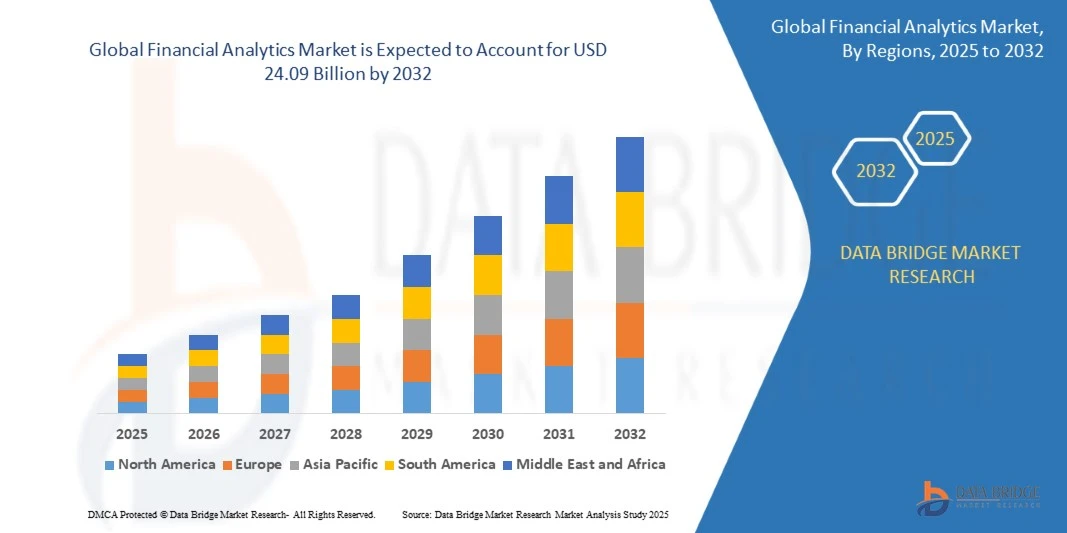
The shift toward dedicated financial data platforms represents a move from mere “reporting” to active “intelligence.” This transition allows organizations to move beyond manual reconciliations and embrace a more automated, reliable, and scalable approach to fiscal management.
1. Limitations of Traditional Reporting Systems
Traditional reporting systems often function as digital filing cabinets rather than dynamic analytical tools. Most legacy setups rely heavily on batch processing, which means the data viewed by leadership is frequently several days or even weeks old.
This lag creates a significant blind spot when trying to respond to sudden market shifts. Furthermore, these older systems lack the flexibility to handle non-structured data or high-frequency updates.
2. Data Fragmentation
Fragmentation remains a persistent hurdle for any large-scale organization. Financial data is typically scattered across multiple ERPs, CRM systems, and third-party payment gateways. This “silo effect” makes it nearly impossible to gain a unified view of the company’s total financial health.
However, a centralized platform acts as a universal translator. It standardizes naming conventions and tax logic across the entire enterprise to ensure accuracy.
3. Real-time Analytics Demands
The speed of global commerce has turned real-time visibility into a competitive necessity. In sectors like fintech, monitoring liquidity and credit risk as they happen is vital.
Real-time analytics allow for proactive intervention rather than reactive damage control. In addition, immediate insights improve the customer-facing side of the business by identifying cross-selling opportunities at the exact moment of relevance.
Why CFOs Need a Governed Analytics Infrastructure
A governed analytics infrastructure provides the guardrails necessary to ensure that data-driven decisions are based on verified information. Without strict governance, “self-service” analytics can quickly turn into a liability.
Moreover, automated data lineage and audit trails simplify the complex landscape of global financial regulations. Ultimately, a governed platform empowers the finance team to become strategic partners who interpret numbers rather than just verifying them.
The move away from traditional BI is an admission that old data methods cannot support modern enterprise scales. By investing in a dedicated platform, organizations solve the twin problems of fragmentation and latency. Establishing this governed infrastructure ensures that financial intelligence remains both accessible and reliable for long-term growth.
What Is an Enterprise Financial Data Analytics Platform?
An enterprise financial data analytics platform is a centralized ecosystem designed to ingest, process, and interpret vast streams of financial information. Unlike basic reporting tools, this infrastructure consolidates data from ERPs, market feeds, and banking APIs into a unified ledger.
It leverages advanced automation to ensure data integrity while providing real-time visibility into liquidity and risk. Therefore, it serves as a strategic engine for decision-makers. By transforming fragmented numbers into actionable intelligence, it enables organizations to forecast trends, automate compliance, and drive sustainable growth.
Types Of Financial Insights Enterprises Generate
Modern platforms do more than track expenses; they uncover deep patterns that drive competitive advantages. By processing diverse data streams, organizations can categorize insights into distinct layers of value.
Each layer serves a specific strategic purpose, moving from basic oversight to sophisticated future-state modeling.
1. Descriptive Insights for Operational Oversight
Descriptive analytics provide a clear view of historical performance and current status. These insights answer fundamental questions about revenue, burn rates, and departmental spending.
By looking at the immediate past, leadership can identify which products are performing and where budgets are leaking. Consequently, this creates a baseline for all subsequent strategic adjustments.
2. Diagnostic Insights to Uncover Root Causes
Diagnostic insights go beyond the “what” to explain the “why” behind financial anomalies. If a particular region shows a sudden dip in profitability, diagnostic tools correlate data from supply chains, currency fluctuations, and labor costs.
This level of detail prevents leaders from making guesses based on surface-level symptoms. Instead, it allows for surgical corrections to the business model.
3. Predictive Insights for Strategic Forecasting
Predictive analytics uses historical data and machine learning to project future financial outcomes. Enterprises utilize these models to anticipate cash flow gaps, customer churn, or potential market volatility.
Therefore, leadership can prepare for various scenarios before they manifest. This foresight is critical for maintaining liquidity during economic shifts or planning aggressive capital expansions.
4. Prescriptive Insights for Optimized Decision-Making
Prescriptive insights represent the highest level of financial intelligence by suggesting specific actions. These systems analyze multiple variables to recommend the best path forward, such as optimizing tax structures or rebalancing investment portfolios.
By simulating the impact of various choices, the platform guides executives toward the most profitable and least risky outcomes.
Generating these insights transforms the finance department into a proactive powerhouse. Organizations no longer have to wait for monthly closings to understand their trajectory. Instead, they operate with a continuous feedback loop that informs every level of the enterprise hierarchy.
Enterprise Use Cases Driving Financial Analytics Platforms
The adoption of a specialized analytics platform is usually triggered by the need to solve high-stakes business challenges. While general tools offer broad visibility, financial platforms focus on the precision required for capital management.
These systems act as a central nervous system, connecting every fiscal movement to a strategic outcome.
1. Real-Time Financial Performance Monitoring
Maintaining a pulse on global performance requires more than periodic checks. Real-time monitoring allows organizations to track KPIs across multiple subsidiaries and currencies instantly.
Therefore, any deviation from the budget is flagged before it becomes a structural deficit. This transparency eliminates the information lag that often plagues decentralized enterprises.
2. Predictive Cash-Flow and Liquidity Analytics
Cash flow is the lifeblood of business, yet managing it globally is notoriously complex. Predictive analytics takes the guesswork out of liquidity by modeling future inflows based on historical patterns.
In addition, these models account for external variables like interest rate hikes. This foresight allows for aggressive investment strategies while keeping core liquidity protected.
3. Risk and Compliance Intelligence Systems
A dedicated platform automates compliance by maintaining an immutable audit trail of every transaction. This ensures alignment with global standards like GDPR or SOX without manual intervention.
Furthermore, the platform scans for counterparty weaknesses that could threaten stability. By quantifying these risks, leadership can pivot strategies before a crisis hits.
4. Revenue Forecasting and Growth Analytics
Advanced analytics break down revenue by product and geography to identify true growth drivers. This granular view helps leaders double down on high-margin opportunities while phasing out underperforming assets.
Consequently, marketing and sales efforts become aligned with actual financial goals. This creates a more efficient engine for sustainable, long-term scaling.
5. Fraud Detection and Anomaly Analysis
Modern platforms use machine learning to establish a baseline of normal behavior and flag any deviating transactions. This proactive approach catches anomalies invisible to traditional rule-based systems.
Beyond theft, these systems identify process inefficiencies or accidental double-payments. Protecting the ledger is fundamental to maintaining investor confidence.
6. Investment Analytics Platforms
For enterprises managing significant reserves, a unified view of portfolio performance is essential. The platform aggregates data from various asset classes to provide a holistic view of returns and volatility.
Furthermore, integrating alternative data gives the enterprise a competitive edge. This sophisticated approach transforms a standard treasury function into a profit-generating center.
Focusing on these specific use cases ensures the platform delivers measurable ROI. Each implementation solves a specific pain point while contributing to a unified view of the company’s financial destiny. Ultimately, these applications empower decision-makers to lead with certainty.
Core Components of a Financial Data Analytics Platform
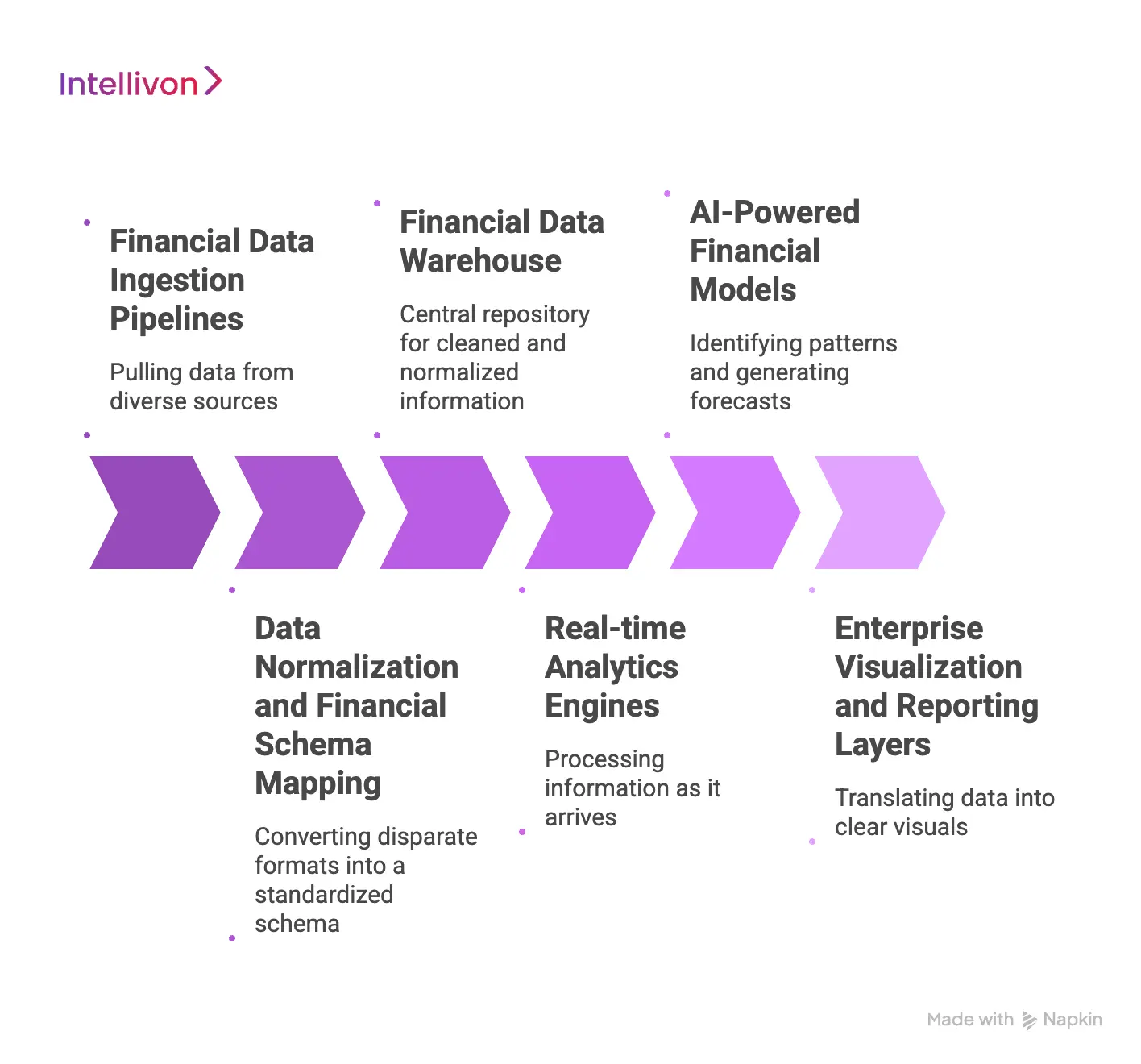
Building a resilient financial platform demands a specialized architecture designed for precision. Every component must work in harmony to ensure that data remains accurate as it moves from raw transaction logs to the executive dashboard. Therefore, the strength of the platform depends on the integrity of its individual layers.
A well-constructed stack eliminates manual intervention and reduces the risk of calculation errors. By automating the journey of a data point, enterprises gain a reliable foundation for high-stakes modeling. This structural reliability is what transforms a simple software tool into an enterprise-grade asset.
1. Financial Data Ingestion Pipelines
The process begins with robust ingestion pipelines that pull data from diverse sources like ERPs, banking APIs, and market feeds. These pipelines must handle both high-volume batch transfers and low-latency streaming data.
Because financial data is time-sensitive, any delay in ingestion can skew the accuracy of real-time reports. Consequently, the pipeline must be resilient enough to recover from connection failures without losing a single transaction record.
2. Data Normalization and Financial Schema Mapping
Raw data from different systems rarely speaks the same language. Normalization involves converting these disparate formats into a standardized schema that the entire enterprise can use.
For instance, it ensures that “Revenue” in the European wing is calculated using the same logic as in the North American branch. This mapping is vital for maintaining a single source of truth and avoiding the confusion of conflicting departmental reports.
3. Financial Data Warehouse
The data warehouse serves as the central repository where cleaned and normalized information is stored for analysis. Unlike general storage, a financial data warehouse is optimized for complex queries and historical auditing.
It provides the high-performance environment needed to run deep-dive analytics without slowing down operational systems. In addition, it maintains the strict data lineage required for regulatory compliance and internal audits.
4. Real-time Analytics Engines
To meet the demands of modern markets, a platform must process information as it arrives. Real-time engines analyze incoming data streams to provide instant updates on liquidity, risk exposure, and market shifts.
This component allows the enterprise to transition from reactive monthly reporting to a continuous, “always-on” financial state. Therefore, leaders can make decisions based on what is happening now, not what happened last week.
5. AI-Powered Financial Models
AI adds a layer of forward-looking intelligence to the platform. These models scan historical datasets to identify patterns that human analysts might miss, such as seasonal cash-flow dips or subtle fraud indicators.
By applying machine learning to the data warehouse, the system can generate highly accurate forecasts and “what-if” simulations. This capability turns the platform into a predictive tool that anticipates future challenges.
6. Enterprise Visualization and Reporting Layers
The final layer translates complex data into clear, intuitive visuals for decision-makers. These dashboards must be customizable to serve different roles, from the granular needs of a controller to the high-level views required by the board.
Effective visualization simplifies technical data without losing its substance, allowing for quick interpretation of trends. However, these layers must also be governed to ensure that only authorized users can access sensitive financial metrics.
The synergy between these components creates a platform that is both powerful and secure. By investing in a dedicated architecture, an enterprise ensures that its financial data is always ready for scrutiny or strategy.
This comprehensive approach provides the clarity needed to navigate complex global markets. Ultimately, a solid core allows the business to scale with confidence and precision.
Key Features of a Financial Analytics Platform
Selecting the right platform requires a focus on features that solve specific operational bottlenecks. While basic software tracks transactions, an enterprise-grade solution provides the specialized tools needed for sophisticated capital management. These features must work together to create a seamless flow from raw data to boardroom strategy.
By prioritizing these core capabilities, organizations can eliminate the manual overhead that often slows down financial growth. This shift ensures that the finance team spends more time on strategy and less on data cleanup. Consequently, the enterprise becomes more agile and responsive to market changes.
1. Real-time financial data pipelines
Modern finance cannot operate on delayed information. That is why real-time pipelines ensure that data from global transactions and market shifts are ingested the moment they occur.
This eliminates the “blind spots” that typically exist between monthly reporting cycles. Therefore, leadership always has an accurate view of the company’s current financial standing.
2. Automated financial reporting systems
Manual report generation is often prone to human error and significant delays. Automated systems pull data directly from the warehouse to generate compliant balance sheets and P&L statements.
This feature allows for “continuous closing,” where the books are essentially always up to date. In addition, it frees up valuable time for the finance team to focus on high-level analysis.
3. Predictive financial analytics capabilities
Predictive tools move the needle from historical reporting to future-state modeling. These capabilities allow enterprises to forecast revenue and expenses with a high degree of accuracy.
By analyzing past trends alongside current variables, the platform identifies potential risks before they materialize. Consequently, this foresight allows for better capital allocation and more confident long-term planning.
4. Risk monitoring and anomaly detection
Protecting the organization requires constant vigilance over every transaction. Anomaly detection uses machine learning to flag unusual patterns that might indicate fraud or processing errors.
This proactive feature acts as an early warning system for the treasury department. Furthermore, it helps maintain the integrity of the ledger and protects the firm’s reputation with stakeholders.
5. Role-based financial data access controls
Security is paramount when dealing with sensitive fiscal information. Role-based controls ensure that employees only see the data necessary for their specific functions.
For example, a regional manager may access local sales data but not the global executive payroll. This granular security layer protects against internal leaks and ensures compliance with privacy regulations.
6. Cross-system financial data reconciliation
In a complex enterprise, data often lives in multiple systems that don’t naturally communicate. Automated reconciliation constantly checks these systems against one another to find and fix discrepancies.
This process ensures that the numbers in the CRM match the figures in the bank account. Therefore, it provides a “single source of truth” that everyone in the organization can trust.
These features represent the difference between a simple ledger and a true strategic engine. When integrated correctly, they provide the clarity and security needed to manage global operations effectively.
Data Sources That Power Financial Analytics Platforms
The effectiveness of a financial data analytics platform is determined by the quality and variety of its inputs. To build a comprehensive view of enterprise health, the system must ingest data from every corner of the organization. This integration converts isolated signals into a loud, clear message about the company’s trajectory.
By connecting these diverse streams, leadership can see how a change in one area impacts the entire fiscal ecosystem. Therefore, a robust ingestion strategy is the first step toward true financial transparency. This interconnectedness allows for more precise forecasting and faster response times.
1. ERP and Accounting Systems Integration
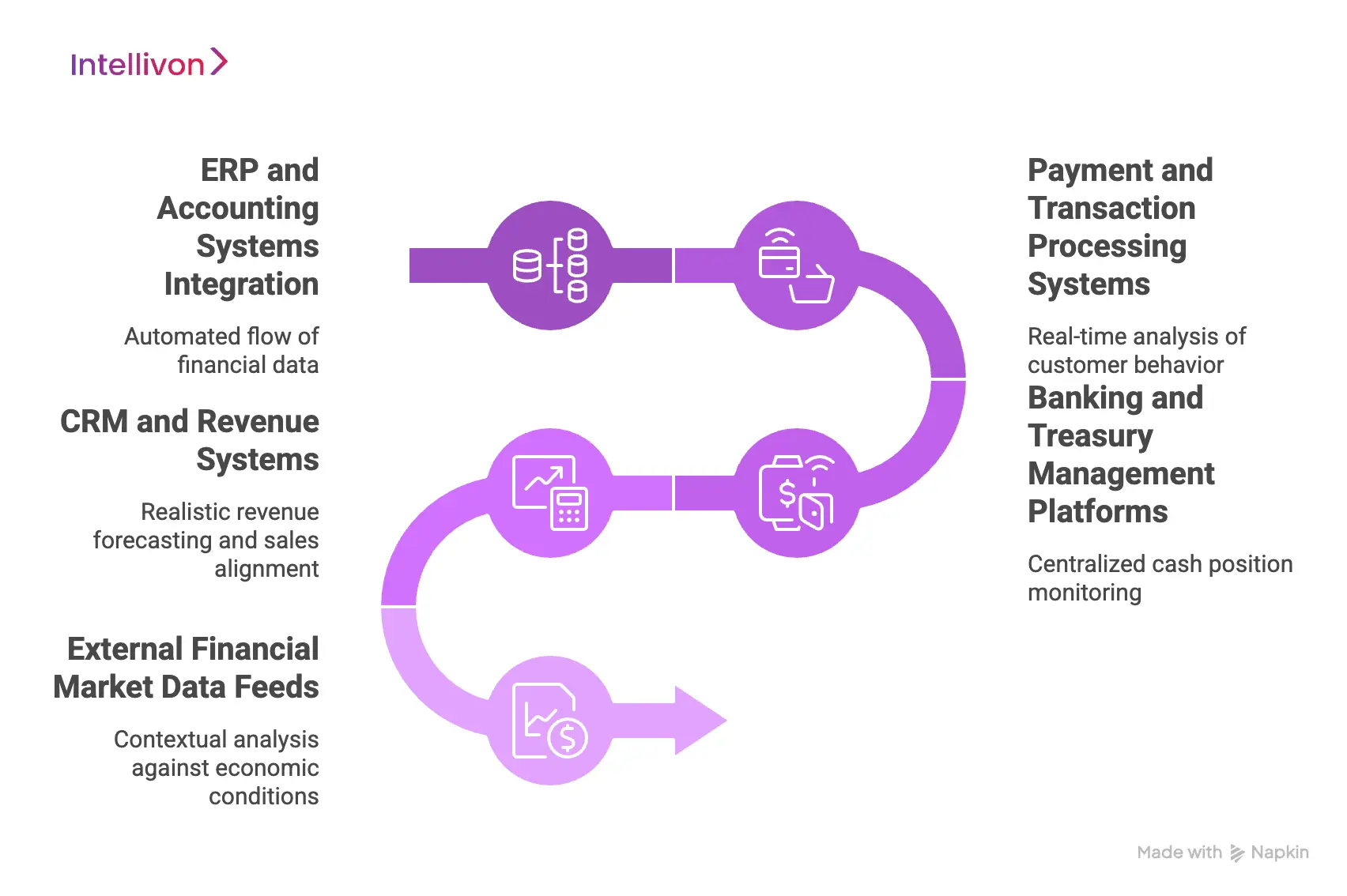
The ERP serves as the foundational record for most enterprise operations. Integrating this system with a financial data analytics platform allows for the automated flow of general ledger data, accounts payable, and procurement logs.
This connection eliminates the need for manual data exports that often lead to version control issues. Consequently, the platform always reflects the most accurate internal accounting state.
2. Payment and Transaction Processing Systems
For businesses with high transaction volumes, direct links to payment gateways are essential. These systems provide granular data on customer behavior, refund rates, and processing fees.
By analyzing this data in real-time, firms can identify shifts in consumer sentiment or technical issues in the payment funnel. Furthermore, this integration is vital for accurate daily cash reconciliation.
3. Banking and Treasury Management Platforms
Direct integration with global banking partners provides an unfiltered view of actual cash positions. This data allows the treasury department to monitor liquidity across different regions and currencies without waiting for bank statements.
Having this information centralized in a financial data analytics platform makes it easier to manage debt, interest, and capital distributions. In addition, it simplifies the complex task of multi-currency reporting.
4. CRM and Revenue Systems
Revenue data often starts in the CRM long before it reaches the accounting department. By connecting sales pipelines to the analytics engine, leadership can see “what’s coming” rather than just “what’s been billed.”
This bridge between sales and finance allows for more realistic revenue forecasting and better alignment with growth targets. Therefore, the finance team can act as a strategic advisor to the sales organization.
5. External Financial Market Data Feeds
Enterprises do not operate in a vacuum. Integrating external feeds provides the necessary context for internal performance. This allows the platform to perform stress tests and sensitivity analyses against shifting economic conditions. Ultimately, it ensures that the organization remains resilient even when global markets become volatile.
A truly integrated platform turns data from a burden into a competitive advantage. When all sources are unified, the “friction” of data gathering disappears, leaving only the “flow” of insight.
This comprehensive visibility is what allows an enterprise to move with confidence. By bridging these data gaps, the organization builds a foundation for long-term strategic success.
AI and Machine Learning in Financial Data Analytics
The integration of artificial intelligence transforms a financial data analytics platform from a passive archive into an active strategic partner. While traditional tools struggle with the sheer volume of modern enterprise data, machine learning thrives on complexity. These technologies scan millions of transactions to identify subtle correlations that escape even the most seasoned human analysts.
Consequently, AI allows leadership to shift from hindsight-driven management to foresight-driven strategy. By automating the heavy lifting of data interpretation, the finance team can focus on high-level capital allocation.
This evolution is essential for staying competitive in a market where speed and precision are the primary currencies.
1. Predictive Revenue and Growth Forecasting
Machine learning models excel at identifying the underlying drivers of business expansion. By analyzing historical sales cycles, seasonal trends, and external economic indicators, these systems generate highly accurate revenue projections.
This moves beyond simple linear regression, accounting for non-linear variables that often disrupt traditional forecasts. Therefore, the enterprise can plan its investments with a much higher degree of certainty.
2. Fraud Detection and Anomaly Identification
Financial crime is becoming increasingly sophisticated, necessitating a more advanced defensive layer. AI-powered anomaly detection establishes a dynamic baseline of “normal” behavior for every account and vendor.
Furthermore, these models learn from every false positive, becoming more accurate and less intrusive over time.
3. Financial risk modeling with machine learning
Managing risk in a global enterprise requires the ability to simulate thousands of potential market scenarios. Machine learning algorithms can process vast amounts of alternative data to stress-test portfolios and liquidity positions.
This allows the organization to quantify its exposure to currency fluctuations or credit defaults more precisely. Consequently, leadership can adjust its risk appetite based on hard data rather than intuition.
4. Automated financial decision intelligence
Decision intelligence represents the pinnacle of AI in the financial sector. These systems do not just present data; they recommend specific actions based on the organization’s strategic goals.
For instance, the platform might suggest moving capital between subsidiaries to optimize tax efficiency or suggest hedging strategies for a volatile commodity. This automation ensures that the enterprise always moves at the speed of the market, unhindered by internal bureaucracy.
Incorporating AI and machine learning ensures that your financial data analytics platform remains a future-proof investment. As data volumes grow, these algorithms provide the scalability needed to maintain oversight without increasing headcount.
How We Build an Enterprise Financial Analytics Platform
Constructing a high-performance financial data analytics platform requires a disciplined, phase-based engineering strategy.
At Intellivon, we utilize a proprietary framework that prioritizes data integrity, architectural resilience, and actionable intelligence for decision-makers.
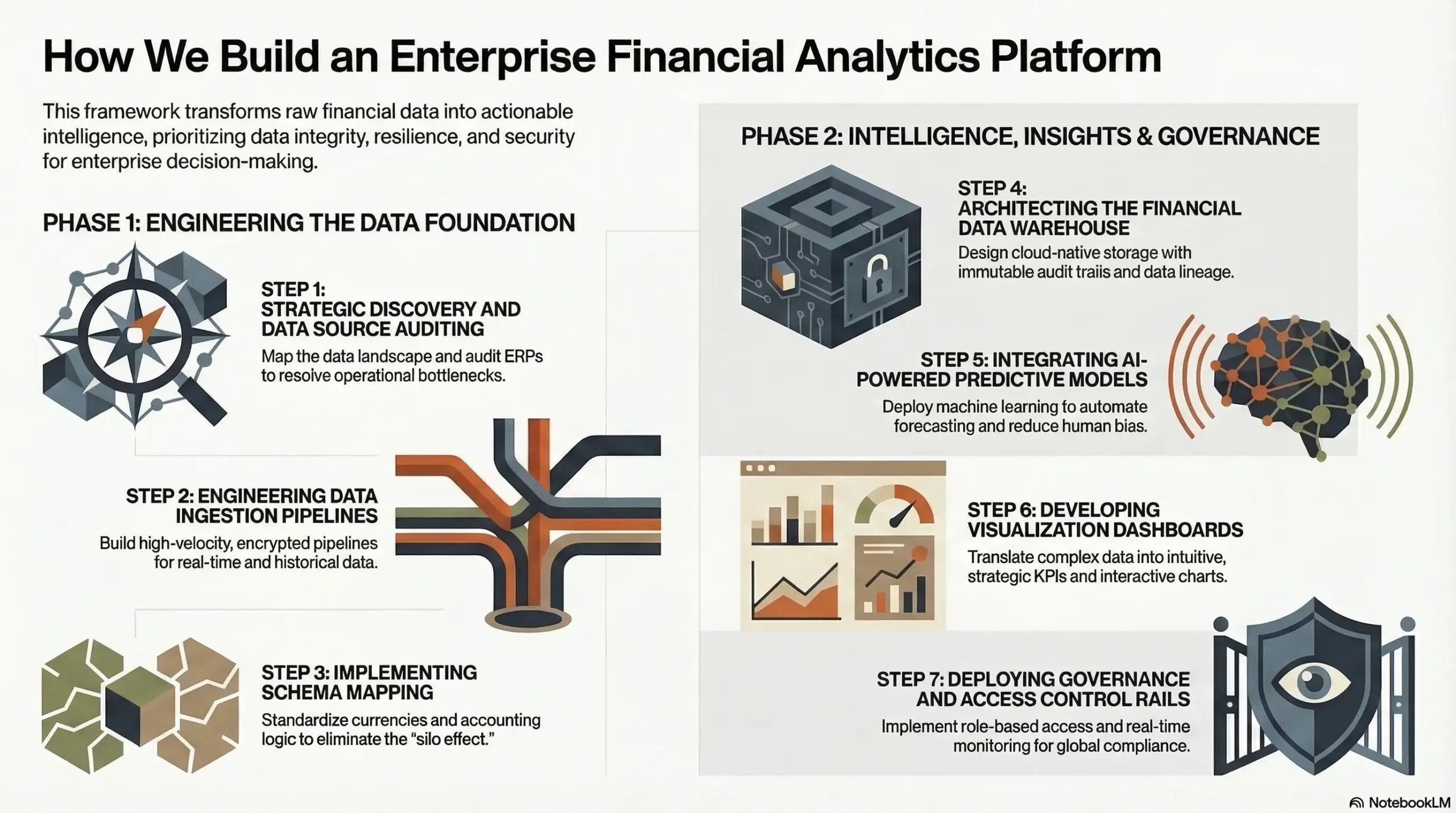
Step 1: Strategic Discovery and Data Source Auditing
We begin by mapping the complex data landscape of your organization to identify every critical touchpoint. Our team audits existing ERPs, legacy accounting software, and external market feeds to establish a clear inventory of your financial assets.
This discovery phase ensures the platform is designed to resolve specific operational bottlenecks from day one. Consequently, we build a roadmap that aligns technical infrastructure with your long-term business goals.
Step 2: Engineering Data Ingestion Pipelines
Once the sources are identified, we build high-velocity pipelines to pull information into a centralized environment. These pipelines are engineered to handle massive historical datasets alongside real-time streaming transactions without latency.
We implement end-to-end encryption and secure authentication to protect sensitive fiscal data during transit. Therefore, your organization gains a continuous flow of information that is both timely and shielded from external threats.
Step 3: Implementing Schema Mapping
Raw financial data from disparate global subsidiaries rarely arrives in a unified format. We apply a sophisticated normalization layer that standardizes varied currencies, tax codes, and accounting logic into a single enterprise schema.
This process eliminates the “silo effect” that often leads to conflicting departmental reports. Furthermore, it ensures that every stakeholder is looking at a verified, consistent version of the truth across the entire organization.
Step 4: Architecting the Financial Data Warehouse
The heart of a financial data analytics platform is a cloud-native warehouse optimized for complex, high-stakes queries. We design this storage layer to maintain an immutable audit trail and full data lineage for every transaction.
This architecture allows for rapid retrieval of insights without putting a strain on your primary operational systems. In addition, it provides the high-performance environment necessary for deep-dive historical analysis and regulatory reporting.
Step 5: Integrating AI-Powered Predictive Models
With a clean data foundation established, we deploy custom machine learning models to identify hidden patterns and trends. These models automate the forecasting of revenue, cash flow, and market risks by analyzing thousands of variables simultaneously.
By moving beyond manual spreadsheet-based projections, we reduce human bias and improve accuracy. Consequently, your leadership team can transition from reactive accounting to proactive, data-backed strategic planning.
Step 6: Developing Visualization Dashboards
The final output of the platform must be intuitive enough for rapid decision-making at the highest levels. We design custom visualization layers that translate complex technical data into clear, strategic KPIs and interactive charts.
These dashboards allow executives to drill down into specific regions or product lines with total ease. However, we ensure the interface remains focused on the metrics that drive growth, preventing information overload for busy leaders.
Step 7: Deploying Governance and Access Control Rails
Security and privacy are non-negotiable when managing an enterprise-grade financial data analytics platform. We implement granular, role-based access controls to ensure that sensitive metrics are only visible to authorized personnel.
This step includes setting up automated monitoring systems that flag any unauthorized access attempts or data anomalies in real-time. Therefore, your enterprise remains compliant with global regulations while maintaining the highest standards of internal data governance.
By following this structured methodology, we eliminate the traditional risks associated with digital financial transformation. Our process ensures that your platform is not just functional, but also a powerful engine for long-term growth.
Cost to Build a Financial Data Analytics Platform
At Intellivon, financial data analytics platforms are built as enterprise intelligence infrastructure, not as dashboards layered onto disconnected financial systems. The objective is to create platforms that continuously aggregate financial data, generate insights, and support strategic decision-making across corporate finance operations.
However, building a reliable financial analytics platform requires more than connecting data sources. As a result, enterprises gain real-time financial visibility while reducing reporting errors, operational delays, and fragmented financial intelligence.
Estimated Phase-Wise Cost Breakdown
| Phase | Description | Estimated Cost Range (USD) |
| Discovery & Financial Data Mapping | Identify financial data sources, analytics goals, and reporting requirements | $8,000 – $15,000 |
| Data Architecture Design | Design data pipelines, warehouse/lakehouse architecture, and analytics frameworks | $12,000 – $20,000 |
| Governance & Data Policies | Data quality rules, access governance, and financial reporting policies | $10,000 – $18,000 |
| Financial System Integrations | ERP systems, payment platforms, banking APIs, and CRM integrations | $18,000 – $35,000 |
| Data Processing & Aggregation Engines | Data normalization, transformation pipelines, and financial data models | $12,000 – $20,000 |
| Analytics & Intelligence Layer | Forecasting models, financial dashboards, and performance analytics | $12,000 – $20,000 |
| Security & Compliance Controls | Encryption, role-based access control, and financial data protection | $12,000 – $20,000 |
| Testing & Data Validation | Data accuracy testing, analytics validation, and performance optimization | $8,000 – $14,000 |
| Deployment & Infrastructure Setup | Cloud deployment, monitoring systems, and scalability configuration | $10,000 – $16,000 |
Total initial investment: $100,000 – $200,000
Ongoing maintenance and optimization:
Approximately 15–20% of the initial development cost per year.
Hidden Costs Enterprises Should Plan For
Even well-designed financial analytics platforms face operational pressure when indirect costs are overlooked.
- Data integration complexity increases as enterprises connect multiple financial systems, including ERP platforms, banking infrastructure, and payment gateways.
- Data governance requirements grow as organizations expand financial reporting, regulatory compliance, and internal audit processes.
- Infrastructure costs rise as financial datasets expand and analytics workloads increase across departments.
- Analytics model updates become necessary as business forecasting models evolve with new financial data.
- Operational training is required for finance teams, analysts, and executives who rely on analytics dashboards for decision-making.
- Data quality management requires continuous monitoring to maintain accurate financial reporting across integrated systems.
Best Practices to Avoid Budget Overruns
Based on Intellivon’s experience building enterprise financial platforms, several practices help organizations control development costs.
- Define financial analytics goals and data sources before expanding the analytics scope.
- Embed governance, security, and reporting controls directly into the platform architecture.
- Adopt modular data pipelines so integrations and analytics layers scale independently.
- Plan ERP, banking, and payment integrations early to avoid expensive rework later.
- Maintain observability across data pipelines, analytics models, and reporting dashboards.
- Design the platform to evolve with new data sources and analytics requirements rather than relying on static reporting systems.
Organizations planning to build a financial data analytics platform can work with Intellivon’s fintech experts to define a development roadmap aligned with financial data complexity, operational scale, and long-term analytics strategy.
Conclusion
Adopting a financial data analytics platform is a strategic pivot toward resilience and long-term expansion. By unifying fragmented data and automating complex workflows, enterprises move beyond historical reporting into a new era of predictive intelligence.
This transition ensures that capital allocation remains precise even during periods of market volatility. Consequently, organizations can lead with certainty. Partnering with Intellivon allows you to harness cutting-edge AI solutions to transform your financial operations into a high-performance growth engine.
Build a Financial Data Analytics Platform With Intellivon
At Intellivon, financial data analytics platforms are engineered as enterprise intelligence infrastructure, not as reporting tools layered onto fragmented financial systems.
Financial analytics platforms must operate across complex financial environments. They need to integrate with ERP systems, banking platforms, payment infrastructure, and enterprise data sources while maintaining data accuracy, governance controls, and secure access management.
Why Partner With Intellivon?
- Enterprise Financial Data Architecture: We design scalable data architectures that unify financial data across ERP systems, banking platforms, payment infrastructure, and enterprise analytics environments.
- Advanced Financial Analytics Engines: Our platforms incorporate forecasting models, financial performance analytics, and predictive intelligence systems that help organizations make data-driven financial decisions.
- Secure and Governed Data Infrastructure: Every analytics platform includes role-based access controls, data lineage tracking, encryption systems, and governance frameworks to protect sensitive financial information.
- Real-Time Financial Data Processing: We build event-driven data pipelines that process financial transactions and operational data in real time, enabling faster reporting and decision-making.
- Enterprise System Integrations: Our platforms integrate seamlessly with financial systems such as ERP software, payment gateways, banking APIs, CRM platforms, and internal data warehouses.
- Scalable Cloud Infrastructure: Financial analytics platforms are deployed on scalable cloud infrastructure that supports large datasets, advanced analytics workloads, and enterprise performance requirements.
Organizations planning to build a financial data analytics platform can partner with Intellivon’s fintech experts to design and deploy scalable analytics systems aligned with their financial operations, data architecture, and long-term intelligence strategy.
FAQs
Q1. What is a financial data analytics platform?
A1. A financial data analytics platform is a system that collects, processes, and analyzes financial data from multiple sources. It integrates systems such as ERP software, payment platforms, banking APIs, and internal databases. The platform then transforms this data into dashboards, forecasts, and financial insights that help organizations monitor performance, manage risk, and make strategic decisions.
Q2. Why do enterprises need financial analytics platforms?
A2. Enterprises use financial analytics platforms to gain real-time visibility into financial performance. These platforms consolidate financial data across departments, systems, and business units. As a result, finance teams can monitor revenue, expenses, liquidity, and operational metrics from a single platform. This improves financial planning, forecasting accuracy, and decision-making.
Q3. What technologies power financial analytics systems?
A3. Financial analytics systems rely on several core technologies. These include data pipelines, cloud data warehouses, analytics engines, and visualization tools. Organizations also use technologies such as machine learning models, API integrations, and event-driven data processing to generate predictive insights and real-time financial reports.
Q4. How long does it take to build a financial analytics platform?
A4. Building a financial analytics platform typically takes 4 to 8 months, depending on the complexity of integrations and analytics requirements. Projects that involve multiple financial systems, advanced analytics models, or global data pipelines may take longer to implement and optimize.