Pediatric telehealth is growing faster than most organizations expected. Parents want quick access, clinicians need help managing increasing digital volumes, and health systems are under pressure to provide effective care without raising costs. These factors make virtual pediatric platforms crucial. They offer speed, continuity, and safety in a setting where the demand for clinical services seldom matches the available staff.
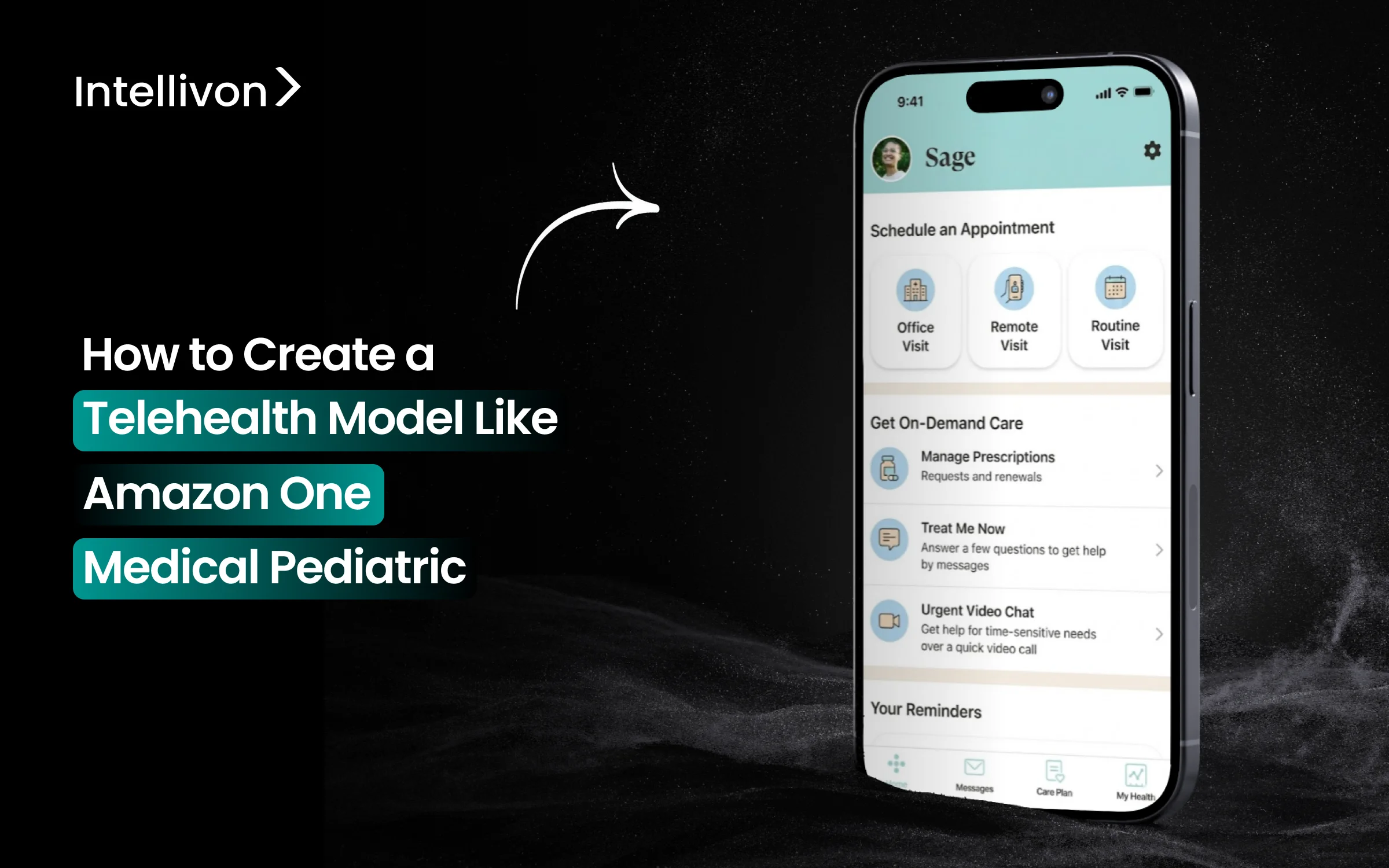
Amazon One Medical Pediatric has become a key example of this change. Its virtual-first approach, integrated care teams, and smooth patient experience show the benefits of combining technology, workflow design, and easy access to clinical support. This model balances convenience with structured care delivery, which appeals to parents and provides what clinicians require for stable operations.
At Intellivon, our teams create telehealth systems that handle actual visit volumes, integrate virtual and in-clinic paths, and use AI to enhance safety and decision-making. This blog reflects that experience and explains how we build telehealth models similar to Amazon One Medical Pediatric from the ground up.

Key Market Insights Shaping Pediatric Virtual Care
Analysts estimate the pediatric telehealth segment to be worth USD 34–36 billion in 2025, with projections placing it between USD 127 billion and USD 189 billion by 2032. This suggests a growth trajectory in the 20–27% CAGR range, depending on the research source.

Market Insights:
- North America remains the most advanced region for pediatric virtual care adoption, although Europe and Asia are scaling quickly as broadband access improves and national telehealth frameworks begin incorporating pediatric populations.
- Some surveyed groups show roughly 70% prior experience with telemedicine and a strong interest in keeping virtual visits as a standard care option.
Satisfaction and Experience Metrics
- A review of synchronous pediatric telehealth shows over 80% of quantitative studies reporting high family satisfaction with both the clinical interaction and the technology platforms.
- Individual research reports parent satisfaction scoring in the 80–86% range across safety, appropriateness, and access.
Clinical Outcomes and Perceived Value
- Across several pediatric telehealth trials, 6 of 8 studies reported meaningfully better outcomes for children receiving virtual care, particularly in therapy-based and chronic condition management programs.
- Longer-term assessments show satisfaction increasing over time. For example, caregiver satisfaction may climb from roughly 57% at three months to more than 80% after a year, often linked to improved familiarity with devices and observed clinical gains.
What Is a Telehealth Model Like Amazon One Medical Pediatric?
The Amazon One Medical Pediatric platform is a virtual-first pediatric care system that gives families continuous access to clinicians through chat, video, and rapid in-clinic scheduling. It is designed as a single digital entry point where parents can ask questions, receive triage, book visits, review care plans, and manage follow-ups without navigating multiple systems. The platform integrates a coordinated care team, structured routing protocols, and age-specific guidance to support everything from routine concerns to escalating conditions.
A core feature of the platform is its hybrid workflow. Low-acuity issues are resolved virtually, while in-person care is reserved for exams or procedures that require physical evaluation. All interactions, virtual or in-clinic, flow through one coordinated technology layer, reducing friction and improving continuity.
For enterprises, this platform represents a practical blueprint for modern pediatric care: accessible, scalable, and clinically reliable across varied patient needs.
Business Model Of Amazon One Medical Pediatric
The Amazon One Medical Pediatric business model combines membership revenue, virtual-first workflows, and coordinated hybrid care to deliver predictable, high-quality pediatric services.
1. Membership-Driven Revenue Stability
The platform operates on an annual membership fee, giving families continuous access to virtual guidance, rapid scheduling, and ongoing support. This approach creates predictable revenue and reduces reliance on fluctuating fee-for-service volumes.
It also enables investment in high-quality digital experiences and coordinated care teams.
2. Virtual-First Care
Most routine pediatric concerns are handled through chat, video, or asynchronous review. By resolving low-acuity cases digitally, the system lowers in-clinic congestion and allows clinicians to focus on children who require hands-on evaluation.
This improves capacity planning and reduces unnecessary utilization.
3. Integrated Hybrid Care
When an in-person visit is needed, families move seamlessly from virtual triage to in-clinic care without repeating information. Shared records, unified scheduling, and coordinated care teams make the transition smooth.
This integration strengthens clinical accuracy and boosts caregiver trust.
4. Technology as the Operational Backbone
The platform relies on a single digital infrastructure that connects messaging, documentation, scheduling, and escalation pathways.
This reduces fragmentation, supports faster decision-making, and enables consistent care delivery across touchpoints.
Amazon One Medical Pediatric succeeds because its business model aligns with convenience, operational efficiency, and predictable revenue. By combining membership stability with virtual-first care and well-integrated in-clinic workflows, the platform creates a sustainable framework that meets modern family expectations and reduces enterprise strain.
How Amazon One Medical Pediatric-Like Platforms Work
Pediatric platforms inspired by Amazon One Medical Pediatric succeed because they run on predictable, repeatable workflows. Parents know where to start, care teams know what happens next, and the technology keeps everything connected. Instead of scattered touchpoints, the system creates one guided path from first concern to resolution.
Below is how that journey usually works, step by step.
1. Unified Digital Entry
The journey starts in a single digital front door. Parents open an app or portal, describe the child’s symptoms, upload photos if needed, and select timing preferences.
Behind the scenes, the system collects structured data: age, history flags, severity indicators, and past encounters. This information feeds the next step instead of sitting in disconnected forms or inboxes.
2. Intelligent Triage and Routing
Once the information arrives, triage logic and, in advanced models, AI assist in sorting cases. The system identifies low-acuity issues suitable for virtual care, time-sensitive concerns, and red-flag symptoms that need rapid escalation.
Cases route to the right clinical queue. Nurses, pediatricians, behavioral specialists, or care coordinators receive clear context, not just a vague message.
3. Virtual Visits and Hybrid Escalation
For many issues, the next step is a virtual visit or asynchronous review. Clinicians join video sessions, chat with caregivers, and review shared media or device data.
If a physical exam, lab, or procedure is required, the clinician converts the encounter into an in-clinic visit. Scheduling links, location details, and instructions appear within the same experience, so families do not feel they are switching systems.
4. Documentation and EHR Synchronization
During or after the encounter, notes, diagnoses, and orders flow into connected systems. In more mature architectures, ambient tools and structured templates reduce manual typing and help standardize documentation.
The platform then synchronizes key data with the EHR and other downstream systems. That prevents information gaps when the child later sees another clinician or moves from virtual to in-person care.
5. Continuous Follow-Up and Care Programs
After the visit, the platform keeps the relationship active. It can send follow-up check-ins, symptom trackers, medication reminders, or links to education tailored to the child’s age and condition.
Care teams see these signals in worklists, allowing them to intervene early if recovery stalls or symptoms worsen. Over time, this creates a living record of the child’s health journey.
Amazon One Medical Pediatric-like platforms work because they turn pediatric care into a guided, repeatable journey. Every step, from digital entry to follow-up, has a clear owner, data trail, and next action.
Pediatric Telehealth Platforms Achieve 84% Satisfaction Rates
For healthcare enterprises, this trend signals that the success of pediatric telehealth is shaped by ease of onboarding, intuitive design, clear communication, and visible clinical value. When systems are well-structured and guidance is reliable, families become strong advocates of virtual care.
1. Growing Confidence With Virtual Care Tools
Many families approach pediatric telehealth with some uncertainty. They want reassurance that remote assessments are accurate and that the platform will match the reliability of an in-clinic visit. Over time, repeated interactions reduce hesitation. Parents get used to checking vitals, joining video visits, and sharing symptoms through structured inputs.
This familiarity reshapes their perception of digital care. Virtual workflows become part of everyday decision-making, and trust increases with each successful consult.
2. Clinical Improvements Reinforce Positive Experience
Clinical progress plays a major role in rising satisfaction. When children improve through virtual follow-ups, adherence support, or ongoing therapy, parents see direct value. Improvements add credibility to the care model and strengthen acceptance of remote guidance.
Over several months, families often begin to prefer digital follow-ups because they avoid travel disruptions and allow care to happen without missing school or work.
3. Reduced Operational Friction Enhances Adoption
A frictionless experience matters as much as clinical accuracy. Shorter wait times, predictable appointment windows, and seamless communication channels reduce stress for caregivers. When platforms pair intuitive UX with clear instructions, families spend less energy navigating the system.
This reduction in friction often pushes satisfaction scores higher than traditional visits, especially when telehealth resolves common pediatric issues efficiently.
Implications for Healthcare Enterprises
Rising satisfaction over time has strategic significance. It shows that telehealth platforms can deliver increasing value without additional resource strain. Once an enterprise builds the initial onboarding and workflow foundation, satisfaction improves organically as families integrate virtual care into daily life.
Systems that invest early in user experience, clear instructions, and consistent clinical follow-ups tend to see the strongest growth in long-term engagement.
The shift from 57% satisfaction at three months to around 84% by twelve months demonstrates that pediatric telehealth becomes more valued as families settle into the model. Trust grows alongside clinical progress and smoother interactions.
Use Cases of a Pediatric Telehealth Platform
Pediatric telehealth platforms support virtual triage, ongoing condition management, behavioral health, developmental tracking, and hybrid care routing within one unified system.
These use cases show where the platform delivers real operational and clinical value.
1. Virtual Pediatric Triage
Parents often need quick clarity on symptoms like fever, rashes, cough, or stomach discomfort. Virtual triage guides them through structured assessments and routes cases to the right clinician.
This reduces unnecessary in-clinic visits and keeps schedules available for higher-acuity needs.
2. Chronic Condition Monitoring
Children with asthma, diabetes, or neurodevelopmental conditions benefit from regular touchpoints. The platform enables scheduled check-ins, medication adherence support, and remote symptom tracking.
This helps clinicians intervene early and improve long-term stability.
3. Pediatric Behavioral and Mental Health Support
Child and adolescent behavioral concerns require consistent engagement. Telehealth sessions simplify access to therapy, coaching, and follow-up reviews.
Families avoid travel barriers, and clinicians maintain continuity through shared notes and structured programs.
4. Developmental Screening and Milestone Guidance
Parents can complete developmental questionnaires, upload media, and receive tailored recommendations. Clinicians review results and suggest next steps, ensuring early identification of speech, motor, or behavioral delays.
5. Post-Discharge and Care Transition Programs
After procedures or hospitalization, families use the platform to share updates, join virtual follow-ups, and receive reminders.
This reduces readmission risk and supports smoother recovery at home.
6. Hybrid Routing
When a hands-on exam is needed, the platform converts virtual encounters into in-person appointments. Shared records and instructions ensure a smooth transition and prevent repetitive explanations.
7. School, Activity, and Documentation Support
Families often need forms for sports clearance, school participation, or medication administration. The platform streamlines requests, reviews, and approvals to reduce administrative burden.
These use cases highlight the breadth of workflows the platform can handle. Each one strengthens access, reduces operational strain, and creates a more predictable experience for families and clinicians.
Features of an Amazon One Medical Pediatric-Like Platform
Amazon One Medical Pediatric-style platforms integrate virtual care, hybrid routing, coordinated teams, EHR connectivity, and pediatric-specific workflows to deliver continuous, child-centered care.
Each feature plays a role in creating a smooth, predictable journey for families while reducing friction for care teams. The goal is to unify all touchpoints into one reliable system that scales.

1. Unified Parent and Child Profiles
Families often juggle multiple children and varying health needs. A unified profile lets parents manage everything, such as records, care plans, medications, and immunizations, without switching screens or repeating information. Clinicians see structured histories, recent encounters, allergies, developmental notes, and risk indicators in one consolidated view.
This reduces errors and prepares care teams to respond quickly, even when a child has complex needs or multiple specialists involved.
2. On-Demand Chat and Video Access
Parents want immediate reassurance when a child shows symptoms at night, during school hours, or while traveling. On-demand chat allows them to describe concerns, upload photos or videos, and get rapid guidance. Scheduled or rapid-response video visits offer a deeper assessment without forcing families to commute.
This feature reduces unnecessary in-person visits, improves access during peak hours, and keeps clinicians available for more urgent cases that require hands-on evaluation.
3. Structured Pediatric Triage Pathways
Children present symptoms differently across age groups, which makes triage more nuanced. The platform uses age-specific intake questions, severity indicators, and developmental considerations to route cases correctly. Infants, toddlers, school-aged children, and teens each follow tailored workflows.
Behind the scenes, triage logic and AI-driven decision support help identify red flags early, reducing risk and accelerating escalation when a condition requires urgent care.
4. Hybrid Scheduling and Seamless Escalation
Virtual care resolves many concerns, but some children need to be examined in person. Hybrid scheduling lets clinicians transition a virtual encounter into an in-clinic visit without forcing parents to re-enter information or call a front desk.
Notes, photos, triage details, and instructions move automatically into the in-clinic workflow. This creates a continuous care experience and prevents repeated explanations, which is especially helpful for anxious parents or complex pediatric cases.
5. Care Team Coordination Tools
Pediatric care often involves multiple professionals, like nurses, pediatricians, behavioral therapists, nutritionists, and specialists. Coordination tools centralize their communication through shared notes, task lists, routed messages, and care-plan updates. Team members see the same information, reducing fragmentation.
This is particularly valuable for chronic conditions or behavioral programs that require frequent monitoring and adjustment.
6. Documentation Automation and Templates
Pediatric visits require detailed notes, especially when symptoms evolve quickly or involve behavioral assessments. Automated documentation helps clinicians stay accurate without slowing down. Templates guide consistent recording of symptoms, medication updates, developmental observations, and safety screenings.
In advanced deployments, ambient listening tools capture the clinical conversation and turn it into structured documentation, saving valuable time and improving standardization across providers.
7. Integrated EHR and Health Data Exchange
Seamless EHR integration prevents information silos and keeps all departments aligned. The platform connects through FHIR, HL7, and secure APIs so that diagnoses, vaccination updates, prescriptions, and follow-up plans sync automatically. When a child transitions from virtual to in-clinic care, clinicians see the full history.
This improves care quality, reduces duplication, and strengthens billing, reporting, and compliance workflows across the enterprise.
8. Age-Specific Education
Parents often leave visits wondering what to monitor, when to worry, and how to support recovery. The platform provides educational guidance tailored to the child’s age and condition.
This reduces confusion between visits and helps families feel more confident managing day-to-day care.
These features form the backbone of a pediatric telehealth platform that can scale, deliver reliable outcomes, and meet rising family expectations. Each feature reduces friction, strengthens clinical decision-making, and creates a predictable framework for hybrid care.
Advanced AI-Powered Features Of These Platforms
Next-generation pediatric telehealth platforms use advanced AI models for documentation, growth prediction, risk scoring, visual assessment, guided care, and knowledge retrieval to enhance clinical accuracy and operational scale.
Below are the high-impact AI features that define a mature, Amazon One Medical Pediatric-style platform.
1. Ambient Pediatric Clinical Documentation
Ambient AI listens during virtual or in-clinic conversations and produces structured clinical notes without manual typing. In pediatrics, where clinicians must capture developmental cues, caregiver observations, and subtle symptom changes, this improves accuracy and consistency.
The system extracts relevant details, organizes them into standardized templates, and reduces administrative burden. Clinicians gain more time for interaction, and families receive a smoother, more focused experience.
2. AI-Driven Growth Curve
Each child follows a unique growth trajectory. AI analyzes height, weight, head circumference, developmental questionnaires, and behavioral observations to predict possible deviations from expected milestones.
These models surface early signals of developmental delays, metabolic risks, or abnormal growth patterns. Clinicians use these insights to plan evaluations and communicate concerns with caregivers in a proactive, structured manner.
3. Pediatric Risk Stratification
Early identification of high-risk children is critical. AI evaluates clinical histories, symptom patterns, vitals, medication adherence, and environmental factors to assign risk scores for conditions such as asthma, obesity, ADHD, and anxiety disorders.
These scores guide care teams toward early intervention and targeted follow-ups. Over time, the platform learns from new data, improving accuracy and reducing avoidable escalation.
4. AI-Generated Care Instructions
Pediatric guidance must be clear, precise, and age-appropriate. AI generates personalized after-visit instructions based on the child’s age, symptoms, diagnosis, and care plan. Parents receive specific monitoring tips, safety warnings, dosing reminders, and next-step actions.
This reduces confusion, improves adherence, and lowers the volume of follow-up calls driven by uncertainty.
5. Computer Vision
Parents frequently upload photos or videos to clarify concerns. Computer vision models analyze these visuals to identify patterns associated with common pediatric conditions, such as viral rashes, allergic reactions, wound infections, or respiratory distress markers.
The AI does not replace clinician judgment but accelerates assessment by narrowing possibilities and highlighting visual cues that warrant closer review.
6. Multi-Agent Systems
Pediatric care is multi-layered. Families often need help understanding symptoms, booking follow-ups, managing long-term conditions, or coordinating behavioral support. Multi-agent AI systems work behind the scenes to guide navigation, answer questions, coordinate tasks, and surface essential reminders.
Each agent specializes in a domain, like triage, scheduling, education, or behavioral health, creating a cohesive support system for families and care teams.
7. RAG-Enabled Retrieval
Clinicians need rapid access to high-quality references, especially when symptoms overlap across multiple pediatric conditions. Retrieval-Augmented Generation (RAG) systems pull from curated pediatric guidelines, clinical pathways, evidence repositories, and institutional protocols.
The platform returns concise, context-specific insights during assessments. This strengthens decision support without disrupting the clinician’s workflow.
These advanced AI capabilities strengthen accuracy, streamline workflows, and create a more predictable experience for families. When combined, they transform a telehealth platform from a communication tool into a comprehensive pediatric care ecosystem.
Architecture of an Amazon One Medical Pediatric-Like Platform
An Amazon One Medical Pediatric-style platform uses a multi-layer architecture that blends experience design, AI intelligence, interoperability, workflow orchestration, and compliance into one unified system.
The architecture below reflects how modern pediatric platforms deliver that consistency.
1. Experience Layer for Families and Care Teams
The experience layer includes apps and portals for parents, as well as dashboards for clinicians and care coordinators. Families use this layer to submit symptoms, join video visits, manage children’s profiles, and review instructions.
Care teams see structured data, care plans, and routed cases in an organized interface. The goal is to keep navigation simple, predictable, and age-aware, so families never feel lost in the process.
2. AI and Pediatric Decision Support Layer
This layer powers core intelligence across the platform. It handles ambient documentation, pediatric triage, developmental prediction, risk scoring, and personalized care instructions. Advanced computer vision and RAG-based knowledge retrieval support clinicians with fast, contextually relevant insights.
AI becomes an embedded part of the workflow rather than an external tool, reducing workload and enhancing precision.
3. Interoperability and Data Integration Layer
A unified pediatric platform must connect seamlessly with EHR systems, scheduling tools, pharmacy networks, lab systems, immunization registries, and external RPM devices.
This layer manages secure data exchange using standards such as FHIR, HL7, CCD, and protected APIs. It ensures all clinical actions, including diagnoses, orders, updates, and notes, flow into the correct systems without manual work.
4. Care Orchestration Layer
This layer coordinates how cases move through the system. It manages routing queues, escalation paths, team assignments, and the transition from virtual to in-clinic care. Pediatric workflows require nuance, especially for infants, chronic conditions, and behavioral needs.
The orchestration layer ensures every case reaches the right clinician with the right context, reducing bottlenecks and improving first-touch resolution.
5. Hybrid Care Management Layer
Virtual and in-person care must function as one experience. This layer connects triage, video visits, follow-up evaluations, and physical exams. When in-clinic care is needed, the system converts a virtual encounter into an appointment without repeating data.
Shared notes and ordered tasks ensure continuity across environments and avoid miscommunication between teams.
6. Security, Compliance, and Governance Layer
Pediatric telehealth requires strict protection. This layer enforces HIPAA, GDPR (where applicable), SOC 2, and regional pediatric data rules.
It includes encryption, access controls, audit trails, data minimization, and model governance for AI tools. Governance also ensures clinical quality checks, bias monitoring, and safe deployment of predictive models.
7. Cloud Infrastructure and Scalability Layer
This layer supports uptime, low latency, and rapid scaling under high demand. Microservices, containerization, CI/CD pipelines, and monitoring tools ensure the platform can handle growth without degrading performance.
As more families join and more clinics use the system, the infrastructure adapts without major rework.
An Amazon One Medical Pediatric-like platform works because every layer contributes to clarity, reliability, and continuity. The architecture supports fast access, accurate decisions, and seamless movement between virtual and in-person care.
How We Build Amazon One Medical Pediatric-Like Platforms
Building a pediatric platform at the level of Amazon One Medical Pediatric requires more than software engineering. It demands deep knowledge of clinical workflows, hybrid care operations, compliance frameworks, and age-specific pediatric needs.
At Intellivon, we use a structured approach that ensures the platform can manage real clinical volume, integrate with complex systems, and scale confidently across regions.

1. Discovery and Pediatric Workflow Mapping
We begin with a detailed mapping of clinical and operational workflows. This includes triage patterns, escalation rules, behavioral health pathways, developmental assessments, chronic care routines, and hybrid care transitions.
The goal is to understand how your teams work today and identify where automation, AI, or orchestration can reduce friction and improve clarity.
2. Use-Case and Feature Prioritization
Next, we identify the highest-value pediatric use cases for your environment, like virtual triage, developmental screening, chronic monitoring, behavioral health, or post-discharge support.
We align platform features to enterprise goals such as reduced wait times, improved clinician efficiency, or expanded geographic reach. This ensures the first release delivers measurable ROI.
3. Architecture and Interoperability Design
Our architects design a scalable system based on microservices, secure APIs, and standards like FHIR and HL7. We define how the platform interacts with EHR systems, scheduling tools, labs, pharmacies, and immunization registries.
Interoperability is not an afterthought; it is built into the foundation so data moves cleanly across all care settings.
4. AI Engineering for Pediatric Intelligence
We integrate advanced AI modules such as ambient documentation, developmental prediction, risk scoring, computer vision, and personalized care guidance. Model governance, bias checks, and safety reviews ensure reliable performance.
AI is designed to support clinicians, not replace them, strengthening accuracy and reducing workload.
5. Experience Design
Designing for pediatric care requires empathy and clarity. We craft parent-friendly interfaces, age-aware workflows, and simple navigation paths.
For clinicians, we build structured dashboards, routed queues, and documentation tools that reduce cognitive load. Every element prioritizes ease of use and fast comprehension.
6. Care Orchestration and Hybrid Routing Setup
We configure routing rules for triage, queues, escalation, and virtual-to-in-person transitions. This includes rules for infants, chronic conditions, behavioral concerns, and emergency redirects.
Care teams receive complete context at every step, ensuring predictable and safe movement across the system.
7. Compliance and Governance Engineering
Our platforms align with HIPAA, GDPR (where required), SOC 2, and pediatric data regulations.
We implement encryption, access controls, audit logs, threat monitoring, and governance frameworks for AI tools. Security is embedded into every layer, not retrofitted later.
8. Development, Integration, and QA
Engineering teams build APIs, microservices, clinician dashboards, parent apps, and AI modules.
We conduct rigorous testing across accessibility, clinical accuracy, workflow performance, and EHR data sync. Hybrid care flows, like virtual-to-in-clinic, are validated end-to-end.
9. Deployment and Change Management
We support phased rollout, clinician onboarding, workflow adjustments, and training for care teams. Families receive onboarding guidance to reduce friction in the first visit.
Our post-launch support ensures stability and continuous performance monitoring.
Our development approach creates a system that is reliable, compliant, and clinically intelligent. By focusing on workflow design, AI integration, interoperability, and long-term scalability, we help enterprises build platforms that match the quality and cohesion of Amazon One Medical Pediatric, while tailoring every layer to their unique needs.
Cost to Build an Amazon One Medical Pediatric-Like Platform
The cost of creating a pediatric telehealth platform modeled after Amazon One Medical Pediatric depends on the scope, level of AI sophistication, and how deeply the platform integrates into existing clinical systems. Expenses increase when organizations introduce advanced pediatric triage, hybrid care transitions, and multi-specialty support in the first release.
At Intellivon, we keep the initial build focused on one high-impact pediatric workflow, such as virtual-first general pediatrics, behavioral health, or chronic care. This approach lowers upfront investment, reduces complexity, and ensures the platform can expand smoothly across regions, specialties, and patient populations.
Estimated Phase-Wise Cost Breakdown
| Phase | Description | Estimated Cost (USD) |
| Clinical & Pediatric Workflow Discovery | Map triage paths, developmental flows, escalation rules, staffing models, and KPIs | 6,000 – 10,000 |
| Architecture & Hybrid Care Blueprint | Platform modules, AI integration planning, routing logic, interoperability mapping | 7,000 – 12,000 |
| EHR & Pediatric Data Integrations | FHIR/HL7 setup, scheduling systems, immunization registries, lab/pharmacy APIs | 8,000 – 15,000 |
| Care Orchestration & Routing Engine Development | Pediatric triage engine, escalation logic, task routing, clinician dashboards | 10,000 – 20,000 |
| Virtual Care Modules | Video visits, chat, asynchronous messaging, and documentation tools | 6,000 – 12,000 |
| In-Clinic Workflow Integration | Intake, vitals, vaccination workflows, care transition setup | 6,000 – 12,000 |
| Advanced AI Models & Pediatric Intelligence Layer | Ambient documentation, growth curve prediction, risk scoring, and computer vision | 8,000 – 18,000 |
| Governance, Security & Compliance | HIPAA, COPPA, GDPR (if applicable), encryption, audit logs, consent flows | 4,000 – 8,000 |
| Testing & Clinical Validation | Safety checks, workflow testing, and developmental logic review | 3,000 – 6,000 |
| Pilot Deployment & Training | Rollout, clinician onboarding, iteration cycles | 3,000 – 7,000 |
Total Initial Investment Range: USD 50,000 – 150,000
This covers a full pediatric telehealth platform built for one priority use case, with the ability to scale into additional pediatric programs.
Annual Maintenance and Optimization Costs
| Estimated Annual Cost | % of Initial Cost |
| USD 7,000 – 20,000 per year | 12–15% |
These costs include infrastructure, minor enhancements, integration updates, AI model tuning, and compliance changes.
Hidden Costs Enterprises Should Plan For
Organizations often encounter additional expenses as the platform grows:
- Adding more pediatric programs (developmental care, adolescent behavioral health, chronic disease).
- Onboarding new clinics, urgent care centers, or school-based programs.
- Increasing data volumes from remote monitoring devices or expansion across regions.
- Training new providers and expanding care team roles.
- Ongoing compliance updates tied to HIPAA, COPPA, AI governance, and state telehealth laws.
Planning for these upfront keeps scaling predictably.
Best Practices to Stay Within Budget
Enterprises that manage cost effectively tend to:
- Start with one clearly defined pediatric workflow.
- Use modular architecture to avoid rebuilding components.
- Pilot before system-wide deployment.
- Integrate AI features in layers rather than all at once.
- Monitor ROI within 60–120 days to guide expansion.
- Prioritize clinical impact over feature quantity.
This keeps financial exposure low and builds a clear pathway to long-term scalability.
At Intellivon, we help healthcare organizations launch cost-efficient pediatric platforms anchored in measurable outcomes, scalable workflows, and compliance-first engineering. Our phased builds deliver predictable investment and create a foundation ready for enterprise-wide pediatric care transformation.
Monetizing Amazon One Medical Pediatric-Like Platforms
Pediatric telehealth platforms can be monetized through memberships, hybrid care bundles, enterprise partnerships, value-based contracts, and add-on pediatric programs.
Amazon One Medical Pediatric succeeds because it blends membership-driven income with hybrid services, operational efficiency, and a seamless family experience. A similar platform can generate revenue in multiple sustainable ways, especially when designed for longitudinal pediatric care.
1. Membership Subscriptions for Families
A recurring membership fee provides reliable revenue while keeping virtual access frictionless. Families pay for benefits like unlimited chat, rapid virtual visits, same-day scheduling, care navigation, and ongoing developmental support.
This model builds long-term loyalty and reduces dependency on visit-by-visit billing.
2. Hybrid Visit Revenue (Virtual + In-Clinic)
The platform routes low-acuity cases through virtual channels and directs higher-acuity needs to clinics. This creates a balanced revenue mix.
Virtual visits improve capacity and reduce overhead, while in-person appointments remain billable, regulated encounters for more complex exams and procedures.
3. Condition-Specific Pediatric Care Programs
Pediatric asthma, ADHD, diabetes, obesity management, and developmental delays benefit from structured programs. These can be monetized as bundled care plans with recurring virtual check-ins, coaching sessions, monitoring tools, and periodic specialist consultations.
Enterprises can price these programs based on outcomes and engagement intensity.
4. Partnerships and Community Programs
Organizations serving children often need accessible pediatric care. Schools, employers, youth programs, and community organizations can subsidize telehealth access for families.
These partnerships expand reach, reduce absenteeism, and strengthen continuity of care across child-focused environments.
5. Value-Based Care and Risk Contracts
Pediatric populations often face fragmented care. Telehealth platforms improve adherence, strengthen follow-ups, and reduce preventable visits.
This positions enterprises to enter value-based agreements where revenue is tied to improved outcomes, reduced emergency visits, and stronger population health metrics.
6. Data-Driven Operational Efficiencies
AI-powered triage, documentation automation, and hybrid routing reduce cost per visit. Even without new billing layers, improved throughput increases revenue by enabling clinicians to handle higher volumes safely.
A successful pediatric platform doesn’t rely on pushing more visits. Instead, it monetizes trust, continuity, and outcomes. Memberships, structured care programs, hybrid delivery, and strategic partnerships form a balanced model that scales.
Conclusion
Building a pediatric telehealth platform inspired by Amazon One Medical Pediatric is ultimately about creating a care model that families can rely on and clinicians can trust. It brings together virtual entry points, hybrid routing, coordinated teams, and advanced AI to support the full pediatric journey, from routine symptoms to long-term conditions and developmental needs.
Enterprises that invest in this architecture gain more than convenience. They unlock a system that reduces operational strain, strengthens clinical accuracy, and expands access for families who need fast, predictable care. The value compounds over time as satisfaction rises, workflows stabilize, and new pediatric programs layer into the platform.
Build Your Pediatric Telehealth Platform With Intellivon
At Intellivon, we build enterprise-grade pediatric telehealth platforms that unify virtual access, hybrid routing, care team coordination, and AI-powered intelligence into one coherent ecosystem. Our systems support real clinical volume, integrate seamlessly with EHR environments, and maintain strict compliance across pediatric workflows, consent models, and multi-location networks.
Every platform is engineered for the realities of modern pediatric care. We design architectures that are secure, scalable, and responsive under fluctuating demand. Our teams align clinical workflows with advanced AI modules, without disrupting existing operations. The result is a virtual-first pediatric experience that is reliable for families and sustainable for care teams.
Why Partner With Intellivon?
- Pediatric-First Clinical Architecture: Every deployment incorporates age-specific triage logic, developmental workflows, escalation rules, and hybrid care patterns designed exclusively for children and adolescents.
- Interoperability Across the Pediatric Ecosystem: We integrate with EHRs, immunization registries, labs, pharmacies, school-based systems, and RPM devices using standards like FHIR, HL7, CCD, and secure APIs.
- AI-Driven Operational and Clinical Intelligence: Our platforms feature advanced models for documentation, risk scoring, growth curve predictions, care guidance, computer vision assessments, and multi-agent navigation.
- Compliance Built Into Every Layer: We embed HIPAA, COPPA, GDPR (where applicable), audit logging, access control, pediatric consent flows, and full governance for AI safety and quality.
- Scalable, Future-Ready Engineering: Intellivon designs modular platforms that can grow with your organization.
Ready to build your pediatric telehealth platform? Contact Intellivon today to start your enterprise-grade development roadmap.
FAQs
Q1. How do you build a telehealth platform like Amazon One Medical Pediatric?
A1. You build it by combining virtual care tools, pediatric-specific workflows, hybrid routing, advanced AI features, and seamless EHR integration within a single, secure architecture. The process requires mapping clinical pathways, designing family-friendly UX, configuring orchestration rules, and ensuring compliance across all pediatric data flows.
Q2. What features should a pediatric telehealth platform include?
A2. It should include virtual triage, chat and video access, hybrid scheduling, care team coordination, developmental tools, risk scoring, documentation automation, and pediatric-specific education modules. Advanced platforms also use computer vision, ambient notes, and AI-generated care instructions.
Q3. How much does it cost to build an Amazon One Medical Pediatric-like platform?
A3. Costs typically range from USD 50,000 to 150,000, depending on AI depth, number of pediatric pathways, interoperability requirements, and whether hybrid in-clinic workflows are included in the first release.
Q4. What are the benefits of a pediatric telehealth platform for healthcare enterprises?
A4. Enterprises gain faster access for families, reduced operational load, improved triage accuracy, higher satisfaction rates, and better continuity between virtual and in-person care. The platform also supports scalable population health and structured chronic condition management.
Q5. Can AI improve the accuracy of pediatric telehealth care?
A5. Yes. AI enhances triage precision, predicts growth or developmental risks, automates documentation, analyzes images for rashes or injuries, and retrieves clinical guidelines through RAG models. These capabilities help clinicians make faster, safer, and more consistent decisions.