

Building a video consultation platform that healthcare teams will use involves solving a significant problem. The problem we are talking about is that strong security controls can disrupt clinical workflows. However, regulators prioritize proof that every conversation and data exchange meets strict standards over convenience.
What keeps these platforms secure is strong transport encryption combined with controlled identity, least-privilege access, and exportable audit evidence across every video session and workflow action. Encryption protects data in motion, but governance proves who accessed what, when, and under which authorization. If you skip any of these, the app may face a breach or have security that looks good on compliance checklists but offers no real protection.
At Intellivon, we build these platforms with security as a core element, and not as an afterthought. We decide on encryption protocols early in the process. At the same time, we design access controls into the database from the very start. This blog explains our approach to each security layer in the video consultation app and illustrates how effective implementation keeps patient data safe while allowing doctors to focus on their work.
Why Should You Invest In Building Video Consultation Apps Right Now
Investing in video consultation apps presents clear opportunities as telehealth continues to scale across enterprises. Demand is rising as healthcare organizations look for secure, reliable platforms that can support long-term care delivery.
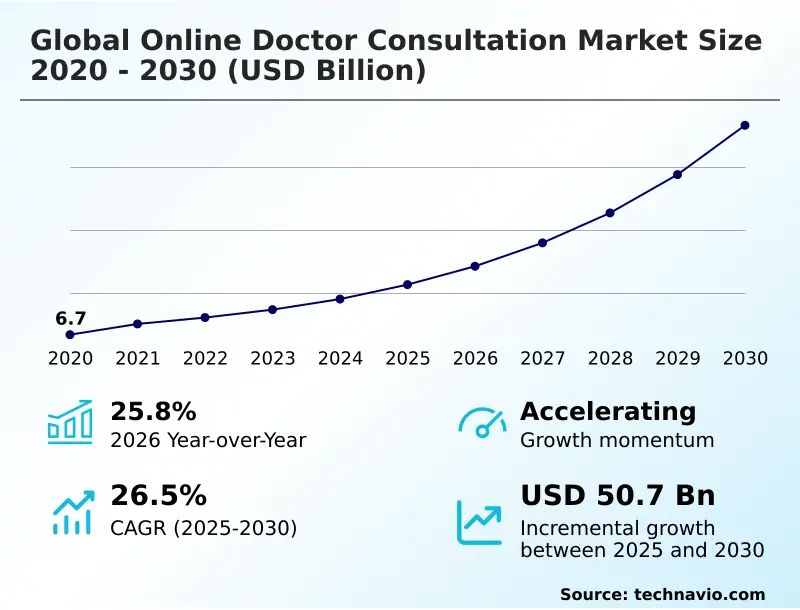
The online doctor consultation market, which depends heavily on video-based interactions, is expected to grow by USD 50.7 billion between 2026 and 2030. This growth reflects a projected CAGR of 26.5%. As a result, video consultation is becoming a core capability that enterprises must plan for strategically.
Encryption protects data in transit, but enterprise healthcare security depends on governance. Platforms must prove who accessed information, what actions were taken, and whether consent and policy rules were enforced. Without access control, audit trails, and ownership clarity, encryption alone does not satisfy regulatory or operational risk requirements.
Market Insights:
- AI-powered diagnostics and virtual assistants are accelerating telehealth adoption by improving triage, decision support, and care coordination. As a result, the healthcare AI market is projected to reach USD 148 billion by 2029, growing at a 40% CAGR.
- Remote patient monitoring through wearables is reducing avoidable hospital visits by enabling continuous tracking outside clinical settings. This approach supports better management of chronic conditions and aging populations.
- Video consultation platforms improve enterprise productivity by 15–30% by reducing travel time and enabling hybrid care models across clinical and operational teams.
- Remote patient monitoring programs deliver measurable ROI, including up to 22% improvement in outcomes for hypertension management and significant reductions in ongoing care costs.
- Telehealth adoption generates large-scale cost savings, with estimates pointing to up to USD 42 billion in annual savings across healthcare systems through reduced in-person visits and operational efficiencies.
Investing in video consultation platforms now allows enterprises to build future-ready healthcare systems without reacting under pressure later. Adoption is accelerating, expectations are rising, and regulatory scrutiny is increasing.
Therefore, early investment creates room for controlled scaling, stronger governance, and long-term returns. Enterprises that act now gain stability and growth. Those who wait risk higher costs and missed opportunities.
What Makes A Video Consultation App “Secure”?
A secure video consultation app protects patient data while remaining defensible under audits and incidents. It enforces encryption, least-privilege access, clinical safeguards, and continuous audit logging across every session. In regulated healthcare environments, security is defined by provable controls and traceability, not by encryption claims alone.
A secure video consultation app protects patient data, ensures clinical safety, and maintains audit-ready control across video sessions, users, and healthcare workflows.
In healthcare enterprises, security means the platform can withstand regulatory scrutiny, operational stress, and real-world failure scenarios. Therefore, security must be designed into the system from the beginning. It cannot be added later without risk.
At its core, a secure video consultation app functions as a regulated clinical infrastructure, not a communication tool.
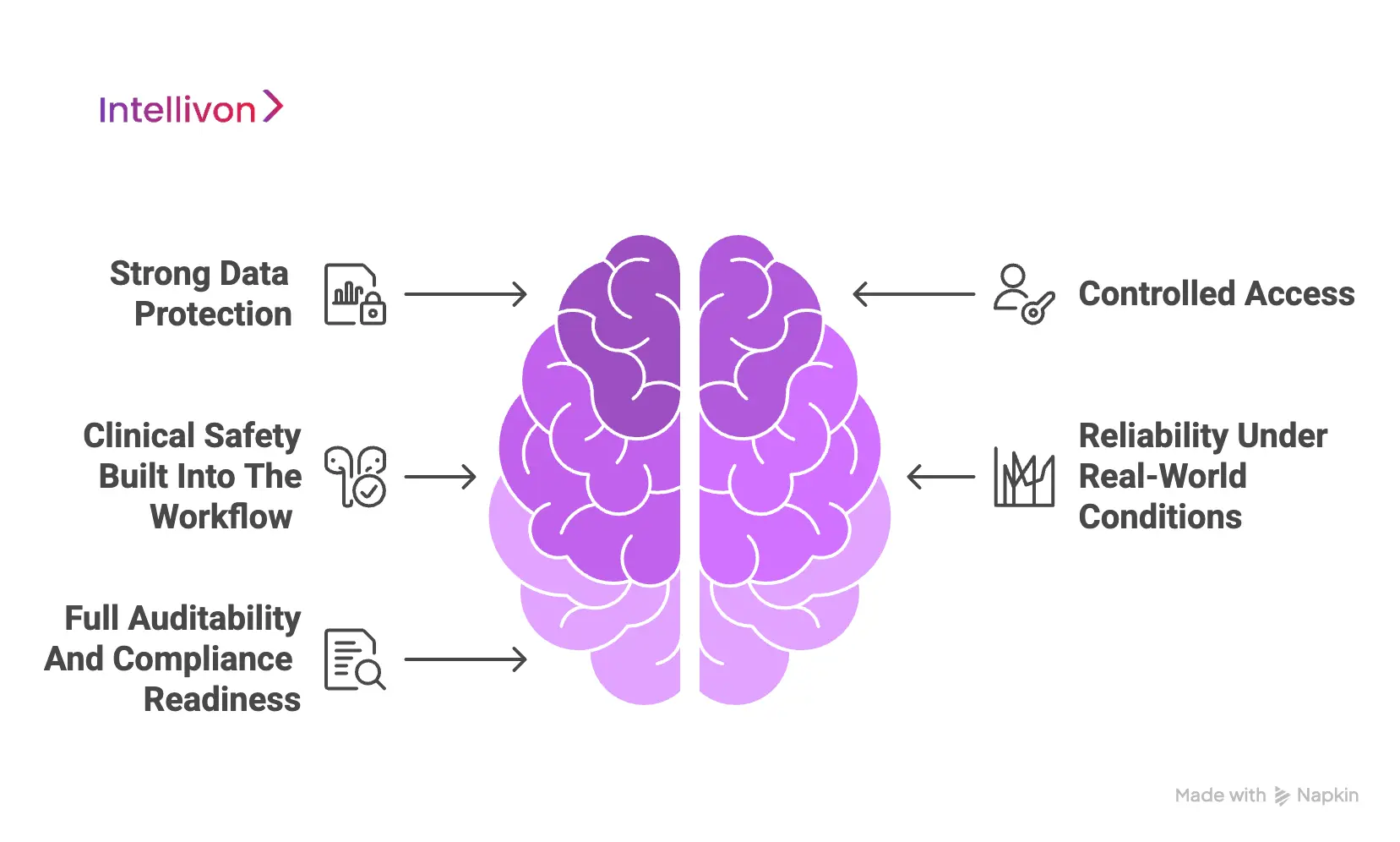
1. Strong Data Protection
Patient data moves constantly during video consultations. This includes video streams, clinical notes, attachments, and session metadata. Each interaction increases exposure if not handled carefully.
A secure platform encrypts data both in transit and at rest. In addition, it limits access strictly based on roles and responsibilities. As a result, only authorized users can view or act on sensitive information. This reduces the risk of data leaks, misuse, and accidental exposure.
2. Controlled Access
Not every user should see the same data or perform the same actions. Patients, clinicians, and administrators all require different levels of access.
Secure video consultation apps enforce role-based access control. They also support strong authentication methods, such as multi-factor verification for clinical and administrative users.
Because of this, the platform prevents unauthorized access even when credentials are compromised.
3. Clinical Safety Built Into the Workflow
A secure video consultation app supports safe care delivery through structured workflows. These include pre-visit intake, consent capture, documentation, and escalation paths when risk is detected.
Therefore, the platform helps clinicians make informed decisions instead of relying on incomplete or unverified information.
4. Reliability Under Real-World Conditions
Healthcare does not pause when networks fail. Video consultations must continue safely even when bandwidth drops or devices change.
Secure platforms are designed to handle disruptions gracefully. They preserve session context, protect data integrity, and allow care to continue through controlled fallbacks. As a result, patient safety is not compromised by technical instability.
5. Full Auditability and Compliance Readiness
Enterprises must prove what happened during a consultation, and not just assume it. A secure video consultation app maintains detailed audit logs. These logs track access, actions, and changes across users and sessions.
They are also exportable for internal reviews and external audits. This level of transparency supports compliance and reduces long-term regulatory risk.
A video consultation app becomes secure when enterprises can trust it under pressure. This trust comes from data protection, access control, clinical safeguards, reliability, and auditability working together. In healthcare, security defines whether digital care can truly endure.
80% US Patients Prefer Video Consultations in Telehealth
Video consultations introduce higher clinical and security expectations than audio-only care. Visual interaction increases session length, data volume, and contextual sensitivity. As video becomes the default for remote care, platforms must maintain security, documentation, and auditability even when network quality degrades or sessions are interrupted.
Recent large-scale data from the US Veterans Health Administration points to a meaningful shift in telehealth behavior. Among patients who received care exclusively through telehealth, nearly 80% relied on video consultations. Only 20% used phone-based care.
This pattern does not reflect casual user preference. Instead, it signals how patients respond when telehealth carries real clinical responsibility. Therefore, the data carries direct implications for how healthcare enterprises design, govern, and scale video consultation platforms.
1. Video Is Becoming the Default for Remote Care
When telehealth moves beyond convenience and into primary care delivery, expectations change. Patients increasingly choose video because it supports clearer clinical interaction. Visual context improves understanding, while face-to-face communication strengthens therapeutic confidence.
In addition, clinicians gain access to behavioral cues that audio alone cannot convey. This improves assessment quality and decision-making comfort. As a result, video shifts from an optional channel to the expected medium for sustained remote care.
This transition appears most clearly in mental and behavioral health settings. However, the same pattern is emerging across chronic care, follow-ups, and specialty consultations.
2. Phone-First Telehealth Has Structural Limits
Audio consultations still serve an important role in access and continuity. They work well for quick follow-ups or low-risk interactions. However, they struggle when care requires observation, contextual judgment, or patient engagement over time.
Because of these limits, phone-first models often act as temporary solutions. Over time, patients and providers gravitate toward formats that feel closer to in-person care.
Consequently, video becomes the preferred option once telehealth turns into a primary care channel. This shift is more functional than it is emotional.
3. Video Preference Raises the Bar for Platform Design
An 80% preference for video introduces new technical and operational demands. Video consultations must remain stable across varying network conditions. They must also support different devices and longer session durations without compromising care flow.
More importantly, platforms must preserve clinical continuity when conditions degrade. Documentation, consent capture, and audit trails cannot break when video quality drops. Therefore, platform design must account for failure scenarios, not ideal conditions.
This requirement places architectural pressure far beyond basic video streaming and demands healthcare-grade system thinking. Therefore, healthcare enterprises must treat video consultation platforms as core clinical infrastructure. The same rigor applied to electronic health records (EHRs) and identity systems must apply here as well.
Core Capabilities of Secure Video Consultation Platforms
Enterprise-ready video consultation platforms combine access control, encrypted communication, clinical workflows, consent management, audit trails, and governed integrations. These capabilities work together to maintain patient safety and regulatory compliance as usage scales. When any layer operates in isolation, security gaps emerge under audit pressure.
Secure video consultation platforms need strong access control, reliable video delivery, clinical workflows, auditability, integrations, and governance to operate safely at enterprise scale.
Secure video consultation platforms must support real clinical work under regulatory and operational pressure. Therefore, enterprises assess these platforms based on stability, control, and long-term reliability.
The following capabilities define whether a platform is enterprise-ready or risky to scale:
1. Role-Based Access and Identity Control
Every user should only see what they are allowed to see. Patients, clinicians, and administrators all have different responsibilities. A secure platform reflects these differences clearly.
Role-based access control ensures that users cannot access data outside their scope. In addition, strong authentication protects accounts from misuse. This becomes critical as teams grow and responsibilities overlap.
Without clear identity control, even well-designed platforms expose sensitive data. Therefore, access management forms the foundation of security.
2. Secure and Reliable Video Infrastructure
Video consultations must work in real conditions, and not just ideal ones. Network quality varies across locations and devices. A secure video consultation app accounts for this reality.
Encrypted video protects conversations from interception. At the same time, adaptive streaming keeps sessions stable during bandwidth drops. When disruptions occur, sessions should recover without losing context.
Because care depends on continuity, reliability matters as much as security.
3. Clinical Workflow and Documentation Support
Video consultations are not isolated events. They sit within a broader care journey. Therefore, platforms must support the full clinical flow.
This includes structured intake, guided documentation, and clear follow-up steps. Clinicians should not rely on memory or external tools during care delivery. Everything must be available within the platform.
When workflows are clear, clinical risk decreases, and care quality improves.
4. Consent Management and Patient Verification
Healthcare requires clear consent at every stage. Patients must understand how their data is used and stored. Platforms must capture this consent reliably.
A video consultation app records consent at the right moments. It also verifies patient identity when required by regulation or policy. This reduces disputes and protects both patients and providers.
Without proper consent handling, platforms face legal and compliance risk.
5. Audit Trails and Compliance Reporting
Enterprises must be able to explain what happened during a consultation. This includes who accessed data, what actions were taken, and when changes occurred.
Audit trails provide this visibility. They record system activity in a clear and structured way. These records support internal reviews and external audits.
As a result, compliance becomes manageable rather than disruptive.
6. Integration With Enterprise Healthcare Systems
Video consultation platforms cannot operate in isolation. They must connect with existing systems across the organization. This includes electronic health records, scheduling tools, and identity systems.
Secure integrations allow data to move safely across workflows. They also reduce manual effort and duplication. Clinicians gain context without switching platforms.
Therefore, integration readiness is essential for operational efficiency.
7. Scalability and Governance Controls
As adoption grows, control becomes more important. Platforms must scale without losing oversight. This is where governance plays a key role.
Enterprise-grade platforms support multi-region use, policy enforcement, and administrative monitoring. Leaders can see how the platform is used and where risks emerge.
Because of this, growth remains controlled and predictable.
Secure video consultation platforms succeed when control and usability work together. These seven capabilities create a stable foundation for clinical care at scale. In healthcare, strong capabilities determine whether digital care can last.
Advanced AI-Powered Features Of Secure Video Consultation Apps
Advanced AI features in a secure video consultation app help enterprises improve triage accuracy, clinician efficiency, care continuity, and operational control without replacing human judgment.
When applied correctly, AI strengthens care delivery while keeping governance and accountability intact.
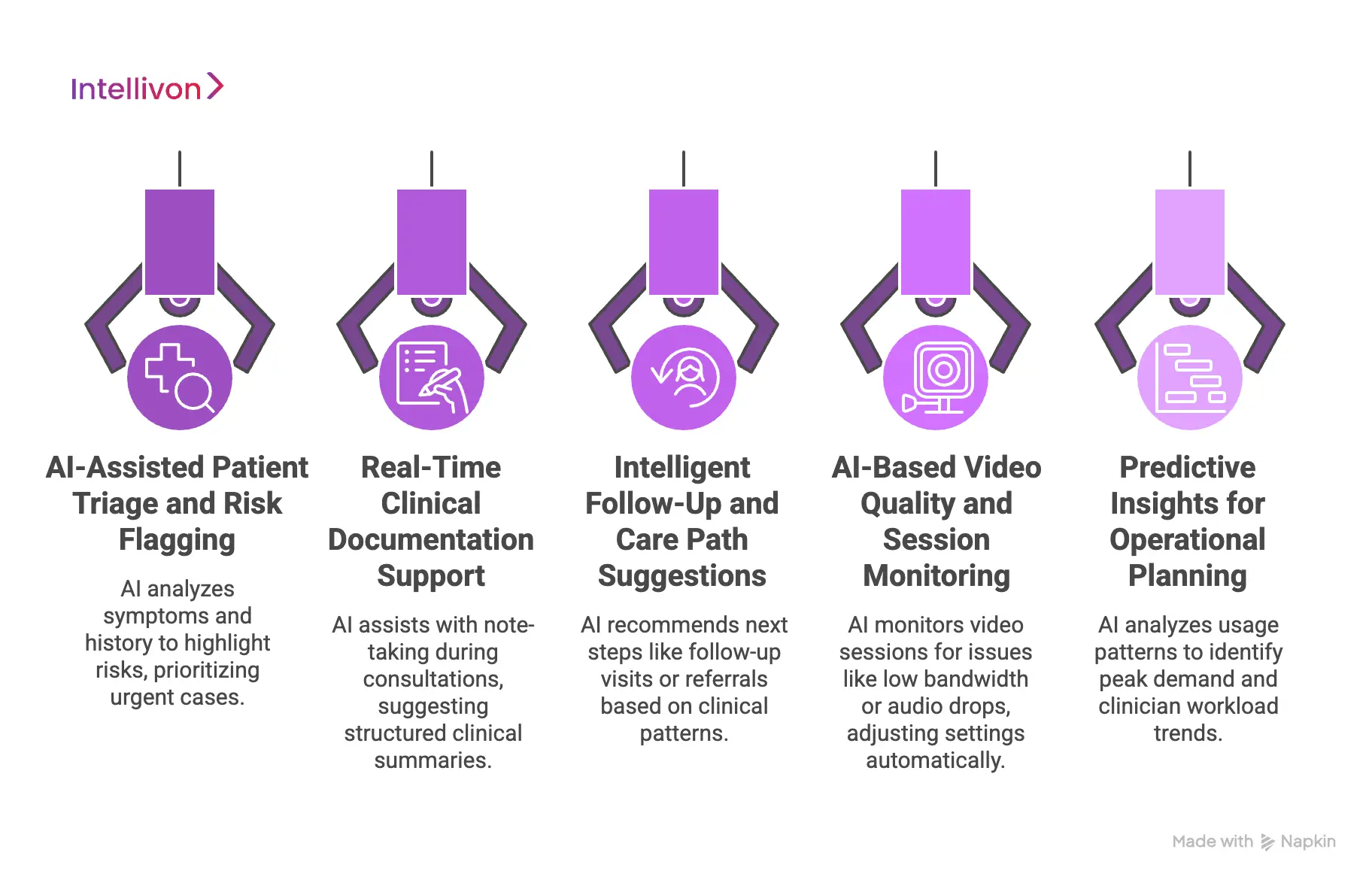
1. AI-Assisted Patient Triage and Risk Flagging
Before a consultation begins, AI can help analyze patient-reported symptoms and history. This allows the platform to highlight potential risks early. Clinicians receive structured insights instead of raw information.
As a result, urgent cases are prioritized correctly. Low-risk cases move through faster. This improves both patient safety and clinician efficiency. Importantly, final decisions remain with the clinician.
2. Real-Time Clinical Documentation Support
During a video consultation, AI can assist with note-taking. It listens to the interaction and suggests structured clinical summaries. Clinicians review and edit these notes before saving them.
This reduces documentation time after visits. It also improves consistency across records. As a result, clinicians spend more time with patients. The platform remains accurate and audit-ready.
3. Intelligent Follow-Up and Care Path Suggestions
After a consultation, AI can recommend next steps based on clinical patterns. These may include follow-up visits, referrals, or patient education resources. Suggestions appear within the workflow.
This helps clinicians avoid missed actions. It also improves continuity of care. Patients receive clearer guidance after each visit. However, recommendations remain optional and reviewable.
4. AI-Based Video Quality and Session Monitoring
AI can monitor video sessions in real time. It detects issues such as low bandwidth, audio drops, or session instability. The system can then adjust settings automatically.
This improves session reliability without manual intervention. Clinicians stay focused on care instead of troubleshooting, and patients experience fewer disruptions. As a result, overall consultation quality improves.
5. Predictive Insights for Operational Planning
At an enterprise level, AI can analyze usage patterns across the video consultation app. It identifies peak demand, clinician workload trends, and common drop-off points. Leaders gain clearer visibility.
These insights support better staffing and scheduling decisions. They also help identify process gaps early. Over time, operations become more predictable. This turns the platform into a strategic planning asset.
Advanced AI features add real value when they support human judgment. A secure video consultation app becomes more effective when AI is applied carefully. The goal is better care, delivered with confidence and control.
Architecture That Makes A Video Consultation App Secure
A secure video consultation app relies on a layered architecture that separates identity, video delivery, clinical workflows, data governance, and integrations to reduce risk and support scale.
Each layer protects a different aspect of care delivery. When stress appears in one area, other layers continue to maintain control. This approach reduces cascading failures and long-term risk.
1. Identity and Access Layer
This layer determines who can access the video consultation app. It manages identities for patients, clinicians, and administrators. Each role is clearly defined from the beginning.
Access rules control what users can see and do. These rules apply across sessions, records, and administrative functions. As a result, sensitive data is not exposed unnecessarily.
Strong authentication adds another layer of protection. Session timeouts and access limits reduce misuse. Because healthcare data is highly sensitive, this layer forms the foundation of platform security.
2. Secure Video and Communication Layer
The communication layer manages live video and audio interactions. It ensures conversations remain private throughout the consultation. Encryption protects data while it is transmitted.
Network conditions often vary across regions and devices. Therefore, the system adapts video quality without ending the session. This maintains continuity of care. When disruptions occur, the platform recovers safely. Session context remains intact. As a result, clinicians can focus on care instead of technical issues.
3. Clinical Workflow and Application Layer
This layer supports how care is delivered during a consultation. It handles intake, consent, documentation, and follow-up actions. Clinicians interact with this layer continuously.
Workflows are structured and predictable. Information appears at the right time. This reduces reliance on memory and external systems.
Because workflows guide clinical decisions, consistency matters. This layer helps reduce errors. It also supports better clinical outcomes over time.
4. Data Management and Security Layer
All patient and operational data flows through this layer. It controls how data is stored, accessed, and retained. Encryption protects data when it is not in use. Policies define where data resides and how long it is kept. Access is logged automatically. This supports transparency and accountability.
When questions arise, records can be reviewed quickly. Therefore, enterprises maintain control over sensitive information at all times.
5. Governance, Audit, and Compliance Layer
This layer provides oversight across the entire video consultation app. It records activity across users, sessions, and workflows. Leaders gain visibility into platform usage. Audit logs support compliance reviews and investigations. Reports can be generated without interrupting care delivery. This reduces operational friction.
Because governance is continuous, not reactive, risks are identified earlier. Over time, compliance becomes predictable and manageable.
6. Integration and Interoperability Layer
A video consultation app must work with existing healthcare systems. This layer connects the platform to electronic health records, scheduling tools, and identity services.
Integrations follow defined rules and permissions. Data flows securely between systems. Uncontrolled sharing is prevented. Clinicians gain context without switching platforms. As a result, workflows remain efficient and connected across the enterprise.
A secure video consultation app depends on clear architectural separation. Each layer protects a specific part of care delivery and data handling.
How We Develop Secure Video Consultation Apps
Secure video consultation apps are developed through an architecture-first, compliance-led approach that prioritizes clinical safety, data protection, and enterprise scalability.
At Intellivon, secure video consultation apps are developed as long-term healthcare platforms. The focus stays on reducing enterprise risk while enabling growth. Therefore, delivery follows a structured, step-by-step approach rather than rapid feature assembly.
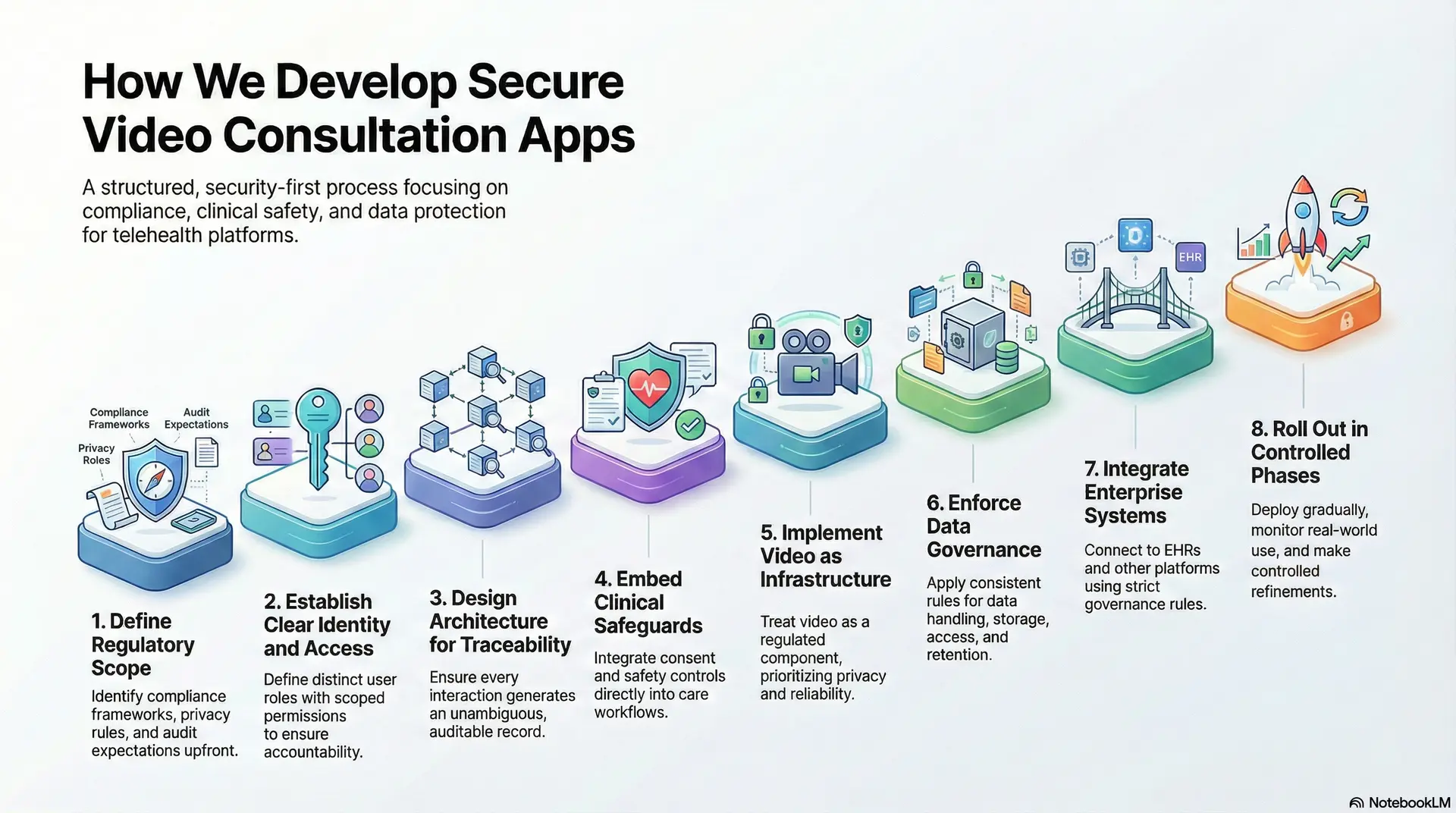
Step 1: Define regulatory scope
Development begins by identifying the regulatory frameworks the video consultation app must comply with across regions and care models. At the same time, privacy obligations, data residency rules, consent requirements, and clinical accountability standards are clarified upfront.
Equally important, audit expectations are defined early. Additionally, teams align on what evidence must exist, which actions must be traceable, and how historical activity should be reconstructed during reviews. This clarity guides all downstream decisions.
By setting expectations early, security and compliance become measurable rather than abstract.
Step 2: Establish a Clear Identity and Access
Many audit findings stem from unclear ownership and excessive access. A secure video consultation app addresses this by defining identity and access boundaries before workflows are finalized.
Patients, clinicians, administrators, and external partners are treated as distinct trust groups. Here, each role has clearly scoped permissions tied to responsibility. Actions within the system are attributable to specific users.
This structure prevents over-privileged access and ensures accountability remains clear as usage grows.
Step 3: Design Architecture Around Traceability
Architecture decisions are shaped by what regulators and auditors examine most closely. Data flows, control points, and system boundaries are designed to be visible and explainable.
Every interaction generates an auditable record. Here, access, changes, and clinical actions can be traced without ambiguity. This allows issues to be investigated based on facts rather than assumptions. As a result, audits focus on verification instead of forensic reconstruction.
Step 4: Embed Clinical Safeguards
Consent and clinical controls are embedded directly into care workflows rather than handled as separate steps. Patients are informed at the right moments, and consent is recorded as part of the care journey.
Clinical workflows are structured to support safe decision-making. Intake, documentation, and escalation paths are clearly defined. High-risk scenarios are accounted for in advance. This reduces clinical ambiguity and protects both providers and the organization during reviews.
Step 5: Implement Video as Infrastructure
Video is implemented as a regulated component of care delivery rather than a communication feature. Privacy, reliability, and session control take precedence over visual enhancements.
The system adapts to network variability while preserving clinical context. Here, session recovery is handled in a controlled manner. At the same time, data integrity is maintained even during disruptions.
This approach ensures continuity of care and prevents gaps that often surface during investigations.
Step 6: Enforce Data Governance
Data handling rules are applied consistently across storage, access, and retention. Every interaction is logged automatically, creating a complete activity record.
Governance tools provide visibility into platform usage and access patterns. Consequently, irregular activity can be identified early. At the same time, evidence remains readily available.
This turns audits into routine processes rather than disruptive events.
Step 7: Integrate Enterprise Systems
Integration with electronic health records, scheduling systems, and identity platforms follows strict governance rules. Data moves only where permitted and for defined purposes.
Permissions are enforced consistently across systems. At the same time, uncontrolled data sharing is avoided, and clinical context remains intact across encounters. This reduces hidden exposure created by poorly governed integrations.
Step 8: Roll out in controlled phases with ongoing oversight
Deployment follows a phased approach rather than a single release. Early usage is monitored closely for compliance, security, and workflow issues.
Feedback from real-world use informs controlled refinements. Here, changes are introduced without disrupting care delivery. At the same time, the documentation evolves alongside the platform. This ensures the video consultation app matures safely as adoption increases.
They are built through disciplined decisions that prioritize audit defensibility, clinical safety, and long-term control. When developed with this approach, platforms scale with confidence rather than accumulating hidden risk.
Cost Of Building A Secure Video Consultation App
At Intellivon, secure video consultation apps are built as a regulated healthcare infrastructure, not as lightweight communication tools adapted for clinical use. Cost planning is anchored in compliance exposure, audit defensibility, and long-term operational reliability, rather than feature volume or speed to launch.
Investment decisions focus on ensuring that video consultations remain secure, traceable, and clinically reliable as usage scales. Budgets are structured to support real-world conditions such as variable networks, cross-region compliance, and sustained clinical workloads, not short-term pilots or demo deployments.
When budget constraints exist, scope is refined deliberately and collaboratively. However, security controls, auditability, and clinical safety are never compromised. This approach helps enterprises avoid hidden remediation costs later. Predictability replaces rework.
Estimated Phase-Wise Cost Breakdown
| Phase | Description | Estimated Cost Range (USD) |
| Discovery & Compliance Alignment | Use case definition, care context mapping, regulatory scope, risk assessment, and KPI alignment | $6,000 – $12,000 |
| Secure Architecture Design | Video architecture, identity and access design, data flow mapping, resilience planning | $8,000 – $15,000 |
| Clinical Workflow & Governance Design | Intake logic, consent workflows, escalation rules, and role-based accountability | $7,000 – $14,000 |
| Backend & Enterprise Integrations | EHRs, scheduling systems, identity providers, labs, or payer systems | $13,000 – $24,000 |
| Frontend & Role-Based Interfaces | Patient, clinician, and admin interfaces with accessibility and security controls | $10,000 – $18,000 |
| AI & Automation Layer | Intake assistance, risk flagging, documentation support, alerts, and monitoring logic | $9,000 – $17,000 |
| Security & Privacy Engineering | Encryption, access control, audit trails, monitoring, zero-trust enforcement | $9,000 – $16,000 |
| Testing & Compliance Validation | Workflow testing, security testing, compliance checks, and audit readiness | $6,000 – $11,000 |
| Deployment & Scale Readiness | Cloud deployment, observability, performance tuning, and failover planning | $7,000 – $13,000 |
Total initial investment: $75,000 – $160,000
Ongoing maintenance and optimization: 15–20% of the initial build per year
Hidden Costs Enterprises Should Plan For
Even well-scoped video consultation programs experience pressure when indirect cost drivers are overlooked. Planning for these early protects budgets, timelines, and audit posture as adoption grows.
- Integration complexity increases with fragmented EHRs, identity systems, and third-party services
- Compliance overhead grows due to audits, reporting requirements, and evolving healthcare regulations
- Data governance requires continuous validation, consent enforcement, and access reviews
- Cloud costs rise with real-time video, routing logic, monitoring, and analytics workloads
- Change management includes clinician onboarding, adoption support, and workflow training
- Continuous monitoring and optimization remain necessary as volume, risk, and regulatory scrutiny increase
Best Practices to Avoid Budget Overruns
Based on Intellivon’s experience delivering enterprise healthcare platforms, these practices consistently lead to controlled costs and defensible growth.
- Start with a focused consultation scope before expanding specialties or regions
- Embed compliance and security rules directly into architecture and workflows
- Use modular components that can be reused across programs and populations
- Balance real-time video with asynchronous workflows to manage infrastructure spend
- Maintain continuous observability across performance, security, and compliance
- Plan for regulatory evolution rather than one-time certification milestones
Request a tailored proposal from Intellivon’s healthcare team to receive a delivery roadmap aligned with your budget constraints, compliance requirements, and long-term video consultation strategy.
Overcoming Common Mistakes When Building Video Consultation Apps
Building a video consultation app in healthcare requires more than technical execution. It demands early attention to clinical responsibility, regulatory scrutiny, and long-term operational risk.
Many enterprise failures emerge from early decisions that seem reasonable during pilots but later break under audits, incidents, or scale, making remediation costly and disruptive.
Mistake 1: Treating video as a standalone feature
Many teams begin by focusing on video quality and interface experience. Video is implemented as a communication layer, separate from clinical workflows and governance. Consent capture, documentation, and escalation steps are handled outside the session itself.
Over time, this creates fragmented care records that are difficult to reconcile. Clinical decisions become harder to trace back to specific consultations. During audits, teams struggle to demonstrate how video interactions support safe care delivery.
This issue is overcome when the video is embedded directly within governed clinical workflows. Sessions are connected to intake, consent, documentation, and follow-up in a single flow. As a result, consultations remain traceable, auditable, and aligned with clinical standards as usage grows.
Mistake 2: Addressing security and compliance too late
Security is often treated as a final checklist rather than a design principle. Teams rely on default platform protections or certifications and assume compliance will hold. In practice, gaps usually appear only when audits or security reviews begin.
Access rules feel inconsistent across roles and environments. At the same time, audit logs lack continuity across actions and sessions. Fixing these issues after launch increases both cost and operational risk.
Our experts avoid this mistake by embedding security and compliance into the system from the beginning. Access control, consent enforcement, and auditability shape platform behavior early. Therefore, controls do not need to be retrofitted under pressure later.
Mistake 3: Designing for ideal network and usage conditions
Many video consultation apps are tested under stable conditions. Reliable connectivity, short sessions, and modern devices are assumed during development. As a result, failure scenarios receive limited attention.
In real deployments, bandwidth fluctuates across locations and devices. At the same time, sessions drop unexpectedly during care delivery. When this happens, clinical context is often lost, and patient trust suffers.
This problem is prevented by designing for real-world variability. Sessions are able to recover safely. At the same time, context is preserved across interruptions. Additionally, care continues even when video quality temporarily degrades.
Mistake 4: Building for a single region or regulation
Some platforms are designed around the rules of one market. Data residency, consent logic, and audit requirements are hardcoded early. While this works initially, it limits future growth. Expansion into new regions requires significant redesign. Compliance risk increases as regulations diverge. Enterprises then face delays and unplanned costs during rollout.
We avoid this mistake by building governance and compliance layers that are configurable. Regional requirements can evolve without structural rework. As a result, expansion remains controlled rather than reactive.
Mistake 5: Lacking clear ownership and governance
Unclear ownership creates hidden risk across video consultation platforms. When issues arise, responsibility is difficult to assign quickly. Decisions slow down during incidents and audits. Access exceptions accumulate quietly over time. At the same time, governance becomes informal and inconsistent. As a result, risk compounds without visibility.
This issue is addressed by establishing clear ownership models early. Role definitions, permission boundaries, and escalation paths are explicit. Therefore, accountability remains intact as usage and complexity grow.
Enterprises that succeed in fixing these mistakes invest in structure early and design for audits, failures, and scale from day one. When this disciplined approach is followed, platforms grow with confidence rather than accumulating hidden risk. This is the approach applied across enterprise healthcare engagements at Intellivon.
Conclusion
Building a secure video consultation app is a long-term decision, not a short-term technical project. The real challenge lies in designing for audits, clinical accountability, and scale from the very beginning. Enterprises that treat video consultations as a regulated care infrastructure avoid costly rework later. They gain predictability, trust, and operational control as adoption grows.
When security, governance, and workflows are embedded early, video consultation becomes a growth enabler rather than a risk surface. This disciplined approach allows healthcare organizations to expand digital care confidently while protecting patients, clinicians, and the enterprise itself.
Build a Secure Video Consultation App With Intellivon
At Intellivon, video consultation apps are built as a regulated healthcare infrastructure, not as surface-level video tools. Architecture and delivery decisions are shaped by audit defensibility, clinical accountability, and long-term operational control. This ensures platforms remain stable under real regulatory and clinical pressure, not just during initial rollout.
As video consultation programs scale across regions, specialties, and care models, governance and performance remain predictable. Security controls, workflows, and compliance mechanisms continue to hold as volume and scrutiny increase. Organizations expand digital care without introducing hidden risk or operational fragmentation.
Why Partner With Intellivon?
- Enterprise-grade video consultation architecture designed for regulated healthcare environments
- Proven experience delivering platforms that withstand audits, scale, and clinical scrutiny
- Compliance-by-design approach with built-in consent management and audit readiness
- Secure role-based access control with full session and action traceability
- AI-assisted workflows designed with mandatory human oversight and accountability
- Modular, cloud-native infrastructure enabling phased rollout and controlled expansion
Book a strategy call to explore how Intellivon can help you build a secure video consultation app that scales with confidence while remaining compliant, auditable, and clinically reliable.
FAQs
Q1. What makes a video consultation app secure in healthcare?
A1. A secure video consultation app protects patient data, supports clinical safety, and remains audit-ready at scale. It includes strong access control, encrypted video, consent management, and detailed audit logs. More importantly, these controls are built into workflows, not added later. This ensures the platform holds up during audits and real clinical use.
Q2. How much does it cost to build a secure video consultation app?
A2. The cost depends on compliance scope, integrations, and long-term scalability requirements. Enterprise-grade platforms typically range from mid-five figures to low six figures for initial development. Ongoing costs include maintenance, monitoring, and regulatory updates. Investing early in security and governance reduces expensive rework later.
Q3. How long does it take to develop a video consultation app for enterprises?
A3. Most secure video consultation apps take several months to build, depending on complexity. Discovery, compliance alignment, and architecture design often take as long as development itself. Faster builds usually increase audit and security risk. A phased rollout helps balance speed with stability.
Q4. Can video consultation apps meet HIPAA and other healthcare regulations?
A4. Yes, but only when compliance is designed into the platform from the start. This includes consent workflows, access control, audit trails, and data residency rules. Relying on video APIs alone is not sufficient. Enterprises must ensure the full system supports regulatory evidence and accountability.
Q5. Why do video consultation apps fail during audits or scale?
A5. Failures usually come from early shortcuts rather than technical limits. Common causes include poor audit logging, unclear ownership, fragmented workflows, and late security additions. These issues stay hidden during pilots but surface under scrutiny. Building with a compliance-first approach prevents these failures.

