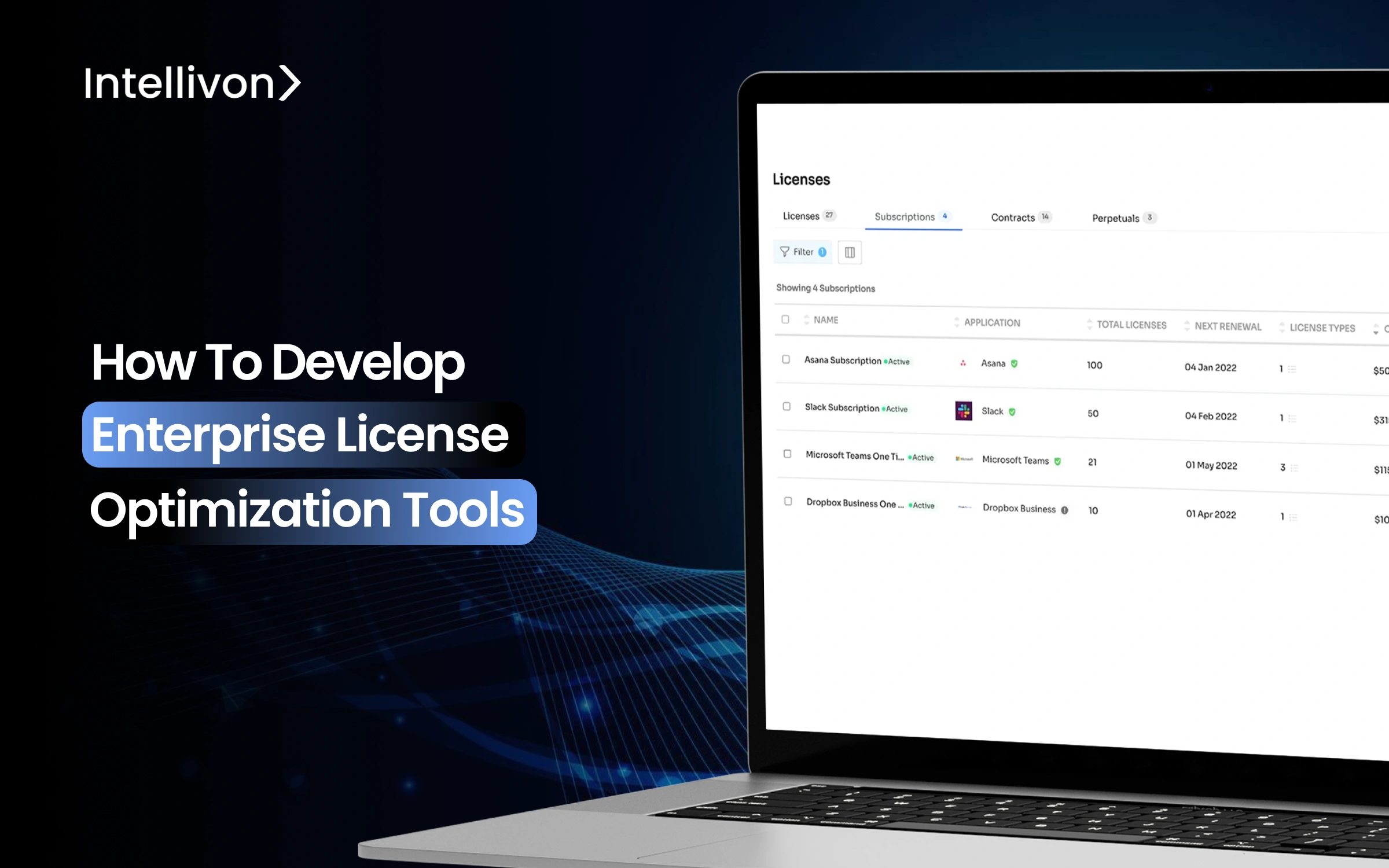
In enterprises with multiple SaaS subscriptions, most licenses sit unused, and teams continue to request more seats. Nobody knows which tools overlap or who still needs access after role changes. Due to this uninformed guesswork, enterprises waste an average of 30% of their SaaS spend on unused licenses, redundant tools, and mismatched tiers. This is where license optimization tools prove their worth. They reveal who uses which apps and at what cost, flagging idle seats, redundant tools, and oversize tiers. They also automate reclaim, steer renewals with real usage, and enforce terms so you only pay for SaaS licenses that give proven value.
At Intellivon, we build enterprise license optimization tools for large organizations facing these challenges. Clients see double-digit savings in the first quarter, audit-ready compliance, faster renewals, and far fewer IT tickets. In this blog, we outline what these tools include, where they deliver impact, and how we develop them from the ground up.
What Are Enterprise SaaS License Optimization Tools?
Enterprises rely on hundreds of SaaS applications, but many licenses go unused or are misaligned with actual needs. Over time, this creates rising costs, overlapping tools, and compliance risks. Enterprise SaaS license optimization tools give leaders visibility and control, ensuring every license delivers measurable value. They:
1. Track Usage
These platforms integrate with identity systems and app APIs to reveal who uses which tools, how often, and to what extent. For instance, a report might show that hundreds of paid Zoom seats never hosted a meeting.
2. Spot Waste
Clear usage data quickly highlights idle seats, redundant apps, and oversize tiers. A typical example is discovering two departments paying for different project tools with nearly identical features, while one is barely used.
3. Recommend Changes
Beyond reporting, the system guides action. It might recommend downgrading underused Salesforce Enterprise licenses or reallocating Microsoft 365 seats to new hires, always with quantified savings.
4. Automate Savings
Automation makes optimization continuous. Policies reclaim inactive licenses, push renewal alerts with usage data attached, and enforce compliance rules to avoid penalties.
These tools transform license management from manual guesswork into a data-driven process. The result is lower spend, stronger compliance, and smoother operations, which are all critical for enterprises balancing cost control with digital growth.
Key Takeaways Of The Software Licensing Management Market
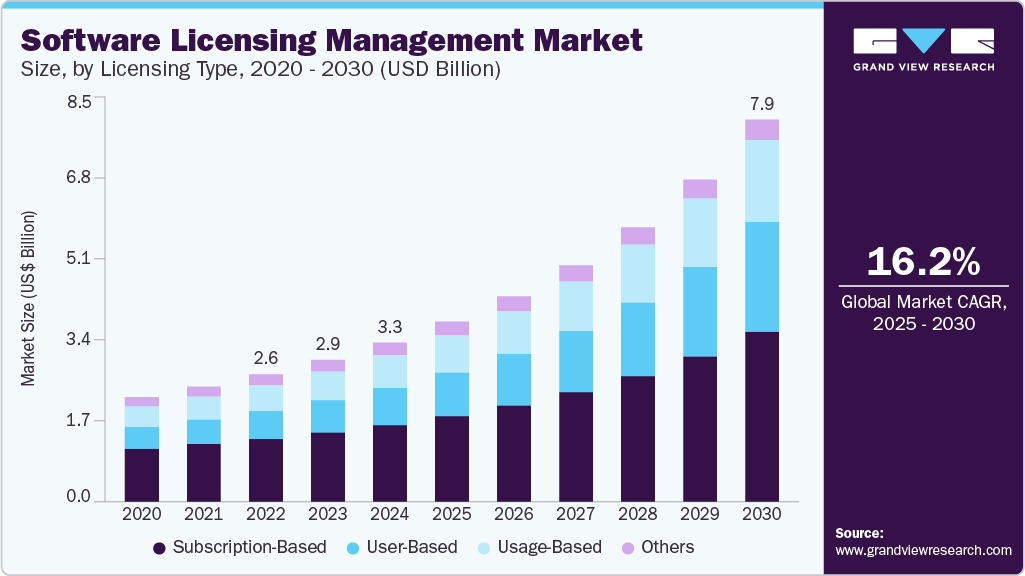
The global software licensing management market is valued at about USD 3.3 billion in 2024 and is expected to nearly double to USD 7.9 billion by 2030. This growth, at a strong 16.2% CAGR from 2025 to 2030, reflects rising enterprise demand for better license control and cost optimization.
Key Takeaways:
- Market Growth: Driven by digital transformation and SaaS adoption across North America, Europe, and fast-growing APAC, with cloud deployments making up 55% of new implementations in 2025.
- Enterprise SaaS Proliferation: Enterprises manage an average of 275 SaaS apps, yet 49% of licenses sit idle monthly, wasting 55% of total software inventory, costing large firms $127.3 million annually.
- SaaS Spend Outlook: Gartner projects global SaaS spend at $299B in 2025, with SaaS powering 85% of all business software by year-end.
- Predictive Cost Analytics: AI/ML forecast license needs, mitigate spikes, and enable just-in-time provisioning, supporting zero-trust and cutting costs by 20–30%.
- Automated Vendor Negotiation: Platforms use real-time usage and pricing data to negotiate contracts and optimize renewal timing for better discounts.
- Compliance Automation: AI automates compliance and audit readiness; healthcare leads the market, driving 46% of license management spending.
- Shadow IT & Visibility: 33% of SaaS apps arise from shadow IT, demanding centralized, automated license tracking and optimization.
- Outcome Metrics: Without modern tools, enterprises waste 30% of total software budgets, and only 38% feel confident in usage tracking, showing a clear need for AI-driven analytics.
Why Enterprises Struggle Without License Optimization Tools
Managing SaaS at scale is harder than most leaders expect. Enterprises adopt hundreds of apps across departments, but without centralized oversight, visibility quickly disappears. Here are a few reasons why enterprises struggle without license optimization tools:
1. Manual Tracking Falls Short
Spreadsheets cannot keep pace with dynamic SaaS environments. License counts change weekly as employees join, leave, or shift roles. Contracts auto-renew in the background, and leaders often realize too late that they are paying for more than they need.
2. Shadow IT Creates Blind Spots
Roughly a third of enterprise SaaS spending comes from shadow IT, which refers to apps purchased outside of official channels. These hidden tools inflate costs, duplicate existing capabilities, and increase compliance risk. Without visibility, enterprises cannot enforce governance or negotiate enterprise-wide contracts.
3. Missed Renewals Drain Budgets
With hundreds of contracts renewing at different times, many organizations still rely on email reminders or manual calendars. Auto-renewals slip through, locking in excess seats or higher costs. This lack of renewal control leaves millions on the table each year.
4. Audits Amplify Risk
Vendors run frequent audits now, but without accurate license data, enterprises face the risk of non-compliance penalties and reputational damage. Even when compliant, the effort to prove it drains IT and finance resources.
5. Strategic Blind Spots
CFOs cannot forecast SaaS spend reliably without usage analytics, making budget planning reactive instead of proactive. CIOs and CTOs deal with redundant tools, fragmented adoption, and bloated stacks that slow digital transformation.
Without license optimization tools, enterprises pay more, operate with less clarity, and expose themselves to higher compliance risks. Optimization now is about protecting budgets and enabling confident decision-making.
How Enterprises Use License Optimization Tools
Enterprises turn to license optimization tools to bring clarity to their SaaS portfolios and transform waste into measurable value. These platforms deliver specific, actionable outcomes across the business, which are functions that go beyond tracking.
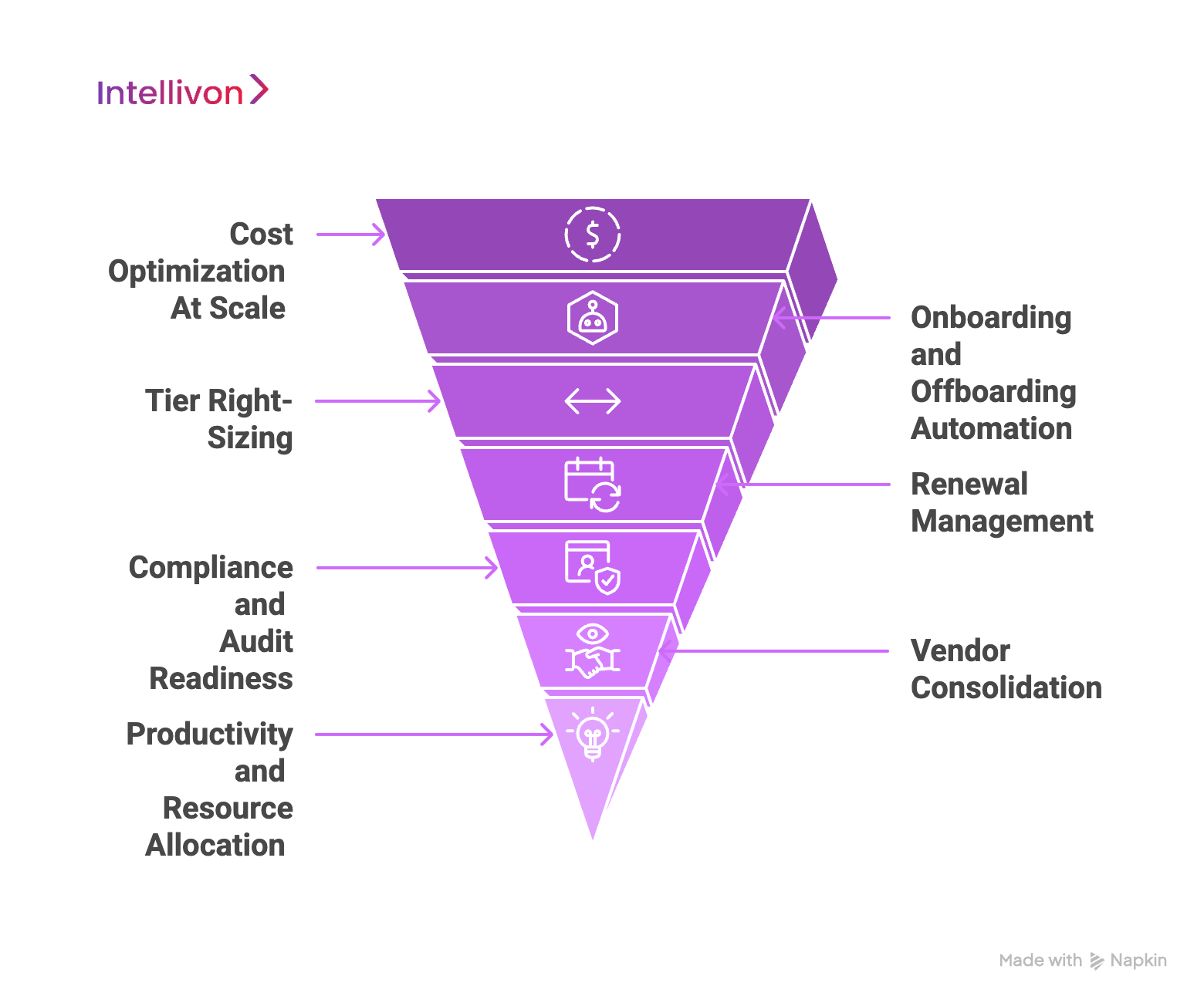
1. Cost Optimization at Scale
These tools expose spending leaks by revealing idle seats, redundant apps, and premium tiers used by only a few. Leaders cut this waste quickly and redirect the budget to software that drives impact. Most organizations see savings in the first renewal cycle.
2. Onboarding and Offboarding Automation
New employees receive the right apps on day one, while departing staff have seats reclaimed automatically. By syncing with HR and identity systems, access stays aligned with roles. Ghost licenses vanish, and IT handles fewer tickets.
3. Tier Right-Sizing
Feature-level insights show who truly needs advanced editions. Light users can be shifted to standard tiers with no productivity loss. At the same time, leaders can approve downgrades in bulk or set policies that trigger automatically.
4. Renewal Management
Renewal calendars combine contracts, usage data, and pricing history. The platform recommends seat cuts or consolidation well before deadlines. Negotiations become fact-based, discounts improve, and long-term commitments shrink.
5. Compliance and Audit Readiness
Usage is continuously checked against license terms. Alerts trigger before thresholds are breached, and audit-ready evidence can be exported on demand. Compliance becomes routine instead of a scramble.
6. Vendor Consolidation
Category-level views highlight overlapping tools across departments. Leaders standardize on fewer platforms, retire duplicates, and simplify security reviews. Fewer contracts mean stronger negotiation power and lower overhead.
7. Productivity and Resource Allocation
Dashboards display adoption by team and tool. Underperforming apps can be supported with training, right-sized, or retired. Budgets shift toward recognizing the value and use of software employees, raising satisfaction and reducing distractions.
License optimization tools turn scattered usage data into clear actions. Enterprises lower costs, strengthen compliance, and gain leverage in renewals, while ensuring teams keep the tools that truly deliver outcomes.
Key Features Every Enterprise License Optimization Tool Should Have
Enterprises need tools that can scale, automate, and guide decisions across a complex SaaS landscape. The right platform combines intelligence with automation, helping leaders cut waste while maintaining compliance and operational continuity. Below are the core features that make these tools effective.
1. Centralized SaaS Inventory
A single dashboard gives a consolidated view of every SaaS application, license, and cost. Leaders no longer chase multiple spreadsheets or vendor portals. This “single source of truth” allows finance, procurement, and IT to make decisions using the same verified data.
2. User and Feature Usage Analytics
Usage tracking shows which employees log in, how often, and what features they use. With this clarity, organizations can identify underutilized seats or accounts that haven’t been touched in months. It stops guesswork and replaces it with evidence.
3. Automated Waste Detection
Automated detection flags idle licenses, redundant apps, and mismatched tiers. Instead of uncovering waste after renewals, leaders see it in real time. This helps reduce unnecessary spending before it becomes a line item on the budget.
4. Cost-Saving Recommendations Engine
Dashboards propose solutions and do not just show problems. The system recommends downgrades, reallocations, or cancellations and attaches projected savings. This turns analytics into actionable decisions, supported by hard numbers.
5. Automate License Management
Policies handle repetitive tasks. For example, if a user is inactive for 60 days, their license is reclaimed automatically. This keeps SaaS portfolios optimized without constant manual intervention from IT.
6. Renewal Lifecycle Management
A built-in calendar with alerts prevents auto-renewals from slipping through. Leaders get time to review contracts, cut excess seats, and negotiate better terms based on actual usage data.
7. Compliance Monitoring and Audit Logs
Tools continuously monitor usage against vendor agreements and regulatory requirements. With exportable logs and audit trails, enterprises are always prepared for vendor checks or compliance reviews.
8. Vendor Portfolio Management
Category-level views highlight overlapping tools across departments. Consolidating contracts simplifies security, improves standardization, and increases bargaining power. Procurement teams gain leverage in every negotiation.
9. Track ROI and Showback
Finance dashboards link spend to departments and measure ROI per application. Leaders can see where budgets go, which apps deliver value, and where costs spiral. This accountability helps drive better adoption and resource allocation.
10. Enterprise-Grade Security and Scalability
Enterprise-grade resilience, encryption, and access controls ensure the platform can handle millions of events without compromising data. Security and privacy are embedded, so leaders trust the tool as much as the outcomes it delivers.
Enterprises thrive when license optimization moves from reactive tracking to proactive governance. These features form the foundation of strategic tools that reduce costs, enforce compliance, and scale with business growth.
How We Build Scalable Enterprise License Optimization Tools
Enterprises need a platform that scales with growth, adapts to new tools, and enforces governance without slowing innovation. At Intellivon, we approach license optimization as a long-term architecture, not a point solution. The way these tools are built determines whether they deliver real impact or fade into shelfware themselves.
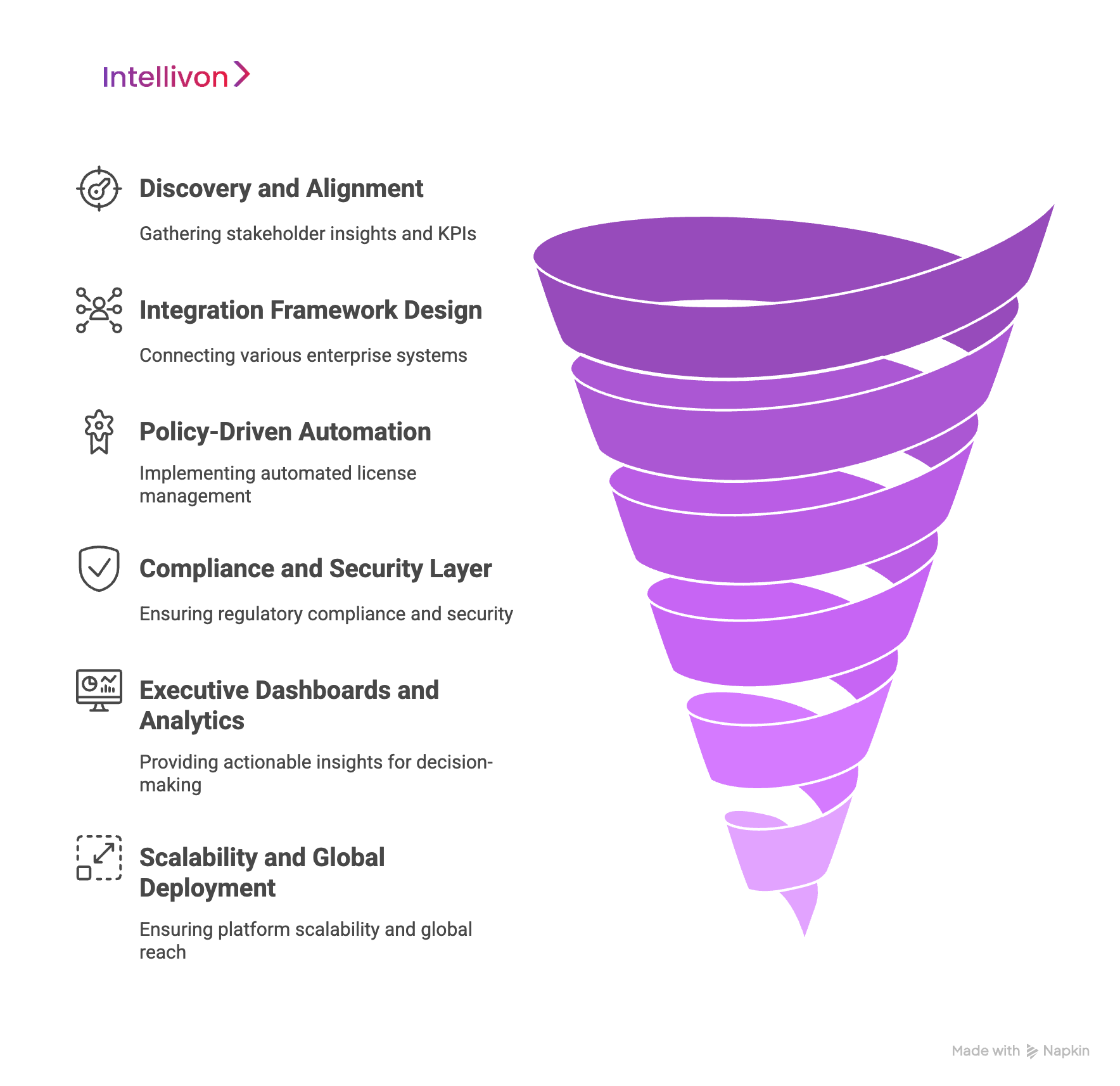
1. Discovery and Alignment
We begin with stakeholder workshops, requirement gathering, and KPI mapping. The focus is on understanding existing SaaS usage, compliance obligations, and business objectives. This ensures the platform is tailored to enterprise realities rather than generic templates.
2. Integration Framework Design
Next, we design the integration layer. Connectors are built for SaaS APIs, single sign-on (SSO), HR systems, finance platforms, and procurement tools. This guarantees real-time data flow, accurate entitlements, and a single source of truth for every department.
3. Policy-Driven Automation
Once data flows are stable, we embed automation engines. Enterprises can set rules like “Reclaim licenses after 45 days of inactivity” or “Downgrade premium accounts after 60 days without advanced feature use.” These policies run continuously, removing manual overhead and locking in ongoing savings.
4. Compliance and Security Layer
We then build compliance modules aligned with regulations such as HIPAA, GDPR, SOX, and PCI. Every license action is logged with full audit trails, and encryption, role-based access, and data residency controls are implemented. This reduces audit risk and strengthens trust.
5. Executive Dashboards and Analytics
Data is translated into role-specific dashboards. Finance leaders see budget vs. spend, procurement gets negotiation leverage, and IT gains real-time visibility. Instead of raw data, executives receive actionable insights and forecasts to guide decisions.
6. Scalability and Global Deployment
Finally, we design for scale. The platform is tested to handle millions of license events daily, across regions and business units. Localization, geo-specific compliance, and enterprise-grade uptime are built in to support global rollouts.
Building enterprise license optimization tools is a structured process, from discovery and integration through automation, compliance, dashboards, and scale. At Intellivon, this process ensures clients not only cut waste immediately but also gain a platform that matures with their SaaS landscape.
Cost of Developing an Enterprise License Optimization Tool
At Intellivon, we understand that enterprises need license optimization platforms that are both secure and cost-effective. That’s why our pricing model is flexible and aligned with your requirements, not a one-size-fits-all package.
If costs risk exceeding your planned budget, we work with you to refine the scope while protecting the core value of cost savings, compliance, and operational efficiency.
Estimated Phase-Wise Cost Breakdown
| Phase | Description | Estimated Cost Range (USD) |
| Discovery & Strategy Alignment | Requirement gathering, stakeholder interviews, KPI mapping, compliance readiness (SOX, GDPR, HIPAA, ISO) | $6,000 – $10,000 |
| Architecture & Data Design | Platform blueprint, data pipelines, SaaS API mapping, HR/Finance/SSO interoperability planning | $8,000 – $14,000 |
| Core Feature Development & Integration | Usage tracking, waste detection, recommendation engine, policy automation, system connectors | $12,000 – $20,000 |
| Platform Development & Customization | Dashboards, renewal calendars, vendor management modules, cost allocation views | $14,000 – $22,000 |
| Security & Compliance Alignment | Encryption, role-based access, audit trails, compliance validation (GDPR, HIPAA, SOX) | $6,000 – $12,000 |
| Testing & Validation | Accuracy checks, policy simulations, audit readiness tests, performance tuning | $6,000 – $12,000 |
| Deployment & Scaling | Cloud rollout, regional data residency setup, enterprise-wide integration, and monitoring dashboards | $5,000 – $10,000 |
Total Initial Investment Range: $50,000 – $100,000
Ongoing Optimization (Annual): $5,000 – $12,000
Factors That Influence Cost
- Integration Depth: Number and complexity of SaaS APIs, HR systems, finance tools, and procurement platforms.
- Feature Scope: From basic dashboards and reporting to advanced recommendation engines and policy-driven automation.
- Regulatory Requirements: Coverage for GDPR, HIPAA, SOX, and jurisdiction-specific data residency obligations.
- Deployment Model: Choice between cloud-native, hybrid, or on-premises, depending on enterprise security posture.
- Customization Needs: Modular platform with pre-built features vs. bespoke workflows for global business units.
- Advanced Capabilities: Predictive analytics, AI-driven negotiation support, multi-language dashboards, and global-scale reporting.
Request a tailored quote from Intellivon today, and we’ll design an enterprise license optimization platform that aligns with your budget, enforces compliance, and scales with your organization’s growth.
Challenges Enterprises Face in Deploying License Optimization Tools
License optimization may sound straightforward, but in practice, enterprises run into hurdles that go far beyond dashboards or reports. Systems are fragmented, renewal cycles chaotic, and stakeholders often reluctant to change. Unless these realities are addressed, even the most advanced tool risks underperforming. At Intellivon, we’ve guided large organizations through these roadblocks, turning challenges into opportunities for stronger governance and faster savings.
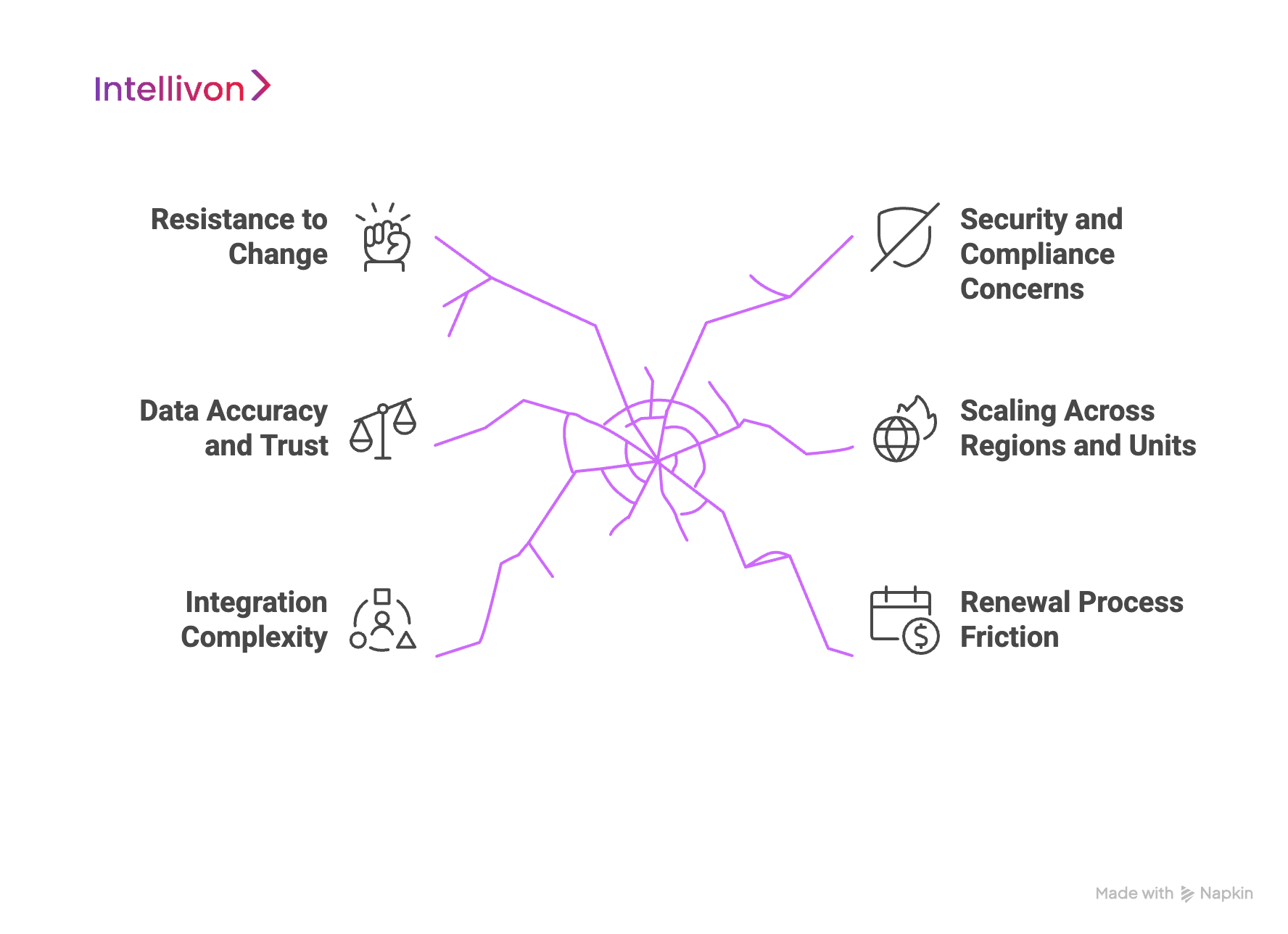
1. Integration Complexity
Most enterprises don’t have a single source of truth for SaaS usage. HR platforms manage joiners and leavers, finance systems track spend, identity providers monitor logins, and each vendor maintains its own portal. Stitching this into one coherent picture is technically challenging and time-consuming. Without it, usage data is incomplete, and optimization recommendations cannot be trusted.
We address this by building a connector framework that standardizes and normalizes data across sources. Our process begins small, focusing first on high-cost applications like Microsoft 365, Salesforce, or Zoom, before expanding to the long tail of departmental tools. This staged rollout ensures quick wins while laying the foundation for enterprise-wide integration.
2. Data Accuracy and Trust
Executives will not act on insights unless the numbers are credible. In many organizations, different teams arrive at different license counts depending on whether they pull from spreadsheets, vendor portals, or finance reports. This lack of alignment erodes trust and stalls action.
Our approach is to use multi-signal validation. We cross-check SSO activity logs, direct SaaS API data, and financial records. Every data point is time-stamped and reconciled, creating a transparent trail that finance, IT, and procurement can all stand behind. When leaders know the data is accurate, they move faster on recommendations.
3. Resistance to Change
Cost optimization often runs into pushback from business units. Teams fear that losing a license will hurt productivity or that retiring a familiar tool will slow delivery. IT worries about automation acting too aggressively, stripping access from users who still need it.
To overcome this, we build explainable recommendations into the platform. Every downgrade, reassignment, or cancellation comes with evidence and projected savings. Leaders see not just what the system suggests, but why. We also use phased automation, like piloting policies with small groups, gathering feedback, and expanding gradually. This balance between control and automation helps overcome resistance while maintaining trust.
4. Security and Compliance Concerns
Enterprises handle sensitive data every day, including employee identities, contract terms, financial details, and sometimes regulated health or customer data. Any optimization platform that touches these systems must raise the bar for security, not lower it. Without strong safeguards, the solution risks introducing new vulnerabilities.
We embed security and compliance by design. That means end-to-end encryption, strict access controls, audit logs, and compliance validation against frameworks like GDPR, HIPAA, and SOX. Data is minimized, segregated by business unit or geography, and residency requirements are respected. This allows enterprises to optimize costs without creating new regulatory headaches.
5. Scaling Across Regions and Units
Global enterprises operate across multiple geographies, languages, and regulatory frameworks. A one-size-fits-all platform cannot handle this complexity. For example, European operations must enforce GDPR rules that don’t apply in the U.S., while APAC regions may demand localization and data residency. Without flexibility, scaling optimization creates more friction than value.
Our solution is to design policy scoping from the ground up. Enterprises can apply different rules by department, geography, or business unit. Localization, multi-currency reporting, and geo-specific compliance checks are built in. This makes scaling smooth, even for enterprises managing thousands of apps across dozens of countries.
6. Renewal Process Friction
Renewal cycles are one of the biggest drains on enterprise budgets. With hundreds of contracts spread across departments, it’s easy for auto-renewals to slip through unnoticed. Procurement teams often lack the usage data they need to negotiate better terms, leaving millions locked into excess seats or inflated pricing.
We solve this with renewal playbooks built into the platform. These include 120/90/60/30-day alerts, recommended seat cuts, and consolidated vendor overviews. Procurement enters every negotiation with usage evidence and cost projections, not estimates. The result is stronger discounts, reduced commitments, and no more surprises from auto-renewals.
Deploying license optimization tools is not without challenges. Integrating data, building trust, managing change, ensuring compliance, scaling globally, controlling renewals, and aligning stakeholders all take deliberate strategy. At Intellivon, we design platforms with these hurdles in mind, turning them into accelerators rather than roadblocks. The result is adoption that sticks, savings that compound, and governance that strengthens over time.
Examples of the Leading Enterprises Using These Tools
Enterprises across industries are already proving the impact of license optimization. While each organization’s SaaS stack is different, the challenges are remarkably similar, which include unused seats, shadow IT, duplicate tools, and spiraling renewals. Below are real-world examples of global companies that have implemented these platforms and the results they achieved.
1. Adobe
Adobe introduced an enterprise-wide SaaS management program to gain visibility across its sprawling software estate. Within the first year, the initiative delivered over $60 million in savings and cost avoidance by reclaiming unused licenses and consolidating overlapping tools. The program became a model of how optimization can be tied directly to measurable financial outcomes.
2. Uber
Managing over a thousand SaaS applications globally, Uber faced the problem of renewals slipping through without centralized oversight. By deploying an optimization platform, the company gained portfolio-wide visibility and used real-time usage data to renegotiate vendor contracts. The result was more controlled renewals and a stronger negotiating position with suppliers.
3. Gainsight
With hundreds of renewals each year, Gainsight needed to standardize its process and reduce manual tracking. The company streamlined renewal workflows with license optimization, saving millions across contracts. Usage-based insights allowed leaders to right-size agreements well ahead of deadlines.
4. Front
The collaboration platform Front adopted license optimization to reduce overlapping tools and underused seats. Within the first year, it saved thousands of dollars, proving how quickly optimization can generate value when applied consistently.
These examples show that license optimization is no longer experimental. Enterprises in technology, finance, healthcare, and beyond are already capturing savings, reducing risk, and gaining leverage in negotiations.
Conclusion
SaaS has transformed how enterprises operate, but without active governance, it creates waste, compliance gaps, and missed opportunities.
License optimization tools bring order to this complexity by combining usage visibility, automation, and compliance monitoring into a single, enterprise-grade platform. The result is measurable, with lower costs, stronger negotiating leverage, faster renewals, and a leaner software stack that teams actually value.
Build Your Enterprise License Optimization Platform with Intellivon
At Intellivon, we design enterprise-grade license optimization platforms that are secure, compliant, and tailored to how global organizations operate. Our approach combines deep SaaS integration, policy-driven automation, and scalable architecture to help you cut waste, enforce compliance, and maximize ROI without slowing innovation.
Why Partner With Intellivon?
- Tailored Solutions: We align every platform with your enterprise’s unique SaaS stack, governance needs, and business priorities.
- Compliance-First Design: Built to meet GDPR, HIPAA, SOX, and global audit standards from day one.
- Proven Enterprise Expertise: Our platforms deliver measurable cost savings, renewal leverage, and stronger IT governance across industries.
- Scalable Architecture: Cloud-native, API-driven, and integration-ready with HR, finance, procurement, and identity systems.
Book a discovery call with Intellivon today. Let’s build a license optimization platform that reduces waste, strengthens compliance, and positions your enterprise for cost discipline and digital resilience.
FAQs
Q1. What’s the difference between license management and license optimization?
A1. License management tracks who owns which licenses and ensures compliance. License optimization goes further and analyzes actual usage, reclaims idle seats, suggests downgrades, and automates renewals. It’s about reducing waste and maximizing value, not just keeping records.
Q2. How much can enterprises realistically save?
A2. Most large enterprises see 20–30% savings on their SaaS budgets within the first year. In some cases, especially with heavy redundancy or idle seats, savings reach into the millions.
Q3. Can these tools integrate with existing HR and finance systems?
A3. Yes. Enterprise-grade platforms integrate with HR platforms for onboarding/offboarding, finance systems for spend tracking, and identity providers for real-time usage validation. Integration is the foundation for accuracy.
Q4. How do these tools help during audits?
A4. Every license action is logged with audit trails, making compliance reporting exportable on demand. This reduces the stress of vendor or regulatory audits and helps avoid penalties.
Q5. Does automation risk removing licenses employees actually need?
A5. No. Policies can be configured with grace periods, manager approvals, and usage thresholds. Enterprises typically start with semi-automated workflows before scaling to full automation, ensuring that optimization never disrupts productivity.