Key Takeaways:
-
Mental health apps have outgrown meditation and mood tracking and have moved to developing products which enhance the ways in which patients are assessed, supported, referred, and followed up on over time.
-
It usually costs between $70,000 and $300,000 to develop a serious mental health app, and the expenses go up if the product has clinical workflows, links to an EHR, uses data from wearables, includes regulated features, or offers more advanced personalization.
-
Healthcare companies ought to develop features that deal with a specific business or care issue: it is more important to achieve better outcomes, reduce waiting times, increase patient engagement, lower the workload on clinicians, and demonstrate value to payers or employers than it is to add features merely for the sake of novelty.
-
Privacy and compliance should influence the product from the very start; depending on the specific use case, teams will need to take into account HIPAA, the FTC HBNR, 42 CFR Part 2, FDA requirements, consent rules, and FHIR-based data exchange before the product is launched.
-
Intellivon collaborates with healthcare businesses in order to turn those ideas into practical mental health products, incorporating the appropriate clinical workflows, integrations, security controls, and technical foundation right from the beginning.
Mental health apps in 2026 are pulling AI out of the chatbot box and putting it to work somewhere less flashy, inside the therapy session itself. A handful of platforms now transcribe and structure what’s said in a session the same way ambient scribes have been doing for physicians for years, catching mood shifts and risk language without anyone typing a note. It’s AI quietly rewriting how care already gets documented.
Wearables are following a similar path, but from the outside in. Heart rate variability, sleep patterns, even how someone’s voice sounds can now feed into models that catch a decline before the person says anything’s wrong. None of it means much, though, without clinical proof and FDA clearance behind it, and that’s exactly where a lot of these tools are still stuck.
This post gets into the trends actually worth watching in 2026, including ambient documentation, digital therapeutics, workplace platforms, and health equity design. Along with this, we will also cover how we build such apps from the ground up.
How Enterprise Mental Health Apps Are Being Built Differently in 2026
Enterprise mental health products are moving beyond isolated wellness apps. Instead, many are becoming connected systems that support assessment, navigation, therapy, clinician workflows, and long-term behavioral care.
Therefore, healthcare leaders need to decide how deeply the product will participate in care before defining features. That choice affects architecture, integrations, compliance, clinical validation, and the overall investment required.
1. Mental Health Apps Are Taking on Clearer Roles in Care
The first change is functional. A mental health app may now act as a wellness tool, care-navigation layer, therapy platform, clinician support system, or condition-specific treatment product.
For example, an employer platform may guide users toward therapy and benefits. By contrast, a behavioral health provider may need assessments, treatment plans, clinician dashboards, medication workflows, and crisis escalation.
As a result, the product’s role should be defined before development begins. Otherwise, teams often add features that increase cost without improving the care pathway.
2. Clinical Data Is Replacing Basic Engagement Metrics
Mental health platforms increasingly rely on more than logins, session length, and content completion. Instead, enterprise products may work with PHQ-9 scores, GAD-7 results, medication history, therapy progress, referral data, sleep patterns, or wearable signals.
Consequently, these apps need stronger data structures and governance. Consent management, audit trails, role-based access, and clear data-retention rules become part of the core product.
Moreover, clinical data makes outcome measurement possible. Providers and payers can track whether engagement actually translates into symptom improvement, adherence, or better access to care.
3. Interoperability Is Becoming Part of the Core Product
Enterprise buyers increasingly expect mental health software to work inside existing healthcare systems. Therefore, integration is moving from a later-stage enhancement to an early architecture decision.
A health system may need the product to exchange data with Epic or Oracle Health. Similarly, an employer platform may need connections with benefits systems, provider networks, pharmacy services, or claims infrastructure.
For this reason, FHIR APIs, identity management, secure data exchange, and consent-aware interoperability should be planned from the beginning. A disconnected mental health app may still work for consumers, but it is much harder to scale across enterprise care environments.
4. Clinical Responsibility Now Shapes the Regulatory Path
The regulatory burden changes according to what the product claims to do. For instance, software designed for relaxation or journaling carries a very different risk profile from an app that claims to treat depression or influence clinical decisions.
Therefore, healthcare companies may need to consider HIPAA, FTC Health Breach Notification Rule requirements, 42 CFR Part 2, FDA SaMD rules, and clinical validation. The exact requirements depend on the product’s data, users, claims, and place in the care workflow.
In addition, AI features create another governance layer. Risk detection, automated recommendations, and treatment support require clear human oversight, model monitoring, and escalation rules.
5. Enterprise Buyers Are Looking for Outcomes, Not Feature Volume
The strongest mental health products are increasingly judged by what they improve. As a result, feature count matters less than measurable impact.
Providers may look at symptom improvement, clinician capacity, no-show rates, or referral completion. Meanwhile, payers and employers may focus on utilization, access, claims costs, absenteeism, and time to care.
Therefore, product roadmaps should begin with a measurable outcome and then work backward to the required features. This approach also makes it easier to prove ROI once the platform reaches enterprise buyers.
Ultimately, enterprise mental health app development in 2026 starts with one decision: what role should the product play in the care journey? Once that is clear, the right architecture, compliance model, integrations, AI capabilities, and development budget become much easier to define.
Why the $9.4B Mental Health App Market Is Shifting to Enterprise
The digital behavioral health market is pivoting from direct-to-consumer models to enterprise distribution because consumer acquisition costs are no longer financially viable. Healthcare payers, self-insured employers, and health systems now demand clinically validated platforms that integrate into established workflows.
Consequently, sustainable growth in 2026 relies on enterprise payer contracts, value-based reimbursement, and verifiable outcomes rather than volatile app-store subscriptions.
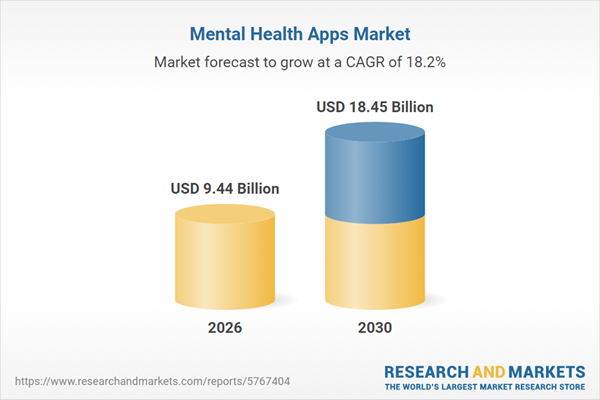
Industry analysis from Research and Markets indicates that the mental health apps 2026 market has expanded to $9.44 billion. Furthermore, projections indicate a steady 18.2% CAGR through 2030, driven primarily by enterprise adoption and digital health investments.
1. The Shift from DTC Acquisition to B2B2C Distribution
High consumer churn and mounting marketing expenses have forced digital health leaders to restructure their distribution models. Therefore, B2B2C channels now provide a more predictable revenue structure:
- Lower Acquisition Costs: Enterprise distribution channels remove reliance on expensive consumer ad campaigns.
- Higher Engagement Rates: Because employers sponsor these digital platforms, workforce participation remains consistently high over time.
- Predictable Cash Flow: As a result, multi-year enterprise contracts replace the financial volatility of individual consumer subscriptions.
2. Payer Contracts and Clinical Care Pathway Integration
Simultaneously, health plans and hospital networks favor digital platforms that comply with CMS reimbursement guidelines and open interoperability protocols such as HL7 FHIR standards.
- Reimbursable Digital Care: Clinicians can bill dedicated CPT codes for digital behavioral health and remote therapeutic monitoring.
- Coordinated Interoperability: Patient mood and biometric data sync directly to EHR systems for continuous provider oversight.
- Measurable ROI: In addition, enterprise buyers require standardized PHQ-9 and GAD-7 clinical validation before finalizing vendor contracts.
Ultimately, the attractive investment is no longer simply “another mental health app.” It is an app that owns a measurable part of the care pathway.
12 Mental Health App Trends Enterprise Leaders Should Invest in 2026
Enterprise buyers are deploying behavioral health platforms that deliver verifiable clinical utility, hard ROI, and compliance-ready architectures. Consequently, digital health leaders are shifting capital away from unvalidated wellness tools toward infrastructure-grade clinical solutions.
The following twelve trends define where enterprise healthcare organizations are directing their technology investments in 2026.
1. Purpose-Built Mental Health AI Is Replacing Generic Chatbots
Generic large language model wrappers are giving way to domain-specific architectures built with strict clinical guardrails. Instead of open-ended conversational bots, modern platforms deploy fine-tuned psychiatric models coupled with validated therapeutic logic, longitudinal context, risk classifiers, and deterministic policy engines.
For instance, Spring Health launched Guide in April 2026, an AI-led clinical navigation engine that drives faster symptom improvement for high-need members. Talkspace is similarly integrating a specialized mental health AI agent designed with continuous human oversight.
Clinical trial data confirms this shift. A 2025 NEJM AI randomized controlled trial of Dartmouth’s Therabot demonstrated that fine-tuned generative AI delivered statistically significant reductions in depression (PHQ-9) and anxiety (GAD).
2. AI Therapist Copilots Are Moving Into Clinical Workflows
Provider burnout and administrative friction have driven behavioral health organizations to adopt ambient AI documentation assistants. These copilots capture ambient session audio, generate structured SOAP, DAP, or BIRP notes, extract key clinical interventions, and prepare billing-ready summaries.
Platforms like Upheal reduce provider documentation time by roughly 14 minutes per clinical session. Similarly, Eleos Health has shown that ambient clinical intelligence substantially reduces manual EHR data entry while auditing documentation for payer compliance.
3. Adaptive Mental Health Apps Are Moving Beyond Personalization
Standard personalization merely curates static wellness content, but enterprise behavioral health demands adaptive clinical intervention. True adaptive care dynamically modulates the intensity and modality of therapeutic delivery based on active diagnostic scores (PHQ-9, GAD-7), real-time engagement patterns, and clinician inputs.
This measurement-based loop continuously adjusts cognitive behavioral therapy (CBT) modules, micro-interventions, and provider touchpoints based on measured symptom trajectory. Therefore, patients receive escalating clinical support exactly when objective scores indicate treatment stagnation.
4. Wearables Are Becoming a Continuous Mental Health Signal Layer
Wearable biometric streams are no longer used for standalone consumer tracking; instead, they serve as a passive, continuous physiological signal layer for clinical care teams. Continuous monitoring of heart rate variability (HRV), resting heart rate, respiration, sleep fragmentation, and digital phenotyping creates real-time risk markers.
These objective biomarkers provide clinicians with contextual telemetry between appointments without attempting to generate unvalidated diagnostic labels.
5. Crisis Detection Is Becoming Core Mental Health App Architecture
Automated crisis detection is a baseline prerequisite for enterprise procurement, liability mitigation, and clinical safety. Modern architectures continuously analyze user inputs via natural language processing (NLP) to detect self-harm markers, escalating depression scores (such as PHQ-9 Item 9), and acute psychological distress.
The American Psychological Association (APA) explicitly warns against using unconstrained generative AI as a substitute for psychotherapy, emphasizing mandatory clinician safeguards. Consequently, enterprise apps must support automated safety planning and jurisdiction-aware routing to emergency resources like the 988 Suicide & Crisis Lifeline.
6. Digital Therapeutics Are Becoming Reimbursable Mental Health Care
Digital therapeutics (DTx) have evolved from standalone wellness apps into FDA-cleared Software as a Medical Device (SaMD) assets backed by standardized reimbursement pathways.
Platforms like Rejoyn illustrate the clinical validation required to achieve Class II medical device clearance. Crucially, the Centers for Medicare & Medicaid Services (CMS) established dedicated payment codes, like HCPCS G0552, G0553, and G0554, for qualifying Digital Mental Health Treatment (DMHT) devices. This framework allows provider networks to capture predictable monthly revenue for remote therapeutic management.
7. Behavioral Health FHIR Is Moving Apps Into the Clinical Record
Enterprise health systems increasingly reject siloed digital tools, requiring bidirectional interoperability with core EHR platforms such as Epic and Oracle Health. In February 2026, the Assistant Secretary for Technology Policy and ONC launched nationwide pilots across 45 exchange partners to operationalize USCDI+ Behavioral Health and FHIR Behavioral Health Profiles.
These standards enable digital health applications to read and write medication adherence, standardized assessment scores, encounter notes, and 42 CFR Part 2-protected substance use disorder records directly within native provider workflows.
8. Hybrid Care Is Replacing Standalone Teletherapy Applications
Standalone teletherapy video apps are being replaced by multimodal hybrid care platforms. In 2026, leading platforms combine AI-led intake, asynchronous clinician messaging, digital therapeutic exercises, and scheduled teletherapy into a unified continuum.
Integrated care networks triage patients rapidly through intelligent routing engines, directing individuals to coaching, therapy, or psychiatric medication management based on clinical severity. This hybrid delivery model maximizes clinician capacity while eliminating treatment drop-off between visits.
9. Employer Mental Health Apps Are Competing on Measurable ROI
Self-insured employers and enterprise benefits leaders require hard financial and clinical metrics before signing multi-year contracts. Modern enterprise mental health platforms must prove reductions in medical claims, emergency room utilization, disability leaves, and workplace absenteeism.
Independently validated research from Spring Health demonstrates a 1.9× ROI, translating to roughly $190 in net healthcare cost savings per $100 invested, alongside a 52% reduction in overall mental health claims costs. Platforms that provide performance-backed outcome guarantees consistently win enterprise contracts.
10. Vertical Mental Health Apps Are Replacing One-Size-Fits-All Care
Enterprise buyers are moving away from broad, generic platforms in favor of vertical solutions tailored to specific populations and clinical conditions. High-value growth verticals include:
- Specialized Populations: Pediatric and adolescent care, maternal/perinatal health, and geriatric mental health.
- Complex Conditions: Neurodivergence (ADHD/autism spectrum), obsessive-compulsive disorder (OCD), eating disorders, and trauma/PTSD.
- Substance Use: Specialized addiction recovery and 42 CFR Part 2-compliant digital interventions.
Specialized workflows and targeted assessment engines create defensible commercial moats that generic wellness solutions cannot replicate.
11. Privacy-First Mental Health AI Is Becoming a Product Advantage
Because behavioral health applications process highly sensitive personal data, privacy-by-design has transitioned from a compliance checkbox into a primary commercial differentiator. Furthermore, the Federal Trade Commission (FTC) Health Breach Notification Rule penalizes unauthorized disclosures of health data by non-HIPAA consumer apps.
Enterprise-grade architectures require:
- Zero-Retention Inference: Large language models process prompts ephemerally without retaining sensitive user conversations for model training.
- Cryptographic Isolation: End-to-end encryption for all stored clinical notes and patient logs.
- Strict Governance: Signed Business Associate Agreements (BAAs), automated audit trails, and role-based access control (RBAC).
12. Multilingual Mental Health Apps Are Becoming Enterprise Products
Global employers and public health systems require mental health platforms that deliver culturally competent, multilingual care rather than simple text translation. True enterprise localization demands culturally adapted therapeutic exercises, regional crisis center integration, and dialect-aware NLP models.
Solutions like Eleos Health support clinical documentation across more than 150 languages. Additionally, the APA’s Digital Badge evaluation framework actively scores platforms on accessibility, language usability, and cultural fairness.
Intellivon deploys localized conversational AI architectures and multilingual NLP pipelines that adapt clinical frameworks across diverse cultural and linguistic groups.
Which Mental Health App Trends Fit Each Healthcare Business Model?
Healthcare organizations need to match digital mental health investments with their business model, patient population, and existing workflows. The most important mental health app trends in 2026 show that hospitals, payers, employers, and behavioral health providers are prioritizing very different capabilities.
Therefore, there is no single feature stack that works equally well for every enterprise. Hospitals may prioritize clinician efficiency and EHR connectivity, while insurers focus more heavily on population risk, utilization, and measurable cost reduction.
1. Hospitals and Health Systems: Connect Mental Health to Clinical Care
Hospitals should prioritize mental health technologies that fit directly into existing clinical workflows. For example, ambient documentation, PHQ-9 and GAD-7 assessments, crisis alerts, and FHIR-based EHR integration can reduce administrative work while keeping behavioral health data inside the patient record.
Additionally, real-time risk stratification can help care teams identify patients who need faster intervention. The investment case here is largely operational: reduce documentation time, improve care coordination, and prevent mental health workflows from becoming another disconnected system.
2. Behavioral Health Clinics: Increase Therapist Capacity Without Diluting Care
Behavioral health organizations benefit most from technology that removes repetitive work between therapy sessions. Therefore, automated SOAP or DAP notes, treatment-plan support, asynchronous messaging, teletherapy, and longitudinal outcome tracking should take priority.
At the same time, these platforms need strong privacy controls because behavioral health records often contain particularly sensitive information. By reducing documentation time and simplifying insurance workflows, clinics can increase therapist capacity without forcing clinicians to shorten sessions or carry larger administrative workloads.
3. Health Insurers: Invest in Risk Detection and Population-Level Outcomes
Health insurers have a different objective. Their mental health platforms need to identify high-risk populations earlier and direct members toward the right level of care before costs escalate.
For this reason, predictive risk models, provider matching, digital therapeutics, utilization analytics, and population health dashboards offer greater value than basic wellness features. Moreover, insurers can use longitudinal outcome data to compare interventions and determine which programs actually reduce emergency care, inpatient utilization, and total behavioral health spending.
4. Employer Benefits Platforms: Prove Value Beyond App Engagement
Employer mental health products need to demonstrate more than downloads, logins, or meditation minutes. Instead, employers increasingly expect faster care access, better provider matching, reduced absenteeism, and evidence that mental health benefits improve workforce outcomes.
Consequently, care navigation, personalized recommendations, EAP integration, utilization reporting, and financial ROI dashboards should become core capabilities. The stronger the connection between employee care and measurable business outcomes, the easier it becomes to justify continued benefits spending.
5. Digital Health Startups: Build Around a Defensible Clinical Problem
Digital health startups should avoid competing with established mental health apps through feature volume alone. Instead, they need a narrower clinical or operational problem that larger platforms do not solve well.
Specialized AI, condition-specific workflows, privacy-first architecture, and enterprise-ready integrations can create that differentiation. As a result, startups can approach hospitals, employers, or payers with a clearer value proposition rather than trying to win expensive consumer acquisition battles against established brands.
6. Pediatric and Youth Platforms: Design Around Families and Safety
Youth mental health products require a different experience from adult behavioral health platforms. For example, age-appropriate interfaces, guardian consent, family dashboards, clinician escalation, and youth-specific crisis workflows need to be considered from the beginning.
Moreover, engagement design matters more because adolescents may interact with care differently from adults. Platforms that connect young users, parents, schools, and specialists can therefore create more useful care pathways than standalone self-help applications.
7. Substance Use Providers: Make Privacy and Relapse Support Core Features
Substance use treatment platforms need unusually strong privacy and consent architecture. In particular, 42 CFR Part 2 can affect how certain substance use disorder records are accessed, shared, and disclosed.
Therefore, consent management, secure data exchange, craving tracking, recovery monitoring, and clinician escalation should sit at the center of the product. Passive sensing may also support relapse-risk monitoring, although healthcare organizations should treat these signals as decision support rather than definitive clinical conclusions.
8. Pharma and Digital Therapeutics: Build for Evidence and Reimbursement
Pharmaceutical and digital therapeutics companies should design mental health software around clinical evidence from the outset. Unlike general wellness apps, these products may need formal trials, regulatory submissions, prescription workflows, real-world evidence collection, and payer reimbursement infrastructure.
As a result, product development must support clinical outcome measurement as well as patient engagement. FDA requirements, Software as a Medical Device considerations, billing workflows, and post-market monitoring can therefore shape the architecture long before commercial launch.
Selecting the right technology early reduces expensive redesigns and keeps development aligned with the actual buyer. More importantly, the feature roadmap should reflect the outcome each organization is trying to improve rather than following every new mental health technology trend.
Ultimately, hospitals, payers, employers, startups, and specialty providers should not build the same mental health product. Their strongest investment opportunities emerge when technology, clinical need, and business economics point toward the same use case.
What Architecture Do These Mental Health Innovations Actually Need?
Enterprise mental health software needs more than a patient-facing app and a backend database. The strongest products use a modular architecture that separates patient experience, clinical workflows, AI, safety controls, interoperability, analytics, and governance.
As a result, healthcare organizations can update one part of the system without disrupting the rest. This separation also makes it easier to integrate with hospitals, payers, employer platforms, and third-party clinical systems as the product grows.
1. Patient Experience Layer: Design for Patients, Clinicians, and Caregivers
The patient experience layer controls how different users interact with the platform. It may include native iOS and Android apps, responsive web portals, clinician dashboards, and separate caregiver interfaces.
For example, patients may use the app for assessments, therapy sessions, journaling, or medication reminders. Meanwhile, clinicians need faster access to treatment plans, risk alerts, progress scores, and patient histories.
Therefore, the interface should change according to user role rather than forcing every user into the same experience. A clear role-based design also reduces friction when the platform expands across several care settings.
2. Clinical Workflow Layer: Turn App Activity Into Structured Care
The clinical workflow layer manages what happens after a patient enters the platform. It can include PHQ-9 and GAD-7 assessments, therapist assignments, asynchronous messaging, appointment scheduling, care plans, and session documentation.
These workflows also need to reflect how behavioral health teams actually operate. For instance, a therapist may need automated assessment scoring before a session, while a psychiatrist may need medication history and previous treatment responses.
Consequently, this layer connects patient activity with clinical action. Without it, even a feature-rich mental health app can remain disconnected from day-to-day care delivery.
3. Mental Health AI Layer: Keep AI Focused on Defined Tasks
The AI layer can support conversational assistance, personalized interventions, risk scoring, session analysis, and clinician decision support. Common components include domain-specific language models, Retrieval-Augmented Generation, recommendation engines, and predictive classifiers.
However, the AI should not operate as one unrestricted system. A conversational assistant, clinical summarizer, and suicide-risk classifier each require different instructions, data access, testing, and human oversight.
For this reason, enterprise teams should separate AI functions according to risk and clinical responsibility. This makes model evaluation, monitoring, and future upgrades much easier to manage.
4. Safety and Escalation Layer: Separate Crisis Logic From Standard AI
Mental health applications need a dedicated safety layer because crisis situations cannot rely on ordinary conversational flows. This layer may combine NLP risk classifiers, deterministic safety rules, human escalation, emergency contact workflows, and crisis-resource routing.
For example, language suggesting self-harm should trigger a different workflow from a routine anxiety conversation. The system may need to notify a clinician, surface emergency resources, or escalate according to location and organizational policy.
Therefore, safety logic should remain separate from the main AI experience. This gives healthcare teams greater control over how high-risk situations are identified and handled.
5. Interoperability Layer: Connect Mental Health Data With Existing Systems
Enterprise mental health platforms rarely operate alone. Hospitals may need Epic or Oracle Health connectivity, while payers and specialty providers may need claims, pharmacy, scheduling, or referral integrations.
FHIR R4 APIs, SMART on FHIR, HL7 interfaces, and secure APIs can support this exchange. Through these connections, assessment scores, treatment plans, appointments, notes, and care updates can move between systems without repeated manual entry.
As a result, the mental health platform becomes part of the broader care environment rather than another isolated dashboard. This is particularly important when clinicians need behavioral health information inside the existing patient record.
6. Data and Analytics Layer: Measure Outcomes, Risk, and ROI
The analytics layer turns clinical and engagement data into usable information for providers, payers, and employers. It may process assessment scores, wearable signals, treatment adherence, appointment history, utilization data, and patient engagement.
For example, wearable integrations can bring in sleep, heart-rate variability, and activity data through Apple HealthKit or Google Health Connect. Population dashboards can then combine these signals with clinical measures to track progress across larger patient groups.
Moreover, enterprise analytics should measure more than app usage. Clinical improvement, time to care, therapist capacity, utilization, and financial outcomes give decision-makers a clearer view of whether the platform is working.
7. Security and Governance Layer: Protect Data Across Every Workflow
Security should sit across the entire platform rather than being added after development. This layer may include encryption, role-based access, consent management, audit logs, model governance, data-retention policies, and secure AI inference.
Mental health data often requires tighter controls because it may include therapy notes, psychiatric history, crisis events, medication data, or substance-use information. In some cases, 42 CFR Part 2 requirements can also affect how records are shared and accessed.
Consequently, governance must cover both human users and AI systems. Every model, integration, and clinical workflow should have clearly defined permissions, logging, and review processes.
Separating these architectural responsibilities makes the platform easier to maintain as clinical requirements and AI models change. It also reduces the risk that an update to one capability breaks EHR connectivity, consent logic, or patient-facing workflows.
Ultimately, modular architecture gives healthcare enterprises room to expand across new populations, health systems, and payer relationships without rebuilding the product from the ground up.
How Compliance Changes Mental Health App Development in 2026
Behavioral health applications handle sensitive psychological and biometric data that trigger distinct federal and state regulatory frameworks.
Consequently, building a compliant platform requires mapping your product’s commercial model to its specific data privacy, clinical safety, and breach notification laws. Understanding these boundaries early prevents costly product re-architectures and protects your organization from heavy civil enforcement penalties.
Navigating Healthcare Privacy and Clinical Regulatory Mandates
The decision table below outlines the core compliance obligations based on your application’s operational structure:
| Product Situation | Primary Regulatory Framework | Major Engineering & Operational Considerations |
| Covered Healthcare Provider or Health Plan | HIPAA & HITECH | Requires signed Business Associate Agreements (BAAs), end-to-end data encryption (AES-256), strict role-based access control, and complete audit logging across all systems. |
| Direct-to-Consumer (DTC) App Outside HIPAA | FTC Act & Health Breach Notification Rule | Explicitly prohibits unauthorized sharing of health data with third-party advertising trackers and mandates rapid consumer breach disclosures. |
| Substance Use Disorder (SUD) Features | 42 CFR Part 2 (HHS OCR Enforcement) | Mandates isolated consent tracking, strict restrictions on legal redisclosure, and alignment with HHS Office for Civil Rights enforcement standards. |
| Clinical Treatment & Diagnostic Claims | FDA SaMD / Class II Medical Device | Requires adherence to ISO 13485 design controls, good machine learning practices (GMLP), and clinical validation trials to support formal reimbursement codes. |
| Pediatric & Adolescent Solutions | COPPA & State Minor Consent Laws | Enforces verified parental consent flows, separate adolescent data stores, and state-specific minor confidentiality safeguards. |
| Workforce & Employer Platforms | ERISA & PHI Separation Rules | Mandates strict technical firewalls ensuring employers only receive de-identified, aggregate population reports rather than individual health metrics. |
| AI-Powered Clinical Chat & Copilots | Algorithmic Fairness & Model Governance | Demands transparent bias auditing, deterministic safety guardrails, clinical validation testing, and continuous drift monitoring. |
February 16, 2026 compliance deadline fundamentally transformed substance use data management by aligning 42 CFR Part 2 with HIPAA civil penalty structures.
As a result, the Department of Health and Human Services (HHS) now actively enforces strict monetary penalties for improper SUD data disclosures.
Therefore, enterprise applications must implement granular consent tracking and secure data isolation directly into their foundational codebase.
10 Mental Health Apps Setting the Innovation Benchmark in 2026
The best mental health apps in 2026 are no longer competing on meditation libraries or video calls alone. Instead, leading companies are actively differentiating through clinical AI, measurement-based care, employer distribution, integrated clinician networks, digital therapeutics, risk detection, and personalized care pathways.
Therefore, healthcare founders should study these products not to copy their feature lists, but to identify which product models are already attracting enterprise adoption and creating defensible infrastructure.
Enterprise Innovation Comparison Matrix
To clarify these strategic shifts, the table below highlights the core architecture and enterprise takeaways from leading market innovators:
| Platform | Core Model | Innovation to Study | Enterprise Lesson |
| Spring Health | B2B enterprise mental healthcare | AI-native continuous care orchestration | AI becomes far more defensible when connected directly to actual clinical care pathways. |
| Headspace | B2C + B2B2C hybrid ecosystem | Stratified EAP and stepped clinical care | Strong consumer engagement can effectively convert into scalable enterprise distribution. |
| Calm Health | Employer and health plan platform | Screening-led clinical personalization | Established wellness brands can successfully pivot into clinical navigation layers. |
| Talkspace | Virtual therapy and psychiatric care | Specialized mental health LLM guardrails | AI works far better alongside human clinicians than trying to replace them. |
| BetterHelp | Direct therapy marketplace | Provider matching algorithms at scale | Marketplace matching infrastructure itself can become a powerful commercial moat. |
| Wysa | AI conversational triage + coaching | Evidence-backed conversational AI | Specialized clinical AI consistently outperforms generic consumer chatbots. |
| Lyra Health | Employer behavioral health platform | Measurement-based care and provider matching | Demonstrable clinical outcomes matter far more to buyers than basic app utilization. |
| Rejoyn | Prescription digital therapeutic (DTx) | FDA-cleared adjunct depression treatment | Mobile apps can mature into formal, reimbursable clinical prescription products. |
| Cerebral | Virtual therapy and medication management | Integrated psychiatry and behavioral workflows | Full vertical clinical integration significantly increases patient lifetime value. |
| Dario Mind | Multi-condition digital health suite | Behavioral and physical health integration | Behavioral health generates higher enterprise value inside whole-health platforms. |
1. Spring Health: AI Is Becoming the Care Orchestration Layer
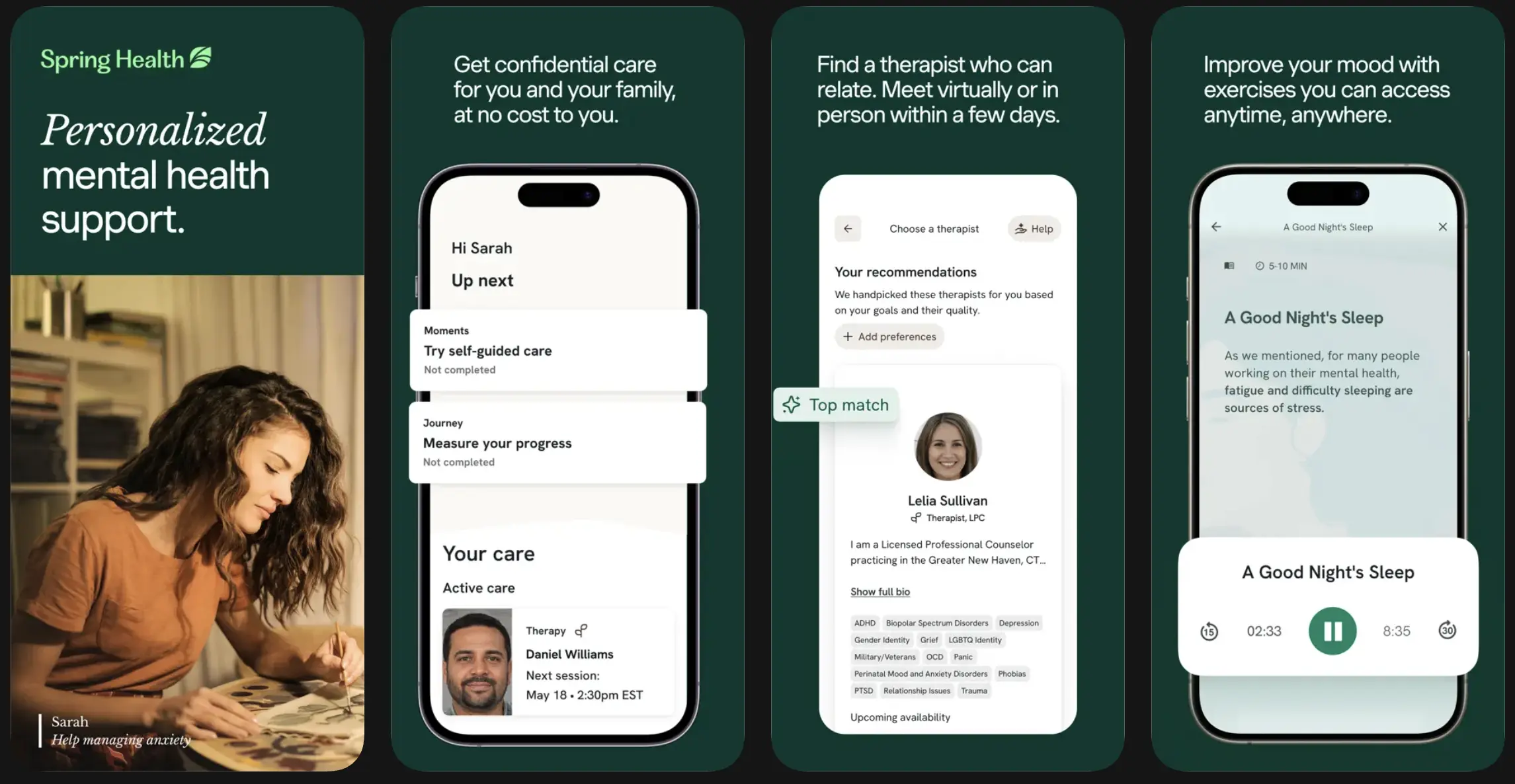
Spring Health launched Guide in April 2026 as an AI-led engine that unifies member navigation, engagement, clinician matching, and outcome tracking. Consequently, the organization reports up to 25% faster symptom improvement among higher-severity users supported by the system.
Furthermore, Guide utilizes a modular multi-agent software architecture. As a result, routine administrative requests and acute clinical-risk conversations route through entirely separate safety guardrails and clinician escalation paths.
Founder Takeaway: Rather than deploying a single large language model for all tasks, you should engineer scoped mental health agents with separate permissions, risk policies, and clinician handoffs.
2. Talkspace: Mental Health AI Is Becoming Clinically Specialized
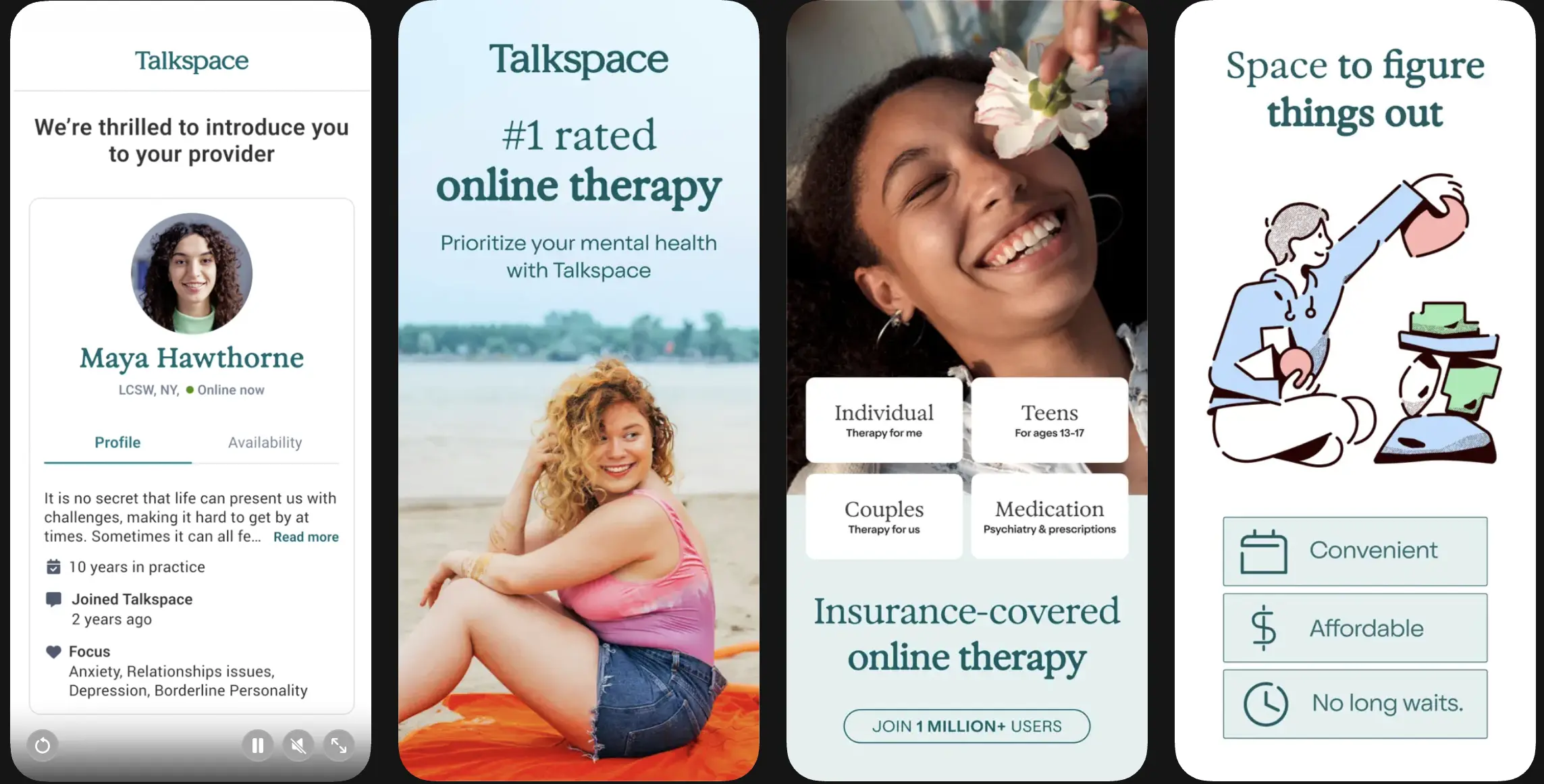
Talkspace introduced Tee in June 2026 as a specialized AI agent built on a domain-specific model with licensed clinician oversight. Therefore, the system can continuously monitor user dialogue for self-harm markers, escalating acute distress directly to human therapists.
Additionally, Talkspace deploys ambient AI to generate clinical summaries and session documentation for providers. Because this automation reduces administrative overhead, therapists can dedicate significantly more time to direct patient care.
Founder Takeaway: The strongest enterprise AI opportunity centers on clinical augmentation and bounded patient support rather than unconstrained, autonomous therapy.
3. Headspace: Consumer Wellness Is Becoming Enterprise Care
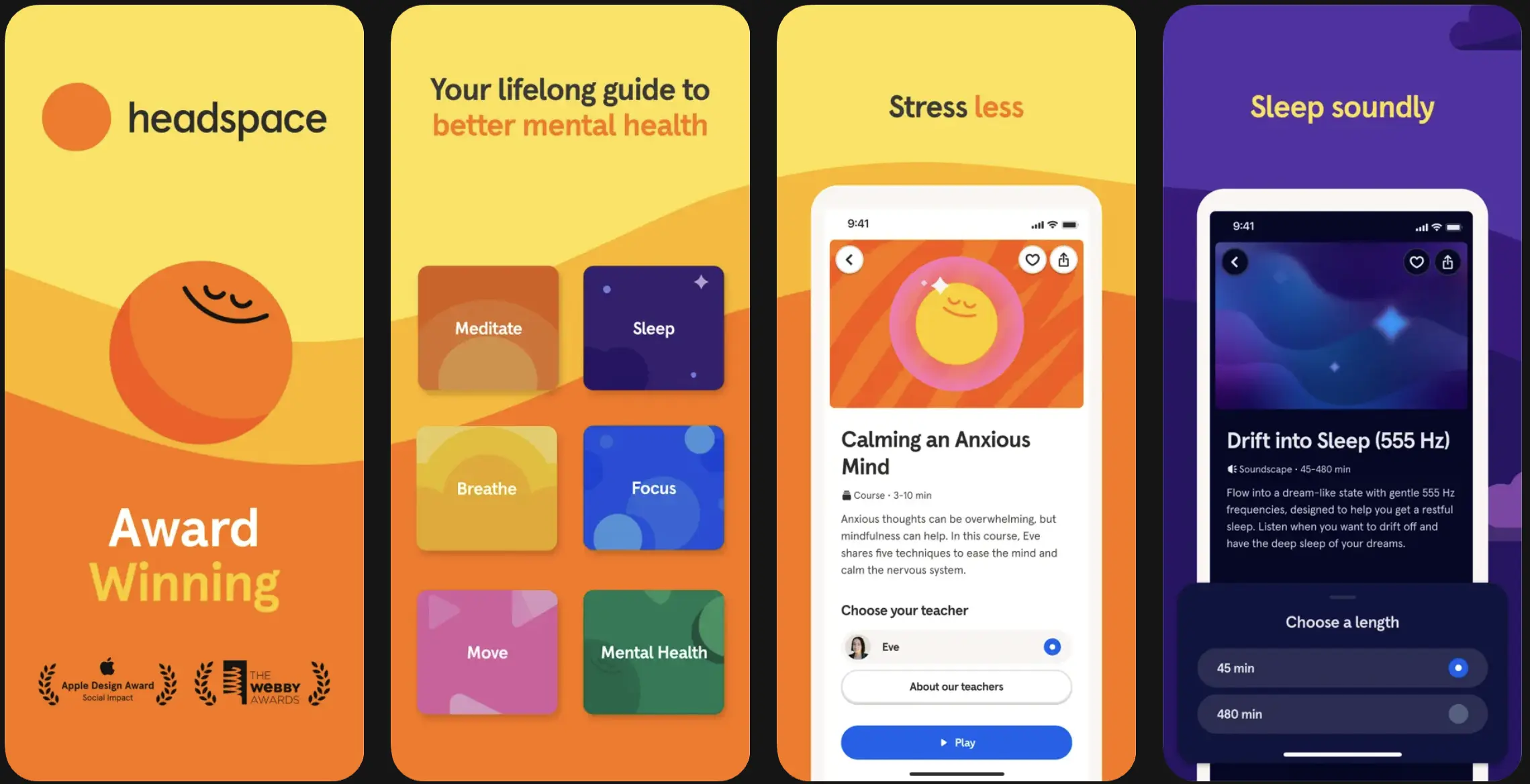
Headspace has evolved well beyond simple mindfulness exercises by building an integrated enterprise behavioral health network. Specifically, its B2B offering combines mental health coaching, virtual therapy, psychiatric care, crisis escalation, and care navigation.
Moreover, in July 2026, Headspace expanded dedicated specialty-care pathways for neurodiversity, eating disorders, and high-acuity behavioral conditions. Thus, these targeted clinical partnerships enable the company to serve over 4,000 enterprise organizations with comprehensive behavioral care.
Founder Takeaway: Instead of treating your application as an isolated mobile tool, you should design the software as a digital front door for an entire behavioral health ecosystem.
4. Calm Health: Engagement Is Becoming Care Navigation
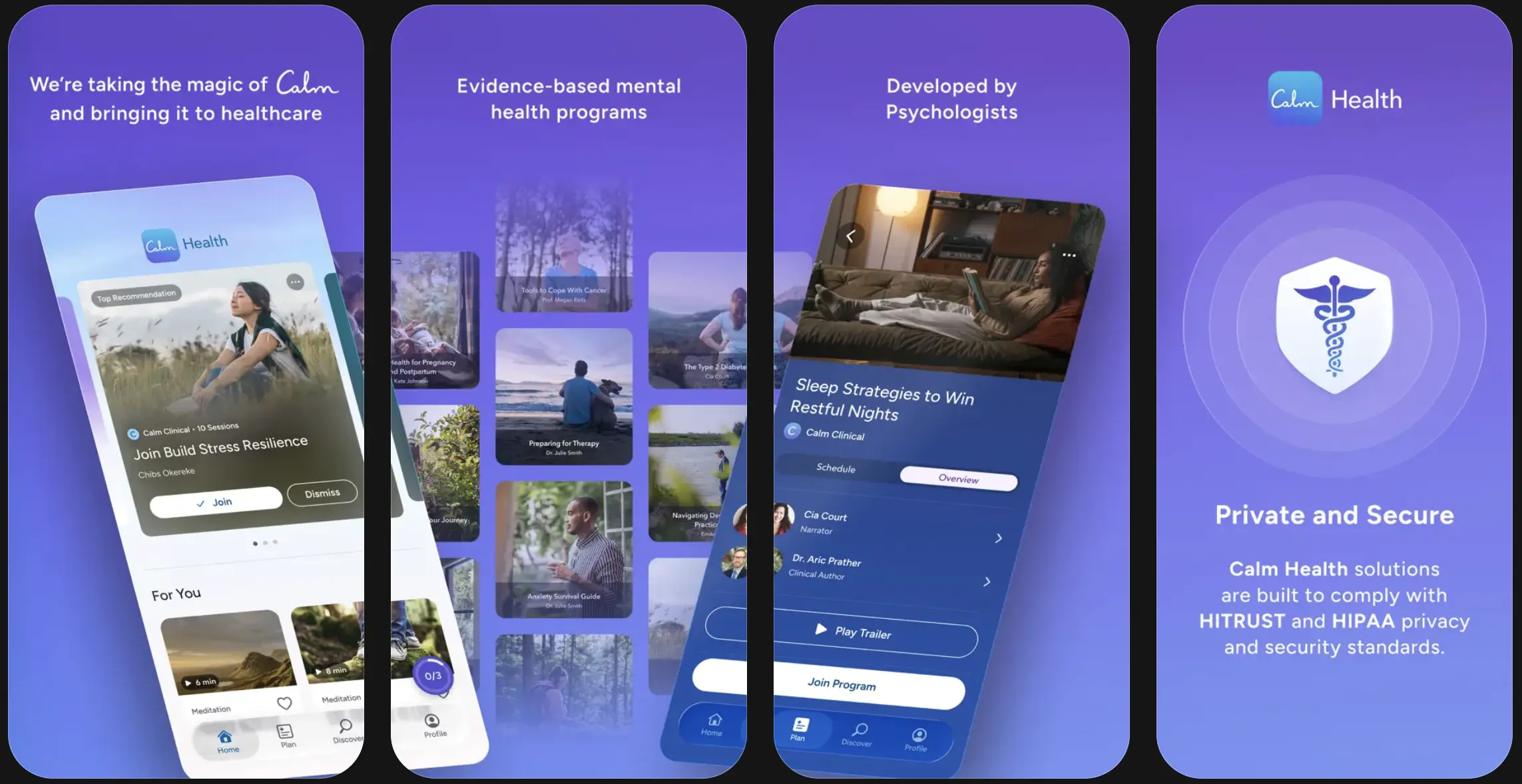
Calm Health leverages its broad consumer brand awareness to direct users into structured clinical care pathways. For example, the platform integrates standardized PHQ-9 and GAD-7 screening tools, evidence-based CBT exercises, and health plan navigation.
Consequently, Calm Health reports that 37% of members with moderate-to-severe screening scores actively engaged in outpatient therapy. Furthermore, by partnering with the Solera Network in January 2026, the company expanded its clinical routing layer to more than 16 million covered lives.
Founder Takeaway: High product value does not always require delivering the final therapy. Frequently, the most defensible asset is the navigation layer that routes patients to the correct level of care.
5. Rejoyn: Mental Health Apps Are Becoming Regulated Treatments
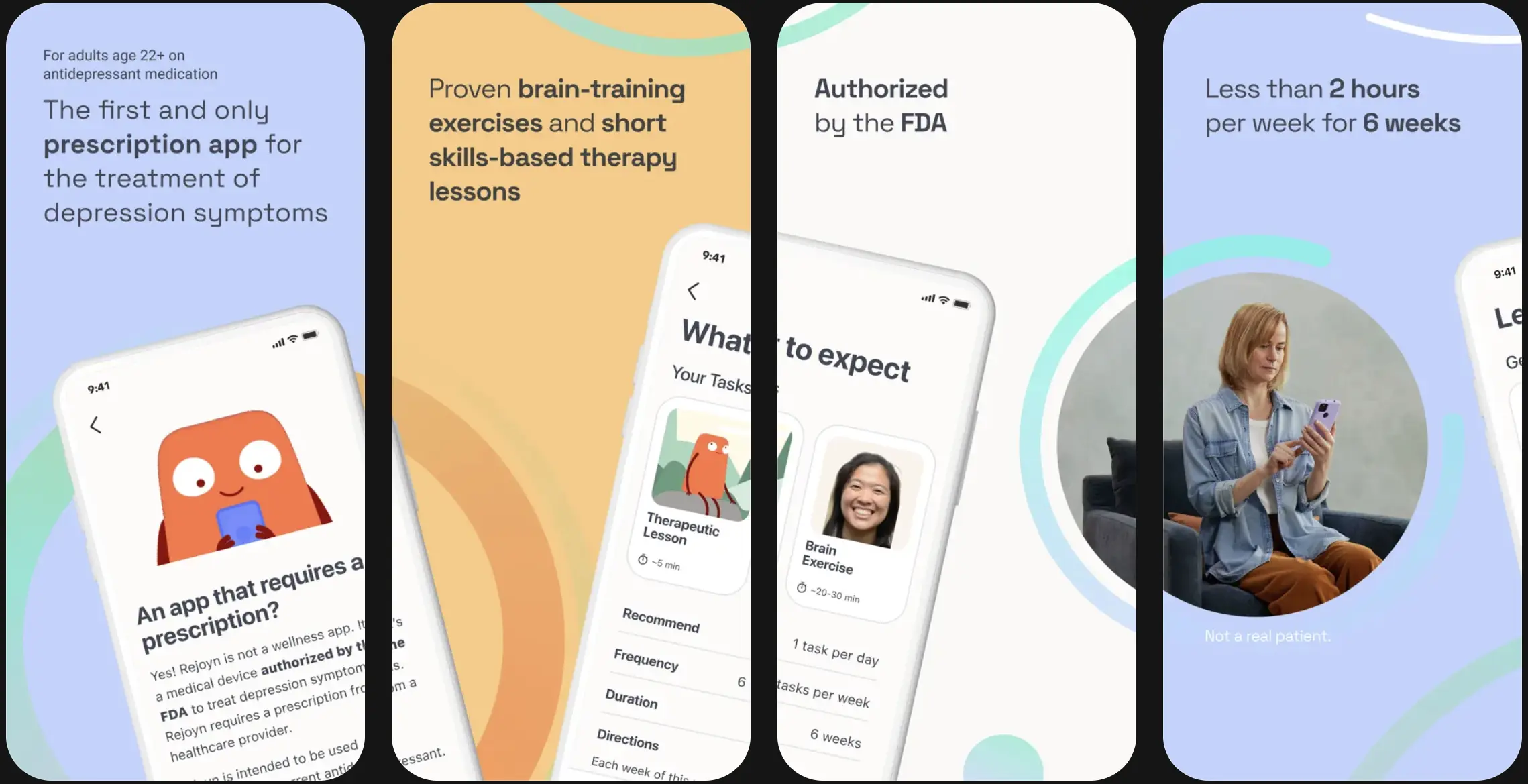
Rejoyn earned FDA clearance as a prescription digital therapeutic for adults with major depressive disorder who are already undergoing clinician-managed outpatient care. Specifically, the software delivers structured cognitive-emotional brain training exercises alongside CBT lessons over a six-week treatment period.
Because Rejoyn operates as an FDA-cleared Class II medical device, clinicians can prescribe the application directly within standard medical workflows. Therefore, this model unlocks formal medical reimbursement codes that consumer wellness apps cannot access.
Founder Takeaway: The commercial ceiling for mental health software extends far beyond consumer subscriptions. Founders can pursue rigorous clinical validation, FDA clearance, and dedicated payer reimbursement codes.
Ultimately, these industry benchmarks demonstrate that sustainable market leaders succeed by embedding software directly into clinical workflows, enterprise benefits, and regulated reimbursement models. Therefore, digital health builders should focus their engineering resources on clinical defensibility, structured data exchange, and measurable patient outcomes.
How Much Should Enterprises Invest in Mental Health Apps in 2026?
A production-ready mental health app typically requires $70,000 to $300,000 in development investment, depending on AI depth, clinical workflows, integrations, regulatory classification, and enterprise scale.
Consequently, your total budget will shift based on whether you are building a bounded wellness tool or an FDA-cleared clinical software product. Understanding where capital is allocated across the software lifecycle helps engineering leaders avoid mid-project budget overruns while maintaining strict clinical compliance.
Mental Health App Development Cost Breakdown
The table below outlines the primary development phases, expected investment ranges, and core deliverables:
| Development Area | Typical Investment Range | Core Deliverables & Technical Scope |
| Discovery + Clinical Workflow Design | $5,000–$15,000 | Clinical protocol mapping, safety risk matrices, compliance planning, and system architecture blueprints. |
| UX/UI + Prototyping | $8,000–$20,000 | Accessible, trauma-informed design systems, patient journeys, interactive Figma prototypes, and user testing. |
| Core Mobile/Web/Backend Development | $25,000–$65,000 | Native iOS/Android apps, Next.js web portals, HIPAA-compliant backend APIs, and database architecture. |
| AI + Personalization Layer | $15,000–$55,000 | Domain-specific LLM fine-tuning, RAG pipelines, dynamic CBT engines, and automated risk classifiers. |
| EHR/Wearable/Payer Integrations | $10,000–$40,000 | SMART on FHIR R4 connectors, Epic/Oracle Health interfaces, and Apple HealthKit/Google Health Connect ingestion. |
| Compliance + Security + Validation | $7,000–$45,000 | End-to-end encryption, automated audit trails, 42 CFR Part 2 consent isolation, and ISO 13485/FDA documentation. |
| QA, Deployment + MLOps | $5,000–$20,000 | Automated end-to-end testing, CI/CD pipelines, private cloud hosting setups, and continuous model drift monitoring. |
| Typical Complete Build | $70,000–$300,000 | Fully deployed, production-ready, and compliance-validated enterprise behavioral health platform. |
Note: The maximum figures in each category are not cumulative across every project, as simpler builds do not require the upper range of every tier.
Enterprise Investment Tiers and Ongoing Maintenance
To help you match your budget to your commercial roadmap, enterprise builds generally fall into three distinct investment tiers:
- $70,000–$110,000 (Focused Mental Wellness / AI MVP): Covers core tracking features, structured CBT modules, baseline safety rules, and bounded conversational AI capabilities.
- $110,000–$200,000 (Integrated Clinical Application): Includes full EHR data connectivity, automated clinician documentation tools, hybrid teletherapy infrastructure, and complex clinical assessment loops.
- $200,000–$300,000+ (Enterprise AI, Advanced Integrations & DTx-Ready Systems): Features multi-agent AI pipelines, population-level risk engines, real-time biometrics, and FDA SaMD design controls.
Additionally, annual maintenance and infrastructure hosting typically average 15% to 25% of the initial build cost.
However, ongoing spending naturally trends higher for applications that require continuous clinical AI drift monitoring or strict FDA-regulated change management.
How Intellivon Builds Enterprise Mental Health Apps That Scale
Building enterprise mental health software requires a disciplined engineering framework that balances clinical safety, deterministic AI behavior, regulatory compliance, and bidirectional health system interoperability.
Because behavioral health applications handle sensitive patient data and manage acute psychological risk, standard consumer app development models frequently fail in clinical and enterprise settings.
Intellivon engineers production-ready digital health platforms using a modular, six-stage technical delivery methodology:
- 1. Clinical Workflow & Care Pathway Discovery: We map the end-to-end patient journey, provider touchpoints, emergency escalation protocols, payer reimbursement models (including CMS DMHT codes), and objective clinical outcome metrics (such as PHQ-9 and GAD-7) before writing code.
- 2. AI Risk Stratification & Model Tiering: Our engineering team classifies each AI capability, separating low-risk conversational support and administrative clinician copilots from regulated clinical interventions and SaMD components.
- 3. Privacy-First Compliance Architecture: We implement granular 42 CFR Part 2 consent engines, zero-retention AI inference pipelines, AES-256 encryption at rest and in transit, FTC Health Breach Notification safeguards, and immutable audit logging.
- 4. Interoperability & Integration Engineering: We develop SMART on FHIR R4 interfaces, HL7 message brokers, direct EHR connectors (Epic, Oracle Health), and normalized wearable streaming pipelines across Apple HealthKit and Google Health Connect.
- 5. AI Safety Guardrails & MLOps Infrastructure: We build multi-agent RAG architectures with strict clinical boundaries, automated prompt-injection defense, continuous model drift monitoring, and deterministic human-in-the-loop escalation paths.
- 6. Controlled Phased Deployment & Validation: We roll out platforms through structured pilot environments targeting specific clinical workflows or patient cohorts, validating engagement and safety data prior to full enterprise expansion.
- Specialized Domain Capabilities: We deploy dedicated frameworks for high-acuity verticals, including pediatric and adolescent caregiver portals, trauma-informed UI/UX, and substance use recovery platforms.
This structured delivery model ensures your application launches with the technical maturity, data governance, and clinical reliability required to pass health system procurement reviews.
Build Your 2026 Mental Health App With Intellivon
Mental health product decisions made in 2026 will determine more than your next feature release. They determine whether your platform can enter clinical workflows, secure enterprise payer contracts, support regulated care, and produce measurable patient outcomes.
Intellivon helps healthcare organizations, digital health founders, and health plans turn these strategic decisions into a production-ready roadmap covering AI architecture, clinical integrations, compliance, deployment, and long-term model governance.
Ready to Build an Enterprise-Grade Mental Health Platform? Discuss Your Mental Health App Roadmap With Intellivon.
Conclusion
The strongest digital health opportunities now sit where clinical evidence, workflow integration, proprietary data, responsible AI, and reimbursement intersect.
Consequently, the winners among mental health apps in 2026 will be the products that prove outcomes, connect into care, manage risk correctly, and own a meaningful part of the mental-health journey.
Deciding to build an enterprise-grade platform today establishes the clinical and regulatory foundation required to lead the market tomorrow.
FAQs
Q1. Does Every Mental Health App Need to Be HIPAA Compliant?
A1. No, not every mental health application falls under HIPAA. Direct-to-consumer (DTC) wellness apps operating outside covered healthcare providers or health plans are generally exempt from HIPAA rules. However, these consumer platforms must still comply with the FTC Act and the FTC Health Breach Notification Rule, which heavily penalize unauthorized health data sharing with third-party advertising trackers.
Q2. Can GPT or Claude Be Used Inside an AI Mental Health App?
A2. Yes, general-purpose models like GPT or Claude can power enterprise mental health applications, provided they operate within a controlled software infrastructure. However, engineering teams must implement independent safety layers, Retrieval-Augmented Generation (RAG) grounding, deterministic risk classifiers, zero-retention PHI boundaries, and automated clinician escalation protocols before deployment.
Q3. When Does a Mental Health App Need FDA Clearance?
A3. A mental health app requires FDA clearance when it makes explicit clinical claims to diagnose, treat, prevent, or mitigate a specific psychiatric condition like major depression or PTSD. While general wellness and relaxation apps avoid medical device oversight, Software as a Medical Device (SaMD) delivering active clinical interventions requires formal FDA Class II clearance to unlock prescription reimbursement.
Q4. What Changes When an App Handles Substance-Use Disorder Data?
A4. Applications handling substance use disorder (SUD) data must comply with strict federal 42 CFR Part 2 privacy regulations. Following the February 16, 2026 enforcement deadline, the HHS Office for Civil Rights actively penalizes improper disclosures. Consequently, platforms must implement granular patient consent workflows, audit trails, and strict data isolation to prevent unauthorized record sharing.