Every quarter, fintech companies have to make big decisions using data spread across different systems and old treasury processes. These systems were not built for the fast pace of today’s business. As a result, the cash is often not used as well as it could be, risks are not always managed, and by the time leaders have an accurate picture of cash across the company, the best moment to act may have already passed. This is because of an issue with the systems that are already in place.
A modern Treasury Management System (TMS) helps solve this by turning treasury from a basic reporting job into a real-time decision tool. With one clear view of cash, built-in controls, better forecasting, and flexible risk management, finance teams can make decisions with more confidence with these systems. The goal is to have a system that truly fits how a company works, no matter how many regions or business units it covers.
At Intellivon, we build treasury platforms as secure, connected financial systems, and not merely standalone tools. The design uses modular building blocks, compliance by design, and AI to fit smoothly into company operations. In this blog, we will cover how we build an enterprise-grade TMS, from architectural foundations and AI capabilities to integration realities and implementation strategies.

Why Enterprises Are Adopting Treasury Management Systems Now
Enterprises are now adopting Treasury Management Systems because managing money has become more complicated. Manual processes are no longer fast enough. Therefore, many organizations are moving to automated, cloud-based treasury solutions that help them manage cash more efficiently.
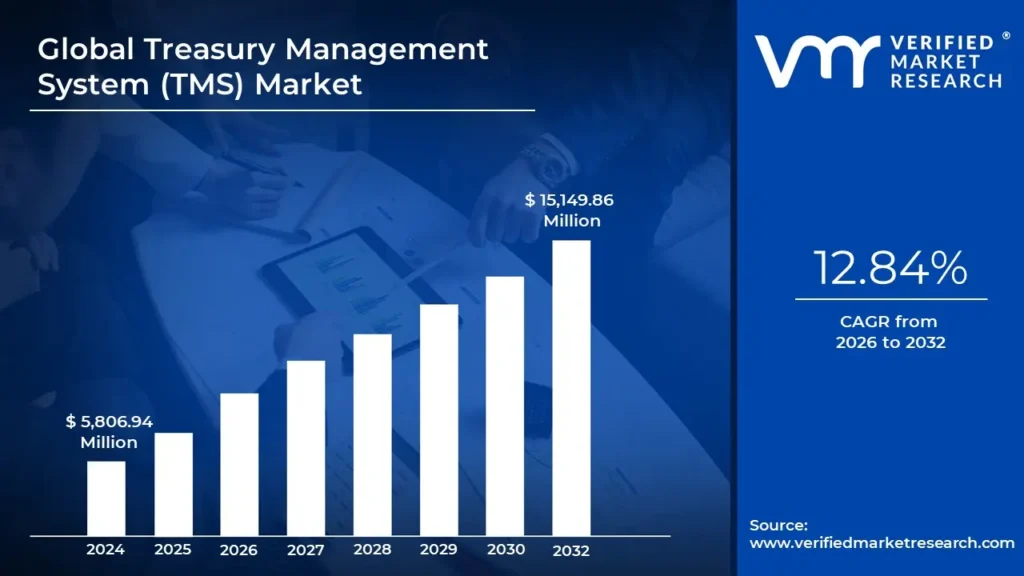
Market trends show strong growth as companies look for better visibility, faster decisions, and more reliable financial control. The Treasury Management System market was valued at about USD 5.8 billion in 2024. It is expected to grow to nearly USD 15.1 billion by 2032.
This steady growth reflects how more enterprises are investing in modern treasury tools to improve cash visibility, financial control, and decision-making.
Market Insights:
- Global financial operations are becoming more complex, which increases the need for better tools to manage cash flow, liquidity, and risk.
- Tighter regulations are pushing businesses to adopt stronger compliance systems, clear audit trails, and AI-based fraud prevention.
- In addition, companies want real-time insights into cash positions, currency risks, and forecasts as digital payments continue to grow.
Treasury now directly affects liquidity, risk, and financial stability in a company. Therefore, many enterprises are rethinking how they manage cash and financial exposure. Adoption trends show this shift clearly. Nearly 60% of organizations already use a Treasury Management System, and adoption rises to 61% among companies earning over $500M annually.
At the same time, the market continues to expand rapidly and is expected to grow from about $6.6 billion in 2025 to over $16.3 billion by 2032.
1. Financial Operations Becoming Harder to Manage
Global expansion has made financial operations more complex. Many enterprises now manage multiple currencies, entities, and cross-border payments. Manual tracking cannot support this scale.
As complexity grows, organizations need centralized tools to manage cash and risk effectively. Therefore, treasury platforms are becoming essential for clarity and control.
2. Real-Time Cash Visibility Is Now Critical
Business decisions now depend on speed. Static financial reports often delay action. However, leadership teams need real-time visibility into liquidity to make timely funding decisions.
Research shows that demand for real-time cash insights is one of the biggest drivers of treasury system adoption. As a result, enterprises are moving toward platforms that provide live cash positioning and faster financial decision support.
3. Regulatory Pressure Continues to Increase
Financial oversight has become stricter across industries. Regulations now require stronger governance and transparency. As a result, enterprises must maintain accurate records and audit-ready processes.
Treasury platforms help automate compliance workflows and reduce manual errors. Therefore, organizations are adopting these systems to improve control and meet regulatory expectations.
4. Digital Finance Is Changing Treasury Expectations
Digital payments and fintech adoption are transforming financial workflows. In fact, 58% of businesses now use fintech solutions for core treasury or cash services, while another 25% plan to adopt them.
This shift shows that enterprises are moving toward more integrated financial environments. Treasury systems now play a central role in managing these digital ecosystems.
5. Treasury Is Becoming a Strategic Function
Enterprises increasingly view treasury as a driver of stability and growth. Nearly 49% of organizations now prioritize building scalable treasury operations, up from 39% just two years ago. This reflects a clear shift in mindset. Treasury is no longer limited to reporting. Instead, it supports capital efficiency, resilience, and faster financial decision-making.
Rising complexity, stricter regulations, and the need for real-time insight are accelerating adoption. Enterprises that invest now are strengthening financial control and preparing for future growth.
What Is An Enterprise-Grade Treasury Management System?
An enterprise-grade Treasury Management System is a centralized platform that helps large organizations manage cash, liquidity, payments, and financial risk with accuracy and control. It connects bank accounts, financial data, and internal systems to give leadership a clear view of cash positions across regions and entities. Therefore, decisions around funding, investments, and risk can be made faster and with better confidence.
Unlike basic treasury tools, an enterprise system supports complex operations such as multi-currency management, intercompany cash movement, and automated compliance workflows.
In addition, it integrates with ERP systems, banking networks, and data platforms to ensure consistent financial information across the organization. This allows teams to reduce manual processes and improve visibility into liquidity and exposure.
As financial operations grow more complex, enterprises need systems that provide real-time insights and strong governance. An enterprise-grade Treasury Management System helps achieve this by aligning treasury activities with business strategy and operational needs.
How Enterprises Use Treasury Management Systems
Enterprises use Treasury Management Systems to manage financial operations with greater control and visibility across complex business environments. These platforms support both daily cash activities and long-term financial planning.
As operations expand across regions and currencies, treasury teams need reliable systems to coordinate decisions. Therefore, a treasury platform becomes essential for maintaining financial clarity and stability.
1. Cash Visibility Across Entities
Enterprises use treasury systems to monitor cash balances across multiple subsidiaries, business units, and geographic locations. This helps leadership gain a consolidated view of available liquidity without relying on manual reports.
In addition, real-time visibility allows finance teams to identify surplus funds or potential shortfalls early. As a result, organizations can make faster funding decisions and improve capital allocation across the enterprise.
2. Payment Management and Controls
Treasury platforms help manage outgoing payments through structured approval workflows and automated processes. These controls reduce the risk of errors and unauthorized transactions across large financial operations.
At the same time, standardized payment execution improves consistency across regions and banking partners. Therefore, enterprises can ensure secure transaction management while improving operational efficiency.
3. Liquidity Forecasting
Enterprises rely on treasury systems to forecast cash requirements based on operational data and financial trends. This allows finance teams to plan for future obligations, investments, and funding needs. In addition, better forecasting helps reduce idle cash and avoid unexpected liquidity gaps.
As a result, organizations can align financial planning with business growth strategies.
4. Risk Monitoring
Treasury systems help enterprises track exposure to currency fluctuations and interest rate changes. This visibility supports better decision-making during volatile market conditions.
In addition, ongoing monitoring allows teams to respond quickly to emerging financial risks. Therefore, organizations can protect margins and maintain financial stability.
By using treasury management systems, enterprises improve cash visibility, strengthen payment controls, enhance forecasting, and manage financial risks more effectively across their operations.
Core Engines of an Enterprise Treasury Management System
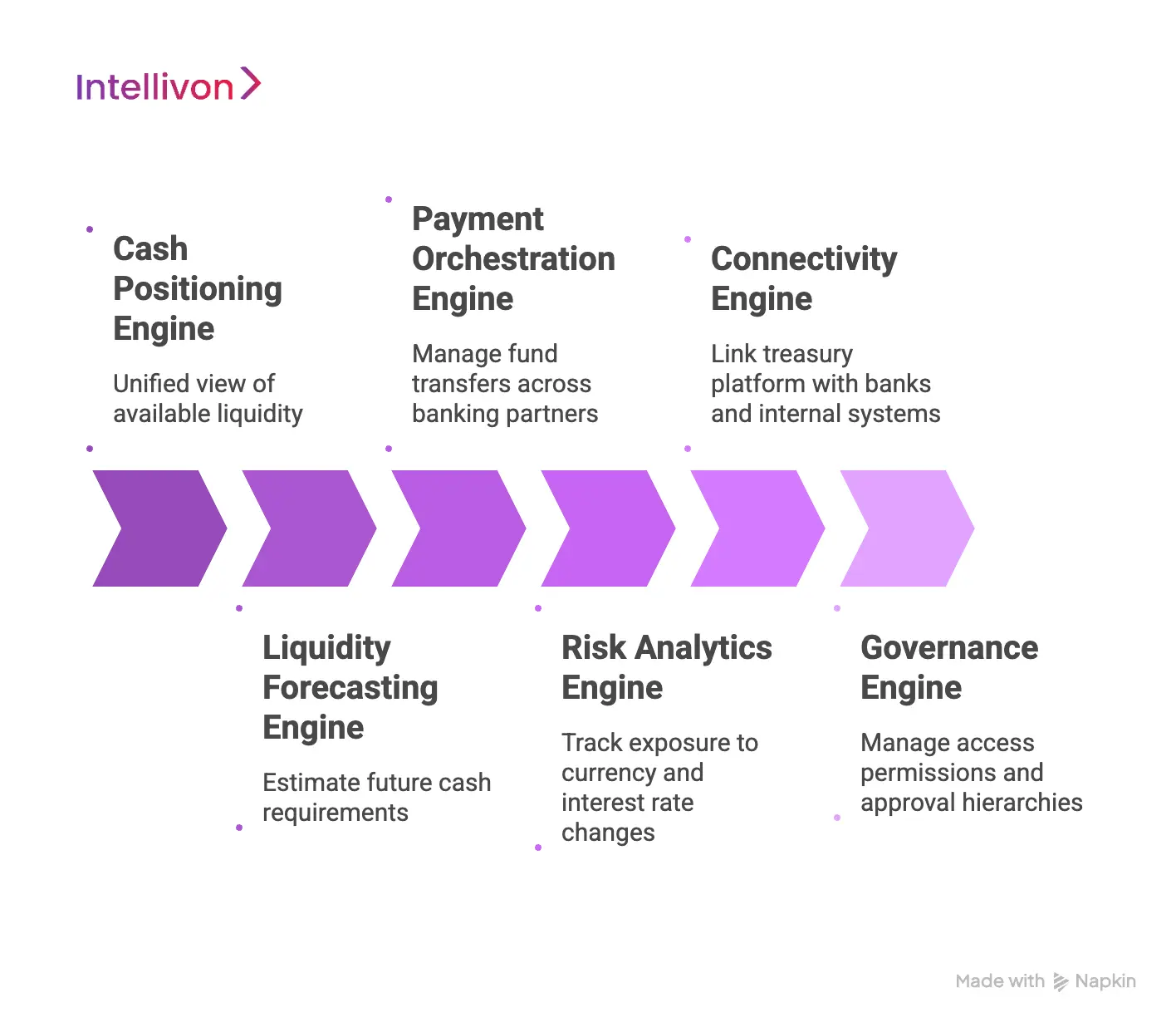
Core engines in a treasury management system include cash positioning, liquidity forecasting, payment orchestration, risk analytics, connectivity, and governance functions that support enterprise financial operations.
An enterprise Treasury Management System operates through several internal engines that enable daily treasury activities across complex financial environments.
These engines define how the system manages liquidity, executes payments, monitors risk, and enforces governance across multiple entities and banking relationships. Instead of focusing on outcomes, they support the underlying processes that make treasury operations possible.
1. Cash Positioning Engine
The cash positioning engine collects balance data from multiple banks and business units across the organization. It consolidates this information to provide a unified view of available liquidity at any given time.
In addition, it supports daily and intraday visibility into cash positions across regions. This helps finance teams understand funding needs without relying on manual updates. As a result, organizations can make faster and more accurate liquidity decisions.
2. Liquidity Forecasting Engine
The liquidity forecasting engine analyzes operational inputs to estimate future cash requirements. It reviews receivables, payment schedules, and recurring expenses to project inflows and outflows. In addition, it supports both short-term and long-term planning cycles.
This enables finance teams to anticipate funding gaps or surplus liquidity. Therefore, enterprises can align financial planning with business objectives.
3. Payment Orchestration Engine
The payment orchestration engine manages how funds are transferred across banking partners. It supports structured approval workflows that ensure transactions follow internal policies.
In addition, it helps coordinate payments across different institutions and geographies. This improves both security and operational efficiency. As a result, enterprises can execute transactions while maintaining strong oversight.
4. Risk Analytics Engine
The risk analytics engine tracks exposure related to currency movements and interest rate changes. It provides visibility into financial risks that may affect stability. In addition, continuous monitoring helps teams respond quickly to market fluctuations.
This reduces uncertainty in financial planning. Therefore, enterprises can better protect margins and maintain resilience.
5. Connectivity Engine
The connectivity engine links the treasury platform with banks and internal enterprise systems. It retrieves financial data such as balances and transaction confirmations from external sources.
In addition, it standardizes this data across different platforms. This improves consistency in financial reporting. As a result, organizations gain a more reliable operational view.
6. Governance Engine
The governance engine manages access permissions and approval hierarchies within the system. It ensures that treasury actions follow defined policies and authorization rules. In addition, it tracks activity to support audit readiness.
This strengthens internal financial control. Therefore, enterprises can maintain compliance and operational accountability.
Together, these core engines support the processes that allow treasury teams to manage liquidity, execute transactions, monitor exposure, and enforce governance across the enterprise. They create a structured framework that enables consistency across regions and entities.
Advanced Features Required for Treasury Management Systems
Advanced treasury management features include segregation of duties, approval limits, audit logging, counterparty controls, exception handling, policy enforcement, and fraud prevention mechanisms.
Additionally, advanced features help enforce internal controls while reducing operational risk. In addition, they support consistency in decision-making across complex financial environments. Therefore, these capabilities allow treasury teams to operate with confidence and accountability.
1. Segregation of Duties Framework
A segregation of duties framework ensures that financial responsibilities are distributed across different roles. This reduces the risk of errors or misuse within treasury operations. In addition, separating approval and execution tasks strengthens internal security.
It also supports compliance with governance standards. As a result, enterprises can manage financial processes with greater control.
2. Approval Policies and Limits
Treasury platforms must support approval rules based on entity structure and transaction value. These policies ensure that payments follow defined authorization steps. In addition, transaction limits help prevent unauthorized financial activity.
They also improve consistency across regional operations. Therefore, organizations can manage funds more securely.
3. Audit Logging and Traceability
Audit logging helps track every financial action within the treasury system. This includes approvals, changes, and transaction activity. In addition, traceability supports internal reviews and regulatory checks.
It also improves accountability across teams. As a result, enterprises maintain transparency in financial operations.
4. Counterparty Risk Controls
Counterparty controls help monitor financial exposure to external partners. These tools support credit evaluation and risk tracking. In addition, they help prevent excessive exposure to any single institution.
This strengthens financial stability. Therefore, organizations can manage relationships more safely.
5. Exception Workflow Handling
Treasury systems must handle payment failures or mismatches effectively. Automated workflows help resolve these issues quickly. In addition, structured processes reduce manual intervention. This improves operational efficiency. As a result, financial workflows remain consistent.
6. Treasury Policy Enforcement
Treasury policy enforcement ensures that financial actions align with internal standards. This includes compliance with approval rules and transaction limits. In addition, it supports governance across different business units. Therefore, organizations can maintain consistent operational discipline.
7. Fraud Prevention Guardrails
Fraud prevention tools help detect unusual financial activity. These guardrails monitor transactions and flag potential risks. In addition, they support early response to suspicious behavior. This improves financial security. As a result, enterprises can protect payment integrity.
Advanced treasury features strengthen governance and reduce operational risk across financial processes.
They support secure decision-making and improve compliance readiness. In addition, they help maintain consistency across complex environments. As a result, enterprises can operate with stronger financial confidence.
The Role Of AI In A Treasury Management System
Treasury teams no longer struggle with access to data. The real challenge lies in making timely decisions across fast-moving financial environments.
AI helps bridge this gap by turning large volumes of financial data into actionable insights. Instead of relying on static reports, enterprises can use AI to detect patterns and anticipate changes. This improves both responsiveness and planning across treasury operations.
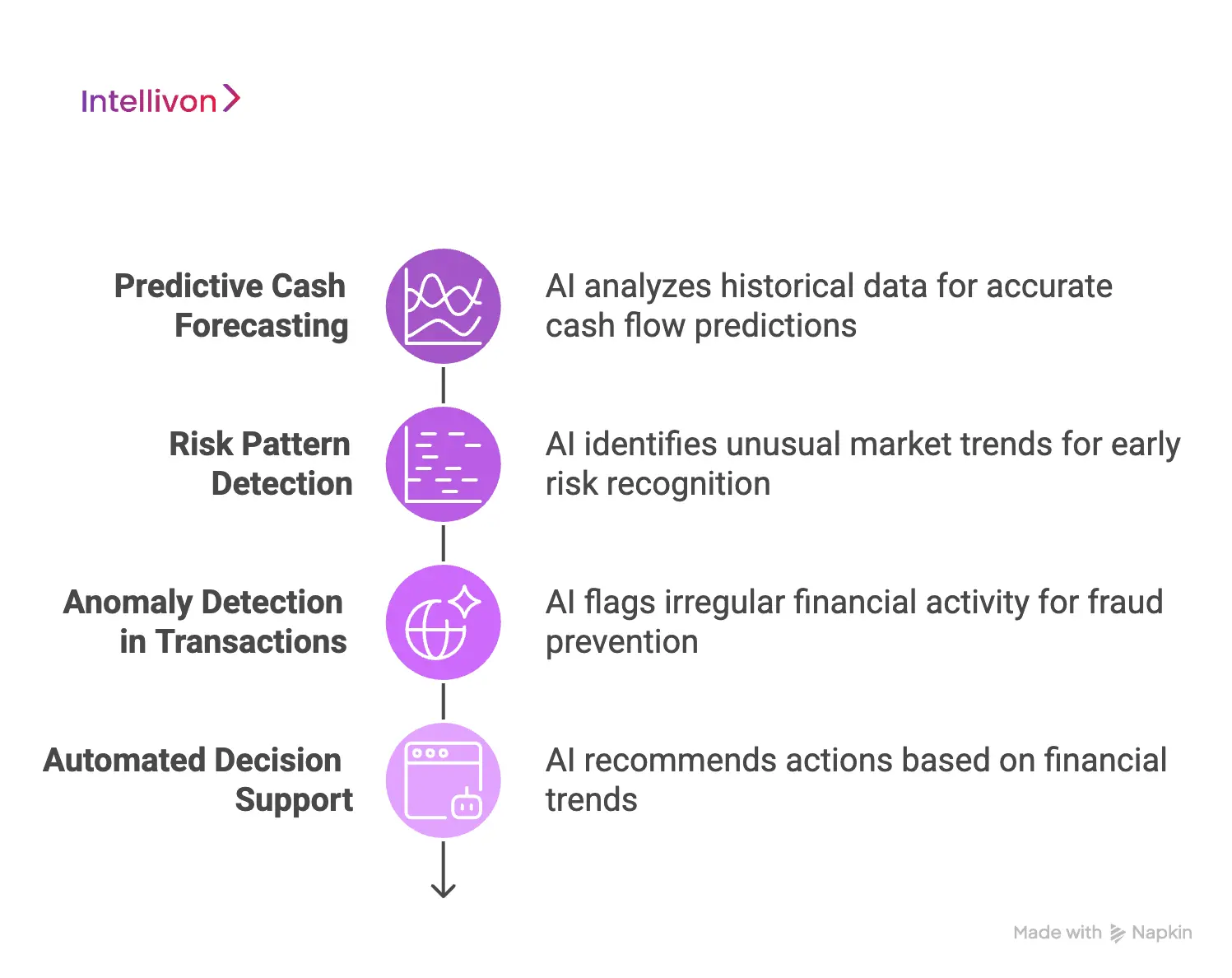
1. Predictive Cash Forecasting
AI helps treasury teams predict future cash flows based on historical and operational data. It analyzes patterns in receivables, payments, and recurring expenses. In practice, this enables more accurate short-term and long-term forecasts.
Over time, organizations can reduce idle cash and avoid liquidity gaps. This allows finance teams to align funding decisions with business needs.
2. Risk Pattern Detection
Market conditions often shift without warning. AI can identify unusual trends in currency exposure or interest rate movements. This helps organizations recognize potential risks early.
In turn, treasury teams can adjust strategies before financial impact occurs. This improves resilience in uncertain environments.
3. Anomaly Detection in Transactions
AI supports the monitoring of financial transactions across accounts. It can flag irregular activity that may indicate errors or potential fraud.
This reduces reliance on manual checks. In addition, early detection helps prevent financial loss. Which means organizations gain stronger payment security.
4. Automated Decision Support
AI can recommend actions based on financial trends and historical outcomes. For example, it may suggest funding adjustments or liquidity allocation.
These insights support faster and more confident decisions. In addition, automation reduces the burden of manual analysis. Therefore, treasury teams can focus on strategic planning.
AI enhances treasury management by improving forecasting, monitoring risk, detecting anomalies, and supporting financial decisions. It helps organizations respond quickly to change while maintaining stability.
In addition, it strengthens operational efficiency across treasury functions. Over time, this enables enterprises to manage liquidity and risk more effectively.
Integrating Treasury Systems into Enterprise Environments
A treasury platform only becomes valuable when it connects seamlessly with the broader enterprise ecosystem. Integration ensures that financial data remains consistent across systems and that treasury decisions reflect real operational activity. Without these connections, visibility becomes fragmented and execution slows down.
Therefore, enterprises focus on aligning treasury with finance, banking, identity, and analytics layers. This creates a unified environment that supports liquidity management and financial control.
1. ERP Integration
ERP integration connects treasury activities with operational finance data across the organization. It synchronizes accounts payable and receivable inputs while aligning financial actions with general ledger structures.
In addition, it ensures that entity mappings remain consistent across business units. This reduces reconciliation gaps and improves financial accuracy. As a result, treasury decisions reflect actual financial commitments.
2. Bank Connectivity
Bank connectivity links treasury systems with financial institutions for balance updates and payment execution. It enables automated retrieval of account statements across regions. In addition, it supports secure payment initiation through standardized processes.
This reduces manual intervention and improves execution speed. Therefore, organizations maintain reliable visibility into cash positions.
3. Identity and Access Systems
Identity integration ensures treasury platforms align with enterprise access policies. It connects the system with single sign-on and identity management frameworks. In addition, role-based access controls help enforce user governance.
This improves security across treasury operations. As a result, enterprises maintain consistent authorization standards.
4. Data Platforms and BI
Integration with data platforms allows treasury insights to flow into analytics environments. It supports liquidity dashboards and forecasting models used across leadership teams. In addition, shared financial data improves enterprise-wide planning.
This strengthens decision-making across functions. Therefore, organizations gain better financial foresight.
5. Payment Messaging Standards
Payment messaging integration ensures treasury systems align with global communication standards. It supports structured formats such as ISO 20022 and SWIFT messaging layers.
In addition, these standards improve transaction consistency across banks. This reduces processing errors and improves interoperability. As a result, payment flows remain dependable.
Integrated treasury systems connect financial data, banking networks, identity controls, and analytics into one operational framework. They improve consistency, reduce delays, and strengthen governance across financial workflows.
In addition, they help enterprises maintain reliable visibility into liquidity. Over time, this supports faster and more informed decision-making.
Regulatory and Compliance Requirements for Treasury Systems
As financial regulations continue to evolve, treasury platforms must support strong compliance and governance controls. Enterprises operate across regions where oversight expectations differ, yet accountability remains consistent.
These capabilities ensure that financial actions remain aligned with legal and organizational requirements. Over time, they strengthen operational discipline and reduce regulatory risk.
1. Sanctions Screening Readiness
Treasury platforms must support screening against sanctioned entities and jurisdictions. This is essential to comply with global regulatory bodies that restrict financial transactions.
Key regulations include:
- OFAC (Office of Foreign Assets Control)
- EU Sanctions Lists
- UN Sanctions Programs
Automated checks help prevent transactions with restricted parties. In addition, system-level screening improves consistency across global operations. As a result, organizations reduce legal exposure and maintain compliance.
2. Payment Compliance Controls
Payment workflows must align with financial crime prevention regulations. Treasury systems support this by enforcing validation and authorization checks.
Relevant frameworks include:
- AML (Anti-Money Laundering) regulations
- KYC (Know Your Customer) obligations
- PSD2 (Payment Services Directive) in Europe
These controls help ensure funds are transferred securely and lawfully. In addition, structured workflows reduce manual errors. Therefore, enterprises maintain stronger payment governance.
3. Internal Audit Alignment
Treasury systems must support internal and external audit requirements. This helps organizations meet corporate governance standards.
Key compliance frameworks include:
- SOX (Sarbanes-Oxley Act)
- Internal Control frameworks, such as COSO
Clear activity logs and approval records support audit reviews. In addition, traceability improves accountability across financial processes. As a result, organizations remain audit-ready.
4. Access Governance Requirements
User access must align with enterprise identity and security policies. Treasury systems enforce this through role-based permissions.
Relevant standards include:
- ISO 27001 (Information Security Management)
- NIST Access Control Guidelines
These frameworks ensure that only authorized personnel can perform financial actions. In addition, governance reduces operational risk. Therefore, access remains secure and controlled.
5. SWIFT Security Expectations
Enterprises that use global banking networks must comply with SWIFT security requirements. Treasury platforms help support these obligations.
Key program:
- SWIFT CSP (Customer Security Programme)
This includes controls for access, transaction integrity, and system security. In addition, alignment improves trust with financial institutions. As a result, organizations strengthen payment security.
6. Data Retention Policies
Treasury systems must retain financial data to meet legal and operational requirements.
Relevant regulations include:
- GDPR (General Data Protection Regulation)
- FINRA Recordkeeping Rules (for financial institutions)
- Local statutory retention laws
Structured data storage supports reporting and audits. In addition, retention policies ensure compliance across jurisdictions. Therefore, enterprises maintain reliable financial records.
Regulatory features in treasury systems support compliance with global sanctions, financial crime prevention, audit frameworks, and data protection laws. Over time, these capabilities reduce compliance risk and support stable financial governance.
Step-by-Step Guide to Building a Treasury System Platform
Building a treasury platform requires more than assembling financial features. It involves designing an infrastructure that supports liquidity decisions, governance, and secure execution across entities and regions. Many enterprises struggle because they treat treasury systems as software projects rather than operational frameworks.
At Intellivon, this delivery process focuses on aligning platform design with real treasury workflows to ensure long-term stability.
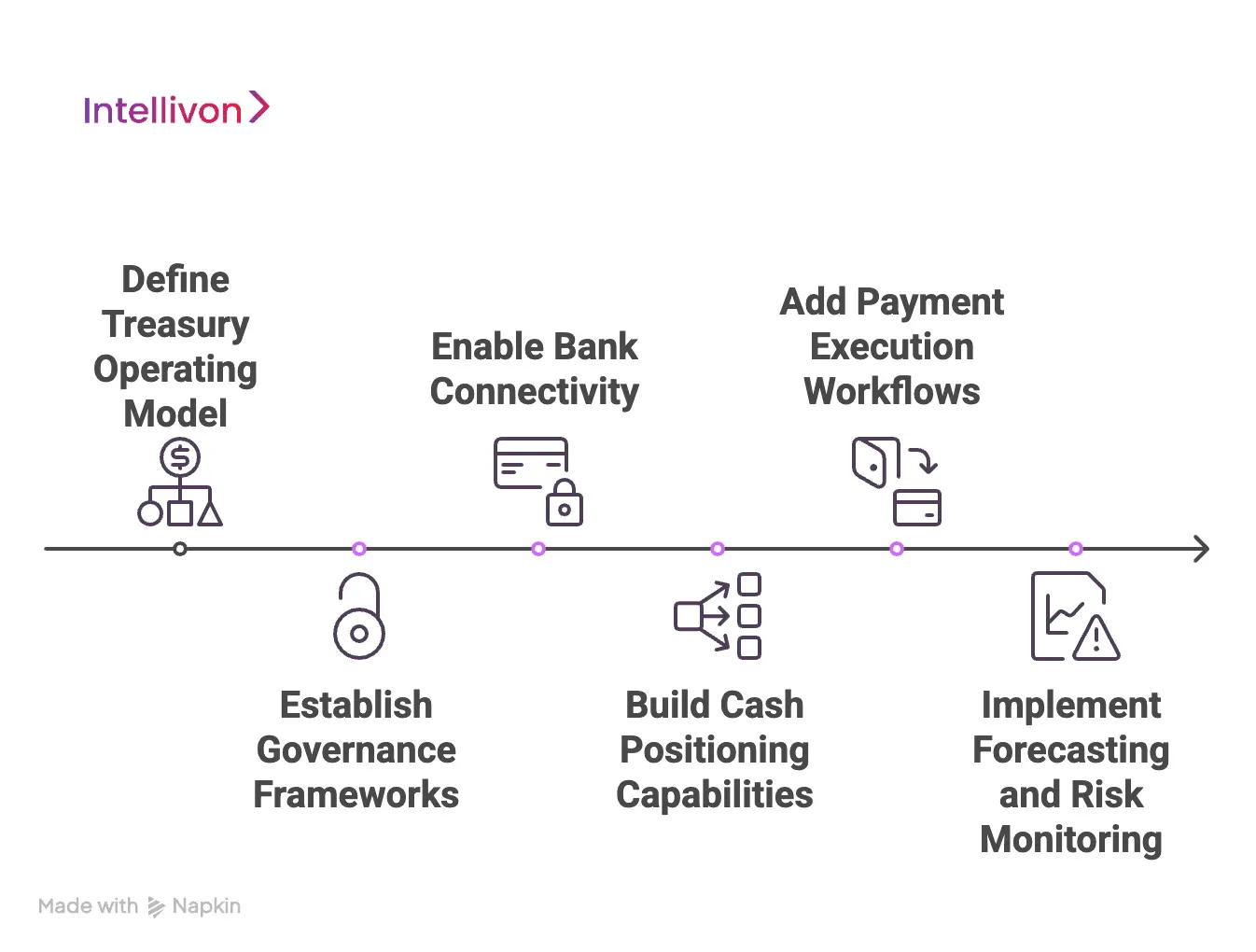
Step 1: Define the Treasury Operating Model
The first step is to understand how treasury decisions are made across the enterprise. This includes identifying ownership of funding, approvals, and policy enforcement across regions.
In addition, mapping cash movement and entity relationships helps clarify operational dependencies.
Intellivon works closely with enterprise teams during this stage to ensure the platform reflects real workflows. As a result, the system supports existing financial structures instead of forcing artificial processes.
Step 2: Establish Governance Frameworks
Governance must be embedded before transaction workflows are built. This includes defining role-based access, approval hierarchies, and audit tracking requirements.
In addition, establishing control policies early helps avoid redesign later in the implementation cycle. Intellivon integrates these frameworks into the platform architecture from the start. Therefore, enterprises gain stronger financial oversight without operational disruption.
Step 3: Enable Bank Connectivity
Next, the platform must connect securely with banking partners. This enables balance visibility and payment execution across institutions.
In addition, standardized connectivity supports consistent data retrieval. Intellivon designs these integrations to support multi-bank environments across regions. As a result, organizations maintain reliable access to financial information.
Step 4: Build Cash Positioning Capabilities
Once connectivity is in place, the system can consolidate liquidity data across entities. This helps create a unified view of available funds. In addition, real-time positioning improves funding decisions.
Intellivon implements positioning logic that adapts to enterprise structures. Therefore, treasury teams gain accurate liquidity insights.
Step 5: Add Payment Execution Workflows
Payment orchestration ensures funds move securely across accounts. This includes approval processes and transaction monitoring. In addition, structured workflows reduce manual effort. Intellivon builds these capabilities to align with internal policies. As a result, enterprises improve both efficiency and control.
Step 6: Implement Forecasting and Risk Monitoring
Finally, the platform supports forecasting and exposure tracking. This helps enterprises prepare for funding needs and monitor financial risks.
In addition, predictive insights support proactive planning. Intellivon integrates forecasting and analytics into the system. Therefore, treasury teams can manage liquidity and exposure effectively.
Building a treasury platform requires a structured approach that balances operational needs with governance controls. Intellivon supports enterprises through each stage of this process, from defining workflows to enabling connectivity and analytics. In addition, this step-by-step method reduces implementation risk. Over time, organizations gain a stable foundation for treasury operations.
Cost of Building an Enterprise-Grade Treasury Management Platform
At Intellivon, treasury platforms are built as governed financial infrastructure, not as reporting tools layered onto existing finance systems. The focus stays on creating environments that operate reliably across multiple banks, entities, and regulatory boundaries.
Every architectural decision considers liquidity accuracy, payment security, forecasting reliability, and audit readiness from the start. This ensures the platform supports real enterprise treasury operations.
When budget constraints exist, scope can be refined carefully. However, core elements such as cash visibility, governance controls, and risk monitoring are never compromised. Therefore, enterprises avoid expensive redesigns after launch. Predictability improves, and long-term value remains protected.
Estimated Phase-Wise Cost Breakdown
| Phase | Description | Estimated Cost Range (USD) |
| Treasury Discovery & Process Mapping | Cash flow analysis, entity structure review | $5,000 – $10,000 |
| Platform Architecture Design | Governance model and scalability planning | $6,000 – $12,000 |
| Bank Connectivity Integration | Multi-bank connection setup | $8,000 – $15,000 |
| Cash Positioning Engine | Liquidity consolidation logic | $6,000 – $12,000 |
| Payment Execution Layer | Approval workflows and orchestration | $7,000 – $14,000 |
| Liquidity Forecasting Module | Cash planning models | $5,000 – $10,000 |
| Risk Monitoring Framework | Exposure tracking and analytics | $4,000 – $9,000 |
| Governance & Compliance Controls | RBAC and audit logging | $4,000 – $8,000 |
| Security & Data Protection | Encryption and monitoring | $3,000 – $7,000 |
| Testing & Validation | Performance and reliability checks | $2,000 – $5,000 |
| Deployment & Scale Readiness | Cloud rollout and monitoring | $3,000 – $8,000 |
Total initial investment: $50,000 – $150,000
Ongoing maintenance and optimization: 15–20% of the initial build per year
Hidden Costs Enterprises Should Plan For
Even well-scoped treasury programs can face indirect cost drivers as operations grow.
- Bank integration differences may require ongoing adjustments
- Regulatory updates may increase compliance workload
- Risk monitoring tools may need expansion
- Reconciliation complexity rises with transaction volume
- Multi-region operations introduce data rules
- Support needs grow as financial activity increases
Because of this, effective cost planning extends beyond the initial build.
Best Practices to Avoid Budget Overruns
Based on Intellivon’s experience delivering enterprise treasury platforms, several patterns improve cost predictability.
- Start with clearly defined treasury workflows
- Embed governance into the core architecture
- Use modular components for future expansion
- Align banking partners early
- Maintain strong liquidity visibility
- Design for evolving regulations
Enterprises that follow these principles typically avoid costly rework and delays.
Request a tailored proposal from Intellivon’s enterprise specialists to receive a delivery roadmap aligned with your treasury strategy and growth plans.
Security and Risk Controls in Treasury Management Systems
Treasury systems manage sensitive financial data and high-value transactions across multiple entities and regions. Therefore, strong security and risk controls are essential to protect financial operations.
These controls help prevent unauthorized access, reduce fraud risk, and maintain compliance with internal policies. In addition, they support consistent oversight across treasury workflows. Over time, they strengthen trust in financial decision-making.
1. Role-Based Access Controls
Treasury platforms must ensure users can access only the functions relevant to their responsibilities, which reduces the likelihood of unauthorized actions. Role-based permissions align system access with enterprise identity policies and approval hierarchies.
In addition, limiting functionality strengthens operational discipline across finance teams. This helps maintain security without slowing down workflows.
2. Transaction Monitoring
Transaction monitoring allows organizations to observe financial activity across accounts and entities in real time. It supports visibility into unusual patterns that may signal risk or operational inconsistencies.
In addition, automated monitoring reduces reliance on manual oversight while improving responsiveness to potential issues. This helps strengthen financial supervision across treasury processes.
3. Payment Authorization
Payment authorization ensures transactions move only after proper validation and approval. Structured workflows align fund movement with internal policies and regional governance rules.
In addition, multi-level approvals create consistency across banking relationships. This improves both control and execution reliability.
4. Activity Logging
Activity logging records system actions and transaction history to support transparency and accountability. These records assist internal reviews and compliance processes when needed.
Additionally, traceability helps identify inconsistencies before they become operational risks. This strengthens confidence in financial workflows.
5. Fraud Detection Controls
Fraud detection tools monitor transactions for irregular behavior while supporting early identification of potential threats.
Automated alerts help teams respond quickly when anomalies appear. In addition, proactive monitoring reduces financial exposure. This improves payment integrity across the enterprise.
Security and risk controls protect treasury operations by improving oversight and reducing exposure to financial threats. Over time, these safeguards strengthen financial stability and operational trust.
Conclusion
Enterprise treasury is no longer a reporting function. It has become a core driver of liquidity control, risk management, and financial agility. As operations grow more complex, systems must support visibility, governance, and faster decision-making.
In addition, integration with enterprise workflows ensures that treasury aligns with the broader business strategy. A well-built treasury platform improves stability while enabling growth.
At Intellivon, treasury systems are designed as a governed financial infrastructure that supports real enterprise needs. This approach helps organizations move beyond fragmented processes and build a strong foundation for future financial resilience.
Build an Enterprise Treasury Platform With Intellivon
At Intellivon, we build enterprise-grade treasury platforms that unify cash visibility, payment control, liquidity planning, and risk monitoring into one coordinated system. Our platforms reduce fragmentation by connecting bank data, financial workflows, and governance controls across regions and entities. This creates consistent financial visibility for leadership and supports efficient decision-making across treasury operations.
Each solution is designed for complex enterprise environments. Platforms are compliant by design, resilient under operational load, interoperable across financial systems, and built to support stability and long-term financial planning from day one.
Why Partner With Us?
- Governance-First Treasury Architecture: We embed approval controls, audit logging, and access governance into every layer of the platform. Financial oversight becomes part of the system, not an afterthought.
- Workflow-Aligned Liquidity Management: Cash positioning, payments, and forecasting align with existing enterprise finance processes. Treasury teams operate within familiar workflows without disruption.
- AI-Enabled Forecasting and Risk Monitoring: AI supports liquidity planning, exposure tracking, and anomaly detection. Teams gain clearer insights and respond faster to financial shifts.
- Interoperable and Bank-Agnostic Integration: We integrate with ERP platforms, banking networks, and data environments using secure APIs. This ensures flexibility without vendor lock-in.
- Scalable Across Regions and Entities: One foundation supports multi-entity structures and regional financial operations. Expansion remains structured and predictable.
- Security-Driven Financial Operations: Encryption, monitoring, and role-based controls protect sensitive financial data across treasury workflows.
Book a strategy call with Intellivon to explore how an enterprise treasury platform can strengthen liquidity control, improve risk visibility, and support scalable financial growth.
FAQs
Q1. What does an enterprise treasury management system do?
A1. An enterprise treasury management system helps organizations manage cash, liquidity, payments, and financial risk across multiple entities and regions. It provides visibility into cash positions and supports funding decisions. In addition, it improves control over financial transactions. As a result, enterprises can operate with greater financial clarity.
Q2. How long does it take to build a treasury platform?
A2. The timeline depends on complexity and integration needs. Most enterprise treasury platforms can be developed within three to six months. In addition, phased implementation allows faster rollout of core features. This helps organizations begin realizing value early.
Q3. Can a treasury system integrate with ERP platforms?
A3. Yes, treasury platforms can integrate with ERP systems. This allows synchronization of financial data such as receivables and payables. In addition, integration improves consistency across financial workflows. As a result, organizations maintain accurate financial visibility.
Q4. Why is real-time cash visibility important?
A4. Real-time visibility helps enterprises understand available liquidity at any moment. This supports faster funding decisions and reduces reliance on delayed reports. In addition, it improves financial planning. Therefore, organizations can respond quickly to changing needs.
Q5. Is a treasury management system necessary for compliance?
A5. While not legally required, treasury systems help support compliance efforts. They provide audit logs, access controls, and structured payment workflows. In addition, these features improve transparency. As a result, organizations can meet governance expectations more easily.