Payments in large enterprises do not move through one simple system. Instead, most teams have to use several payment providers, work with different banks in different areas, and deal with changing rules in each market.
While using more than one provider can seem like a good idea at first, it often leads to confusion about routing, uneven approval rates, scattered payment tokens, and limited oversight of the whole process. As the number of transactions grows, these problems can start to affect revenue, make it harder to match records, and cause day-to-day issues that aren’t easy to fix.
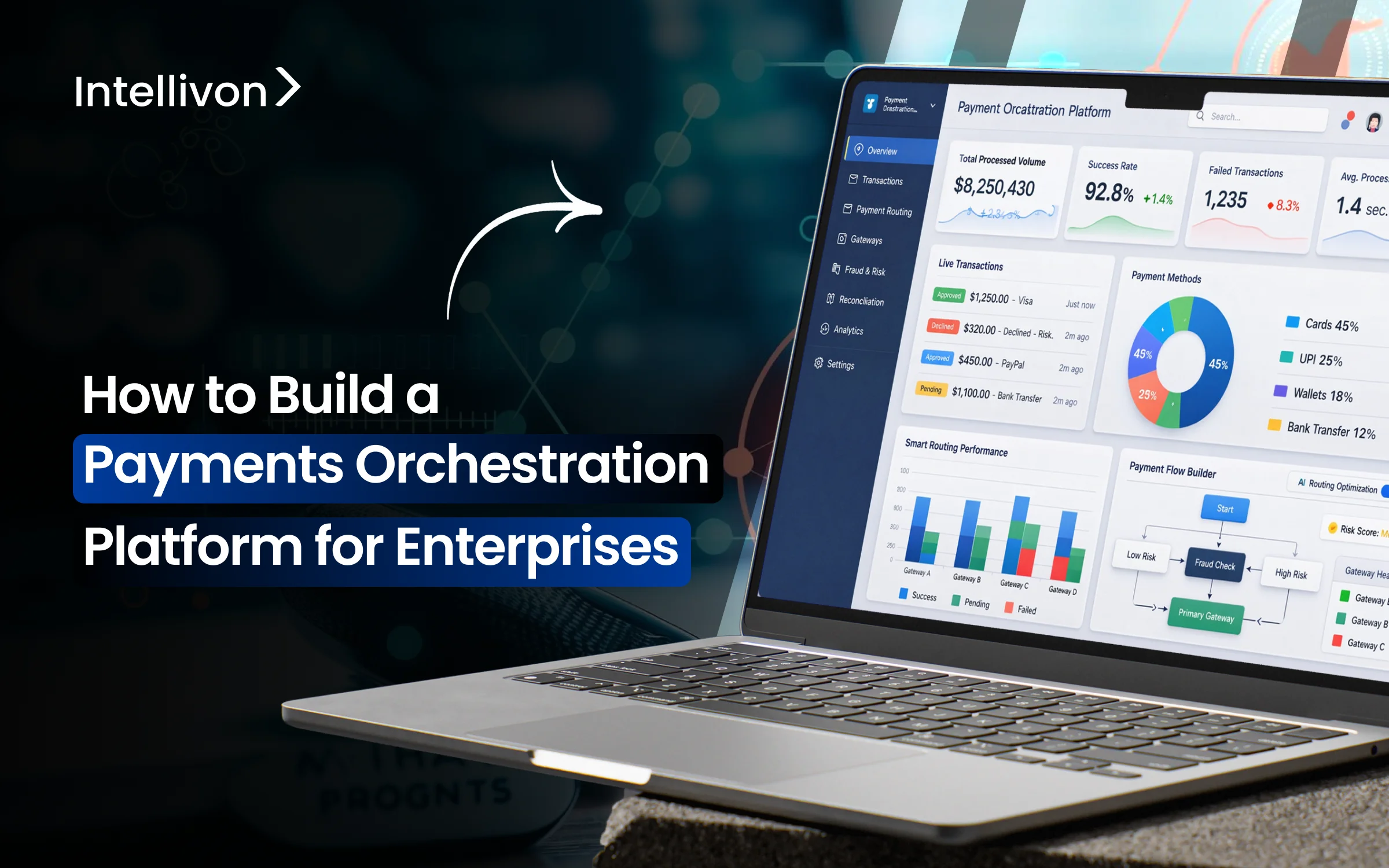
A payments orchestration platform helps by adding one layer that controls the entire payment process. Instead of patching together lots of separate systems, companies get smart routing, one place to manage payment tokens, backup options if something fails, and real-time tracking. Most importantly, this approach moves payments away from being stuck with one provider and toward a system that makes decisions and can easily grow with the business.
At Intellivon, orchestration platforms are designed as reliable, enterprise-level payment decision tools with strong oversight. In this blog, we will draw from these years of experience and explain how we build these platforms for enterprises that want to scale and grow higher ROIs from the ground up.
Why Enterprises Are Investing in Payment Orchestration Platforms
Enterprises are adopting payment orchestration platforms to bring fragmented payment systems under one control layer. This helps improve transaction success rates, reduce operational costs, and support growing e-commerce and cross-border payment demands.
According to the Congruence Market Insights report, the global payments orchestration platform market reached USD 1.53 billion in 2024. It is expected to grow to USD 8.16 billion by 2032, expanding at a 23.3% CAGR.
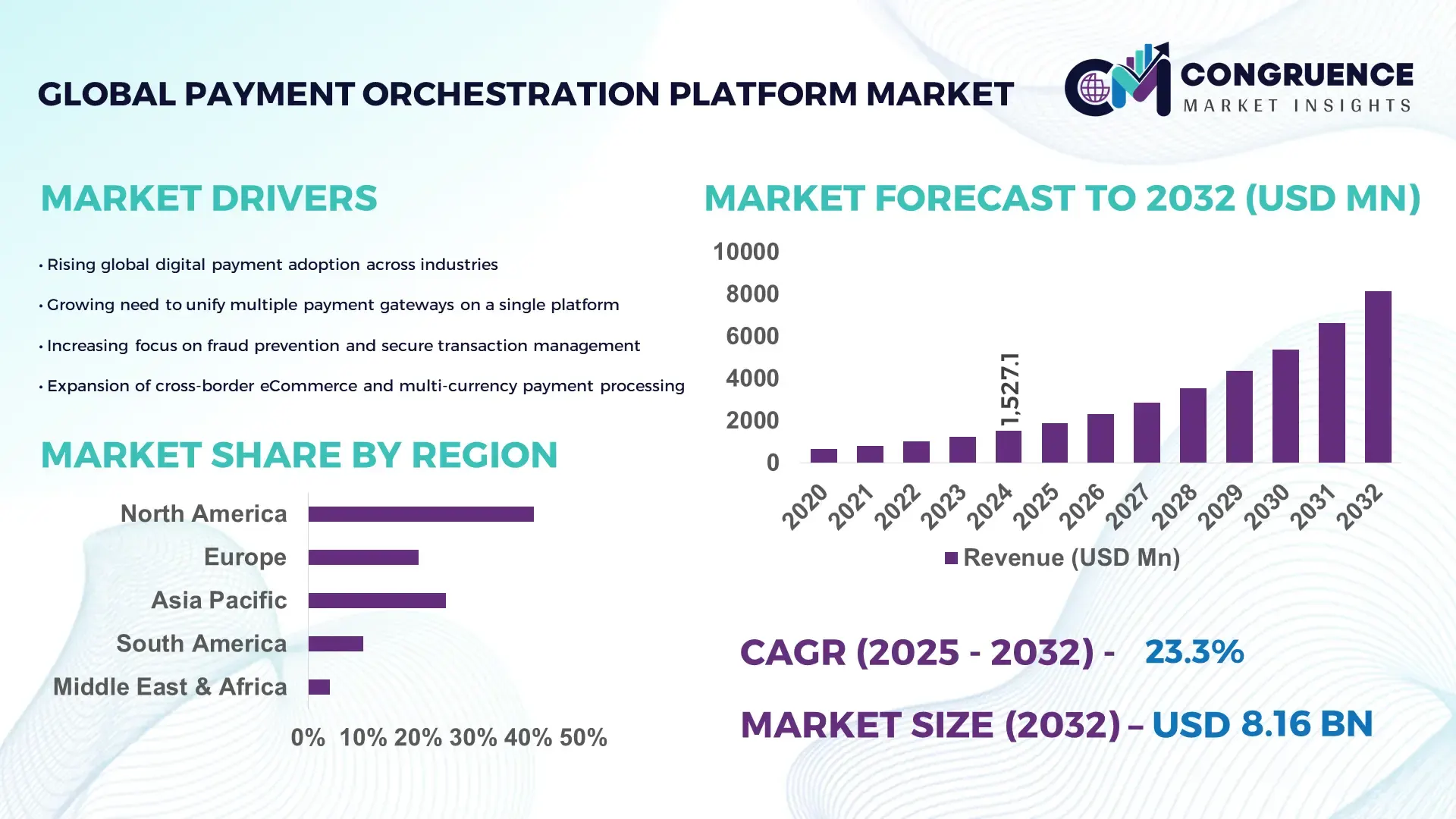
Market Growth Insights:
- AI-powered routing is a major growth driver. It can reduce payment failures by up to 38% and improve approval rates by 25 to 29%.
- E-commerce leads the market with a 48% share. Fintech follows at 27%, driven by demand for smoother checkouts and stronger fraud prevention.
- More than 58% of fintech, retail, and SaaS firms prefer cloud-native platforms to support global expansion and faster deployment.
- In addition, blockchain and open banking integrations are improving interoperability. As a result, about 47% of platforms now support bank-to-bank orchestration.
1. PSP Fragmentation and Vendor Lock-In
Many enterprises added payment service providers over time to support new markets and products. However, each new integration created more complexity behind the scenes.
Teams now manage multiple contracts, routing rules, and settlement flows across regions. This fragmentation makes it harder to maintain consistent performance and visibility. Therefore, orchestration platforms help create a unified control layer that reduces dependency on any single provider.
2. Authorization Rate Optimization Pressure
Payment approval rates directly affect revenue. Even small declines can translate into significant losses at scale. However, approval performance often varies by region, issuer behavior, and processor reliability.
Enterprises are therefore investing in orchestration to apply smart routing, retries, and failover logic. This improves transaction success while keeping the checkout experience smooth for customers.
3. Global Expansion and Local Payment Methods
As businesses expand into new markets, payment expectations change quickly. Customers in different regions prefer different methods, including wallets, real-time payments, and local card schemes.
Supporting these options through direct integrations can slow growth. In addition, maintaining regional compliance adds more overhead.
Payment orchestration simplifies this expansion by centralizing integrations and enabling faster rollout of local payment methods.
4. Compliance and Risk Visibility Requirements
Regulatory expectations around payments continue to tighten across regions. Organizations must monitor fraud exposure, data handling, and transaction flows with greater precision. However, fragmented payment stacks often create blind spots in reporting and audit trails.
A well-designed orchestration layer improves visibility across the payment lifecycle. As a result, risk teams gain better control without adding operational friction.
5. Cost Control and Smart Routing Economics
Payment costs vary widely across processors, geographies, and payment methods. Without intelligent routing, enterprises often pay higher fees than necessary.
In addition, manual optimization rarely keeps pace with changing network conditions. Orchestration platforms introduce rule-based and performance-driven routing decisions. This helps teams manage acceptance rates while also improving margin efficiency.
Together, these pressures explain why payment orchestration has moved from a technical upgrade to a strategic priority.
As payment environments grow more complex, enterprises need centralized intelligence, stronger control, and scalable infrastructure to sustain performance and support global growth.
What Is a Payments Orchestration Platform?
A payments orchestration platform is a centralized control layer that manages routing, processing, and visibility across multiple payment providers.
A payments orchestration platform is a software layer that sits between your application and multiple payment service providers. It standardizes how transactions are routed, processed, and monitored across different processors, acquirers, and payment methods.
Instead of building and maintaining separate integrations, enterprises manage payments through one unified interface. This improves approval rates, simplifies global expansion, and strengthens operational visibility.
In addition, orchestration platforms enable smart routing, automated failover, token management, and consolidated reporting. As payment ecosystems grow more complex, this control layer helps organizations scale reliably while maintaining cost efficiency and risk oversight.
Orchestration Platforms vs Payment Gateways
Payment gateways and orchestration platforms both sit in the transaction flow. However, they serve very different purposes inside an enterprise payments stack. A gateway mainly connects your checkout to a single processor.
In contrast, an orchestration platform manages multiple providers, routing decisions, and performance controls from one place. Therefore, enterprises evaluating long-term scale usually compare both carefully before investing.
Key Differences at a Glance
| Factor | Payment Gateway | Payments Orchestration Platform |
| Primary role | Connects the merchant to one processor | Manages multiple PSPs and payment flows |
| Provider flexibility | Limited, often single provider | High, multi-provider support |
| Routing capability | Basic or static | Dynamic smart routing and failover |
| Token management | Usually provider-specific | Unified, portable token control |
| Global expansion support | Slower, requires new integrations | Faster rollout through one control layer |
| Cost optimization | Minimal | Built-in least-cost routing options |
| Enterprise visibility | Limited reporting | Centralized observability and analytics |
| Vendor lock-in risk | Higher | Lower with the abstraction layer |
In simple terms, a payment gateway enables transactions, while an orchestration platform optimizes and governs them at scale. As payment environments become more complex, many enterprises adopt orchestration to gain flexibility, resilience, and stronger financial control.
Where Orchestration Fits in the Enterprise Payments Stack
A payments orchestration platform sits between the customer-facing application and the underlying payment providers. It acts as the control layer that standardizes routing, security, and reporting across the entire payment flow.
As a result, enterprises gain consistent performance without constantly rebuilding integrations. This position in the stack allows orchestration to coordinate multiple systems while keeping the checkout experience fast and reliable.
In a typical enterprise payments stack, orchestration sits between:
- Frontend checkout, mobile apps, or billing systems
- Fraud and risk decision engines
- Payment gateways and PSP connections
- Acquirers and card network
- Settlement and reconciliation systems
By operating at this central point, orchestration brings visibility, flexibility, and control to complex payment environments.
Types of Payment Orchestration Platforms
Payment orchestration platforms come in several models, including PSP-agnostic, gateway-led, merchant-built, and embedded finance solutions for marketplaces.
Not all orchestration platforms are built the same. The right model depends on your scale, control requirements, and growth plans. Some solutions focus on flexibility, while others prioritize speed of deployment.
Therefore, enterprises should evaluate the platform type carefully before committing to an architecture.
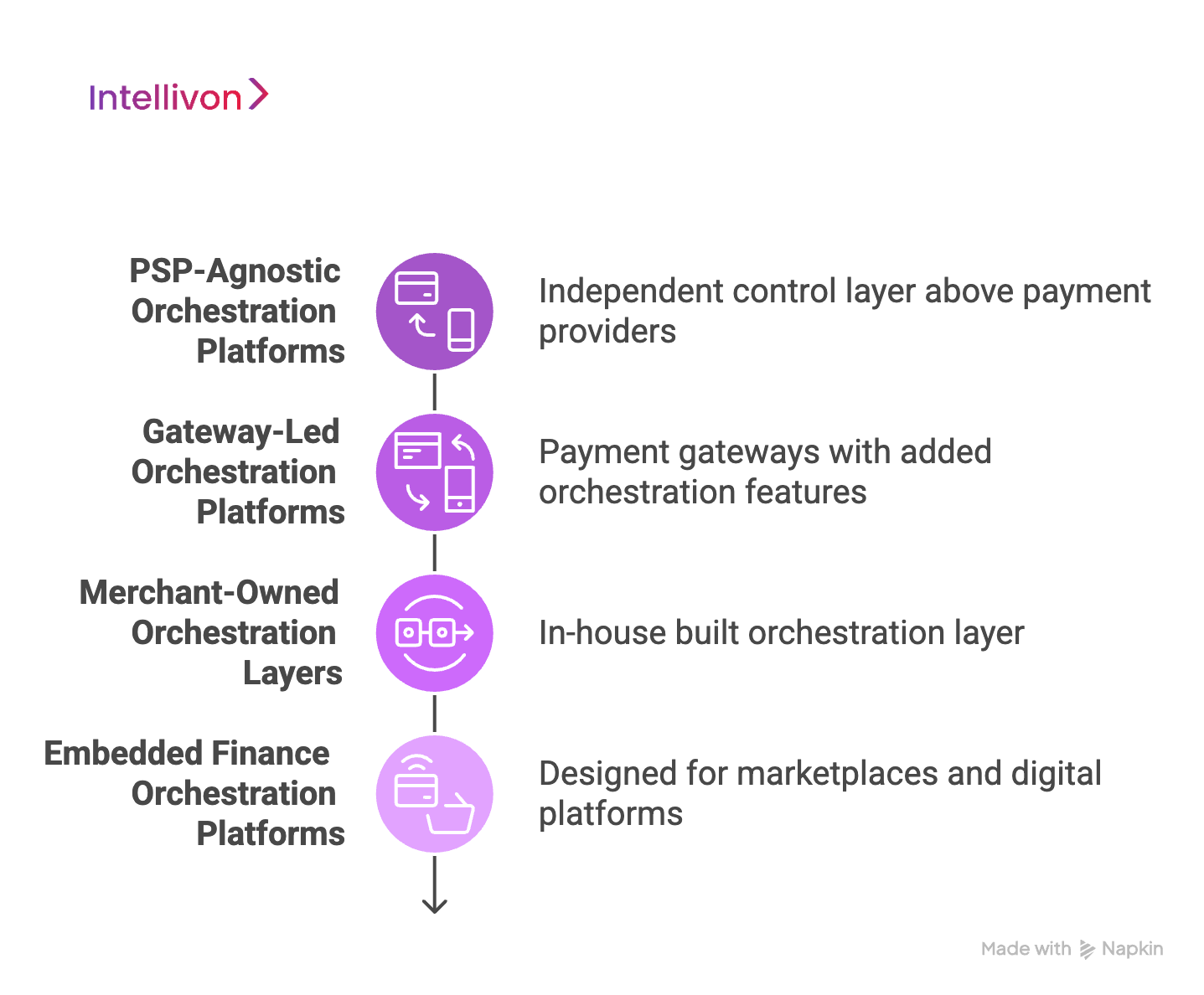
1. PSP-Agnostic Orchestration Platforms
PSP-agnostic platforms operate as an independent control layer above payment providers. They allow enterprises to connect multiple processors without being tied to one ecosystem.
This approach gives teams greater flexibility in routing, pricing negotiations, and regional expansion. As a result, organizations can reduce vendor lock-in and optimize performance more effectively.
2. Gateway-Led Orchestration Platforms
Some payment gateways have added orchestration features over time. These solutions usually offer faster setup because the core gateway is already integrated.
However, flexibility may be limited compared to fully independent platforms. Enterprises should evaluate how portable tokens, routing rules, and provider choices remain as the business scales.
3. Merchant-Owned Orchestration Layers
Large enterprises sometimes build their own orchestration layer in-house. This approach offers maximum control over routing logic, data ownership, and compliance workflows.
However, it also requires significant engineering investment and ongoing maintenance. Therefore, this model typically suits organizations with very high payment volume and strong internal platform teams.
4. Embedded Finance Orchestration Platforms
These platforms are designed for marketplaces, SaaS providers, and digital platforms that manage payments for multiple sellers. They support complex flows such as split payments, sub-merchant onboarding, and multi-party settlements.
In addition, they help platforms expand financial services without rebuilding core payment infrastructure.
Each orchestration model serves a different enterprise need, from flexibility and speed to full platform control. Choosing the right type depends on your scale, ownership goals, and long-term payment strategy.
How Payments Flow Through an Orchestration Platform
A payments orchestration platform routes each transaction through validation, smart routing, authorization, settlement, and reporting to improve performance and control.
Understanding the payment flow helps leaders see where orchestration delivers real value. Instead of sending transactions directly to one processor, the platform evaluates, routes, and monitors each payment step in real time.
As a result, enterprises gain better approval rates, visibility, and resilience across providers.
Step 1: Payment Request Enters Orchestration Layer
The merchant application, checkout, or billing system sends the payment request to the orchestration layer. The platform standardizes the request before further processing.
Step 2: Identity, Token, and Risk Pre-Checks
The system validates customer identity, checks token status, and runs initial fraud or risk rules. This helps filter risky transactions early.
Step 3: Smart Routing Decision Engine
The routing engine evaluates rules, cost logic, and performance data. It then selects the most suitable PSP or acquirer for the transaction.
Step 4: Authorization and Processor Response
The selected provider attempts the authorization. The response returns to the orchestration layer for further handling.
Step 5: Retry and Failover (If Needed)
If the payment fails, the platform can automatically retry through another provider. This improves resilience and recovery rates.
Step 6: Settlement and Reconciliation
Approved transactions move into settlement workflows. The platform consolidates financial data for accurate reconciliation.
Step 7: Reporting and Observability
Finally, the system updates dashboards, alerts, and analytics tools. Teams gain real-time visibility into payment performance.
Where Orchestration Platforms Typically Fail
Even strong platforms can struggle without careful design. Common weak points include:
- Incomplete retry logic that creates false declines
- Poor token portability across providers
- Limited visibility into issuer-level behavior
- Static routing rules that fail under scale
- Weak reconciliation across multi-PSP environments
When designed correctly, orchestration creates a controlled and resilient payment flow. This visibility and flexibility help enterprises scale transactions with greater confidence.
Key APIs in a Payments Orchestration Platform
Payments orchestration platforms rely on specialized APIs to manage routing, security, reconciliation, and real-time payment visibility. These APIs create a unified control layer across multiple processors and payment flows.
Behind every effective orchestration layer sits a well-designed API framework. These interfaces standardize how transactions move across providers, risk controls, and reporting systems.
As payment environments grow more complex, API quality directly affects scalability and reliability. Therefore, enterprises should evaluate orchestration platforms through the maturity of their core APIs.
1. Payment Initiation API
This API receives transaction requests from checkout, mobile apps, or billing systems. It provides a single, unified endpoint that abstracts multiple PSP connections. As a result, teams avoid building separate integrations for each provider.
Key capabilities typically include:
- Unified endpoint for all payment requests
- Multi-PSP abstraction to simplify integrations
- Idempotency handling to prevent duplicate charges
- Support for both synchronous and asynchronous flows
When designed well, this API becomes the front door of the orchestration layer.
2. Smart Routing API
The smart routing API determines where each transaction should be processed. It evaluates predefined rules, performance signals, and cost considerations before selecting a provider.
Strong platforms usually support:
- Rule-based routing for predictable control
- Performance or AI-driven routing for optimization
- Automatic failover logic during processor issues
- Retry orchestration to recover soft declines
Because routing decisions directly affect approval rates and fees, this API plays a critical role in enterprise payment performance.
3. Tokenization and Vault API
This API protects sensitive card and payment data while enabling secure reuse across providers. It helps reduce PCI exposure and simplifies cross-PSP portability.
Enterprise teams should look for:
- PCI scope reduction through secure token vaults
- Support for both network tokens and vault tokens
- Token lifecycle management and rotation controls
- Secure access policies for token usage
A strong token layer improves both security posture and routing flexibility.
4. Reconciliation and Reporting API
Financial visibility becomes difficult in multi-PSP environments. This API consolidates transaction, settlement, and fee data across providers and regions.
It typically enables:
- Unified transaction and settlement views
- Cross-provider financial reconciliation
- Fee and margin analysis
- Export-ready reporting for finance teams
For finance leaders, this API often determines whether the platform delivers real operational value.
5. Webhooks and Event Streaming API
Payments generate many real-time events, including authorizations, failures, refunds, and disputes. Webhooks and event streams push these updates instantly to downstream systems.
Key capabilities include:
- Real-time payment lifecycle notifications
- Event-driven workflow automation
- Reliable retry and delivery mechanisms
- Integration with monitoring and analytics tools
This real-time visibility helps operations and risk teams respond quickly to changing payment conditions.
Together, these APIs form the backbone of a scalable payments orchestration platform. When designed with enterprise needs in mind, they enable flexibility, control, and real-time decision-making across the payment ecosystem.
Enterprise Use Cases for Payment Orchestration Platforms
Enterprises use payments orchestration platforms to improve approval rates, expand globally, reduce costs, and manage complex payment environments from one control layer.
Payment orchestration becomes valuable as payment operations grow in size and complexity. Many organizations struggle with multiple providers, regional methods, and rising costs.
A unified orchestration layer brings control, visibility, and flexibility. The use cases below show where enterprises see the strongest impact.
1. E-commerce Authorization Optimization
Online businesses lose revenue when valid payments fail. Approval rates often vary by issuer, region, and processor performance.
Orchestration platforms use smart routing and retries to improve success rates. As a result, merchants capture more revenue without changing the checkout experience.
2. Global Payment Method Expansion
Different regions prefer different payment methods such as UPI, wallets, and local card schemes. Managing each method separately slows expansion.
Payment orchestration centralizes these integrations. Therefore, teams can launch new payment options faster and enter new markets with less effort.
3. Multi-Acquirer Redundancy
Large merchants need payments to work at all times. Depending on one acquirer creates risk during outages. Orchestration platforms spread traffic across multiple providers and enable automatic failover. This improves uptime and protects revenue.
4. Marketplace and Platform Payments
Marketplaces and SaaS platforms often handle payments for many sellers. These flows require split payments and sub-merchant management. Orchestration platforms support these complex flows from one layer. As a result, platforms can scale payments without building heavy custom systems.
5. Subscription and Recurring Billing Optimization
Subscription businesses depend on reliable recurring payments. Failed renewals can quickly increase churn. Orchestration platforms support token lifecycle management and intelligent retries. This helps businesses keep recurring revenue stable.
Cost Optimization and Fee Management
Processing fees vary across providers and regions. Without proper routing, costs can rise quickly. Orchestration platforms enable least-cost routing and clear fee visibility. In addition, finance teams gain better control over payment margins.
These use cases show why orchestration is becoming essential for modern enterprises. It improves payment success, reduces risk, and gives teams stronger control as payment operations grow.
Core Architecture of an Enterprise Payments Orchestration Platform
The core architecture of a payments orchestration platform uses layered services to manage routing, security, tokenization, and financial visibility at enterprise scale.
A strong payments orchestration platform is built in layers. Each layer handles a specific responsibility while working together as one controlled system.
This structure helps enterprises scale across providers, regions, and payment methods without creating integration chaos. It also improves reliability, security, and financial visibility as transaction volume grows. Below are the core layers most enterprise platforms include.
1. Unified Payment Abstraction Layer
This layer standardizes how payment requests enter the platform. It hides the complexity of different PSP APIs behind one consistent interface.
Key responsibilities:
- Normalize payment requests from apps and checkout systems
- Provide a single integration point for merchants
- Manage multi-PSP connectivity behind the scenes
- Reduce engineering effort for new provider integrations
Because this layer sits at the front, it sets the foundation for scalability.
2. Intelligent Routing Engine
The routing engine decides where each transaction should go. It evaluates rules, performance signals, and cost factors in real time.
Typical capabilities include:
- Rule-based routing by region, card type, or volume
- Performance-based or adaptive routing
- Automatic failover between providers
- Retry logic for soft declines
This layer directly influences approval rates and cost efficiency.
3. Tokenization and Vault Infrastructure
This layer protects sensitive payment data and enables secure reuse across providers. It is critical for both compliance and flexibility.
Core functions include:
- Secure storage of payment credentials
- Support for network and vault tokens
- Token lifecycle management and rotation
- PCI scope reduction controls
A well-designed vault allows enterprises to switch providers without losing customer payment data.
4. Fraud and Risk Decision Layer
This layer evaluates transactions for potential fraud or policy violations before and after authorization.
Common responsibilities:
- Pre-authorization risk scoring
- Rule-based fraud checks
- Integration with external fraud tools
- Real-time risk signals for routing decisions
Strong risk controls help reduce chargebacks while protecting approval rates.
5. Settlement and Reconciliation Engine
After authorization, transactions must be settled and matched correctly. This layer ensures financial accuracy across providers.
Key capabilities:
- Consolidated settlement tracking
- Cross-PSP reconciliation
- Fee and commission calculations
- Exception handling and dispute support
Finance teams rely heavily on this layer for clean reporting.
6. Observability and Reporting Layer
This final layer provides visibility into payment performance and system health. It turns raw transaction data into actionable insights.
Typical features include:
- Real-time dashboards and alerts
- Approval rate monitoring
- Provider performance analytics
- Financial and operational reporting
With strong observability, teams can quickly identify issues and optimize performance.
When these layers work together, the orchestration platform becomes a reliable control center for enterprise payments. This structured architecture enables flexibility, resilience, and clear financial visibility as payment operations scale globally.
Step-by-Step: How to Build a Payments Orchestration Platform
Building a payments orchestration platform requires a phased approach across abstraction, routing, security, reconciliation, and reliability layers.
Building orchestration software involves more than connecting payment providers. It requires strong control across routing, risk, and financial operations. Many enterprises underestimate the operational depth involved. Therefore, a structured build approach reduces risk and supports long-term scale.
At Intellivon, we design orchestration platforms as a governed payment infrastructure for complex enterprise environments. The framework below reflects how we typically plan and deliver these systems.
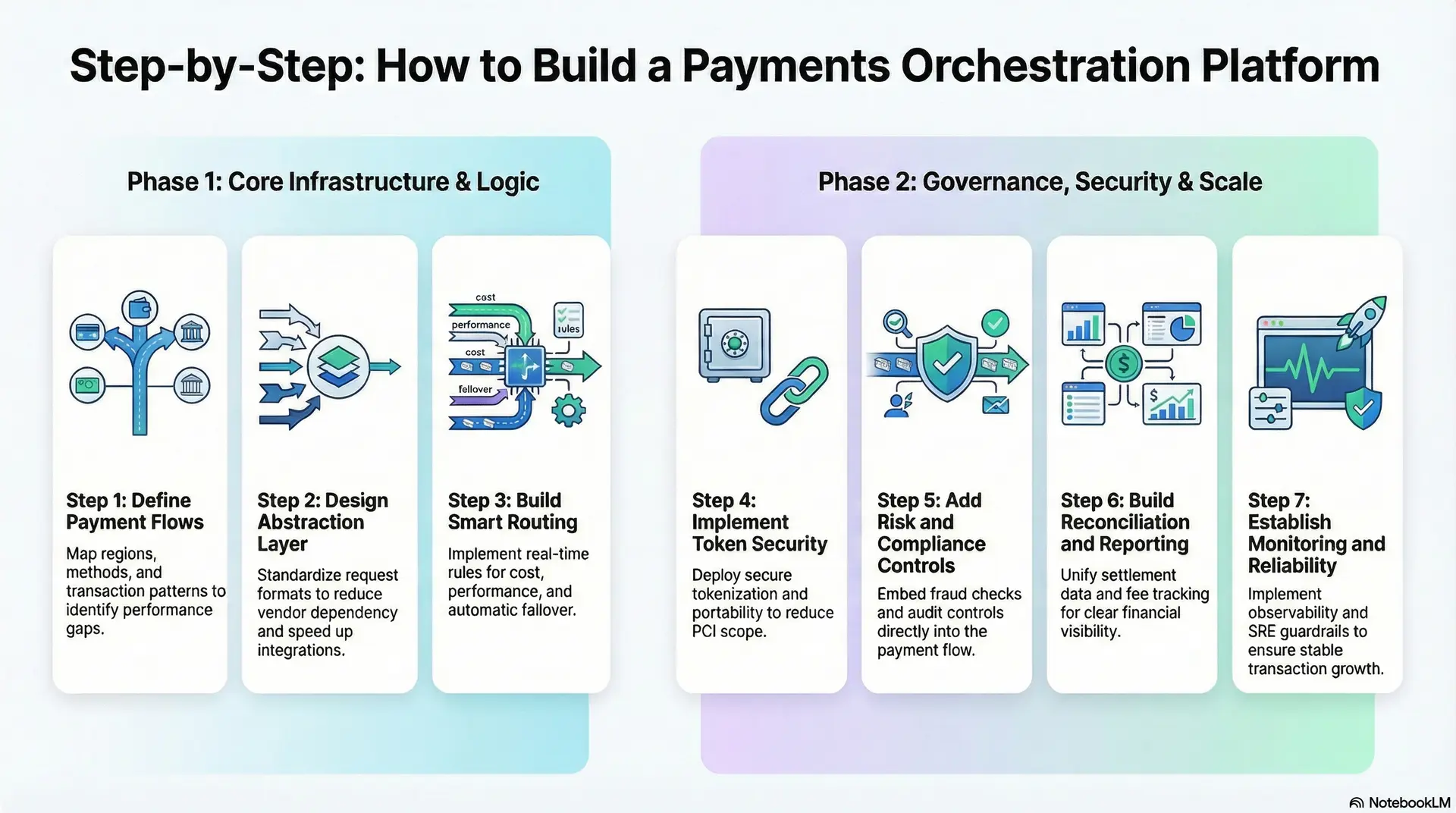
Step 1: Define Payment Flows
At Intellivon, we begin by mapping how payments move across your business today. We analyze regions, payment methods, providers, and transaction patterns.
This step reveals performance gaps early. In addition, it helps prioritize the integrations that will deliver the most impact.
Step 2: Design the Abstraction Layer
Next, we design a unified abstraction layer above all PSP connections. This layer standardizes request formats and hides provider complexity from upstream systems.
As a result, future integrations become faster and less risky. It also reduces long-term vendor dependency.
Step 3: Build Smart Routing
We then implement a routing engine that evaluates cost, performance, and regional rules in real time.
The platform includes retry logic and automatic failover between providers. This is a critical step because routing quality directly affects approval rates and uptime.
Step 4: Implement Token Security
At this stage, we deploy secure tokenization and vault controls. The platform supports token portability across providers and manages token lifecycle events.
In addition, this approach helps reduce PCI scope while protecting sensitive payment data.
Step 5: Add Risk and Compliance Controls
Next, we embed fraud checks, policy rules, and audit controls into the payment flow. These controls operate without slowing the customer experience.
Enterprises also gain clear traceability for regulatory reviews. Therefore, risk management becomes part of the core platform.
Step 6: Build Reconciliation and Reporting
We then design the financial reconciliation layer to unify settlement data across providers. This includes fee tracking, exception handling, and reporting workflows.
At the same time, finance teams gain a clean, reliable view of payment performance across regions.
Step 7: Establish Monitoring and Reliability
Finally, we implement observability, alerting, and SRE guardrails. This ensures the platform remains stable as transaction volume grows. Real-time monitoring helps teams detect issues early and maintain consistent payment performance.
When built with this structured approach, a payments orchestration platform becomes a reliable control center for enterprise payments. It supports scale, improves visibility, and prepares the business for future growth.
Cost to Build a Payments Orchestration Platform
At Intellivon, payments orchestration platforms are built as governed payment infrastructure, not as routing features layered onto existing gateways. The focus stays on creating environments that operate reliably across multiple PSPs, regions, and regulatory boundaries. Every architectural decision considers authorization performance, routing accuracy, reconciliation clarity, and long-term risk exposure from the start.
When budget constraints exist, scope can be refined with care. However, core elements such as smart routing, token security, financial visibility, and audit readiness are never compromised. Therefore, enterprises avoid expensive fixes that often appear after launch. Predictability improves, and long-term ROI remains protected.
Estimated Phase-Wise Cost Breakdown
| Phase | Description | Estimated Cost Range (USD) |
| Program Discovery & Payment Mapping | Flow analysis, provider landscape, regional coverage review | $12,000 – $20,000 |
| Orchestration Architecture Design | Abstraction model, routing strategy, scalability planning | $18,000 – $30,000 |
| PSP & Acquirer Integrations | Multi-provider connectivity and normalization | $20,000 – $38,000 |
| Smart Routing & Retry Engine | Rule engine, failover logic, performance tuning | $22,000 – $40,000 |
| Tokenization & Vault Infrastructure | Secure storage, token lifecycle, PCI scope controls | $18,000 – $32,000 |
| Fraud & Risk Controls | Policy rules, fraud signals, compliance instrumentation | $15,000 – $28,000 |
| Reconciliation & Reporting Engine | Settlement matching, fee tracking, and finance visibility | $20,000 – $36,000 |
| Security & Compliance Controls | Encryption, RBAC, audit logging, data protection | $14,000 – $26,000 |
| Testing & Performance Validation | Load testing, failover validation, and reliability checks | $10,000 – $18,000 |
| Deployment & Scale Readiness | Cloud rollout, monitoring setup, SRE tuning | $12,000 – $20,000 |
Total initial investment: $161,000 – $288,000
Ongoing maintenance and optimization: 15–22% of the initial build per year
Hidden Costs Enterprises Should Plan For
Even well-scoped orchestration programs can face pressure when indirect cost drivers are missed. Planning for these early protects both timelines and margins as payment volume grows.
- PSP behavior differences often require ongoing routing tuning
- Compliance overhead increases with new regions and regulations
- Fraud operations may need additional tools and review teams
- Reconciliation complexity rises as transaction volume scales
- Multi-region expansion introduces data residency requirements
- Support operations grow as payment traffic increases
Because of this, mature cost planning always extends beyond the initial build.
Best Practices to Avoid Budget Overruns
Based on Intellivon’s experience delivering enterprise payment infrastructure, several patterns consistently lead to more predictable outcomes.
- Start with clearly defined payment flows before expanding coverage
- Embed smart routing and token discipline into the core architecture
- Use modular services that support multi-PSP growth
- Align providers, acquirers, and regions early in the program
- Maintain strong observability across routing and authorization
- Design for regulatory change rather than one-time compliance
Enterprises that follow these principles typically avoid the expensive rework that slows many orchestration initiatives.
Request a tailored proposal from Intellivon’s enterprise fintech specialists to receive a delivery roadmap aligned with your payment strategy, provider landscape, and long-term growth plans.
Security and Compliance Requirements Enterprises Cannot Ignore
Enterprise payments orchestration platforms must embed PCI controls, strong encryption, access governance, and audit visibility to manage risk at scale.
As payment volume grows, security and compliance move from checklist items to core platform requirements. Fragmented controls can create blind spots that expose the business to fraud, data risk, and regulatory penalties.
Therefore, orchestration platforms must be designed with governance built into every layer. The areas below require careful attention during both design and operations.
1. PCI DSS Scope Management
PCI scope can expand quickly in multi-PSP environments. Without proper controls, sensitive card data may flow through more systems than intended.
Orchestration platforms should use tokenization, network tokens, and data minimization to reduce exposure. As a result, enterprises can simplify compliance audits and lower long-term risk.
2. Data Protection and Encryption Strategy
Payment data must remain protected both in transit and at rest. Strong encryption standards, secure key management, and vault isolation are essential.
In addition, platforms should support end-to-end protection across providers and regions. This ensures sensitive information stays secure even as integrations grow.
3. Access Governance and RBAC
Large payment environments involve many internal and external users. Without clear access controls, privilege sprawl can create serious risk.
Role-based access control helps enforce least-privilege policies across operations, finance, and support teams. Therefore, enterprises maintain tighter control over who can view or modify payment data.
4. Audit Logging and Traceability
Regulators and risk teams require clear visibility into payment activity. Comprehensive audit logs should capture routing decisions, access events, configuration changes, and transaction flows.
These logs must be searchable and tamper-resistant. With strong traceability, teams can investigate issues quickly and support regulatory reviews with confidence.
5. Regional Regulatory Considerations
Payment rules vary across countries and payment networks. Requirements around data residency, strong customer authentication, and local processing can change frequently.
Orchestration platforms should be designed to adapt to these regional demands. This flexibility helps enterprises expand globally without constant rework.
When security and compliance are built into the core architecture, orchestration platforms scale with far less risk. This foundation allows enterprises to grow payment volume while maintaining strong control and regulatory confidence.
Leading Payment Orchestration Platforms in the Market
Several vendors offer payment orchestration capabilities, each with different strengths in routing, global coverage, and enterprise control.
The payments orchestration market has matured quickly. However, platforms vary widely in flexibility, depth, and enterprise readiness. Some providers evolved from gateways, while others were built as orchestration-first platforms. Therefore, enterprises should evaluate each option carefully before making a long-term decision.
1. Stripe
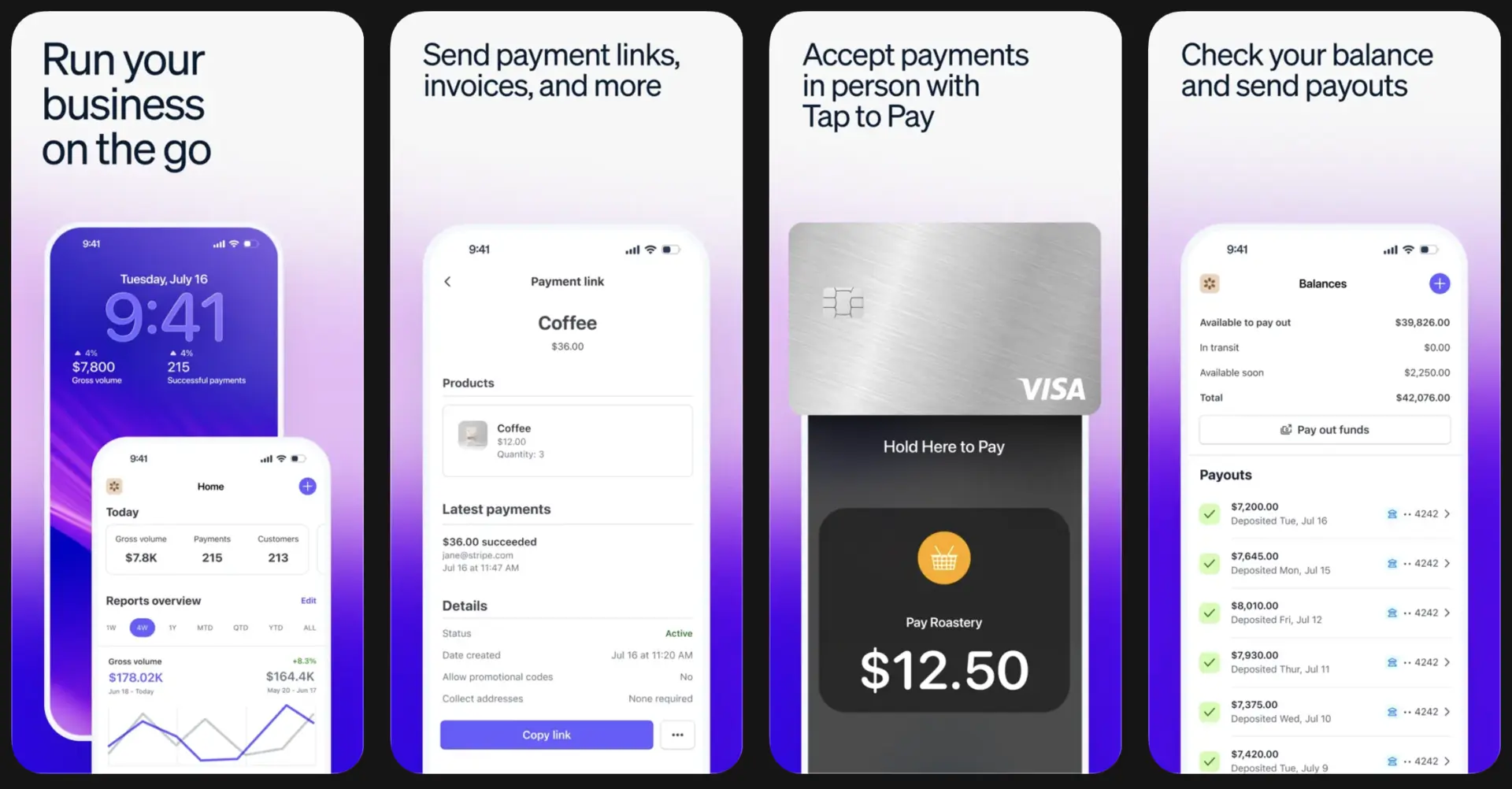
Stripe is widely known for its developer-friendly payments ecosystem and expanding orchestration capabilities. Many fast-growing digital businesses adopt it early because implementation is straightforward and documentation is strong. In addition, the platform offers a broad set of adjacent tools that support payments, billing, and reporting in one environment.
However, organizations that require deep multi-PSP neutrality or highly customized routing may find the flexibility somewhat constrained compared to independent orchestration layers.
Ideal use case: Digital-first companies that prioritize speed to market, strong APIs, and an integrated payments stack.
2. Adyen
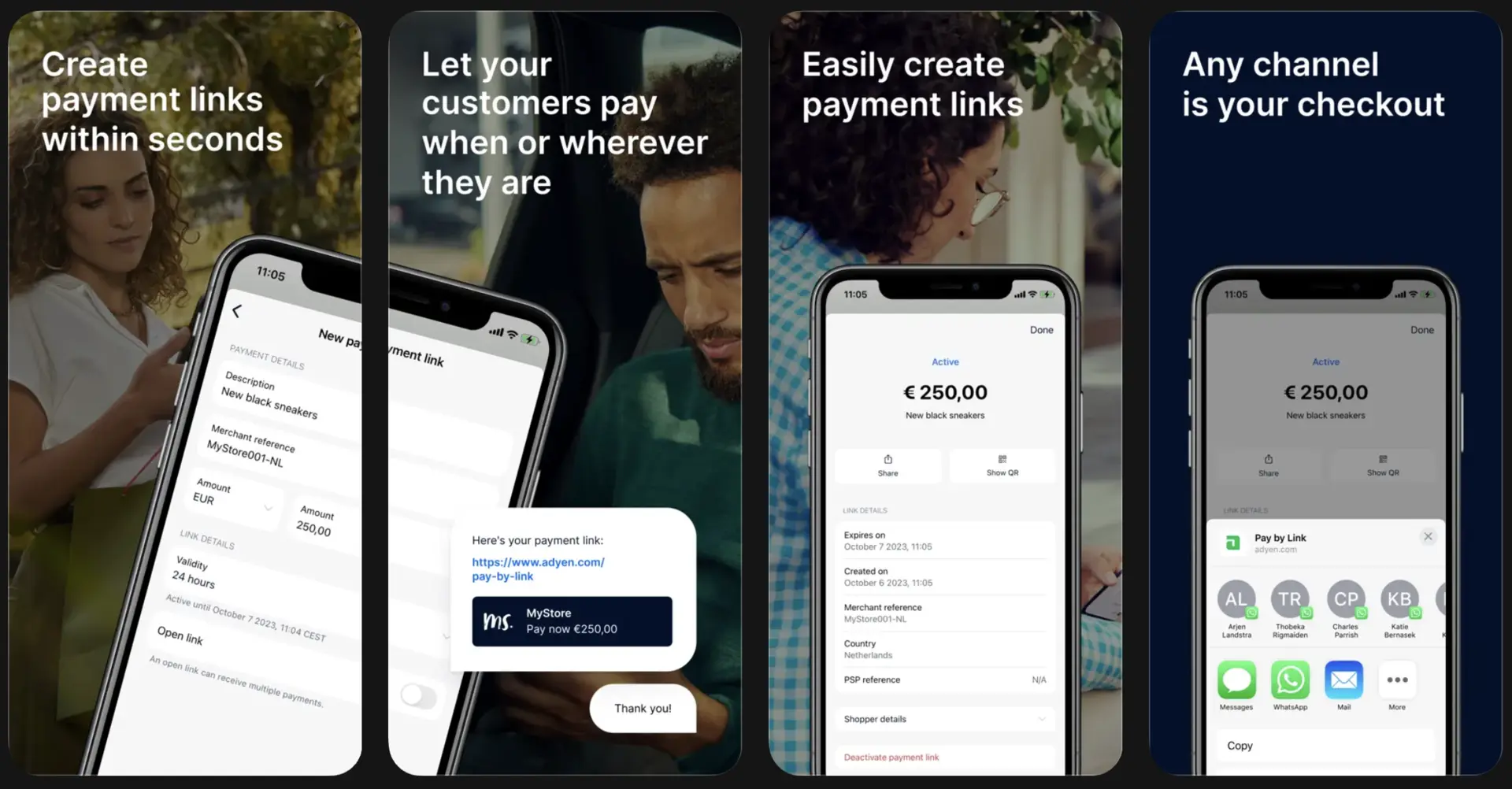
Adyen operates as a vertically integrated global payments platform with orchestration features built into its full-stack model. It provides strong acquiring coverage across many regions and maintains tight control across authorization and settlement flows. This approach often delivers consistent performance for enterprises operating at a global scale.
At the same time, the vertically integrated structure can limit provider-level flexibility for organizations that want a fully processor-agnostic strategy.
Ideal use case: Large global merchants that prefer an all-in-one payments environment with strong international coverage.
3. Checkout.com
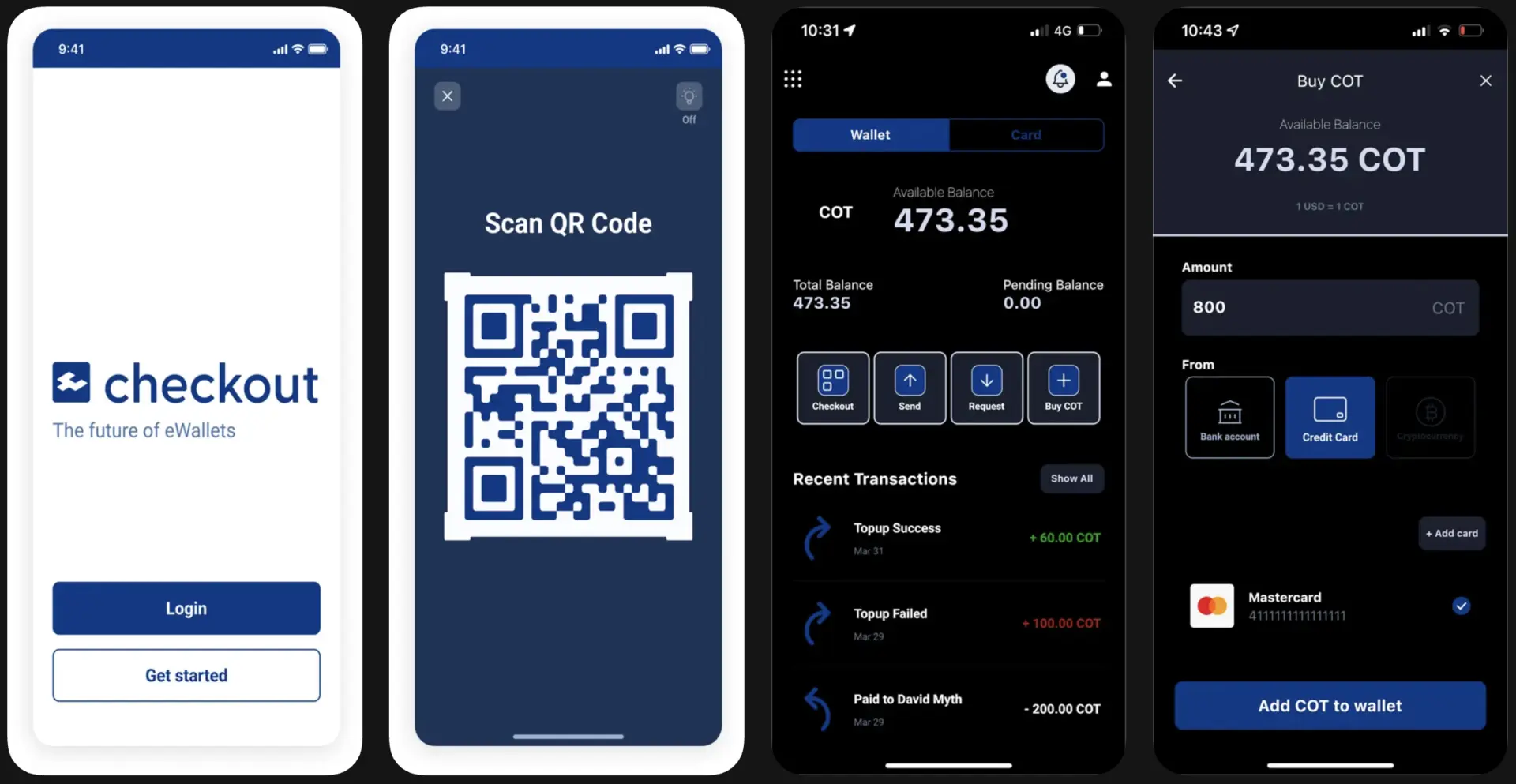
Checkout.com positions itself as a performance-focused payments platform built for high-growth digital businesses. It offers strong global acquiring capabilities and continues to expand its orchestration and routing features.
Many enterprises value its focus on authorization optimization and regional coverage. That said, companies looking for a deeply independent orchestration control layer may still need additional abstraction depending on their architecture goals.
Ideal use case: High-growth online businesses that want strong global processing performance with modern API support.
4. PayPal (Braintree)

Through Braintree, PayPal provides orchestration-style capabilities alongside its well-known wallet ecosystem. The platform supports multiple payment methods and offers reasonable flexibility for many digital commerce scenarios. It also benefits from PayPal’s global brand recognition and network reach.
However, enterprises building highly customized multi-provider routing strategies may find limitations compared to orchestration-first platforms.
Ideal use case: Businesses that want broad wallet coverage combined with standard multi-processor support.
Conclusion
Payment orchestration has become a strategic layer for enterprises managing complex payment environments. As providers, regions, and payment methods continue to expand, fragmented systems create both revenue and operational risk.
A well-designed orchestration platform brings these moving parts under one governed control layer. It improves approval rates, strengthens resilience, and gives finance and risk teams clearer visibility.
However, long-term success depends on architecture discipline, strong security controls, and reliable provider management. This is where execution matters most. Intellivon helps enterprises design and scale orchestration platforms that support global growth with confidence, control, and measurable financial impact.
Build a Payments Orchestration Platform With Intellivon
At Intellivon, payments orchestration platforms are engineered as governed payment infrastructure, not as routing features layered onto disconnected systems. Every architectural decision focuses on authorization performance, routing intelligence, financial visibility, and regulatory readiness across complex enterprise environments.
As payment ecosystems expand across providers, regions, and payment methods, consistency becomes essential. Therefore, performance, compliance posture, and operational visibility remain stable even as transaction volume and routing complexity increase. This disciplined approach helps organizations scale payments confidently while maintaining long-term control.
Why Partner With Intellivon?
- Enterprise-grade orchestration architecture designed for complex, multi-PSP payment environments
- Proven delivery across e-commerce, fintech, marketplaces, and global payment platforms
- Compliance by design with built-in audit visibility and policy enforcement
- Secure, modular infrastructure supporting cloud, hybrid, and multi-region deployments
- AI-enabled routing intelligence, risk monitoring, and payment performance optimization
Book a strategy call to explore how Intellivon can help you design and scale a payments orchestration platform with confidence, control, and long-term enterprise value.
FAQs
Q1. What does a payments orchestration platform do?
A1: A payments orchestration platform manages and routes transactions across multiple payment providers from one control layer. It helps improve approval rates, reduce costs, and simplify global payment operations. In addition, it gives teams better visibility into performance, risk, and settlement data.
Q2. How long does it take to build a payments orchestration platform?
A2: Timelines vary based on scope and complexity. Most enterprise builds take four to eight months for a production-ready platform. However, multi-region coverage, advanced routing, and deep compliance requirements can extend the timeline. Careful planning early usually speeds delivery later.
Q3. Can payment orchestration improve authorization rates?
A3: Yes. Orchestration platforms use smart routing, retries, and failover logic to improve transaction success. As a result, enterprises often see measurable gains in approval rates. The impact depends on provider mix, regional coverage, and routing quality.
Q4. Is a payments orchestration platform PCI compliant by default?
A4: Not automatically. The platform must be designed with tokenization, encryption, and proper data handling controls. When implemented correctly, orchestration can reduce PCI scope and simplify audits. However, compliance still depends on architecture and operational discipline.
Q5. When should an enterprise invest in payment orchestration?
A5: Organizations usually consider orchestration when they manage multiple PSPs, expand globally, or see rising payment costs. It becomes especially valuable when approval rates fluctuate or when reporting lacks clarity. At that stage, a unified control layer delivers the most benefit.