When a major healthcare provider’s patient portal was breached in 2024, nearly 190 million medical records were exposed. The fallout went beyond regulatory penalties, eroded trust quickly, and stalled strategic partnerships. At the same time, competitive credibility weakened in ways that couldn’t be fixed easily. In healthcare, a single damage to reputation causes rippling effects in retaining users over time.
Creating a medical history management app is a long-term responsibility. Every prescription record, diagnostic image, and clinical note holds long-term patient value and organizational risk. Therefore, early design choices have consequences that appear years later, often under scrutiny.
At Intellivon, we build these enterprise medical history apps with this reality in mind. Across healthcare organizations our team has developed apps that manage millions of sensitive records while ensuring governance, resilience, and audit readiness at scale. As a result, security, compliance, and data integrity are seen as essential foundations rather than fixes. This guide looks at the strategic, technical, and operational methods of building a medical history management app from the ground up.

Why Should You Invest In Medical History Management Apps Now?
Medical history management apps, also known as Personal Health Record (PHR) apps, securely digitize and share patient records across EHRs, telehealth, and devices, reducing care fragmentation while supporting enterprise interoperability, compliance, and regulated healthcare data exchange.
The personal health record software market continues to expand steadily. In 2025, it is valued between USD 47.40–47.85 million. By 2033–2034, it is projected to reach USD 105–113 million, growing at a CAGR of 10.06–10.61%. This growth reflects rising digitization and regulatory pressure.
However, the larger opportunity lies in medical document management systems. This segment is valued at USD 1.6 billion in 2025 and is expected to reach USD 3.4 billion by 2032 at an 11.5% CAGR. Therefore, enterprises increasingly view medical history platforms as foundational infrastructure, not standalone patient tools.
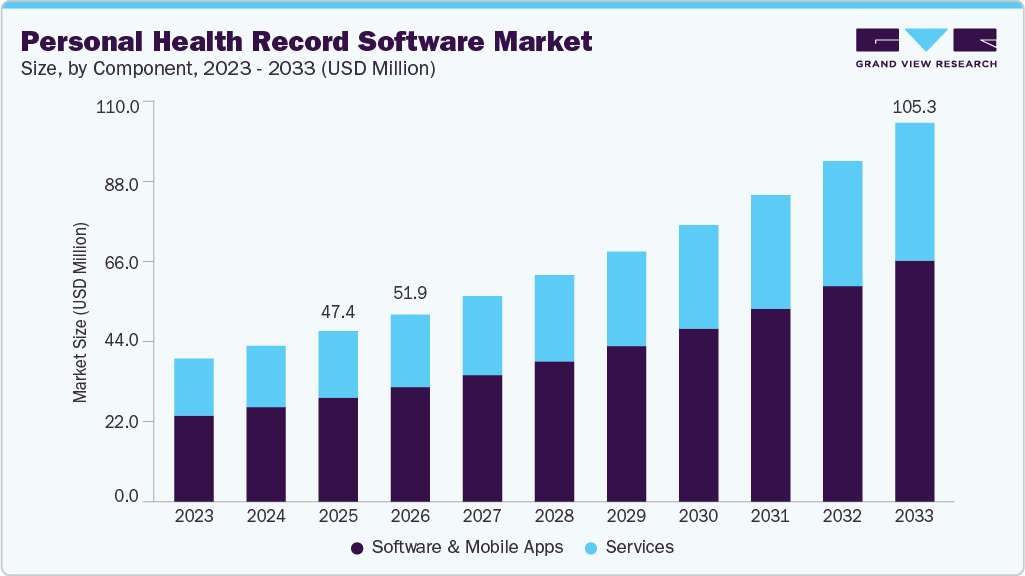
Growth Insights:
- Healthcare digitization is accelerating demand for patient-controlled platforms that ensure lifelong record continuity and personalized care at enterprise scale.
- Integration with wearables, telehealth, and AI enables real-time monitoring, driving higher adoption in chronic disease programs that account for over 60% of long-term care costs.
- North America leads adoption with a 46.8% market share, supported by HIPAA enforcement and enterprise-level digital health mandates.
- Cloud-based PHR platforms improve ROI by reducing care fragmentation and enabling scalable telehealth coordination across populations.
- Asia-Pacific adoption is rising rapidly due to smartphone penetration exceeding 70% in key healthcare markets.
- Enterprise demand is shifting toward HIPAA-compliant, AI-enabled platforms with blockchain-backed, immutable records to meet governance, auditability, and C-suite risk expectations.
Investing in medical history management apps now delivers measurable ROI. These platforms reduce administrative overhead, improve billing accuracy, and lower clinical error rates. As a result, operational costs decline while revenue capture improves.
Cloud-based and interoperable systems also reduce infrastructure spend. They scale efficiently as data volumes grow. Therefore, enterprises avoid repeated reinvestment in fragmented systems.
As regulatory pressure increases, early investment protects margins and market position. More importantly, these platforms turn compliance-driven systems into long-term growth enablers rather than ongoing cost centers.
What Is a Medical History Management App?
A medical history management app is a digital system that collects and maintains a patient’s complete health record over time. It brings together clinical notes, diagnoses, medications, lab results, and imaging into one governed platform.
These apps allow authorized providers to access accurate histories when care decisions are made. As a result, information no longer remains trapped in disconnected systems.
For enterprises, the app functions as a coordination layer. It supports interoperability, enforces access controls, and maintains audit trails. Therefore, medical histories stay consistent, secure, and usable across the care lifecycle.
Core Data Types Managed Inside Medical History Management Apps
Medical history platforms succeed when they manage the right data with structure and consistency. Each data type plays a role in continuity, safety, and decision accuracy. Therefore, enterprise systems treat these records as governed assets, not loose documents.
- Patient demographics and identity: Name, date of birth, contact details, and identifiers anchor all records. This reduces mismatches and duplication across systems.
- Clinical history and diagnoses: Conditions, onset dates, and current status provide long-term clinical context. As a result, care decisions stay informed over time.
- Medications and treatment plans: Prescriptions, dosages, and adherence history prevent conflicts and errors. This improves safety and care coordination.
- Lab reports and imaging: Test results, scans, and discrete values such as HbA1c support diagnosis and monitoring. Therefore, repeat testing declines.
- Procedures and hospitalizations: Dates, details, and outcomes create a clear care timeline. This helps teams understand prior interventions quickly.
- Lifestyle and behavioral data: Diet, activity, smoking, and stress factors influence risk assessment. These inputs support preventive strategies.
- Allergies and adverse reactions: Medication and food allergies with severity indicators protect patient safety. This data must always remain visible.
- Immunizations and vaccinations: Vaccine types, dates, and boosters support compliance and population health tracking.
- Vital signs: Blood pressure, heart rate, BMI, and wearable trends enable longitudinal monitoring. As a result, changes surface earlier.
- Family and social history: Genetic risks, habits, and occupation inform long-term risk profiling and screening.
- Care plans and goals: Directives, preferences, and shared goals align care delivery with patient intent.
- Provider details: Clinician names and credentials add accountability to encounters. This supports audits and trust.
Together, these data types form a complete, usable medical history. When managed centrally, they improve care quality while reducing enterprise risk.
How Medical History Management Apps Work
Medical history apps work by collecting records from many sources, organizing them into a single timeline, and controlling how they are shared. Therefore, clinicians and patients see the same trusted version of the record when decisions are made.
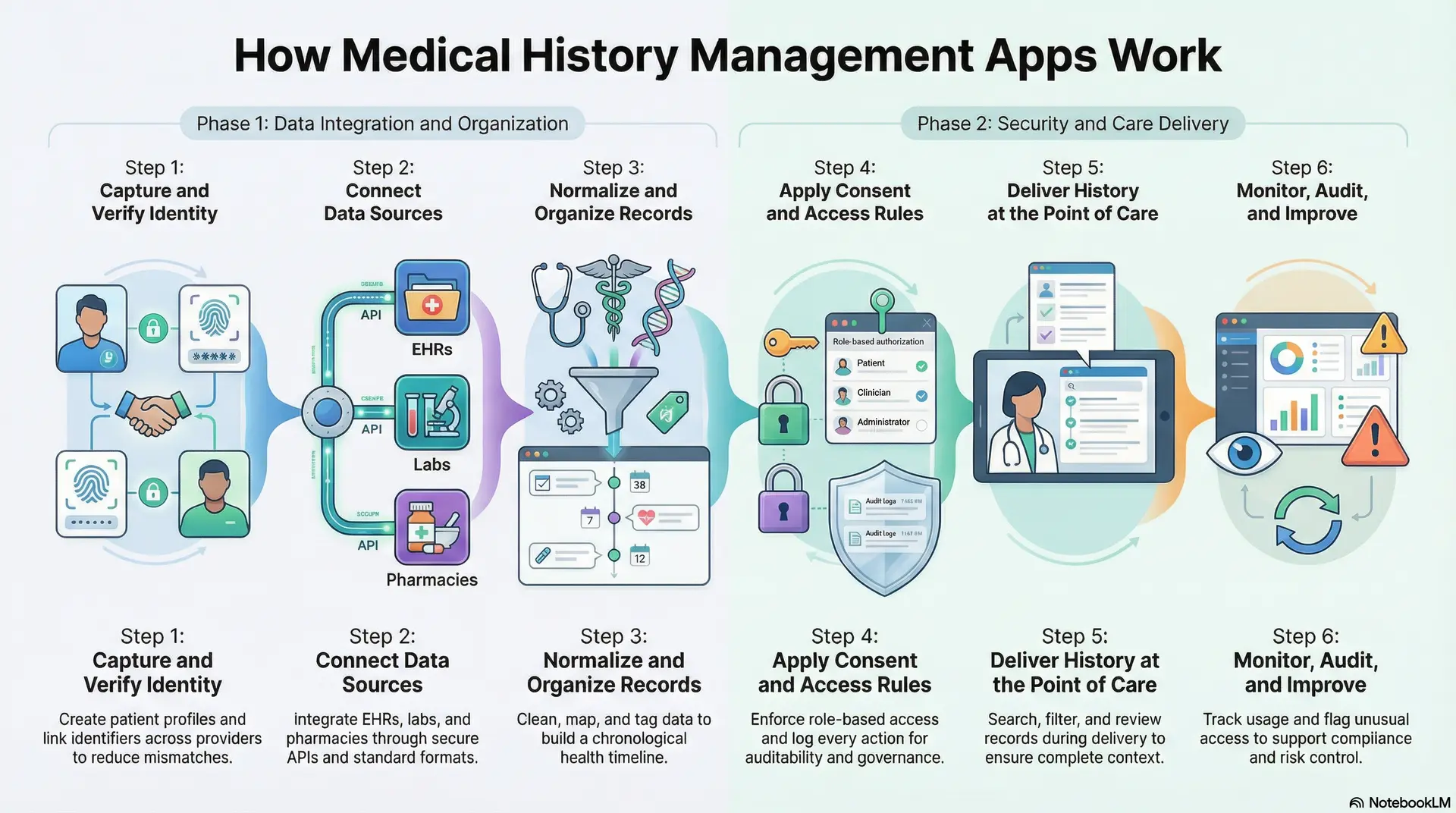
Step 1: Capture and Verify Identity
The system creates a patient profile and verifies identity. It also links identifiers across providers to reduce mismatches. As a result, records are attached to the right person.
Step 2: Connect Data Sources
The app integrates with EHRs, labs, pharmacies, telehealth platforms, and wearables. It pulls data through secure APIs and standard formats. Therefore, history becomes continuous instead of fragmented.
Step 3: Normalize and Organize Records
Incoming data is cleaned, mapped, and tagged. The platform then builds a chronological health timeline. As a result, teams find key details quickly.
Step 4: Apply Consent and Access Rules
The system enforces role-based access and patient consent. It logs every view, edit, and share action for auditability. Therefore, governance stays consistent across teams.
Step 5: Deliver History at the Point of Care
Clinicians search, filter, and review records during care delivery. Patients can also view and share selected documents when needed. As a result, decisions rely on complete context.
Step 6: Monitor, Audit, and Improve
The platform tracks usage, flags unusual access, and supports compliance reporting. It also measures data quality and integration health. Therefore, risk stays controlled as the scale increases.
A medical history app works best when it connects data, enforces governance, and delivers clarity in real time. This turns record management into reliable care coordination.
Key Features of a Medical History Management App
Medical history platforms must operate reliably under regulatory scrutiny, high data volumes, and continuous clinical use. Therefore, each feature must serve a clear operational purpose while supporting scale, security, and governance. Below are the core features enterprises should expect, explained in practical terms.
1. Regulatory Compliance by Design
Compliance cannot be an afterthought in healthcare systems. Medical history apps must align with HIPAA, GDPR, HITECH, and FHIR standards from the ground up, with ABDM support where applicable. These requirements shape how data is stored, accessed, and shared.
As a result, consent, access controls, and audit trails remain consistent across workflows. This reduces last-minute remediation before audits. It also lowers long-term compliance costs as regulations evolve.
2. End-to-End Security Controls
Security must extend beyond perimeter defenses. End-to-end encryption protects data both in transit and at rest. At the same time, zero-trust authentication verifies every user and system interaction, even within internal networks.
Therefore, access is granted only when identity, role, and context are validated. This approach limits lateral movement during breaches. It also strengthens enterprise confidence during third-party integrations.
3. Centralized Record Repository
Medical data arrives in many formats. A centralized repository brings structured records, scanned documents, and reports into one governed system. OCR converts images and PDFs into usable data. NLP extracts clinical meaning from unstructured text.
As a result, records become searchable and actionable. This eliminates dependence on manual review and disconnected storage systems.
4. Real-Time System Integration
Continuity depends on timely data exchange. The platform integrates with EHRs, labs, telehealth tools, and wearable devices through secure APIs. Data updates occur in near real time rather than batch uploads.
Therefore, clinicians work with current information during care delivery. This reduces decision delays and improves coordination across departments and partners.
5. Intelligent Search and Alerts
Large record volumes reduce usability without intelligent navigation. AI-powered search surfaces relevant data based on context and intent. Auto-categorization organizes incoming records without manual tagging. Alerts flag missing information, abnormal values, or access anomalies.
As a result, teams focus on action rather than data hunting. This improves efficiency and decision quality.
6. Predictive Risk Scoring
Risk often emerges gradually across data points. Predictive models analyze vitals, history, and trends to identify early warning signals. The system assigns risk scores based on defined thresholds.
Therefore, care teams intervene earlier rather than reacting to acute events. This supports preventive care strategies. It also reduces downstream costs tied to escalation.
7. Shared Access Portals
Collaboration improves outcomes when governed correctly. Patient and provider portals enable shared access to records and care plans. Role-based permissions ensure visibility matches responsibility.
Therefore, patients stay informed while providers retain control. Shared plans improve adherence and coordination. This strengthens engagement without increasing risk.
8. Scalable Hybrid Deployment
Enterprise environments are rarely uniform. Hybrid deployment supports both cloud and on-prem systems. At the same time, auto-scaling adjusts resources as usage grows.
Therefore, performance remains stable during peak demand. This approach protects prior infrastructure investments. It also supports regional data residency and resilience requirements.
Together, these features define enterprise-grade medical history management apps. They enable secure operations, scalable growth, and long-term trust across healthcare ecosystems.
Advanced AI-Powered Capabilities Of These Apps
Advanced AI capabilities turn medical history management apps from passive systems into active intelligence layers.
Therefore, these features focus on prediction, prevention, and decision support rather than automation alone. Below are the most impactful AI capabilities enterprises deploy today.
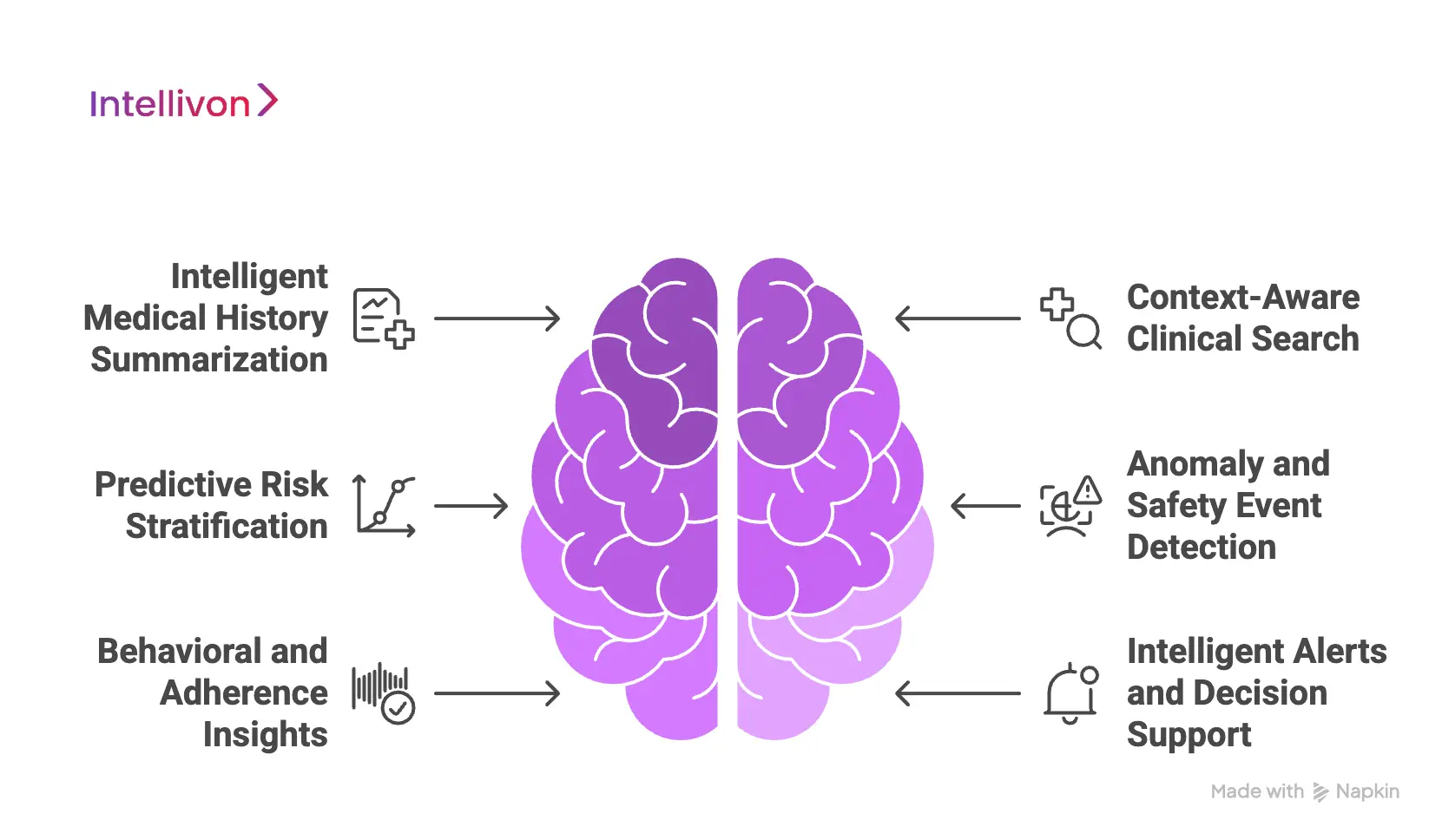
1. Intelligent Medical History Summarization
Large patient records are difficult to review during active care. AI models generate concise, clinically relevant summaries from years of historical data. These summaries highlight diagnoses, medications, risks, and recent changes.
As a result, clinicians spend less time scanning records. Decision speed improves without sacrificing context. This also reduces cognitive load during complex cases.
2. Context-Aware Clinical Search
Traditional keyword search fails in medical environments. AI-powered search understands clinical intent, not just terms. It retrieves relevant records based on symptoms, timelines, and care context. Therefore, providers find what matters faster.
This improves accuracy during consultations. It also reduces missed details hidden in unstructured notes.
3. Predictive Risk Stratification
AI analyzes longitudinal data to identify emerging risks. Models evaluate vitals, diagnoses, labs, and behavioral trends together. The system assigns risk scores based on defined thresholds. As a result, care teams intervene earlier.
This supports preventive care and chronic disease management. It also lowers escalation and hospitalization costs.
4. Anomaly and Safety Event Detection
AI continuously monitors records for inconsistencies and safety risks. It flags abnormal vitals, conflicting medications, or missing documentation. Therefore, potential adverse events surface before harm occurs.
This strengthens patient safety programs. It also reduces liability exposure tied to oversight failures.
5. Behavioral and Adherence Insights
Medical outcomes depend on adherence over time. AI tracks patterns in medication use, follow-ups, and lifestyle data. It identifies early signs of non-adherence or disengagement.
As a result, care teams can intervene with targeted support. This improves outcomes in long-term care programs. It also increases the effectiveness of population health initiatives.
6. Intelligent Alerts and Decision Support
Static alerts often overwhelm clinicians. AI prioritizes alerts based on severity, context, and patient history. It delivers recommendations aligned with established protocols. Therefore, alerts become actionable rather than disruptive.
This improves trust in decision support systems. It also reduces alert fatigue across teams.
Together, these AI capabilities transform medical history apps into decision intelligence platforms. They improve safety, efficiency, and outcomes while keeping human oversight firmly in place.
How To Turn Medical History Apps Into Proactive Risk-Control Systems
Medical history apps become proactive risk-control systems when cloud infrastructure, AI monitoring, and immutable audit layers are designed into workflows from the start.
Medical history platforms create enterprise value only when they move beyond record storage. At scale, their primary role is risk control. Therefore, architecture decisions must focus on prevention, traceability, and governance rather than post-incident response. When built correctly, these platforms reduce exposure while supporting growth.
1. Make Risk Visible by Design
Risk cannot be controlled if it stays hidden. Cloud-native architecture enables continuous visibility into data access, system activity, and integration flows.
As a result, unusual behavior surfaces early instead of remaining buried across disconnected systems. This visibility allows teams to act before issues escalate.
2. Use AI to Spot Problems Early
AI delivers the most value when applied upstream. Behavioral models can flag abnormal access, missing records, or inconsistent data patterns.
Therefore, compliance gaps and care risks are addressed before they trigger audits, incidents, or patient harm. This shifts risk management from reactive to preventive.
3. Lock Accountability Into the System
Trust requires proof. Blockchain-backed verification creates tamper-evident records of data changes and consent actions.
As a result, enterprises gain immutable audit trails without slowing clinical workflows. This strengthens regulatory confidence while reducing investigation time.
4. Align Controls With Daily Work
Governance fails when it conflicts with real operations. Access rules, consent flows, and escalation paths must reflect how teams actually work.
Therefore, controls remain enforceable without creating friction or workarounds.
When cloud, AI, and immutable audit layers work together, medical history apps become control systems. They reduce breach risk, support audits, and protect enterprise credibility. More importantly, they allow healthcare organizations to scale confidently without multiplying operational or regulatory exposure.
Why Medical History Platforms Generate Measurable ROI Within 12–24 Months
Enterprises that invest in medical history platforms often see financial impact within 12–24 months. This timeline is driven by operational savings rather than speculative innovation. Unified records reduce duplication, shorten workflows, and limit downstream risk. Therefore, ROI emerges across cost, efficiency, and governance simultaneously.
1. Lower Administrative Burden
Administrative work consumes a significant share of healthcare operating budgets. Medical history platforms centralize records, automate retrieval, and reduce reconciliation effort across teams.
As a result, staff spend less time locating data and more time acting on it. Over time, this creates sustained reductions in operating expense.
2. Fewer Duplicate Tests
Fragmented histories often lead to repeated labs and imaging. Unified medical records improve visibility across providers and facilities.
Therefore, unnecessary diagnostics decline without compromising clinical outcomes. This reduces claims costs and frees capacity for higher-value care.
3. Better Utilization and Revenue Capture
Missed follow-ups and documentation gaps directly affect revenue. Medical history platforms improve continuity across visits and care settings.
As a result, appointment adherence improves, and billing accuracy increases. These gains compound steadily as adoption spreads.
4. Reduced Compliance and Breach Exposure
Regulatory fines and breach response costs erode margins quickly. Centralized platforms enforce access controls, audit trails, and consent governance by default.
Therefore, compliance shifts from reactive remediation to controlled operations. This lowers financial exposure tied to audits and incidents.
5. Faster Payback Through Scale
Cloud-based architectures scale without proportional cost increases. Once implemented, additional users and records add a marginal expense rather than fixed overhead.
As a result, ROI accelerates as platforms expand across departments or regions.
Medical history platforms deliver ROI because they remove inefficiency at the system level. They reduce waste, protect revenue, and control risk in parallel. For enterprises, this makes investment less about future potential and more about near-term financial discipline with long-term upside.
How We Build Medical History Management Apps
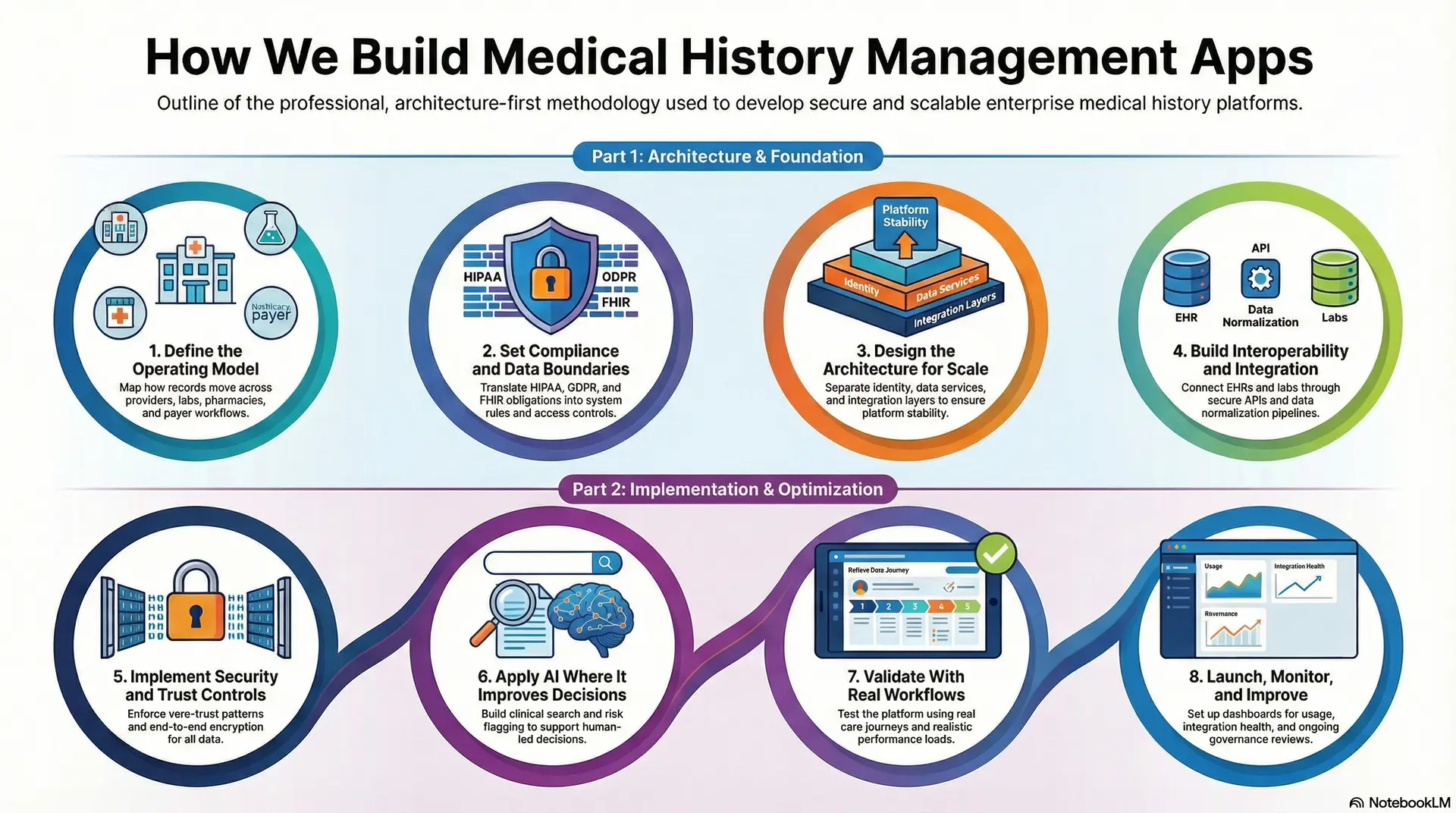
Enterprise medical history platforms fail when teams treat them like standard software builds. Therefore, Intellivon follows a governed, architecture-first process that protects data integrity from the first workshop. This approach keeps compliance, scale, and clinical usability aligned throughout delivery.
It also reduces rework that typically appears after integrations and audits begin. The steps below reflect how enterprise-grade platforms reach production safely.
Step 1: Define the Operating Model
Intellivon starts by mapping how records should move across your ecosystem. The work covers providers, labs, pharmacies, telehealth, and payer workflows. Therefore, ownership rules become clear early.
This includes who can write, read, export, and revoke access. Escalation paths are defined for edge cases such as emergencies. As a result, the platform reflects real governance, not assumptions.
Step 2: Set Compliance and Data Boundaries
Compliance requirements are translated into system rules before the architecture is finalized. HIPAA, GDPR, HITECH, and FHIR obligations shape access controls and audit design.
Therefore, the platform stays audit-ready by default. Data residency and retention policies are defined upfront. Consent models are also finalized at this stage. As a result, delivery stays stable even when regulations tighten.
Step 3: Design the Architecture for Scale
Intellivon designs a cloud-ready, hybrid-friendly architecture that supports enterprise growth. The system separates identity, data services, integrations, and intelligence layers. Therefore, changes in one area do not destabilize the whole platform.
High availability and disaster recovery are designed early. Observability is also built in from the start. As a result, performance stays predictable at scale.
Step 4: Build Interoperability and Integration
Integration is treated as product scope, not a final checklist. Intellivon connects EHRs, labs, imaging systems, and telehealth platforms through secure APIs. Therefore, records remain current across care settings. Data normalization pipelines standardize formats and terminology.
Event-based syncing is used where real-time matters. As a result, fragmentation reduces without slowing workflows.
Step 5: Implement Security and Trust Controls
Security is enforced through zero-trust patterns across every user and service. End-to-end encryption protects data at rest and in transit. Therefore, exposure reduces even when access paths multiply. Audit trails log every record view, edit, and export.
For tamper evidence, immutable verification layers can be added for critical actions. As a result, governance stays provable during audits and investigations.
Step 6: Apply AI Where It Improves Decisions
AI is applied only after data quality and governance are stable. Intellivon builds clinical search, summarization, and risk flagging that support human-led decisions. Therefore, teams gain speed without losing accountability.
Alerts are tuned to reduce fatigue and improve relevance. Continuous monitoring flags anomalies and data gaps. As a result, the platform becomes proactive rather than reactive.
Step 7: Validate With Real Workflows
The platform is tested using real care journeys, not generic scripts. Intellivon validates usability with clinical, operations, and compliance teams together. Therefore, workflow friction is removed before launch.
Performance and security testing are executed under realistic loads. Integration failure scenarios are also tested. As a result, go-live risk is reduced.
Step 8: Launch, Monitor, and Improve
Launch is treated as the start of operational control, not the finish line. Intellivon sets up dashboards for usage, integration health, and security events. Therefore, issues are detected early and corrected quickly.
Governance reviews remain ongoing as new departments and partners join. Feature updates follow audit and change-control practices. As a result, the platform stays reliable as it grows.
Medical history management apps succeed when governance, security, and scale are designed from the start. Intellivon builds these platforms as long-term enterprise systems that protect trust while enabling sustainable growth.
Cost Of Building a Medical History Management App
At Intellivon, medical history management apps are built as a regulated health data infrastructure, not as basic record storage solutions. The focus remains on creating platforms that operate safely across providers, regions, and long-term regulatory change. Every design decision considers scale, governance, and risk exposure from day one.
When budget constraints exist, scope is refined with intent. However, security controls, consent logic, and auditability are never reduced. Therefore, enterprises avoid hidden remediation costs later. Predictability replaces rework, and long-term ROI stays protected.
Estimated Phase-Wise Cost Breakdown
| Phase | Description | Estimated Cost Range (USD) |
| Discovery & Compliance Alignment | Use case definition, data scope mapping, regulatory assessment, risk modeling, and KPI alignment | $6,000 – $12,000 |
| Secure Architecture Design | Layered architecture, identity and consent design, data flow mapping, residency planning | $8,000 – $15,000 |
| Consent & Governance Design | Consent models, access rules, audit requirements, governance workflows | $7,000 – $14,000 |
| Backend & Enterprise Integrations | EHRs, labs, pharmacies, insurers, identity systems, interoperability services | $14,000 – $26,000 |
| Frontend & Role-Based Interfaces | Patient, provider, and admin interfaces with accessibility and security controls | $10,000 – $18,000 |
| Data Normalization & Longitudinal Records | Validation pipelines, record structuring, metadata tagging, and history management | $9,000 – $16,000 |
| Security & Privacy Engineering | Encryption, access control, audit trails, monitoring, zero-trust enforcement | $9,000 – $16,000 |
| Testing & Compliance Validation | Functional testing, security testing, consent validation, and audit readiness | $6,000 – $11,000 |
| Deployment & Scale Readiness | Cloud deployment, observability, performance tuning, and failover planning | $7,000 – $13,000 |
Total initial investment: $80,000 – $170,000
Ongoing maintenance and optimization: ~15–20% of the initial build per year
Hidden Costs Enterprises Should Plan For
Even well-scoped medical history programs face pressure when indirect cost drivers are ignored. Planning for these early protects budgets, timelines, and compliance posture as adoption grows.
- Integration complexity increases as fragmented EHRs, labs, and third-party systems expand
- Compliance overhead grows due to recurring audits, reporting, and regulatory updates
- Data governance requires continuous consent validation, access reviews, and corrections
- Cloud costs rise with storage growth, processing workloads, and analytics usage
- Change management includes onboarding and support for providers, patients, and operations teams
- Continuous monitoring becomes essential as data volume and scrutiny increase
Best Practices to Avoid Budget Overruns
Based on Intellivon’s experience delivering enterprise healthcare data platforms, these practices consistently lead to controlled costs and predictable outcomes.
- Start with a focused medical history scope before expanding regions or integrations
- Embed consent, auditability, and security directly into core architecture
- Use modular components that scale without redesign
- Plan data normalization early to avoid expensive rework later
- Maintain continuous observability across performance and compliance
- Design for regulatory evolution rather than one-time certification
Request a tailored proposal from Intellivon’s healthcare team to receive a delivery roadmap aligned with your budget constraints, compliance exposure, and long-term medical history management strategy.
How Medical History Management Apps Can Make Money
Medical history management apps generate revenue when they are positioned as enterprise infrastructure, not consumer utilities. Monetization works best when it aligns with operational value, risk reduction, and regulatory readiness.
Therefore, successful apps focus on sustainable revenue models tied to usage, outcomes, and scale.
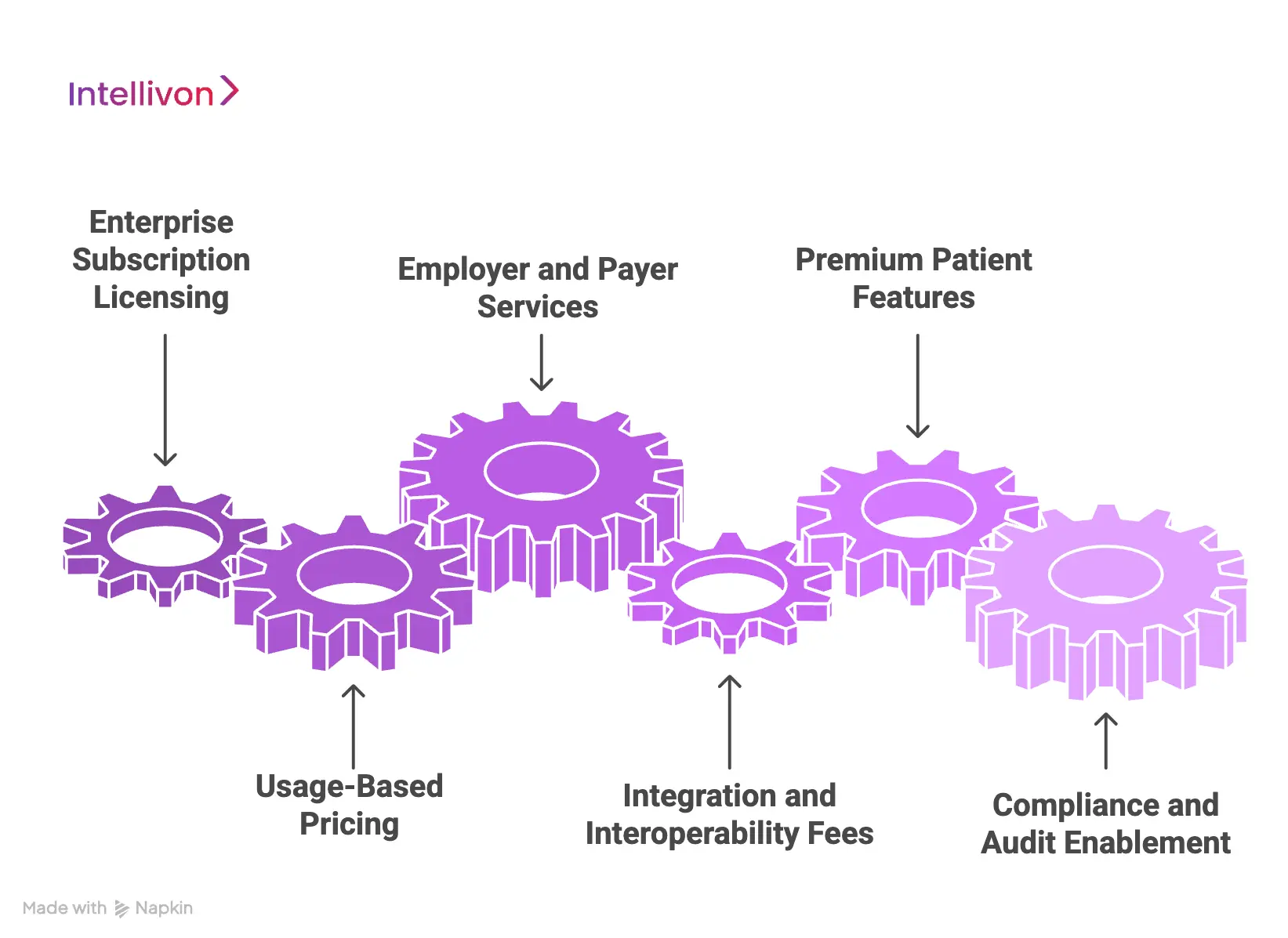
1. Enterprise Subscription Licensing
Healthcare organizations pay recurring subscription fees based on users, facilities, or patient volumes. Pricing tiers often reflect storage limits, integrations, and analytics depth. As a result, revenue scales predictably as adoption grows.
This model works well for hospitals, provider networks, and digital health platforms. It also supports long-term contracts with clear SLAs.
2. Usage-Based Pricing
Some platforms charge based on active records, API calls, or data processed. This aligns cost with actual system usage. Therefore, enterprises avoid overpaying during early rollout phases.
As usage expands, revenue grows naturally. This model suits fast-scaling health ecosystems and platform-led businesses.
3. Employer and Payer Services
Medical history platforms unlock longitudinal insights valuable to employers and insurers. Enterprises monetize aggregated, compliant analytics for population health, risk stratification, and cost optimization.
As a result, platforms move beyond storage into intelligence. These services are often priced as premium add-ons. They also create high-margin recurring revenue.
4. Integration and Interoperability Fees
Complex integrations require ongoing support and governance. Platforms charge setup and maintenance fees for connecting EHRs, labs, pharmacies, and third-party systems.
Therefore, integration becomes a revenue stream rather than a cost center. This model reflects the real effort involved in maintaining interoperability at scale.
5. Premium Patient and Care Coordination Features
While core access remains standard, advanced features can be monetized. These include enhanced summaries, family access, emergency sharing, or care navigation tools.
Therefore, patient-facing monetization remains optional and consent-driven. This approach avoids regulatory and trust risks while adding incremental revenue.
6. Compliance and Audit Enablement
Enterprises pay for compliance tooling that reduces audit effort and breach exposure. Platforms monetize advanced audit reporting, immutable verification, and regulatory reporting modules.
As a result, compliance shifts from overhead to value. This model resonates strongly with regulated healthcare organizations.
Medical history management apps become profitable when monetization mirrors enterprise value. Subscription, usage, analytics, and compliance-led models create durable revenue without compromising trust. When aligned correctly, these platforms generate income while strengthening healthcare operations and governance.
Top Examples of Medical History Management Apps
Examining real platforms helps enterprises understand how medical history systems deliver value in practice. Each example below shows how governance, interoperability, and intelligence translate into ROI at scale.
1. Epic Systems (MyChart)

MyChart is Epic’s patient-facing layer built on top of its core EHR platform. It allows patients to view records, test results, medications, and care plans directly from provider systems. Data flows from hospitals already using Epic, which keeps records consistent and trusted.
For MyChart, ROI comes from reduced administrative effort and fewer inbound support requests. Appointment adherence also improves as patients access information easily. AI capabilities support smart notifications, record summarization, and workflow prompts within Epic’s ecosystem.
2. Oracle Cerner
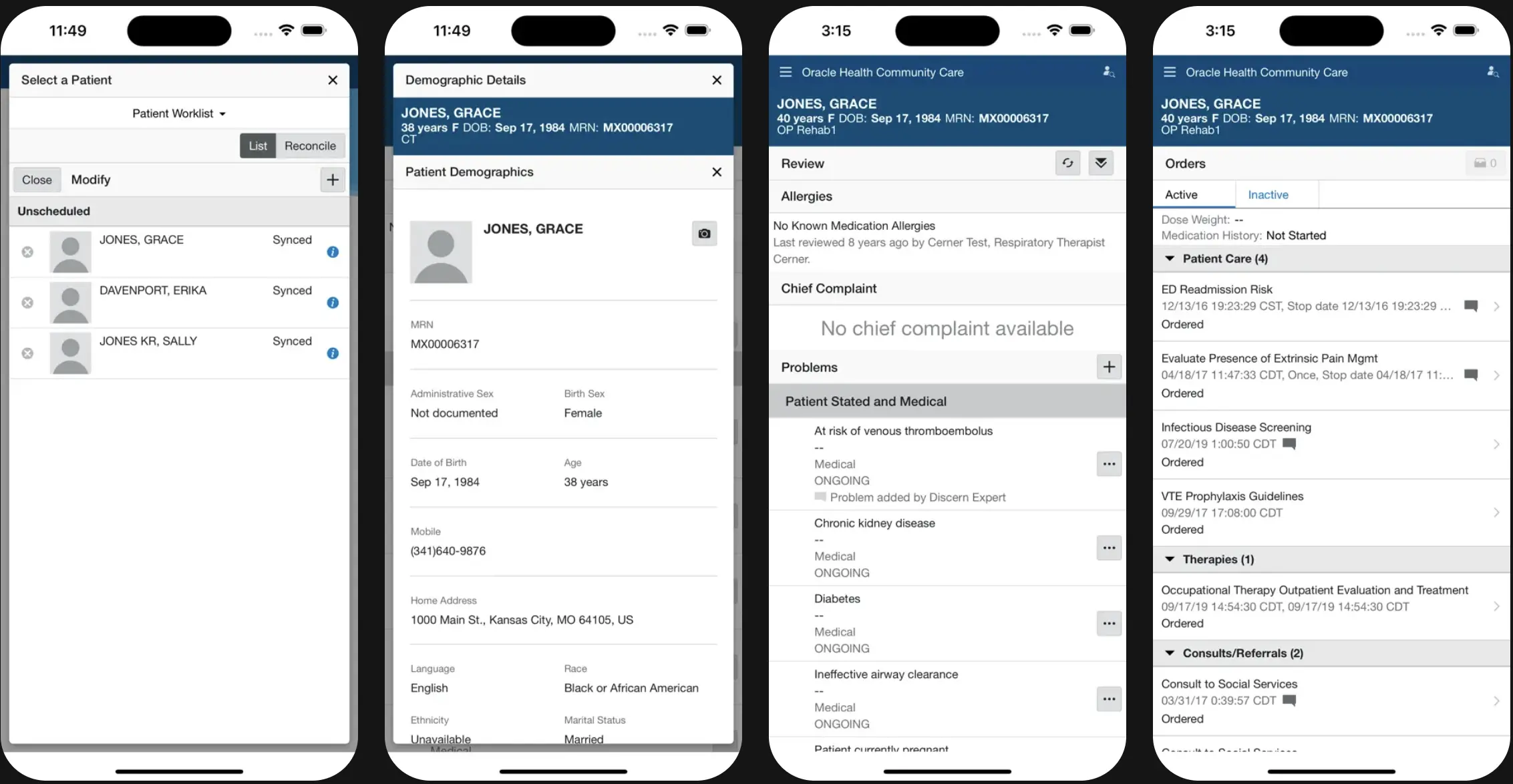
Oracle Cerner focuses on enterprise-scale longitudinal medical records. Its systems aggregate patient histories across facilities, regions, and specialties. Standardized interoperability reduces manual reconciliation and data gaps.
This app sees ROI through lower duplicate testing, improved utilization, and stronger audit readiness. Claims processing also becomes more predictable. AI is applied to population health analytics, risk stratification, and operational optimization across large datasets.
3. Apple Health Records

Apple Health Records enables patients to aggregate data from multiple providers into a single mobile interface. It uses standardized APIs and emphasizes privacy, encryption, and user control. Records remain device-centric and permission-based.
While Apple does not monetize directly through healthcare billing, enterprises benefit from reduced record access friction. Manual document requests decline. AI supports trend detection, health insights, and anomaly identification presented in simple language.
4. My Medical
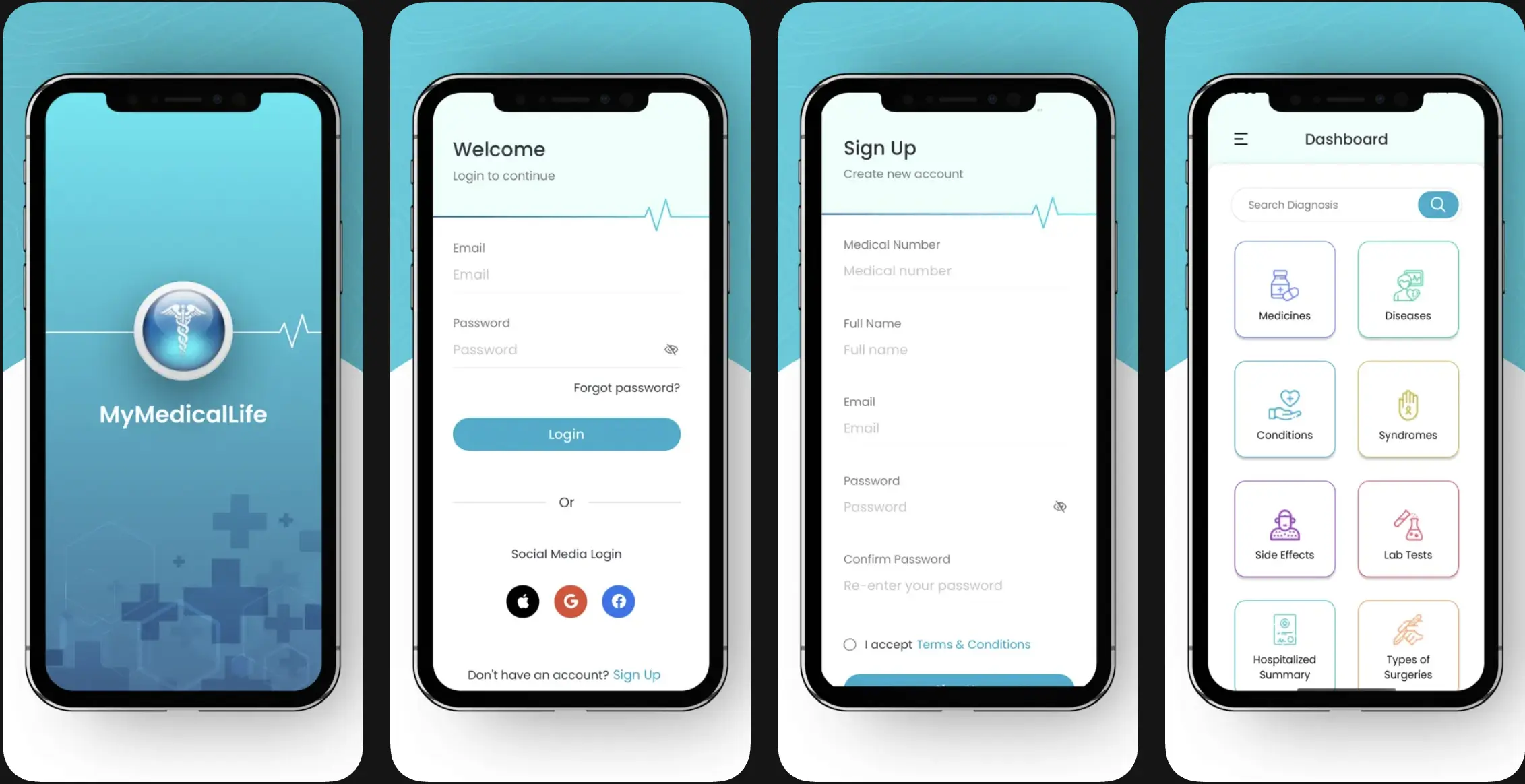
My Medical is an independent personal health record platform focused on portability. Users upload, organize, and share documents across providers. It fills gaps where enterprise systems lack interoperability.
ROI appears through faster record sharing and reduced administrative handling. Similar models lower operational overhead for enterprises. AI is used for OCR, document classification, and searchable timelines, improving usability without deep system dependencies.
These examples show that medical history platforms succeed when aligned with real operating models. ROI comes from reduced friction, better data access, and controlled risk. At the same time, AI amplifies these gains when applied to insight and governance rather than automation alone.
Conclusion
Medical history management apps have moved beyond digitization projects. They now sit at the center of enterprise healthcare strategy. When built correctly, these platforms reduce operational waste, strengthen compliance, and improve care continuity at scale. Therefore, the value extends well beyond record storage.
Enterprises that invest early benefit from faster ROI, lower risk exposure, and stronger data control. Cloud-native architecture, AI-driven intelligence, and governed interoperability turn medical histories into reliable decision assets. As a result, organizations scale care delivery without multiplying complexity.
The real differentiator lies in execution. Platforms succeed when governance, security, and usability are embedded from day one. With the right partner, medical history systems become growth enablers that protect trust, support innovation, and sustain long-term enterprise advantage.
Build a Medical History Management App With Intellivon
At Intellivon, medical history management apps are built as enterprise healthcare systems, not standalone record repositories. Every architectural and delivery decision prioritizes data governance, consent enforcement, and regulatory resilience. This ensures platforms operate reliably across providers, regions, and evolving compliance requirements, not just at launch.
As medical history programs expand across populations, data sources, and care models, stability becomes critical. Governance, performance, and interoperability remain consistent as scale increases. Organizations retain control over sensitive health data without introducing fragmentation, compliance risk, or operational drag.
Why Partner With Intellivon?
- Enterprise-grade architecture designed for regulated, multi-provider healthcare ecosystems
- Proven delivery across healthcare platforms, digital health products, and data-driven care systems
- Compliance-by-design approach covering privacy, consent, auditability, and data residency
- Secure role-based access with full data lineage and traceability
- Governed AI enablement for insights, decision support, and analytics
- Modular, cloud-native infrastructure built for phased and cross-region scaling
Book a strategy call to explore how Intellivon can help you build and scale a medical history management app with confidence, control, and long-term enterprise value.
FAQs
Q1. What is a medical history management app used for?
A1. A medical history management app centralizes patient health records across providers, systems, and care settings. It ensures accurate, longitudinal histories are available for clinical, operational, and compliance needs. Enterprises use it to reduce fragmentation, improve decision-making, and maintain governance at scale.
Q2. How is a medical history management app different from an EHR?
A2. An EHR is typically provider-owned and limited to a single organization. A medical history management app aggregates records across multiple providers, labs, and platforms. Therefore, it acts as a coordination and governance layer rather than a single-system record.
Q3. Are medical history management apps HIPAA and GDPR compliant?
A3. Yes, enterprise-grade medical history apps are designed to meet HIPAA, GDPR, HITECH, and FHIR requirements. Compliance is enforced through encryption, role-based access, consent management, and audit trails. This ensures regulatory readiness as data volumes and integrations grow.
Q4. How do medical history management apps generate ROI for enterprises?
A4. These apps reduce administrative overhead, prevent duplicate tests, and improve billing accuracy. They also lower compliance and breach-related risk. As a result, enterprises often see measurable ROI within 12–24 months through cost savings and efficiency gains.
Q5. How long does it take to build a medical history management app?
A5. Timelines vary based on scope and integrations. Most enterprise builds take several months, covering discovery, compliance alignment, architecture, integrations, and testing. A phased approach allows faster initial rollout while supporting long-term scalability.