Key Takeaways:
-
Circular economy platforms track material flows, reverse logistics, waste reduction, and product lifecycle data.
-
ERP and PLM integrations, IoT tracking, AI optimization, and CSRD or EPR reporting are core requirements.
-
Data architecture, workflow automation, audit trails, and compliance-ready reporting ensure governed platform operations.
-
Custom platforms cost $70,000 to $300,000 depending on facility count, integrations, and AI model depth.
-
How Intellivon builds circular economy platforms for healthcare, manufacturing, fintech, and sustainability teams.
Circular economy software connects the product, waste, supplier, and logistics data scattered across your ERP, PLM, EHS, and WMS systems into one platform that tracks how materials enter, move, return, recover, and re-enter the business. Building circular economy software for enterprises starts with one foundational decision, which is the material flow data model. You need to track every product and material through multiple loops, and not just forward through a supply chain. That closed-loop entity model is what separates a functional circular economy platform from a repurposed linear supply chain tool. From there, you integrate reverse logistics systems, build the reporting layer, and add AI to optimize material recovery.
Here is where the build decision matters most. When circular economy software sits on top of a linear supply chain data model, materials lose their identity at customer handoff. Take-back programs, remanufacturing workflows, and extended producer responsibility reports then have no traceable data to draw from. Over 70% of global manufacturing leaders expect circular business solutions to increase revenue by 2027, but that return depends entirely on the traceability of the material data model underneath it.
Intellivon has spent over a decade building compliance-grade enterprise platforms for healthcare and financial services, always designing the data model around closed-loop tracking requirements first. In this blog, we walk through the full build: material entity architecture, reverse logistics integration, compliance framework alignment, AI optimization layer, and cost from $70,000 to $300,000. By the end, you will have a clear blueprint to scope and commission this platform.

What Circular Economy Software Is And What It Actually Does Today
Circular economy software is an enterprise platform that tracks how products, materials, waste, assets, packaging, and returned items move through the business. It helps organizations see what can be reused, repaired, refurbished, remanufactured, recycled, resold, or safely disposed of.
Unlike ESG reporting software, it does not only report sustainability outcomes after the fact. It manages the operational data and workflows that create those outcomes.
1. How The Platform Tracks Materials Across Their Full Lifecycle
Circular economy software establishes an unbroken digital custody record for physical resources as they migrate through procurement, utilization, and subsequent recovery phases. Consequently, this continuous tracking replaces historical guesswork with verifiable operational records.
- Logging exact product lifecycle management circular economy workflows for complex manufactured goods.
- Verifying instantly whether an asset was successfully refurbished or safely recycled.
- Aggregating waste-to-resource tracking metrics across decentralized production facilities.
- Accessing unalterable receipts that prove exact recycling outcomes and final disposal records.
- Capturing granular tracking metrics to satisfy modern regional landfill diversion reporting rules.
Furthermore, this detailed tracking architecture provides the foundational dataset required for generating compliance-ready disclosures. For a deeper breakdown of optimizing your software delivery pipelines, see our guide on automated software training.
2. How It Connects Product, Waste, Supplier, And Cost Data
A circular economy management platform unifies disparate corporate data streams by pulling fragmented operational records into a single structured database. Therefore, it successfully bridges the deep informational gaps that typically exist between procurement, logistics, and environmental departments.
The centralized management platform integrates disconnected datasets to show exactly which materials create waste. Meanwhile, critical disposal data remains locked away inside third-party waste vendor portals.
- Integrating engineering data isolated within product lifecycle management tools directly with core ERP systems.
- Evaluating instantly which specific tier-one suppliers actively support corporate circularity mandates.
- Calculating the precise cost savings generated by material reuse programs to optimize budgets.
- Identifying which circular workflows actively reduce raw material expenditures across business units.
- Tracking supplier proof and third-party certifications sent via email in one secure hub.
Moreover, establishing a unified database is essential for maintaining strict compliance across highly regulated international supply chains. To understand how secure data pipelines protect enterprise infrastructure, see our analysis on How to Build an AI Risk Intelligence Platform.
3. How Circular Software Differ From Sustainability Dashboards
Traditional sustainability dashboards function primarily as static reporting windows that display historical environmental metrics after operations have concluded. Conversely, circular economy software operates as an active transaction engine that manages the real-time workflows producing those metrics.
Therefore, a standard dashboard simply displays a high-level percentage showing total corporate waste diverted from landfills. However, that static number fails to provide the granular operational context required by modern financial auditors.
- Tracking the precise facility that generated the waste and identifying the specific vendor that collected it.
- Mapping the recovered material to support expanding sustainability reporting software development.
- Confirming the precise volume of material diverted from waste lines at an individual factory level.
- Recording the exact timestamp and geographic location of material shipments to processing centers.
- Generating continuous validation logs that back up high-level metrics for strict disclosure rules.
Consequently, this structural depth ensures that all environmental data can withstand rigorous external review cycles. As a result, compliance officers can seamlessly back up their disclosures for CSRD or EPR audits.
4. How It Helps Teams Decide What To Recover Or Discard
The platform serves as an advanced decision-support engine that guides operational personnel through complex material recovery choices. Therefore, it removes human error from sorting workflows by applying standardized corporate rule sets to returned assets.
Consequently, when a product enters a reverse logistics facility, the system automatically evaluates its current condition against real-time repair costs. It then calculates whether the item should be remanufactured, resold, or broken down for components.
- Balancing historical refurbishment costs against current secondary market resale value automatically.
- Routing low-value items to certified recycling streams to prevent unnecessary warehouse storage fees.
- Directing high-value components to refurbishment pipelines to maximize resource recovery.
- Providing operations teams with standardized data to make disposal decisions consistently.
- Calculating the hidden environmental penalties of incineration versus processing material for resale.
Therefore, this structured decision layer ensures that recovery strategies remain financially viable while meeting corporate net-zero targets. This shifts the platform from a basic tracking ledger into a core driver of enterprise resource efficiency.
Circular economy software is not just a reporting tool. It is the operating system for material recovery, reverse logistics, supplier evidence, waste reduction, circularity KPIs, and compliance-ready reporting. Once the reader understands what the platform does, the next question becomes why enterprises need it now.
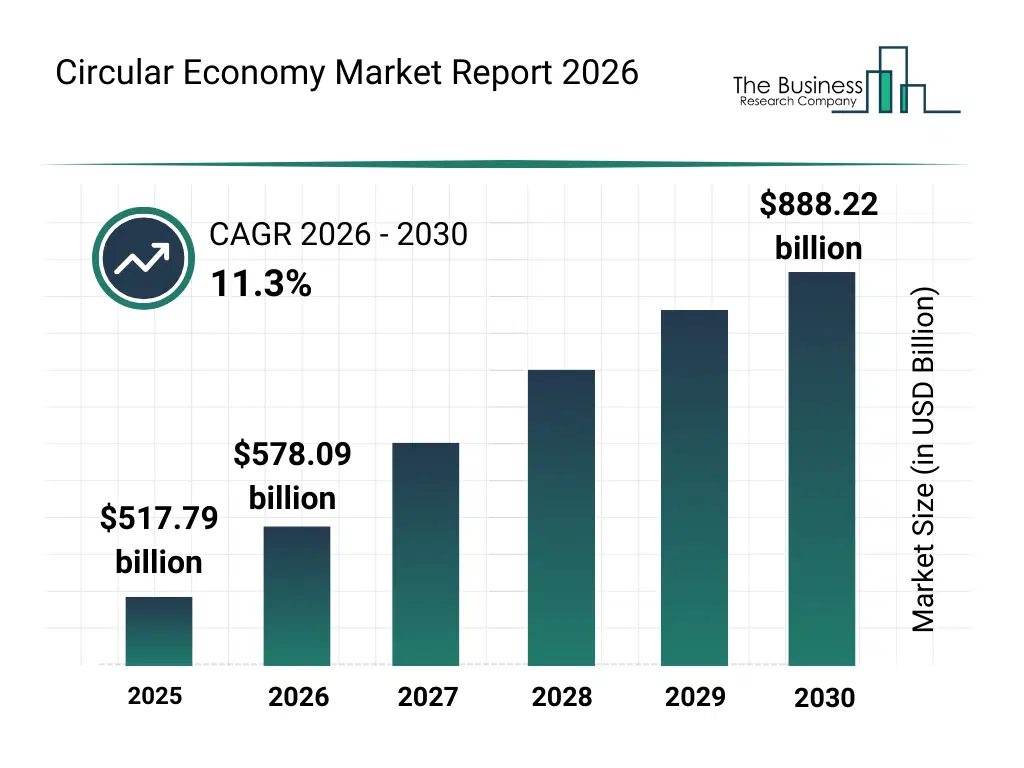
Why Large Organizations Need A Circular Economy Management Platform
Large organizations need a circular economy management platform because circularity now affects procurement, supplier risk, waste cost, product design, compliance reporting, and investor confidence.
Manual spreadsheets cannot track multi-site material flows, reverse logistics, EPR documentation, and reuse outcomes with enough consistency to support executive decisions or audit-ready disclosure.
1. Multi-Site Operations Create Circularity Blind Spots
Modern corporate asset infrastructure creates severe tracking challenges when material data remains isolated within separate regional facility databases, preventing sustainability leaders from accurately determining total material reuse efficiencies.
Consequently, healthcare systems run hundreds of hospitals, medical packaging lines, and component warehouses that constantly dispose of valuable single-use assets without central oversight.
- Tracking real-time material lifecycles across diverse multi-site hospital networks to optimize equipment utilization.
- Monitoring product utilization, batch expirations, and reclamation statuses within high-volume pharmaceutical plants.
- Isolating localized asset disposition trends across distinct regional product fulfillment and storage warehouses.
- Consolidating circular economy investment portfolio tracking metrics to measure material risk exposure for banking groups.
- Aggregating asset recovery data from decentralized corporate branches to eliminate manual tracking gaps.
Furthermore, this extreme operational fragmentation introduces significant data validation errors that directly impact high-level compliance reports.
2. Regulations Now Require Evidence, Not Estimates
Expanding regional environmental mandates have transformed corporate circularity tracking into a strict legal obligation, meaning companies can no longer rely on high-level proxy averages or loose supplier estimates to clear external regulatory verification audits.
Under the updated EU Corporate Sustainability Reporting Directive (CSRD) frameworks, affected organizations with over 1,000 employees must explicitly disclose detailed material utilization data using specialized product stewardship compliance software.
- Automating end-to-end data ingestion pipelines to maintain compliance with strict EU circular economy action plan rules.
- Building unalterable data ledgers to satisfy comprehensive CSRD circular economy disclosure requirements.
- Tracking regional compliance liabilities through integrated extended producer responsibility (EPR) software frameworks.
- Generating granular audit trails and traceability logs to prove actual landfill diversion metrics to third-party verifiers.
- Isolating material streams to eliminate legal exposure from expanding global anti-greenwashing consumer protection laws.
As a result, reactive data assembly methods fail completely when subjected to modern digital validation rules.
3. Circularity Changes Procurement And Supplier Decisions
Transitioning to a circular operating model requires procurement departments to completely change how they score, select, and audit external product vendors by actively tracking supplier evidence to verify the true material background of all incoming components.
A functional enterprise platform utilizes automated supplier circularity tracking and scoring algorithms to grade vendors on their actual sustainable sourcing metrics and verify the volume of recycled input shares.
- Monitoring live vendor material submissions to maintain strict oversight over incoming supply chains.
- Scoring production vendors based on their active use of standardized reusable packaging frameworks.
- Collecting verifiable electronic receipts and supplier evidence to back up product-level sustainability assertions.
- Applying automated circular procurement scoring matrix tools during high-value enterprise vendor selection rounds.
- Flagging high-risk component suppliers who fail to provide transparent product-end-of-life reclamation options.
Therefore, this continuous vendor oversight helps procurement teams protect the company from upstream compliance violations. This structural integration turns raw material tracking into an active tool for improving supply chain resilience.
4. Circularity Creates Financial Value When Data Is Reliable
According to the latest global industry metrics, inefficient linear business practices cause companies to lose massive potential returns due to premature material disposal, whereas reliable tracking software allows companies to recapture this lost value by optimizing asset reuse.
For instance, implementing structured reuse and repair programs drives up to a 50% reduction in total operational costs across manufacturing environments by allowing financial teams to track exact avoided disposal costs and calculate precise recovered material values in real time.
- Identifying high-value component parts that are fully eligible for secondary market resale pipelines.
- Reducing overall raw material dependency by continuously routing used manufacturing inputs back into production lines.
- Monitoring sustainable finance circular economy metrics to secure lower interest rates from institutional green lenders.
- Isolating specific manufacturing lines where material waste can be directly processed into new revenue streams.
- Measuring the exact financial return on investment achieved across corporate resource recovery workflows.
Consequently, building a dependable material database transitions circularity from a simple compliance cost center into a clear driver of corporate profitability. This financial clarity allows executive teams to confidently fund long-term environmental optimization programs.
The business case becomes stronger when circularity moves from annual reporting into operational workflows. However, this only works if the platform architecture matches how materials actually move. That is where architecture becomes the real cost driver.
Circular Economy Platform Architecture And Development
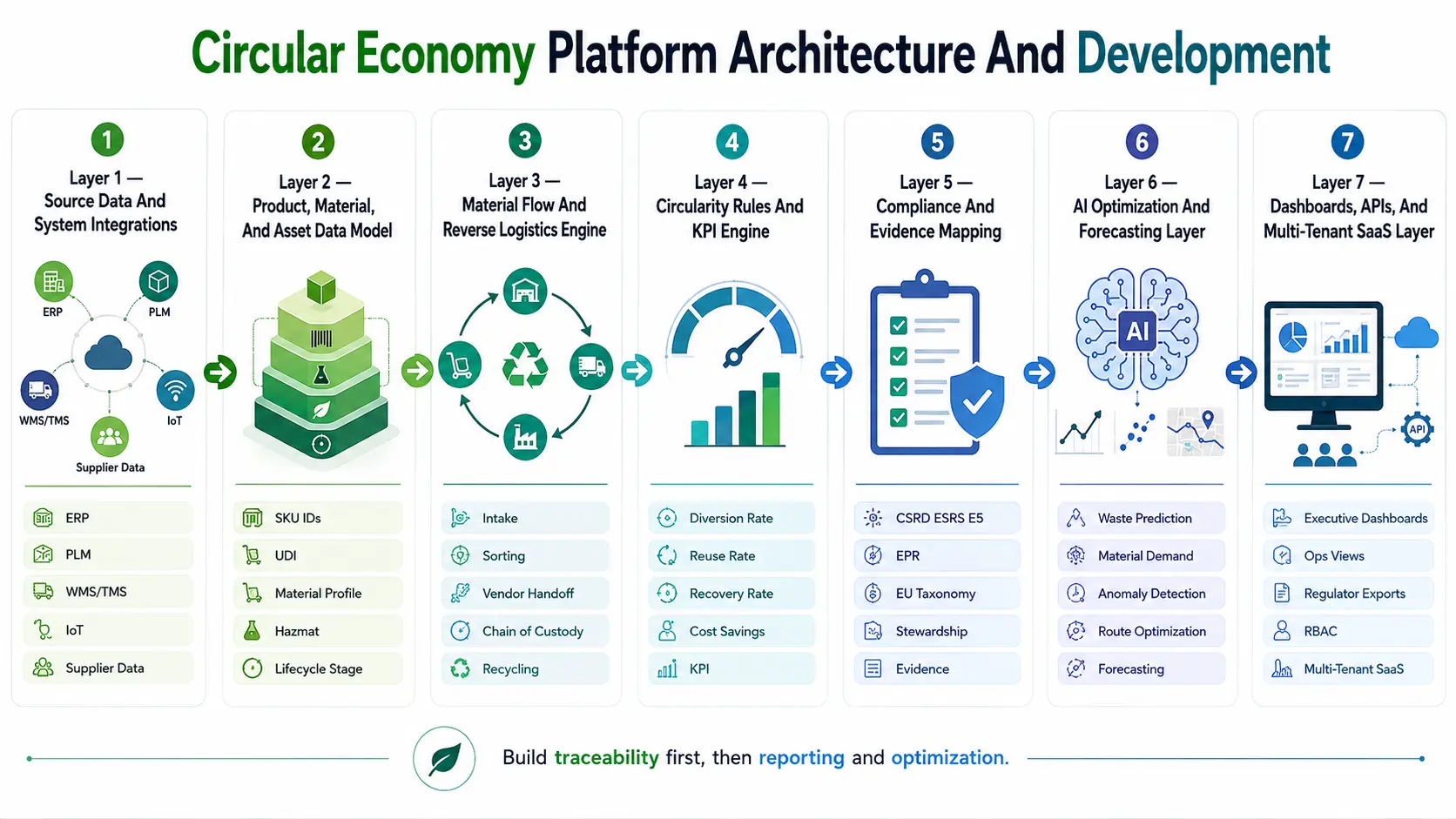
Circular economy platform architecture and development should follow seven layers: source data ingestion, product and material master data, circular workflow orchestration, reverse logistics tracking, compliance mapping, AI optimization, and dashboards.
This layered design keeps reporting, operations, and AI models aligned without duplicating circularity data across disconnected systems.
Layer 1 — Source Data And System Integrations
The foundation layer relies on robust data orchestration to pull real-time material information directly from disparate enterprise operational environments. Consequently, the application utilizes secure API endpoints to ingest activity logs from systems that historically never communicated with environmental tools.
- Integrating deep ERP circular economy data integration pipelines to capture corporate procurement and billing logs.
- Synchronizing with product lifecycle management systems to extract initial bill-of-materials documentation.
- Connecting warehouse management systems and transportation management systems to track physical asset movements.
- Automating real-time data ingestion from telemetry networks and IoT sensors monitoring facility resource usage.
- Ingesting verified third-party records from external waste vendors and global supplier portals directly.
Furthermore, unifying these fragmented data feeds requires a highly secure and scalable system integration framework.
Layer 2 — Product, Material, And Asset Data Model
This layer normalizes raw data streams into a single, unified database structure that tracks individual product identities across their full lifecycles. Therefore, the data architecture converts basic text descriptions into highly organized data fields that map out the physical traits of every corporate asset.
- Mapping distinct product IDs and detailed SKU hierarchies to track identical components across global divisions.
- Recording production batch numbers and unique device UDI markers to maintain strict medical equipment tracking.
- Cataloging exact chemical material composition profiles alongside verified structural recyclability percentages.
- Flagging hazardous material classes automatically to ensure compliance with strict environmental handling protocols.
- Updating current asset ownership status, real-time physical locations, and exact operational lifecycle stages continuously.
Consequently, establishing a rigorous material data model is a strict prerequisite for executing automated sorting and recovery actions.
Layer 3 — Material Flow And Reverse Logistics Engine
The reverse logistics tracking component manages the day-to-day physical processing operations after an item or material batch returns to a facility. Consequently, this specialized processing layer transitions assets through structured recovery, sorting, and refurbishment workflows without losing data continuity.
- Recording initial facility intake metrics and subsequent internal sorting movements across localized processing bays.
- Logging real-time recovery progress for components undergoing intensive industrial remanufacturing or deep cleaning.
- Verifying external vendor handoffs using encrypted OTP validation codes and live GPS shipping proofs.
- Generating legally defensible chain-of-custody certificates automatically when materials transition to third-party recyclers.
- Tracking final recycling outcomes or approved disposal records to verify total material diversion.
As a result, keeping this operational ledger updated prevents material loss and ensures total transparency across your reverse supply chain. This real-time visibility provides the essential raw values needed to calculate corporate sustainability performance.
Layer 4 — Circularity Rules And KPI Engine
The core calculation layer applies standardized mathematical formulas to your operational data streams to evaluate the true financial and environmental impact of recovery efforts. Therefore, the system automatically translates raw weight and volume metrics into actionable executive performance indicators.
- Computing the total corporate waste diversion rate to track progress against municipal landfill goals.
- Calculating specific material reuse rates and item-level product recovery rates across product lines.
- Quantifying verified recycled input shares and broader circular material use rates for public compliance reporting.
- Measuring individual facility repair yields to isolate operational processing bottlenecks and mechanical efficiency drops.
- Evaluating aggregate financial recovery metrics alongside total avoided disposal costs for executive balance sheet reviews.
Subsequently, having these live metrics allows management to justify their sustainability investments using hard financial data. This direct link between data and impact forms the baseline for meeting international disclosure laws.
Layer 5 — Compliance And Evidence Mapping
The compliance framework dynamically reorganizes your calculated operational KPIs to match the specific structural requirements of regional environmental laws. Therefore, it eliminates the need for manual data cross-referencing by turning raw ledger entries into audit-ready regulatory reports.
- Mapping environmental data directly to satisfy strict CSRD ESRS E5 circular economy disclosure rules.
- Generating automated compliance documentation to clear extended producer responsibility (EPR) reporting audits.
- Utilizing specialized product stewardship compliance software modules to verify regional compliance with circular frameworks.
- Structuring financial and operational metrics to align with complex EU taxonomy reporting platform rules.
- Formatting resource efficiency metrics to match international Ellen MacArthur Foundation framework integration standards.
Consequently, this automated alignment minimizes the risk of regulatory non-compliance penalties during independent corporate reviews.
Layer 6 — AI Optimization And Forecasting Layer
The predictive engineering layer applies advanced machine learning models to your historical operational datasets to automate resource allocation and optimize recovery schedules. Consequently, the platform shifts from a passive recording tool into an active system that helps lower logistics costs.
- Running an AI circular economy optimization engine to predict regional material demand and pricing shifts.
- Utilizing machine learning waste prediction models to optimize asset collection schedules before facilities overflow.
- Deploying continuous anomaly detection algorithms to flag irregular material data entries and prevent fraudulent reporting.
- Calculating optimal transportation route optimization patterns for complex multi-site asset reclamation fleets.
- Executing advanced climate risk and scenario modeling routines to evaluate supply chain resource dependencies.
Therefore, embedding predictive models directly into your workflow ensures your material recovery strategies remain cost-effective even as supply chains fluctuate. This automated intelligence heavily optimizes the final user presentation layer.
Layer 7 — Dashboards, APIs, And Multi-Tenant SaaS Layer
The presentation layer delivers customized, highly secure user interfaces tailored specifically to the unique needs of internal operators, external regulators, and corporate executives. Therefore, the frontend application segregates complex data sets into clear, scannable visualizations based on user credentials.
- Delivering high-level executive dashboards that focus entirely on macro savings and net-zero target timelines.
- Providing granular operational dashboards for facility managers handling daily material intake and sorting queues.
- Exporting pre-formatted regulator reports and transparent customer summaries with full data lineage backing.
- Enforcing strict role-based access controls and total tenant isolation across multi-tenant enterprise networks.
- Deploying a white-label circular economy management SaaS architecture to support downstream commercial vendor networks.
Consequently, this clean user presentation ensures high system adoption across all corporate divisions while maintaining enterprise-grade security standards. It unifies complex engineering logic into a straightforward, accessible business application.
This architecture prevents the common mistake of building reports before building traceability. Once the data model is stable, product teams can decide which features matter most. The next section should translate the architecture into platform modules.
Core Features Of A Custom Circular Economy Platform
A custom circular economy platform should include material flow tracking, reverse logistics workflows, waste-to-resource management, circularity scoring, compliance reporting, supplier collaboration, AI forecasting, and ROI dashboards.
These features work together because circularity depends on traceable actions, not static ESG claims or isolated sustainability metrics.
1. Material Flow Analysis Software
Material flow analysis software maps how raw inputs enter your production lines, shift through active utilization, and transition into downstream recovery pathways. Consequently, this continuous balancing model ensures that unallocated process losses are flagged before they degrade corporate efficiency.
- Tracking real-time volumetric inputs across complex regional assembly networks to eliminate resource blind spots.
- Measuring localized operational scrap margins automatically during initial material cutting and forming stages.
- Separating unadulterated manufacturing offcuts from hazardous waste streams to maximize localized reuse potential.
- Mapping distinct material transformation stages to keep underlying carbon intensity metrics perfectly aligned.
- Generating automated material mass-balance ledgers to satisfy independent third-party supply chain audits.
Furthermore, this detailed baseline mapping is vital for identifying hidden waste streams across your asset network. For a comprehensive look at optimizing your core data pipelines, see our engineering guide on [LINK: Insert Intellivon Data Pipeline Integration URL].
2. Reverse Logistics Management Software
Reverse logistics management software coordinates the complex physical transit, intake processing, and structural sorting of assets returning from external distribution networks. Therefore, the system automates multi-carrier logistics routing to reduce aggregate transportation emissions while managing fluctuating return volumes.
- Generating automated client return shipping manifests based on real-time asset registration histories.
- Planning optimized truck routes dynamically to lower carbon outputs during multi-facility collection rounds.
- Directing incoming pallets to specialized processing bays for immediate breakdown, repair, or refurbishment.
- Automating internal repair ticketing workflows to trace parts replacement against baseline product engineering specs.
- Capturing digital proof of ownership changes to maintain unalterable material custody ledgers continuously.
As a result, managing this processing loop keeps secondary materials moving efficiently back into your primary commerce lines. This structured operational workflow provides the essential inputs required to fuel downstream reclamation networks.
3. Waste-To-Resource Tracking Platform
A waste-to-resource tracking platform converts legacy corporate disposal operations into transparent material marketplace listings by matching byproduct outputs with certified commercial recyclers. Consequently, this ledger shifts your operations away from standard landfill dumping and moves them toward active resource recovery.
- Categorizing hazardous and non-hazardous byproducts automatically using standardized digital material classification codes.
- Querying integrated commercial database networks to match localized waste outputs with active local processors.
- Tracking exact chemical treatment profiles and thermal conversion metrics across external processing plants.
- Measuring precise landfill diversion weights to document verified reductions in corporate environmental footprints.
- Logging financial recovery metrics from byproduct sales directly into central enterprise accounting dashboards.
Consequently, replacing manual disposal logs with automated verification ensures your sustainability reports remain completely accurate. This level of traceability helps protect large enterprises from greenwashing liabilities.
4. Take-Back Program Management Platform
A take-back program management platform orchestrates specialized customer asset retrieval operations across retail, commercial, and institutional product distribution networks. Therefore, the system enforces strict validation parameters to ensure returned products are handled safely according to their specific material classifications.
- Processing commercial client product collection requests through a centralized, web-based intake registry.
- Managing strict medical device recovery pipelines to safely isolate and process single-use clinical instrumentation.
- Tracking global bulk packaging recovery workflows to minimize single-use container manufacturing requirements.
- Scoring asset retrieval program participation rates by regional consumer demographic and commercial sector.
- Documenting the exact operational destination of every returned asset to verify complete circular processing.
Subsequently, having this specialized retrieval data allows product engineering teams to optimize future component designs for easier disassembly. This proactive collection loop forms the backbone of modern corporate EPR compliance strategies.
5. Circular Economy KPI Dashboard Development
Custom circular economy KPI dashboard development converts raw material weight and transit logs into interactive, scannable visualizations tailored for corporate decision-makers. Therefore, the frontend architecture presents live performance metrics without exposing non-technical leaders to raw database schemas.
- Calculating your overall corporate circularity score by comparing virgin material inputs against recovered resources.
- Monitoring real-time facility reuse rates and component repair yields to isolate operational performance bottlenecks.
- Quantifying verified recycled content levels across active production lines to meet regional compliance thresholds.
- Evaluating aggregate financial cost savings achieved by diverting materials away from high-fee commercial landfills.
- Exporting pre-formatted resource efficiency data summaries to streamline annual corporate sustainability reporting cycles.
Consequently, having clear access to these performance metrics allows financial analysts to confidently track the true return on investment of circularity programs. This clear financial validation helps secure long-term board funding for expansion efforts.
6. Circular Economy API Integrations
Circular economy API integrations serve as the central communication network that connects your specialized sustainability tools to your core enterprise applications. Therefore, this integration layer unifies disconnected software programs to eliminate manual spreadsheet reconciliation and prevent data degradation.
- Synchronizing directly with core ERP systems to pull real-time procurement histories and material costs.
- Extracting structural material specifications and composition tables from product lifecycle management software databases.
- Connecting with environmental health and safety portals to monitor regional hazardous material handling licenses.
- Ingesting continuous data streams from third-party waste vendor platforms and global supply chain portals.
- Streaming validated resource efficiency metrics directly into your existing investor compliance reporting systems.
As a result, establishing these automated data pathways ensures your entire enterprise operates from a single, verified source of truth. To learn more about structuring secure, multi-tenant API integrations for corporate platforms, see our development blueprint on [LINK: Insert Intellivon SaaS Security Architecture URL].
The strongest feature set connects every circularity action to evidence and cost impact. That makes the platform useful to operations, sustainability, finance, and compliance at the same time. The next section should show what this means in healthcare.
Healthcare Circular Economy Software Development Use Cases
Healthcare circular economy software development helps hospitals, pharmaceutical companies, and medical device manufacturers track regulated materials, reduce waste, manage reprocessing, and document circularity outcomes.
The platform must handle clinical safety, hazardous waste, supplier controls, device traceability, and compliance reporting without mixing circularity workflows with patient-care systems.
1. Hospital Waste Reduction And Diversion Software
Hospital systems generate vast material streams that require strict division to prevent low-risk items from entering expensive regulated medical waste disposal streams. Consequently, utilizing specialized tracking software allows facilities to optimize material flows while managing tight operational budgets.
- Classifying clinical waste streams automatically at the individual ward level using electronic logs.
- Tracking daily landfill diversion rates for bulk packaging and clean cafeteria organic waste.
- Monitoring discarded single-use personal protective equipment volumes across heavy outpatient triage clinics.
- Verifying external disposal vendor certificates using automated digital receipt validation pipelines.
- Isolating high-cost regulated medical waste lines to prevent unnecessary specialized processing fees.
Furthermore, automating this tracking infrastructure helps administrators uncover hidden operational expenses across their entire network. For a comprehensive look at structuring high-throughput enterprise data pipelines, see our technical engineering guide on [LINK: Insert Intellivon Enterprise Data Pipeline Architecture URL].
2. Medical Device Reprocessing Tracking Software
According to global healthcare industry data, the commercial market for single-use medical device reprocessing is projected to reach USD 36.7 billion by 2033, expanding at an annual growth rate of 11.3%. Therefore, hospital groups must deploy specialized tracking systems to monitor device eligibility, validation histories, and sterilization protocols safely.
- Scanning unique device UDI barcodes instantly to track an instrument’s full lifecycle history.
- Validating multi-stage mechanical cleaning and thermal sterilization cycles against strict safety thresholds.
- Checking device structural integrity records automatically before authorizing an item for reuse.
- Maintaining complete, unalterable digital documentation to clear strict federal clinical safety audits.
- Separating high-value cardiology and gastroenterology consumables to maximize hospital procurement savings.
As a result, managing this validation loop allows health systems to safely reduce their reliance on expensive new equipment. This strict technical oversight ensures patient care remains fully uncompromised while achieving environmental targets.
3. Pharmaceutical Waste Circular Economy Platform
Managing complex pharmaceutical inventories requires automated reverse distribution tracking to handle expired medication lots and dangerous chemical waste without introducing liability risks. Consequently, a centralized software platform unifies supply logistics with environmental compliance metrics to monitor product disposal streams cleanly.
- Monitoring real-time product expiration dates across decentralized clinical storage networks automatically.
- Managing secure reverse distribution routing pipelines for expired or recalled medication lots.
- Coordinating bulk customer take-back initiatives and localized patient packaging recovery networks.
- Documenting automated chain-of-custody logs for high-risk chemical or controlled substance disposal.
- Scoring production vendors based on their active use of temperature-controlled reusable containers.
Consequently, establishing this digital tracking layer shields healthcare organizations from severe regulatory non-compliance penalties. This structural oversight turns complex chemical disposal into a predictable, highly controlled corporate workflow.
4. Medical Supply Chain Circularity Tracking
The broader medical supply chain represents a major focus area for environmental optimization, with clinical procurement and logistics driving nearly 79% of total healthcare industry emissions across developed nations. Therefore, procurement departments must deploy automated scoring tools to evaluate the true lifecycle impact of incoming clinical equipment.
- Grading high-volume disposable glove and gown suppliers on their verified material recycling programs.
- Tracking the exact percentage of recycled content integrated into incoming device packaging materials.
- Evaluating vendor adherence to standardized, regional bulk shipping container reuse frameworks.
- Running automated sustainability performance matrices during high-value clinical vendor selection rounds.
- Flagging high-emission tier-one suppliers who fail to provide transparent product reclamation strategies.
Therefore, integrating continuous vendor analytics directly into your purchasing workflows helps mitigate upstream value chain risks. This automated data framework helps organizations systematically decouple operational growth from carbon growth.
5. Healthcare Circular Economy Compliance Reporting
Modern healthcare compliance frameworks require unalterable physical proof of material diversion rather than high-level estimates or loose supplier summaries. Therefore, the software platform dynamically reformats raw facility processing data to clear rigorous independent third-party validation reviews.
- Compiling localized site-level waste diversion records into comprehensive regional corporate dashboards.
- Attaching official third-party destruction certificates directly to specific reported material batches.
- Generating complete data lineage trails for all generated corporate environmental safety reports.
- Structuring clinical resource efficiency metrics to align with international ESG disclosure templates.
- Exporting pre-formatted data summaries to streamline annual board-level sustainability progress reviews.
Consequently, having instant access to verified data logs reduces internal audit preparation times and eliminates manual reporting bottlenecks.
Healthcare circularity needs stronger governance than generic waste software. Clinical safety, supplier proof, and regulated waste evidence must sit inside the platform design. The same infrastructure logic also applies to financial institutions that fund or score circular economy activity.
AI-Powered Circular Economy Management Software
AI-powered circular economy management software improves prediction, matching, routing, anomaly detection, supplier scoring, and reporting assistance. AI should not replace circularity policy or compliance review. Instead, it should help teams find recoverable value faster, detect data gaps earlier, and recommend operational actions that humans approve before execution.
1. Machine Learning Waste Prediction Models
Machine learning waste prediction models evaluate historical inventory and production timelines to project future byproduct outputs before material generation occurs.
Consequently, this predictive visibility allows facilities to organize logistics assets ahead of peak processing periods.
- Forecasting seasonal material disposal patterns to lower secondary warehouse handling costs.
- Running site-level waste prediction models across decentralized enterprise manufacturing lines.
- Identifying SKU-level loss thresholds to systematically reduce manufacturing component scrap.
- Calculating forward-looking disposal cost charts based on regional landfill taxation shifts.
- Simulating baseline inventory demands to optimize material ordering frequencies automatically.
Furthermore, deploying advanced volume forecasting models minimizes the operational risks of local system blockages. For a detailed breakdown of building robust enterprise ingestion frameworks, see our technical design manual on [LINK: Insert Intellivon Data Ingestion Architecture URL].
2. AI Circular Economy Optimization Engine
An AI circular economy optimization engine serves as a dynamic transaction manager that prescribes the most financially and environmentally efficient recovery pathways for returned assets.
Therefore, the system eliminates human sorting errors by balancing repair expenses against current secondary market pricing.
- Providing real-time refurbishment decision support based on component condition and past processing histories.
- Planning optimized material recovery transport routes to reduce regional collection vehicle emissions.
- Allocating reusable logistics pallets across global distribution networks to minimize replacement purchasing.
- Selecting optimal third-party recycling processors based on their documented material processing certifications.
- Matching raw waste outputs with active local buyers seeking secondary material manufacturing inputs.
As a result, automating these disposition choices ensures your material reclamation strategy yields consistent financial returns. This structural optimization helps turn sustainability workflows into highly profitable enterprise operations.
3. Computer Vision For Waste And Asset Classification
Computer vision applications use advanced neural networks to analyze physical materials moving through entry docks and conveyor systems, automatically recording asset details without manual data entry.
Consequently, this image-based sorting layer dramatically accelerates processing timelines while filtering out unsafe materials.
- Labeling incoming inventory lots using instant, image-based item classification models.
- Recognizing complex packaging designs to verify compatibility with existing automated sorting equipment.
- Flagging material contamination risks automatically on open recycling lines to preserve batch purity.
- Assessing returning medical or mechanical hardware conditions before initializing intensive refurbishment steps.
- Conducting scan-based material validation to cross-reference physical arrivals against digital shipping logs.
Therefore, replacing manual scanning routines with automated vision tools ensures your core database remains clean and accurate. This deep operational tracking prevents data degradation before metrics reach high-level dashboards.
4. AI Agents For Circular Economy Workflow Automation
Specialized AI agents manage the time-consuming administrative coordination required to collect material evidence across international supply networks.
Therefore, these digital assistants execute repetitive compliance verification steps independently to keep reporting pipelines moving without human delays.
- Tracking down tier-one vendors automatically to collect missing environmental compliance certifications.
- Drafting comprehensive sustainability disclosure text segments based on verified operational data ledgers.
- Monitoring multi-step compliance checklist updates across complex global extended producer responsibility frameworks.
- Routing anomalous material receipts to internal compliance officers for immediate operational review.
- Updating stakeholder collaboration portals with real-time supplier sustainability performance scorecards.
Consequently, delegating coordination tasks to automated agents frees up your sustainability teams to focus on core strategic reduction initiatives. This processing efficiency ensures compliance timelines are consistently met.
5. Model Governance And Human Review
Strict model governance guarantees that all automated recommendations are carefully checked and backed by clear evidence before any code is executed in production.
Consequently, this transparent design prevents model errors and ensures your environmental tracking files remain fully audit-ready.
- Attaching clear confidence scores to every automated asset recovery recommendation.
- Enforcing absolute human approval gates before executing high-value logistics asset transactions.
- Monitoring predictive models for data drift to prevent calculation accuracy degradation.
- Maintaining unalterable audit trails for every recommendation made by the underlying AI models.
- Running regular explainability audits to ensure calculation methodologies match regional compliance rules.
Therefore, keeping strict human oversight embedded within your software platform shields your organization from regulatory reporting errors. To learn how to structure protected, enterprise-grade application networks for sensitive datasets, read our security architecture guide on [LINK: Insert Intellivon SaaS Security Architecture URL].
AI creates value when it improves operational decisions, not when it produces unsupported sustainability claims. The platform must preserve evidence behind every recommendation. The next section should convert this architecture into a step-by-step build plan.
How To Build Circular Economy Software Step By Step
How to build circular economy software starts with defining circularity scope, then building the data model, integrations, workflows, reporting layer, AI services, and rollout plan.
The safest development sequence is architecture-first because circular economy platforms fail when teams add compliance and traceability after dashboards are already built.
Step 1 — Define Circularity Scope And Material Boundaries
Define which materials, products, facilities, suppliers, and circular workflows the platform must track before designing screens. Consequently, avoiding early frontend development cycles prevents costly data model rewrites as your tracking requirements adapt over time.
- Establishing concrete material taxonomies and localized waste classifications across regional production sites.
- Documenting high-level product hierarchies alongside your active global vendor and supply network records.
- Mapping regulatory reporting obligations against specific internal and external operational milestones.
- Formatting initial calculation equations to accurately evaluate targeted corporate environmental efficiency indicators.
- Isolating high-cost facility disposal areas to establish baseline landfill diversion targets safely.
Our teams map out your physical workflow constraints against required compliance frameworks before establishing software dependencies.
At Intellivon, we use this functional discovery step to ensure that your backend data layers naturally match daily business habits. Once the scope is clear, the data model can support real operations.
Step 2 — Design The Circular Economy Data Architecture
The data architecture should normalize product, material, waste, supplier, cost, and compliance data into one circularity model. Therefore, this unified layout converts disconnected asset descriptions into standard database schemas that can scale without structural degradation.
- Constructing relational entity relationship models to tightly connect raw procurement logs with downstream scrap tracking data.
- Structuring strict master data governance rules to prevent duplicate vendor accounts across business divisions.
- Embedding permanent metadata tags to log exact asset condition, ownership histories, and location tracking events.
- Programming automated system transaction fields to protect the data lineage required for independent verification.
- Isolating multi-level database user permissions to maintain high system security across decentralized corporate branches.
Our engineers define your relational schema models before writing any frontend interface layouts. At Intellivon, we follow this approach to ensure that your downstream reporting engines and predictive AI modules utilize fully validated data pools. After the data layer is defined, integrations can feed it.
Step 3 — Connect ERP, PLM, EHS, And Supplier Systems
Enterprise circular economy tracking platform build success depends on reliable integrations with the systems that already hold operational truth. Consequently, establishing automated data pathways eliminates manual coordinate pipelines and protects files from data entry degradation.
- Writing custom API adapters to extract monthly procurement files directly from core enterprise ERP engines.
- Linking with internal product lifecycle management systems to map complex component material compositions automatically.
- Ingesting live safety updates directly from environmental health and safety tools during hazardous material transfers.
- Integrating secure automated file transfer networks to collect disposal summaries from external waste contractors.
- Structuring webhook alerts to monitor inbound material registration logs within third-party vendor portals.
Our integration specialists deploy dedicated adapters around your existing legacy networks rather than forcing teams into manual record uploads. At Intellivon, we design these data pipelines to run continuously without disrupting your primary business processes. Once data enters the platform, workflows can turn it into action.
Step 4 — Build Circular Workflows And Reverse Logistics
Circular economy workflow automation should manage the movement, inspection, routing, recovery, and documentation of products or materials. Therefore, the system moves physical assets through distinct reprocessing queues while keeping your tracking logs updated in real time.
- Orchestrating rule-based task queues to guide facility operators through sorting and cleaning steps safely.
- Coding explicit asset status states to trace parts as they transition between refurbishment, recycling, or disposal.
- Verifying handoffs to external distribution providers using automated shipping proofs and encrypted confirmation pins.
- Running centralized return authorization workflows to validate returned materials against original product sales data.
- Routing anomalous material shipments to internal compliance managers instantly through automated exception lines.
Our development squads decouple rule-based operational workflows from secondary machine learning tools. At Intellivon, we maintain this operational separation to guarantee that compliance personnel preserve complete control over high-value inventory choices. Once workflows run, the platform needs dashboards and compliance outputs.
Step 5 — Build Dashboards, Reporting, And Compliance Evidence
Circular economy reporting automation should convert validated workflow data into dashboards, regulatory reports, investor summaries, and audit evidence. Therefore, the platform translates raw weight and volume metrics into audit-ready disclosures that meet global tracking laws.
- Compiling live facility performance statistics into high-level environmental efficiency dashboards for management review.
- Reorganizing asset metrics automatically to align with strict corporate sustainability disclosure templates.
- Accumulating third-party processing certificates to back up reported waste diversion numbers during audits.
- Attaching original vendor delivery receipts directly to reported material batches to verify data lineage.
- Exporting pre-formatted operational data summaries to simplify annual stakeholder transparency reviews.
Our teams map every regulatory output directly to specific source data fields within your underlying tracking ledger. At Intellivon, we implement this structural approach to ensure that every reported figure remains fully reproducible during external reviews. Once reporting is stable, AI can improve prediction and decision support.
Step 6 — Add AI Models, RAG, And Optimization Tools
AI should be added after the data and workflow foundation is stable. Consequently, introducing intelligent computing models onto clean database records allows the system to accurately automate resource matching and lower logistics expenses.
- Deploying predictive volume models to project regional material disposal trends before inventory limits are reached.
- Running continuous anomaly detection logic to catch irregular ledger entries before they reach audits.
- Optimizing transport routing maps dynamically to drop carbon emissions across material collection networks.
- Applying automated supplier sustainability algorithms to rank parts vendors based on material recovery metrics.
- Building retrieval-augmented generation tools to quickly verify internal processes against changing regional environmental laws.
Our engineering teams construct all predictive features using strict explainability frameworks that log the logic behind every output. At Intellivon, we keep these automated recommendations structured behind explicit human review gates to protect your financial and compliance standing. Once AI is governed, the platform can move into pilot testing.
Step 7 — Pilot, Validate, And Scale The Platform
A circular economy SaaS platform development guide should include pilot validation before enterprise rollout. Therefore, testing software functionality across a single facility allows you to harden integrations and workflows before implementing the application worldwide.
- Launching a localized system pilot in a single facility to check live data ingestion accuracy safely.
- Conducting rigorous quality assurance testing to verify how well custom system connectors handle peak traffic.
- Reconciling automated platform outputs against historical manual spreadsheets to ensure calculations are correct.
- Administering targeted role-based training modules to help plant operators adopt new tracking habits.
- Refining the core configuration rules based on operational feedback before scaling the platform across your network.
Our deployment teams utilize direct performance metrics from your pilot phase to optimize system setups before initiating an enterprise rollout. At Intellivon, we leverage these real-world data points to eliminate integration errors and maximize your operational return on investment. After this sequence, leaders can estimate the full investment accurately.
The build sequence should move from scope to data, then integrations, workflows, reporting, AI, and rollout. Skipping that order creates rework. The next section should make the budget concrete.
For teams interested in seeing these types of data systems built out visually, this step-by-step video breakdown on How to Build an AI Risk Intelligence Platform highlights the exact process for establishing secure pipelines, mapping architectures, and executing governed enterprise workflows.
This walkthrough is highly relevant because building clear validation boundaries is identical whether you are tracking operational financial risk or physical circular economy assets.
Circular Economy Software Development Cost: $70,000–$300,000
Circular economy software development usually costs $70,000 to $300,000, depending on facility count, integration depth, reverse logistics workflows, AI models, compliance frameworks, dashboards, and SaaS scalability. A focused MVP costs $70,000 to $120,000, while an enterprise-grade multi-site platform with AI and compliance automation reaches $210,000 to $300,000.
1. Development Phase Budget Breakdown
The total cost of building a specialized material recovery platform is determined by the complexity of your technical infrastructure layers. Therefore, structuring your initial investments by development phase prevents unexpected budget overruns during core system construction.
| Development Phase | What It Covers | Estimated Cost |
| Discovery And Circularity Scope | Material boundaries, workflows, KPIs, compliance scope, user roles | $7,000–$15,000 |
| Data Architecture And Material Model | Product, material, supplier, waste, site, and evidence schema | $8,000–$20,000 |
| Core Platform Development | User roles, dashboards, admin panel, workflow screens, records | $20,000–$50,000 |
| ERP, PLM, EHS, And Supplier Integrations | APIs, ETL, IoT feeds, vendor data, validation logic | $15,000–$55,000 |
| Reverse Logistics And Recovery Workflows | Take-back, inspection, routing, refurbishment, recycling, disposal | $12,000–$35,000 |
| Compliance And Reporting Automation | CSRD, ESRS E5, EPR, audit logs, evidence exports | $8,000–$30,000 |
| AI And Optimization Layer | Waste prediction, matching, anomaly detection, AI agents | $10,000–$45,000 |
| Dashboards, APIs, And SaaS Controls | KPI dashboards, tenant logic, white-label controls, reporting APIs | $8,000–$20,000 |
| Security, QA, Launch, And Training | RBAC, audit testing, performance testing, rollout support | $7,000–$30,000 |
2. Implementation Pricing Tiers
Enterprise implementation costs scale based on the operational scope, deployment environments, and automated data processing volumes required by your business units.
Consequently, selecting the correct initial platform tier allows organizations to efficiently validate software features before executing a global rollout.
- MVP Circularity Platform ($70,000–$120,000): Designed for a single business unit or limited material types, featuring basic tracking dashboards and manual data file uploads.
- Mid-Level Enterprise Platform ($120,000–$210,000): Built for multi-site facility tracking, featuring automated enterprise API integrations, reverse logistics workflows, and compliance reporting tools.
- Advanced AI Circular Economy Platform ($210,000–$300,000): Features full multi-tenant SaaS architecture, predictive AI optimization models, live IoT telemetry streams, and automated regional CSRD/EPR compliance engines.
3. Ongoing System Maintenance Costs
Annual software maintenance typically costs 18% to 25% of the initial system build expenditure. Consequently, this recurring engineering budget covers mandatory background updates to prevent system degradation as your operational environments adapt.
- Updating enterprise API connection layers when background ERP or product lifecycle software versions change.
- Retraining predictive machine learning waste models to maintain accurate sorting and volume forecasts.
- Adjusting core calculation rules to match updated regional environmental and extended producer responsibility laws.
- Patching system security configurations continuously to maintain modern data protection compliance.
- Managing backend cloud database hosting expenses as your tracked material data volumes expand.
Planning a circular economy platform budget?
The cost is manageable when the first release has clear boundaries. Costs rise when teams try to automate every material, facility, supplier, and compliance framework at once. The next section should help readers decide whether custom development is even the right move.
Build Vs. Buy Circular Economy Software
Build vs buy circular economy software decisions should depend on workflow uniqueness, integration complexity, compliance depth, and data ownership. Buy a SaaS tool when your needs match standard reporting.
Build a custom platform when circularity affects regulated operations, proprietary supply chains, multi-site workflows, or customer-facing sustainability products.
1. Buy When You Need Standard Reporting
Purchasing a pre-built SaaS application is highly efficient when your primary organizational objective centers on basic environmental compliance data assembly. Consequently, generic off-the-shelf tools eliminate early software design timelines while delivering standard tracking interfaces right away.
- Deploying simple ESG dashboards to track high-level corporate greenhouse gas emissions and resource indicators.
- Managing basic waste tracking metrics across a small number of traditional administrative office locations.
- Executing simple data operations that do not require deep background integrations with complex manufacturing ERP software.
- Exporting general compliance reports that satisfy entry-level regulatory questionnaires and corporate marketing transparency metrics.
- Keeping upfront software infrastructure expenses low when circularity workflows remain decoupled from primary business logic.
Furthermore, out-of-the-box software packages work well when your operational teams follow standard material handling habits. For a deeper look at aligning pre-built software choices with overall business goals, read our product management guide on [LINK: Insert Intellivon Product Strategy Guide URL].
2. Build When Circularity Is Operationally Unique
Constructing a custom platform is necessary when material recovery processes run through heavily regulated environments or proprietary logistics pipelines.
Therefore, custom software engineering ensures that specialized compliance checks and handling tracking are native to your daily business operations.
- Monitoring regulated clinical single-use device reprocessing compliance healthcare parameters across complex hospital networks safely.
- Tracing individual high-value manufacturing assets by scanning unique device UDI markers at the processing dock.
- Orchestrating custom reverse logistics workflows to coordinate high-volume chemical or pharmaceutical waste distribution pipelines.
- Scoring external component vendors using proprietary supplier sustainability matrices tailored specifically to your procurement standards.
- Calculating direct financial impact metrics using specialized internal return on investment and avoided disposal cost formulas.
As a result, custom application architecture protects your core business from operational bottlenecks that occur when rigid, generic software models try to manage unique physical operations. This tailored engineering approach keeps your highly specialized workflows efficient and safe.
3. Build When Data Ownership Matters
Building a proprietary infrastructure layer is critical for large enterprises that consider their resource-efficient datasets a core corporate asset.
Consequently, holding complete ownership over your database schemas shields your organization from vendor lock-in risks and protects sensitive supply data.
- Directing raw multi-facility resource consumption data straight into your controlled internal enterprise data lakes.
- Preserving exclusive ownership over the historical operational records used for machine learning waste prediction models.
- Securing proprietary investor scoring logic and vendor performance profiles away from shared public cloud environments.
- Exporting unalterable, audit-ready data lineage logs to streamline independent third-party financial and environmental reviews.
- Developing valuable platform intellectual property that increases the overall market valuation of your technology assets.
Therefore, establishing absolute structural control over your data assets transforms simple compliance logging into a long-term strategic advantage. This high-security foundation provides a clean environment for scaling advanced analytics features safely.
Build A Circular Economy Management Platform With Intellivon
Intellivon builds circular economy management platforms as governed enterprise data infrastructure with workflow automation, AI models, compliance mapping, and production-ready integrations.
The team helps organizations move from disconnected sustainability data to a traceable platform that supports material recovery, reverse logistics, circularity reporting, and operational decision-making across complex environments.
1. We Start With Circularity Scope And Data Readiness
Circular economy platforms fail when teams start with dashboards before defining what circularity actually means for their business. Intellivon helps enterprises clarify the material flows, product categories, recovery goals, compliance needs, and ROI assumptions that should shape the first release.
- Material categories across products, packaging, waste, returns, and assets
- Product lifecycle stages from sourcing to reuse, repair, resale, or recycling
- Site-level circularity data across facilities, warehouses, stores, and plants
- Supplier and vendor data needed for material traceability
- Reporting goals for CSRD, ESRS E5, EPR, ESG, and internal dashboards
- Compliance scope across regions, product lines, and business units
- ROI model for waste reduction, recovery value, resale, and disposal savings
- Data readiness review across ERP, procurement, logistics, inventory, and waste systems
2. We Build The Platform Architecture Before Dashboards
Intellivon designs the foundation before building the visual layer. This gives enterprises a platform that can track material movement, ownership, evidence, recovery status, supplier inputs, and compliance outputs without turning into another disconnected sustainability dashboard.
- Product data model for SKUs, materials, components, batches, and assets
- Material flow schema for input, use, return, recovery, recycling, and disposal
- Integration plan for ERP, WMS, procurement, logistics, EHS, and supplier systems
- Workflow engine for approvals, recovery tasks, vendor actions, and escalations
- Evidence layer for invoices, certificates, waste records, and recovery proof
- Dashboard logic tied to verified circularity data, not manual spreadsheet uploads
- Security controls for user roles, supplier access, and sensitive operational data
- Scalable cloud architecture for multi-site, multi-region, and multi-product rollout
3. We Add AI Where It Changes Operational Decisions
Intellivon adds AI where it can improve circular economy operations, not just reporting. The AI layer helps teams predict waste, identify recovery opportunities, match materials to reuse channels, flag anomalies, and reduce manual review while keeping human oversight in place.
- Waste prediction models for facilities, product lines, and supplier groups
- Material matching models for reuse, resale, refurbishment, and recycling options
- Anomaly detection for unusual waste volumes, recovery gaps, or missing records
- Supplier scoring for circularity performance, documentation quality, and risk
- Document extraction from invoices, certificates, disposal records, and compliance files
- AI agents for routing tasks, following up on missing data, and preparing summaries
- Human review workflows for AI-generated recommendations and reporting outputs
- Model monitoring to keep predictions, scoring, and matching logic reliable over time
4. We Design For Healthcare, Fintech, And Enterprise Compliance
Intellivon builds circular economy platforms for enterprises that need more than generic sustainability tracking. The platform can support regulated workflows, audit trails, access controls, circularity disclosures, supplier evidence, and compliance reporting across healthcare, fintech, manufacturing, retail, and large enterprise environments.
- HIPAA-aware healthcare data boundaries where operational data needs protection
- Medical waste, equipment reuse, procurement, and supplier recovery workflows
- Fintech circularity use cases for green finance, ESG scoring, and portfolio reporting
- CSRD and ESRS E5 mapping for resource use and circular economy disclosures
- EPR workflows for producer responsibility, packaging, take-back, and recovery data
- Audit trails showing who submitted, reviewed, changed, or approved circularity data
- Role-based access for suppliers, ESG teams, operations, finance, and auditors
- Governed reporting outputs for compliance, investors, boards, and sustainability teams
5. We Support Production Rollout And Maintenance
Intellivon supports the platform beyond the first release, so enterprises are not left with a static build that breaks when systems, suppliers, reporting rules, or AI models change. The team helps maintain the integrations, infrastructure, workflows, and model layer needed for long-term platform reliability.
- QA testing across data flows, workflows, dashboards, and reporting outputs
- DevOps setup for deployment, monitoring, uptime, and release management
- Cloud infrastructure support for scaling across sites, users, and product lines
- Integration maintenance for ERP, procurement, logistics, supplier, and waste systems
- Model monitoring for AI predictions, material matching, and supplier scoring
- Reporting updates for CSRD, ESRS E5, EPR, ESG, and internal KPI changes
- Security patching, access updates, bug fixes, and performance improvements
- Annual support for roadmap planning, new modules, and compliance changes
If your team is planning a circular economy platform build, Intellivon can help define the first release, estimate the cost, and design the architecture before engineering starts.
Conclusion
Creating a custom sustainability reporting platform changes environmental tracking from an annual compliance project into a live, automated operational asset. By replacing manual spreadsheets with a secure seven-layer data architecture, large organizations can eliminate multi-site data blind spots, lower waste expenses, and protect themselves against changing global regulations.
Success depends on building a stable, audit-ready data ledger before launching advanced automation tools. Moving forward, having clean, verifiable material data will be a vital operational requirement for maintaining long-term market access and capital growth.
Things To Know About Circular Economy Software Development
Q1. How much does circular economy management software development cost?
A1. Circular economy management software development cost usually ranges from $70,000 to $300,000. Consequently, a basic MVP with material tracking costs $70,000 to $120,000. Meanwhile, an enterprise platform with ERP integrations, reverse logistics, AI models, and CSRD reporting requires $210,000 to $300,000 due to deeper integration complexity.
Q2. How long does it take to build circular economy management system software?
A2. A focused MVP usually takes 10 to 16 weeks to build successfully. However, a production-ready enterprise platform typically requires 4 to 8 months. This extended timeline occurs because engineers must validate data models, connect ERP pipelines, configure dashboards, test audit trails, and train multi-site operational users.
Q3. What integrations does a circular economy platform need?
A3. A circular economy platform usually needs ERP, PLM, EHS, WMS, and supplier portal integrations. Additionally, healthcare builds require specialized device tracking and regulated waste connections. Therefore, connecting these systems ensures that your environmental metrics remain tied directly to actual enterprise operational truth without manual data manipulation.
Q4. What AI models are useful in circular economy software?
A4. Useful AI models include machine learning waste forecasting, image classification, anomaly detection, and route optimization routines. Furthermore, generative AI tools can help draft compliance text. However, human operators must explicitly review and approve all automated outputs before formal regulatory submission to protect data governance standards.
To Sum Up:
- Organizations that build circular economy software as a dashboard first usually rebuild later because circularity depends on traceable workflows, not final reports.
- Reverse logistics is often the hidden cost driver because pickup, inspection, refurbishment, recycling, and disposal workflows require operational proof at every handoff.
- AI adds the most value after circularity data is structured. It should predict waste, detect anomalies, score suppliers, and recommend recovery actions with human approval.
- Healthcare circular economy platforms need stronger governance than generic sustainability tools because medical device reprocessing, pharmaceutical waste, and regulated waste require traceability.
- Fintech circular economy platforms should treat circularity as a risk and portfolio intelligence layer, not a replacement for carbon accounting.