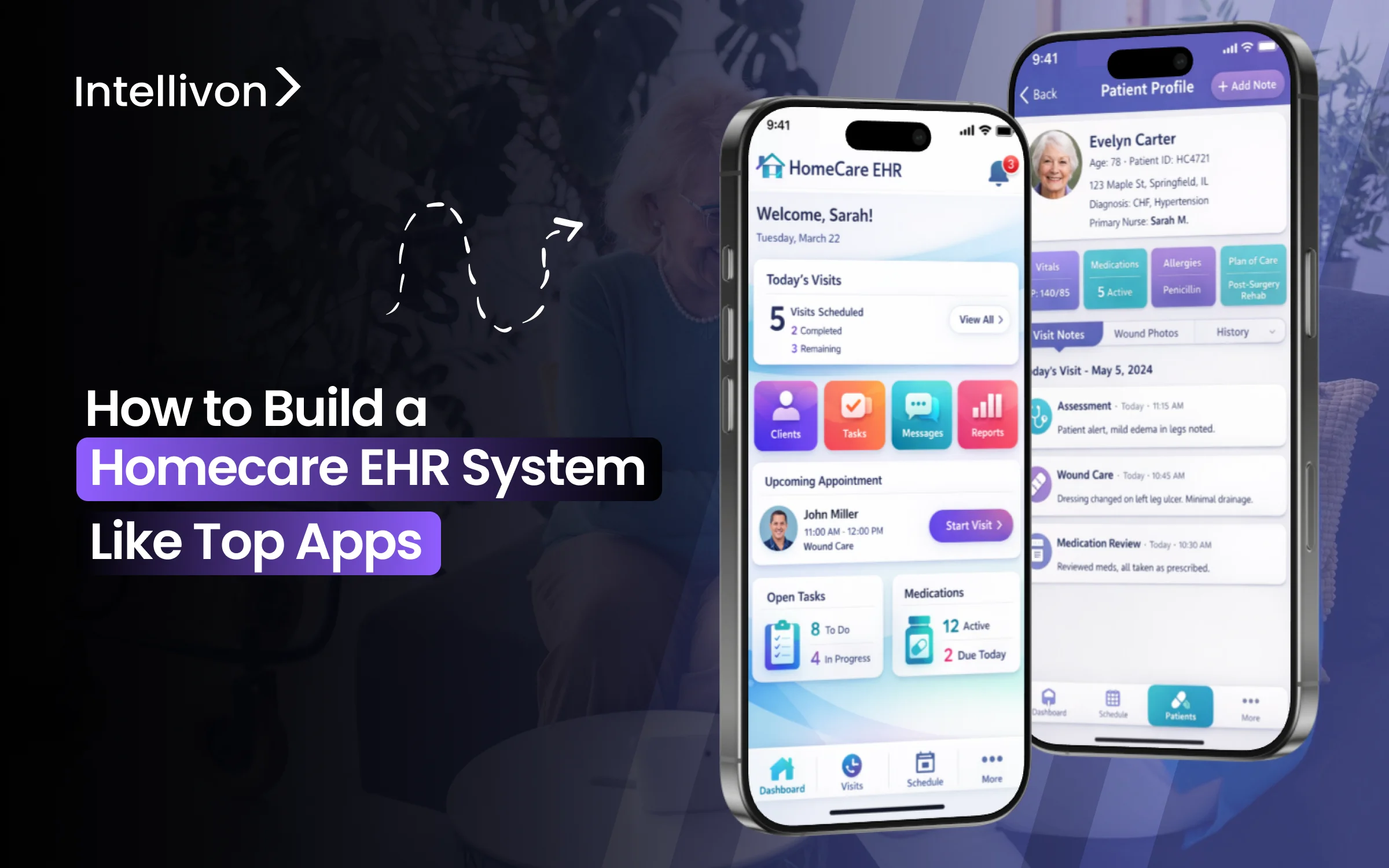
The way people receive care is drastically changing, with aging populations, rising hospital costs, and shifting patient expectations moving to home-based care. Health systems and homecare organizations that once viewed this as a small segment now see it as central to their services. This is because older platforms built for clinics and hospitals were not designed for this new reality.
You may already notice this trend in your own enterprise, where patients are asking for homecare options and care teams are working in the field. Meanwhile, your current systems are struggling to keep up with workflows that are way beyond their capacity. What is needed is a homecare EHR system designed specifically for this purpose, one that allows for field operations, clinical documentation, and compliance to be handled smoothly.
Intellivon has spent years developing homecare EHR systems for organizations navigating this transition. We’ve examined what the top apps in the market do well and turned that into a practical engineering and strategy playbook. In this blog, we will talk about how we build such platforms from the ground up.
Why Homecare EHR Systems Are Evolving Fast
There has been a boom in remote healthcare systems ever since the pandemic hit, and enterprises as well as their customers seem to favor that system more and more. Homecare EHR systems are evolving fast to support remote monitoring, AI-driven workflows, and seamless telehealth. As demand for home-based care rises, providers need scalable, integrated platforms.
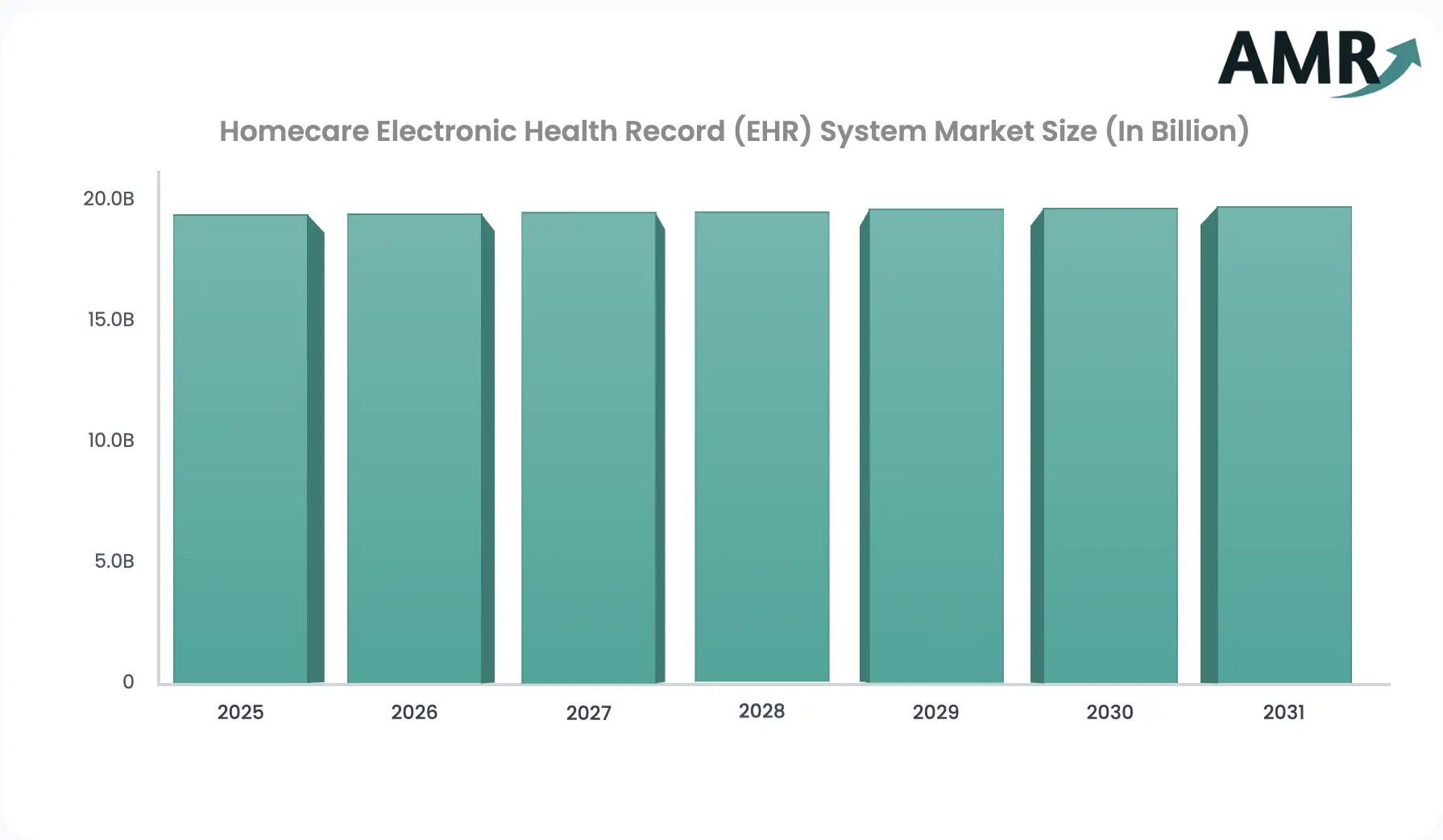
In fact, an Archive Market Research report states that the global homecare EHR market reached $19.4 billion in 2025 and continues to expand at a steady pace. Growth is driven by rising chronic diseases, an aging population, and increasing demand for remote patient monitoring. The market is projected to grow at a CAGR of 0.3%.
Homecare EHR evolution is driven by a shift toward value-based, decentralized care. Modern platforms prioritize mobile-first design, real-time data interoperability, and AI-driven scheduling to manage distributed workforces effectively while ensuring HIPAA compliance and clinical accuracy.
1. Shift to Distributed, Home-Based Care Delivery
Healthcare delivery is no longer tethered to a single location. Patients now prefer receiving treatment at home to reduce hospital readmission rates. This shift requires a technological backbone that supports asynchronous communication between doctors and families.
Therefore, the EHR must function as a bridge connecting various stakeholders through a unified source of truth. Without a reliable digital platform, the risks of medication errors or missed visits increase.
2. Why Hospital EHRs Fail in Homecare Settings
Hospital-based EHRs were built for controlled environments with stable internet and fixed workstations. These systems often crumble when faced with intermittent connectivity or GPS tracking needs. Hospital software typically focuses on episodic care rather than long-term engagement.
Furthermore, complex interfaces often cause caregiver burnout during field documentation. Investing in a purpose-built homecare EHR ensures technology supports the workflow instead of hindering it.
3. Operational Gaps in Current Homecare Systems
Many existing platforms rely on outdated modules that fail to communicate. For example, a system might have excellent billing but manual scheduling processes.
This fragmentation creates data silos that prevent leadership from seeing the full operational picture. Inconsistent data entry and a lack of automated checks often result in audit failures.
4. What Modern Providers Expect from EHR Platforms
Today’s providers demand a user experience that mirrors simple consumer-grade applications. They seek tools that automate routine tasks like mileage tracking and visit verification.
Real-time collaboration features are also high on the list of requirements for modern teams. Ultimately, a modern EHR must empower the workforce to deliver high-quality care with minimal administrative friction.
Selecting a platform that addresses these modern requirements is the first step toward a scalable enterprise. Building such a system requires a deep understanding of both clinical necessity and technical excellence.
What Is a Homecare EHR System?
A homecare EHR system is a digital platform that manages patient data, care plans, and clinical workflows for home-based healthcare services. It enables caregivers, nurses, and administrators to access real-time patient information from any location.
Unlike hospital EHRs, it supports mobile-first workflows, remote monitoring, and decentralized care delivery. The system integrates scheduling, documentation, billing, and compliance into a single interface.
As a result, providers reduce manual work, improve care coordination, and ensure accurate reporting. A well-designed homecare EHR acts as the operational backbone for delivering scalable, efficient, and patient-centric care outside traditional clinical settings.
How Homecare EHR Differs From Hospital EHR
Homecare and hospital EHR systems serve different care environments. As a result, their design, workflows, and priorities vary significantly. While hospital EHRs focus on centralized, facility-based care, homecare EHRs support distributed, mobile-first operations.
Therefore, choosing the right architecture depends on how care is delivered, not just what data is stored.
Homecare EHR vs Hospital EHR Comparison
| Aspect | Homecare EHR | Hospital EHR |
| Care Setting | Patient homes and remote environments | Hospitals and clinical facilities |
| Workflow Design | Mobile-first, field-based workflows | Station-based, department workflows |
| User Access | Caregivers, nurses on the move | Doctors and nurses within facilities |
| Data Capture | Real-time updates from field visits | Data entered during in-hospital care |
| Scheduling | Caregiver routing and home visits | Appointment and bed management |
| Integrations | Remote monitoring, telehealth tools | Lab systems, imaging, internal systems |
| Connectivity | Works in low or offline conditions | Relies on stable internal networks |
| Care Model | Continuous, long-term care | Episodic, treatment-based care |
In short, hospital EHRs optimize structured, facility-based care, while homecare EHRs enable flexible, real-world care delivery.
Therefore, enterprises building homecare platforms must prioritize mobility, interoperability, and real-time access. This shift ensures that care teams can operate efficiently outside traditional clinical environments while maintaining accuracy and compliance.
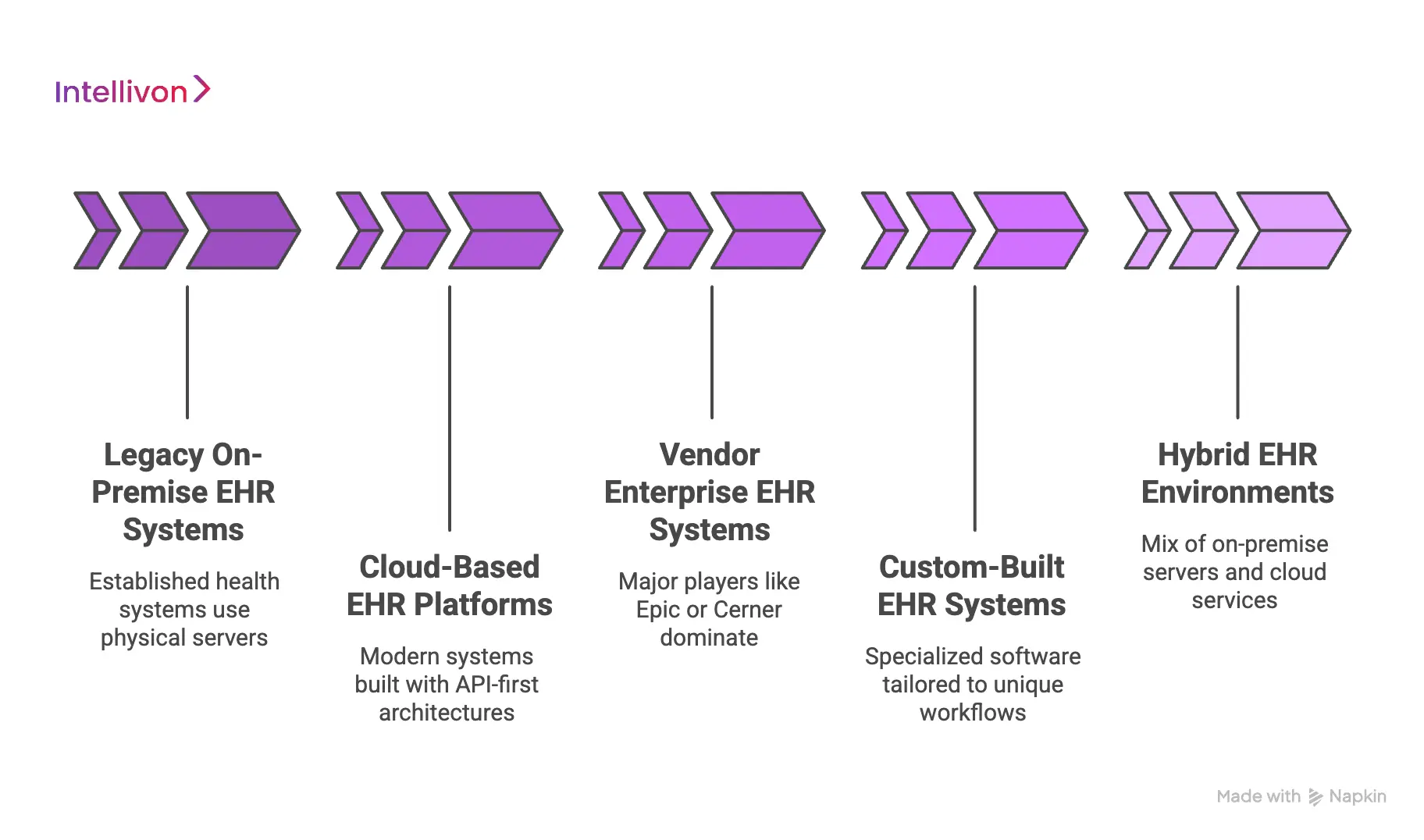
Types of EHR Systems You Can Build Today
Choosing the right architecture is a foundational decision that dictates your long-term capital expenditure and operational agility. Investors must balance the need for rapid deployment with the stringent security requirements of the healthcare sector.
Therefore, understanding the structural nuances of each EHR type is essential for building a platform that attracts high-value enterprise clients.
1. Cloud-based EHR Platforms for Scalability
Cloud-hosted systems, often delivered as Software as a Service (SaaS), allow agencies to scale without investing in heavy local hardware. These platforms offer seamless updates and high accessibility from any location with an internet connection.
Because the service provider handles security patches and backups, the internal IT burden is significantly reduced. For instance, Kanuha and AlayaCare leverage cloud elasticity to support massive growth across multiple geographic regions.
2. On-premise EHR Systems for Strict Control
On-premise solutions involve installing the software on local servers within the organization’s physical facility. This model provides maximum control over data residency and deep customization of security protocols.
While the upfront costs for hardware and maintenance are higher, some large-scale institutions prefer this to maintain total sovereignty over sensitive patient records.
Systems like Epic often offer on-premise deployments for major health systems requiring bespoke integration with local infrastructure.
3. Hybrid EHR Systems for Enterprise Flexibility
Hybrid models combine the accessibility of the cloud with the security of on-site storage for critical data subsets. This approach allows an enterprise to keep sensitive PHI (Protected Health Information) on-premises while using the cloud for non-sensitive operational tasks.
It provides a strategic middle ground for organizations transitioning away from legacy systems. NetSmart frequently utilizes hybrid configurations to help large behavioral health and homecare providers balance compliance with modern accessibility.
4. Mobile-first EHR for Field Healthcare Teams
A mobile-first EHR is designed specifically for the smartphone or tablet, prioritizing touch interfaces and offline functionality. Unlike desktop versions ported to a mobile screen, these apps focus on the specific needs of a caregiver in a patient’s home.
They include features like GPS-validated visit verification and voice-to-text clinical notes. HHAeXchange is a primary example, offering robust mobile tools that ensure compliance and ease of use for thousands of field clinicians.
5. AI-enabled EHR Platforms for Automation
AI-integrated platforms use machine learning to automate repetitive tasks like scheduling optimization and predictive risk modeling.
These systems can analyze patient data to flag potential health declines before they become emergencies. By reducing the “documentation burden” through ambient listening and auto-coding, they significantly improve staff retention.
CareTime and newer entrants are increasingly incorporating AI to streamline billing audits and provide actionable clinical insights in real-time.
Strategic selection of these architectures ensures your platform meets the specific regulatory and operational demands of the homecare market. Matching the technology to the user’s environment is the key to achieving high adoption rates and sustainable growth.
Types of Homecare EHR Platforms by Use Case
Different clinical environments demand distinct technical capabilities. A platform designed for long-term companion care will fail in a skilled nursing environment because the regulatory and documentation requirements are fundamentally different.
Therefore, investors must align their product development with the specific workflows of their target sub-sector. By focusing on a niche use case, you can build deeper authority and solve the precise “pain points” that generic systems often overlook.
1. Skilled Nursing Homecare EHR Systems
Skilled nursing platforms are designed for clinicians providing complex medical care, such as wound management or IV therapy. These systems must prioritize strict clinical documentation standards like OASIS to ensure Medicare reimbursement.
Because accuracy is paramount, these platforms often include built-in clinical decision support and medication reconciliation tools.
For example, Homecare Homebase is widely used by large agencies to manage high-acuity patients while maintaining rigorous federal compliance.
2. Hospice and Palliative Care Platforms
Hospice care requires a unique focus on end-of-life management, bereavement tracking, and interdisciplinary team coordination. These platforms must facilitate seamless communication between physicians, social workers, and spiritual counselors.
Unlike standard EHRs, they often include specialized modules for symptom management and volunteer tracking.
MatrixCare offers a dedicated hospice solution that manages these sensitive workflows while ensuring that documentation meets the specific requirements of the hospice benefit.
3. Therapy and Rehabilitation EHR Systems
Platforms tailored for physical, occupational, or speech therapy focus heavily on functional assessment and progress tracking over time. These systems require robust graphing capabilities to visualize patient improvement and must integrate with specialized billing codes for rehabilitative services.
They often feature library-based goal-setting and exercise plan builders. Casamba (now part of NetSmart) is a classic example of a platform built to handle the unique documentation and scheduling needs of mobile therapy providers.
4. Chronic Care and Remote Monitoring EHR
These systems are built for long-term management of conditions like diabetes or heart failure. They rely heavily on integrations with cellular-enabled scales, blood pressure cuffs, and wearable sensors.
The core value here is “exception-based reporting,” where the system alerts a nurse only when a patient’s vitals fall outside a healthy range.
Vivify Health provides a specialized framework for this, allowing agencies to manage massive patient populations with fewer staff members through automated monitoring.
5. Multi-agency Homecare Management Systems
Large-scale enterprises operating across multiple states or franchises require a “macro” view of their operations. These systems offer centralized billing, payroll, and reporting while allowing individual branches to manage their local schedules.
They must handle complex tax jurisdictions and varying state-level Medicaid regulations. AlayaCare excels in this area by offering a cloud-native platform that gives corporate leaders a consolidated dashboard of KPIs across hundreds of different locations.
Building a platform that speaks the specific language of these use cases is essential for market penetration. When the software feels like it was designed by clinicians for clinicians, the path to enterprise-wide adoption becomes much smoother.
Core Modules of a Homecare EHR Platform
The architecture of a high-performing EHR is defined by its modularity. Each component must function as a standalone powerhouse while maintaining deep integration with the rest of the ecosystem.
A truly sophisticated platform actively manages the lifecycle of care from intake to final billing. Therefore, investing in a robust modular framework is the only way to ensure long-term operational viability.
1. Patient Records and Longitudinal Data Tracking
A modern EHR must provide a 360-degree view of the patient’s health history over time. This requires tracking trends in vitals, medications, and social determinants of health.
By maintaining a longitudinal record, clinicians can identify subtle declines in health that episodic snapshots might miss.
For example, systems like Epic or AlayaCare allow users to visualize health trends through intuitive dashboards. This level of data depth is critical for agencies participating in value-based care contracts.
2. Care Plans and Clinical Workflow Management
Digital care plans should be dynamic documents that evolve based on real-time patient assessments. The system must guide the caregiver through specific clinical pathways to ensure that no step in the treatment protocol is overlooked.
This module acts as a safeguard, flagging potential drug interactions or missed clinical tasks during a home visit.
Homecare Homebase excels here by embedding rigorous clinical logic into the documentation process. Effective workflow management ensures that the care delivered in the home matches the high standards of a hospital setting.
3. Scheduling and Caregiver Coordination Systems
In the homecare world, the schedule is the heartbeat of the operation. An intelligent scheduling module must account for caregiver skills, patient preferences, travel time, and geographic proximity.
Automation in this area can save thousands of administrative hours and significantly reduce travel-related expenses. Many top-tier platforms now incorporate AI-driven “best-fit” matching to optimize daily routes.
HHAeXchange, for instance, provides sophisticated tools that ensure the right caregiver is at the right home at the precisely scheduled time.
4. Billing, Claims, and Revenue Cycle Workflows
The financial health of an agency depends on its ability to turn clinical visits into clean claims. A robust billing module must handle a complex mix of payers, including Medicare, Medicaid, and private insurance.
It should automatically verify that every visit has the necessary documentation before a claim is even generated. This proactive approach reduces denial rates and accelerates the revenue cycle.
Systems like MatrixCare offer integrated financial suites that bridge the gap between clinical documentation and the back-office ledger.
5. Compliance, Audit, and Reporting Systems
Compliance is not an afterthought; it must be baked into the software’s DNA. This module should provide automated alerts for expiring caregiver licenses or missing Electronic Visit Verification (EVV) data.
During an audit, the system must generate comprehensive reports and detailed “audit trails” with a single click. This transparency protects the agency from heavy fines and legal liabilities.
Netsmart provides deep reporting capabilities that allow executives to monitor compliance metrics across multiple states and regulatory jurisdictions.
Strategic investment in these core modules ensures that your platform can handle the administrative weight of a growing enterprise. When these systems work in harmony, the result is a more efficient workforce and a significantly healthier bottom line.
Advanced Capabilities in Modern Homecare EHR Platforms
Standard digital records are no longer sufficient to maintain a competitive edge in the homecare market. Enterprise leaders are now looking toward intelligent systems that proactively assist the caregiver. These advanced capabilities transform the EHR from a passive storage bin into an active clinical partner.
By leveraging high-level automation, agencies can significantly reduce the cognitive load on their field staff. Therefore, investing in these frontier technologies is essential for attracting top-tier clinical talent and improving patient safety.
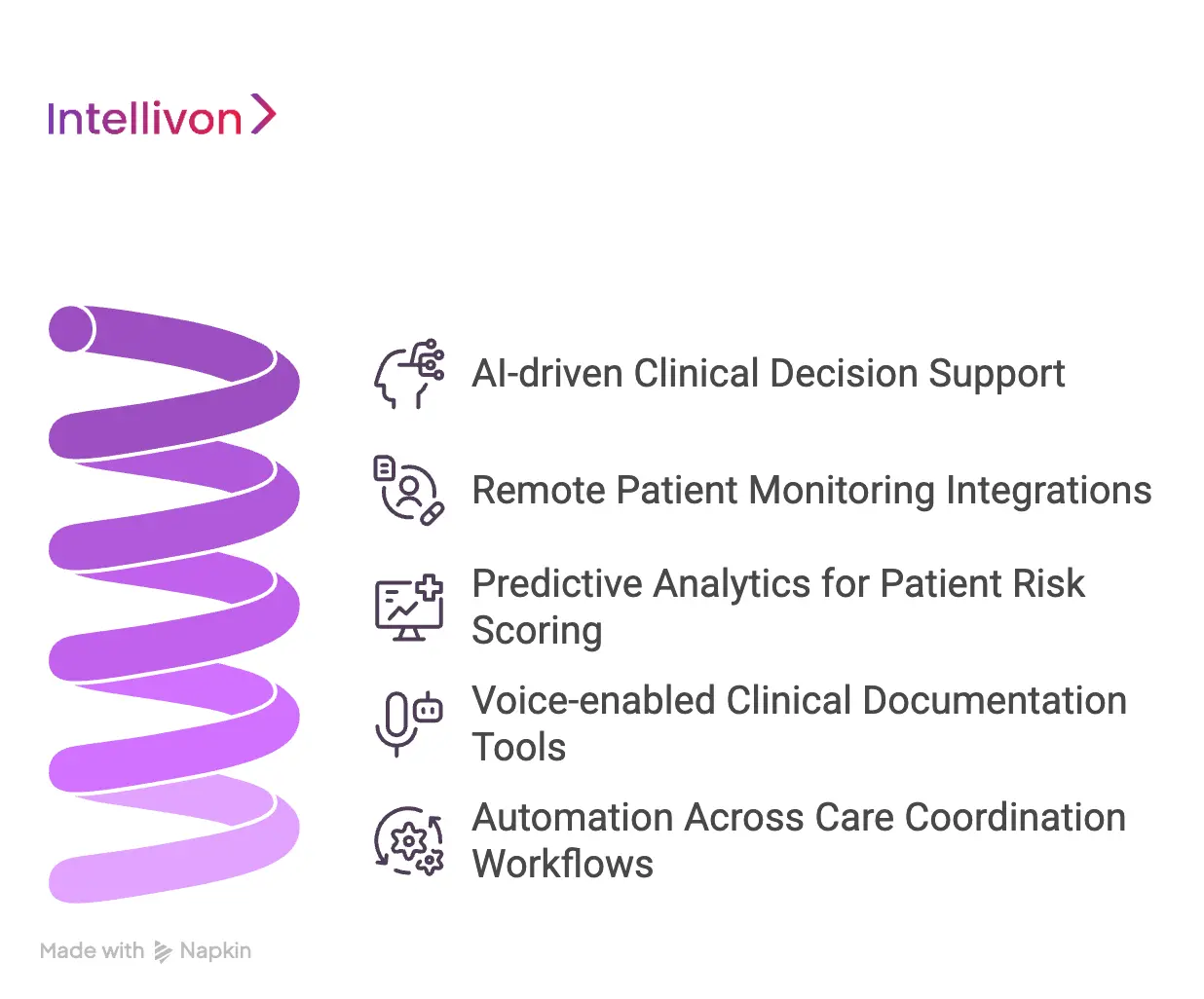
1. AI-driven Clinical Decision Support Systems
Clinical decision support (CDS) uses machine learning to provide real-time guidance during patient assessments. These systems analyze historical data to suggest potential diagnoses or flag dangerous medication interactions.
This reduces the variability in care that often occurs when different nurses visit the same patient.
- Real-time Alerting: Algorithms can instantly notify staff if a patient’s daily assessment deviates from their baseline.
- Standardized Care: These tools ensure that every field clinician has the backing of a virtual expert at the point of care.
- Example: AlayaCare incorporates these intelligent guardrails to maintain clinical excellence across distributed teams.
2. Remote Patient Monitoring Integrations
Remote Patient Monitoring (RPM) allows for continuous oversight of high-risk patients through connected medical devices. Modern EHRs must integrate directly with cellular-enabled scales, pulse oximeters, and glucose monitors.
This connectivity eliminates the need for manual data entry and provides a real-time stream of clinical intelligence.
- Biometric Syncing: Data flows directly from the home device to the clinician’s dashboard without human intervention.
- Immediate Intervention: Agencies can react instantly when vitals reach a critical threshold, preventing hospitalizations.
- Example: Vivify Health demonstrates this by feeding biometric data directly into the care team’s primary workflow.
3. Predictive Analytics for Patient Risk Scoring
Predictive models can identify which patients are most likely to be readmitted to the hospital within the next 30 days. By assigning a dynamic “risk score” to every individual, the EHR helps managers prioritize their most vulnerable cases.
This strategic foresight allows for better resource allocation and improved clinical outcomes.
- Proactive Wellness: The model shifts the focus from reactive crisis management to preventative health maintenance.
- Resource Optimization: Managers can deploy senior clinical staff to high-risk cases while monitoring stable patients remotely.
- Example: Homecare Homebase utilizes these analytics to help agencies participate successfully in value-based purchasing programs.
4. Voice-enabled Clinical Documentation Tools
Documentation remains one of the largest contributors to caregiver burnout and high turnover rates. Voice-enabled tools allow clinicians to dictate their notes directly into the EHR using natural language processing.
This technology can automatically structure the narrative into the correct clinical fields, saving hours of typing.
- Ambient Listening: Advanced software can capture clinical conversations and draft structured notes automatically.
- Hands-Free Operation: Nurses can keep their eyes on the patient instead of a tablet screen during the visit.
- Example: Nuance DAX is a prime example of how ambient intelligence can transform the documentation experience.
5. Automation Across Care Coordination Workflows
True automation goes beyond simple task reminders to manage complex, multi-step processes. For example, when a patient is discharged from a hospital, the EHR can automatically trigger insurance authorization and caregiver matching.
This reduces the “administrative lag” that often delays the start of care.
- Workflow Orchestration: The system manages the hand-off between intake, scheduling, and billing departments.
- Scalability: Automation allows an agency to grow its patient census without a linear increase in back-office headcount.
- Example: HHAeXchange automates these workflows to ensure compliance and billing requirements are met seamlessly.
Integrating these advanced features is not just about staying current with technology; it is about building a resilient enterprise. These tools provide the transparency and efficiency required to thrive in a highly regulated and competitive environment.
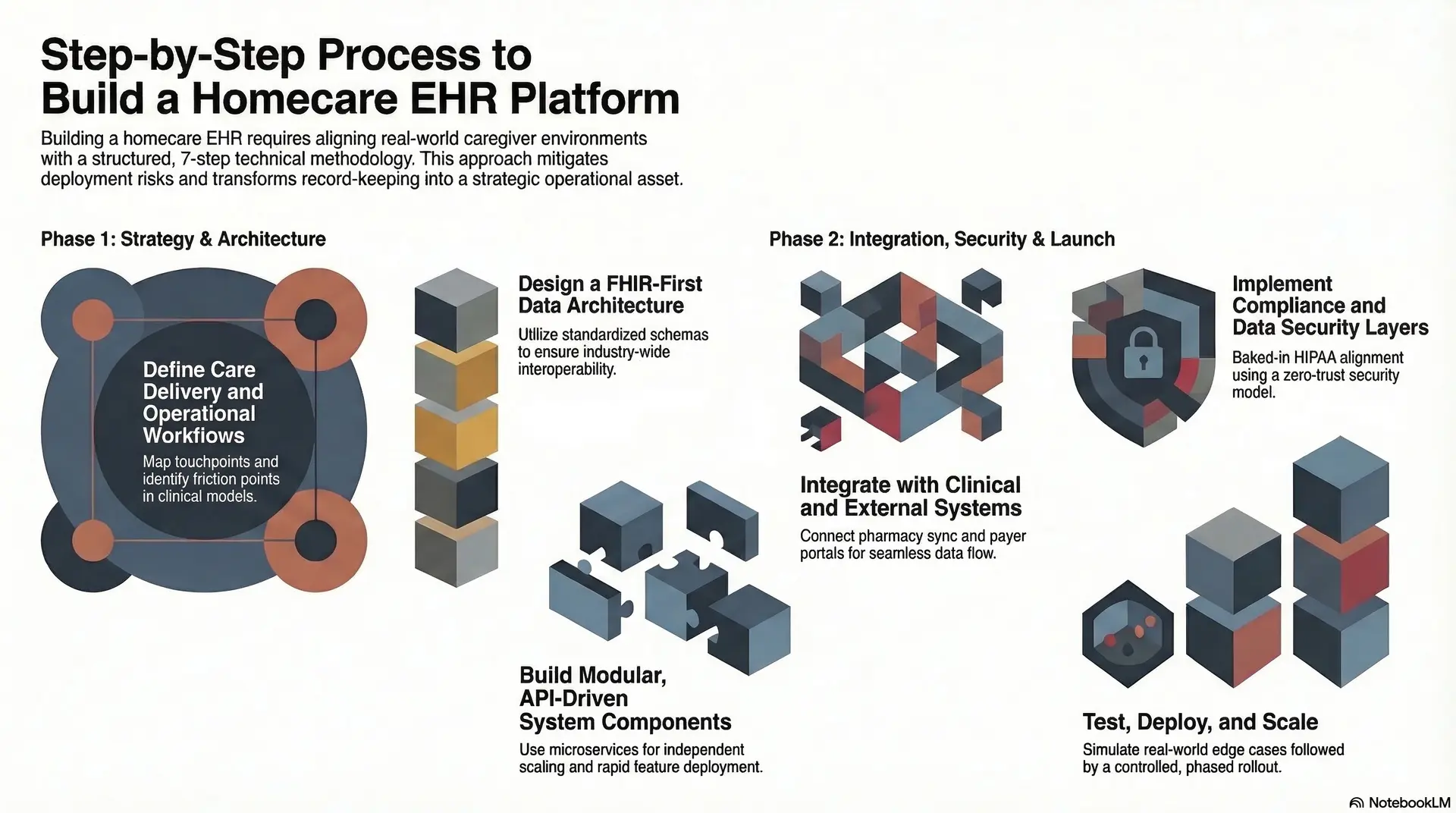
Step-by-Step Process to Build a Homecare EHR Platform
Building an enterprise-grade homecare EHR requires more than just software engineering; it demands a deep alignment between clinical workflows and technical architecture. At Intellivon, we approach this challenge by prioritizing the real-world environment of the caregiver.
Our methodology ensures that the final product is not only a record-keeping tool but a strategic asset that drives operational efficiency. By following a structured, phased approach, we mitigate the risks associated with high-stakes healthcare deployments.
1. Define Care Delivery and Operational Workflows
The first phase involves a deep dive into the specific care models your agency utilizes. We map every touchpoint, from the initial patient intake to the final insurance claim submission.
This stage identifies the “friction points” where manual processes currently slow down your operations.
- Stakeholder Mapping: Identifying the unique needs of nurses, therapists, and administrative staff.
- Gap Analysis: Pinpointing where legacy systems fail to support modern field requirements.
- Workflow Optimization: Designing digital paths that mirror the actual steps taken during a home visit.
2. Design a FHIR-First Data Architecture
Data portability is the cornerstone of modern healthcare. We design our systems using the Fast Healthcare Interoperability Resources (FHIR) standard from day one.
This ensures that your EHR can exchange data with hospitals, labs, and pharmacies without costly custom integrations.
- Standardized Schemas: Utilizing industry-standard formats for patient demographics, medications, and observations.
- Interoperability: Building the foundation for a “connected” ecosystem that talks to the broader healthcare grid.
- Future-Proofing: Ensuring the database can handle evolving regulatory data requirements.
3. Build Modular, API-Driven System Components
At Intellivon, we move away from monolithic software in favor of a microservices architecture. This means each core function, like scheduling or billing, operates as an independent module.
This modularity allows for faster updates and prevents a single point of failure from crashing the entire system.
- Independent Scaling: Growing the scheduling module during peak hours without taxing the billing engine.
- Rapid Deployment: Updating individual features without requiring a full system reboot.
- API-First Strategy: Creating robust endpoints that allow for easy integration with third-party tools.
4. Integrate with Clinical and External Systems
A homecare EHR cannot exist in a vacuum. We focus on building bridges to external stakeholders, including national health exchanges and private insurance payers.
This integration ensures that clinical data flows seamlessly to the people who need it most.
- Pharmacy Sync: Automating medication orders and reconciliation to reduce errors.
- Payer Portals: Connecting directly to insurance systems for real-time authorization and claims status.
- HIE Connectivity: Participating in Health Information Exchanges to track patient transitions across the care continuum.
5. Implement Compliance and Data Security Layers
Security is baked into the code, not added at the end. We implement a “zero-trust” security model that protects patient data at every level, from the mobile device to the cloud server.
This includes rigorous encryption and multi-factor authentication for all users.
- HIPAA Alignment: Ensuring every data transaction meets federal privacy standards.
- Audit Logging: Creating an unalterable record of every person who accesses a patient file.
- Encryption at Rest: Protecting sensitive PHI even if the physical hardware is compromised.
6. Test Real-World Care Scenarios and Edge Cases
Before a platform goes live, it must be battle-tested in conditions that mimic the unpredictability of homecare.
We simulate scenarios like sudden internet loss during a clinical assessment or complex split-billing for multiple payers.
- User Acceptance Testing (UAT): Getting field nurses into the system to verify that the UI is intuitive.
- Offline Stress Tests: Ensuring the mobile app retains data perfectly when cell service drops.
- Edge Case Analysis: Testing for rare but critical events, such as emergency care escalations.
7. Deploy and Scale Across Care Networks
The final stage is a controlled rollout that ensures minimal disruption to existing care. We provide the infrastructure to scale your platform from a single pilot branch to a nationwide network.
Intellivon stays by your side during this transition to ensure that your technical growth matches your business ambitions.
- Phased Rollout: Deploying to specific regions first to gather feedback and refine performance.
- Performance Monitoring: Using real-time dashboards to track system health as the user base grows.
- Enterprise Support: Providing the high-level technical partnership required for long-term success.
The path to a market-leading EHR is complex, but with the right strategic partner, it becomes a predictable journey toward growth. Building a system that clinicians love and administrators trust is the ultimate competitive advantage in the modern homecare era.
Key Integrations in Homecare EHR Systems
An EHR that exists in isolation is a liability, not an asset. For a homecare agency to function as a high-value node in the healthcare continuum, its software must communicate fluently with the broader medical ecosystem.
Integration is the mechanism that transforms a simple documentation tool into a powerful data exchange. Therefore, building a “connected” platform is the only way to achieve the operational speed required for modern enterprise growth.
1. Integration with Epic, Cerner, and MEDITECH
Most homecare patients originate from hospital discharges, making a seamless link to acute care systems essential.
Bi-directional integration allows the homecare team to receive discharge summaries, medication lists, and surgical notes instantly. This eliminates the “information gap” that often leads to preventable hospital readmissions.
- Seamless Transitions: Patients move from the hospital to the home without losing critical clinical context.
- Direct Referrals: Agencies can receive digital referrals directly into their intake queue, reducing administrative lag.
- Example: Utilizing HL7 or FHIR standards to sync patient records with major health systems like Epic ensures your agency is the preferred partner for hospital discharge planners.
2. Remote Monitoring and IoT Health Devices
As care becomes more proactive, the ability to ingest data from wearable sensors and home medical devices is a significant competitive advantage. Integrating with the Internet of Things (IoT) allows the EHR to track patient vitals in real-time between nursing visits.
- Continuous Oversight: Monitoring blood pressure, glucose levels, and heart rate without requiring a physical presence.
- Automated Alerting: The system flags abnormal readings immediately, allowing for early clinical intervention.
- Example: Connecting to platforms like Dexcom or Apple HealthKit provides a continuous stream of objective data that enhances clinical decision-making.
3. Pharmacy, Lab, and Diagnostic Systems
Managing medications and lab results is a high-risk area in homecare. Direct integration with national pharmacy networks and diagnostic laboratories ensures that orders are accurate and results are processed quickly.
- Electronic Prescribing (eRx): Clinicians can send or renew prescriptions directly from the patient’s digital chart.
- Results Tracking: Lab values flow directly into the EHR, triggering alerts if a patient’s condition requires a medication adjustment.
- Example: Integrating with Surescripts allows for real-time medication reconciliation, significantly reducing the risk of adverse drug events.
4. Insurance and Billing Infrastructure
The financial viability of a homecare enterprise depends on its ability to verify coverage and process claims without friction. Integrating with clearinghouses and payer portals automates the verification of benefits and the submission of digital claims.
- Real-time Eligibility: Verifying insurance coverage instantly during the intake process to prevent unbillable visits.
- Electronic Remittance Advice (ERA): Automatically reconciling payments and denials within the internal ledger.
- Example: Deep integration with Waystar or Availity streamlines the revenue cycle, ensuring that cash flow remains steady and predictable.
5. Telehealth and Patient Communication Tools
Virtual care is a core component of modern homecare delivery. Integrating secure video conferencing and encrypted messaging directly into the EHR workflow allows for rapid consultations with specialists or family members.
- Virtual Assessments: Reducing travel costs by conducting routine follow-ups via secure video link.
- Caregiver Collaboration: Allowing field staff to message supervisors or doctors instantly without leaving the patient’s record.
- Example: Using Zoom for Healthcare or Twilio-powered messaging within the platform ensures all communications remain HIPAA-compliant and fully documented.
Mastering these integrations ensures that your platform is not just a siloed application but a central hub for coordinated care. When data moves freely between these systems, the result is a more responsive, efficient, and profitable healthcare enterprise.
Compliance and Security in Homecare EHR Development
Security in healthcare is not a feature; it is the foundation of trust between the provider and the patient. Building a homecare EHR requires a “security-first” mindset where every line of code is scrutinized for vulnerabilities.
As care moves into the home, the attack surface expands to include mobile devices and home networks. Implementing a zero-trust architecture ensures that sensitive Protected Health Information (PHI) remains secure regardless of where it is accessed.
1. HIPAA Compliance and Patient Data Protection
Maintaining HIPAA compliance is a continuous process of risk management and technical safeguards. This involves encrypting data both while it is stored on a server and while it is being transmitted over the internet.
Physical safeguards are equally important, ensuring that mobile devices used by field staff are managed through centralized security policies.
- Encryption Standards: Utilizing AES-256 for data at rest and TLS 1.3 for data in transit.
- Business Associate Agreements (BAA): Ensuring all third-party cloud providers sign legally binding security guarantees.
- Device Management: Implementing remote-wipe capabilities for tablets or phones lost in the field.
- Example: Microsoft Azure and AWS provide HIPAA-eligible environments that serve as the secure backbone for top-tier EHR platforms.
2. Audit Trails and Clinical Data Traceability
Transparency is essential for passing federal audits and defending against malpractice claims. An immutable audit trail records every instance a user views, edits, or deletes a patient record.
This level of traceability ensures that there is a clear “paper trail” for every clinical decision made in the home.
- Time-Stamping: Every entry is marked with a precise digital signature that cannot be altered.
- Version Control: Maintaining a history of changes to care plans to track clinical progress accurately.
- Forensic Readiness: Providing administrators with the tools to investigate suspicious access patterns instantly.
- Example: Netsmart utilizes advanced logging features that allow agencies to generate comprehensive compliance reports during unexpected state surveys.
3. Role-based Access and Identity Management
In a multi-disciplinary care team, not everyone requires access to the entire patient file. Role-Based Access Control (RBAC) ensures that a scheduler only sees logistics data, while a nurse sees clinical history.
This “principle of least privilege” minimizes the risk of accidental or intentional data exposure.
- Granular Permissions: Defining specific data fields that are visible based on the user’s professional credentials.
- Multi-Factor Authentication (MFA): Requiring a second form of verification to prevent unauthorized logins from stolen credentials.
- Single Sign-On (SSO): Streamlining the login process while maintaining centralized control over user identities.
- Example: Integrating Okta or Azure AD allows large homecare enterprises to manage thousands of users with precision and security.
4. Regional Compliance and Regulatory Alignment
Healthcare regulations are often fragmented across state and national borders. A robust EHR must be flexible enough to handle varying Electronic Visit Verification (EVV) requirements and state-specific Medicaid rules.
Staying aligned with these shifting mandates prevents the costly “re-work” of software modules as the business expands geographically.
- EVV Integration: Automatically capturing GPS data and timestamps to meet the requirements of the 21st Century Cures Act.
- State-Specific Forms: Customizing clinical documentation to meet local regulatory standards without manual intervention.
- Global Readiness: Preparing for international standards like GDPR if the enterprise looks to expand beyond domestic markets.
- Example: HHAeXchange is specifically engineered to handle the complex, state-by-state EVV mandates that vary significantly across the country.
A secure and compliant EHR is a resilient asset that protects the longevity of your investment. By prioritizing these security layers, you create a platform that can safely handle the complexities of modern, distributed healthcare.
Challenges in Building EHR Platforms (And How We Solve Them)
Developing homecare EHRs involves overcoming data fragmentation, legacy system friction, and low caregiver adoption.
Intellivon solves these through FHIR-based interoperability, microservices for legacy bridging, and user-centric mobile designs that reduce administrative fatigue while ensuring multi-location scalability.
1. Fragmented Data Across Care Environments
Patient information is often scattered across hospitals, primary care offices, and homecare agencies. This fragmentation leads to incomplete clinical pictures, increasing the risk of medication errors and hospital readmissions.
When a nurse enters a home without the latest discharge summary, the quality of care suffers immediately.
The Intellivon Solution: We implement a unified data lake strategy that aggregates information from every touchpoint in the care continuum. Our platforms use real-time synchronization to ensure that the mobile device in the field has the exact same data as the back-office server.
Consequently, your clinical team always operates with a 360-degree view of the patient’s health history.
2. Integration with Legacy Healthcare Systems
Many established health systems still rely on outdated on-premise software that was never designed for modern API connectivity. These “walled gardens” make it difficult for new homecare platforms to pull or push data efficiently. This lack of interoperability often forces staff into manual data entry, which is both slow and error-prone.
The Intellivon Solution: We build custom integration layers and middleware adapters that act as a bridge to legacy environments. By utilizing HL7 and FHIR wrappers, we allow your modern EHR to “speak” to older systems without requiring them to be replaced.
This approach enables a smooth data flow while preserving the value of existing infrastructure investments.
3. Ensuring Compliance at Scale
As an agency expands across state lines, it faces a dizzying array of different Medicaid rules and Electronic Visit Verification (EVV) mandates. Manually tracking these changing regulations is impossible for a growing enterprise. Failing to meet even one minor requirement can result in massive financial penalties or lost contracts.
The Intellivon Solution: We bake compliance directly into the software’s logic using automated rules engines. Our systems include geographic-aware modules that adjust documentation requirements based on the patient’s location.
Therefore, the platform proactively prevents non-compliant actions before they happen, ensuring your enterprise remains “audit-ready” at all times.
4. Adoption Challenges Among Caregivers
Field staff are often overwhelmed by complex software that feels like an additional administrative burden. If an EHR is too difficult to use, caregivers will find workarounds or provide low-quality documentation. High turnover in the homecare sector is frequently linked to frustration with poorly designed digital tools.
The Intellivon Solution: We prioritize a “mobile-first” UX design that mimics the simplicity of popular consumer apps. By including features like voice-to-text notes and offline functionality, we reduce the time spent on documentation by up to 40%.
When the software makes their job easier rather than harder, caregiver satisfaction and retention rates improve significantly.
5. Scaling Across Multi-Location Operations
Managing a single office is vastly different from overseeing a national network of care providers. Systems often slow down or become unstable as the volume of concurrent users and data transactions increases. Without a scalable architecture, business growth can lead to systemic technical failures that interrupt patient care.
The Intellivon Solution: We utilize cloud-native microservices that scale horizontally to meet any level of demand. This means that as you add new locations, the system automatically allocates more resources to maintain high performance.
Our centralized dashboards give corporate leadership total visibility into every branch, allowing for consistent quality control across the entire network.
Navigating these challenges requires a partner who understands the intersection of clinical necessity and technical excellence. By addressing these pain points head-on, we empower your enterprise to grow without the typical growing pains of digital transformation.
Conclusion
Building a high-performance homecare EHR is a strategic investment in the future of decentralized medicine. By prioritizing interoperability, mobile-first design, and robust security, enterprises can transform operational complexity into a distinct competitive advantage.
Success requires moving beyond basic documentation toward an intelligent, automated ecosystem that empowers caregivers and protects patient outcomes. Ultimately, the right digital foundation does more than store records; it drives sustainable, scalable growth.
Build a Homecare EHR Platform With Intellivon
At Intellivon, homecare EHR platforms are engineered as an enterprise clinical infrastructure, not as tools layered onto disconnected systems. The goal is to create a unified platform that manages patient data, automates workflows, and supports care delivery across distributed home environments.
Each solution is designed to handle the full patient lifecycle. This includes smart scheduling, caregiver coordination, remote monitoring, clinical documentation, and automated billing. As a result, providers gain real-time visibility, reduce administrative burden, and deliver faster, more accurate care at home.
Our approach focuses on AI-first, API-driven architectures combined with interoperability standards like HL7 and FHIR. This ensures seamless integration with EHR systems, labs, pharmacies, monitoring devices, and billing infrastructure without disrupting ongoing operations.
Why Partner With Intellivon?
- Clinical Infrastructure, Not Just Software: Built to support long-term, distributed homecare operations at scale.
- AI-Driven Workflow Automation: Automates scheduling, documentation, billing, and care coordination workflows.
- Integration-Ready Architecture: Connects seamlessly with healthcare systems, devices, and third-party platforms.
- Compliance-First Engineering: Designed with HIPAA-compliant security, encryption, and governance frameworks.
- Scalable for Multi-Location Care: Supports growing agencies and high patient volumes without performance issues.
Custom homecare EHR platforms are no longer optional for providers aiming to scale distributed care delivery. Therefore, building the right system early directly impacts efficiency, compliance, and patient outcomes.
Connect with Intellivon’s experts to build a homecare EHR platform tailored to your workflows, integrations, and growth roadmap.
FAQs
Q1. What is a homecare EHR system?
A1. A homecare EHR system is a digital platform designed to manage patient records, care plans, and workflows for home-based healthcare services. It enables caregivers to access real-time data, coordinate care, and document visits from any location. As a result, providers improve efficiency, ensure compliance, and deliver consistent care outside traditional clinical settings.
Q2. How much does it cost to build an EHR?
A2. The cost to build a homecare EHR system typically ranges from $40,000 to $150,000+, depending on features, integrations, and compliance requirements. Basic platforms cost less, while AI-driven, fully integrated systems require higher investment. Therefore, the final cost depends on scalability, security, and system complexity.
Q3. How long does EHR development take?
A3. Building a homecare EHR system usually takes 4 to 9 months, depending on scope and complexity. An MVP can be developed faster, while full-scale platforms with integrations and compliance layers take longer. Proper planning and architecture decisions help reduce delays and accelerate deployment.
Q4. What features are essential in homecare EHR?
A4. Key features include patient records, care plan management, scheduling, caregiver coordination, and billing systems. In addition, mobile access, remote monitoring integration, and compliance tracking are critical. These features ensure smooth operations, accurate documentation, and efficient care delivery in home environments.
Q5. Can EHR systems integrate with wearables?
A5. Yes, modern EHR systems can integrate with wearable devices and remote monitoring tools. These integrations allow real-time collection of patient health data such as heart rate, activity, and vitals. As a result, providers can monitor patients continuously and make faster, data-driven care decisions.