Key Takeaways:
- Agentic loan decisioning platforms should be controlled orchestration layers, not autonomous LLM credit approval systems.
- Specialized agents handle document intake, bureau retrieval, fraud checks, risk scoring, pricing, and adverse-action reasons.
- Validated predictive models, deterministic rules, and RAG policy retrieval make all material credit decisions.
- Focused MVPs cost $70,000 to $110,000 while enterprise multi-product platforms reach $220,000 to $300,000.
- How Intellivon builds this: authority mapping, decision replay, regulatory controls, LOS integration, and model monitoring first.
Rule-based underwriting engines process each loan against fixed criteria and send exceptions to human review. Instead, agentic loan decisioning replaces that single engine with a team of specialized AI agents. In sequence, one agent collects data, one assesses risk, one checks policy, and one decides. A fifth then flags difficult cases for a human reviewer with all evidence already gathered.
The decision that determines regulatory defensibility is how the shared policy layer gets built. Without a shared credit policy layer, each AI agent interprets lending rules differently. In practice, lenders report 70% faster processing and 40% lower costs after deploying automated underwriting. However, that result only holds when the policy layer is built and verified first.
Intellivon builds agentic loan decisioning platforms where regulatory compliance and model governance are non-negotiable. As a result, the approach always starts with the policy layer before any agent is built. Accordingly, this blog covers multi-agent architecture, policy layer design, ECOA compliance, and model risk management.

What Is an Agentic Loan Decision Platform?
An agentic loan decisioning platform uses specialized AI agents to coordinate data collection, policy execution, risk analysis, and customer pricing.
Unlike legacy systems that follow fixed trees, these agents dynamically select the best tools to process an application within strict lender-defined limits. They automate complex operational workflows while remaining bound by human-governed credit policies.
1. Rule-Based Automation vs. Predictive AI vs. Agentic AI
Traditional systems follow rigid paths, machine learning models calculate risk, and agentic AI determines the best sequence of actions to take next.
| Capability | Rule-Based Automation | Predictive AI / ML | Agentic AI Orchestration |
| Data Collection | Fixed API calls only | Static inputs required | Dynamic tool selection |
| Risk Assessment | Hard cutoffs | Statistical scoring | Contextual analysis |
| Process Flow | Linear decision trees | Single-point evaluation | Multi-step reasoning |
| Exception Handling | Hard rejection | Outlier score | Automated escalation |
Lenders use this framework to move past rigid rule engines without losing operational control. Intellivon builds these orchestration layers to connect legacy data pipelines with modern reasoning models.
This shift transforms underwriting from a series of disjointed checks into a continuous, self-correcting workflow.
2. The Agent Orchestrates the Decision but Does Not Own Credit Policy
AI agents manage the execution of credit workflows, but human risk teams retain absolute control over the core underwriting rules.
- Controlled Logic: Agents execute policy rules but cannot create, alter, or ignore approval criteria.
- Model Validation: The system passes data to approved risk models without altering their underlying code.
- Immutable Audit Trails: The platform logs every agent action, tool call, and policy check for compliance.
3. Agentic Does Not Have to Mean Fully Autonomous
Lenders deploy agentic infrastructure across four distinct operational levels based on asset class and risk tolerance.
- Level 1 (Assisted Collection): Agents gather and verify documents, leaving analysis entirely to humans.
- Level 2 (Recommendation): Agents analyze data and present structured credit summaries to underwriters.
- Level 3 (Bounded Decisioning): The system approves clear-cut applications within strict portfolio limits.
- Level 4 (Exception Handling): The agent identifies edge cases and routes them to human committees.
4. The Platform Must Know When to Abstain
A resilient lending system relies on pre-programmed boundaries to halt execution when data anomalies or policy conflicts occur.
- Low Confidence: The agent halts if credit model outputs fall below strict certainty metrics.
- Missing Evidence: The platform pauses when primary employment or income verifications fail to return data.
- Policy Ambiguity: The system triggers manual reviews when regional lending guidelines contradict core rules.
Bounded automation ensures that AI agents optimize lending operational efficiency without exposing the financial institution to unmapped credit risk.
This architectural control establishes the safety boundaries required to scale autonomous operations safely. The primary operational question is not whether agents can execute this work, but where this infrastructure delivers the highest economic return.
Why Rule-Based Loan Automation Is Reaching Its Operational Ceiling
Traditional rule-based loan automation functions reliably when processing structured data under static lending policies. However, this architecture becomes prohibitively expensive when lenders must constantly adapt to alternative data streams, product-specific rules, and high exception volumes.
Financial institutions face escalating maintenance costs because hard-coded IF-THEN logic cannot natively parse unstructured documents or coordinate fragmented vendor APIs.
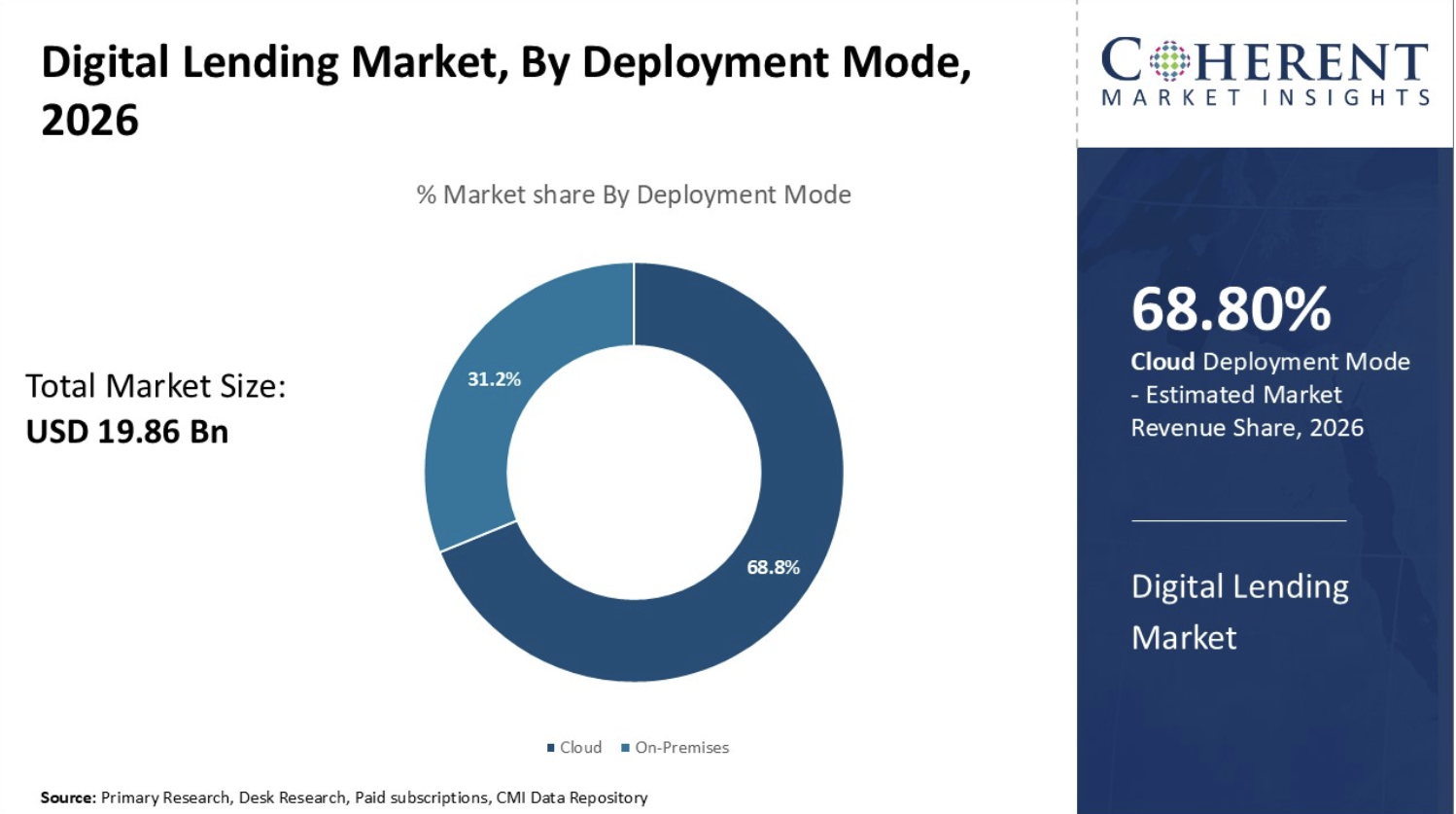
This market transition is accelerating rapidly across the financial services sector. Market data indicates the global credit decisioning platform market will expand from 7.98 billion dollars in 2025 to over 53.69 billion dollars by 2035, exhibiting a compound annual growth rate (CAGR) of 21%. Consequently, lenders must modernize their technological infrastructure to remain competitive.
1. Every Manual Exception Weakens Straight-Through Processing
Legacy rule engines force applications out of the automated pipeline whenever they encounter minor, non-standard borrower variables.
- Document Mismatch: Systems halt when required borrower evidence is missing or formatted as unstructured image files.
- Data Conflict: Platforms trigger manual reviews when bank statement cash flows contradict stated payroll application values.
- Policy Volatility: Rule trees break when adjusting to intra-day manual pricing modifications or multi-tier team escalations.
2. Policy Changes Create Hidden Engineering Work
Modifying lending criteria in a traditional framework requires widespread updates across multiple siloed software systems.
- Siloed Logic: Underwriting rules sit fragmented across credit manuals, spreadsheets, email approvals, and custom model code.
- Vendor Dependency: Altering hard-coded parameters often demands specialized engineering sprints from external core banking providers.
- Knowledge Loss: Tribal knowledge within individual underwriting teams creates invisible variances in daily credit execution.
3. Product Complexity Changes the Business Case
Each credit asset class imposes unique operational constraints that break traditional, linear decisioning workflows.
- Consumer & BNPL: Demand sub-second response times using real-time open banking APIs and alternative data checks.
- Mortgage & Commercial: Requires extracting data from dense tax returns, property valuations, and complex entity structures.
- Small businesses and the SBA rely on balancing thin-file personal credit profiles with active corporate cash flow performance.
Rigid automation reaches its functional limit when loan origination pipelines demand multi-source evidence extraction and continuous, repeatable credit judgment.
This operational ceiling forces lenders to rethink how they structure their underwriting systems. However, risk leaders should not select specific language models or software agents before establishing the formal boundaries of what each component is legally permitted to execute.
Define Agent Authority Before Choosing the AI Stack
Every proposed agent action must be classified as automated, advisory, approval-required, or prohibited. The authority model should exist before model selection because it determines required controls, testing depth, audit records, and human staffing.
Defining these boundaries ensures that probabilistic models cannot violate deterministic credit guidelines. Consequently, banking compliance AI changes the credit function from a black box to a governed digital pipeline.
1. Actions Agents May Perform Automatically
Autonomous systems safely handle structural data collection, information sorting, and data formatting. Therefore, these operations do not require real-time human monitoring.
- Retrieve authorized borrower data via Experian agentic API data integration and TransUnion autonomous data integration layers.
- Classify documents like pay stubs and W-2 forms using specialized NLP loan document classification AI.
- Validate file completeness and calculate structural debt-to-income ratio metrics.
- Route cases to appropriate work queues and generate preliminary credit memos for review.
2. Actions Agents May Recommend but Not Finalize
Complex financial choices require probabilistic reasoning. As a result, agents can generate recommendations but cannot issue final binding approvals.
- Policy exceptions based on alternative data agentic credit scoring models.
- Counteroffers when the primary loan application fails standard underwriting parameters.
- Pricing adjustments managed by a dynamic loan pricing AI agent outside basic risk bands.
- Overrides of model outcomes triggered by thin-file borrower autonomous decisioning anomalies.
3. Events That Must Trigger Human Review
System exceptions occur when data inputs fall outside expected statistical envelopes. Consequently, these specific scenarios require immediate manual underwriter intervention.
- Low-confidence data extraction from complex corporate tax return files.
- Conflicting income evidence between open banking cash flow data and submitted payroll documents.
- High-value exposures exceeding the financial institution’s pre-configured automated credit risk appetite.
- Protected-class disparity alerts flagged by the fair lending AI monitoring system.
4. Actions the Platform Must Prohibit
To ensure compliance with the Consumer Financial Protection Bureau, certain modifications must be structurally blocked at the runtime environment level.
- Creating new eligibility rules or modifying established underwriting policy baselines.
- Inferring protected characteristics for decisioning, ensuring ECOA-compliant agentic decisioning design.
- Changing model thresholds or bypassing standard adverse action notice AI generation pathways.
- Calling unrestricted external tools or open internet APIs outside the secure network boundary.
For a deeper breakdown of system boundaries, see our guide on AI Loan Origination Platform Development. The agent authority matrix serves as a product blueprint, security control, validation artifact, and regulator-facing governance record.
Once these execution boundaries are strictly enforced within the software, the platform can safely orchestrate governed data movement through the credit decision pipeline.
How an Agentic Loan Decision Moves From Application to Outcome
An agentic credit workflow must operate as a deterministic, evidence-driven sequence managed by a centralized orchestration engine. Specifically, each software agent completes a narrow task, returns structured JSON data, and subsequently passes control back to the central router.
Therefore, the platform never depends on unrestricted multi-agent text conversations to reach a final lending decision. Consequently, the autonomous loan decisioning platform development process yields an explainable, step-by-step credit pipeline.
1. Capture the Application, Consent, and Product Intent
First, the platform ingests core applicant and co-applicant identities alongside the requested product parameters and lending amounts.
- Simultaneously, it logs immutable consent records and runs immediate permissible-purpose checks.
- In addition, the system analyzes channel and device signals to verify initial security parameters.
- Finally, basic product eligibility prechecks screen out applicants falling outside geographic or absolute age baselines.
2. Retrieve and Reconcile Borrower Evidence
Next, specialized data retrieval agents query external APIs to gather verified applicant records.
- For instance, credit bureau data is pulled via Experian, Equifax, or TransUnion integrations.
- Furthermore, open-banking transactions and cash flow metrics are compiled via Plaid or similar services.
- Meanwhile, employment and income verification are extracted from payroll provider APIs and tax returns.
However, when data sources conflict, such as differing income amounts on a tax return versus real-time payroll records, the system enforces pre-configured source precedence rules to resolve discrepancies instead of guessing.
3. Extract Features and Run Risk Controls
After data reconciliation, the orchestration engine triggers specialized calculation agents to parse the information into credit features.
- Accordingly, debt-to-income (DTI) and loan-to-value (LTV) ratios are computed deterministically.
- Moreover, cash flow coverage and probability of default models classify the borrower’s risk tier.
- At the same time, fraud indicators scan for synthetic identity markers and anomalous velocity patterns.
4. Apply Credit Policy, Eligibility, and Pricing
Subsequently, the platform combines historical predictive models with strict, code-enforced credit policy rules.
- Specifically, it checks the application against the financial institution’s risk appetite thresholds and product matrices.
- As a result, a dynamic loan pricing AI agent calculates the optimal interest rate based on calculated risk-based pricing bands.
- Alternatively, if the primary request fails, counteroffer generation logic determines secondary loan options.
5. Approve, Decline, Condition, Counteroffer, or Escalate
Following policy application, the reasoning engine generates a structured, immutable payload rather than free-form natural language text.
- Decision Metrics: Captures the explicit decision, approved amount, term length, and interest rate.
- Governance Details: Appends necessary loan conditions, clear reason codes, and specific credit policy references.
- Operational Flags: Details the system’s confidence score and sets the definitive manual review status.
6. Generate Notices and Write the Outcome Back
Ultimately, the final step closes the transaction loop by updating the institution’s core systems and generating compliant customer documents.
- FCRA Compliance: Drafts precise adverse action notices using the exact reason codes generated in step five.
- Underwriter Support: Compiles an executive credit memo detailing the entire agentic credit workflow automation trail.
- System Synchronicity: Updates the Loan Origination System (LOS) via API and commits all telemetry to the audit archive.
For a deeper breakdown of specialized underwriting agents, see our guide on how to build AI agents for AML compliance.
Designing an agentic loan workflow as a structured sequence ensures absolute control over the credit decision process. Indeed, by segregating data collection, risk computation, and policy application into isolated agent steps, lenders achieve automated execution while meeting strict regulatory standards.
Enterprise Agentic Loan Decisioning Architecture
The platform should use a layered architecture so agents cannot access borrower data, external APIs, or decision tools without strict policy enforcement. Specifically, the orchestration layer coordinates work, while entirely separate services govern evidence, models, rules, explanations, and auditability.
Therefore, isolating execution from data access ensures deterministic safety. Consequently, an enterprise-grade agentic AI loan decisioning architecture design protects decision integrity by separating orchestration from decision authority.
Architectural Layers
| Architectural Layer | Core Responsibility | Key Governance Artifacts Managed |
| Experience (Layer 1) | Interface for borrowers, underwriters, and brokers | Session tokens, user interaction audits |
| Security & Access (Layer 2) | Access control, consent, and zero-trust isolation | Consent logs, OAuth tokens, tenancy keys |
| Integration Fabric (Layer 3) | Core banking, LOS, and data bureau connectivity | Raw data payloads, immutable storage hashes |
| Orchestration (Layer 4) | Agent registry, state management, and tool limits | Task execution traces, step state snapshots |
| Decision Intelligence (Layer 5) | Risk models, rules engines, and RAG knowledge bases | Model versions, deterministic scoring flags |
| Explanation & Review (Layer 6) | Generating adverse action notices and compliance text | Reason-code maps, human override justifications |
| Governance & MLOps (Layer 7) | Model drift tracking, fairness checks, and replay logs | Replay database logs, global system kill switches |
Enterprise agentic architecture guarantees lending safety by isolating untrusted agent logic from core systems. By routing every agent action through a strict tokenized gateway, lenders deploy autonomous agents without risking data leakage or rule manipulation.
Build the Borrower Evidence and Decision Data Foundation
Agent performance depends on a canonical lending data model rather than direct access to disconnected vendor payloads. Specifically, every fact used in a credit decision should explicitly carry its source, retrieval time, consent status, validation result, and transformation history.
Therefore, standardizing raw payloads into structured entities prevents agents from misinterpreting mismatched formats. Consequently, an autonomous loan decisioning platform development strategy begins at the foundational data schema level.
1. Model the Application Beyond a Single Borrower Record
First, the platform must represent credit relationships as complex relational schemas rather than flat customer profiles.
- Core Entities: Maps borrowers, co-borrowers, guarantors, businesses, and associated application intent records.
- Product Parameters: Structures loan products, facility types, collateral attachments, and checking accounts.
- Telemetry Links: Binds supporting documents, variable income sources, and final system decision payloads to the primary record.
2. Create an Evidence Object for Every Material Fact
Next, each piece of collected evidence is encapsulated inside a metadata wrapper to maintain an unalterable chain of custody.
- Data Attributes: Captures the original value, normalized value, source system identifier, and exact retrieval timestamp.
- Compliance Metadata: Stores the customer consent reference, extraction method, confidence score, and current validation status.
- Lifecycle Flags: Track the explicit document expiry period to prevent the system from referencing stale files during subsequent reviews.
3. Separate Raw Evidence From Derived Features
Subsequently, the data engine keeps immutable raw inputs entirely separated from computed credit risk features.
- Cash Flow Features: Evaluates raw account transactions separately from derived cash flow underwriting AI agent stability indexes.
- Income Verification: Isolates raw pay stubs from the finalized, verified monthly income features used in calculators.
- Credit Utilization: Maintains historical bureau tradelines apart from real-time computed debt-to-income ratio metrics.
- Collateral Ratios: Stores county property records separately from the ultimate dynamic loan-to-value ratio calculations.
4. Store Decision Outcomes for Future Learning
Furthermore, the platform logs post-decision lifecycle events to establish a clean closed-loop training dataset.
- Initial Actions: Records the initial approval, decline, underwriter override, and eventual funding dates.
- Performance Metrics: Track payment delinquency, absolute default, early repayment, and confirmed fraud cases.
- Loss Analytics: Captures recovery actions and total loss severity metrics to calculate expected credit loss equations.
For instance, when an applicant’s stated income differs from official IRS tax filings, the data layer automatically applies tax record figures. Similarly, if open banking deposit streams mismatch legacy credit bureau data, the platform relies on verified payroll APIs to settle the divergence.
Separating raw evidence from derived credit features allows a lender to accurately reproduce any decision. Indeed, this clean architectural separation enables continuous model improvement without altering the historical transaction log.
Divide Work Across Models, LLMs, and RAG
Deterministic rules must enforce hard policy thresholds, while predictive models calculate measurable numeric credit risk. Concurrently, large language models interpret and summarize unstructured text, whereas retrieval-augmented generation fetches versioned lending policies.
Finally, a lending knowledge graph development layer links borrowers, entities, products, and historical exceptions. Therefore, isolating functions prevents system hallucination. Consequently, a multi-agent loan decisioning system development guide requires segregating tasks across targeted modeling frameworks.
Use Deterministic Rules for Non-Negotiable Credit Policy
First, strict code-enforced rules manage non-negotiable credit parameters to guarantee absolute boundary compliance.
- Absolute Exclusions: Enforce age boundaries, product geography restrictions, and maximum exposure caps.
- Financial Limits: Validates debt-to-income ratio thresholds, loan-to-value ratio constraints, and regulatory exclusions.
- Operational Control: Controls delegated authority limits and cross-checks required documentation checklists.
Use Predictive Models for Risk Estimation
Next, traditional machine learning models process structured historical datasets to calculate financial exposure.
- Credit Quality: Quantifies the probability of default, loss given default, and exposure at default.
- Behavioral Trends: Estimates fraud risk, delinquency risk, income reliability, and cash-flow volatility.
- Portfolio Risk: Computes expected credit loss metrics and flags prepayment risk markers.
Use LLMs for Language and Document Tasks
Subsequently, specialized language processors handle unstructured textual inputs within strict operational boundaries.
- Core Utility: Powering automated document classification, tax return data extraction, and exception summarization.
- Reporting: Generating initial credit memo drafts and drafting automated borrower communications.
- Prohibited Bounds: The system physically blocks LLMs from inventing credit policies or generating unverified approval decisions.
Use RAG for Versioned Policy Retrieval
Furthermore, the platform deploys an RAG-powered loan policy knowledge base to access official corporate documents.
- Context Control: Sources text from an approved policy corpus filtered by active effective dates.
- Regional Rules: Restrict searches based on specific product lines, state lending regulations, and strict citation requirements.
- Data Hygiene: Excludes outdated documents automatically and enforces human-in-the-loop review on policy changes.
Use a Knowledge Graph for Relationship-Heavy Decisions
Moreover, a unified graph database maps complex hidden networks across the commercial loan decisioning system.
- Corporate Links: Connects related borrowers, parent-subsidiary structures, and shared street addresses.
- Financial Binding: Visualizes guarantors, underlying collateral ownership, and aggregated enterprise exposure.
- Risk Networks: Traces complex beneficial ownership graphs to flag shell company vulnerabilities.
According to 2026 AI safety benchmarks, frontier LLMs show inconsistent calibration and systemic bias when analyzing complex underwriting edge cases. Therefore, the orchestration engine applies mandatory escalation protocols when model confidence drops below 95%.
Balancing deterministic rules, predictive models, and LLMs protects lenders from automated failure. Indeed, using each model for its native capability achieves operational scale while preserving regulatory safety.
Integrate LOS and Open-Banking Data Safely
Software agents should never connect directly to unrestricted third-party APIs. Specifically, every external action must pass through a governed tool gateway that validates permissions, request schemas, response freshness, retries, timeouts, and audit events.
Therefore, wrapping legacy connections in an orchestration wrapper prevents cascading infrastructure failures. Consequently, building a secure API gateway ensures that custom agentic loan decisioning software maintains system integrity during live credit evaluations.
1. Connect the Loan Origination System Without Replacing It First
First, the platform integrates with existing infrastructure rather than forcing expensive core migrations.
- System Adapters: Connect directly with nCino agentic loan decisioning integration points, Blend, and Encompass workflows via webhooks.
- Data Exchanges: Synchronizes application files, mandatory conditions, loan pricing parameters, and active underwriter notes.
- State Alignment: Ensures the external system remains the official system of record while agents enrich background data.
2. Integrate Core Banking and Servicing Systems
Next, the tool gateway establishes strict read and write permissions when connecting to central banking ledgers.
- Core Systems: Interoperates with major vendor environments, including FIS, Fiserv, Jack Henry, and Temenos APIs.
- Permission Isolation: Grants agents read-only access to deposit history while restricting write access to authorized human managers.
- Reconciliation Loop: Employs transactional ledger checkpoints to prevent balance mismatches between auxiliary tools.
3. Normalize Credit Bureau Data
Subsequently, a normalization service translates fragmented bureau payloads into a standardized structural format.
- Bureau Pipes: Manages real-time data ingestion from Experian, Equifax, and TransUnion endpoints.
- File Exceptions: Flags frozen profiles, thin-file borrower autonomous decisioning traps, and duplicate identities automatically.
- Pull Strategy: Implements soft pull pre-qualification rules before triggering hard inquiry compliance markers.
4. Add Open-Banking, Payroll, Tax, and Asset Data
Furthermore, specialized extraction agents harvest alternative credit history files directly from user-permissioned networks.
- Verification Streams: Gathers bank statement analysis agentic platform details, payroll records, and tax return files.
- Data Cleaning: Normalizes messy open banking transaction descriptions into standard expense categories.
- Fallback Framework: Implements automated asset verification loops when traditional historical data points are absent.
5. Integrate Identity, Fraud, AML, and OFAC Controls
Moreover, security agents orchestrate downstream validation checks during the initial onboarding lifecycle phase.
- Compliance Verification: Coordinates KYC agentic automation loan decisioning steps alongside OFAC sanctions screening.
- Score Deconstruction: Forces third-party fraud tools to return structured evidence instead of black-box numbers.
- Audit Packaging: Binds identity verification telemetry directly to the core credit application file.
6. Engineer Failure Handling Before Straight-Through Processing
Finally, robust resilience mechanisms shield core banking systems from unexpected network timeouts.
| Resilience Pattern | Trigger Event | Autonomous Mitigation Strategy |
| Circuit Breaker | Bureau API Timeout > 5s | Halts outgoing calls, routes to manual bureau verification queue |
| Idempotency Keys | Network Handoff Drop | Prevents double-funding on retry by matching unique application IDs |
| Dead-Letter Queue | JSON Schema Mismatch | Isolates corrupted payload, alerts data engineering triage team |
Governing third-party APIs through a secure tool gateway isolates critical systems from external vulnerabilities. Indeed, building comprehensive failure handling ensures that integration drops result in clean human escalations rather than platform crashes.
How to Build Agentic Loan Decisioning Software in Seven Phases
Developing an autonomous lending platform requires a staged engineering approach that moves from manual rules to controlled machine execution. Specifically, teams must isolate every operational phase to ensure data privacy, mathematical model explainability, and absolute regulatory compliance.
Therefore, jumping straight to full automation without systematic safeguards inevitably introduces unacceptable risk.
Consequently, following a custom agentic loan decisioning system development guide ensures that your engineering resources build a production-grade infrastructure rather than an uncalibrated laboratory demo.
Build Agentic Loan Software In Steps
| Development Phase | Focus | Key Production Deliverable |
| Phase 1: Scope | Define product boundaries and baseline KPIs | Structured Decision Inventory |
| Phase 2: Policy | Translate text credit guidelines into code | Versioned Credit Rules Engine |
| Phase 3: Data | Standardize schemas and track data lineage | Canonical Lending Data Architecture |
| Phase 4: Gateway | Secure and connect legacy banking APIs | Govened Tool Gateway |
| Phase 5: Intelligence | Train risk models and configure RAG tools | Multi-Agent Orchestration Layer |
| Phase 6: Review | Build explainability and underwriter views | Compliance Replay Workbench |
| Phase 7: Shadow | Compare models against human choices in live environments | Champion-Challenger Validation Report |
Phase 1. Scope Products, Decisions, and Success Metrics
First, define one exact lending product, one sharp decision boundary, and one measurable operational problem before designing the agent network.
- Engineering Scope: Teams select a single asset class, such as unsecured personal loans, and map every permissible approval, decline, condition, and human referral outcome.
- Operational Baseline: Engineers measure manual processing speeds, establish straight-through processing targets, and define clear fairness and notice metrics.
- Intellivon Approach: We begin by generating a complete decision inventory that catalogs every current business rule, predictive model, data source, and manual exception workflow.
Phase 2. Convert Credit Policy Into Executable Controls
Next, translate the financial institution’s written underwriting manuals into deterministic software controls.
- Rules Engineering: Developers break textual policies into clear Boolean rules, resolve policy ambiguities, and construct explicit rule-to-reason mappings.
- Governance Mapping: Engineers design multi-level exception authority matrices and construct a centralized, versioned policy knowledge base.
- Intellivon Approach: We keep human-readable documentation and executable logic linked but separately governed, ensuring compliance teams can update rules without rewriting code.
Phase 3. Build the Canonical Data and Evidence Model
Subsequently, establish the core data schema to ensure uniform data processing across the application ecosystem.
- Schema Design: Teams model comprehensive lending entities, implement unalterable evidence lineage, and normalize external vendor JSON payloads.
- Data Validation: Developers insert user consent fields, fresh validation timers, and clear source precedence parameters.
- Intellivon Approach: We design full decision replay requirements into the underlying database architecture before building application screens or agent prompts.
Phase 4. Build the Integration and Tool Gateway
Furthermore, engineer a secure communication framework to link the platform with required third-party services.
- Connection Fabric: Engineers construct specialized adapters for traditional Loan Origination Systems, core banking engines, credit bureaus, and payroll APIs.
- System Resilience: Developers establish strict tool permission limits, rigid timeout controls, and automated manual fallback paths.
- Intellivon Approach: We expose narrowly defined microservice tools to autonomous agents instead of providing broad database access or open vendor API keys.
Phase 5. Develop Rules, Models, RAG, and Agent Orchestration
Moreover, build the analytical reasoning layer that combines deterministic processing with probabilistic machine learning models.
- Intelligence Stack: Teams deploy targeted credit risk classification engines, document intelligence modules, and RAG policy lookups.
- State Management: Developers program task routing protocols, strict memory boundaries, and clear confidence thresholds.
- Intellivon Approach: We configure models and agents to execute only where they demonstrably outperform rule-based pipelines and remain completely auditable.
Phase 6. Build Human Review, Explainability, and Decision Replay
Following the core backend build, create the visualization interfaces required by operational compliance officers.
- Workbench Assembly: Software engineers build a clean underwriter workbench equipped with reason-code mappings and adverse-action generators.
- Audit Tools: Developers implement an interactive evidence viewer and package an immutable system decision replay payload.
- Intellivon Approach: We provide reviewers with the exact raw evidence and the failed policy conditions rather than delivering an unexplained risk score.
Phase 7. Validate in Shadow Mode Before Increasing Autonomy
Finally, execute continuous validation testing to prove system safety under actual operating conditions.
- Testing Protocol: Engineers run historical data replays, simulate prospective shadow decisions, and execute champion-challenger benchmarks.
- System Hardening: Teams run fair lending stress tests, simulate widespread integration dropouts, and prepare a structured production rollback plan.
- Intellivon Approach: We deploy agents in a secondary recommend-only status alongside the existing live system before granting bounded production execution authority.
Building an agentic lending platform in seven distinct phases mitigates structural data and compliance risks. Indeed, expanding iteratively by decision type allows a financial institution to scale automation safely while preserving strict operational control.
What Existing Platforms Reveal About Agentic Decisioning
Modern financial technology vendors provide valuable architectural blueprints for building an autonomous loan decisioning platform development ecosystem.
Specifically, analyzing established decision engines reveals that standalone language models fail without structural execution guardrails, versioned logic, and tightly coupled integration boundaries.
Consequently, enterprise software teams look to production deployments to separate scalable architectures from isolated laboratory prototypes.
1. Taktile: Governed Decision Infrastructure
First, automated underwriting requires wrapping conversational models in strict boundary controls to guarantee transaction safety.
- Operational Control: Platforms like Taktile prove that specialized agents become valuable only when operating inside hard-coded decision blocks rather than as open chat interfaces.
- Workflow Audits: Their infrastructure combines business rules, machine learning, and human verification into trace maps that record every state change.
- Design Lesson: Lenders must decouple prompt engineering from core business logic, ensuring that code-enforced guardrails govern all probabilistic agent actions.
2. Provenir: Unified Data and Analytics Layers
Next, fragmented infrastructure introducing network delays or data silos inevitably cripples automated straight-through credit processing.
- Stack Integration: Platforms such as Provenir avoid processing bottlenecks by unifying real-time data orchestration, analytical engines, and agent protocols.
- Operational Scale: Consolidating these modules permits their platform to achieve sub-200 millisecond execution speeds while simultaneously routing multi-system bureau evidence.
- Design Lesson: Architecture teams must avoid deploying isolated data pipelines, since latency gaps between evidence gathering and model calculation cause execution errors.
3. FICO and ACTICO: The Dominance of Fixed Logic
Subsequently, incorporating predictive artificial intelligence should expand upon mature decision-management foundations rather than replace verified math.
- System Integrity: Longstanding vendors like FICO and ACTICO demonstrate that deterministic rules remain essential for running high-volume simulations and enforcing strict compliance.
- Audit Readiness: Their enterprise frameworks isolate regulatory calculations from exploratory workflows to provide reproducible decision logs for banking examinations.
- Design Lesson: Engineering teams must design agent networks as auxiliary computation layers that feed standardized features back into core rules engines.
4. Better Tinman: Product-Specific Context Packs
Furthermore, generic language models cannot handle the deeply specialized documentation requirements of complex lending lines.
- Domain Focus: Better’s vendor-reported mortgage decisioning platform, Tinman, shows the necessity of integrating hyper-specific modules for collateral valuation and title verification.
- Speed Optimization: Their custom logic unifies point-of-sale intake and underwriting checks to significantly accelerate traditional multi-week fulfillment cycles.
- Design Lesson: System architects must construct isolated, product-specific evidence schemas rather than relying on generalized lending engines to parse complex assets.
5. Oscilar and Newgen: Risk and Process Merging
Finally, modern risk systems must connect real-time identity threat detection directly to baseline operational workflows.
- Unified Operations: Environments like Oscilar and Newgen combine fraud risk classification, policy rules, and human-in-the-loop review queues into one screen.
- Explainable Output: Their unified dashboards render clear reason-code maps alongside live transaction telemetry to maximize underwriter productivity.
- Design Lesson: Procurement teams should select platforms that bundle risk data pipelines with case management tools to eliminate duplicate screen logins.
Evaluating market leaders proves that agentic lending tools succeed only when anchored to deterministic rules engines. Indeed, blending fixed compliance boundaries with flexible agent orchestration achieves scalable automation without sacrificing regulatory safety.
Agentic Loan Decisioning Platform Development Cost
Agentic loan decisioning platform development usually costs $70,000 to $300,000, depending on product scope, agent autonomy, model requirements, integrations, compliance controls, deployment architecture, and validation depth.
Specifically, building an initial system requires allocating technical resources across distinct engineering milestones to balance functionality with capital expenditure.
Therefore, understanding these price tiers helps financial technology leaders avoid budget overruns during core implementation phases.
Consequently, establishing an exact cost baseline ensures the project matches the institution’s current operational roadmap.
Development Phase Breakdown
| Development Phase | Cost Range |
| Discovery, authority mapping, and compliance design | $7,000–$12,000 |
| Data model and solution architecture | $10,000–$25,000 |
| Integrations and governed tool gateway | $15,000–$45,000 |
| Rules, models, RAG, and agent orchestration | $20,000–$65,000 |
| Underwriter experience and explainability | $8,000–$25,000 |
| Validation, security, and resilience testing | $8,000–$25,000 |
| Deployment, MLOps, and operational monitoring | $7,000–$20,000 |
| Enterprise scale, migration, and product extensions | $0–$83,000 |
Note: Not every corporate project reaches the maximum expenditure in every engineering category. However, the total approved project scope must remain within the selected $70,000–$300,000 build band.
1. Focused MVP Costs $70,000–$110,000
First, deploying a preliminary version allows lenders to validate core automation logic within a bounded engineering envelope.
- Operational Scope: Targets one lending product within a single legal jurisdiction using core eligibility rules.
- Integration Footprint: Plugs into two to four external APIs to handle standard document intake, automated bureau queries, and baseline underwriter reviews.
- Intelligence Layer: Features one predictive risk model alongside bounded agents capable of generating basic reason codes for compliance tracking.
- Infrastructure Baseline: Deploys onto standard cloud environments with foundational operational monitoring frameworks.
2. Production Platform Costs $120,000–$210,000
Next, expanding to a true production-grade platform introduces complex multi-agent orchestration across active loan cycles.
- Advanced Capabilities: Integrates multi-agent loan underwriting system design frameworks with five to eight distinct vendor systems.
- Knowledge Integration: Deploys a functional RAG-powered loan policy knowledge base alongside specialized rule and model registries.
- Decision logic: Automates multi-tiered pricing matrices, counteroffer generation routines, and complete adverse action notice AI generation workflows.
- System Resiliency: Incorporates real-time shadow testing modules, high-availability clusters, advanced error tracking, and strict penetration testing.
3. Enterprise Multi-Product Platform Costs $220,000–$300,000
Subsequently, top-tier enterprise deployments provide a unified framework for multi-tenant or white-label operations.
- Portfolio Footprint: Manages several distinct loan products with unique policy variants across multiple operating corporate entities.
- Security Architecture: Mandates deployment inside a private cloud environment or controlled Virtual Private Cloud (VPC) infrastructure.
- Governance Protocols: Incorporate advanced model governance matrices matching SR 11-7 requirements, geo-redundant disaster recovery, and continuous portfolio monitoring.
- Legacy Extraction: Supports complex migrations from outdated rule platforms alongside customized enterprise integrations.
4. Ongoing Maintenance, Infrastructure, and Development Timelines
Furthermore, long-term software execution requires budgeting 15% to 25% of the initial build cost annually.
This recurring capital allocation covers policy updates, regular model monitoring, continuous agent evaluations, and mandatory adjustments for third-party vendor API changes.
Specifically, typical engineering timelines track closely to product complexity. A focused MVP takes 12 to 16 weeks, while a full production setup spans 5 to 8 months. Finally, a multi-product enterprise rollout requires an 8- to 12-month delivery window.
Build Agentic Loan Decisioning Software With Intellivon
Build agentic loan decisioning software with Intellivon when your lending operation needs more than another scoring model or workflow plugin.
Intellivon designs governed multi-agent systems that connect borrower evidence, credit policy, predictive models, human review, and existing lending infrastructure while preserving decision traceability, regulatory controls, and production reliability.
Consequently, financial institutions transform automated underwriting from a compliance risk into a major operational advantage.
Why Hire Intellivon
- Authority-First Architecture: Define exactly which agents may retrieve evidence, recommend outcomes, execute approved rules, or escalate cases before development begins.
- Lending Data Foundation: Build canonical borrower, application, evidence, collateral, decision, and outcome models with complete source lineage.
- Governed AI Stack: Combine deterministic policies, validated credit models, document intelligence, policy RAG, knowledge graphs, and human review.
- Explainability by Design: Map model features and failed rules to specific adverse-action reasons, replay packets, overrides, and appeal workflows.
- Enterprise Integrations: Connect nCino, Blend, Encompass, credit bureaus, open-banking providers, FIS, Fiserv, Jack Henry, payroll, tax, fraud, KYC, AML, and OFAC services.
- Production-Grade Engineering: Deploy platforms built with ex-MAANG engineering experience, 500K+ development hours, MLOps, zero-trust access, testing, monitoring, rollback, and disaster recovery frameworks.
- Clear Investment Planning: Scope a focused MVP, production platform, or multi-product rollout within the $70,000–$300,000 development range.
Talk to Intellivon’s Fintech AI Engineers
Map your decision authority, integration requirements, compliance controls, delivery timeline, and build-versus-buy economics before committing to an agentic lending platform.
Our team provides the technical blueprints and regulatory expertise required to scale your credit operations safely.
Conclusion
Transitioning to agentic loan decisioning requires moving past isolated scoring algorithms to deploy a tightly coordinated, multi-layered system architecture. Specifically, implementing structured data pipelines alongside hard-coded agent execution controls ensures absolute auditability and operational resilience.
Therefore, this staged development framework protects lenders from automated failure while drastically accelerating credit underwriting cycles. Ultimately, anchoring advanced artificial intelligence to deterministic policy guardrails allows financial institutions to achieve scalable loan automation while preserving complete compliance safety.
FAQs
Q1. Should a Lender Build or Buy an Agentic Loan Decisioning Platform?
A1. Specifically, purchase a commercial platform if your operational workflows match at least 80% to 90% of an out-of-the-box system fit.
Otherwise, custom development yields a lower five-year total-cost comparison than paying perpetual enterprise seat licensing fees and expensive third-party vendor modification change orders.
Q2. How Much Historical Loan Data Is Needed for the First Model?
A2. Lenders need enough observations across approvals, declines, performance windows, risk bands, and borrower segments to form stable default patterns.
Consequently, if you lack sufficient outcome historical depth, you must begin with deterministic rules, third-party models, and human-reviewed agent recommendations instead of deploying fully autonomous loops.
Q3. How Can Alternative Data Be Used Without Increasing Fair-Lending Risk?
A3. First, establish a clear business justification and maintain data minimization principles under the Equal Credit Opportunity Act. Subsequently, execute strict proxy testing, data source quality checks, and ongoing demographic disparity analysis.
Therefore, this structured oversight guarantees transparent adverse-action explainability while actively eliminating disparate credit impacts.
Q4. What Happens When a Bureau or Open-Banking Service Is Unavailable?
A4. The governed gateway triggers exponential retries, enforces evidence freshness timers, and routes partial decisions to manual review queues.
Crucially, the platform structurally prohibits silent data substitution. As a result, missing credit attributes immediately halt autonomous processing loops to preserve absolute underwriting data integrity.
Q5. Can Agents Monitor Loans After Origination?
A5. Yes, specialized monitoring agents continuously analyze ongoing payment behavior, cash-flow deterioration, covenant obligations, and early-warning delinquency indicators. Furthermore, this continuous ingestion loop directly fuels automated CECL portfolio calculations.
However, executing post-origination account management actions requires completely separate policy and customer-treatment control boundaries.
Q6. How Do You Validate an Agent That Uses RAG and Multiple Tools?
A6. Ultimately, engineers deploy isolated, modular validation protocols across every application layer. Specifically, teams run individual tests for context retrieval precision, tool capability safety, automated workflow sequencing, and fairness tracking.
In addition, developers simulate unexpected tool failures to verify that manual underwriting escalation triggers execute successfully.
To Sum It Up
- An agentic loan decisioning platform should automate evidence and workflow before it automates final credit authority.
- A lender cannot reproduce an AI decision unless it versions the evidence, policy, model, rule results, agent actions, and human overrides together.
- LLMs are useful for documents and policy retrieval, but validated models and deterministic rules should control material lending outcomes.
- The strongest straight-through processing rate is not the highest rate. It is the highest rate the lender can validate, explain, monitor, and reverse safely.