Key Takeaways:
-
Stablecoins fit 24/7 programmable high-frequency payments where licensed on-ramps, off-ramps, and local liquidity exist.
-
SWIFT remains stronger for bank-native counterparties, restricted jurisdictions, complex currencies, and high-value institutional transfers.
-
SWIFT gpi has shortened payment journeys while SWIFT’s shared ledger introduces tokenized weekend-capable payment orchestration.
-
Most global enterprises should adopt a hybrid model routing payments by corridor, cost, urgency, and compliance requirements.
-
How Intellivon builds custom payment orchestration platforms costing $70,000 to $300,000 supporting both stablecoin and SWIFT rails.
Choosing between stablecoin and SWIFT comes down to one question. Which rail actually gets your money there fastest? A supplier payment can sit stuck in a correspondent chain. Meanwhile, a stablecoin payment on the same route settles in minutes. For a treasury team watching cash flow tighten, that wait is the cost.
However, switching rails alone won’t close that gap. Businesses need compliance mapped into the same corridors SWIFT already screens. Businesses that build KYC, AML, and travel rule checks see results fast. Cross-border B2B payments still average three to five days under SWIFT. They also cost 6.3% of value, per World Bank data from a 2026 analysis. As a result, treasury teams recover full ROI within 9 months of switching.
Rail comparisons usually stop at speed and cost, then leave compliance as an afterthought. That gap is where most switch decisions actually stall, once a partner bank asks how travel rule data gets handled. This blog compares settlement speed, cost, transparency, and risk side by side, then closes with a selection framework. By the end, you’ll know exactly which rail fits your payment flow.

Understanding SWIFT and Stablecoin Payment Rails
Cross-border payments rely on two fundamentally different technologies to move money globally.
SWIFT connects over 11,000 financial institutions using secure, standardized messaging standards like ISO 20022. However, SWIFT only transfers payment instructions, and not actual funds. Settlement relies on a network of correspondent banks maintaining pre-funded accounts across different time zones.
In contrast, stablecoins use public or enterprise blockchain ledgers to transfer tokenized fiat value directly between wallet addresses. By removing intermediate banks, stablecoin networks complete messaging, clearing, and settlement simultaneously.
- SWIFT Architecture: High trust, universal bank acceptance, but multi-day processing delays.
- Stablecoin Architecture: Instant 24/7 settlement, zero intermediary fees, but dependent on local fiat on/off-ramps.
Understanding this infrastructure divide helps corporate treasurers evaluate where speed, cost, and liquidity actually diverge.
Why Enterprises Are Re-Evaluating Their International Payment Rails
Rising interest rates and tight credit conditions mean enterprise finance teams can no longer afford cross-border settlement delays. Traditional correspondent banking channels tie up billions in foreign accounts, while unpredictable transaction fees reduce operational margins. Consequently, enterprises are actively comparing legacy SWIFT workflows against tokenized digital payment rails.
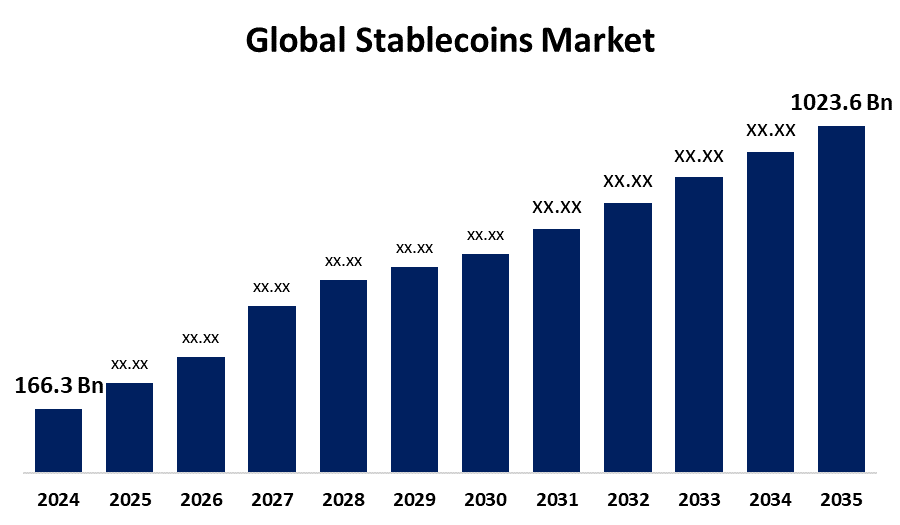
The global demand for low-cost, near-instant settlement is expanding the digital asset payment market rapidly. Industry analysis from Juniper Research on stablecoin cross-border payments projects that stablecoin cross-border B2B transactions will grow from $39.8 billion in 2026 to $5 trillion by 2035. This represents a compound annual growth rate (CAGR) of 84.37%, highlighting how institutional adoption is shifting digital asset rails into core B2B infrastructure.
1. Multi-Day Settlement Delays Lock Up Capital
Traditional cross-border payments rely on sequential banking intermediaries that create persistent settlement friction.
- Working Capital Drag: Payments routed through correspondent chains take 2 to 5 business days to achieve finality.
- Banking Blackouts: Operating hours, public holidays, and weekend closures stall capital flow during critical liquidity windows.
- Cash Flow Uncertainty: Corporate treasurers lose visibility while funds remain in transit between multiple clearing balances.
- Unpredictable Execution: Manual compliance holds or missing data fields frequently trigger unexpected multi-day payment delays.
2. Unpredictable Fees and Hidden FX Spreads
Correspondent banking networks impose compounding fees that make cross-border payment costs difficult to forecast.
- Deductive Intermediary Fees: Middleman banks deduct processing charges along the transaction chain without upfront disclosure.
- Foreign Exchange Spreads: According to Fortune Business Insights research on cross-border payments, global transfer fees and foreign exchange margins average 6.35% per transaction.
- Reconciliation Overhead: Finance departments spend significant manual labor matching altered final payout amounts to original invoices.
- Pre-Funding Drag: Businesses must maintain expensive capital buffers across multiple regional Nostro accounts to cover incoming payouts.
3. Global Operational Challenges across Key Industries
Complex international payment flows hit specific industry business models particularly hard.
- Healthcare & Life Sciences: Managing global clinical trial disbursements requires paying thousands of international medical contractors on tight schedules.
- Financial Services Firms: Cross-border asset management and foreign exchange settlements incur heavy correspondent charges that erode portfolio yields.
- Enterprise E-Commerce: Global online platforms must disburse low-value, high-volume supplier payouts instantly to maintain merchant loyalty.
- Global Technology SaaS: Overseas payroll and contractor management face multi-day banking delays and high currency conversion losses.
Corporate treasury teams must evaluate whether traditional correspondent banking rails can support modern 24/7 business operations.
Stablecoin vs SWIFT Is Not a Direct Rail Comparison
SWIFT primarily sends secure payment messages between banks, while stablecoin networks move actual digital money directly between wallet addresses.
Therefore, comparing only transfer speed confuses messaging, clearing, currency exchanges, and final bank deposits. As a result, finance teams must evaluate the entire payment journey rather than just one fast step.
1. SWIFT Carries Payment Instructions, Not the Funds
SWIFT works like a private secure chat app for banks, but it never holds or transfers actual cash.
- Messaging Network: It sends standard instructions, updating from old MT message formats to modern ISO 20022 MX formats, using unique bank identification codes (BICs).
- Middleman Bank Chains: It relies on correspondent banks that keep pre-funded accounts (Nostro and Vostro accounts) with each other to settle balances.
- Separate Settlement: Actual money movement happens outside SWIFT through local systems like Fedwire or CHIPS.
- Final Deposit Delays: Because each middleman bank runs its own checks, local deposits often take days to arrive.
2. Stablecoin Networks Transfer Tokenized Value
In contrast, stablecoins combine messaging, clearing, and cash transfer into a single automated step on a blockchain.
- Cash-Backed Tokens: Companies like Circle hold real dollars in reserves and issue digital tokens that match those dollars 1:1.
- Direct Wallet Transfers: Money moves directly from sender to receiver on a blockchain, which creates instant and final settlement without middleman banks.
- Creation and Cashing Out: Large businesses can deposit dollar balances to mint new tokens or return tokens to redeem cash.
- Local Bank Off-Ramps: However, getting actual paper cash out of a crypto wallet still requires a connection to a local bank.
The Five Moments Enterprises Must Measure
To properly compare a stablecoin vs SWIFT payment rail, finance leaders should track these five specific steps:
- Payment Initiation: Creating the invoice, entering data, and approving the payout.
- Compliance Approval: Checking background databases, running AML/KYC checks, and verifying identities.
- Rail Execution: Sending the SWIFT message or posting the transaction to the blockchain network.
- Settlement Finality: Reaching the exact point where money cannot be canceled or reversed.
- Spendable Beneficiary Funds: Getting usable local currency deposited into the recipient’s main bank account.
Instant blockchain settlement does not help if your local cashing-out bank closes early on weekends. Understanding these five stages makes it clear why fast messaging does not always mean fast cash in hand.
How SWIFT and Stablecoin Payment Architectures Work
Understanding end-to-end payment flows requires mapping the exact technical hops, compliance checkpoints, and intermediary entities involved across both networks. Furthermore, evaluating these systems side-by-side reveals how underlying infrastructure impacts total settlement efficiency.
SWIFT routes financial messages across legacy banking ledgers using standardized protocols. Conversely, stablecoin rails coordinate token transfers across decentralized ledgers and specialized service providers.
While stablecoins eliminate traditional correspondent banks, they introduce new infrastructure entities that corporate finance teams must manage carefully.
1. SWIFT Correspondent Banking Architecture
Fundamentally, SWIFT operates as a secure messaging layer that coordinates balance updates across independent bank ledgers.
- Messaging Standards: First, corporate ERP systems trigger payments via SWIFT APIs using ISO 20022 MX messages. Notably, SWIFT’s MT messaging standard fully phased out on November 22, 2025, making ISO 20022 mandatory for all network participants.
- Correspondent Chains: Subsequently, payment instructions travel through intermediate banks using pre-funded Nostro and Vostro accounts, incurring deductions at each sequential hop.
- Compliance & FX: Meanwhile, sanctions screening, KYC checks, and foreign exchange conversions execute independently at every bank along the clearing path.
- Operational Friction: As a result, strict banking cut-off times, holiday schedules, and missing payment details frequently push transactions into manual exception and repair queues.
2. Stablecoin Payment Rail Architecture
In contrast, stablecoin networks execute messaging, clearing, and settlement simultaneously through blockchain smart contracts.
- Orchestration & KYB: Initially, enterprise software validates corporate identity (KYB) and routes payment payload instructions to licensed liquidity providers.
- Wallet Security: Next, reserve-backed tokens (such as USDC) are secured using Multi-Party Computation (MPC) or Hardware Security Modules (HSM) to protect private keys.
- On-Chain Execution: Thereafter, transactions are submitted to public or enterprise blockchains, utilizing gas abstraction layers so treasury teams pay transaction fees in fiat rather than native tokens.
- Automated Compliance: Simultaneously, integrated Travel Rule protocols and blockchain analytics tools screen wallet addresses for sanctions and AML risks in real time.
- Local Off-Ramps: Ultimately, fiat payout partners convert tokens back into local fiat currencies and credit recipient accounts via local clearing networks.
3. Where Each Architecture Adds Intermediaries
A common misconception is that stablecoin rails eliminate all middleman fees and counterparty dependencies.
- Correspondent Elimination: On one hand, stablecoin networks successfully remove correspondent clearing banks, thereby eliminating hidden lifting fees and multi-day float holds.
- New Service Providers: On the other hand, on-chain flows substitute traditional banks with token issuers, institutional custodians, liquidity providers, Travel Rule monitors, and local fiat off-ramp gateways.
- Counterparty Distribution: Consequently, rather than relying entirely on central banking relationships, enterprise risk shifts toward smart contract security, token peg stability, and off-ramp banking availability.
For a deeper breakdown of the components behind on-chain settlement, see our guide on Stablecoin Infrastructure for Cross-Border Payments.
Ultimately, evaluating these technical architectures highlights why cross-border speed and total cost depend heavily on how each rail handles compliance, custody, and fiat conversion.
Stablecoin vs SWIFT Payment Rail Comparison
When re-evaluating global treasury infrastructure, corporate finance teams must analyze structural capabilities rather than treating these options as like-for-like platforms. While legacy banking channels offer deep institutional trust, digital asset networks introduce unprecedented execution speed and automation.
The following structured breakdown compares both payment rails across core enterprise evaluation criteria:
Stablecoin vs SWIFT Payment Rail Table
| Evaluation Area | SWIFT | Stablecoin Rail | Enterprise Interpretation |
| Core function | Financial messaging | Tokenized value transfer | Not a like-for-like infrastructure model |
| Availability | Bank and corridor dependent | Blockchain available 24/7 | Fiat conversion may still follow banking hours |
| Typical rail execution | Minutes to business days | Seconds to minutes | End-to-end payout can take longer |
| Settlement asset | Commercial or central bank money | Privately issued token | Different issuer and redemption risk |
| Cost visibility | Varies across correspondents | On-chain fee visible | Ramp and FX fees may be off-chain |
| Global reach | Extensive bank coverage | Internet-level transfer reach | Fiat payout coverage remains corridor-specific |
| Programmability | Limited at network level | Smart contracts and APIs | Useful for conditional B2B workflows |
| Reversibility | Bank investigation possible | Usually irreversible on-chain | Stablecoins require stronger pre-transfer controls |
| Compliance | Bank-led | Platform, issuer and VASP-led | Responsibility shifts to the operator |
| Recourse | Established bank processes | Provider-dependent | Must be designed contractually |
| Liquidity | Correspondent accounts | Stablecoin and fiat pools | Neither model eliminates liquidity needs |
| Integration | Mature bank and ERP interfaces | API-native but fragmented | Custom orchestration may be needed |
| Counterparty risk | Banks and correspondents | Issuer, custodian and ramp providers | Risk changes rather than disappears |
| Best fit | Bank-native and restricted corridors | Fast, digital-first corridors | Hybrid routing is often optimal |
Stablecoins usually win on programmability and continuous settlement. SWIFT usually wins on institutional reach, bank-native liquidity, mature recourse, and counterparty acceptance.
Consequently, forward-thinking enterprise treasuries rarely choose an exclusive path. Instead, modern payment architectures frequently implement hybrid routing models to maximize speed while preserving traditional institutional connectivity.
Stablecoin vs SWIFT Compliance Requirements
Navigating regulatory risk requires organizing compliance duties by functional responsibility rather than tracking disconnected acronyms. While both payment rails enforce strict Anti-Money Laundering (AML) standards, they allocate accountability across vastly different operational entities.
1. Compliance Duties That Apply to Both Rails
Regardless of the underlying payment infrastructure, cross-border corporate transfers must satisfy foundational global financial regulations:
- Identity & Verification: Rigorous Know Your Customer (KYC), Know Your Business (KYB), and ultimate beneficial ownership (UBO) screening.
- Financial Crime Prevention: Real-time transaction monitoring, automated sanctions enforcement (OFAC), fraud prevention controls, and Suspicious Activity Report (SAR) filings.
- Governance & Licensing: Maintaining local payment service licenses, strict record retention, enterprise data protection, and regular regulatory reporting.
2. SWIFT Compliance Model
In the SWIFT network, financial crime compliance relies on a distributed, institution-by-institution operational structure.
- Bank-Led Screening: The originating bank conducts primary customer onboarding and transaction verification.
- Correspondent Rescreening: Intermediate correspondent banks routinely rescreen transactions against their internal compliance rulebooks, occasionally flagging transfers for manual review.
- Messaging Role: Crucially, SWIFT acts solely as a secure communications provider rather than a regulatory approval body. As a result, poor payment data quality directly causes processing holds and costly investigation queues.
3. Stablecoin Compliance Model
Conversely, digital asset rails distribute regulatory responsibilities across specialized technical and financial service providers:
Consequently, the corporate enterprise must ensure each participant along the chain maintains proper regional authorization.
United States Requirements
- The GENIUS Act: The landmark Guiding and Establishing National Innovation for US Stablecoins (GENIUS) Act was signed into law on July 18, 2025. Treasury, FinCEN, and the OCC have actively rolled out implementation rules and illicit-finance requirements to formalize federal oversight for Permitted Payment Stablecoin Issuers (PPSIs).
- Federal Guardrails: Platforms must comply with Bank Secrecy Act (BSA) rules, FinCEN money transmission registration, state licensing, and strict OFAC sanctions protocols. Furthermore, custody obligations mandate 1:1 reserve backing with high-quality liquid assets.
European Union Requirements
- MiCA Framework: The Markets in Crypto-Assets (MiCA) regulation fully governs European digital asset infrastructure.
- Token Classification: MiCA imposes strict regulatory standards on issuers of Electronic Money Tokens (EMTs) and Asset-Referenced Tokens (ARTs).
- CASP Licensing: Crypto-Asset Service Providers (CASPs) must secure formal authorization to operate, maintaining 1:1 reserve requirements, guaranteed redemption rights, strict Travel Rule compliance, and GDPR alignment.
UK, Singapore, UAE and Other Corridors
Key international markets regulate digital asset payments through tailored statutory regimes:
- United Kingdom: The Financial Conduct Authority (FCA) enforces strict crypto-asset registration and financial promotion rules.
- Singapore: The Monetary Authority of Singapore (MAS) regulates stablecoins under the Payment Services Act.
- UAE Market: Digital asset flows are governed by the Virtual Assets Regulatory Authority (VARA) in Dubai, the Financial Services Regulatory Authority (FSRA) in ADGM, and the DFSA in the DIFC.
- Hong Kong: The Hong Kong Monetary Authority (HKMA) enforces licensing frameworks for stablecoin issuers and local payout gateways.
Data Privacy and Blockchain Immutability
Reconciling public blockchain transparency with enterprise privacy laws demands specialized technical architecture:
- GDPR & CCPA Compliance: Public blockchains are immutable, making “right to be forgotten” erasure requests impossible for on-chain data.
- Privacy Shields: Enterprises must never write Personal Identifiable Information (PII) directly to public chains. Instead, platforms store identity off-chain in encrypted repositories, broadcasting only zero-knowledge proofs or tokenized reference hashes to the network.
Compliance Responsibility Matrix
| Compliance Duty | SWIFT Rail Owner | Stablecoin Rail Owner |
| Customer Verification (KYC/KYB) | Originating / Beneficiary Bank | On-Ramp / Off-Ramp VASP & Enterprise |
| Wallet & Address Screening | N/A (Uses account numbers) | Blockchain Analytics Vendor & Platform |
| Sanctions Screening (OFAC) | Every Bank in Chain | Issuer, VASP, & Smart Contract Gateways |
| Travel Rule Compliance | Originating / Receiving Bank | Originating & Beneficiary VASP Protocols |
| Suspicious Activity Reporting (SAR) | Intermediary & Clearing Banks | Token Issuer, VASP, & Exchange Partners |
| Transaction Monitoring | Clearing Banks | On-Chain Analytics & Ramp Providers |
| Record Retention | Participating Banks | Enterprise, Custodian, & VASP |
| Regulatory Reporting | Licensed Banks | Issuer & Licensed Payment Service Providers |
Compliance duties shift from a bank-monopolized screening framework under SWIFT to a distributed responsibility model across issuers, VASPs, and enterprise operators.
Therefore, navigating regulations like MiCA and the GENIUS Act requires robust on-chain analytics and privacy-compliant identity management.
Stablecoin vs SWIFT Use Cases by Payment Workflow
Enterprise payment requirements vary significantly by transaction size, urgency, and counterparty acceptance.
Consequently, selecting between SWIFT and stablecoins depends on specific operational workflows rather than choosing a single universal rail.
The table below breaks down optimal payment rails across enterprise workflows:
Stablecoin vs SWIFT Use Cases
| Payment Workflow | Primary Rail Choice | Operational Drivers & Considerations |
| High-Value Corporate Payments | SWIFT / Hybrid | Drivers: Deep bank acceptance, established legal recourse, counterparty corporate policies, and massive currency depth.
Considerations: Protects multi-million-dollar M&A or CAPEX flows where institutional limits and off-ramp liquidity caps on public chains pose execution risks. |
| High-Frequency Supplier Payments | Stablecoin / Hybrid | Drivers: Low, predictable per-transaction fees, batch payout automation, and direct API integration.
Considerations: Prevents small vendor payout deductions across correspondent chains; requires local fiat conversion channels for suppliers. |
| Corporate Treasury & Intercompany Transfers | Stablecoin (24/7) | Drivers: Continuous intra-group liquidity rebalancing and instant multi-entity capital deployment.
Considerations: Bypasses weekend banking blackouts; SWIFT remains necessary for unsupported local currencies or central bank reserve accounts. |
| International Payroll & Contractor Payments | Stablecoin | Drivers: Recipient choice, fast worker onboarding, and instant local wallet off-ramping.
Considerations: Enterprise finance teams must manage local worker classification, tax withholdings, and ERP payslip reconciliations. |
| Trade Finance & Delivery-Versus-Payment (DvP) | Stablecoin | Drivers: Smart contract escrow, conditional payouts tied to shipping documents, and tokenized asset settlement.
Considerations: Replaces expensive Letters of Credit by automating settlement upon digital document verification without counterparty risk. |
| Healthcare & Pharmaceutical Payments | Stablecoin / Hybrid | Drivers: Rapid Contract Research Organization (CRO) payouts, clinical-trial investigator funding, and international site disbursements.
Considerations: Protects patient privacy off-chain while accelerating site funding; SWIFT handles large medical device and sanctions-sensitive procurement. |
| Financial Services & Fintech Payments | Stablecoin | Drivers: Instant cross-border remittances, merchant settlement, insurance claim processing, and embedded API payments.
Considerations: Dramatically reduces pre-funding requirements for broker settlement, fund subscriptions, and multi-currency payout gateways. |
| Ecommerce, Marketplace & Gig Payouts | Stablecoin | Drivers: Automated split settlements, rapid refund handling, and friction-free mass disbursements.
Considerations: Elevates gig worker user experience and eliminates card chargeback risks across global multi-vendor marketplaces. |
Regional Emerging-Market Corridors
Rather than treating emerging markets as a single homogeneous category, enterprise treasuries must evaluate each corridor independently:
- Latin America: High local inflation and strict capital controls make USD-pegged stablecoin settlement the preferred choice for enterprise B2B trade.
- Southeast Asia: Advanced domestic instant payment rails allow hybrid stablecoin-to-local fiat off-ramps to settle within seconds.
- Africa: Severe correspondent banking bottlenecks and foreign currency shortages make stablecoins an essential B2B clearing alternative.
- Middle East: Dedicated regulatory frameworks in financial centers (VARA in Dubai, ADGM in Abu Dhabi) foster rapid institutional stablecoin adoption for cross-border commerce.
High-value corporate transactions and restricted corridors favor SWIFT’s mature legal and institutional framework.
Conversely, high-frequency payouts, treasury rebalancing, trade finance, and volatile emerging-market corridors achieve superior speed and cost efficiency over stablecoin rails.
How AI Improves SWIFT and Stablecoin Payment Routing
Integrating AI into cross-border payment orchestration enables enterprise treasuries to optimize routing decisions in real time.
Consequently, predictive machine learning models eliminate manual interventions without sacrificing operational control.
1. Predictive Corridor Optimization & Anomaly Detection
AI models continuously evaluate historical and live data streams across both traditional and digital payment rails:
- Corridor Cost & Time Prediction: Machine learning algorithms accurately forecast total landed costs (including FX spreads, ramp fees, and gas spikes) alongside settlement delays caused by bank cut-offs, holidays, or chain congestion.
- Fraud & Anomaly Detection: Real-time risk engines analyze wallet behavior, velocity changes, invoice details, and sanctions proximity to block suspicious transfers before execution.
- Liquidity Forecasting: Predictive models estimate intraday funding needs, optimizing stablecoin inventory, fiat reserves, and gas balances across global corridors.
2. AI Governance Framework
To maintain strict risk controls, enterprise platforms apply predictive AI exclusively for routing recommendations, cost optimization, and exception prioritization.
Meanwhile, deterministic compliance rules maintain sole authority over sanctions blocks and final high-value payment approvals:
- Human-in-the-Loop: High-value or low-confidence transfers require explicit human approval.
- Explainable Routing: Every automated routing choice generates auditable decision logs and confidence scores.
- Audit Trails: Comprehensive override logs and false-positive tracking guarantee full regulatory inspectability.
Predictive AI optimizes corridor selection, cost estimation, and liquidity forecasting across hybrid rails while deterministic governance maintains strict administrative control.
Consequently, enterprises achieve superior execution efficiency without compromising compliance or financial security.
Stablecoin and SWIFT Integration Roadmap
Implementing an enterprise-grade hybrid payment architecture requires a structured, multi-phase operational strategy.
Consequently, moving from initial corridor analysis to live automated settlement ensures complete compliance, robust system integration, and zero disruption to daily treasury operations.
Phase 1 — Payment Flow Discovery
First, enterprise teams must conduct a granular audit of historical treasury data rather than relying on generalized fee assumptions.
- Corridor & Fee Mapping: Analyzing historical payment volumes, bank cut-off times, intermediary correspondent deductions, FX spreads, and exception rates across every active corporate route.
- Systems & Compliance Audit: Evaluating existing ERP, TMS, and accounting ledger connectors alongside internal regulatory compliance workflows.
Phase 2 — Corridor Feasibility and Compliance
Next, each potential payment route must undergo strict legal and operational validation before technical architecture work begins. Unsuitable or highly restricted corridors must be rejected immediately.
- Regulatory Verification: Assessing local token legality, issuer licensing (such as MiCA or GENIUS Act compliance), and data residency requirements.
- Liquidity & Banking Access: Confirming reliable local fiat on/off-ramp partners, institutional exchange liquidity, and real-time bank payout channels.
Phase 3 — Architecture and Provider Selection
Following corridor approval, platform architects select core technology partners and infrastructure providers.
- Provider Selection: Choosing underlying blockchains, stablecoins, institutional custodians, ramp partners, and compliance analytics vendors.
- Routing Logic: Defining deterministic rules for dynamic SWIFT versus stablecoin rail allocation.
Phase 4 — Ledger and Integration Build
During this stage, engineering teams build the core data structures connecting digital payment rails directly to the corporate balance sheet.
- Double-Entry Ledger: Developing real-time transactional ledgers with automated ERP and TMS API connectors.
- Treasury Controls: Establishing multi-signature approval controls, custom role-based access permissions, and automated reconciliation pipelines.
Phase 5 — Compliance and Security Controls
Before executing live transfers, security protocols must be thoroughly embedded across the payment pipeline.
- Financial Crime Guardrails: Implementing automated KYB screening, sanctions checking, wallet address risk scoring, and Travel Rule messaging protocols.
- Key Security: Deploying Multi-Party Computation (MPC) signing architecture and enforcing strict per-transaction velocity limits.
Phase 6 — Single-Corridor Pilot
Once security controls are active, the system launches in a controlled production environment using a single corridor, single chain, and single stablecoin pair.
- Pilot Safeguards: Capping transaction values, limiting counterparty pools, and maintaining manual SWIFT fallback procedures for any execution exceptions.
Phase 7 — Hybrid Routing Rollout
Upon successful pilot completion, the platform activates full multi-rail capabilities and dynamic pathing.
- Full Integration: Activating automated SWIFT connectors, multi-provider liquidity routing, real-time failover logic, and unified ledger reconciliation.
Phase 8 — Monitoring and Expansion
Finally, treasury leadership tracks ongoing performance metrics to justify further corridor expansion.
- Key Performance Indicators: Measuring cost savings per payment, settlement success rates, reconciliation speed, compliance alert false positives, and corridor return on investment.
Target Timeline: Full enterprise implementation typically requires 12 to 32 weeks, depending on regional licensing complexity, custody requirements, and total corridor scope.
A phased integration roadmap mitigates operational risk by validating compliance and liquidity early in the process.
Consequently, moving systematically from single-corridor pilots to full hybrid routing guarantees secure, seamless ERP integration and scalable cross-border execution.
Cost to Build Stablecoin or Hybrid Payment Infrastructure
A custom enterprise stablecoin or hybrid SWIFT payment platform generally costs $70,000–$300,000.
However, the precise budget depends directly on corridor complexity, custody choices, regulatory scope, and backend enterprise integrations.
1. Cost Breakdown by Component
While project modules naturally overlap during development, initial investments break down across core functional components:
| Development Phase | Estimated Cost |
| Discovery & Corridor Analysis | $7,000–$15,000 |
| Architecture & Provider Design | $8,000–$20,000 |
| Compliance & KYB Workflows | $12,000–$35,000 |
| Wallet & Custody Integration | $10,000–$30,000 |
| Stablecoin Settlement Engine | $15,000–$40,000 |
| Double-Entry Ledger & Reconciliation | $15,000–$35,000 |
| ERP & Treasury Integrations | $10,000–$35,000 |
| SWIFT or Banking Integration | $12,000–$40,000 |
| AI Routing & Risk Models | $10,000–$30,000 |
| Security Testing & Deployment | $8,000–$20,000 |
For a deeper breakdown of development costs, see our guide on [Cost to Build a Stablecoin Payment Infrastructure Platform].
2. Single-Corridor Stablecoin Pilot — $70,000–$120,000
To begin, focused initial deployments prioritize essential cross-border functionality within a single operational route. Consequently, this starter phase includes:
- Core Rails: Integration of one stablecoin, one underlying blockchain network, one fiat on-ramp, and one off-ramp provider.
- Essential Operations: Basic KYB verification, controlled wallet custody, and CSV/API ledger exports for ERP tracking.
3. Multi-Corridor Enterprise Platform — $130,000–$220,000
Furthermore, scaling to multiple international trade corridors requires higher automation and broader system integration. As a result, this tier covers:
- Advanced Automation: Multi-corridor routing, real-time transaction monitoring, automated reconciliation, and automated provider failover.
- Treasury Controls: Full ERP bidirectional sync, an enterprise treasury management dashboard, and customizable corporate policy engines.
4. Hybrid SWIFT-Stablecoin Orchestration — $220,000–$300,000
Ultimately, full enterprise-grade infrastructure seamlessly unifies legacy banking channels with public digital asset rails. Therefore, this comprehensive build incorporates:
- Dual-Rail Connectivity: Direct SWIFT network or bank API connectivity alongside programmatic stablecoin routing.
- Intelligent Infrastructure: AI-supported dynamic rail selection, multi-provider liquidity pools, unified double-entry ledgers, advanced audit reporting, and enterprise business continuity frameworks.
5. Ongoing Operational Costs
In addition to capital expenditure during buildout, enterprise budgets must account for recurring operational expenses:
- Annual System Maintenance: Typically 15%–22% of total initial build costs annually.
- Compliance & Analytics Vendors: Volume-based pricing for KYB, sanctions screening, Travel Rule messaging, and blockchain analytics.
- Custody & Liquidity Services: Asset-based basis points or fixed monthly fees for MPC custody, alongside corridor-dependent fiat conversion spreads.
- Security & Audits: Annual third-party penetration testing and release-based smart contract audits.
Enterprise deployment budgets range from $70,000 for focused single-corridor pilots to $300,000 for fully automated hybrid SWIFT-stablecoin platforms.
Consequently, factoring in recurring maintenance, custody fees, and compliance tooling ensures accurate long-term total cost of ownership.
The Future Is Convergence of SWIFT and Stablecoin
Rather than operating as permanent adversaries, legacy bank messaging networks and public blockchain rails are rapidly converging into a unified global payment ecosystem.
Consequently, future cross-border dominance will belong to infrastructure models that seamlessly bridge traditional bank money with tokenized digital assets.
1. SWIFT Is Becoming More Programmable and Always-On
Demonstrating this convergence, SWIFT announced in July 2026 that its blockchain-based shared ledger was officially ready for pilot deployment across 17 major global banks.
- Orchestration Layer: The ledger acts as a permissioned orchestration layer, allowing participating institutions to transfer bank-issued tokenized deposits around the clock.
- 24/7 Liquidity: Furthermore, the platform enables continuous overnight and weekend capital movement while retaining final settlement connections within established interbank channels.
2. ISO 20022 Will Connect Traditional and Tokenized Payments
To ensure seamless data flow across disparate networks, the global financial system is standardizing around the ISO 20022 messaging format:
- Rich Payment Context: Standardized data schemas carry structured party addresses, invoice references, tax identifiers, and compliance metadata alongside value transfers.
- Interoperability & Automated ERP Reconciliation: Consequently, structured data allows automated compliance checks and instant end-to-end ledger reconciliation across both traditional bank channels and public blockchain networks.
- Strict Mandates: Accelerating this transition, fully unstructured postal addresses are scheduled for complete removal from cross-border ISO 20022 messages in November 2026.
3. Stablecoins, Tokenized Deposits and CBDCs Will Coexist
Instead of a single digital token winning total market share, corporate treasuries will navigate a multi-token monetary ecosystem:
- Privately Issued Stablecoins: Provide unmatched public chain liquidity, broad global availability, and open programmable access for B2B payouts.
- Bank-Issued Tokenized Deposits: Offer 24/7 continuous settlement backed directly by commercial bank balance sheets and existing regulatory protections.
- Wholesale CBDCs: Function as sovereign-backed, risk-free settlement assets reserved primarily for interbank clearing and systemic liquidity.
- Commercial Bank Money: Remains the foundational ledger standard for legacy corporate debt, credit lines, and local currency operations.
4. Payment Orchestration Becomes the Competitive Layer
Ultimately, committing exclusively to a single payment rail introduces unnecessary operational vulnerability.
Therefore, the strategic long-term advantage for enterprise treasuries lies in dynamic payment orchestration, selecting, routing, and executing each transaction across the optimal rail based on real-time speed, cost, compliance, and liquidity conditions.
Traditional banking messaging and decentralized token rails are merging into an integrated, ISO 20022-compliant financial web.
Consequently, competitive enterprise treasuries will win by deploying flexible orchestration layers that route payments fluidly across stablecoins, tokenized deposits, and SWIFT channels
Build Hybrid Payment Infrastructure With Intellivon
Intellivon designs and engineers enterprise-grade payment infrastructure that unifies legacy banking channels with programmable digital asset networks.
Consequently, organizations can execute cross-border settlements with automated compliance and full operational control.
Core Engineering Capabilities
- Payment Orchestration: Unified routing engine across stablecoin networks and legacy SWIFT rails.
- Ledger Systems: Real-time double-entry accounting ledgers with automated reconciliation.
- Custody & Security: Multi-Party Computation (MPC) architecture and institutional custodian integration.
- Compliance Workflows: Automated KYC, KYB, sanctions screening, and Travel Rule protocols.
- ERP Integration: Direct bidirectional sync with enterprise ERP and treasury management systems.
- Route & Liquidity Optimization: AI-supported models for cost prediction, execution speed, and liquidity routing.
- System Resilience: Multi-provider failover logic with continuous route monitoring.
- Audit & Visibility: Production monitoring dashboards with complete immutable audit trails.
- Corridor Rollouts: Tailored corridor-level deployment strategies designed around local regulatory frameworks.
Evaluate whether stablecoin, SWIFT, or hybrid routing provides the strongest return for your payment corridors. Intellivon can map the architecture, regulatory requirements, implementation cost, and expected ROI before development begins.
Ready to evaluate whether stablecoin, SWIFT, or hybrid routing provides the highest ROI for your cross-border payment corridors? [Book a free strategy call with Intellivon’s experts] to map your architecture, regulatory roadmap, and integration costs before development begins.
Conclusion
Ultimately, the choice between traditional SWIFT channels and modern stablecoin networks is no longer a zero-sum decision. Consequently, progressive corporate treasuries are actively shifting toward dynamic hybrid frameworks that unify both infrastructures.
By combining legacy regulatory certainty with the low cost and instant settlement of digital asset rails, global enterprises can maximize liquidity and eliminate operational bottlenecks.
Therefore, implementing a scalable orchestration strategy ensures your enterprise remains fully flexible, compliant, and cost-effective as the future of international payments continues to unfold.
FAQs
Q1. Is Stablecoin Really Cheaper Than SWIFT After Conversion Fees?
A1. Yes, stablecoins are typically cheaper because total conversion, gas, and off-ramp fees generally range from 0.5% to 1.5%. Consequently, this yields substantial savings in high-frequency or emerging market corridors. However, SWIFT remains competitive for large transactions in deep, major-currency routes with negotiated enterprise bank rates.
Q2. Can Stablecoins Completely Replace SWIFT for Enterprise Payments?
A2. No, stablecoins cannot fully replace SWIFT across every corporate scenario. While digital assets optimize selected high-friction corridors, enterprises must still rely on SWIFT for bank-native counterparties, restricted local currencies, established credit facilities, and mandates requiring legacy bank confirmation protocols.
Q3. How Long Does a Stablecoin Payment Take End to End?
A3. Although the underlying blockchain transaction settles in seconds, complete end-to-end execution depends heavily on fiat conversion rails. As a result, final liquidity delivery can take anywhere from a few minutes to several hours based on local banking hours, KYB checks, and off-ramp processing.
Q4. What Happens if a Stablecoin Payment Goes to the Wrong Address?
A4. Because public blockchain transfers are mathematically irreversible, misrouted stablecoin payments are permanently unrecoverable on-chain. Therefore, enterprise infrastructure must enforce strict address allowlisting, beneficiary verification, automated transaction simulation, multi-signature approvals, and compulsory micro-value test transfers prior to executing full liquidity movements.
To Sum It Up:
- A stablecoin transaction can settle in seconds while the recipient still waits for fiat liquidity.
- Stablecoins reduce correspondent prefunding but create new issuer, custody, and off-ramp liquidity requirements.
- SWIFT gpi has already compressed many payment journeys, so outdated three-to-five-day comparisons can mislead treasury teams.
- The strongest enterprise strategy is usually corridor-based routing rather than complete rail replacement.
- Gas fees represent only a small part of a stablecoin payment’s total landed cost.