Key Takeaways:
-
Stablecoin treasury platforms provide real-time cash visibility, automated payments, multi-wallet liquidity control, and FX management.
-
MPC or HSM custody, double-entry ledgering, KYC/AML, sanctions screening, and Travel Rule support are core requirements.
-
6 build phases cover discovery, architecture, treasury engine, custody integration, pilot validation, and controlled rollout.
-
Most builds cost $70,000 to $300,000 and take 4 to 9 months depending on chains and jurisdictions.
-
How Intellivon designs stablecoin treasury platforms around measurable treasury workflows rather than generic crypto features.
A stablecoin treasury platform gives finance teams real-time visibility into cash positions across every entity and currency. Without it, treasury teams still rely on end-of-day bank statements to know their actual balance. That gap makes accurate cash forecasting nearly impossible.
However, visibility alone doesn’t fix the float problem. Cross-border wire transfers typically take 2 to 5 business days, and funds often stay untraceable while in transit, according to a 2026 industry analysis. As a result, treasury teams end up holding excess cash buffers just to cover that uncertainty. Consequently, platforms that settle in real time let treasury release those buffers within a few months of going live.
Meanwhile, most treasury builds stop at visibility and skip the forecasting layer entirely. This blog covers the build in order, starting with real-time cash position tracking, then AI-driven forecasting, liquidity management, and compliance. By the end, you’ll know exactly what a production-grade treasury platform requires.

What Is a Stablecoin Treasury Platform?
A stablecoin treasury platform is an enterprise software system that consolidates digital and traditional financial operations.
Specifically, it unifies stablecoin balances, bank balances, payment execution, liquidity, FX exposure, investment policies, compliance controls, and accounting records into a single control layer. As a result, it acts as an operational decision engine rather than an asset custodian or issuance tool.
What a Stablecoin Treasury Platform Is Not
Many finance teams confuse multi-signature wallets or retail dashboards with enterprise treasury software. Consequently, understanding these boundaries prevents costly architectural mistakes.
- Basic crypto wallet: A wallet merely stores private keys and signs transactions. Therefore, it lacks multi-entity cash visibility, approval hierarchies, and general ledger sync.
- Stablecoin issuer platform: Issuer software mints, redeems, and manages the underlying reserve assets of tokens like USDC or EURC. In contrast, treasury software manages those tokens as operational cash.
- Payment gateway alone: A gateway processes incoming consumer payments. However, it does not manage liquidity buffers, FX exposure, or intercompany netting across global entities.
- Custody dashboard: Custody providers secure digital assets in cold or warm storage. Meanwhile, they do not offer cash flow forecasting, yield optimization, or bank reconciliation.
- DeFi portfolio tracker: Read-only trackers monitor on-chain addresses. Thus, they cannot enforce corporate governance, ISO 20022 messaging, or SOX-compliant audit trails.
Core Operational Differences: Treasury Management vs. Token Issuance
Corporate treasury operations focus primarily on capital preservation, working capital optimization, and global liquidity. Meanwhile, token issuers focus on minting mechanics, collateral reserve management, and primary redemption rails.
- User perspective: Corporate treasurers handle working capital across subsidiaries, whereas issuers manage asset backing and minting smart contracts.
- Instrument vs. Rail: Stablecoins act as cash equivalents. Furthermore, underlying blockchains like Ethereum, Solana, or Polygon serve as programmable 24/7 settlement rails.
- Fund segregation: The platform separates internal corporate cash positions from client funds. In addition, it uses distinct smart-contract permissions and wallet infrastructure.
- Ledger reconciliation: On-chain records track public transactions effectively. Nevertheless, enterprise general ledger systems still require traditional double-entry accounting for regulatory reporting.
- Operational bridge: The platform connects legacy banking protocols with blockchain nodes. Ultimately, this harmonizes cross-border cash visibility across traditional and digital assets.
Basic Wallet vs. Enterprise Treasury Platform
A basic wallet offers key storage, whereas an enterprise platform provides governance, multi-entity cash visibility, and automated financial controls.
| Capability | Basic Crypto Wallet | Stablecoin Treasury Platform |
| Cash Visibility | Shows token balances for specific addresses. | Consolidates cash across banks, wallets, chains, and subsidiaries. |
| Control Layer | Executes simple asset transfers. | Applies approval workflows, liquidity rules, and compliance limits. |
| Record Keeping | Displays basic blockchain transaction history. | Produces double-entry general ledger and audit records. |
| User Access | Designed for single users or basic signers. | Supports roles for operators, approvers, auditors, and CFOs. |
Ultimately, a stablecoin treasury platform acts as a central control and decision layer over global financial infrastructure, rather than the underlying repository holding corporate assets.
Consequently, once this operational definition is clear, the next step is determining where this additional governance creates enough financial value to justify enterprise investment.
Where Enterprises Gain Value From Stablecoin Treasury
Enterprise stablecoin treasury platforms deliver measurable efficiency when managing high-volume cross-border settlements, volatile foreign exchange corridors, and multi-entity liquidity positions. Consequently, companies eliminate multi-day clearing delays, reduce bank intermediary fees, and unlock 24/7 working capital management.
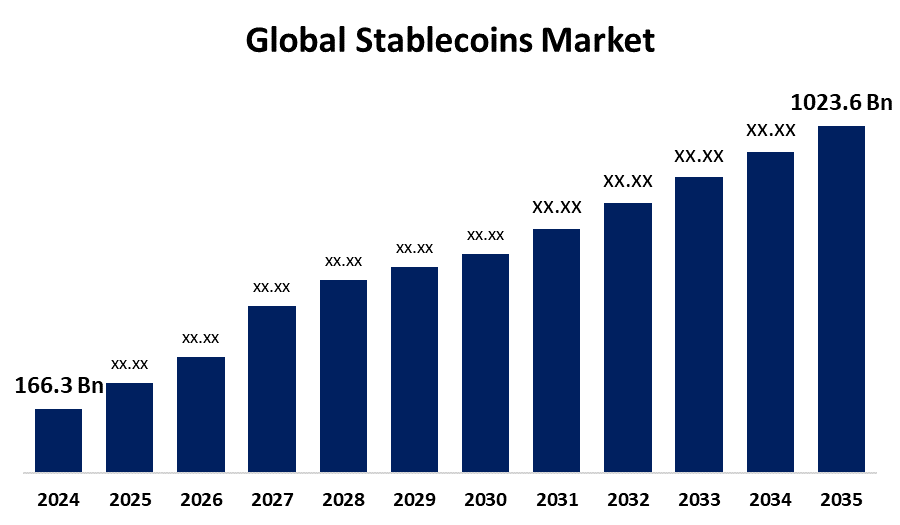
According to research from Chainalysis, adjusted stablecoin transaction volumes surged at a 133% compound annual growth rate, reaching $28 trillion in economic activity. Furthermore, PwC insights highlight cross-border payments, contractor disbursements, and liquidity mobility as immediate high-value enterprise use cases.
1. Core Enterprise Value Areas
- Real-Time Cash Visibility: Consolidates stablecoin wallets, bank accounts, and exchange liquidity into one unified dashboard.
- Cross-Border Supplier Settlement: Routes payments via stablecoins, allowing recipients to settle instantly in tokens or local fiat.
- Intercompany Treasury Movement: Transfers liquidity between global subsidiaries while maintaining strict transfer-pricing and accounting compliance.
- Working Capital Optimization: Minimizes regional cash buffers through automated concentration and rapid rebalancing.
- 24/7 Liquidity Operations: Enables weekend settlements, margin coverage, and instant emergency funding outside traditional banking hours.
2. Sector Applications & Implementation Reality
Global industries leverage these capabilities for targeted operational needs:
- Pharmaceuticals & Healthcare: Streamlines CRO trial disbursements, API supplier payments, and multi-hospital cash pooling.
- Financial Services: Optimizes settlement liquidity, collateral management, and insurance payouts.
- Tech & Energy: Powers international payroll, seller payouts, and volatile FX commodity settlements.
Crucially, corporate suppliers do not need crypto infrastructure. Instead, buyers send stablecoins internally while integrated off-ramps convert and deposit local fiat directly into the vendor’s bank account. For a deeper breakdown of payment workflows, see our guide on How to Build a Stablecoin Payment Platform for Global Businesses.
Features of a Stablecoin Treasury Management Platform
An enterprise stablecoin treasury management platform requires seven interconnected operational capability groups: cash visibility, liquidity control, payment orchestration, FX management, investment governance, risk mitigation, and audit reporting.
However, custody alone cannot perform these complex corporate treasury functions.
Stablecoin Treasury Management Platform Features
| Capability Group | Core Functions | Enterprise Operations |
| 1. Cash Visibility & Position Management | Multi-wallet balance aggregation, real-time balance tracking, multi-bank consolidation, entity-level position views. | Tracks intraday vs. end-of-day positions while segregating available, restricted, and committed cash across entities. |
| 2. Liquidity & Cash-Pooling Controls | Target-balance rules, zero-balance sweeps, physical and notional pooling, liquidity buffer management. | Executes automated intercompany funding, chain rebalancing, and liquidity provider routing via an in-house bank structure. |
| 3. Payment Factory & Orchestration | Beneficiary whitelisting, bulk batch execution, scheduled/recurring payments, conditional smart contracts. | Applies multi-level approval hierarchies and automated transaction limit checks for global payroll and supplier disbursements. |
| 4. FX & Multi-Currency Management | Currency exposure dashboards, stablecoin-to-fiat quote locking, automated rate management, FX gain/loss logging. | Monitors rate spreads and slippage, executes cross-currency settlements, and records forwards, options, and swaps. |
| 5. Investment & Yield Controls | Policy-bound asset allocation, tokenized Treasury management, CeFi/DeFi exposure caps, policy breach alerts. | Enforces strict maturity restrictions and counterparty limits while isolating optional yield farming within tight governance modules. |
| 6. Risk & Compliance | Depeg risk monitoring, issuer concentration tracking, address screening, sanctions check integration, network congestion alerts. | Scans on-chain transactions via Chainalysis or Elliptic, mitigating counterparty, smart contract, and settlement risks. |
| 7. Reporting & Audit | Board dashboards, double-entry general ledger exports, automated balance reconciliation, regulatory reporting. | Generates IFRS 9 and US GAAP (ASC 820) compliant records, tracks policy exceptions, and logs immutable transaction evidence. |
Ultimately, these seven capability groups transform disparate blockchain rails and legacy bank connections into a unified corporate financial control center.
Consequently, once finance teams evaluate these feature sets, they can assess the technical architecture required to build them.
How AI Improves Stablecoin Treasury Decisions
AI acts as a predictive analytics and decision-support layer within enterprise treasury management platforms.
Rather than executing payments autonomously, AI models analyze complex cash flows, recommend optimal routes, and detect operational anomalies while keeping signers strictly in control.
1. Predictive Cash Flow & Liquidity Forecasting
Machine learning replaces static cash spreadsheets with real-time, multi-horizon liquidity forecasts across all corporate wallets and bank accounts.
- Machine Learning Models: Gradient-boosted decision trees and Temporal Fusion Transformers predict short-term working capital needs across entities and currency pairs.
- Buffer Calculation: Algorithms continuously calculate target reserve buffers based on historical payout velocity and scheduled intercompany obligations.
- Proactive Funding: The system automatically flags underfunded payment wallets before transactions fail, recommending optimal rebalancing transfers.
2. Anomaly Detection & Routing Intelligence
AI algorithms scan on-chain and off-chain data streams simultaneously to protect corporate assets and reduce execution costs.
- Pattern Recognition: Deep learning models flag irregular transaction sizes, sudden wallet-drain patterns, or unexpected cross-chain bridge usage.
- Execution Optimization: Routing engines evaluate liquidity-provider quotes, on-ramp rates, and network congestion to rank paths by speed, cost, and slippage.
- Behavioral Monitoring: Automated monitors instantly detect deviations in routine supplier payment schedules or unverified beneficiary address changes.
3. Generative Insights & Governance Controls
Generative AI simplifies daily administrative workflows without bypassing essential financial security protocols or SOX requirements.
- Natural Language Insights: GenAI summaries explain sudden cash-position variances, draft board reports, and parse terms from complex liquidity contracts.
- Strict Human Oversight: Systems require explicit human authorization before executing any recommended liquidity movement or currency swap.
- Audit-Ready Decisioning: Explainable AI frameworks log every model prediction, confidence score, and approval action to maintain full decision audit trails.
Ultimately, embedded AI capabilities give corporate treasurers continuous predictive control without sacrificing governance. Consequently, after defining these intelligence capabilities, the next step involves mapping out the underlying system architecture that powers them.
Stablecoin Treasury Platform Architecture and Integrations
An enterprise stablecoin treasury platform is an API-first, event-driven system connecting internal corporate software with multi-chain wallets, custodians, banks, and liquidity providers.
Consequently, it decouples transaction execution from public blockchains, providing an immutable operational control layer between decentralized rails and legacy finance environments.
For payment orchestration patterns, see our article on Building Cross-Border Payment Platforms Using Stablecoins.
Stablecoin Treasury Management Platform Architecture
| Architectural Layer | Core Components & Systems | Enterprise Functions & Operations |
| 1. User & Access Layer | CFO dashboards, treasury consoles, compliance workspaces, auditor portals. | Enforces SSO, MFA, RBAC, maker-checker authorization workflows, and strict segregation of duties. |
| 2. Treasury Workflow Layer | Cash-position engine, liquidity manager, payment factory, FX module. | Executes target-balance sweeps, automates bulk disbursements, and manages intercompany funding rules. |
| 3. Treasury Ledger & Reconciliation | Double-entry subledger, state machine, on/off-chain matcher, gas/fee logging. | Maps blockchain hashes to general-ledger entries, logs FX gains/losses, and manages exception queues. |
| 4. Wallet & Custodial Infrastructure | MPC wallets, multi-sig schemes, HSM keys, hot/warm/cold storage tiers. | Enforces transaction policy limits, manages automated key rotations, and powers disaster recovery. |
| 5. Stablecoin & Chain Connectivity | Assets: USDC, USDT, EURC, PYUSD, RLUSD. Networks: Ethereum, Solana, Polygon, Base, Stellar. | Scores asset-network pairs based on liquidity, finality, redemption fees, and local compliance status. |
| 6. Banking, FX & Liquidity | Bank APIs, SWIFT, ISO 20022, open banking, OTC desks, market makers. | Locks FX rates, routes fiat on/off-ramps, and connects to primary stablecoin mint/redeem APIs. |
| 7. Compliance & Risk Engine | KYC/KYB, AML transaction monitoring, sanctions screening, Travel Rule. | Integrates Chainalysis, Elliptic, or TRM Labs to calculate real-time wallet and transaction risk scores. |
| 8. Enterprise ERP Integration | SAP, Oracle, NetSuite, Microsoft Dynamics, Workday, Kyriba, Bloomberg. | Pushes verified multi-currency postings directly into corporate general ledgers and treasury management systems. |
| 9. Infrastructure & Observability | AWS/Azure/GCP, Kubernetes, Terraform IaC, Prometheus, Grafana, Datadog. | Maintains zero-trust DevSecOps, multi-region failovers, immutable logs, and strict sub-second alerting. |
Ultimately, this modular 9-layer architecture bridges on-chain liquidity with traditional enterprise resource planning tools without compromising corporate governance. Consequently, once platform engineers establish these architectural layers, the next step involves mapping out the end-to-end development roadmap to build them.
Compliance, Accounting, and Treasury Controls
Compliance mandates depend strictly on an organization’s operational role rather than its choice of underlying currency.
Specifically, managing internal working capital requires fundamentally different controls than transmitting customer funds, issuing tokens, or operating an exchange venue.
1. Start With the Enterprise’s Regulatory Role
Determining your legal stance dictates system architecture and licensing overhead. Fortunately, corporate treasuries managing proprietary balance sheets avoid complex money-service business classifications when properly structured.
| Operating Role | Primary Regulatory & Operational Considerations |
| Corporate Treasury (Self-Managed) | Treasury policy compliance, tax alignment, sanctions screening, custody controls. |
| Customer Asset Custodian | Segregated client asset rules, bankruptcy-remote custody, local licensing. |
| Payment Intermediary | Money transmission licenses (MTLs), BSA compliance, customer KYC/AML. |
| Stablecoin Issuer | Reserve asset audits, primary redemption mechanisms, capital adequacy rules. |
| Exchange / VASP | Crypto Asset Service Provider (CASP) licensing, Travel Rule data exchange. |
Consequently, finance teams must engage specialized legal counsel to define jurisdictional boundaries before deploying smart contracts.
2. U.S. Regulatory Frameworks
U.S. compliance requires navigating both enacted statutes and evolving administrative proposals across federal agencies. Therefore, platforms must build flexible regulatory engines.
- Federal Legislation: The GENIUS Act established primary classification standards for digital assets and corporate issuers.
- Proposed Rules: Meanwhile, Treasury proposals outline enhanced AML procedures and sanctions requirements for non-custodial software integrations.
- Enforcement Reality: As a result, operations must maintain BSA compliance, continuous OFAC screening, and strict state money-transmission exemptions for corporate payouts.
3. European & International Standards
Global markets enforce distinct licensing regimes for asset-referenced tokens and cross-border data privacy. Furthermore, regulatory bodies actively monitor cross-border settlement channels.
- MiCA Compliance: European operations must verify that tokens comply with Asset-Referenced Token (ART) or E-Money Token (EMT) guidelines.
- VASP Registration: In addition, ESMA registers list authorized issuers and blacklisted entities to streamline institutional counterparty checks.
- Travel Rule Standard: Similarly, revised FATF Recommendation 16 guidelines mandate standardized payment information exchanges across all international transfers.
4. Accounting, Tax, and Internal Audit Controls
Digital asset accounting demands continuous double-entry subledgers to satisfy strict corporate audit requirements.
For a deeper breakdown of automated financial controls, see our guide on Agentic AI for Compliance Automation in Finance.
- Asset Classification: Systems log fair-value adjustments under ASC 820. However, FASB continues evaluating cash-equivalent qualifications for stablecoin holdings.
- Tax Reconciliation: Additionally, automated engines track lot accounting, realized FX gains, network gas fees, and intercompany transfers in real time.
- SOX Governance: Ultimately, immutable event logs capture every approval threshold, signature key action, and general ledger export for external auditors.
Ultimately, embedding compliance directly into transaction workflows protects enterprises from regulatory exposure. Consequently, once legal and accounting parameters are established, teams must evaluate the total cost of system development.
How to Build a Stablecoin Treasury Platform in Six Phases
Building an enterprise stablecoin treasury platform requires an engineered, multi-phase roadmap that systematically decouples strategic planning, deterministic core engineering, and predictive decision support.
Consequently, enterprises mitigate deployment risk, maintain continuous regulatory alignment, and establish rock-solid internal financial controls before moving production funds.
Phase 1 — Define the Treasury Operating Model
Defining the operating model establishes clear legal, organizational, and technical boundaries before writing a single line of code. Specifically, this initial phase maps existing bank accounts, payment corridors, intercompany funding rules, and risk thresholds across every operating legal entity.
- Technical Foundations: Teams map multi-entity legal structures, target currencies, existing TMS integrations, payment hierarchies, and pilot success metrics.
- Intellivon Approach: We begin by auditing real-world cash flows, transfer-pricing constraints, and regulatory requirements rather than jumping prematurely into blockchain selection.
- Key Deliverables: Current-state cash map, regulatory responsibility matrix, treasury control framework, pilot scope definition, and a build-versus-buy analysis.
Once the operating model is finalized, engineering teams can transition into designing the core system architecture and underlying ledger schemas.
Phase 2 — Design the Architecture and Treasury Data Model
Architecture design defines the API-first, event-driven framework required to handle high-concurrency cross-border transactions safely. Therefore, engineers construct a multi-tenant or single-tenant database model alongside a rigid double-entry subledger schema.
- Technical Foundations: System architects map microservices, state machines, HSM/MPC wallet structures, API contracts, threat models, and multi-region disaster recovery goals.
- Intellivon Approach: We isolate key-management services from business logic layers to ensure zero-trust security and sub-second failover capabilities.
- Key Deliverables: System architecture diagrams, data integration maps, OpenAPI specs, ledger schemas, and recovery point objectives (RPO/RTO).
With a validated architectural blueprint in hand, development shifts to building the deterministic treasury engine.
Phase 3 — Build the Core Treasury Engine
Building the core engine establishes the primary operational logic that governs daily balance tracking, payment creation, and approval workflows. Furthermore, this layer handles beneficiary management, policy enforcement, and general-ledger posting routines.
- Technical Foundations: Engineers write deterministic code for multi-bank balance consolidation, target-balance sweeps, bulk payouts, FX rate locking, and automated reconciliation queues.
- Key Deliverables: Production-ready balance aggregation services, payment orchestration engines, maker-checker approval modules, and double-entry reconciliation subledgers.
After verifying that internal business logic functions flawlessly, the platform must connect to external rails and compliance services.
Phase 4 — Connect Custody, Chains, Banks, and Compliance
The integration phase bridges internal treasury logic with external banking networks, institutional custodians, public blockchains, and automated AML vendors. As a result, the system handles real-world API rate limits, provider outages, and network congestion gracefully.
- Technical Foundations: Developers integrate MPC/HSM key vaults, stablecoin issuer APIs, RPC nodes, SWIFT/ISO 20022 bank rails, and Travel Rule data feeds.
- Intellivon Approach: We implement rigorous idempotency, automatic retries, duplicate payment protections, webhook verification, and fallback routing to prevent stuck transactions.
- Key Deliverables: Active multi-chain node connectors, integrated bank APIs, automated sanctions screening pipelines, and real-time market data feeds.
Once live connectivity is established and stabilized, predictive machine learning models can be introduced safely.
Phase 5 — Add AI Forecasting and Decision Support
Integrating AI models introduces predictive liquidity forecasting, dynamic FX routing, and real-time anomaly detection into standard treasury operations. Consequently, finance teams gain actionable insights without surrendering execution authority to autonomous agents.
- Technical Foundations: Data engineers build pipelines for Temporal Fusion Transformers, gradient-boosted cash flow models, and transaction velocity anomaly detectors.
- Intellivon Approach: We design explainable AI frameworks where models provide confidence-scored recommendations while policy engines and authorized humans retain sole signing authority.
- Key Deliverables: Predictive liquidity dashboards, automated slippage calculators, risk-alert summaries, and model confidence tracking modules.
With intelligent decision support in place, the platform enters controlled live testing and validation.
Phase 6 — Pilot, Validate, and Roll Out
The final phase validates system resilience through a controlled, single-entity production pilot using restricted payment corridors and strict transaction limits. As a result, teams confirm settlement success rates and reconciliation accuracy before expanding globally.
- Technical Foundations: Operations execute parallel ledger reconciliation, smart contract audits, key-recovery drills, penetration tests, and SOX compliance sign-offs.
- Intellivon Approach: We measure pilot success against hard metrics: >99.9% settlement success, 100% automated reconciliation matching, and zero unauthorized fund movements.
- Key Deliverables: External audit readiness reports, penetration test sign-offs, operational playbooks, and a phased global rollout roadmap.
Ultimately, while these phases naturally overlap, a focused pilot can launch in approximately 16 weeks. Consequently, expanding from a single-corridor pilot to a multi-entity global deployment typically spans 6 to 9 months.
Stablecoin Treasury Platform Development Cost: $70K–$300K
A stablecoin treasury platform costs approximately $70,000 to $300,000 to design and build, excluding regulatory capital, licensing fees, prefunded liquidity, custody charges, and third-party transaction fees.
Consequently, the final expenditure reflects organizational complexity, selected blockchain rails, compliance integration requirements, and multi-entity scope.
Development Cost by Project Scope
Capital requirements scale directly based on operational boundaries, entity counts, and required automation levels.
| Scope Tier | Cost Range | Typical Functional Coverage |
| Controlled Treasury MVP | $70K–$110K | One entity, one chain, one stablecoin, cash visibility, basic payments, and essential compliance. |
| Production Treasury Platform | $140K–$220K | Multi-entity, multi-chain, custom approval workflows, ERP integration, automated reconciliation. |
| Global Enterprise Platform | $230K–$300K | Multi-jurisdiction operations, predictive AI forecasting, complex liquidity, high availability (HA/DR). |
Phase-by-Phase Capital Allocation
Engineering budgets must be allocated across distinct build phases. Note that these phase ranges reflect independent project tiers rather than additive totals.
| Development Phase | Pilot Build Allocation | Enterprise Build Allocation |
| Discovery & Regulatory Mapping | $5,000 – $10,000 | $12,000 – $20,000 |
| Architecture & Workflow Design | $6,000 – $10,000 | $12,000 – $20,000 |
| Core Engine & Double-Entry Ledger | $20,000 – $30,000 | $45,000 – $60,000 |
| Custody & Blockchain Integration | $10,000 – $18,000 | $30,000 – $45,000 |
| Compliance & Risk Controls | $8,000 – $15,000 | $25,000 – $35,000 |
| ERP, TMS & Bank Integrations | $8,000 – $15,000 | $35,000 – $50,000 |
| AI Forecasting & Decisioning | $5,000 – $10,000 | $20,000 – $30,000 |
| QA, Security Audits & Deployment | $8,000 – $12,000 | $20,000 – $30,000 |
Cost Drivers & Ongoing Maintenance
Primary cost drivers include operating entity counts, target jurisdictions, supported blockchains, MPC key structures, and complex ERP integrations (such as SAP or Oracle).
Furthermore, annual maintenance typically runs 15%–25% of the initial build cost. This ongoing investment covers vendor API updates, blockchain upgrades, security patches, compliance adjustments, model monitoring, and cloud infrastructure.
For a deeper breakdown of software development budgeting, see our AI Compliance Software Development Cost Guide 2026.
Build a Stablecoin Treasury Platform With Intellivon
Navigating digital asset rails requires a software development partner that builds around real-world treasury responsibilities, cash flows, and institutional controls.
Specifically, Intellivon designs custom enterprise treasury platforms tailored to your specific jurisdictional exposures, compliance constraints, and financial operations.
Enterprise Engineering Capabilities
Rather than forcing off-the-shelf software onto complex corporate structures, we deliver purpose-built solutions that connect modern blockchain primitives directly into legacy finance stacks.
- Enterprise Treasury Architecture: We engineer multi-tenant platforms designed to support complex, multi-entity legal hierarchies and intercompany settlement rules.
- Multi-Wallet & Chain Integration: Systems connect seamlessly to public and private blockchain networks, managing gas policies and asset routing automatically.
- Institutional Custody: We integrate robust Multi-Party Computation (MPC) and Hardware Security Module (HSM) key management protocols for secure asset storage.
- Double-Entry Ledger Development: Built-in financial engines maintain real-time subledgers to guarantee continuous audit readiness and sub-second reconciliation.
- Legacy Systems Connectivity: Our API-first approach links stablecoin workflows directly into existing ERPs, TMS platforms, SWIFT networks, and banking partners.
- AI Cash-Flow Forecasting: Machine learning models analyze historical liquidity trends to provide predictive visibility over future cash positions.
- Liquidity & FX Decision Support: Automated engines calculate optimal conversion routes, minimizing slippage and network gas costs across payment corridors.
- Compliance Automation: Real-time sanctions screening, Travel Rule data exchanges, and transaction monitoring are embedded natively into every workflow.
- High-Availability Infrastructure: Cloud deployments feature multi-region failover, sub-second disaster recovery, and strict SOC 2 Type II controls.
- Controlled Rollout: We guide organizations through a disciplined, six-phase roadmap from single-corridor pilots to full global production deployment.
Plan a stablecoin treasury platform around your entities, payment corridors, risk policies, and finance systems before committing to a blockchain or custody provider. Intellivon can help translate those operating requirements into a production-ready architecture and implementation roadmap.
Conclusion
Modernizing corporate cash management requires shifting from fragmented manual processes to an automated control layer. By combining double-entry subledgers, programmable custody, and automated compliance, enterprise stablecoin treasury platforms unlock instant global settlement and optimized liquidity.
However, long-term success depends on a disciplined, phased rollout. Establishing clear legal roles, robust architecture, and strict risk controls before deploying funds ensures your organization scales operations safely while maintaining continuous regulatory alignment and audit readiness across every payment corridor.
FAQs
Q1. Does a Company Need a License to Manage Its Own Stablecoin Treasury?
A2. Generally, managing proprietary corporate working capital does not require specialized financial licensing. However, acting as a custodian, money transmitter, payment intermediary, or exchange immediately triggers strict regulatory requirements. Consequently, finance teams must perform a jurisdiction-specific legal review to confirm their operational structure remains safely exempt from money-service business classifications.
Q2. Can AI Move Stablecoin Treasury Funds Automatically?
A2. No, artificial intelligence should never execute unauthorized capital transfers autonomously. Instead, predictive models analyze cash positions and recommend optimized payment routes. Subsequently, deterministic smart contract policies and authorized human signatories must validate every transaction, thereby ensuring strict double-entry ledger oversight and eliminating the risk of unapproved fund movements.
Q3. Should Corporate Treasury Use DeFi to Earn Stablecoin Yield?
A3. DeFi yields present significant smart contract and counterparty risks compared to traditional money market instruments. Therefore, corporate treasuries must operate under a board-approved policy featuring strict allocation ceilings, protocol audit assessments, and mandatory liquidity stress tests before deploying capital into permissioned decentralized yield pools or tokenized treasury funds.
Q4. How Are Stablecoin Transactions Reconciled?
A4. Reconciling digital treasury operations requires continuously matching multi-chain transaction hashes and wallet addresses against general-ledger entries. Furthermore, specialized subledgers automatically process real-time foreign exchange conversions, network gas fees, bank fiat on-ramps, and outstanding invoice IDs, which completely eliminates manual reconciliation bottlenecks for high-volume cross-border payments.
Q5. How Should Enterprises Prepare for a Stablecoin Depeg?
A5. Organizations prepare for depeg events by establishing an automated, rule-based decision framework. Specifically, treasury systems enforce strict issuer diversification limits, monitor real-time oracle price feeds, trigger pre-set redemption alerts, and automatically execute fallback conversion routes to alternate stablecoins or fiat bank rails whenever safety thresholds are breached.
To Sum It Up:
- A stablecoin treasury platform is a financial control system, not a wallet dashboard with extra reporting.
- Multi-chain support adds little value when balances cannot be reconciled to legal entities, invoices, and the general ledger.
- AI should forecast liquidity and explain anomalies, but it should never hold independent transaction-signing authority.
- A controlled treasury MVP can cost $70,000–$110,000, while global multi-entity platforms can reach $300,000.
- The hardest integrations are often ERP, accounting, custody, and compliance systems—not the blockchain networks.