Key Takeaways:
-
AI fintech platforms require seven coordinated architecture layers, from frontend and AI to compliance and cloud, each essential for real-time intelligence at scale.
-
Backend language selection determines platform performance, with Go for payments, Java for banking, Python for AI systems, and .NET for regulated workflows.
-
Real-time decisioning depends on Kafka, Apache Flink, in-memory caching, and feature stores that eliminate gaps between model training and live inference.
-
Tech stack priorities shift by use case, with fraud platforms needing graph databases, lending needing predictive scoring, and banking needing ACID-compliant high availability infrastructure.
-
How Intellivon builds AI fintech platforms your enterprise fully owns, with compliance-first architecture and modular infrastructure designed to scale without rebuilding the core.
The technology behind AI-driven fintech platforms has changed a lot in recent years. What used to need costly on-site infrastructure and long setup times now operates on flexible, cloud-based systems that expand with product demands. However, the large number of available tools, frameworks, and integration options makes choosing the right stack quite complicated, and poor decisions at the foundation level lead to ongoing issues as the platform grows.
This complexity is why discussions about the tech stack are so important in fintech. AI features like real-time fraud detection, predictive credit scoring, and automated compliance monitoring do not work alone. They rely heavily on the supporting data pipelines, API structure, and machine learning systems that connect everything. Therefore, understanding how these layers interact distinguishes platforms built for scaling from those made for demonstrations.
Intellivon has built AI-powered fintech platforms for large financial companies, creating compliant cloud systems designed for LLM inference, KYC pipelines, AML scoring, and real-time intelligence. As a result, this blog draws from that engineering depth to explain the tech stack step by step, detailing what each component does and why these choices impact long-term platform performance.

Why Are AI-Powered Fintech Tech Stacks Evolving Rapidly?
AI-powered fintech stacks are evolving fast. As customer expectations rise, platforms must deliver real-time, personalized experiences. At the same time, risk and compliance demands are becoming stricter. However, legacy systems cannot handle both at scale. As a result, institutions are shifting to modern, AI-ready architectures.
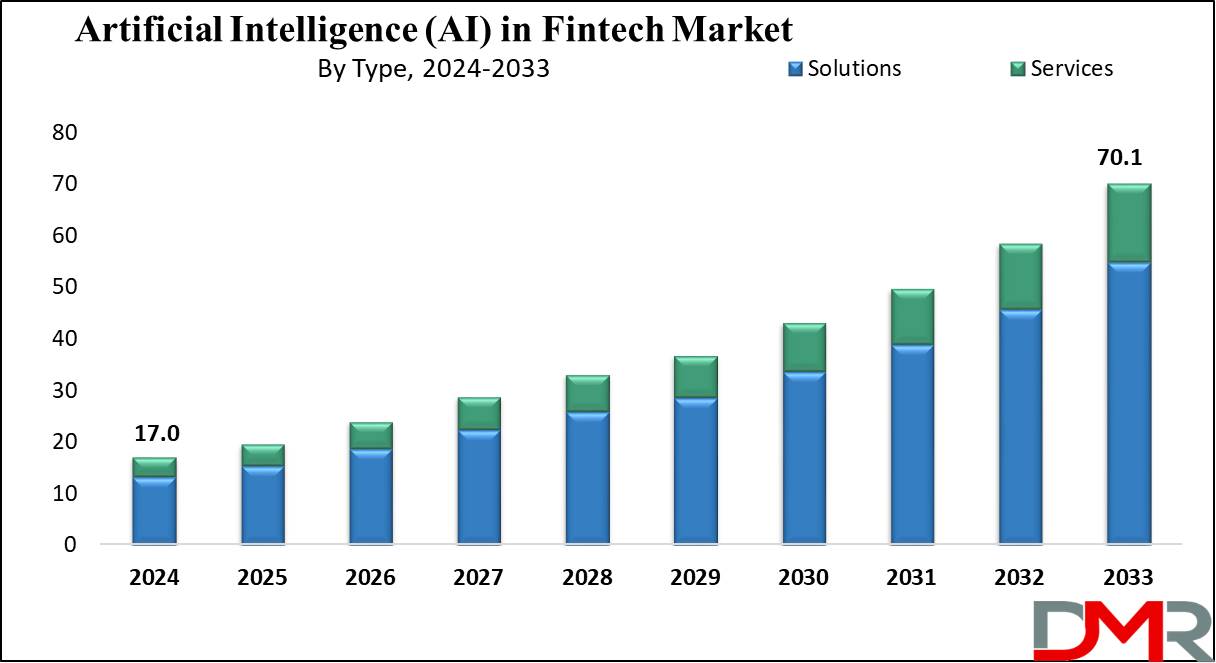
The global AI in fintech market is expected to reach USD 17.0 billion in 2024. It is projected to grow to USD 70.1 billion by 2033. This reflects strong momentum, with a CAGR of 17.0% over the forecast period.
1. Staying competitive with speed
Fintechs and neobanks now win or lose based on how quickly they can approve loans, settle payments, and block fraud, often in seconds rather than hours or days.
To keep pace, they are replacing traditional systems with AI-driven tools that manage decisions, risk, and routing in a single layer.
2. Decisions in real time
AI models now score credit, underwrite, and detect fraud in milliseconds instead of in batches. This allows them to support instant loans, dynamic pricing, and real-time risk blocking.
Fintechs can automate underwriting, KYC, and some compliance tasks, reducing manual work and letting teams focus on product and user experience instead of back-office issues.
3. Stacks built for AI
Modern fintech systems are built around cloud services, microservices, and event-driven pipelines like Kafka and Spark. AI engines connect directly to risk, payments, and analytics. Current recommendations suggest integrating AI into data and coordination layers, so new features like BNPL, crypto-linked products, and local payments can be added without overhauling core systems.
4. Rules and regulators
Regulators and card schemes no longer accept occasional checks. They now require continuous monitoring, clear risk scores, and auditable models.
Fintechs are responding by incorporating RegTech, data tracking, and model-risk controls into their systems so that AI-driven decisions can be reviewed and explained when necessary.
5. Tools and talent catching up
Frameworks like PyTorch and TensorFlow, along with AI cloud services from AWS, Azure, and GCP, have made integrating AI into core systems much easier.
At the same time, fintechs are hiring more AI/ML and MLOps engineers, considering AI capability an essential part of their infrastructure rather than a side project.
This shift means AI is no longer just an added feature but is the foundation of how fintechs operate. As speed, risk, and customer experience rely more on AI-driven decisions, the system itself is becoming the key competitive advantage.
What Is An AI-Powered Fintech Tech Stack?
An AI-powered fintech tech stack is the combination of technologies, frameworks, and infrastructure layers that work together to build and run intelligent financial platforms. It covers everything from data pipelines and cloud infrastructure to machine learning models, APIs, and compliance systems.
Therefore, rather than a single tool, it is an integrated architecture where each layer supports the others, enabling fintech platforms to deliver real-time intelligence, automation, and scale reliably.
What Makes A Fintech Stack Enterprise-Grade?
An enterprise-grade AI fintech stack requires high availability, real-time processing, and modular microservices. These architectures prioritize secure access controls and automated audit trails to ensure regulatory compliance and global scalability.
Founders often mistake a functional prototype for a market-ready financial system. An enterprise-grade architecture must do more than just process a payment. It must maintain total integrity under extreme stress while satisfying the most rigid global regulators.
1. High Availability For Critical Workflows
Financial operations cannot afford a single minute of downtime without losing massive revenue and user trust. A professional stack utilizes redundant systems across multiple geographic regions to ensure the platform stays online during local outages.
This level of reliability ensures that a server failure in one part of the world does not stop a customer from accessing their funds in another.
2. Real-Time Processing At Transaction Scale
Modern fintech users expect instant feedback when they move money or check their balances. The underlying technology must be capable of handling thousands of events per second without causing a bottleneck.
By utilizing high-speed data pipelines, the system processes complex logic in a fraction of a second. This speed is what allows for immediate fraud checks and balance updates during the checkout process.
3. Secure Access Across User Roles
Protecting sensitive financial data requires more than just a strong password for every employee. An enterprise-grade stack implements strict identity management to control exactly who can view or move money.
Role-based access ensures that a customer support agent has different permissions than a senior developer or a CFO. This granular control is a fundamental requirement for preventing internal fraud and meeting security standards.
4. Audit Trails Across Financial Operations
Transparency is a non-negotiable requirement for any entity handling third-party capital. Every action taken within the platform must leave a permanent and unchangeable digital footprint. These audit trails allow investigators to trace a transaction back to its origin and see every person who interacted with it.
Having this data ready at a moment’s notice makes the annual regulatory examination process much smoother.
5. Modular Architecture For Product Expansion
A rigid system prevents you from launching new features as the market changes around you. Successful fintech platforms use a microservices approach where different functions operate as independent modules.
This means you can upgrade your lending engine without touching your digital wallet or your card issuance service. This flexibility allows your engineering team to move faster and deploy updates without risking the stability of the entire core.
6. Cloud-Native Infrastructure For Growth
Scaling a global fintech business requires the ability to add computing power instantly as your user base explodes. Cloud-native tools allow the platform to expand its resources automatically during peak traffic periods like holiday sales.
This infrastructure ensures that your cost per transaction remains low even as your total volume reaches enterprise levels. It provides the global reach needed to enter new markets without building physical data centers.
Building on these foundations ensures your platform is a resilient financial powerhouse rather than a fragile startup tool. Strategic architectural choices today will determine your ability to dominate the fintech market tomorrow.
What Are The Core Layers Of The Stack?
A modern fintech platform is a complex ecosystem of specialized layers that must communicate with zero friction. Each layer handles a specific business requirement while contributing to the overall stability and intelligence of the enterprise.
| Layer | Primary Function | Key Outcome |
| User Experience | Frontend Interface | Seamless Customer Engagement |
| Backend & API | Core Business Logic | Scalable Service Orchestration |
| Data Engineering | Information Movement | Real-Time Data Availability |
| AI & Machine Learning | Intelligence & Prediction | Proactive Risk & Growth Strategy |
| Payment & Ledger | Financial Accounting | Absolute Transaction Integrity |
| Security & Compliance | Defense & Governance | Regulatory Trust & Safety |
| Cloud & DevOps | Infrastructure Management | Global Availability & Speed |
1. User Experience Layer
The frontend is the only part of the stack your customers actually see and touch. It must be exceptionally fast and intuitive to retain user loyalty in a competitive market.
- Responsive Design: Interfaces must work perfectly across mobile apps and web browsers.
- State Management: The UI needs to reflect balance changes and transaction statuses instantly.
- Direct Feedback: Real-time notifications keep users informed about their financial activity.
2. Backend And API Layer
This layer acts as the brain that coordinates all activities between the user and the internal data systems.
- Service Orchestration: It manages the flow of information between different microservices, like lending or savings.
- API Standardization: It provides a clean way for third-party partners to connect with your financial products.
- Request Handling: The backend ensures that every user action is validated before it hits the database.
3. Data Engineering Layer
Data is the lifeblood of a fintech platform, and it must be moved with absolute precision.
- Streaming Pipelines: Systems like Kafka move transaction events across the stack in milliseconds.
- Data Enrichment: This layer adds context to raw numbers by pulling in historical user behavior.
- Storage Optimization: It ensures that data is saved in formats that are easy for AI models to consume.
4. AI And Machine Learning Layer
Intelligence turns a simple wallet into a smart financial assistant that can predict user needs and stop fraud.
- Predictive Scoring: Models analyze data to determine creditworthiness or risk levels on the fly.
- Automated Personalization: The AI suggests financial products tailored to specific user spending habits.
- Fraud Detection: High-speed algorithms scan for anomalies that suggest a security breach.
5. Payment And Ledger Layer
This is the most critical layer where the actual movement and recording of money take place.
- Double-Entry Accounting: Every transaction must have a corresponding entry to ensure the books always balance.
- Settlement Logic: This layer manages the complex timing of moving funds between different banks and networks.
- Immutable Records: Once a transaction is finalized, it cannot be altered or deleted.
6. Security And Compliance Layer
Trust is the currency of fintech, and this layer ensures your platform remains a safe harbor for capital.
- Encryption At Rest: All sensitive data is locked away using industry-leading cryptographic standards.
- KYC/AML Automation: The system automatically checks users against global watchlists during onboarding.
- Audit Logging: Every administrative action is recorded to satisfy internal and external auditors.
7. Cloud And DevOps Layer
The underlying infrastructure provides the physical power and global reach for the entire stack.
- Automated Scaling: The system adds more servers during high-traffic events to maintain performance.
- Continuous Deployment: Engineering teams can push updates without stopping the service.
- Disaster Recovery: Automated backups ensure that data is never lost, even during a major system failure.
Integrating these layers into a unified architecture is the only way to build a truly modern financial platform. This structural depth provides the foundation for sustainable innovation and long-term market leadership.
Which App Stack Powers AI Fintech Platforms?
The software tools you choose will dictate how fast your team can build and how well your platform can scale.
A professional app stack must balance developer productivity with the extreme performance requirements of the financial industry.
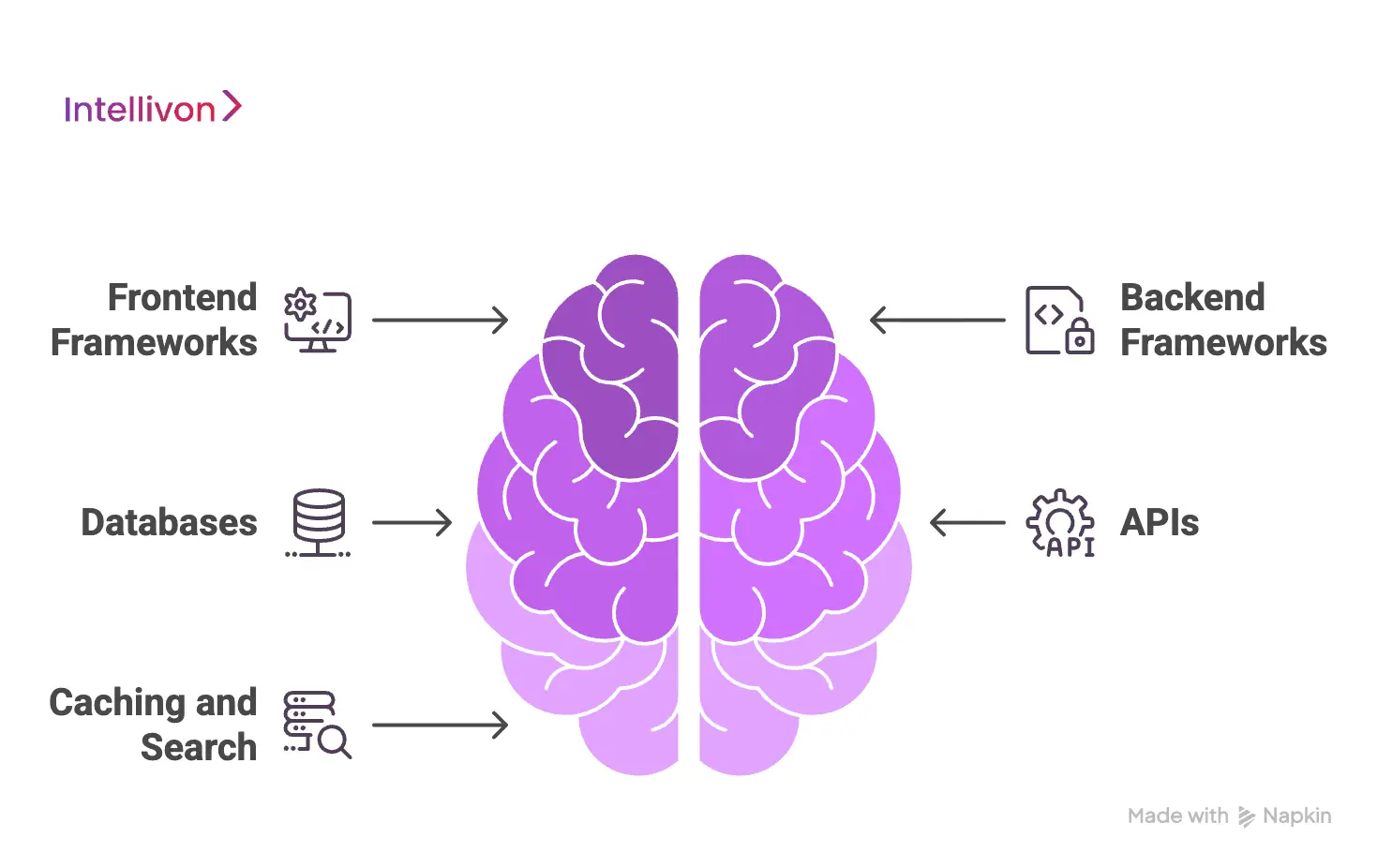
1. Frontend Frameworks For Fintech Interfaces
The interface must be highly responsive to give users confidence in your digital services.
- React.js: This is the industry standard because of its massive ecosystem and ability to handle complex state changes. It allows you to build modular components that can be reused across different parts of your banking app.
- Flutter: Many fintech leaders use this for mobile development because it allows for a single codebase across iOS and Android. This ensures your user experience remains consistent regardless of the device your customer is using.
- Swift and Kotlin: For platforms that require deep integration with mobile hardware, native languages provide the best performance. These are often used for high-security features like biometric authentication or hardware-based encryption.
2. Backend Frameworks For Secure Workflows
The backend must prioritize safety and transaction integrity over everything else.
- Go (Golang): Known for its incredible speed and efficiency, Go is perfect for building high-concurrency payment systems. It handles thousands of simultaneous requests with very low memory overhead.
- Node.js with TypeScript: This combination is popular for rapid development because it allows teams to share logic between the frontend and backend. Using TypeScript adds a layer of type safety that prevents many common coding errors.
- Java (Spring Boot): Larger institutions often stick with Java because of its mature security frameworks and proven reliability. It remains the backbone of many core banking systems globally.
3. Databases For Financial Records
Fintech data requires absolute consistency because a single lost record can mean a major financial loss.
- PostgreSQL: This is the most trusted relational database for fintech due to its strict adherence to ACID compliance. It ensures that every transaction is either fully completed or fully reversed.
- MongoDB: For non-transactional data like user profiles or document storage, a NoSQL database offers the flexibility you need. It allows you to store diverse data types without a rigid schema.
- Amazon Aurora: This cloud-native database provides the performance of a high-end commercial system with the simplicity of an open-source tool. It automatically scales to handle spikes in transaction volume.
4. APIs For Banking And Payment Integrations
No fintech platform exists in a vacuum, so you must connect to the broader financial world through reliable APIs.
- Plaid: This is the standard for connecting your app to a user’s existing bank account to verify balances and identity.
- Stripe or Adyen: These provide the infrastructure for processing credit card payments and managing global merchant payouts.
- Unit or Treasury Prime: These Banking-as-a-Service (BaaS) providers allow you to embed real bank accounts and card issuance directly into your app.
5. Caching And Search For Faster Operations
To maintain sub-second response times, you cannot rely on the main database for every single query.
- Redis: This in-memory data store is used for lightning-fast caching of session data and temporary balances. It significantly reduces the load on your primary databases during peak traffic.
- Elasticsearch: When users need to search through years of transaction history, this tool provides near-instant results. It allows for complex filtering and pattern matching across millions of records.
Choosing the right app stack is a strategic decision that affects your long-term operational costs. These tools provide the technical agility needed to stay ahead of market trends while keeping user data secure.
Which Backend Stack Fits Fintech Workflows?
The backend is the engine room where financial logic becomes reality. Selecting a language is about choosing the specific performance characteristics that your particular financial workflow requires.
1. Java For Enterprise Banking Systems
Java remains the dominant force in traditional banking because of its extreme stability and massive ecosystem. It offers superior multi-threading capabilities, which are essential for handling millions of concurrent user sessions.
- Security Frameworks: Mature libraries like Spring Security have been battle-tested for decades.
- Predictability: Java provides a consistent environment for managing billions of dollars in assets.
- Enterprise Support: Large institutions prefer its long-term stability and extensive documentation.
2. NET for Regulated Financial Platforms
Many firms operating in highly regulated markets choose the Microsoft .NET ecosystem for its tight security and corporate support. It integrates seamlessly with enterprise identity providers and provides a structured environment for building complex business logic.
- Compliance Focus: The framework is designed for reliability and satisfies the most rigid financial security standards.
- Performance: It offers high-speed execution for transaction-heavy environments.
- Infrastructure Synergy: It is a top choice for platforms that require deep integration with existing Windows-based financial tools.
3. Node.js For Real-Time Fintech Workflows
Node.js is perfect for modern apps that require constant, low-latency communication between the server and the user. Its non-blocking architecture allows it to handle many simultaneous connections without slowing down.
- Event-Driven: Ideal for digital wallets, real-time trading dashboards, and live notification systems.
- Unified Codebase: It allows your engineering team to move faster by using JavaScript across the entire software stack.
- Rapid Iteration: Perfect for startups that need to ship features quickly in a fast-moving market.
4. Python For AI-Heavy Fintech Systems
Python is the undisputed leader when your fintech platform relies heavily on machine learning and advanced data analysis. It boasts the most extensive libraries for building intelligent financial services.
- AI Integration: Direct access to frameworks like PyTorch and TensorFlow for credit scoring and fraud detection.
- Data Science Synergy: It allows your data scientists to move from research to production with minimal friction.
- Vast Libraries: Includes powerful tools for handling complex mathematical operations and data manipulation.
5. Go For High-Throughput Payment Services
Go, or Golang, was built to solve the challenges of massive scale and extreme speed. It is increasingly the language of choice for building modern payment gateways and high-speed clearing houses.
- Concurrency: Its built-in support for “goroutines” allows it to process global transactions in real time with very low overhead.
- Efficiency: The simple syntax makes code both highly performant and easy for large teams to maintain.
- Scalability: Go provides the sub-second latency required to dominate the global payment landscape.
6. FastAPI For AI And Data-Driven APIs
FastAPI is a modern web framework that bridges the gap between AI research and production performance. It allows developers to build high-speed APIs that can serve machine learning predictions to millions of users.
- Speed: It is designed to be one of the fastest Python frameworks available today.
- Validation: Automated data validation prevents errors before they ever reach your financial database.
- Efficiency: It is a powerful tool for startups that need to deploy complex AI features without sacrificing system stability.
The backend technology you choose today will define your platform’s ability to scale tomorrow. Matching the right language to your specific financial workflow is the first step toward building a market-leading fintech enterprise.
What Data Stack Supports AI Fintech?
Data is the fundamental asset that powers every intelligent decision within a financial platform.
An enterprise-grade data stack must handle massive volumes of information while ensuring every byte remains accurate, secure, and accessible for both human analysts and AI models.
1. Data Lakes For Large Financial Datasets
A data lake serves as a massive repository for storing all your raw information in its original format.
- Storage Diversity: You can store everything from structured transaction logs to unstructured customer service recordings.
- Scalability: These systems are designed to hold petabytes of data at a low cost, providing a rich history for future AI training.
- Flexibility: Data scientists can access raw information directly to discover new patterns without waiting for formal database updates.
2. Data Warehouses For Analytics And Reporting
While lakes store raw data, warehouses are optimized for high-speed querying and complex financial reporting.
- Structured Intelligence: Data is organized into clean tables that allow leadership to track key performance indicators instantly.
- Business Logic: These systems are perfect for calculating monthly recurring revenue or identifying long-term customer churn trends.
- Performance: Advanced indexing allows you to run massive reports across years of history in seconds.
3. ETL Pipelines For Clean Financial Data
Extract, Transform, and Load (ETL) processes are the digital factories that turn messy raw data into valuable information.
- Data Cleansing: The pipeline removes duplicates and fixes formatting errors to ensure your AI models receive high-quality inputs.
- Standardization: It ensures that currency values and timestamps are consistent across all global regions.
- Automation: These workflows run continuously to ensure your production databases are always up to date.
4. Feature Stores For AI Model Inputs
Feature stores are specialized databases that manage the specific variables used by your machine learning models.
- Consistency: They ensure the same data used to train a model is the exact data used when the model makes a live prediction.
- Reusability: Different teams can share features like “average spend per week” without recalculating them for every new model.
- Time-Travel: These stores allow you to see what a specific data point looked like at any exact moment in the past.
5. Streaming Data For Real-Time Decisions
In the world of fintech, waiting for a batch update is not an option when a fraudster is active.
- Event-Driven Analysis: Systems like Kafka or Flink process data within a microsecond, as it is generated by a user action.
- Instant Risk Scoring: Streaming allows your platform to block a suspicious transaction before the funds even leave the account.
- Live Personalization: You can send a relevant offer to a user based on a purchase they just made seconds ago.
6. Data Governance For Compliance Control
Governance provides the rules and guardrails that ensure your data practices satisfy global regulators.
- Access Auditing: The system tracks exactly who accessed sensitive financial information and for what purpose.
- Data Lineage: You can trace any data point back through every transformation it underwent to ensure its integrity.
- Privacy Management: Automated tools ensure that personal identifiable information is handled according to GDPR and other privacy laws.
Investing in a modern data stack is what separates basic apps from intelligent financial ecosystems. This architectural depth ensures your AI models are always fed the high-quality data they need to protect and grow your business.
What AI Stack Is Used In Fintech Platforms?
The intelligence layer is what defines the modern fintech experience. To move beyond simple automation, you must select frameworks that can handle high-stakes financial calculations with absolute mathematical precision and speed.
1. Python For AI Model Development
Python is the foundational language for almost every AI-driven financial service in the market today.
- Ecosystem Dominance: It offers the largest library support for financial data analysis and mathematical modeling.
- Rapid Prototyping: Developers can build and test new risk models in a fraction of the time compared to compiled languages.
- Talent Availability: Most data scientists are native to Python, ensuring you can scale your intelligence team quickly.
2. TensorFlow For Deep Learning Models
Developed by Google, this framework is a powerhouse for building complex, multi-layered neural networks.
- Production Scalability: It is designed to deploy models at a massive scale across global cloud infrastructures.
- Mobile Integration: TensorFlow Lite allows you to run smaller AI models directly on user devices for faster biometric checks.
- Consistent Performance: It provides high-speed execution for tasks like image recognition during identity verification.
3. PyTorch For Advanced AI Systems
PyTorch has become the favorite of researchers and engineers who require flexibility for cutting-edge AI development.
- Dynamic Computation: It allows for real-time changes to the model architecture, which is perfect for complex financial simulations.
- Research to Production: Most new AI breakthroughs are released in PyTorch first, giving you a competitive edge in model sophistication.
- Intuitive Debugging: The framework is famously developer-friendly, making it easier to identify and fix errors in complex logic.
4. Scikit-Learn For Predictive Models
While deep learning gets the headlines, traditional machine learning remains the workhorse for many fintech tasks.
- Algorithmic Efficiency: It is the best tool for regression and classification tasks where the data is structured and tabular.
- Model Explainability: These models are often easier to “explain” to regulators compared to “black-box” neural networks.
- Feature Engineering: It provides built-in tools for preparing your financial data for the most accurate results.
5. XGBoost For Risk And Scoring Models
XGBoost is the “gold standard” for credit scoring and fraud detection due to its incredible performance on tabular datasets.
- High Accuracy: It consistently outperforms other algorithms in identifying subtle patterns of financial risk.
- Gradient Boosting: The system builds a series of weak models that work together to create a single, highly powerful prediction.
- Processing Speed: It is optimized for speed and can handle the massive amounts of data generated by modern payment flows.
6. LangChain For AI Agent Workflows
As fintech moves toward autonomous assistants, LangChain provides the framework for managing complex AI agents.
- Reasoning Chains: It allows AI agents to follow a logical series of steps to solve a customer support issue or a risk case.
- Tool Integration: Your AI can be programmed to “reach out” and interact with your internal databases or external APIs.
- Context Management: It ensures the AI remembers previous interactions to provide a personalized experience for the user.
7. Vector Databases For AI Search
Vector databases like Pinecone or Milvus are essential for powering the next generation of semantic search and AI memory.
- Similarity Search: These tools allow your AI to find related transactions or similar fraud cases based on “meaning” rather than just keywords.
- Long-Term Memory: They provide a place for AI agents to store and retrieve vast amounts of contextual information instantly.
- High Dimensionality: These databases are optimized to store the complex mathematical embeddings that define modern AI understanding.
Building a world-class AI stack requires a balance between proven mathematical tools and cutting-edge agentic frameworks. This technological depth ensures your platform provides the “smart” features that today’s fintech users demand.
Which AI Models Create Fintech Business Value?
Intelligence is the engine that converts raw financial data into higher margins and lower risks. By deploying specialized models, enterprises move from reactive data collection to proactive strategic execution.
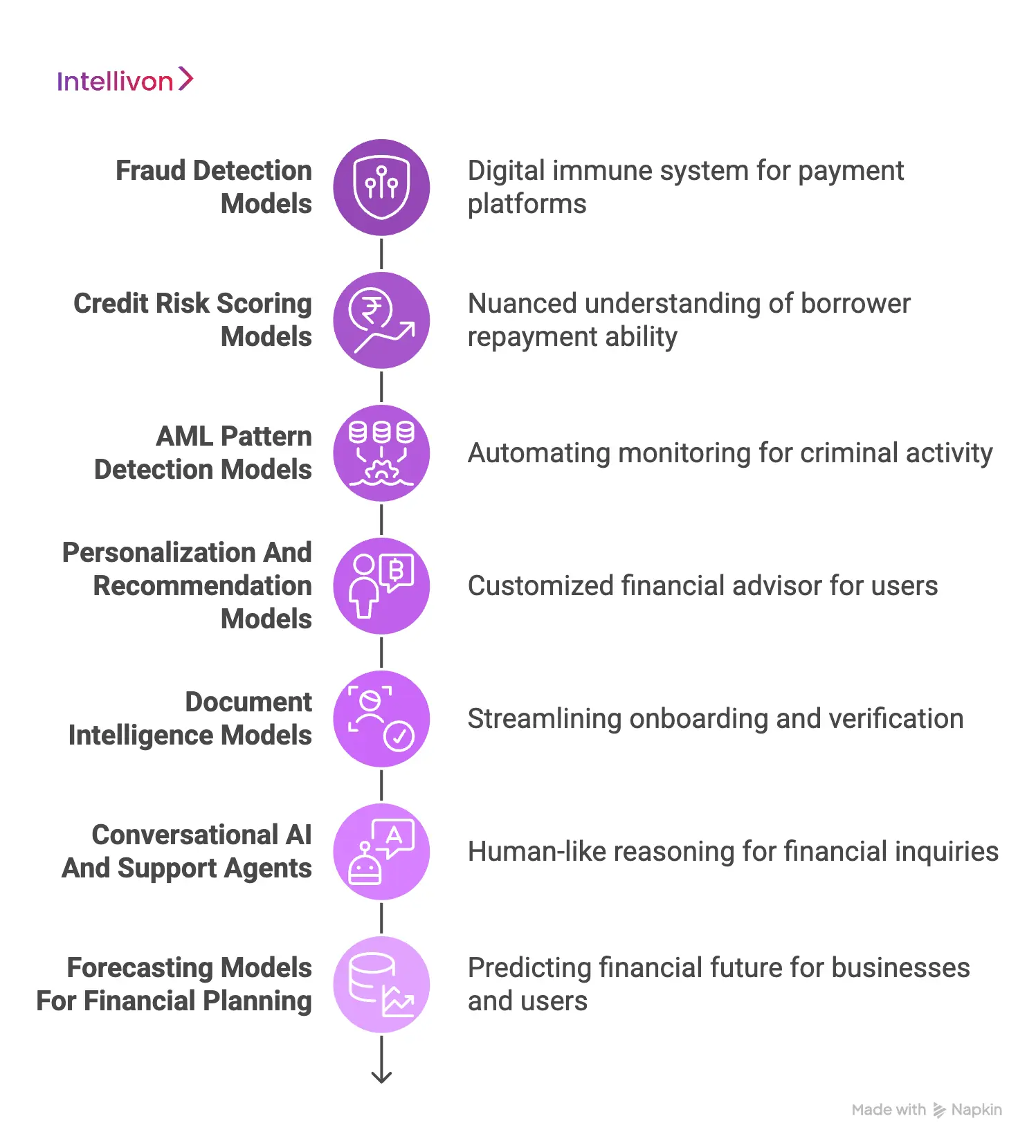
1. Fraud Detection Models
These models serve as the digital immune system for any payment platform by identifying suspicious activity before a loss occurs.
- Anomaly Detection: Systems use unsupervised learning to spot transactions that deviate from a user’s established spending habits.
- Pattern Matching: Supervised models recognize the specific signatures of known attack vectors like account takeovers or card testing.
- Real-Time Blocking: High-speed inference engines allow the system to decline a fraudulent request in milliseconds.
2. Credit Risk Scoring Models
Machine learning allows for a more nuanced understanding of a borrower’s ability to repay compared to traditional credit scores.
- Alternative Data Analysis: Models ingest non-traditional signals like utility payments or rent history to assess creditworthiness accurately.
- Dynamic Risk Adjustment: The system updates a user’s credit limit in real time based on their most recent financial behaviors.
- Default Prediction: Advanced algorithms identify early warning signs that a borrower may be heading toward financial distress.
3. AML Pattern Detection Models
Anti-Money Laundering (AML) models automate the grueling task of monitoring global flows for criminal activity.
- Graph Analysis: These models map connections between disparate accounts to uncover hidden money-laundering networks.
- Structured Monitoring: The AI tracks high-volume transfers and international hops that lack a clear business purpose.
- Alert Prioritization: Machine learning ranks flags by severity so compliance teams focus their energy on the most dangerous threats.
4. Personalization And Recommendation Models
These models turn a generic banking app into a customized financial advisor for every individual user.
- Next-Best-Action: The AI suggests the most relevant financial product, such as a high-yield savings account or an insurance policy, at the perfect moment.
- Spending Insights: Models categorize transactions to provide users with clear visibility into their monthly habits.
- Engagement Optimization: Personalized notifications increase user retention by providing value that feels tailored rather than generic.
5. Document Intelligence Models
Automated document processing removes the manual bottlenecks from onboarding and verification workflows.
- OCR Extraction: Optical Character Recognition identifies and pulls key data points from passports, tax returns, and utility bills.
- Fraudulent Document Detection: AI analyzes textures, fonts, and metadata to spot forged or tampered identification.
- Automated Data Entry: The system populates internal databases with extracted information to speed up the KYB and KYC process.
6. Conversational AI And Support Agents
Modern support conversational AI agents go beyond simple chatbots to handle complex financial inquiries with human-like reasoning.
- Intent Recognition: Natural Language Processing identifies exactly what a customer needs, whether it is a balance check or a card replacement.
- Self-Service Resolution: AI agents can guide users through multi-step processes like initiating a dispute or updating an address.
- Sentiment Analysis: The system detects when a user is frustrated and automatically escalates the case to a human representative.
7. Forecasting Models For Financial Planning
Predictive models provide both the enterprise and the end-user with a clear view of their financial future.
- Cash Flow Prediction: For business users, these models forecast future revenue and expenses to help with budget planning.
- Market Sentiment: AI analyzes global economic signals to predict shifts in currency values or stock market trends.
- Resource Optimization: The platform uses forecasting to ensure it has enough liquidity to meet peak demand during seasonal surges.
Building these models into your stack transforms your platform from a passive tool into an active partner for your users. This intelligence is the foundation for achieving true scale in the modern fintech economy.
What Stack Supports Real-Time Fintech AI?
In the financial sector, a delay of even a few seconds can result in massive losses or a degraded user experience.
Real-time architecture ensures that your AI models act on data the moment it is generated, rather than waiting for slow batch updates.
1. Kafka For Event Streaming
Apache Kafka acts as the central nervous system for modern fintech platforms by managing the flow of data between different services.
- Decoupled Architecture: It allows your payment service to send data to the risk engine without waiting for a response, ensuring maximum speed.
- High Throughput: Kafka can handle millions of events per second, making it ideal for global platforms with high transaction volumes.
- Fault Tolerance: If a service goes down, Kafka stores the data until the system is back online, preventing any loss of financial information.
2. Apache Flink For Stream Processing
While Kafka moves the data, Apache Flink is the engine that analyzes that data as it passes through the system.
- Stateful Computation: Flink can “remember” a user’s previous transactions to identify a sudden spike in spending in real time.
- Low Latency: It is designed to process complex logic with sub-second response times, which is essential for instant fraud detection.
- Accuracy: It handles out-of-order data events to ensure that financial calculations remain precise even during network instability.
3. Spark For Large-Scale Data Processing
Apache Spark is often used alongside streaming tools to handle the massive datasets required for training and auditing.
- Batch and Stream: It can process historical data to train new AI models while also handling live data for immediate insights.
- Complex Analytics: Spark is the preferred tool for running heavy mathematical simulations or large-scale credit risk assessments.
- Integration: It connects seamlessly with various data lakes and warehouses, providing a unified environment for data scientists.
4. WebSockets For Live User Updates
To provide a truly modern experience, the platform must push information to the user without them needing to refresh their screen.
- Bi-Directional Communication: WebSockets keep a persistent connection open between the server and the user’s mobile app or browser.
- Instant Notifications: Users receive immediate alerts about successful payments, price movements, or security warnings.
- Dynamic Dashboards: Financial charts and balances update in real time, creating an engaging and professional user experience.
5. Real-Time APIs For Instant Decisions
APIs serve as the gateways through which your AI models communicate their findings to the rest of the stack.
- Inference Endpoints: These specialized APIs allow the payment engine to ask the AI model for a risk score in the middle of a transaction.
- Standardized Responses: They provide clear and consistent data formats that ensure different parts of the platform can act on AI insights quickly.
- High Reliability: These APIs are often deployed in redundant clusters to ensure that a risk check is never missed due to a server failure.
6. Low-Latency Infrastructure For Payments
The physical and network layers must be optimized to move bits across the globe at the speed of light.
- Edge Computing: Deploying risk engines closer to the user reduces the time it takes for data to travel back and forth.
- Optimized Networking: Using high-speed protocols and dedicated financial lines ensures that transaction data is never stuck in public internet congestion.
- Hardware Acceleration: Some platforms use specialized chips to speed up the mathematical calculations required by deep learning models.
Maintaining this level of performance is what allows a fintech platform to scale globally without sacrificing safety.
This real-time capability is a core requirement for any enterprise looking to lead in the age of autonomous finance.
What DevOps Stack Keeps Fintech Reliable?
In the world of high-stakes finance, reliability is as important as the code itself. A modern DevOps stack ensures that your platform can handle massive traffic surges while remaining secure and fully compliant with global standards.
1. Docker For Containerized Services
Docker allows developers to package an entire application and its dependencies into a single digital container.
- Environment Consistency: It ensures the software runs exactly the same way on a developer’s laptop as it does in a high-security production environment.
- Rapid Deployment: Containers can be started or stopped in seconds, allowing the system to react quickly to changing user demands.
- Resource Isolation: Each fintech service operates in its own container, preventing a bug in one area from crashing the rest of the platform.
2. Kubernetes For Service Orchestration
Kubernetes acts as the conductor for your containerized services, managing thousands of Docker containers across global clusters.
- Self-Healing: If a server fails, Kubernetes automatically restarts the affected containers on a healthy machine to prevent downtime.
- Automated Scaling: The system adds more computing power during peak shopping holidays and reduces it when traffic is low to save costs.
- Rolling Updates: Engineers can deploy new features one server at a time, ensuring that users never experience an interruption in service.
3. Terraform For Infrastructure As Code
Terraform allows you to manage your entire cloud setup through simple text files rather than manual clicks in a console.
- Version Control: Your infrastructure changes are tracked just like software code, making it easy to see who made a change and why.
- Repeatability: You can recreate your entire financial environment in a new region within minutes to support global expansion.
- Drift Detection: The tool automatically identifies and fixes any unauthorized changes to your security settings or server configurations.
4. CI/CD Pipelines For Controlled Releases
Continuous Integration and Continuous Deployment (CI/CD) pipelines automate the journey from a developer’s keyboard to the live platform.
- Automated Testing: Every line of code is put through rigorous security and performance tests before it is allowed to reach production.
- Gatekeeping: Compliance officers can set manual approval steps to ensure that major financial logic changes are reviewed by experts.
- Rollback Capabilities: If a new update causes an issue, the pipeline can instantly revert the platform to the previous stable version.
5. Observability Tools For System Health
Observability tools provide a deep look into the internal state of your platform to identify hidden issues before they impact users.
- Distributed Tracing: Engineers can follow a single transaction as it travels through dozens of microservices to find the exact cause of a delay.
- Metrics Aggregation: The system tracks real-time data on CPU usage, memory, and transaction speeds to identify emerging bottlenecks.
- Structured Logging: Centralized logs allow your team to search through millions of events to investigate specific customer support cases or security alerts.
6. Incident Monitoring For Financial Uptime
Proactive monitoring ensures that your team is the first to know when something goes wrong with a critical financial workflow.
- Smart Alerting: The system uses AI to distinguish between a minor blip and a serious outage, preventing “alert fatigue” for your staff.
- SLA Tracking: Automated tools monitor your Service Level Agreements to ensure you are meeting the uptime promises made to your enterprise partners.
- Automated Incident Response: Some tools can trigger automated scripts to clear caches or restart services the moment a problem is detected.
Building a resilient DevOps foundation is the only way to support a fast-moving AI fintech platform. This technical discipline ensures that your focus remains on innovation rather than firefighting system failures.
What Compliance Stack Supports Fintech AI?
In a regulated industry, compliance is not a hurdle but a prerequisite for market entry and longevity.
A modern compliance stack automates the complex task of adhering to global laws while ensuring your AI models remain ethical and transparent.
| Compliance Area | Core Focus | Essential Tools |
| Identity (KYC/KYB) | Verification of Users & Entities | Biometric Scanners, Document OCR |
| Financial Crime (AML) | Fraud & Money Laundering Prevention | Transaction Monitoring, Sanctions Feeds |
| Payment Security | Protecting Credit Card Data | Tokenization, Encrypted Vaults |
| Data Privacy | Protecting Personal Information | Data Masking, Consent Management |
| Operational Trust | Internal Controls & Security | Automated Evidence Collection, Logging |
| AI Governance | Model Fairness & Transparency | Explainability Frameworks, Bias Audits |
A robust compliance stack protects your business from massive fines and builds the trust necessary to attract large-scale enterprise clients. Integrating these tools into your core architecture is a strategic investment in the long-term stability of your platform.
How Should The Stack Change By Use Case?
While the foundational layers of a fintech system remain consistent, the specific tools you prioritize will shift based on your primary business model. Each use case demands a unique balance of speed, mathematical complexity, and regulatory depth.
1. Tech Stack For AI Payment Platforms
Payment systems prioritize sub-second latency and absolute transaction integrity above all else. The stack must handle massive throughput during peak retail periods while maintaining a perfect ledger.
- Performance Focus: Uses compiled languages and event streaming to process high-volume traffic.
- Data Strategy: Prioritizes real-time “hot” data for immediate authorization decisions.
| Component | Technology Choice | Reason |
| Backend | Go (Golang) | High concurrency and low latency for transactions |
| Streaming | Apache Kafka | Moves event data across services in milliseconds |
| Database | CockroachDB | Distributed SQL for global consistency and resilience |
| AI Model | XGBoost | Rapid inference for transaction risk scoring |
2. Tech Stack For AI Lending Platforms
Lending platforms are data-hungry environments that focus on predictive accuracy and long-term risk assessment. The stack must ingest diverse data sources to determine creditworthiness.
- Analytical Depth: Uses powerful data science libraries to evaluate alternative credit signals.
- Automation: Focuses on document intelligence to reduce manual underwriting time.
- Python (FastAPI): Efficiently serves complex risk models to the frontend.
- Snowflake: A cloud data warehouse used to store years of historical loan performance data.
- Amazon Textract: Automates the extraction of financial data from tax returns and bank statements.
- Scikit-learn: Provides a robust framework for building traditional credit scoring models.
3. Tech Stack For AI Banking Platforms
Digital banking requires a highly secure, “always-on” core that can manage complex user relationships and diverse financial products.
- Reliability: Built on mature enterprise frameworks to ensure 99.99% uptime.
- User Engagement: Prioritizes real-time updates and personalized mobile experiences.
- Java (Spring Boot): The industry standard for building secure, scalable banking cores.
- PostgreSQL: Ensures ACID compliance for absolute balance accuracy.
- Redis: Caches session data and current balances for instant user feedback.
- TensorFlow: Powers personalized financial insights and “next-best-action” recommendations.
4. Tech Stack For AI WealthTech Platforms
WealthTech stacks must handle complex market data, portfolio optimization, and long-term financial forecasting.
- Mathematical Precision: Requires libraries capable of running heavy simulations and optimization algorithms.
- Connectivity: Needs deep integration with global market data feeds and brokerage APIs.
| Component | Technology Choice | Reason |
| Computation | Python (NumPy/Pandas) | Industry-leading tools for financial data manipulation |
| API Layer | GraphQL | Efficiently fetches complex, nested portfolio data |
| Database | TimescaleDB | Optimized for time-series data like stock price history |
| AI Agent | LangChain | Powers autonomous “Robo-Advisors” for user queries |
5. Tech Stack For AI Fraud Platforms
Fraud platforms act as a high-speed filter for the entire fintech ecosystem. They must identify professional fraud rings and unusual patterns within milliseconds.
- Graph Intelligence: Uses specialized databases to find connections between seemingly unrelated accounts.
- Stream Processing: Analyzes data “in-flight” before a transaction is finalized.
- Neo4j: A graph database used to visualize and detect complex money-laundering networks.
- Apache Flink: Performs stateful stream processing for real-time anomaly detection.
- PyTorch: Builds deep learning models that recognize sophisticated digital fingerprints.
- Pinecone: A vector database for semantic search across millions of historical fraud cases.
6. Tech Stack For AI RegTech Platforms
RegTech focuses on the automation of compliance, auditing, and reporting. The stack is designed to be a “source of truth” that is always ready for a regulatory exam.
- Governance First: Prioritizes data lineage, audit trails, and immutable logging.
- Natural Language Processing: Uses AI to read and interpret changing global regulations.
- Rust: Used for high-performance, memory-safe compliance checks.
- Hyperledger Fabric: Provides a private blockchain for immutable, transparent audit trails.
- OpenAI GPT-4 (via API): Analyzes regulatory text to identify new compliance requirements.
- Drata/Vanta: Automates the continuous collection of SOC 2 and ISO evidence.
Tailoring your technology choices to your specific business model ensures that you are not over-engineering simple tasks or under-powering critical operations. This strategic alignment is what allows an enterprise to scale efficiently in a crowded marketplace.
How To Choose The Right Fintech Stack
Selecting the ideal technology path is a high-stakes decision that dictates your long-term margins and regulatory standing.
At Intellivon, we use a specialized framework to align your technical choices with your specific business goals and risk profile. We do not believe in a one-size-fits-all approach. Instead, we architect systems that are custom-built for your unique operational requirements.
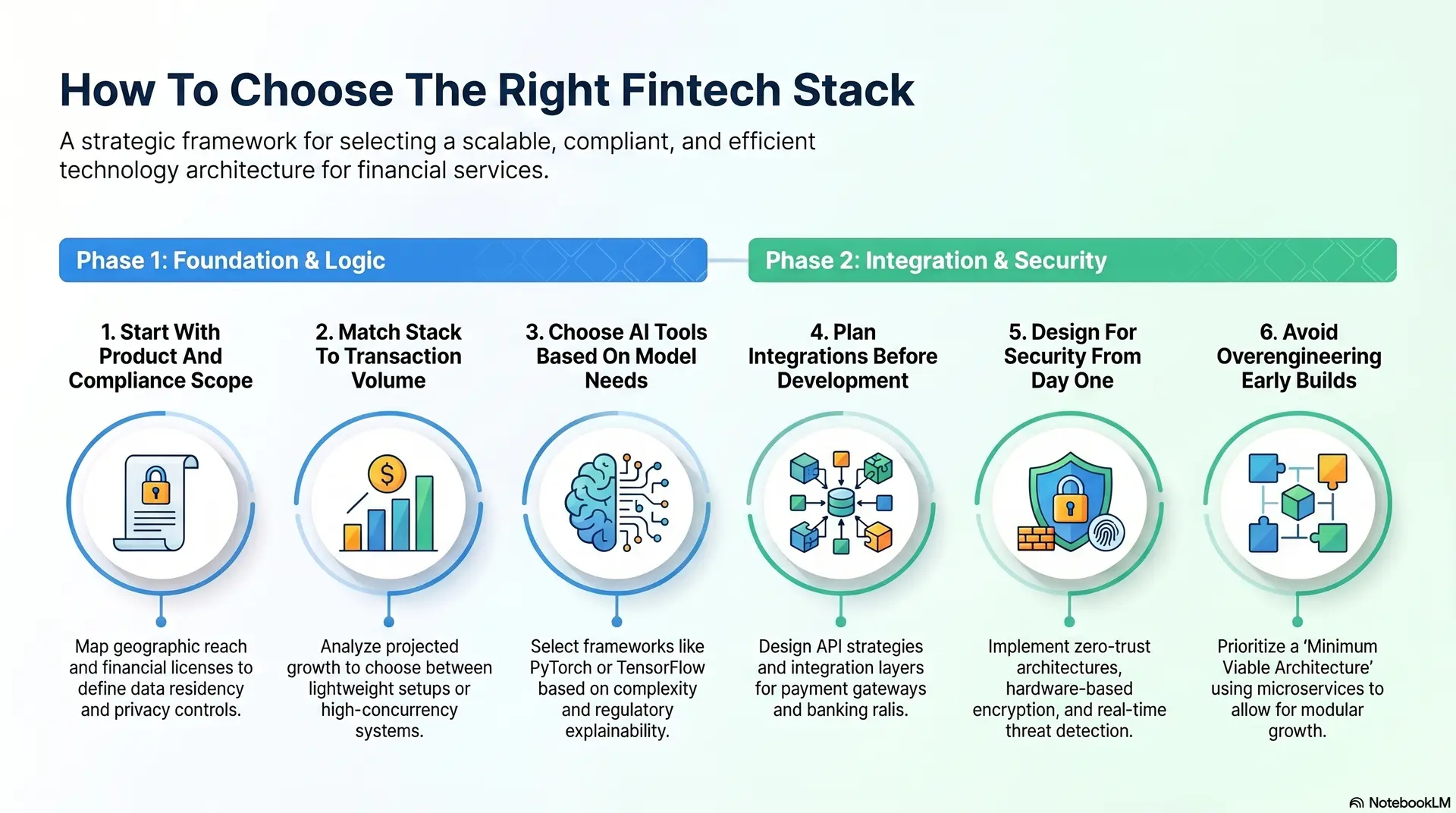
1. Start With Product And Compliance Scope
We begin by mapping out your geographic reach and the specific financial licenses you hold or intend to acquire. This defines the guardrails for your data residency and privacy controls.
- Regulatory Mapping: We identify if your stack must prioritize GDPR, PCI DSS, or regional banking standards from the very first line of code.
- Asset Class Requirements: The tech stack for a high-frequency trading platform differs fundamentally from a micro-lending app. We ensure your architecture supports your specific financial products.
2. Match Stack To Transaction Volume
Intellivon analyzes your projected growth to ensure your backend can handle current needs while being ready for enterprise-level spikes.
- Throughput Analysis: We help you decide between a lightweight Node.js setup for rapid MVP testing or a high-concurrency Go-based system for massive transaction loads.
- Latency Budgets: We define exactly how many milliseconds are allowed for each step of the transaction journey to keep your user experience seamless.
3. Choose AI Tools Based On Model Needs
We select your machine learning frameworks based on the complexity and explainability requirements of your risk and growth models.
- Framework Selection: If you need cutting-edge research and flexibility, we prioritize PyTorch. For stable, production-scale deep learning, we often deploy TensorFlow.
- Explainability First: For lending or insurance use cases, we integrate libraries like SHAP or LIME to ensure every AI decision can be defended to a regulator.
4. Plan Integrations Before Development
A fintech platform is only as strong as its connections to the broader financial ecosystem. We map out your entire API strategy before the build begins.
- Partner Orchestration: We design the integration layers for your payment gateways, KYC providers, and core banking rails to prevent data silos.
- API Resiliency: We build robust error-handling and fallback mechanisms to ensure that a failure in a third-party partner does not crash your entire service.
5. Design For Security From Day One
At Intellivon, we treat security as a fundamental feature rather than a final checklist. We bake protection into every layer of the infrastructure.
- Identity Governance: We implement zero-trust architectures and hardware-based encryption for sensitive financial operations.
- Proactive Defense: Our stacks include automated vulnerability scanning and real-time threat detection as core components.
6. Avoid Overengineering Early Builds
While we design for enterprise scale, we also prioritize your time to market. We help you build a “Minimum Viable Architecture” that is professional and compliant without unnecessary complexity.
- Modular Growth: We use a microservices approach that allows you to start with essential features and add complex modules as your business evolves.
- Cost Optimization: By selecting the right managed services and serverless components, we ensure your infrastructure costs scale in direct proportion to your revenue.
This strategic selection process ensures that your technology remains an accelerator for your business rather than a bottleneck. By partnering with Intellivon, you gain an architecture designed for the specific demands of the modern financial landscape.
Conclusion
Building a resilient AI fintech stack requires a strategic balance between transaction speed, predictive intelligence, and regulatory compliance. Selecting the right architecture ensures your platform can scale globally while maintaining absolute data integrity.
By prioritizing modularity and security today, you create a future-proof foundation for sustainable growth. This technical foresight transforms your infrastructure into a powerful competitive asset, allowing you to dominate the evolving digital finance landscape with confidence.
Build AI Fintech Platforms With Intellivon
Developing an enterprise-grade AI fintech stack requires more than just selecting modern languages. It demands a cohesive architecture where high-speed data pipelines, predictive models, and regulatory controls function as a single unit.
At Intellivon, we build financial infrastructure where artificial intelligence is embedded directly into the core processing layer. This approach enables faster transaction speeds, deeper risk insights, and scalable growth across global markets. Our systems are engineered to handle massive volumes and complex compliance requirements without compromising the user experience.
A. Architecting Real-Time Financial Decisioning
Modern fintech demands instant action. We design architectures that allow your AI models to score and act upon data the microsecond it enters your ecosystem.
- Low-latency data streaming: We utilize tools like Kafka and Flink to move and process financial events in real time.
- Edge inference deployment: By deploying models closer to the transaction source, we reduce the time required for critical risk decisions.
- Unified intelligence layers: We ensure your fraud, credit, and marketing signals converge into a single source of truth for total visibility.
B. Building Scalable AI And Machine Learning Engines
Intelligence is only as good as the infrastructure supporting it. We design robust environments for developing and deploying high-performance models.
- Hybrid model management: We build systems that allow supervised risk models and generative AI agents to work together seamlessly.
- Automated feature engineering: Our data pipelines ensure your models always have access to the most relevant and up-to-date financial signals.
- Model monitoring and retraining: We implement continuous loops that identify model drift and update your intelligence based on new market patterns.
C. Embedding Security And Governance At Every Layer
Trust is the foundational currency of the financial world. We build compliance and defense into the technical architecture rather than treating them as final steps.
- Automated compliance logging: Every AI decision and system change is recorded in an immutable audit trail for regulatory review.
- Identity and access governance: We implement zero-trust security protocols to protect sensitive financial data and user credentials.
- Explainable AI frameworks: We ensure your automated decisions are transparent and meet the strict “reason code” requirements of global regulators.
D. Integrating Seamlessly Across The Financial Ecosystem
A fintech platform must connect to the world to provide value. We design integration layers that unify your stack with global banking and payment partners.
- API first orchestration: We enable seamless connections with payment processors, KYB providers, and legacy banking cores.
- Standardized data formats: Our architectures ensure that information flows consistently between your internal modules and external partners.
- Modular system evolution: We build with a microservices mindset so you can upgrade specific features without disrupting your overall operations.
At Intellivon, we help you translate your complex financial goals and technical requirements into a clear AI fintech architecture and execution roadmap. Talk to our team to design a platform tailored to your specific enterprise needs and get a detailed project estimate.
FAQs
Q1. Why Should Funds Flow Be Mapped Before Choosing A Fintech Stack?
A1. Funds flow defines who holds money, who moves it, who owns reconciliation, and who handles disputes. Without mapping it first, teams may choose the wrong ledger, payment APIs, compliance tools, or banking integrations. Clear funds flow makes the fintech stack safer and easier to scale.
Q2. What Ledger Architecture Does A Fintech Platform Need?
A2. Most fintech platforms need a double-entry ledger architecture to track balances, debits, credits, reversals, settlements, and reconciliation accurately. The ledger should support audit trails, multi-currency transactions, transaction states, and integration with payment systems so financial records stay consistent across every workflow.
Q3. Should Enterprises Build Or Buy Fintech Infrastructure?
A3. Enterprises should buy when they need speed and standard workflows. They should build when they need custom risk logic, AI models, payment flows, compliance controls, or proprietary product experiences. Many fintech platforms use a hybrid approach, combining infrastructure providers with custom-built systems.
Q4. What Tech Stack Supports AI-Powered Fintech Platforms?
A4. An AI-powered fintech stack usually includes secure backend frameworks, real-time data pipelines, AI/ML tools, payment APIs, ledger systems, cloud infrastructure, DevOps tools, security controls, and compliance integrations. The exact stack depends on the platform’s use case, transaction volume, and regulatory scope.
Q5. How Do You Choose A Stack That Sponsor Banks Trust?
A5. Sponsor banks look for secure architecture, clean funds flow, strong KYC/KYB controls, AML monitoring, audit trails, reconciliation, data protection, and operational readiness. A trustworthy fintech stack should prove that payments, compliance, risk, and reporting workflows can operate reliably under regulatory scrutiny.