Key Takeaways:
-
AI audit trail software is decision-evidence infrastructure, and not generic log storage, capturing every model action.
-
Event capture, data lineage, explanation records, human overrides, and cryptographic verification are core capabilities.
-
SR 26-2, ECOA, SEC, FINRA, EU AI Act Article 12, GDPR, DORA, and SOX define compliance requirements.
-
Development costs $70,000 to $300,000, with delivery ranging from 12 weeks to 9 months based on scope.
-
How Intellivon builds AI audit trail platforms with a production-first approach and 15 to 25% annual maintenance.
AI audit trail software for financial services does two things at the same time. First, it captures every AI decision event immutably, including inputs, outputs, model version, and timestamp. Second, it stores those records in a searchable, exportable format for examination requests. In practice, most builds get the capture layer right but skip the query layer entirely.
The query layer determines whether a platform satisfies examiner requests or creates examination findings. Without it, logs cannot be searched or exported by decision date, customer ID, or model version. Under FINRA Rule 4511, audit records must be immediately accessible for the first two years. Consequently, an unqueryable log fails the immediately accessible standard before an examiner even reviews it.
Intellivon builds AI audit trail platforms where immutable capture and queryable retrieval are developed together. The approach therefore always designs the query layer alongside capture before any compliance mapping or SIEM integration. Accordingly, this blog covers immutable log architecture, cryptographic integrity, explanation capture, multi-regulation retention mapping, and SIEM integration. This guide closes with an architecture and retention schedule ready for regulatory examination.

What Is AI Audit Trail Software?
AI audit trail software is an enterprise logging platform that captures every data input, feature weight, model parameter, and decision output generated by AI systems.
Consequently, financial institutions use these immutable logs to track decision lineage, prove compliance with regulatory mandates like SR 11-7, and ensure total operational transparency across high-stakes automated workflows.
While basic system logs only capture simple server activities, specialized compliance platforms trace complex decision lineages in real time. Furthermore, establishing this granular visibility is essential before deploying autonomous decision engines into production environments.
The broader AI in audit market is projected to reach $11.7 billion by 2033, growing at a rapid CAGR of 27.9%. Meanwhile, specialized AI compliance automation platforms are expanding even faster at a 35.7% CAGR.
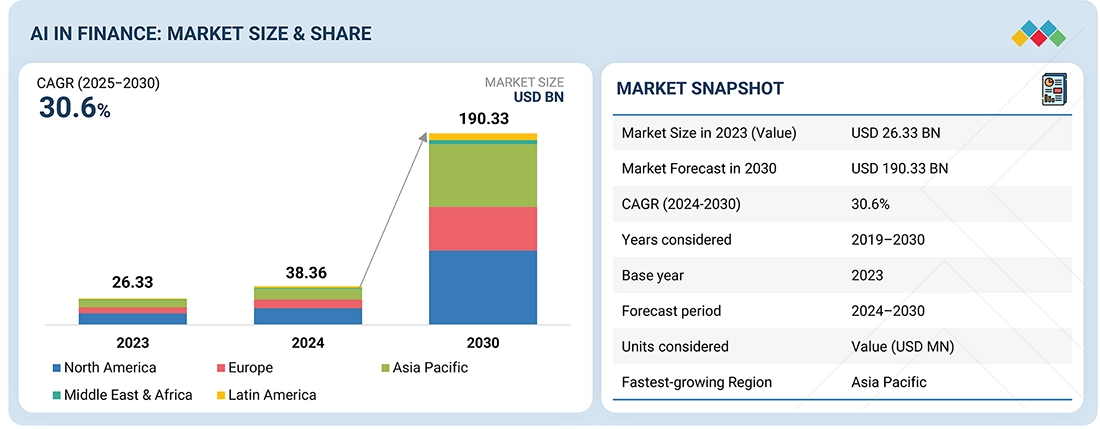
As a result, financial institutions are heavily investing in robust trace logging platforms to meet evolving regulatory demands.
What AI Audit Trail Software Must Prove in Financial Services
In financial services, AI audit trail software must reconstruct the full lineage and rationale behind a consequential decision rather than merely confirming system execution.
Consequently, the software must prove exactly how inputs, feature weights, and business rules interacted to generate a specific customer or risk outcome.
For a deeper breakdown of production engineering standards, see our guide on Enterprise AI Software Development Services.
1. AI Audit Trails Versus Application Logs
Standard IT monitoring tools track system health, whereas true audit platforms log decision-level evidence for regulators. Consequently, relying on Splunk or CloudWatch alone fails to explain specific business outcomes.
- Infrastructure logs: Record CPU usage, memory utilization, and server uptime metrics.
- Application logs: Capture standard API calls, endpoint latency, and system error rates.
- Security telemetry: Track user authentication, permission changes, and network access events.
- Model monitoring: Measure aggregate metric shifts like concept drift and model accuracy over time.
- Data lineage: Map the historical flow and transformations of raw data pipelines.
- Model documentation: Store static validation reports, training parameters, and architectural designs.
- Decision-level audit evidence: Captures the exact inputs, feature weights, and explanation vectors behind a specific automated decision.
2. The Minimum Evidence Chain for One AI Decision
To satisfy strict regulatory examinations, every automated decision requires an uninterrupted chain of evidence. Furthermore, stitching these events together requires a single persistent correlation ID across all microservices.
- Raw input: Captures the original, untransformed customer or market data payload at runtime.
- Data version: Pinpoints the exact snapshot of reference data used during processing.
- Feature vector: Logs the engineered input values generated specifically for model consumption.
- Model version: Identifies the precise active model artifact and hyperparameter configuration.
- Model output: Records the raw prediction score, class output, or confidence interval.
- Model explanation: Captures local feature attribution values such as SHAP or LIME scores.
- Policy check: Validates the prediction against hardcoded risk thresholds and regulatory rules.
- Human action: Logs any manual review, override justification, or analyst approval.
- Final outcome: Registers the final downstream transaction execution or credit disposition.
3. What Makes the Trail Examiner-Ready
Regulatory examiners require structured, tamper-proof logs that can be analyzed independently without manual system mapping. As a result, compliant platforms must enforce strict data integrity controls.
- Completeness: Guarantees zero missing event steps across the entire decision lifecycle.
- Chronological ordering: Applies high-precision timestamps to construct an accurate timeline.
- Data provenance: Traces every data element back to its authoritative source system.
- Integrity verification: Uses cryptographic hashes to prevent unauthorized log modifications.
- Access history: Records every internal view, query, and export of audit records.
- Reproducibility: Re-runs historical inputs against legacy models to verify past outputs.
- Readable evidence exports: Generates clear PDF or JSON dossiers for regulatory examination teams.
- Control-owner sign-off: Captures formal officer approvals for model deployments and rule updates.
An AI audit trail software platform succeeds when an auditor can reconstruct a historical decision without manually reconciling disconnected telemetry systems.
Furthermore, this seamless traceability simplifies compliance reporting and protects financial institutions during high-stakes regulatory examinations.
Which Financial Decisions Need End-to-End AI Traceability?
Not all financial AI deployments carry equal regulatory weight. Consequently, institutions must prioritize AI audit trail software resources based on decision consequence, fair lending risk, and explicit statutory mandates.
For a deeper breakdown of system governance, see our guide on AI Model Risk Management Software for Financial Services.
1. Credit Decisioning and Underwriting
Credit automation directly impacts consumer access to capital. As a result, regulations like ECOA, Regulation B, and the EU AI Act (Annex III) enforce strict traceability and adverse action logging.
- Credit scoring & pricing: Captures raw applicant data, feature transformations, score generation, and rule-based adjustments.
- Mortgage & loan origination: Tracks automated approval chains across consumer, commercial, auto, and BNPL models.
- Adverse action compliance: Logs exact reason codes, SHAP feature rankings, and denial letters for regulatory reporting.
2. AML, KYC, Sanctions, and Fraud Operations
Financial crime platforms run high-volume automated screening. While the EU AI Act explicitly carves fraud detection out of its high-risk tier, BSA/AML and OFAC rules still demand strict evidentiary logging for investigations.
- Alert generation & scoring: Records suspicious activity scores, transaction monitoring thresholds, and suppression rules.
- SAR drafting assistance: Captures LLM-generated narrative drafts alongside source evidence files.
- Investigator actions: Logs manual reviews, alert dismissals, fraud blocks, and account release approvals.
3. Trading, Surveillance, and Investment Decisions
High-frequency and algorithmic trading demand microsecond-level traceability to comply with SEC, FINRA, MiFID II, and CFTC surveillance standards.
- Algorithmic execution: Logs order routing choices, pre-trade risk checks, and best execution parameters.
- Market abuse surveillance: Records market manipulation alerts, insider trading signals, and spoofing flags.
- Robo-advisory & allocation: Tracks automated portfolio rebalancing, suitability scores, and investor risk profiles.
4. Insurance and Customer-Facing AI
Life and health insurance pricing engines fall under high-risk regulatory rules, whereas customer-facing conversational agents carry lower-tier transparency duties.
- Life & health underwriting: Traces actuarial pricing models, risk classification vectors, and premium calculations.
- Claims adjudication: Logs automated claim approvals, fraud probability scores, and payout calculations.
- Conversational AI: Records user prompts, intent classifications, chatbot responses, and escalation handoffs.
5. Core Financial Use Cases and Compliance Requirements
| Financial Use Case | Decision Consequence | Evidence to Retain | Human Review Point | Risk Tier |
| Credit Scoring | Direct impact on consumer credit access | Inputs, SHAP values, reason codes, model version | Manual override on loan denial | High Risk (EU AI Act Annex III) |
| AML Alerting | Filing inaccurate SAR reports, regulatory fines | Raw transactions, rule match, alert score, data snapshot | Compliance analyst alert disposition | Medium Risk (BSA/AML / SEC) |
| Algo Trading | Market impact, execution slippage, compliance breach | Order routing logic, tick data, latency metrics, pre-trade checks | Risk manager kill-switch activation | High Risk (MiFID II / FINRA) |
| Life Underwriting | Coverage denial, policy mispricing | Medical history features, actuarial rules, model output | Underwriter exception review | High Risk (EU AI Act Annex III) |
| Customer Service Chatbot | Hallucinations, misinformed policy guidance | Prompt, output text, knowledge retrieval chunks, user ID | Handoff to human support agent | Limited Risk (EU AI Act Art. 50) |
Financial institutions must align logging depth with regulatory exposure. At the same time, high-consequence decisions like credit underwriting demand complete end-to-end lineage, while operational utilities require lighter transparency controls.
Which Regulations Shape AI Audit Trail Requirements in 2026?
Modern regulatory frameworks enforce specific, technical data-capture requirements rather than general guidelines. Consequently, an enterprise AI audit trail software platform must dynamically adjust its schema to satisfy varying statutory retention periods, evidence formats, and jurisdictional rules.
1. SR 26-2 and the Transition From SR 11-7
The federal banking agencies updated model risk management expectations by issuing the SR 26-2 model risk management guidance, formerly SR 11-7.
As a result, large banking organizations must maintain an active audit trail that links development code to operational runtime decisions.
- Model inventory management: Tracks every production deployment alongside historical baseline versions.
- Risk-based classification: Categorizes models by business exposure to dictate validation rigor.
- Governance & monitoring: Logs continuous performance metrics, drift alerts, and periodic validation sign-offs.
- Third-party & retirement tracking: Records vendor model updates, data dependencies, and formal deprecation notices.
2. ECOA, Regulation B, FCRA, and CFPB Adverse-Action Requirements
Under Equal Credit Opportunity Act (ECOA) rules, creditors using complex algorithms cannot use “black-box” opacity to justify denial decisions. Therefore, the CFPB demands explicit evidence of the actual mathematical factors driving every adverse action.
- Inputs & feature values: Retains exact applicant data points and engineered variables consumed during scoring.
- Reason codes & SHAP vectors: Maps local explainability outputs directly to ranked principal reason codes.
- Policy overlays & exclusions: Captures manual override rules, suppressed variables, and hard decision boundaries.
- Action notices & timestamps: Archives generated customer letters, human review notes, and dispatch timestamps.
3. SEC, FINRA, CFTC, and Securities Recordkeeping
Securities regulators enforce distinct rules for trading surveillance, order handling, and electronic recordkeeping. Consequently, engineering teams must differentiate general AI governance logs from specialized market reporting standards.
- SEC Rule 17a-4: Enforces immutable electronic storage that permits exact recreation if primary files are modified.
- Rule 613 (CAT): Tracks the lifecycle of NMS orders specifically, operating separately from model decision logs.
- FINRA Rules 3110 & 4370: Require documented supervisory controls, business continuity logs, and algorithmic trade surveillance.
- Best-execution & CFTC reporting: Captures order routing parameters, liquidity venue checks, and post-trade compliance logs.
4. EU AI Act Article 12, GDPR Article 22, DORA, MiFID II, and EMIR
The EU AI Act establishes strict technical documentation and automatic logging mandates for high-risk deployments. Furthermore, under the updated implementation timeline, high-risk Annex III requirements take effect in December 2027.
- Automatic event logging (Art. 12): Captures runtime operations continuously to trace unexpected drift or failure modes.
- Human oversight & rights impacts: Logs human-in-the-loop interventions, exception approvals, and fundamental rights checks.
- GDPR Art. 22 compliance: Preserves data snapshots to fulfill consumer rights to meaningful explanations of automated profiling.
- DORA & MiFID II resilience: Verifies operational continuity, software dependency chains, and algorithmic trading safety limits.
5. Requirement-to-Evidence Regulatory Mapping
| Regulation / Standard | Target Institution / Use Case | Required Evidence Object | Control Owner | Retention Authority | Export Format |
| SR 26-2 | Large Banks / Credit Models | Validation reports, drift metrics, version diffs | Head of Model Risk | 7 Years | PDF / Parquet |
| CFPB / Reg B | Lenders / Credit Scoring | Raw features, SHAP rankings, denial reason codes | Chief Compliance Officer | 25 Months | JSON / CSV |
| SEC Rule 17a-4 | Broker-Dealers / Trading AI | Write-once-read-many (WORM) hash-chained event logs | CTO / Head of Tech Audit | 6 Years | Immutable WORM |
| EU AI Act Art. 12 | High-Risk Deployers / Underwriting | Input/output logs, confidence scores, human overrides | Chief AI Officer | Lifecycle + 10 Yrs | JSON-LD / Encrypted ZIP |
An enterprise AI audit trail software platform must not rely on a static “compliance mode.” Instead, it must dynamically tag every log event with the relevant jurisdiction, control owner, and retention policy.
Core Capabilities of an Enterprise AI Decision Audit Trail Platform
To meet stringent regulatory scrutiny, deploying automated AI audit trail software for banks requires a robust, production-grade feature set. Consequently, enterprise architecture teams must prioritize key technical capabilities that ensure data immutability, decision explainability, and seamless regulatory reporting across every model deployment.
For a deeper breakdown of production engineering standards, see our guide on AI Governance Software for Banks.
Key Capabilities Matrix
| Core Capability | Primary Engineering Requirement | Primary Compliance Target |
| 1. Canonical Event Schemas | Standardized JSON/Avro formats across microservices | Cross-system data consistency |
| 2. Real-Time & Batch Capture | High-throughput Kafka and async REST streaming | Low-latency inference retention |
| 3. Cryptographic Integrity | Hash-chained logs and WORM storage retention | SEC 17a-4 / Anti-tamper proofing |
| 4. Explanation & Reason Codes | Automated SHAP/LIME feature attribution logging | CFPB / Reg B adverse action |
| 5. Human Action & Override Capture | HITL sign-off, escalation, and approval tracking | SR 26-2 governance controls |
| 6. Decision Replay & Search | Indexing via Elasticsearch for historical re-runs | Regulatory examination readiness |
| 7. Agent Prompt & Tool-Call Logging | LLM input context, RAG chunks, and tool execution logs | EU AI Act Article 12 compliance |
| 8. Automated Evidence Packs | One-click PDF/JSON regulatory export dossiers | Independent model validation |
Implementing automated AI audit trail software for banks transforms complex, distributed model outputs into a single source of truth. Furthermore, enforcing cryptographic integrity and automated reason-code logging ensures complete readiness for federal regulatory examinations.
Architecture for AI Audit Trail Software in Banks
Building an enterprise-grade platform requires a secure, modular pipeline that connects capture points to immutable storage.
Consequently, financial institutions must implement a multi-tiered architecture that handles real-time event streaming, role-based governance, and rapid examiner replay.
Architectural Components Overview
| Architectural Layer | Core Technical Components | Primary Engineering Function |
| 1. Instrumentation & Capture | Model proxy, AI gateway, agent runtime, core adapter | Ingests raw inference requests and downstream overrides |
| 2. Event Streaming & Normalization | Apache Kafka, Schema Registry, dead-letter queues | Validates, sequences, and routes structured logs |
| 3. Evidence Storage | Hot operational store, WORM object lock, cold archive | Guarantees tamper-proof retention and quick retrieval |
| 4. Query & Examiner Workspace | Elasticsearch search index, chronological replay engine | Enables rapid regulatory auditing and PDF export generation |
| 5. Security & Governance Plane | Zero-trust IAM, HSM key management, cloud vs. hybrid | Enforces strict data segregation and encryption controls |
A well-architected AI audit trail platform development financial services initiative separates real-time event ingestion from long-term WORM storage. Furthermore, this decoupling ensures high-speed transaction processing alongside uncompromised regulatory compliance.
How to Make AI Audit Records Tamper-Evident
Financial regulators require immutable evidence to prove that decision logs have not been altered after execution.
Consequently, an enterprise AI audit trail software platform must combine write-once storage with cryptographic verification to guarantee absolute data integrity.
1. Append-Only and WORM Storage
Write-Once-Read-Many (WORM) storage policies prevent users, administrators, and automated scripts from altering historical records.
As a result, once an audit event is committed to the repository, it remains permanently locked against modifications or premature deletion.
2. Hash Chains and Digital Signatures
Cryptographic structures bind individual log entries into an unbroken timeline. Furthermore, applying digital signatures ensures that any unauthorized modification immediately invalidates the entire verification chain.
- Per-record hashes & chains: Computes a unique cryptographic hash for every event that incorporates the hash of the preceding record.
- Batch Merkle trees: Aggregates high-volume decision events into root hashes for efficient, periodic verification.
- Key rotation & monitoring: Uses hardware security modules (HSMs) for key rotation while automated verification jobs alert teams to integrity failures.
3. When Blockchain Adds Real Value
Distributed ledgers provide strong verification when multiple independent institutions must share a record without a single central trust authority.
However, standard WORM storage and digital signatures offer faster performance and better data privacy for single regulated entities.
4. Immutability Does Not Mean Keeping Everything Forever
Enforcing immutability must not violate privacy laws like GDPR or CCPA. Therefore, platforms store tokenized references rather than raw Personally Identifiable Information (PII) within the immutable layer.
- Tokenization & minimization: Replaces sensitive customer attributes with cryptographic tokens before log creation.
- Corrective event logging: Appends new adjusting records to correct errors rather than overwriting historical entries.
- Cryptographic erasure: Destroys encryption keys to render target records unreadable when retention schedules expire, or legal holds lift.
Cryptographic tamper-evidence makes unauthorized changes instantly detectable to internal auditors and external regulators. Furthermore, pairing tokenization with WORM storage protects sensitive financial data while satisfying strict data retention rules.
What AI Models Should the Platform Use?
Enterprise buyers often assume an AI audit trail software platform must run machine learning models across every subsystem. However, relying on probabilistic AI for core record-keeping creates compliance risks. Consequently, architecture teams must separate probabilistic analysis from deterministic data verification.
For a deeper breakdown of system governance, see our guide on AI Governance Software for Banks.
1. Where AI Adds Value
Machine learning models excel at interpreting complex, high-volume log streams to highlight anomalies. As a result, embedding AI into analysis workflows helps compliance teams identify potential control breaches before regulators discover them.
- Missing-event & override detection: Scans log streams to flag missing processing steps or abnormal human override patterns.
- Semantic search & case retrieval: Uses vector embeddings to locate similar historical decisions across unstructured customer records.
- Incident clustering & mapping: Groups related decision failures together and maps them against new regulatory guidance documents.
- Evidence summarization: Uses fine-tuned LLMs to generate clear executive summaries and audit narrative drafts from raw logs.
2. What Must Remain Deterministic
Core evidence management functions must rely on strict, rule-based code rather than probabilistic AI models. Therefore, system architects must enforce hard boundaries where predictive uncertainty is unacceptable.
- Event capture & schema validation: Enforces strict field requirements and data types without statistical approximation.
- Record ordering & hashing: Uses cryptographic algorithms to construct precise, sequential hash chains.
- Policy gating & retention: Executes hard access control policies, legal holds, and immutable storage locking rules.
- Completeness verification: Validates that every required step in a decision chain is fully accounted for before export.
AI models are valuable for interpreting audit evidence, searching complex records, and summarizing findings. However, core data capture, integrity verification, and retention controls must remain purely deterministic to satisfy regulatory scrutiny
Integrations Required Across the Financial Tech Stack
An enterprise AI audit trail software platform cannot operate in an isolated sandbox. Because AI decisions flow across multiple banking systems, compliance teams must capture data from the underlying infrastructure, business applications, and security platforms.
For detailed integration blueprints, explore our services in DevOps and Cloud Infrastructure Integration.
1. MLOps and Data Infrastructure
To prove why a model made a specific prediction, the audit system must track the underlying data and model assets. Consequently, integration with the machine learning and data pipeline is essential for total lineage verification.
- MLOps Pipelines: Connects to model registries, feature stores, CI/CD pipelines, and model-serving environments.
- Data Governance: Links with data catalogs, quality tools, data lakes, and lineage platforms to track data origin.
- Monitoring Systems: Ingests drift metrics and performance telemetry from operational monitoring tools.
2. Lending, Banking, and Financial Crime Systems
Core banking applications frequently modify or execute AI recommendations. Therefore, capturing events directly from business transaction channels ensures that human overrides and final outcomes are recorded.
- Credit & Lending: Integrates with loan origination systems and credit decision engines.
- Core Operations: Ingests events from core banking, card processing, and collections platforms.
- Financial Crime: Connects to AML transaction monitoring, KYC verification, sanctions screening, and fraud management tools.
3. Trading, Insurance, and Advisory Systems
In high-velocity capital markets and underwriting environments, audit logging must capture real-time market contexts and risk decisions. As a result, systems must support low-latency streaming integrations across trade and policy workbenches.
Trading and Advisory Systems
| Functional Area | Target System Integrations | Primary Audit Event Captured |
| Capital Markets | Order Management (OMS), Execution Management (EMS) | Algorithmic order routing and execution logs |
| Market Surveillance | Trade Surveillance, Market-Data Platforms | Anomaly alerts and real-time tick data context |
| Insurance & Wealth | Underwriting Workbench, Claims, Robo-Advisory | Automated risk ratings and portfolio rebalancing |
4. SIEM, Observability, GRC, and Security
Security and governance platforms require real-time visibility into AI decision logs. Thus, the audit platform must feed enriched events into existing enterprise security operations centers and compliance dashboards.
- SIEM & Observability: Streams audit alerts into Splunk, Microsoft Sentinel, IBM QRadar, Datadog, or Elasticsearch.
- Governance & Compliance: Syncs control status and evidence packages with GRC platforms like ServiceNow GRC.
- Security & Identity: Integrates with enterprise Identity Providers (IdPs), KMS/HSM services, DLP systems, and legal-hold repositories.
5. Integration Priority Rule
When prioritizing integration roadmap phases, engineering teams should follow a strict operational hierarchy:
- Produce: Systems that generate the initial AI recommendation or score.
- Modify: Workflows where human operators review or override the AI output.
- Execute: Downstream core platforms that process the final financial transaction.
- Communicate: Customer-facing channels that send notice of the final decision.
- Store: Secondary repositories holding supporting documentation and evidence.
A platform connected only to the model endpoint will miss policy decisions, human changes, and downstream execution. Therefore, full regulatory compliance requires capturing every step across the complete decision lifecycle.
How to Build AI Audit Trail Software for Banks Step by Step
Building an enterprise AI audit trail software platform requires a structured engineering roadmap that balances real-time performance with strict regulatory compliance.
Consequently, banking teams should execute a phased rollout focused on high-consequence production workflows.
Step 1 — Inventory AI Systems and Define Evidence Obligations
Engineers must begin by cataloging all operational models, autonomous agents, rule engines, and data pipelines across business units. Furthermore, teams must map each system to its downstream human approval points, operating jurisdictions, and governing regulations.
Assigning a risk tier to every workload ensures that customer-impacting decisions take priority over internal productivity tools.
Our team begins with a detailed decision-to-evidence matrix. This matrix defines exactly what data must be captured, why it matters to regulators, who owns the system, and how an examiner will retrieve the records during an audit.
Step 2 — Design the Canonical Event Schema and Retention Taxonomy
Creating a standardized event schema prevents engineering teams from building brittle, custom logging formats for every new model.
Consequently, the canonical schema must define required correlation IDs, schema versions, tokenization rules, and data classifications while allowing use-case extensions.
| Schema Component | Technical Function | Regulatory Impact |
| Core Identifiers | Correlation IDs, session tokens, model versions | Connects multi-step decision chains |
| Data Protection | In-line tokenization and data masking | Enforces GDPR and PII compliance |
| Lifecycle Metadata | Retention classes and legal-hold flags | Enforces immutable deletion schedules |
Our technical leads validate this schema against real-world credit, AML, trading, and insurance decision data before writing production code. As a result, the platform maintains backward compatibility across future model updates.
Step 3 — Build Real-Time Capture and Immutable Evidence Storage
Implementation requires deploying proxy adapters, API gateway interceptors, and streaming event buses like Apache Kafka. Furthermore, the streaming layer must handle event validation, deduplication, strict ordering, and dead-letter queues before writing to WORM storage.
Silent logging failures will undermine an otherwise compliant system. Therefore, any capture disruption must instantly trigger operational alerts.
Our architecture decouples capture services from the model layer, ensuring a model failure never disables the audit trail.
Step 4 — Add Decision Replay and Evidence Exports
Compliance teams need an intuitive interface to reconstruct complex decisions in real time. Consequently, the workspace must show what inputs entered the model, which rules fired, what explanation was generated, and whether a human operator modified the output.
- Replay Engine: Reconstructs the exact state of inputs, model weights, and business logic at decision time.
- Audit Exports: Generates cryptographically signed PDF, CSV, and JSON evidence packages for external examiners.
- Lineage Tracking: Visualizes the complete path from raw data ingestion to customer notification.
Our specialists validate these examiner workflows directly with compliance, internal audit, model risk, and legal teams to guarantee that exported evidence satisfies external regulatory demands.
Step 5 — Validate Controls and Roll Out by Risk Tier
Before going live, engineering teams must rigorously test tamper detection, key rotation, failover scenarios, and high-volume performance under stress. Once validated, rollout should proceed incrementally, starting with a single high-consequence decision engine.
- Control Testing: Execute synthetic tamper attempts to verify cryptographic hash chain alerts.
- Failure Recovery: Simulate stream disruptions to confirm dead-letter queue recovery and data replay.
- Pilot Rollout: Deploy to a single production workflow, such as credit decisioning or fraud scoring.
- Independent Audit: Validate that internal auditors can reconstruct decisions without engineering assistance.
Our deployment model includes automated control evidence, operational runbooks, real-time monitoring, and clear ownership matrices to ensure long-term system stability.
Successfully building AI audit trail software requires moving systematically from risk tiering to immutable capture and examiner replay. By rolling out by risk tier, banks establish strong compliance controls without disrupting core operations.
AI Audit Trail SaaS Platform Development Cost: $70,000–$300,000
AI audit trail software for financial services typically costs $70,000–$300,000 to design, build, integrate, validate, and deploy. Furthermore, final implementation budgets vary based on system complexity and regulatory scope.
Development Cost and Scope Breakdown
| Scope Level | Estimated Cost | Timeline | Typical Functional Coverage |
| Focused MVP | $70,000–$120,000 | 12–16 weeks | Single use case, core schema, capture, evidence store, basic dashboard |
| Production Platform | $120,000–$210,000 | 4–6 months | Multiple systems, lineage tracking, overrides, MLOps and SIEM integrations |
| Enterprise Deployment | $210,000–$300,000 | 6–9 months | Multi-jurisdiction, high volume, agentic logging, examiner workspace |
Main Cost Drivers and Maintenance
Primary cost drivers include high event volumes, legacy core-banking integrations, agentic AI logging, multi-region data residency, and cryptographic WORM controls. Consequently, engineering teams must account for both initial build expenses and ongoing operational needs.
- Development Phase Costs: Discovery ($8k–$20k), Schema/UX ($10k–$25k), Event Capture ($22k–$70k), Lineage ($15k–$55k), Integrations ($10k–$80k), Security Validation ($5k–$50k).
- Ongoing Maintenance: Budget 15%–25% of the initial build cost annually ($10,500–$75,000/year). This covers storage growth, schema extensions, regulatory mapping updates, and security patching.
Build AI Audit Trail Software With Intellivon
Navigating complex financial regulations requires a robust, infrastructure-first compliance architecture. Intellivon partners with financial institutions to build, integrate, and deploy enterprise-grade AI audit trail software that satisfies stringent regulatory demands without slowing down innovation.
From initial risk assessment to production rollout, our specialized engineering teams deliver complete end-to-end capabilities tailored to your tech stack:
- Evidence & Schema Design: Comprehensive AI-system assessments paired with production-ready canonical decision-event schemas.
- Immutable Ingestion Pipeline: High-throughput, real-time event capture built on WORM storage, hash chains, and zero-trust security.
- Lineage & Override Tracking: Complete model, agent, and data lineage mapping alongside human override and adverse-action workflows.
- Enterprise Integration: Seamless connectivity across your MLOps pipelines, SIEM observability suites, GRC platforms, and core banking systems.
- Examiner Workspaces: Intuitive decision replay engines featuring fast search, completeness scoring, and cryptographically signed evidence exports.
Ready to Secure Your AI Decision Pipeline?
Ensure your AI systems are fully compliant, transparent, and examiner-ready. Speak directly with our lead architects to evaluate your technical readiness and build a compliant audit trail infrastructure.
Conclusion
As financial institutions accelerate AI adoption, building an audit-ready compliance infrastructure is essential. Capturing deterministic decision logs, enforcing immutable WORM storage, and enabling full decision replay protects banks against regulatory penalties.
Ultimately, separating probabilistic AI analysis from strict, rule-based logging ensures that your platform maintains verifiable transparency, satisfies strict examiner scrutiny, and safeguards long-term consumer trust across every automated financial workflow.
FAQs
Q1. What Must an AI Audit Trail Log for Credit Decisions?
A1. An AI audit trail for credit decisioning must capture the complete decision context. Consequently, it must record raw input features, exact model versions, calculated scores, applied threshold boundaries, generated reason codes, policy rule firings, human overrides, final outcome notifications, and issued adverse-action notices.
Q2. Does SR 11-7 Still Apply to Bank AI Audit Trails?
A2. SR 26-2 superseded SR 11-7 in April 2026. While legacy documentation, vendor collateral, and historical search queries still reference SR 11-7, all new compliance architecture, governance frameworks, and model risk management policies must align directly with the updated SR 26-2 supervisory guidance.
Q3. Does EU AI Act Article 12 Require Logging for Every Financial AI System?
A3. Article 12 logging requirements apply specifically to high-risk AI deployments. Consequently, classification depends on the model’s intended purpose, operational context, and regulatory category. Banks should maintain a use-case classification register rather than assuming all fraud, service, lending, or insurance models carry identical logging obligations.
Q4. Can a SIEM Replace an AI Decision Traceability Platform?
A4. A SIEM cannot replace a dedicated AI decision traceability platform. While SIEMs successfully aggregate system logs and security events, they fail to reconstruct decision lineages, model version states, explanation artifacts, business rule evaluations, human override records, and final customer outcomes into a single, cohesive audit record.
To Sum It Up
- Auditability is a data contract, not a dashboard. A dashboard cannot compensate for missing decision events.
- Every consequential AI decision needs one correlation ID spanning model output, policy checks, human action, and business outcome.
- The system protecting audit evidence should remain deterministic, even when the model being audited is probabilistic.
- Blockchain is rarely the first immutability control a bank needs; append-only storage and cryptographic verification are usually simpler.
- A $70,000 MVP can cover one controlled use case, while a $300,000 platform supports multiple systems, integrations, and jurisdictions.