The math of drug development no longer adds up. Spending billions to advance a single candidate over a 10–15 year timeline, only to see 9 out of 10 fail, is not sustainable. With average costs now exceeding $2 billion per approved drug, enterprises are under immense pressure to innovate faster, reduce trial-and-error, and improve returns. AI drug discovery systems are emerging as the new infrastructure to solve this problem, designed to cut discovery timelines, lower wet-lab churn, and increase the odds of clinical success.
At Intellivon, we have guided leading healthcare enterprises in building and scaling such systems. By integrating generative chemistry models, predictive analytics, and compliance-first architectures, our platforms have enabled clients to identify viable candidates sooner, streamline trial design, and reduce operational spend by millions. In this blog, we’ll break down the cost of developing an AI drug discovery system, outline the factors that influence investment, and show how Intellivon builds enterprise-grade platforms from the ground up.
Can AI Fix Pharma’s $2B Drug Development Crisis?
Drug discovery has reached a breaking point. It now costs large pharmaceutical companies an average of $2.23 billion per asset.
The journey still stretches 10–15 years from discovery to approval, and only about 1 in 10 candidates entering human trials ever makes it to market. That means most of that massive R&D spend is never recouped. Even more concerning is that approximately 80% of total out-of-pocket costs occur during clinical development, where failures are most expensive.
At the same time, commercial pressure is mounting. In the U.S., newly launched drugs have had median annual list prices well above six figures, and payers/regulators are increasingly pushing back on the justification of high cost based solely on R&D spend. To find breaking ground, enterprises must compress discovery timelines, lower development risk, and improve portfolio ROI, or risk pricing themselves out of future markets.
The AI Advantage
AI drug discovery systems are being adopted as core infrastructure for pharmaceutical R&D. Their value lies in changing the economics of discovery and development on three fronts:
1. Time Compression
What used to take years of iterative medicinal chemistry can now be done faster. In documented cases, AI-guided design loops have enabled lead nomination and preclinical advancement in a fraction of the typical time and cost.
For example, an AI-designed molecule can be nominated in 12-18 months instead of many years.
2. Higher-Confidence Candidates
The notion that AI is just a tool for screening is outdated. In one major milestone, Insilico Medicine’s drug candidate Rentosertib (also known as ISM001-055), using both an AI-discovered target and AI-designed molecule, entered human Phase IIa trials for idiopathic pulmonary fibrosis (IPF).
This proof-of-concept shows AI can originate clinically advanced assets, not just assist.
3. Protecting Portfolio ROI
Given that the cost per drug is already in the billions, and headcount/experts don’t scale proportionally, AI platforms allow enterprises to:
- Explore exponentially more targets and molecules in silico with fewer physical tests.
- Surface only the highest-value candidates for wet-lab synthesis, reducing churn and cost.
- Improve chances of success in the most expensive phase (clinical development) by feeding forward better predictions.
That means more programs, higher quality, lower waste, thereby improving the internal rate of return (IRR) on R&D budgets. As noted in Deloitte’s 2024 report, IRR rose to 5.9% from 4.1% the prior year, driven by fewer but higher-value assets.
The Executive Urgency
Enterprise leaders are no longer framing AI in drug discovery as a “nice-to-have.” They’re treating it as a survival strategy. The rise in cost per asset, the sheer amount of money tied up in multi-year programs, and the payer/regulator pushback all combine to create a moment of truth.
AI drug discovery systems are building the financial infrastructure that will determine which pharma companies remain viable in the next decade.
What Is an AI Drug Discovery System?
An AI drug discovery system is a fully integrated enterprise platform designed to accelerate the end-to-end drug development pipeline.
From identifying novel biological targets to predicting safety profiles and optimizing trial design, these systems bring together advanced data pipelines, generative chemistry, predictive modeling, and compliance frameworks into one coordinated ecosystem.
Unlike traditional tools that assist scientists in isolated tasks, a well-built AI drug discovery system acts as a decision-making engine. It provides research teams with actionable insights, reduces the number of physical experiments required, and helps prioritize candidates with the highest probability of success. The goal is not simply speed—it is creating a pipeline that is more cost-efficient, scalable, and resilient against failure.
How It Works
At its core, the platform functions through a series of interconnected steps:
1. Data Ingestion and Integration: Clinical records, genomic datasets, molecular libraries, and scientific literature are ingested, cleaned, and structured into a unified data layer.
2. AI Model Development: Machine learning and deep learning models analyze these datasets to identify potential drug targets, generate novel molecules, and predict key ADMET (absorption, distribution, metabolism, excretion, toxicity) properties.
3. In-Silico Testing and Optimization: Candidate molecules are scored and refined through virtual simulations, dramatically reducing the need for costly wet-lab experiments.
4. Clinical Trial Simulation: Platforms can model patient stratification, predict enrollment bottlenecks, and design adaptive trials that improve the chances of success while lowering cost.
5. Compliance and Governance: Every output is checked against regulatory frameworks like FDA 21 CFR Part 11, GDPR, HIPAA, and the EU AI Act, ensuring systems are audit-ready from day one.
In practice, this workflow allows enterprises to shorten early discovery cycles by 25–70%, reduce trial failures, and protect hundreds of millions in sunk costs. It is a new operating model for pharmaceutical R&D.
Takeaways of the AI Drug Discovery Market
This surge is driven by adoption at scale, measurable efficiency gains, and accelerating ROI across pharma R&D. Enterprises are now actively turning to AI platforms as a way to reduce risk, compress development timelines, and unlock new therapeutic opportunities.
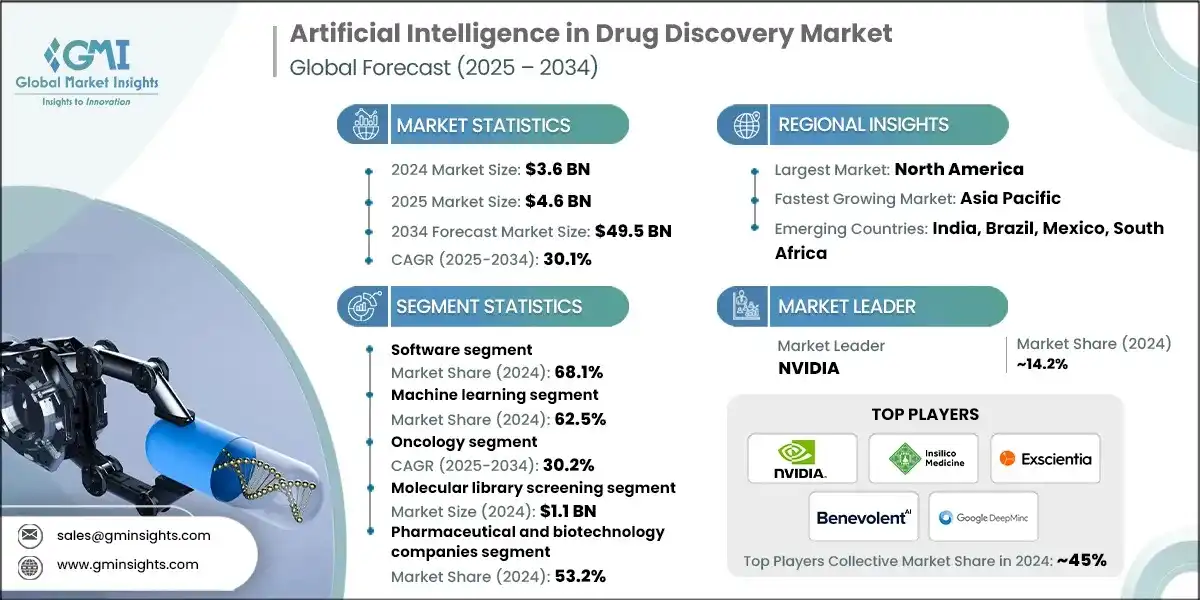
- AI reduces drug discovery timelines by 25% and clinical trial costs by up to 70%, creating significant operational savings.
- Platforms powered by AI can generate $26 billion in annual cost savings by streamlining research, compound screening, and preclinical testing.
- The success rate of AI-discovered molecules in Phase I trials is reaching 80–90%, far above traditional averages.
- Major partnerships, such as AstraZeneca’s multi-billion-dollar AI collaborations, demonstrate growing trust. AI-driven trial site selection alone can cut enrollment time by 33% and participant needs by 25%.
- More than 75% of pharma executives rank generative AI among their top investment priorities, reporting 20% improvements in marketing effectiveness and 30–50% reductions in equipment downtime.
- McKinsey estimates generative AI could save the pharma industry $60–110 billion annually, further reinforcing the financial case.
The market’s exponential growth, combined with clear cost savings and strategic benefits, makes AI-driven drug discovery one of the most compelling enterprise investments of 2025 and beyond. For leaders responsible for pipeline efficiency and long-term growth, the business case rests in building the future backbone of pharmaceutical R&D.
Key Use Cases of an AI Drug Discovery System
AI drug discovery systems are not theoretical experiments anymore. They are being deployed to solve very specific pain points in pharmaceutical R&D. The value comes from making critical stages faster, cheaper, and more predictable.
1. Target Identification and Validation
One of the hardest steps in drug discovery is deciding which biological target to pursue. AI systems can analyze genomic data, patient records, and scientific literature to surface promising targets. This reduces wasted time on targets that are unlikely to translate into viable therapies.
2. Generative Molecule Design
Instead of testing thousands of random compounds, AI platforms generate novel molecules that fit desired therapeutic profiles. These candidates are scored for efficacy, stability, and toxicity before entering the lab. Enterprises save millions by narrowing the scope of wet-lab experiments.
3. Predictive Safety and Toxicity Screening
Early toxicity is one of the most common reasons for failure in clinical trials. AI-driven predictive models flag unsafe compounds before expensive animal or human testing. This lowers attrition rates and protects R&D budgets from late-stage collapse.
4. Clinical Trial Optimization
AI is now influencing trial design itself. By modeling patient populations, predicting enrollment bottlenecks, and simulating outcomes, systems can shorten enrollment timelines and reduce the number of required participants. This accelerates timelines while lowering trial costs by up to 70%.
5. Drug Repurposing Opportunities
Pharma companies hold vast libraries of compounds that never reached the market. AI platforms can re-screen these compounds for new therapeutic applications. This approach shortens development cycles dramatically because safety data already exists, making regulatory approval smoother.
6. Portfolio Prioritization
Enterprises often face the challenge of balancing multiple parallel programs. AI systems rank drug candidates based on predicted efficacy, safety, and market potential. Decision-makers can then allocate resources with higher confidence and reduce the risk of betting on the wrong asset.
AI drug discovery systems are redefining how enterprises approach cost, speed, and risk in pharmaceutical R&D.
Key Cost Drivers of AI Drug Discovery Systems
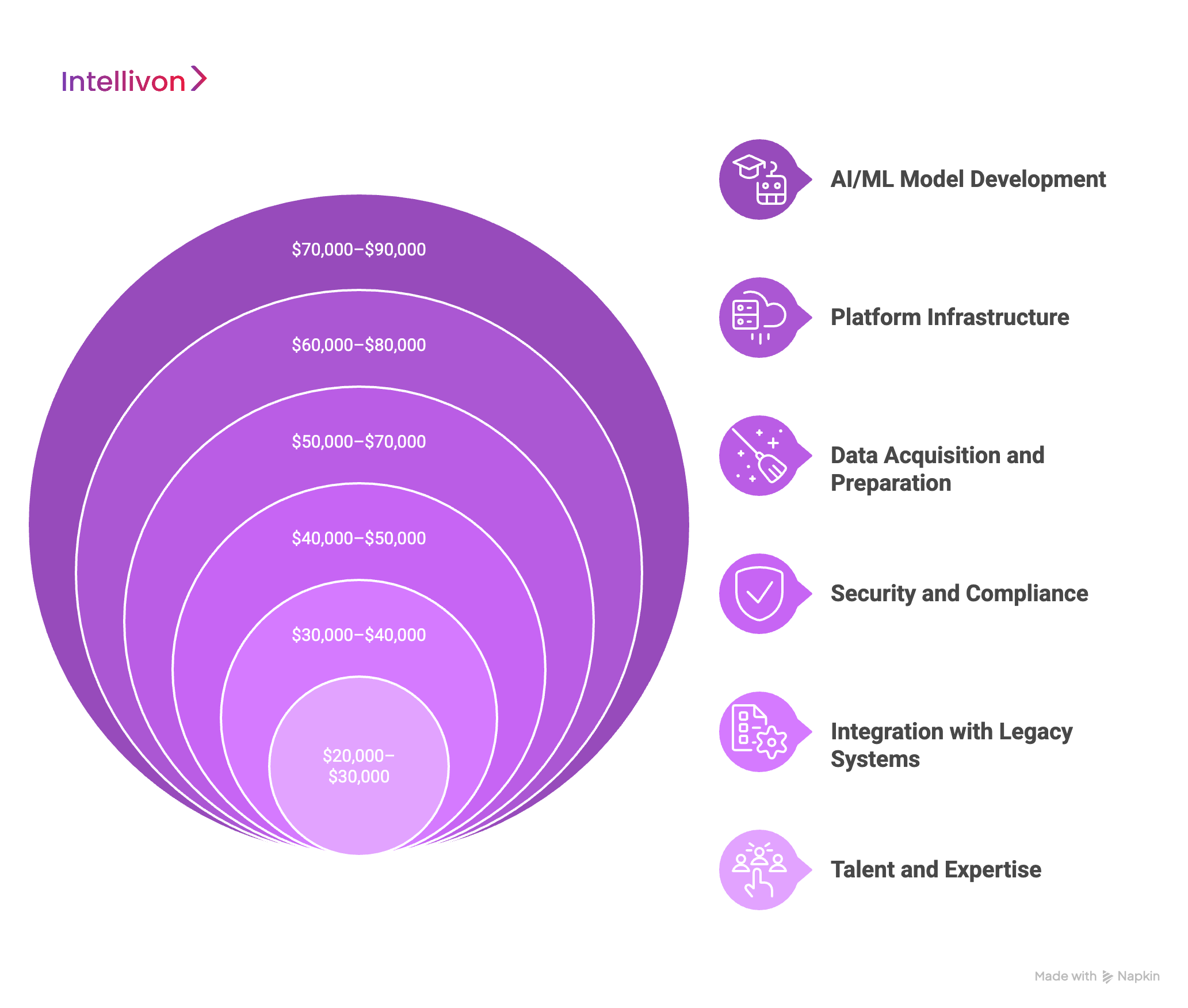
For most enterprises, the cost to build an AI drug discovery system can be managed within a $280,000–$300,000 budget if the project is carefully scoped. Instead of trying to replicate every capability on day one, the focus is on building a strong, scalable foundation and layering on complexity as adoption grows. Below are the primary cost components and how they shape the overall investment.
1. Platform Infrastructure
Every AI system starts with reliable infrastructure. Cloud-native environments, GPU clusters, and secure storage allow enterprises to process complex biomedical datasets without heavy upfront hardware spend. By designing the system to scale gradually, organizations avoid unnecessary oversizing and still ensure future readiness.
Estimated allocation: $60,000–$80,000
2. Data Acquisition and Preparation
Data is the most valuable input for discovery, but also the most resource-intensive. Instead of purchasing broad datasets, enterprises can start with focused genomic and molecular libraries relevant to their therapeutic areas. Careful curation, cleaning, and harmonization are prioritized so the system produces trustworthy predictions from day one.
Estimated allocation: $50,000–$70,000
3. AI/ML Model Development
Core models such as generative chemistry engines and toxicity predictors can be developed using open-source frameworks and pre-trained models. Enterprises can then customize only the areas that provide a competitive advantage, such as a rare-disease focus or specific trial simulations. This approach balances cost control with high-value capability.
Estimated allocation: $70,000–$90,000
4. Integration with Legacy Systems
Most pharmaceutical organizations already rely on tools like LIMS and EHRs. Integration at this stage focuses on essential data exchange through APIs, enabling the AI system to plug into existing workflows without full system reengineering. Future integrations can be phased in once value is proven.
Estimated allocation: $30,000–$40,000
5. Security and Compliance
From the beginning, the platform must align with HIPAA, GDPR, and FDA 21 CFR Part 11. Compliance-by-design reduces audit risk and builds long-term trust. Modular security layers and DevSecOps practices allow enterprises to remain compliant without over-investing in features that aren’t needed immediately.
Estimated allocation: $40,000–$50,000
6. Talent and Expertise
Instead of hiring large in-house teams, enterprises can adopt a hybrid approach. Internal leads manage strategy while specialized external partners provide AI, bioinformatics, and regulatory expertise. This ensures high-quality execution without the fixed overhead of building a permanent research staff too early.
Estimated allocation: $30,000–$40,000 (annualized)
Total Estimated Cost: $280,000–$300,000
This cost structure reflects a lean but enterprise-ready system that is capable of delivering measurable ROI, reducing discovery timelines, and fitting into existing R&D operations without overwhelming budgets. Over time, enterprises can expand capabilities as data grows and business cases strengthen.
Estimated Cost Breakdown of AI Drug Discovery Systems
At Intellivon, we design AI drug discovery systems that balance innovation with cost sustainability. Our pricing approach adapts to enterprise workflows, regulatory frameworks, and scaling needs, instead of forcing a rigid model. If early estimates exceed budgets, we refine scope collaboratively while preserving core functionality such as accuracy, compliance, and scientific trust.
Phase-Wise Cost Estimates
| Phase | Description | Estimated Cost Range (USD) |
| Discovery & Strategy Alignment | Requirement gathering, compliance mapping (FDA, HIPAA, GDPR, EU AI Act), ROI modeling, and R&D workflow assessments. | $12,000 – $20,000 |
| Architecture & Design | Blueprinting across data pipelines, generative models, compliance modules, and integration mapping. | $15,000 – $30,000 |
| Core AI Model Development | Training and validating generative chemistry, target prediction, and toxicity models with domain expert input. | $25,000 – $50,000 |
| Data Preparation & Annotation | Cleaning datasets, semi-automated labeling, governance frameworks, and audit-ready annotations. | $15,000 – $30,000 |
| Workflow Integration | APIs for LIMS, EHR, and lab systems; molecule scoring dashboards; portfolio management features. | $12,000 – $25,000 |
| Security & Compliance Framework | Encryption, anonymization, continuous monitoring, explainability dashboards, and audit trails aligned with regulators. | $10,000 – $20,000 |
| Testing & Quality Assurance | Model validation, compliance checks, bias detection, and pilot testing with R&D teams. | $8,000 – $15,000 |
| Deployment & Scaling | Cloud rollout, regional hosting, multi-lab integration, monitoring dashboards, and disaster recovery planning. | $8,000 – $15,000 |
Total Initial Investment Range: $100,000 – $300,000
Ongoing Maintenance & Optimization (Annual): 15–20% of initial build cost
Hidden Costs Enterprises Should Anticipate
- Integration Complexity: Legacy research systems may require custom middleware for interoperability.
- Regulatory Overhead: Ongoing validation and reporting for FDA, HIPAA, or GDPR compliance add recurring spend.
- Specialist Training: Adoption requires onboarding for bioinformaticians, pharmacologists, and clinical researchers.
- Data Harmonization: Cleaning and normalizing biomedical data can consume significant resources.
- Cloud & API Usage: Hosting, storage, and inference costs grow with project scale.
- Change Management: Teams need structured adoption frameworks to align workflows with new systems.
Best Practices to Prevent Budget Overruns
- Start Narrow, Scale Gradually: Launch with a focused therapeutic area before expanding into multiple pipelines.
- Design Compliance Early: Embed regulatory alignment into architecture to avoid costly retrofits.
- Leverage Modular Builds: Reuse AI pipelines and integration layers across different use cases.
- Prioritize Observability: Track accuracy, bias, and per-compound costs from day one.
- Keep Human Oversight: Ensure scientist-in-the-loop validation enhances trust and reduces compliance risks.
- Iterate Continuously: Update compliance modules, retrain models, and refine pipelines on a rolling basis.
Request a tailored quote from Intellivon, and we’ll design an AI drug discovery system that fits your budget, embeds compliance, and scales with your enterprise R&D strategy.
Architecture of an AI Drug Discovery System
The architecture of an AI drug discovery system is designed to support heavy data processing, advanced model pipelines, and strict regulatory compliance. A well-structured system creates a secure, scalable environment where scientific and business priorities align.
1. Data Ingestion Layer
This layer gathers data from diverse sources, like genomic libraries, molecular databases, clinical records, and scientific literature. It handles cleaning, normalization, and harmonization so downstream models work with consistent, high-quality inputs.
2. Data Storage and Management
Secure cloud-based repositories store structured and unstructured datasets. Access controls, encryption, and audit trails ensure sensitive information complies with HIPAA, GDPR, and FDA standards.
3. AI/ML Model Pipelines
Here, deep learning and generative models are trained for target identification, molecule generation, and toxicity prediction. Transfer learning and federated learning methods help reduce costs and improve performance across diverse data types.
4. Generative Chemistry Engine
This component designs new compounds by predicting chemical structures that fit therapeutic goals. It narrows the field from thousands of molecules to only the most promising candidates, saving time and resources.
5. Predictive Safety & Efficacy Layer
Models assess ADMET properties, like absorption, distribution, metabolism, excretion, and toxicity. By flagging unsafe or ineffective compounds early, the system reduces costly late-stage failures.
6. Clinical Trial Simulation
AI-driven simulations model patient cohorts, enrollment bottlenecks, and adaptive trial designs. This layer improves success probabilities and lowers the expense of real-world trials.
7. Compliance & Security Layer
Every output passes through governance checks. Features like anonymization, explainability dashboards, and regulator-ready audit trails ensure trust and reduce audit risk.
8. Visualization & Decision Dashboards
Finally, research teams and executives access results through intuitive dashboards. These interfaces display molecule rankings, trial simulations, and ROI forecasts, turning complex science into actionable insights.
Together, these eight layers form a modular, enterprise-grade architecture. They allow organizations to scale capabilities gradually, maintain compliance, and ensure scientific breakthroughs translate into measurable business value.
Compliance and Security Considerations in AI Drug Discovery Systems
AI drug discovery systems deal with some of the most sensitive assets in an enterprise—genomic data, patient records, molecular structures, and intellectual property. Without robust compliance and security measures, even the most advanced system can create regulatory risks and erode trust.
1. Global Regulatory Frameworks
Overlapping rules govern pharmaceutical R&D. Systems must align with FDA 21 CFR Part 11, HIPAA, GDPR, and the EU AI Act, depending on the geography. These frameworks mandate strict controls on data storage, auditability, and model transparency. Ignoring these requirements can result in fines, delayed approvals, or product recalls.
2. Data Privacy and Anonymization
Biomedical data often contains personally identifiable information. To stay compliant, enterprises need built-in anonymization and de-identification techniques. Role-based access ensures only authorized researchers can view sensitive records, while audit logs track every interaction with the system.
3. Security by Design
Compliance cannot be bolted on later. Systems must use DevSecOps practices, runtime protection (RASP), and encryption for data at rest and in transit. Continuous monitoring identifies anomalies early, and explainability dashboards help both regulators and research teams understand how AI models make decisions.
4. Governance and Trust
Beyond regulations, enterprises must enforce strong internal governance. Model outputs should be reviewed under a “scientist-in-the-loop” framework, ensuring clinical trust. Regular validation, bias audits, and compliance reporting reassure regulators, investors, and partners that the system is reliable and ethically aligned.
By embedding security and compliance at every layer, enterprises not only reduce audit risk but also build systems that regulators, clinicians, and patients can trust. The cost of getting this wrong is far higher than the upfront investment in doing it right.
Challenges in Developing AI Drug Discovery Systems
Even with the promise of faster discovery and lower costs, building an AI drug discovery system comes with hurdles. These challenges can derail projects if not addressed from the start. Intellivon has built its expertise around solving exactly these pain points for enterprises.
1. Data Fragmentation and Quality
Biomedical data is scattered across clinical records, molecular libraries, genomic repositories, and research publications. Much of it is unstructured, inconsistent, or incomplete. Poor data quality leads to unreliable predictions and regulatory setbacks.
We deploy enterprise-grade data pipelines that clean, harmonize, and normalize datasets at scale. By embedding governance frameworks and audit-ready data curation, we ensure the models are trained on high-quality, trustworthy inputs.
2. High Computational Demands
Running generative chemistry models and predictive simulations requires significant computing resources. Overbuilding infrastructure inflates costs, while underbuilding creates bottlenecks.
We design cloud-native, elastic architectures that scale as demand grows. GPU resources are optimized through efficient model pipelines, and federated learning reduces the need to centralize sensitive data. This keeps costs controlled without sacrificing performance.
3. Regulatory Complexity
AI in drug discovery is regulated under multiple frameworks, including FDA 21 CFR Part 11, HIPAA, GDPR, and the EU AI Act. Each adds unique requirements for transparency, auditability, and data handling. Ignoring them can cause costly delays or rejections.
Compliance is built into our systems from day one. Features like anonymization, explainability dashboards, and audit trails ensure every deployment is regulator-ready. Our compliance-first design reduces the risk of retrofits and accelerates regulatory acceptance.
4. Talent Shortages
AI drug discovery requires rare expertise across AI engineering, bioinformatics, pharmacology, and regulatory strategy. Many enterprises struggle to assemble such diverse skillsets in-house.
With 200+ domain experts and 500+ enterprise AI solutions delivered, Intellivon provides multidisciplinary teams that cover the full spectrum of expertise. We integrate seamlessly with your internal teams, bringing both speed and depth of knowledge.
By addressing these challenges upfront, Intellivon ensures enterprises build a scalable, compliant, and ROI-driven platform. Our approach combines deep technical knowledge with regulatory rigor, giving enterprises the confidence that their investments will deliver measurable results.
How We Build AI Drug Discovery Systems
At Intellivon, we follow an 8-step framework designed to balance scientific accuracy, compliance, and cost efficiency. This process ensures enterprises move from concept to deployment with clarity, control, and measurable ROI.
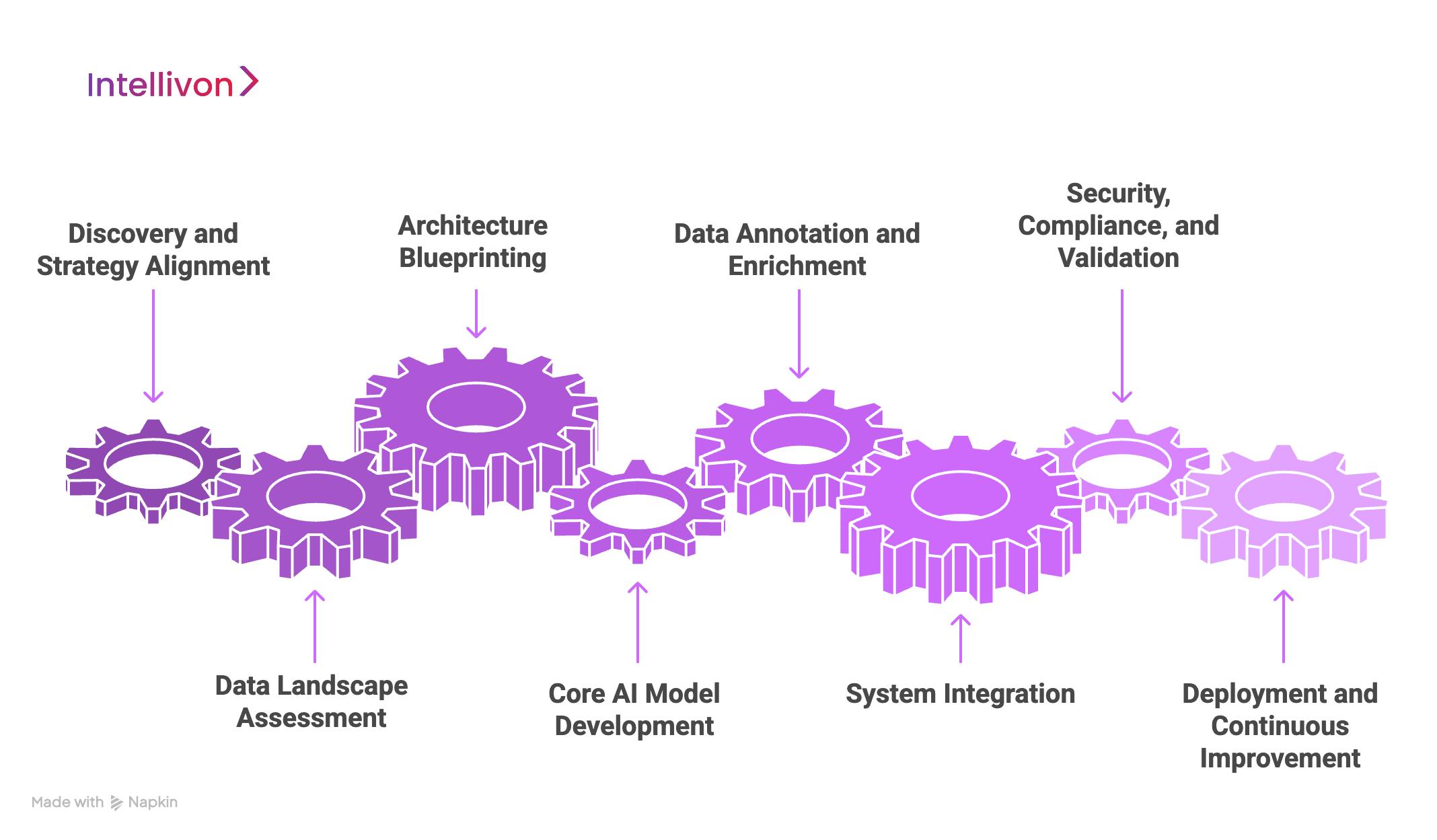
1. Discovery and Strategy Alignment
We begin by understanding your R&D goals, compliance requirements, and existing workflows. This phase involves mapping regulatory obligations such as FDA 21 CFR Part 11, HIPAA, and the EU AI Act, alongside defining ROI expectations. By aligning business priorities with scientific objectives early, we create a clear roadmap that guides the entire build.
2. Data Landscape Assessment
The quality of data determines the accuracy of discovery. Our teams review available molecular, genomic, and clinical datasets, assess gaps, and design governance frameworks. We clean and normalize unstructured inputs to create consistent, audit-ready data pipelines that feed directly into model development.
3. Architecture Blueprinting
Next, we design a layered architecture covering data ingestion, AI pipelines, compliance modules, and visualization dashboards. This blueprint ensures scalability and modularity, allowing enterprises to add new therapeutic areas or integrations without disrupting the system. Every design decision is made with long-term expansion in mind.
4. Core AI Model Development
We develop and validate generative chemistry engines, toxicity prediction models, and trial optimization algorithms. Our process combines advanced machine learning with expert clinical input, ensuring predictions are not only mathematically sound but also biologically and clinically relevant. This is where science and AI converge.
5. Data Annotation and Enrichment
When datasets require labeling, we combine semi-automated techniques with domain-expert validation. Annotations are reviewed against governance standards to ensure accuracy and reproducibility. This step strengthens model performance and creates a solid foundation for regulatory submissions.
6. System Integration
Enterprises cannot afford silos, so integration is prioritized. We connect the platform to existing systems like LIMS, EHRs, and lab databases through APIs and secure connectors. This integration ensures smooth workflows, enabling researchers to leverage AI without leaving familiar environments.
7. Security, Compliance, and Validation
From day one, our builds embed compliance with FDA, HIPAA, GDPR, and the EU AI Act. Security is layered in through encryption, continuous monitoring, DevSecOps practices, and explainability dashboards. Before deployment, we run validation checks, bias audits, and stress tests across multiple scenarios.
8. Deployment and Continuous Improvement
Finally, we roll out the system in a controlled setting, often beginning with one therapeutic area. Dashboards track accuracy, cost-per-compound, and trial predictions. Feedback loops enable continuous retraining, ensuring the platform evolves as data grows and scientific goals expand.
This structured approach ensures enterprises build a scalable, compliant, and ROI-driven platform that evolves with their pipeline.
Conclusion
The rising cost of drug development and the pressure to deliver therapies faster have made AI drug discovery systems a strategic necessity. These platforms reduce timelines, improve trial success, and lower R&D expenses, transforming how enterprises approach pharmaceutical innovation.
By embedding compliance, security, and scientific trust, organizations can build systems that scale responsibly while protecting long-term ROI. The question is no longer whether to adopt AI, but how quickly it can reshape enterprise pipelines.
Build an AI Drug Discovery System With Intellivon
At Intellivon, we design enterprise-grade AI drug discovery systems that are secure, compliant, and built to meet the demands of global pharmaceutical R&D. Our solutions deliver measurable ROI by accelerating discovery timelines, reducing trial failures, and aligning with regulatory frameworks to support enterprise-scale adoption.
Why Partner With Intellivon?
- Compliance-Embedded Architecture: Every system is designed with FDA 21 CFR Part 11, HIPAA, GDPR, and EU AI Act alignment, ensuring regulator trust and scientific credibility.
- Regulator-Ready Workflows: Audit trails, explainability dashboards, and scientist-in-the-loop models speed up approvals while lowering compliance overhead.
- Enterprise System Integrations: Seamless connectivity with LIMS, EHRs, and lab databases ensures smooth AI adoption without disrupting existing R&D workflows.
- Accelerated Discovery Cycles: Generative chemistry engines and predictive models shorten discovery timelines by up to 70%, cutting costs while improving success rates.
- Security That Safeguards IP: End-to-end encryption, anonymization, and continuous monitoring protect sensitive biomedical data and proprietary compound libraries.
- Proven Domain Expertise: With deep experience delivering enterprise AI across healthcare and pharma, we bring frameworks tested in the real world, reducing risk and accelerating ROI.
Book a discovery call with Intellivon today and see how we can design an AI drug discovery system that strengthens compliance, accelerates discovery, and transforms pharmaceutical R&D into a true growth driver for your enterprise.
FAQs
Q1. How much does it cost to build an AI drug discovery system?
A1. The cost to build an AI drug discovery system typically ranges between $100,000 and $300,000 for a lean, enterprise-ready deployment. Final costs depend on architecture complexity, data requirements, integration needs, and compliance frameworks.
Q2. What factors influence the cost of AI in drug discovery?
A2. Key cost drivers include infrastructure design, data acquisition, AI model development, system integration, compliance, and specialized talent. Enterprises that prioritize compliance-by-design and modular builds often reduce long-term costs and speed up adoption.
Q3. How can AI reduce the cost of drug discovery?
A3. AI platforms compress discovery timelines by up to 70%, reduce wet-lab experiments by nearly 85%, and improve clinical trial efficiency. By eliminating weak candidates earlier, enterprises avoid expensive late-stage failures and protect overall R&D budgets.
Q4. What are the main challenges in building AI drug discovery systems?
A4. Enterprises face fragmented data, high computational demands, complex regulatory obligations, and talent shortages. Without addressing these challenges upfront, projects risk overruns. Partnering with experts helps ensure systems are scalable, compliant, and ROI-driven.
Q5. What ROI can enterprises expect from AI drug discovery systems?
A5. ROI comes from faster “first-in-human” milestones, lower clinical trial costs, and increased candidate success rates. Companies adopting AI systems are already reporting 20–30% improvements in R&D efficiency and stronger long-term pipeline resilience.