Key Takeaways:
-
Healthcare ESG platforms collect data from facilities, utilities, ERP, HRIS, procurement, and supplier systems.
-
GRI, SASB, TCFD, SEC, CMS, and Joint Commission framework mapping are core reporting requirements.
-
HIPAA controls, audit workflows, AI-assisted validation, and multi-site dashboards ensure governed data infrastructure.
-
Custom healthcare ESG platforms cost $70,000 to $300,000 depending on integrations and framework coverage.
-
How Intellivon builds ESG platforms with KPI engines, PHI-safe reporting, and executive disclosure workflows.
Building ESG compliance software for healthcare enterprises follows a specific sequence. You design the data architecture around your regulatory frameworks first, integrate your EHR and operational systems into that layer, build the reporting engine on top, and then add AI to automate disclosure. That sequence is the foundation, and everything else in the build depends on getting it right.
Here is why that sequence matters for your organization. When teams wire in compliance frameworks after the build, the data feeding into reports is unverified at its source. Because of that single ordering mistake, reports look complete but cannot survive a real audit, and the trust of investors and regulators becomes very difficult to recover. McKinsey found that executing ESG plans effectively can affect operating profits by as much as 60%, but that outcome depends entirely on the quality of the data those plans are built on.
Intellivon has spent over a decade building compliance-grade enterprise platforms for healthcare, always following this architecture-first sequence. In this blog, we walk through each stage: data architecture, system integration, reporting engine, AI layer, and real cost figures from $70,000 to $300,000. By the end, you will have a clear blueprint on why you need this platform and how we can build it for you, so you can extract maximum ROI within a short period of time.

What ESG Means And Why Healthcare Enterprises Should Care
ESG stands for Environmental, Social, and Governance. For the purpose of building compliance software, these are not value categories. They are the three data domains your platform needs to collect, normalize, and report against. At the same time, healthcare enterprises face reporting obligations across all three simultaneously. Investors need verified ESG output before they commit capital.
Regulators expect disclosure-ready data on emissions, workforce equity, and governance controls. Therefore, the platform you are building needs to pull from every operational system your organization runs, map that data to recognized frameworks, and produce a single auditable disclosure picture. That is what each ESG dimension demands from a technical standpoint.
1. Environmental
The Environmental dimension covers your organization’s impact on the planet. For a hospital network, that means Scope 1 emissions from owned facilities, Scope 2 from purchased energy, and Scope 3 from your supply chain, pharmaceuticals, and patient transportation.
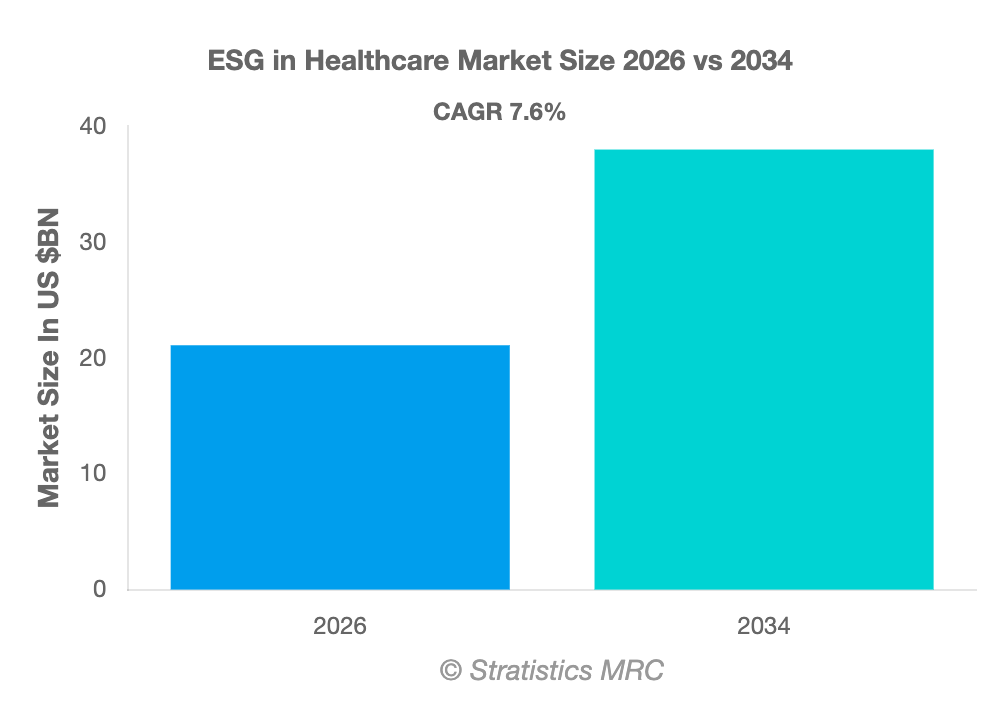
Health Care Without Harm found that the global healthcare sector accounts for 4.4% of global net emissions, equal to the output of 514 coal-fired power plants annually. Your ESG software needs to collect energy, waste, and water data from facility management systems and map it directly to GHG Protocol standards.
2. Social
The Social dimension tracks how your organization manages its people and the communities it serves. For healthcare enterprises, that means employee safety records, workforce diversity data, nurse burnout indicators, pay equity ratios, and patient access metrics.
These data points live across HR platforms, EHR systems, and community health databases. Your compliance software needs to aggregate them into a single reporting layer and map them to SASB healthcare standards and GRI social disclosure requirements, without manual consolidation at each reporting cycle.
3. Governance
Governance covers how your organization is directed and held accountable. That means board diversity, cybersecurity incident records, ethics reporting, data privacy controls, and executive compensation transparency.
For healthcare, governance failure carries a direct financial cost. According to IBM’s 2024 Cost of a Data Breach Report, the average healthcare data breach cost $9.77 million, making it the most expensive industry for breaches for 14 consecutive years.
Your ESG platform needs to surface governance data in a format that gives investors and regulators a verified, real-time view of your risk posture.
ESG is the framework your software is built to serve. Hence, get the data architecture right across all three dimensions, and the disclosure output takes care of itself.
Are ESG Reporting Requirements Mandatory?
Yes, environmental, social, and governance (ESG) reporting is increasingly mandatory for many healthcare organizations, depending on their size, location, and corporate structure. Government regulations, investor pressure, and supply chain rules mean that enterprise health systems can no longer treat sustainability tracking as an optional project.
Consequently, building tailored software is the most reliable way to handle these shifting legal and commercial obligations without disrupting daily clinical care.
1. EU CSRD Makes Sustainability Reporting Mandatory For In-Scope Companies
The European Union’s Corporate Sustainability Reporting Directive (CSRD) enforces strict transparency rules that apply directly to large healthcare organizations operating within Europe.
Therefore, qualifying companies must publicly disclose how their operations affect both local communities and the global environment.
- Broad Scope: The rule affects any healthcare enterprise with significant European subsidiaries or listings on EU stock exchanges.
- Data Standards: Organizations must align their disclosures with the comprehensive European Sustainability Reporting Standards (ESRS).
- Double Materiality: Software must track how climate change impacts the business, alongside how the business impacts the planet.
To help organizations navigate these complex international rules, Intellivon builds compliance engines that automatically map multi-facility hospital data to global frameworks. This ensures your data pipelines remain audit-ready. For a deeper breakdown of system architecture, see our guide on Top Upcoming Trends For AI In 2026.
2. California Climate Laws Create U.S. Reporting Pressure
United States legislation is rapidly advancing at the state level, which creates massive financial compliance pressure for large healthcare organizations.
Specifically, California laws SB 253 and SB 261 require extensive climate risk disclosures from any major company doing business in the state.
- SB 253 Requirement: Healthcare enterprises making over $1 billion annually must disclose all Scope 1, 2, and 3 greenhouse gas emissions.
- SB 261 Requirement: Companies making over $500 million annually must submit formal reports detailing their climate-related financial risks.
- Supply Chain Impact: Even mid-sized hospital networks face pressure because large pharmaceutical and medtech suppliers pass down tracking requirements.
3. SEC Climate Disclosure Is Uncertain, But Not Irrelevant
Federal oversight from the Securities and Exchange Commission (SEC) remains unpredictable, but public healthcare enterprises cannot afford to stop their data collection.
Although regulatory proposals shift frequently at the federal level, institutional investors still demand structured carbon accounting software and healthcare data before issuing capital.
- Investor Demands: Major financial backers require clear, climate-related data before funding new hospital wings or clinical research facilities.
- State-Level Safety: Relying solely on federal rules is risky because individual state laws fill the regulatory gaps.
- Data Readiness: Organizations that pause their data collection struggle to rebuild the historical records required for future compliance audits.
4. Healthcare Has ESG-Adjacent Obligations Even When They Are Not Called ESG
Many health systems already collect massive amounts of data for traditional medical regulations that fit directly into modern ESG reporting structures.
For instance, federal healthcare programs closely monitor social metrics, patient safety records, and local community investments.
- Health Equity Focus: Modern programs track how well hospitals address the social determinants of health metrics in underserved neighborhoods.
- Data Privacy Rules: Protecting patient information under standard healthcare data privacy governance directly fulfills the “G” or governance pillar.
- Clinical Governance Software: Systems that track clinical trial diversity compliance also provide necessary data for broader enterprise equity reports.
5. Voluntary Standards Still Influence Procurement And Reputation
Even when a sustainability framework is technically voluntary, it still operates as a commercial necessity for competitive health systems. Major groups like the Joint Commission offer sustainability recognitions that directly influence public trust and patient choices.
- Framework Alignment: Leading institutions structure their public impact statements around the global GRI Standards healthcare sector guidelines.
- Procurement Advantages: Suppliers using automated ESG data collection healthcare tools routinely win major contracts over slower competitors.
- Market Position: Showcasing a clear healthcare carbon neutrality roadmap helps attract top-tier medical talent and corporate partnerships.
ESG compliance is not dictated by a single law, but rather by a complex web of international mandates, state regulations, and commercial expectations. Healthcare systems require flexible software architectures that centralize data from across multiple facilities while adjusting automatically to new rules.
What Happens If Healthcare Enterprises Ignore ESG Reporting?
Ignoring ESG reporting can create immediate regulatory, financial, and operational risks across your entire facility network. Specifically, failing to establish clear tracking pipelines results in missed legal disclosure deadlines, loss of capital access, and sudden disqualification from enterprise vendor contracts.
Consequently, healthcare enterprises must treat sustainability reporting data infrastructure as a core security and operational requirement rather than a secondary PR initiative.
1. Regulatory Exposure Increases
If a healthcare enterprise falls under active mandatory disclosure laws, failing to report accurate ESG metrics invites direct enforcement actions and heavy financial penalties. This is because regulators increasingly audit climate, labor, and data governance claims with the same intensity as financial bookkeeping.
- Enforcement Risk: Government bodies penalize companies that submit incomplete data or miss deadlines for state-level and international carbon disclosures.
- Audit Trailing: Security frameworks require an immutable record showing exactly where each piece of facility and emissions data originated.
- Workflow Automation: Compliance teams require centralized calendars and structured workflows to avoid administrative bottlenecks before formal reporting deadlines.
2. Investor And Lender Confidence Can Drop
Institutional investors and commercial lenders use verified sustainability metrics to evaluate your enterprise’s operational efficiency and exposure to climate risks. Therefore, a lack of clear environmental data signaling can cause backers to view your health system as an unmitigated risk profile.
- Higher Borrowing Costs: Banks restrict access to favorable interest rates for hospital networks that lack a clear healthcare carbon neutrality roadmap.
- Capital Flight: Private equity and public investors actively divest from healthcare firms that fail to align with global GRI Standards healthcare sector rules.
- Credit Impact: Major rating agencies integrate environmental and climate risk management evaluations directly into corporate creditworthiness scores.
For a deeper breakdown of tracking data securely across extensive enterprise facilities, see our guide on How Much Does 50+ Hospital EHR Integration Platform Cost?.
3. Procurement Opportunities Can Be Lost
Large healthcare clients, corporate employers, and government buyers now require complete transparency regarding vendor labor practices, carbon accounting software healthcare metrics, and data privacy protocols.
Consequently, a healthcare supplier or SaaS vendor without these verified metrics will be filtered out during basic procurement due diligence.
- Scope 3 Exclusion: Enterprise hospital chains routinely drop suppliers who cannot provide clean Scope 3 emissions data to help complete their own corporate records.
- B2B Contract Loss: Pharmaceutical and medtech firms lose primary vendor status if they cannot submit verified community health impact measurement data.
- RCM and SaaS Friction: Technology vendors failing to prove compliance with zero-trust ESG platform healthcare frameworks are rejected during routine vendor assessments.
4. Greenwashing Risk Increases
Making public sustainability announcements without verifiable data infrastructure behind them creates immediate greenwashing vulnerabilities and corporate liability.
If an organization cannot prove its environmental or social claims during an external audit, it faces public trust damage and regulatory fraud investigations.
- Public Scrutiny: Activists, media outlets, and consumer advocacy groups regularly audit public healthcare statements against actual operational outcomes.
- Legal Action: Shareholders sue enterprises that publish unverified ESG metrics that mislead the market regarding structural risk management.
- System of Record: Platforms require automated ESG data collection healthcare pipelines to back up every public claim with raw, verifiable source documents.
5. Board Oversight Becomes Weaker
Hospital boards and executive leadership cannot govern corporate risk profiles effectively if their operational data remains scattered across disjointed spreadsheets and departments.
Without a central data management platform, executive leadership remains blind to hidden compliance failures within localized facilities.
- Data Silos: Facilities, HR, and legal teams store vital compliance evidence in isolated systems, blocking multi-site ESG data aggregation.
- Liability Gaps: Board members face personal accountability issues when corporate governance failures occur due to a complete lack of centralized data visibility.
- Resource Misallocation: Leadership cannot optimize sustainability investments without real-time ESG dashboard reports showing which facilities are underperforming.
Ignoring ESG reporting introduces systemic risks that threaten your enterprise’s procurement pipelines, capital access, and regulatory safety.
Transitioning away from manually managed documents to an automated system of record is the only way to safeguard your market share and maintain defensive board oversight.
Healthcare ESG Reporting Requirements The Platform Must Support
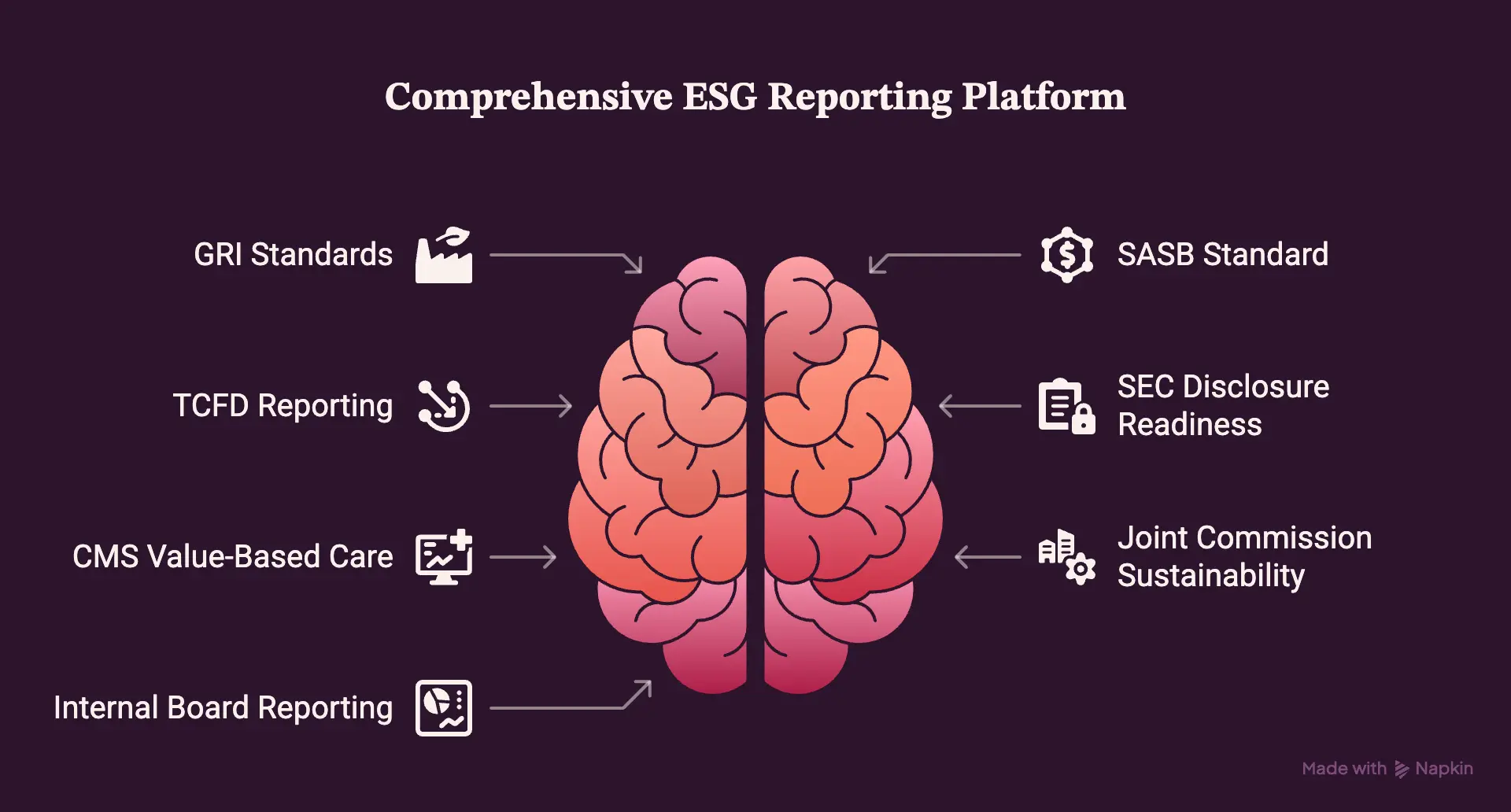
A healthcare ESG platform must support diverse global frameworks, internal compliance evidence, and medical board risk tracking within a single, unified database. Instead of hard-coding the software to one specific rule, the underlying architecture should map each operational metric exactly once.
Consequently, the enterprise can reuse that validated data point across multiple frameworks like GRI, SASB, and TCFD without duplicating administrative workloads.
1. GRI, SASB, And TCFD Mapping
The core system architecture requires an isolated framework mapping layer that translates raw operational data into distinct disclosure formats automatically. This structural flexibility ensures that a single data point, such as annual electricity consumption, populates both environmental and financial risk reports simultaneously.
- GRI Standards Healthcare Sector: Tracks public, multi-site impacts on local ecosystems, labor forces, and regional public health infrastructure.
- SASB Healthcare Standard: Aligns specific sustainability disclosures with industry-specific, financially material factors that institutional investors monitor.
- TCFD Healthcare Reporting: Maps core corporate governance, climate strategy, risk management protocols, and reduction targets to financial statements.
2. SEC ESG Disclosure Readiness
Although federal regulatory environments face sudden policy shifts, public and investor-backed health groups still require a structured, traceable climate record. Therefore, the data pipeline must maintain historical data lineage for emissions data, board oversight activities, and formal executive reviews.
- Traceable Lineage: Every public disclosure must link back to an immutable, time-stamped calculation method and its original source files.
- Materiality Matrix Healthcare: The platform lets risk officers flag climate-related financial vulnerabilities that impact multi-site hospital assets directly.
- Audit Defensibility: A secure repository protects the enterprise against retroactive regulatory rule updates by preserving year-over-year factor changes.
For organizations designing secure, high-throughput enterprise systems to manage complex data compliance across distributed infrastructure, see our specialized analysis on AI Transaction Monitoring System Cost.
3. CMS Value-Based Care ESG Alignment
Modern enterprise healthcare sustainability compliance software build projects must connect environmental metrics directly with regional clinical quality and health equity outcomes. This integration ensures that your social tracking data aligns perfectly with federal value-based care reimbursement goals.
- SDOH Data Integration: Software maps health disparities data tracking alongside localized environmental factors like regional air quality.
- Patient Equity Reporting Software: Captures clinical trial diversity compliance and language access metrics to support patient equity reports.
- Community Health Impact Measurement: Tracks capital investments in local health infrastructure to prove long-term commitments to population health.
4. Joint Commission Sustainability Readiness
Hospital networks pursuing formal sustainability recognition require an engineered system of record that aggregates decarbonization evidence across dozens of physical facilities. This operational evidence must remain organized by specific reporting cycles to ensure smooth, recurring accreditation reviews.
- Multi-Site ESG Data Aggregation: Automatically pools medical waste management compliance software metrics from separate regional clinical centers.
- Performance Tracking: Monitors real-time hospital carbon footprint tracking to verify that facilities actively meet national carbon reduction goals.
- Leadership Oversight Documentation: Records formal administrative approvals, policy changes, and sustainability workshop completions to prove active clinical governance.
5. Internal Board And Investor Reporting
Corporate board members and institutional lenders need access to real-time ESG dashboard views that emphasize material risks over raw, unorganized metrics. Consequently, the user interface must convert complex infrastructure data into clean, executive-ready risk signaling.
- Target Progress Bars: Displays clear visual indicators showing how close the health system is to its stated net-zero milestones.
- Unresolved Data Gaps: Highlights missing utility invoices, unverified supplier files, or late facility submittals before formal audit cycles.
- Approval Workflows: Enforces multi-step digital sign-offs for compliance officers before data exports are delivered to external investors.
An enterprise ESG platform solves framework anxiety by separating raw data collection from final reporting templates. By mapping metrics to a centralized, flexible schema, your health system can easily comply with shifting CMS, SEC, and Joint Commission standards without rewriting core code.
Healthcare ESG Data Model And Materiality
The ESG data model defines which metrics the platform tracks, where they originate, how they are calculated, and which regulatory reports use them. For healthcare enterprises, this model must merge environmental operations, social impact, workforce safety, and governance controls into a single, centralized database structure.
Consequently, building a rigorous data foundation ensures your platform provides verifiable business evidence rather than just a collection of disconnected spreadsheets.
1. Healthcare ESG Materiality Assessment
The platform must prioritize the specific environmental and social issues that impact healthcare operations, clinical safety, and investor decisions.
By embedding a digital healthcare ESG materiality assessment directly into the software, compliance teams can dynamically rank risk factors based on their financial and operational impact.
- Operational Resilience: Tracks energy grid dependency, backup generator readiness, and facility vulnerabilities during extreme weather events.
- Resource Management: Monitors localized water usage, regulated medical waste volumes, and pharmaceutical supply chain environmental compliance.
- Social Responsibility: Ranks community health impact measurement, patient access, and clinical workforce safety parameters across all sites.
2. ESG ESG KPI Dictionary
To prevent separate facility teams from calculating the same sustainability metric differently, the software requires a centralized ESG KPI tracking health systems dictionary.
This structural dictionary ensures every single data point follows a unified, standardized formula before it reaches executive dashboards.
- Data Attributes: Every metric requires a strict definition, assigned corporate owner, specific unit, and designated source system.
- Data Quality Scoring: The system automatically calculates an ESG data quality scoring metric based on whether the input is raw, estimated, or audited.
- Approval Lineage: Tracks the multi-step review path a number takes from a local facility manager to the regional compliance officer.
3. Environmental Metrics
The environmental database schema must ingest structural data from utility bills, waste haulers, procurement systems, and fleet telematics across dozens of medical centers.
Additionally, hospitals require specific normalization metrics to track true operational efficiency accurately over time.
- Emissions Pipelines: Automatically calculates Scope 1, 2, and 3 emissions reporting health systems data using localized EPA and GHG Protocol emission factors.
- Specialized Medical Gases: Tracks highly potent fugitive emissions from anesthetic gases, HVAC refrigerants, and localized sterilization systems.
- Normalization Rules: Compiles emissions intensity metrics mapped to total facility square footage, annual occupied beds, or specific clinical service lines.
4. Social Metrics
Social metrics in healthcare require careful software engineering to aggregate community health and workforce data without exposing sensitive personal information.
Therefore, the data layer must ingest de-identified, pre-aggregated summaries from human resources, clinical trial management, and population health software.
- Health Equity Metrics: Integrates health disparities data tracking alongside regional social determinants of health metrics to monitor care accessibility.
- Workforce Demographics: Automates healthcare workforce diversity reporting, employee retention rates, and workplace injury tracking across clinical departments.
- Research Metrics: Ingests clinical trial diversity compliance indicators directly from academic trial management platforms to verify inclusive research practices.
5. Governance Metrics
The governance layer provides the formal compliance evidence that defends your organization against legal liability and external stakeholder skepticism.
Instead of tracking corporate policies via email, the platform automates the collection of structural governance actions and data protection audits.
- Board Transparency: Records formal healthcare board transparency reporting schedules, ESG risk committee reviews, and major policy approval dates.
- Ethics and Training: Logs completion rates for ethics and anti-corruption compliance healthcare training modules across all active medical staff.
- Data Protection: Ingests security infrastructure indicators from your core healthcare data privacy governance engines to prove continuous compliance.
A robust healthcare ESG platform is entirely dependent on the strength of its underlying data model and KPI dictionary. Without a standardized, materiality-driven schema, multi-site data aggregation falls apart under the pressure of external regulatory audits.
Core Architecture Of A Healthcare ESG Compliance Platform
An enterprise-grade healthcare ESG compliance platform requires a decoupled, seven-layer software architecture to transform fragmented operational data into an audit-ready system of record. Because health systems handle massive, multi-site operations, the platform cannot rely on single-point data collection.
Instead, it must systematically process infrastructure, clinical, and administrative metrics through dedicated functional layers. Consequently, this engineering approach ensures the entire application remains secure, scalable, and fully prepared for external regulatory scrutiny.
1. Architectural Overview: System Components and Functions
The table below outlines how the seven core architectural layers interact to transform raw operational inputs into defensible compliance evidence.
| Architectural Layer | Core Responsibility | Primary Healthcare Data Sources |
| 1. Data Ingestion | Extracts, validates, and standardizes multi-format data streams. | Smart meters, waste manifests, ERP, HRIS, vendor APIs. |
| 2. Entity Hierarchy | Maps physical facilities, cost centers, and ownership structures. | Active Directory, clinical location registries, real estate databases. |
| 3. Calculation Engine | Applies conversion factors and formulas to derive true emissions and KPIs. | EPA GHG emission factor tables, custom engineering constants. |
| 4. Framework Mapping | Directs a single validated metric into multiple compliance report schemas. | GRI templates, SASB healthcare indexes, SEC disclosure rules. |
| 5. AI Validation | Detects data anomalies, scans source documents, and surfaces data gaps. | Historical energy baselines, unbilled utility invoices. |
| 6. Workflow Automation | Controls task routing, data approvals, and sign-off calendars. | Compliance team task assignments, internal auditor notifications. |
| 7. Governance Dashboard | Renders real-time risk indicators, executive KPIs, and audit trails. | Enterprise leadership views, multi-site ESG data dashboards. |
2. Layer 1 — ESG Data Ingestion
The ingestion layer must ingest data from diverse systems including utility providers, medical waste haulers, enterprise resource planning (ERP) systems, and supplier portals. To handle this variety, it needs to support automated REST APIs, secure batch SFTP file transfers, and manual upload interfaces with built-in format checks.
- API Connectors: Automatically retrieves monthly energy consumption directly from smart grid utility platforms and commercial supplier portals.
- Validation Queues: Places unverified files or corrupt data payloads into an administrative isolation queue before they can affect the core database.
- Supplier Integrations: Collects Scope 3 pharmaceutical supply chain environmental compliance details using standardized vendor input portals.
3. Layer 2 — Master Data And Entity Hierarchy
Large healthcare systems operate complex corporate structures that include acute care hospitals, regional outpatient centers, and leased administrative office spaces. Therefore, the master data layer must map every data source to a standardized, multi-tenant corporate hierarchy.
- Entity Mapping: Standardizes disparate facility names, internal cost centers, and departmental codes into a single source of truth.
- Asset Categorization: Groups physical properties by square footage, localized climate zones, and facility types to enable accurate cross-site benchmarking.
- Ownership Boundaries: Tracks whether greenhouse gas emissions count as operational or financial control categories based on commercial lease structures.
4. Layer 3 — KPI Calculation Engine
The calculation engine applies formulas, conversion factors, and warming potentials to raw data inputs to generate standardized compliance metrics. Crucially, the system must maintain historical factor versions so that past calculations can be audited or restated when regulatory baselines change.
- Emission Computations: Translates therms of natural gas and kilowatt-hours of electricity into metric tons of carbon dioxide equivalent ($MTCO_2e$).
- Medical Waste Normalization: Computes medical waste management compliance software volumes per occupied bed day across active clinical wards.
- Audit-Ready Lineage: Binds every calculated metric directly to its source files, conversion factor versions, and original timestamp records.
For organizations designing secure, high-throughput enterprise systems to manage complex data compliance across distributed infrastructure, see our specialized analysis on AI Transaction Monitoring System Cost.
Layer 4 — Framework Mapping Engine
A framework mapping layer isolates raw operational metrics from final reporting templates, allowing the platform to support changing disclosure rules seamlessly. This approach eliminates the need to run separate data collection pipelines for different regulatory bodies.
- Cross-Framework Mapping: Routes a single metric, like workforce diversity, to both GRI and SASB healthcare indexes simultaneously.
- Dynamic Customization: Allows compliance officers to build bespoke internal report templates without modifying the database schema.
- Regulatory Updates: Updates final report layouts automatically as international sustainability bodies release new disclosure requirements.
Layer 5 — AI Validation Layer
The AI validation layer serves as an automated internal auditor, scanning data streams for human input errors and anomalies before reports are finalized. It processes unstructured data using explainable AI for ESG compliance models, ensuring that every automated insight can be manually verified.
- Anomaly Detection: Flags extreme fluctuations in monthly utility data that could point to billing errors or equipment malfunctions.
- Document Parsing: Extracts data points from unstructured PDF utility bills and waste manifests using automated document processing.
- Trend Analysis: Uses predictive ESG analytics and models to forecast year-end emission levels against corporate net-zero targets.
Layer 6 — Workflow Automation Layer
Managing compliance across a multi-site health system requires strict workflow automation to ensure deadlines are met, and data is reviewed by the right teams. This layer guides data submissions through a series of review and approval steps before they reach public reports.
- Task Routing: Automatically assigns data validation tasks to facility managers when monthly utility invoices are missing.
- Approval Controls: Enforces multi-step digital sign-offs across sustainability, legal, and executive teams for high-priority disclosures.
- Audit Logging: Records every text correction, comment, and approval action inside a permanent ESG audit trail healthcare system.
Layer 7 — Governance Dashboard
The presentation layer turns raw compliance data into actionable insights for chief compliance officers, sustainability directors, and board members. It uses role-based access control to display appropriate levels of detail, from facility-level metrics to high-level executive summaries.
- Executive Signals: Displays real-time ESG KPI tracking and health systems indicators that highlight compliance risks and upcoming filing deadlines.
- Performance Comparison: Allows corporate leadership to evaluate environmental efficiency metrics across different regional hospital networks.
- Evidence Repositories: Provides external financial auditors with direct, read-only access to compiled source documents and calculation histories.
A modular, seven-layer software architecture prevents your compliance platform from becoming an unmanageable collection of data silos. By separating data ingestion, processing, and visualization, your enterprise can maintain a reliable system of record that adapts as global reporting rules change.
Integrations Required To Build ESG Compliance Software For Hospitals
To build ESG compliance software for hospitals, your platform must connect operational, financial, workforce, and supplier data streams into a single system of record. Because large hospital networks operate hundreds of disconnected software applications, developers must prioritize the integrations that feed the highest-value reporting frameworks first.
Consequently, the initial release should connect directly to utility grids, waste management manifests, and enterprise resource planning systems to automate core emissions calculations.
1. Facilities And Utility Integrations
The facilities integration layer connects directly to automated building management systems (BMS), smart electricity grids, and commercial utility billing portals.
Gathering this data automatically allows the application to track true consumption patterns across all inpatient and outpatient centers without relying on slow manual entry.
- Continuous Data Feeds: Ingests live consumption metrics for electricity, natural gas, municipal water, and district steam across all physical locations.
- Fugitive Gas Logging: Registers maintenance records for HVAC refrigerants, chilling equipment, and clinical anesthetic gases like nitrous oxide.
- Performance Benchmarking: Feeds raw energy data directly into hospital carbon footprint tracking models to measure multi-site building efficiency over time.
2. Medical Waste And Environmental Vendor Integrations
A specialized environmental integration layer establishes automated data pipelines between your health system and third-party medical waste management providers.
Processing these manifests digitally ensures that regulated biocontaminated waste and chemical disposal volumes remain completely auditable.
- Manifest Data Ingestion: Scans digital receipts from waste haulers to log exact tonnage for regulated medical waste, sharps, and hazardous chemicals.
- Pharmaceutical Tracking: Monitors the lifecycle of expired or discarded pharmaceuticals to verify adherence to regional environmental safety regulations.
- Recycling Metrics: Collects processing volumes from recycling partners to prove that your healthcare sustainability compliance software build effectively meets landfill diversion targets.
3. ERP, Finance, And Procurement Integrations
Connecting to the central ERP and finance engine allows the platform to analyze corporate expenditures and calculate complex upstream supply chain impacts.
This integration is critical because tracking supplier sustainability and vendor carbon footprints is often the most complex part of an enterprise build.
- Spend-Based Calculations: Uses financial purchase summaries to calculate Scope 3 emissions reporting health systems data for raw medical supplies.
- Supply Chain Assessment: Aggregates vendor risk profiles to monitor pharmaceutical supply chain environmental compliance across international manufacturing sites.
- Green Bond Reporting: Tracks the allocation of specialized capital investments to ensure full compliance with healthcare green bond compliance reporting covenants.
For a deeper breakdown of healthcare system integration and connecting separate operational layers, see our guide on the Cost To Develop a Healthcare Data Interoperability Platform.
4. HRIS And Workforce Integrations
Workforce data integration hooks directly into human resource information systems (HRIS) to monitor corporate diversity, employee training, and staff safety.
Because human resources data includes sensitive personal files, this integration layer requires strict field-level encryption and access restrictions.
- Workforce Demographics: Automates the collection of multi-facility data to populate healthcare workforce diversity reporting templates.
- Safety Tracking: Logs clinical workplace injury incidences, nursing retention rates, and occupational health metrics from across the network.
- Training Governance: Monitors completion rates for internal compliance courses, ethics training, and patient-centered cultural competency programs.
5. EHR-Adjacent And Population Health Integrations
EHR-adjacent integrations use only approved, pre-aggregated, and de-identified data packages to track social impact metrics without exposing protected health information (PHI).
This architecture ensures that your platform maps regional health metrics while remaining fully compliant with national data privacy laws.
- SDOH Integration: Imports regional socioeconomic indicators to power your health systems’ internal SDOH data integration mapping modules.
- Equity Dashboards: Pulls high-level demographic data to assist patient equity reporting software in tracking local health disparities data tracking.
- Research Visibility: Aggregates clinical trial diversity compliance indicators from research databases to monitor inclusive enrollment practices across facilities.
6. Supplier Portal And ESG Evidence Uploads
A secure, multi-tenant vendor portal allows your supply chain partners to submit their own sustainability evidence, emissions data, and ethical certifications directly.
Providing a self-service upload portal removes the need for compliance teams to gather evidence via endless manual email chains.
- Automated Attestations: Lets suppliers upload carbon accounting software healthcare data directly into your central verification queue.
- Certificate Audits: Archives external ISO certificates, minority-owned business declarations, and child labor prohibition statements.
- Data Quality Checks: Assigns a verified rating to vendor inputs, helping the system calculate an accurate overall ESG data quality scoring matrix.
Building an effective hospital ESG platform requires connecting data from facilities, procurement, human resources, and vendor networks into a single architecture. Automating these data connections reduces manual work and ensures your health system can back up public sustainability statements with clear operational evidence.
AI-Powered ESG Compliance Platform Healthcare Use Cases
An AI-powered ESG compliance platform healthcare deployment enhances data verification, document parsing, and automated anomaly detection across your hospital infrastructure. Rather than replacing human risk officers, deep learning models eliminate repetitive manual tabulation, surface hidden reporting gaps early, and accelerate cross-framework data prep.
Consequently, integrating artificial intelligence into your sustainability workflow turns unorganized administrative files into highly defensible corporate evidence backed by full human oversight.
1. Automated ESG Data Collection
Machine learning models streamline data gathering by automatically pulling critical values from complex, unstructured operational documents across separate hospital facilities. This pipeline eliminates the administrative lag that usually occurs when sustainability teams try to collect data manually from various departments.
- Document Ingestion: Scans PDF utility bills, waste haulers’ manifests, and transport receipts to isolate raw usage and tonnage metrics.
- Supplier Scraping: Processes raw vendor certificates to populate your central pharmaceutical supply chain environmental compliance directory automatically.
- Speed Realization: Moves data extraction timelines from months to minutes, allowing for year-round compliance tracking instead of rushed end-of-year collection.
2. ESG Data Quality Scoring
Autonomous monitoring algorithms act as an internal quality control layer, reviewing incoming facility data streams for input errors, duplicates, and missing metrics. The system flags unusual spikes or drops in consumption against historical facility baselines before the data reaches formal executive views.
- Anomaly Triggers: Automatically alerts the compliance team if a specific medical center shows a sudden, uncharacteristic 40% drop in energy use.
- Metric Validation: Evaluates data inputs against historical operational trends, regional weather variables, and current building occupancy rates.
- Data Quality Scoring: Computes an automated ESG data quality scoring value for each reporting node to highlight which facilities need manual data cleanup.
3. Evidence Classification
Natural language processing models catalog uploaded documentation by structural taxonomy terms, including metric definitions, facility codes, and reporting cycles. This processing creates an organized, searchable evidence repository that significantly simplifies third-party accounting reviews.
- Automatic Tagging: Labels incoming receipts by specific environmental frameworks, such as the global GRI Standards healthcare sector guidelines.
- Audit Integration: Links calculated Scope 1, 2, and 3 emissions reporting health systems data points directly to original source invoices within the dashboard.
- Lineage Continuity: Organizes historical evidence trails across complex, multi-site hospital networks to ensure compliance data remains audit-ready.
For a deeper look at building secure internal oversight frameworks that manage automated data pipelines safely, see our guide on How to Build a Robust AI Governance Framework for Enterprises.
4. ESG Disclosure Drafting
Large language models (LLMs) help compliance teams by drafting narrative sections of sustainability reports based on verified data and approved internal evidence. These systems use strict validation parameters to ensure that all generated text matches actual operational metrics perfectly.
- Retrieval-Based Workflows: Restrict the model’s text generation strictly to locked source documents, approved KPI definitions, and verified facility data.
- Version Auditing: Logs every text adjustment, model generation, and human modification to maintain a transparent, audit-ready change log.
- Human Sign-Off: Requires a multi-step digital sign-off from legal and sustainability directors before any drafted text can be exported.
5. Predictive ESG Analytics
Predictive machine learning models process historical utility data, procurement habits, and regional clinical growth to project future enterprise sustainability outcomes. This foresight helps leadership make informed operational adjustments well ahead of formal disclosure deadlines.
- Emissions Forecasting: Projects year-end greenhouse gas output against stated target paths to spot potential compliance gaps early.
- Risk Mitigation: Gauges vendor vulnerability scores to protect the enterprise against sudden supply chain environmental or labor issues.
- Decarbonization Planning: Models the potential environmental impact of switching facilities to renewable energy certificates or updating localized HVAC equipment.
6. Explainable AI For ESG Compliance
To maintain corporate accountability, all integrated machine learning utilities must operate through an explainable AI for ESG compliance framework. This architecture prevents “black box” automated decisions by showing the exact reasons, formulas, and source files behind every system flag.
- Logic Transparency: Outlines the specific data thresholds and calculation variables that caused an automated system alert to trigger.
- Reviewer Assignment: Shows which compliance officer evaluated the data point, along with the specific resolution notes and approval timestamps.
- Auditor Visibility: Provides external verification teams with plain-text explanations of model decisions, making it easier to trust automated insights.
AI changes healthcare ESG tracking from a reactive annual project into a proactive, continuous risk management strategy. By wrapping automated collection and analysis loops in clear explainability protocols, your organization can safely scale its sustainability reporting without expanding administrative headcount.
How To Build ESG Compliance Software For Enterprises
To build an enterprise-grade ESG compliance platform, execute a disciplined development roadmap that addresses data ingestion, architectural scaling, and regulatory mapping. Organizations should avoid building a single, monolithic tracking application.
Instead, engineers must deploy a phased engineering methodology that moves from system audits to advanced validation networks. Consequently, following this step-by-step roadmap allows your healthcare enterprise to establish a high-availability infrastructure that evolves alongside changing disclosure mandates.
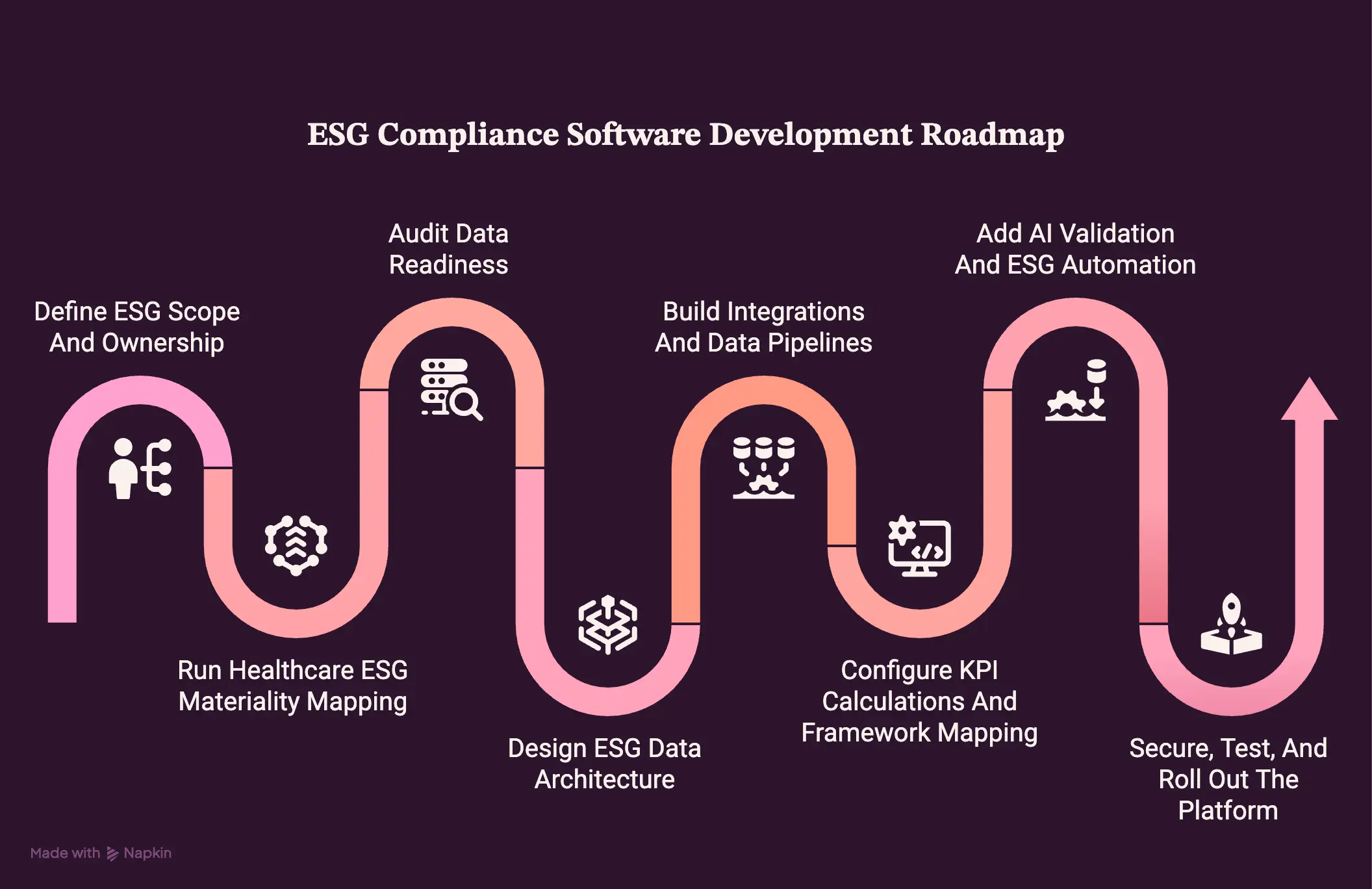
Step 1 — Define ESG Scope And Ownership
The initial step establishes corporate boundaries by identifying the exact facilities, operational departments, and compliance workflows the software will support. Technical leaders must map out organizational roles and assign data stewardship duties before writing the first line of code.
- Role Mapping: Defines specific platform permissions for environmental engineers, financial auditors, HR administrators, and legal compliance officers.
- Operational Scope: Determines whether the application monitors only acute care hospital facilities or includes outpatient clinics, research labs, and corporate offices.
- Intellivon’s Approach: We conduct technical scoping workshops to map your current organizational layout directly to multi-tenant database models. This step ensures that your user hierarchy remains fully scalable.
Step 2 — Run Healthcare ESG Materiality Mapping
The second step embeds a digital healthcare ESG materiality assessment framework directly into your platform’s configuration layer. This mapping process filters out minor variables, focusing development resources purely on the metrics that impact financial risks and regulatory compliance.
- Stakeholder Matrix: Weights data collection priorities based on feedback from hospital board members, institutional investors, and state regulators.
- Risk Ranking: Configures the database schema to automatically flag high-impact areas like medical waste management compliance software metrics and Scope 1 emissions.
- Intellivon’s Approach: We design dynamic weighting engines that calculate a real-time risk-priority score for each facility type. This structure keeps your platform aligned with actual corporate vulnerabilities.
Step 3 — Audit Data Readiness
The third step requires an exhaustive engineering audit of your legacy enterprise networks to find where sustainability data lives and evaluate its formatting quality. Software teams must identify which systems use open APIs, which rely on batch file transfers, and where data sits trapped in manual spreadsheets.
- System Inventory: Maps out data connection paths across utility management tools, ERP platforms, HRIS suites, and procurement ledgers.
- Privacy Mapping: Identifies the precise architectural locations where protected health information (PHI) resides to establish secure system boundaries.
- Intellivon’s Approach: Our systems engineers perform comprehensive endpoint discovery audits to analyze database schemas and flag data quality gaps before ingestion pipelines are built.
Step 4 — Design ESG Data Architecture
The fourth step focuses on designing a decoupled, seven-layer software architecture capable of processing massive data loads while keeping compute layers separate from reporting templates. System architects establish relational data models, encryption keys, and worker nodes during this blueprinting phase.
- Blueprint Schematics: Defines how information flows from raw facility ingestion points up to the executive dashboard views.
- Data Models: Engineers a unified schema that stores varied data formats—such as utility metrics, employee demographics, and compliance text—within a centralized database.
- Intellivon’s Approach: We build zero-trust ESG platform healthcare foundations using microservices and secure database structures. This keeps clinical tracking metrics and infrastructure metrics completely isolated from one another.
Step 5 — Build Integrations And Data Pipelines
The fifth step focuses on building the automated ETL (Extract, Transform, Load) pipelines and API connectors that ingest data from your primary corporate systems. Developers should build these pipelines iteratively, starting with high-value utility and waste vendor data feeds.
- API Connectors: Deploy scheduled webhook listeners to automatically pull usage information from smart building systems and supply chain portals.
- Error Queues: Isolates corrupted file uploads, incomplete CSV rows, or unexpected API payloads inside an administrative isolation queue for review.
- Intellivon’s Approach: We build resilient integration layers that handle inconsistent data streams cleanly.
Step 6 — Configure KPI Calculations And Framework Mapping
The sixth step programs the platform’s core calculation engine, converting raw metrics into standardized compliance indicators across global frameworks. Engineers load regulatory math formulas, emission factors, and unit conversion rules directly into the application’s processing layer.
- Formula Libraries: Automates the math needed to convert kilowatt-hours and fuel volumes into metric tons of carbon dioxide equivalent ($MTCO_2e$).
- Crosswalk Configuration: Links a single calculated data point to multiple disclosure outputs, satisfying GRI, SASB, and TCFD rules simultaneously.
- Intellivon’s Approach: We deploy centralized KPI dictionaries that protect calculation history. This ensures your data remains audit-ready even when international conversion factors change.
Step 7 — Add AI Validation And ESG Automation
The seventh step integrates machine learning models directly into your data pipelines to handle complex validation tasks, detect anomalies, and parse documents automatically. This layer acts as an automated internal auditor, flagging data entry errors before they reach executive dashboards.
- Anomaly Discovery: Sets up monitoring algorithms that flag unusual usage shifts against historical facility baselines.
- Narrative Generation: Deploys retrieval-augmented generation (RAG) models to draft the qualitative, text-heavy portions of compliance disclosures using verified corporate data.
- Intellivon’s Approach: We build validation loops using explainable AI for ESG compliance models. This ensures that every automated alert or narrative draft links directly back to its verifiable source files.
Step 8 — Secure, Test, And Roll Out The Platform
The final step subjects the entire software platform to rigorous user acceptance testing (UAT), penetration testing, and data reconciliation checks before rolling it out across your facilities. Large enterprises should deploy the application in phases, activating one reporting domain or regional hospital group at a time.
- Security Testing: Performs automated vulnerability scans to confirm the application meets strict enterprise security benchmarks.
- Data Reconciliation: Verifies the software’s calculation engine outputs against manual accounting ledgers to confirm absolute mathematical accuracy.
- Intellivon’s Approach: We manage phased release schedules, running new automated pipelines alongside legacy tracking systems to ensure complete stability during deployment.
Building an enterprise-grade ESG platform requires a methodical execution path that shifts compliance from manual data collection to an automated, infrastructure-driven process. By following a structured design, integration, and AI validation roadmap, your healthcare network can deploy a secure system of record that protects data integrity across all facilities.
Healthcare ESG Software Development Cost: $70,000–$300,000
Healthcare ESG software development usually costs $70,000 to $300,000, depending on facility count, data integrations, ESG domains, reporting frameworks, AI workflows, dashboards, and compliance controls.
A focused ESG MVP starts near $70,000, while a multi-site AI-powered ESG compliance platform can reach $300,000 when it supports advanced analytics, audit trails, and enterprise governance.
1. Cost Table
| Development Phase | What It Covers | Estimated Cost |
| ESG Discovery And Materiality Mapping | ESG scope, data owners, KPI list, framework priorities, stakeholder needs, roadmap | $8,000–$18,000 |
| Data Readiness Audit | Source systems, data quality, integration complexity, PHI boundaries, approved datasets | $8,000–$20,000 |
| Platform Architecture | ESG data model, workflow logic, security model, dashboard plan, integration blueprint | $10,000–$25,000 |
| Data Pipelines And Integrations | Utilities, waste, ERP, HRIS, procurement, suppliers, facility systems, approved healthcare data | $18,000–$55,000 |
| KPI Engine And Framework Mapping | Scope 1, Scope 2, Scope 3 logic, ESG formulas, GRI, SASB, TCFD, CMS, Joint Commission, SEC-readiness where applicable | $15,000–$45,000 |
| AI Validation And Automation | Anomaly detection, evidence classification, disclosure drafting, predictive analytics, model review workflows | $18,000–$55,000 |
| Dashboards And Workflow Automation | ESG dashboards, approvals, audit queues, board reporting, facility comparison, role-based views | $15,000–$40,000 |
| HIPAA, Security, And Governance Controls | RBAC, SSO, encryption, audit logs, PHI-safe reporting, export controls, access policies | $12,000–$35,000 |
| Testing, Training, And Rollout | UAT, KPI reconciliation, staff training, rollout support, stabilization, post-launch fixes | $10,000–$27,000 |
2. MVP Cost Range
A focused healthcare ESG MVP usually costs $70,000 to $110,000. This version should cover one to two ESG domains, basic data uploads, limited integrations, KPI dashboards, framework mapping, and audit evidence storage. It works best for one hospital, one region, or one business unit that needs to replace manual ESG reporting with a controlled first release.
At this level, the platform should not try to automate every ESG workflow. Instead, it should prove data trust across the highest-priority metrics, such as energy use, waste, emissions, workforce indicators, supplier records, or governance documentation. The goal is to create a working ESG data foundation before adding complex AI or multi-site automation.
3. Mid-Level Platform Cost Range
A mid-level healthcare ESG platform usually costs $120,000 to $200,000. This version can support more integrations, multiple facilities, stronger workflow automation, better framework mapping, board dashboards, and structured approval flows. It is the right tier when ESG reporting depends on several departments, not one sustainability owner.
This build can connect utilities, ERP, HRIS, procurement, waste vendors, facility systems, and approved healthcare datasets. It can also compare sites, flag missing evidence, assign KPI owners, and prepare leadership reports with clearer data lineage. For health systems, this tier usually delivers the strongest balance between cost, speed, and operational usefulness.
3. Enterprise AI ESG Platform Cost Range
An AI-powered multi-site ESG platform usually costs $210,000 to $300,000. This version supports AI validation, supplier workflows, PHI-safe equity reporting, predictive analytics, advanced access controls, board-ready dashboards, and multi-entity ESG reporting. It is designed for healthcare organizations that need ESG reporting to operate like enterprise compliance infrastructure.
AI features should focus on controlled assistance, not unsupervised decision-making. Useful workflows include anomaly detection, missing evidence alerts, automated evidence classification, draft disclosure support, predictive energy trends, and risk scoring for incomplete facility or supplier data. Human reviewers should approve ESG outputs before they appear in executive, regulatory, or public reports.
4. Ongoing Maintenance Cost
Annual maintenance usually costs 15% to 25% of the initial build. This means a $100,000 MVP may need $15,000 to $25,000 per year, while a $300,000 enterprise platform may need $45,000 to $75,000 per year. Maintenance should be planned from day one because ESG frameworks, emissions factors, integrations, dashboards, and AI workflows change over time.
This budget covers framework updates, emissions factor updates, integration fixes, security monitoring, dashboard improvements, AI model review, QA regression testing, user support, and reporting workflow changes. Without maintenance, healthcare ESG software can quickly become outdated, especially when new facilities, suppliers, metrics, or reporting expectations enter the system.
Healthcare ESG software development cost should be planned as a controlled infrastructure investment, not a dashboard expense.
A realistic budget starts at $70,000 for a focused MVP and can reach $300,000 for a multi-site AI ESG platform with integrations, audit trails, PHI-safe workflows, and compliance governance.
The final cost depends on how much data the platform must collect, validate, explain, and report across the healthcare organization.
Build ESG Compliance Software For Healthcare With Intellivon
Healthcare enterprises choose Intellivon to build ESG compliance software because the platform needs more than sustainability reporting screens.
It needs secure healthcare data architecture, AI validation, audit trails, workflow automation, ESG framework mapping, and integration with the systems that already run hospital operations.
1. We Understand Healthcare Data Complexity
ESG reporting in healthcare touches facilities, utilities, waste vendors, ERP, HRIS, procurement, suppliers, governance records, and approved healthcare datasets.
Intellivon builds platforms around that operational reality, so ESG data does not stay trapped in spreadsheets, email threads, and disconnected reporting folders.
This matters for hospitals, IDNs, pharmaceutical companies, and medtech firms because ESG reporting must work across many facilities, systems, owners, and disclosure formats.
2. We Build Compliance-Ready Platforms, Not Standalone Dashboards
Intellivon designs ESG compliance software with audit trails, role-based access, encryption, approval workflows, export controls, and PHI-safe reporting boundaries.
The goal is to help healthcare enterprises prove where ESG data came from, who reviewed it, and which evidence supports each claim.
That level of control is important when ESG reports reach boards, investors, regulators, procurement teams, or external assurance partners.
3. We Know Where AI Actually Helps ESG Reporting
AI can improve ESG reporting when it validates data, classifies evidence, detects anomalies, forecasts trends, and drafts disclosure narratives from approved sources.
Intellivon adds AI as a governed workflow layer, not as an uncontrolled content generator.
That means every AI-assisted output can be reviewed, explained, traced, and approved before it reaches an executive report or public disclosure.
4. We Build Around Enterprise Integrations From Day One
A healthcare ESG platform is only useful when it connects to the right systems.
Intellivon builds integration-ready platforms that can connect with utilities, waste vendors, ERP systems, HRIS platforms, procurement tools, supplier portals, compliance systems, and selected de-identified healthcare data sources.
This helps enterprises reduce manual ESG reporting work while improving data consistency across departments and facilities.
5. We Bring Healthcare AI, Governance, And MLOps Experience Into ESG
ESG software becomes harder when AI, healthcare data, compliance workflows, and enterprise reporting all meet in one platform.
Intellivon brings experience across healthcare AI, enterprise automation, AI governance, MLOps, and regulated system design, which makes the ESG platform easier to scale beyond the first dashboard.
That matters because ESG requirements will keep changing. The platform needs to adapt without forcing the enterprise to rebuild its reporting infrastructure every year.
6. We Help Enterprises Build For Long-Term ESG Maturity
Intellivon helps healthcare enterprises move from manual ESG tracking to governed ESG intelligence. The platform can start with emissions, waste, workforce reporting, supplier risk, or governance dashboards, then expand into AI validation, predictive analytics, investor reporting, and multi-site benchmarking.
The result is not just a software build. It is a foundation for healthcare ESG reporting that leadership can trust, compliance teams can defend, and operating teams can actually use.
Talk to Intellivon to plan a healthcare ESG compliance platform that fits your reporting scope, data environment, compliance requirements, AI roadmap, and enterprise growth plans.
Conclusion
ESG compliance software gives healthcare enterprises a practical way to turn fragmented sustainability, equity, workforce, supplier, and governance data into reliable reporting infrastructure. As ESG expectations expand across regulations, investors, procurement, and board oversight, hospitals need systems that prove claims with data, not spreadsheets.
At the same time, the right platform centralizes metrics, protects sensitive data, automates evidence, and helps leaders act before reporting gaps become enterprise risks and long-term compliance exposure over time.
Things To Know About ESG Compliance Software Development
Q1. How much does healthcare ESG software development cost?
A1. Healthcare ESG software development usually costs $70,000 to $300,000. A focused MVP with ESG data collection, KPI dashboards, and framework mapping costs $70,000 to $110,000. However, a multi-site AI-powered platform with integrations, audit trails, HIPAA controls, and predictive analytics usually costs $210,000 to $300,000 for large healthcare enterprises.
Q2. How long does it take to build ESG compliance software for hospitals?
A2. A focused ESG reporting MVP usually takes 10 to 14 weeks to build. Meanwhile, a mid-level platform with integrations, dashboards, and approval workflows takes 4 to 6 months. For multi-site healthcare enterprises, AI validation, supplier workflows, privacy controls, and testing can extend the timeline to 6 to 9 months.
Q3. Which ESG software features matter most for hospital networks?
A3. Hospital networks need multi-site ESG data collection, Scope 1, 2, and 3 emissions tracking, medical waste reporting, supplier ESG workflows, patient equity metrics, framework mapping, audit trails, approval workflows, and board dashboards. However, AI validation should come after the ESG data model, ownership rules, and reporting logic are stable.
Q4. Why do ESG platforms feel too generic for healthcare teams?
A4. Many ESG platforms feel generic because they focus on corporate reporting, not hospital operations. Healthcare teams need medical waste workflows, PHI-safe equity reporting, facility-level emissions, supplier risk tracking, governance evidence, and integrations with ERP, HRIS, procurement, utility, waste vendor, and approved healthcare data sources. Therefore, customization is often necessary.
Q5. Can ESG software replace spreadsheets completely?
A5. ESG software can replace most recurring spreadsheet work once integrations, data ownership, validation rules, and approval workflows are in place. However, some manual uploads may remain for smaller vendors, early-stage ESG metrics, or evidence documents without API access. Therefore, the goal is controlled reporting, not forced full automation.
To Sum Up:
- Healthcare ESG software fails when teams build dashboards before they define metric ownership, source lineage, approval workflows, and audit evidence.
- Scope 3 is usually harder than Scope 1 and Scope 2 because supplier, pharmaceutical, medtech, logistics, food, and purchased-services data often sit outside hospital systems.
- AI should not publish ESG disclosures on its own. Its strongest role is anomaly detection, evidence classification, trend forecasting, and draft support.
- The best first ESG software build is not the biggest one. It is the one that proves data quality, executive trust, and reporting repeatability within one cycle.