Key Takeaways:
-
Procurement orchestration connects intake, sourcing, contracts, POs, invoices, ERP, and reporting without replacing tools.
-
A rules engine, data normalization layer, and integration gateway are core orchestration architecture requirements.
-
AI spend classification, supplier risk scoring, invoice exception routing, RBAC, and audit logs ensure governed operations.
-
Focused MVPs cost $70,000 to $120,000, while production healthcare platforms cost $180,000 to $300,000.
-
How Intellivon builds procurement orchestration as API-first infrastructure, and not procurement software with added automation.
Hospital networks typically run procurement across four or more disconnected systems at once. Procurement orchestration software development solves that by building an engine layer above all of them. That engine routes procurement events between ERP, P2P, sourcing, and supplier systems in real time. From there, AI handles routing, spend classification, approval automation, and exception management across every connected system.
The core architecture decision for this platform is event-driven streaming versus batch synchronization. Event streaming updates all connected systems the moment a procurement event occurs, eliminating sync delays entirely. Vizient found that disconnected procurement inefficiencies cost health systems 3 to 5% of total supply chain spend. At the same time, event-driven architecture is therefore the design decision that eliminates that cost at its source.
This blog follows the architecture Intellivon uses when building procurement orchestration platforms for healthcare clients. We have built these platforms for enterprises where GPO and FHIR integration are non-negotiable requirements. Furthermore, it covers orchestration engine design, event-driven API patterns, AI routing, ERP integration, and HIPAA compliance.
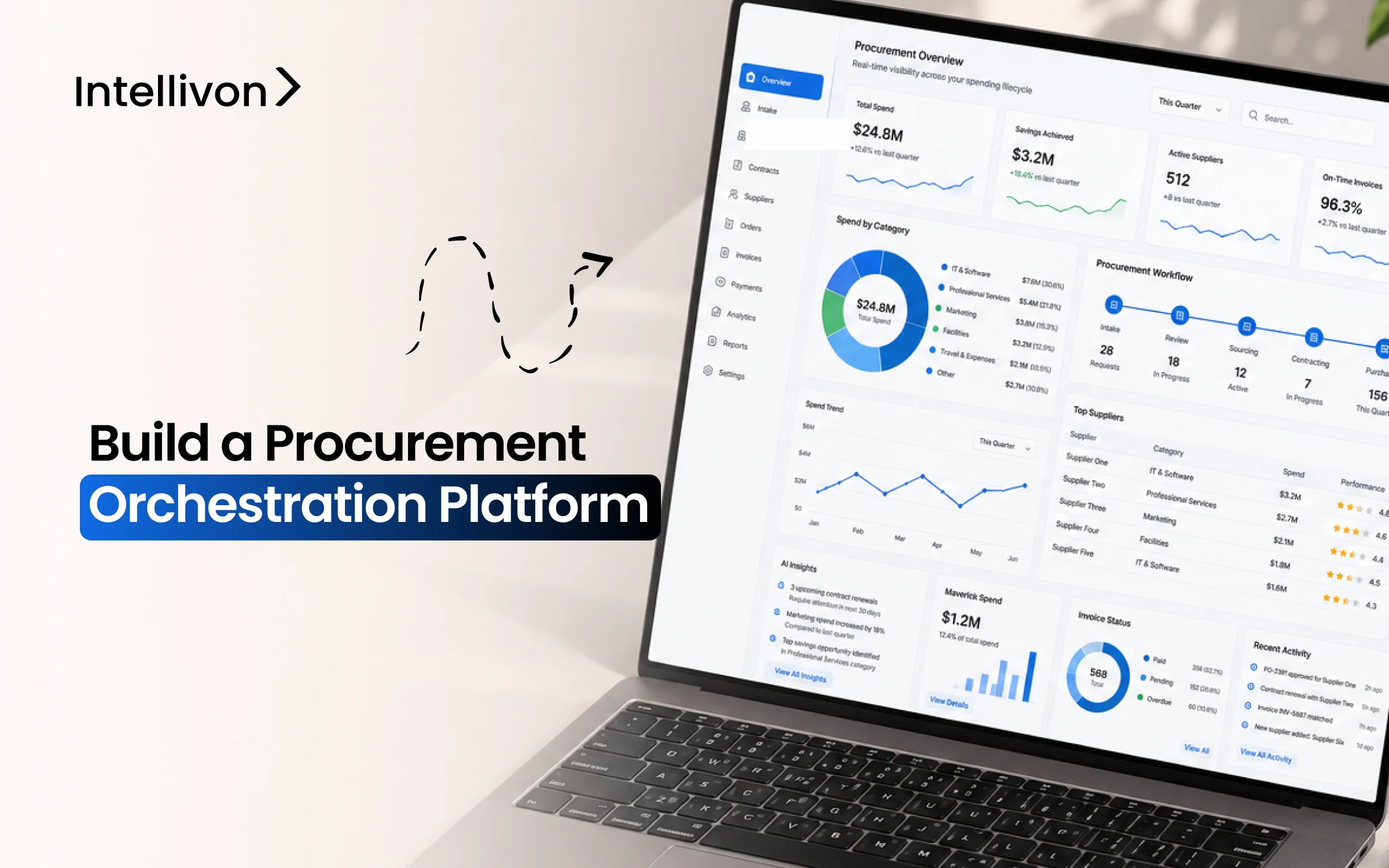
What is Procurement Orchestration Software?
Procurement orchestration software is an enterprise middleware platform. It connects separate procurement systems like legacy ERPs and inventory software into one automated layer. This system does not replace your current tools.
Instead, it sits above them to sync data and route workflows automatically. It works as an intelligent data layer to coordinate your purchasing across different departments.
What Procurement Orchestration Software Actually Coordinates
Procurement orchestration software coordinates the people, systems, approvals, data, policies, and exceptions behind enterprise buying. It sits above ERP, P2P, CLM, sourcing, supplier management, AP, GRC, and communication tools. Unlike a standard procurement module, it controls the workflow path before and after the transaction.
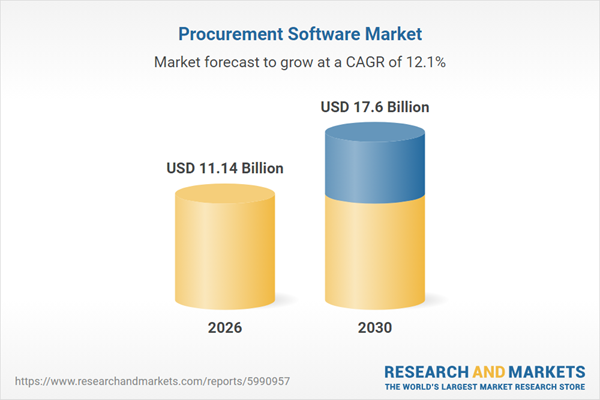
The global procurement software market is expanding rapidly, valued at $11.14 billion in 2026 and projected to reach $17.6 billion by 2030 at a CAGR of 12.1%, according to Research and Markets.
1. Creates One Front Door For Every Purchase Request
This step establishes a single entry point for all enterprise buying requests. It captures user intent through natural language processing before matching the request to specific internal policies.
- Guided intake forms: Replace messy emails with dynamic forms that change based on what the user needs to buy.
- Communication tool intake: Allows employees to log buying requests directly inside Slack or Microsoft Teams.
- Automated metadata capture: Extracts product details, category selections, and budget owners instantly from uploaded vendor quotes.
2. Routes Work Across Procurement, Finance, Legal, And IT
This step automates the complex approval pathways required across multiple internal departments. It ensures the right stakeholders review high-value transactions without causing operational bottlenecks.
- Parallel approval routing: Sends contract documents to legal, IT security, and finance at the same time to save weeks of waiting.
- Intelligent routing engine: Evaluates the technical risks and automatically tags the precise role-based reviewer needed for clearance.
- Automated escalation paths: Flag stalled approvals and route them to backup managers when deadlines pass.
3. Syncs Procurement Data Across ERP, P2P, And CLM
This step builds a unified data fabric between your decentralized operational systems. It guarantees that transactional records mirror each other perfectly across the entire enterprise stack.
- Cross-system data synchronization: Connects core ERP systems like SAP S/4HANA, Oracle Fusion, and Workday with modern P2P suites.
- Real-time master data matching: Unifies supplier records between Coupa, SAP Ariba, Jaggaer, and IT service platforms like ServiceNow.
- Automated webhook streaming: Pushes signed legal agreements directly from CLM tools into accounts payable tracking modules.
4. Enforce Policy Before Spend Becomes Committed
This step prevents maverick buying by validating corporate compliance rules before any money leaves the organization. It locks down spend management guidelines across every department automatically.
- Preferred supplier rules: Restrict selection exclusively to pre-negotiated contracts or active healthcare group purchasing organizations (GPOs).
- Automated budget checks: Cross-reference the request amount against live financial balances in your underlying ERP system.
- Three-way match orchestration: Vertically aligns purchase orders, product inventory manifests, and vendor invoices to stop billing errors.
Custom procurement orchestration platforms do not replace your core ERP infrastructure. They act as a flexible, intelligent middleware layer that controls the cross-system workflow paths that standard financial ledgers were never engineered to manage.
Why Enterprises Need An Orchestration Layer Above ERP Systems
Enterprises need an orchestration layer above ERP because ERP records approved financial transactions, but it does not manage the messy pre-approval journey across teams. Consequently, orchestration closes that gap by controlling work before it reaches the system of record.
Although legacy systems track historical data well, they fail to govern active stakeholder collaboration. Therefore, an independent management layer remains essential to prevent unapproved spending.
1. ERP Handles Records
Although SAP and Oracle track financial ledgers, they lack dynamic workflow tools.
- Static ledgers: As a result, non-technical users find financial fields rigid.
- Spreadsheet reliance: Consequently, teams fall back on manual tracking.
2. P2P Tools Often Break At The Exception Layer
Standard software works initially. However, it fails when transactional errors occur.
- Document gaps: Specifically, missing vendor forms freeze pipelines.
- Pricing shifts: Furthermore, tiny invoice discrepancies create manual backlogs.
3. Healthcare Procurement Adds Clinical Buying Complexity
Medical supply chains require specialized validation because clinician choice matters.
- GPO tier tracking: Therefore, systems must verify volume pricing.
- Formulary rules: Additionally, preference items require clinical approvals.
4. Fintech Procurement Adds Vendor And AP Risk Controls
Financial technology requires rigorous security because data compliance is mandatory.
- Vendor risk: Specifically, software purchases must clear SOC 2 checks.
- Compliance: Meanwhile, continuous AML tracking prevents fraud.
ERP plus email is no longer enough. Ultimately, the orchestration layer serves as the central control plane between corporate business requests and financial commitment.
Procurement Orchestration Engine Architecture And Core Modules
The procurement orchestration engine is the technical core of the platform. It receives procurement events, evaluates policy rules, determines workflow paths, triggers system actions, records audit evidence, and sends data back to ERP, P2P, CLM, AP, inventory, supplier, and analytics systems.
This architectural design completely decouples the user experience from back-end transactional ledgers to provide complete systemic agility.
Module Architectural Layers
| Core Module Layer | Main Technical Focus | System Value |
| Intake & Guided Buying | Conversational front door, guided buying orchestration layer, and catalog matching. | Captures natural language requests to eliminate maverick spend. |
| Business Rules Engine | Procurement business rules engine development, spend thresholds, and escalation logic. | Evaluates complex corporate policies, regional rules, and facility-level risk scores. |
| API Gateway Layer | Procurement API gateway development and ERP procurement orchestration integration. | Connects SAP Ariba orchestration, Oracle Fusion, Coupa, and Workday APIs natively. |
| Procurement Data Fabric | Procurement data normalization layer and procurement data fabric architecture. | Maps supplier master data, contract metadata, cost centers, and GPO tiers. |
| Zero-Trust Governance | RBAC, zero-trust procurement orchestration security, and immutable audit trails. | Collects tamper-proof approval evidence and handles secure data retention. |
The orchestration architecture builds a flexible digital control plane above rigid record structures. Consequently, it enables enterprise teams to automate custom workflow paths without altering foundational accounting software.
Build An API-First Procurement Orchestration Integration Layer
An API-first procurement orchestration layer allows enterprises to connect existing procurement systems without a rip-and-replace project. It uses secure APIs, webhooks, event streaming, middleware, and data mapping to move approved procurement actions between ERP, P2P, CLM, AP, supplier portals, catalogs, and analytics platforms.
1. Design The Procurement Middleware Platform First
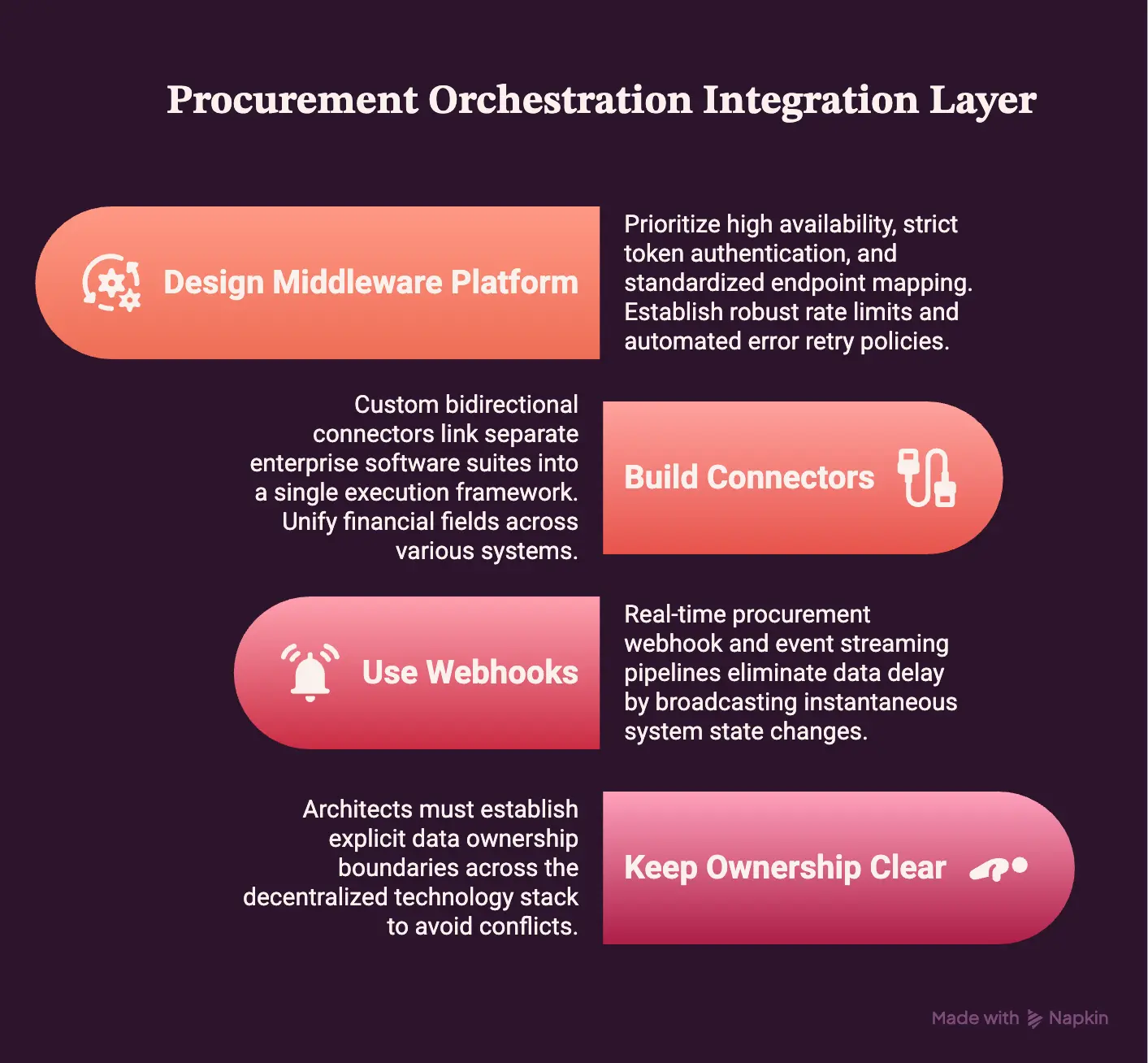
Enterprise procurement middleware platform development must prioritize high availability, strict token authentication, and standardized endpoint mapping.
Consequently, engineers should establish robust rate limits and automated error retry policies to prevent heavy transactional payloads from degrading underlying database performance.
2. Build Connectors For ERP, P2P, CLM, And AP Systems
Custom bidirectional connectors must link separate enterprise software suites into a single execution framework.
Specifically, the system unifies financial fields across SAP S/4HANA, SAP Ariba orchestration API integration layers, Oracle Fusion procurement integration setups, and Coupa procurement orchestration integration points.
3. Use Webhooks For Status Changes And Exceptions
Real-time procurement webhook and event streaming pipelines eliminate data delay by broadcasting instantaneous system state changes.
Therefore, whenever invoice exceptions, supplier document updates, or purchase order statuses shift inside a remote application, the orchestration engine reacts immediately.
4. Keep System Ownership Clear Across The Stack
Architects must establish explicit data ownership boundaries across the decentralized technology stack to avoid conflicts.
For example, while the orchestration layer controls the live approval workflow, your foundational ERP must remain the absolute financial system of record.
Integration architecture dictates the overall success of your custom software build. Ultimately, a procurement platform will fail if its connecting APIs are treated as an engineering afterthought rather than the structural foundation.
Event-Driven Data Fabric For Real-Time Procurement Synchronization
Event-driven procurement architecture keeps data current across disconnected systems by publishing procurement events as they happen. Instead of nightly batch updates, the platform streams changes in requests, approvals, vendors, contracts, POs, invoices, receipts, and exceptions into the orchestration layer and downstream systems.
This real-time processing capability prevents data latency across your entire inventory pipeline.
Business Action Event Table
| Business Action Event | Schema Payload Elements | Downstream Consumer Action |
| request. created | Requester ID, Cost Center, Estimate | Triggers the business rules engine budget validation |
| approval.completed | Approver Token, Timestamp, Limit | Instructs the ERP gateway to generate an official PO |
| supplier.updated | Tax ID, Bank Routing, Sanction Status | Updates the banking registry in the accounts payable system |
| invoice.exception | SKU Discrepancy, Price Delta, Line ID | Alerts the category manager via integrated chat apps |
Moving from rigid batch processing to an asynchronous event-driven data fabric eliminates administrative delays completely. Consequently, the architecture ensures your operational visibility matches live purchasing activity across every distributed enterprise system.
AI Models For Intelligent Procurement Workflow Orchestration
AI improves procurement orchestration when it classifies, extracts, predicts, recommends, and flags issues inside governed workflows. It should not approve regulated purchases alone. The safest architecture uses AI models behind deterministic policy rules, confidence thresholds, human review, audit logs, and MLOps monitoring.
Gartner research on 2026 supply chain trends describes procurement AI agents as assistants that automate supplier selection, contract management, purchase order handling, and spend analysis through machine learning and data-driven execution.
AI Models Table
| AI Model Type | Functional Operational Target | System Action / Guardrail |
| Spend Classification Engine | Automated spend classification engine | Maps unstructured text to strict UNSPSC codes with confidence thresholds |
| NLP Extraction Layer | NLP purchase order processing orchestration | Pulls values from incoming PDFs into three-way match orchestration automation |
| Supplier Risk Scoring | Supplier onboarding orchestration workflow | Aggregates credentialing history to trigger human compliance review overrides |
| Predictive Demand Model | Predictive procurement demand orchestration | Syncs inventory demand signals to initiate automated spend routing paths |
| Explainable AI Pipeline | MLOps procurement orchestration pipeline | Tracks model drift detection, procurement, AI, and records raw prompt logs |
AI must serve as a highly controlled infrastructure layer rather than an unguided autonomous system. Consequently, implementing deterministic policy guardrails ensures your intelligent procurement workflow orchestration remains legally compliant, audit-ready, and shielded from algorithmic error.
Healthcare Procurement Orchestration Controls And Compliance Needs
Healthcare procurement orchestration requires stricter controls because purchasing decisions directly affect patient care, clinical inventory, and regulatory compliance. The platform must naturally manage complex GPO pricing structures, vendor credentialing, and medical device tracking. Because data privacy is paramount, the system must also enforce strict access boundaries around sensitive patient operations.
1. GPO Pricing And Distributor Contract Orchestration
A custom healthcare procurement orchestration platform development strategy must automate complex supplier agreement layers.
Specifically, the system connects directly to distributor catalog feeds to verify contract tier validation and facility eligibility. Consequently, it prevents price leakage by flashing automated alerts whenever vendor invoices deviate from pre-negotiated rates.
2. Clinical Value Analysis Committee Workflows
Introducing new medical supplies into a hospital network requires rigorous value analysis committee workflow orchestration. Therefore, the intake layer guides physicians through customized request forms for specialized preference items.
The engine then captures all clinical trial evidence, safety data, and review history before routing the request for final financial sign-off.
3. HIPAA, BAA, And PHI-Safe Architecture
Building a HIPAA-compliant procurement orchestration platform requires a strictly isolated, PHI-safe procurement orchestration architecture. Specifically, the system utilizes data minimization protocols to ensure no protected health information leaks into standard purchase orders.
Additionally, the system automates BAA-compliant procurement orchestration software checks before verifying third-party vendor contracts.
4. FDA QMSR And Supplier Qualification Controls
Medical device sourcing must align with the FDA’s Quality Management System Regulation (QMSR), which incorporates ISO 13485:2016 standards. Consequently, the orchestration layer maintains an immutable approved supplier list with embedded risk-based qualification triggers.
Furthermore, it logs Unique Device Identification (UDI) traceability metadata to provide ironclad audit evidence for federal inspectors.
5. Inventory And Demand Forecasting For Clinical Supplies
Efficient hospital procurement system orchestration balances material availability with holding costs. The platform uses demand forecasting, procurement orchestration, and healthcare models to track clinical inventory management and procurement orchestration variables.
As a result, it triggers automated replenishment workflows and critical stock alerts to guarantee that life-saving medications remain fully available.
Generic procurement platforms fail to address the high-stakes regulatory landscape of modern clinical operations. Ultimately, a specialized healthcare workflow orchestration engine bridges the gap between strict federal compliance mandates and active frontline medical supply chains.
Fintech Vendor, AP, And Third-Party Procurement Orchestration
Fintech procurement orchestration must unify vendor intake, contract review, third-party risk, AP approvals, budget controls, security evidence, and audit trails. The platform should route vendors through risk-based paths before onboarding, payment setup, data access, or contract execution.
Consequently, integrating specialized financial risk layers protects organizational capital while maintaining operational velocity.
1. Third-Party Risk Intake And Vendor Due Diligence
Modern financial infrastructure requires strict automated vetting protocols during initial vendor onboarding.
Therefore, the intake layer automatically distributes compliance questionnaires and collects SOC 2 Type II data processing agreements.
- Automated compliance collection: Gathers third-party background records, security certificates, and legal documentation.
- Risk-based routing path: Directs high-risk data-handling software suppliers toward deep manual security reviews.
2. Accounts Payable Orchestration Automation Fintech
Automating downstream payment processing prevents manual accounting bottlenecks and eliminates costly billing mistakes.
Specifically, the accounts payable orchestration automation fintech engine handles real-time invoice intake and triggers automated three-way matching against original purchase orders.
- Duplicate invoice identification: Flags identical billing amounts or invoice numbers to prevent overpayment.
- Automated GL line coding: Maps transaction line items to the correct internal corporate cost centers.
3. Contract, Renewal, And Spend Control Workflows
Uncontrolled software renewals and redundant application licenses quickly drain corporate financial resources.
Through deep contract lifecycle orchestration integration, the engine scans active vendor portfolios to identify overlapping SaaS tools and usage discrepancies.
- Proactive renewal alert: Broadcasts automated warnings months before software agreements extend.
- Dynamic spend enforcement: Locks approval pathways when individual department budgets hit limits.
4. Audit Trails For Regulated Financial Operations
Operating within heavily scrutinized financial markets demands absolute data clarity and tamper-proof operational record-keeping.
The platform institutes strict segregation of duties across all financial approval chains.
- Cryptographic approval evidence: Captures behavioral timeline data for external regulatory compliance teams.
- Granular access restriction: Enforces zero-trust frameworks through secure multi-factor user authentication.
Unifying vendor validation with automated accounting workflows creates an ironclad corporate safety net. Ultimately, an intelligent financial orchestration layer transforms complex risk checking from a slow administrative barrier into a continuous, automated utility.
How To Build A Procurement Orchestration Platform In Phases
Build a procurement orchestration platform in phases, starting with workflow mapping and the data model before adding AI agents or advanced analytics. The safest roadmap is discovery, architecture, core workflows, integrations, data fabric, AI models, compliance hardening, pilot rollout, and multi-system scale.
Research from DeepStream indicates that up to 80% of digital procurement transformations underdeliver because organizations attempt big-bang deployments without establishing stable foundational baselines. Consequently, a phased modular implementation strategy mitigates systemic failure risks.
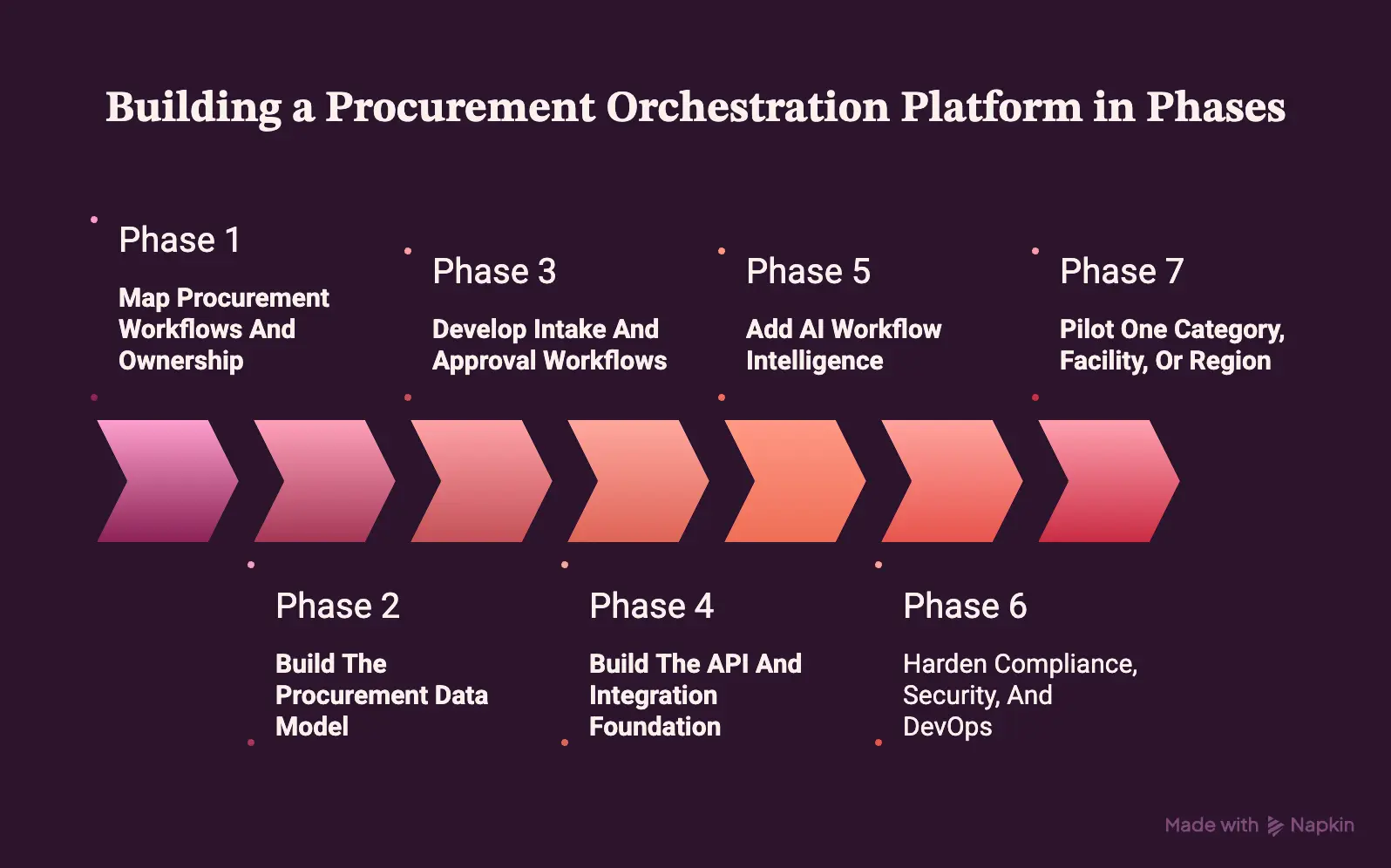
Phase 1: Map Procurement Workflows And Ownership
This step defines the behavioral boundaries and systemic handoffs governing your purchasing operations. Therefore, teams document the exact operational sequences running from initial guided intake through final accounts payable release.
- Handoff mapping: Documents systemic touchpoints between downstream P2P networks and core source-to-pay engines.
- Intellivon approach: We map business rules, exception paths, approval thresholds, and compliance constraints before writing code.
Phase 2: Build The Procurement Data Model
This framework acts as the structural skeleton that supports the entire software application. Consequently, database engineers construct unified relational tables to harmonize transaction schemas across decentralized business applications.
- Schema normalization: Unifies data representations for item masters, cost centers, GPO tiers, and active purchase orders.
- Intellivon approach: We build a flexible data model that natively supports future AI ingestion and compliance audit reporting.
Phase 3: Develop Intake And Approval Workflows
This phase builds the direct interface and logic rules that users interact with daily. As a result, the platform evaluates spend thresholds and budget balances automatically to route requests appropriately.
- Dynamic routing loops: Trigger conditional approval paths for specialized clinical preference items or urgent software acquisitions.
- Intellivon approach: We prioritize four high-volume workflows first, including new supplier intake, purchase requests, and contract review pipelines.
Phase 4: Build The API And Integration Foundation
This layer establishes real-time, bi-directional connectivity between the middleware engine and external core systems. Specifically, developers configure secure endpoint mapping routines to bridge modern tools with legacy software architectures.
- Middleware connector deployment: Establishes native links with foundational ERP platforms like SAP S/4HANA, Oracle, and Workday.
- Intellivon approach: We stabilize bi-directional synchronization, error logs, and automated retry policies before deploying predictive analytics engines.
Phase 5: Add AI Workflow Intelligence
This milestone introduces advanced cognitive layers to automate manual data classification and pattern matching. However, these models operate behind deterministic business logic to protect enterprise workflows from algorithmic hallucinations.
- Automated metadata capture uses machine learning models to classify unstructured tail spend and extract invoice information.
- Intellivon approach: We embed AI models strictly behind business rules, confidence thresholds, and mandatory human review parameters.
Phase 6: Harden Compliance, Security, And DevOps
This step locks down system boundaries to verify compliance within highly regulated industrial environments. Therefore, engineering teams construct automated deployment pipelines that incorporate rigorous vulnerability scans and credential protection layers.
- Zero-trust engineering: Deploys granular role-based access control alongside immutable audit-trailing frameworks across all system environments.
- Intellivon approach: We treat compliance and release engineering as continuous architecture layers rather than post-development verification tasks.
Phase 7: Pilot One Category, Facility, Or Region
This final stage validates overall platform performance inside a live, ring-fenced operational environment. Specifically, product leaders track specific metrics like touchless PO rates and approval cycle times to verify systemic stability.
- Iterative scope expansion: Deploys the framework within a single hospital facility or specific business department initially.
- Intellivon approach: We launch narrowly to validate master data quality before scaling features across wider connected networks.
Designing an enterprise-grade orchestration layer demands a disciplined, data-first development sequence. Ultimately, stabilizing your core middleware integration fabric first ensures that advanced AI models can execute workflows reliably without risking operational disruption.
Procurement Orchestration Platform Development Cost
The procurement orchestration SaaS platform development cost usually ranges from $70,000 to $300,000. This range depends on workflow scope, API integration depth, AI model requirements, supplier portal complexity, event streaming, and whether the platform is a single-enterprise system or a multi-tenant SaaS application.
Because structural integration requirements vary across regulated industries, defining features early prevents budget overruns.
Comprehensive Phase-by-Phase Development Cost Breakdown
| Development Phase | What It Covers | Estimated Cost |
| Discovery And Workflow Mapping | Process audit, stakeholder roles, approval rules, system ownership, compliance scope | $6,000–$12,000 |
| Product Architecture And Data Model | Procurement orchestration engine architecture, entity model, workflow logic, tenant model | $10,000–$24,000 |
| UX, Intake, And Admin Portal | Guided buying, requester portal, approver views, supplier portal basics, dashboards | $12,000–$32,000 |
| Core Workflow Engine | Approval routing, business rules, exception handling, audit logs, status tracking | $18,000–$45,000 |
| API And Integration Layer | ERP, P2P, CLM, AP, GPO, distributor, SSO, reporting, webhook integrations | $22,000–$65,000 |
| Data Fabric And Analytics | Data normalization, KPI dashboards, spend visibility, event logs, reconciliation | $12,000–$35,000 |
| AI And MLOps Modules | Spend classification, contract extraction, supplier risk, invoice exceptions, model monitoring | $18,000–$60,000 |
| Security And Compliance | RBAC, encryption, HIPAA/BAA controls, audit evidence, fintech access controls | $10,000–$32,000 |
| Testing, DevOps, And Pilot | QA, CI/CD, sandbox testing, deployment, monitoring, pilot launch | $8,000–$25,000 |
| Total Estimated Build | MVP to production-grade platform | $70,000–$300,000 |
Tactical Investment Cost Tiers
| Build Tier | Best For | Scope | Cost |
| MVP | One department, one region, SaaS validation | Intake, approvals, supplier records, basic PO workflow, one integration | $70,000–$120,000 |
| Production Platform | Mid-market enterprise or hospital division | ERP, supplier portal, contracts, invoices, dashboards, audit logs | $130,000–$190,000 |
| Regulated AI Platform | Healthcare, fintech, medical device, pharma | GPO, AP, AI models, compliance, MLOps, multi-system sync | $200,000–$300,000 |
Ongoing System Maintenance
Budget 15%–25% of the initial build cost per year for ongoing infrastructure management. This annual spend covers cloud hosting, API updates, security patches, regulatory changes, workflow improvements, supplier data cleanup, and continuous AI model monitoring.
Allocating resources along a structured modular framework keeps financial deployment predictable. Ultimately, matching your initial investment directly to an industry-specific tier prevents unnecessary development waste.
Leading Procurement Orchestration Platforms in the Market
Evaluating the commercial technology landscape is essential before making an enterprise build-versus-buy decision.
The following five market examples illustrate how different platforms approach process orchestration, data synchronization, and integration management across complex global supply chains.
1. ORO Labs: Agentic AI and Enterprise Orchestration King
ORO Labs is built specifically for large-scale, highly complex global enterprises operating across deeply fragmented technology stacks.
At the same time, the platform functions as an intelligent process overlay that orchestrates workflows seamlessly across multi-ERP environments, legacy P2P suites, and clinical or financial compliance networks.
- No-code agentic automation: Empowers business teams to build and modify specialized, rule-based AI agents using a drag-and-drop workflow canvas.
- Rigorous institutional governance: Holds the distinction of being the first procurement platform globally to achieve ISO/IEC 42001 certification for responsible AI implementation.
- Architectural view: ORO represents the absolute standard for enterprise-grade agility because it handles deep, multi-system parallel data synchronization without breaking.
2. Zip: The Process-Driven Intake Pioneer
Zip pioneered the modern “single front door” philosophy, focusing heavily on creating a consumer-grade intake experience for non-technical company employees.
At the same time, the system excels at capturing initial purchase intent and routing complex multi-department approvals before final data hits the backend accounting ledger.
- Intuitive guided buying portal: Completely eliminates unapproved spending by capturing all transaction requests through simple, dynamic web forms.
- Pre-built orchestration library: Provides access to over 100 out-of-the-box workflow templates to accelerate inter-departmental finance and legal clearances.
- Architectural view: While Zip provides world-class user interfaces for intake and mid-market spend management, it frequently requires custom extension layers when handling complex healthcare GPO or deep invoice line-item reconciliation dependencies.
3. Vertice: Data-Driven Intake and Commercial Spend Optimizer
Vertice distinguishes itself by embedding a massive, proprietary vendor pricing and contract dataset directly into its automated intake-to-procure workflow architecture.
At the same time, it goes beyond pure process routing by providing real-time commercial benchmarking data to give procurement teams explicit negotiation leverage.
- Integrated pricing intelligence: Utilizes an expansive B2B software pricing database to identify price gouging and anomalies during contract renewals.
- Parallel cross-functional approvals: Dramatically compresses procurement cycle times by routing requests to IT security, legal, and compliance teams simultaneously.
- Architectural view: Vertice is a highly effective, ROI-focused choice for centralized software asset management, though it operates primarily as a pre-configured platform rather than a completely open middleware foundation.
4. Omnea: Agile Lifecycle Automation for Decentralized Teams
Omnea focuses primarily on streamlining third-party vendor management, supplier onboarding automation, and recurring SaaS contract renewal workflows.
This platform is engineered to deploy rapidly, eliminating the lengthy multi-month integration cycles typically associated with legacy source-to-pay infrastructure deployments.
- Automated compliance tracking: Constantly monitors third-party risk profiles and handles automated collection workflows for active security certifications.
- Proactive renewal monitoring: Scans active contract metadata repositories to broadcast early warning alerts months before recurring agreements extend.
- Architectural view: Omnea is ideal for organizations seeking immediate relief from manual administrative overhead, but it lacks the heavy structural data fabric needed to orchestrate physical medical device supply manifests.
5. Zycus: AI-Native Source-to-Pay Orchestration Overlay
Zycus leverages an extensive, proprietary AI framework called the Merlin Experience Centre to inject automated exception handling directly into legacy enterprise accounting environments.
At the same time, it specializes in bridging master data definitions across heavy manufacturing, retail, and pharmaceutical procurement ecosystems.
- Intelligent exception management: Employs specialized intake agents to parse unstructured documents, extract line items, and automate three-way matching processes.
- Pre-built SAP integration adapters: Run native connection wrappers directly on top of the SAP Integration Suite to align cost centers instantly.
- Architectural view: Zycus provides excellent, deep data normalization capabilities for heavy industrial operations, making it a powerful reference architecture for complex back-office financial environments.
Commercial platforms each emphasize a distinct strength, ranging from Zip’s user-friendly intake to ORO’s complex enterprise multi-connectivity.
Build Procurement Orchestration Software With Intellivon
Build procurement orchestration software with Intellivon when your enterprise needs more than intake automation, approval routing, or another disconnected P2P module.
We help healthcare, fintech, and enterprise technology teams build API-first orchestration platforms that connect procurement workflows, supplier systems, ERP data, AI models, compliance rules, and audit controls into one governed operating layer.
- Architecture-first build: Design a procurement orchestration engine with an API gateway, event-driven workflows, data fabric, rules engine, approval logic, exception handling, and audit logs.
- Healthcare procurement depth: Support GPO pricing, BAA tracking, PHI-safe workflows, vendor credentialing, value analysis committees, FDA/QMSR supplier controls, and clinical supply chain routing.
- Fintech workflow control: Build AP orchestration, third-party risk workflows, SOC 2 evidence checks, vendor approvals, contract review paths, and audit-ready finance controls.
- AI with governance: Use spend classification, contract extraction, supplier risk scoring, invoice exception routing, anomaly detection, MLOps, explainability, and human review.
- Enterprise integrations: Connect SAP, Oracle, Workday, Coupa, SAP Ariba, Jaggaer, NetSuite, ServiceNow, CLM, AP, GPO APIs, distributor catalogs, and SSO.
- Cost clarity: Plan MVP, production, AI, integration, compliance, and maintenance budgets within the $70,000–$300,000 development range.
Talk to Intellivon’s procurement orchestration experts to scope your platform architecture, estimate your build cost, and decide whether a custom orchestration layer is the right move for your enterprise.
Conclusion
Building a procurement orchestration platform offers a definitive path away from manual workarounds and fragmented data silos.
By embedding a flexible middleware layer directly above your legacy accounting ledgers, your organization can successfully automate complex, cross-system workflows while enforcing ironclad industry compliance.
Ultimately, establishing this stable integration foundation transforms employee buying from an administrative bottleneck into a continuous, highly optimized utility.
FAQs
Q1. Does ERP Already Handle Procurement Orchestration?
A1. Although legacy ERP engines efficiently track completed financial ledgers, they lack dynamic workflow tools to coordinate initial employee requests. Consequently, these financial systems of record completely miss messy pre-approval loops across legal, security, and operations.
Therefore, implementing a separate procurement orchestration software development strategy remains critical to manage workflows safely before transactions hit core databases.
Q2. What Integrations Matter Most In Enterprise Procurement?
A2. To build a functional procurement middleware platform development layer, you must establish stable, real-time bidirectional connectors to your primary databases. Specifically, your infrastructure requires native SAP Ariba orchestration API integration alongside deep Coupa procurement orchestration integration setups. Additionally, regulated industries like healthcare demand immediate, secure links to live distributor catalog channels and active group purchasing networks.
Q3. How Do You Build A Composable Procurement Orchestration Platform?
A3. To successfully execute a composable procurement architecture design, engineers must deploy completely decoupled, modular microservices rather than a single rigid application. Because flexibility is mandatory, each distinct service should communicate asynchronously through a custom procurement API gateway development layer. As a result, your engineering team can upgrade independent functional components without risking broader systemic downtime.
Q4. What Makes Healthcare Procurement Orchestration Different?
A4. Healthcare procurement workflow orchestration demands stricter data boundaries because purchasing choices directly impact patient well-being and federal compliance. For example, platforms must incorporate specialized GPO integration orchestration layer healthcare tools to track shifting pricing volumes accurately. Furthermore, developers must implement a PHI-safe procurement orchestration architecture to avoid exposing protected patient data during standard supplier onboarding workflows.
To Sum Up
- Procurement orchestration does not replace ERP. Instead, it controls the messy decisions and approvals that happen before ERP receives a clean transaction.
- A $70,000 MVP should prove intake, routing, supplier data, approval logic, and one integration before adding agentic AI.
- Healthcare procurement orchestration needs GPO, BAA, PHI, vendor credentialing, clinical value analysis, and FDA/QMSR-aware supplier controls.
- The most expensive mistake is a late discovery of ERP, GPO, CLM, AP, and supplier data synchronization rules.
- A custom orchestration platform makes sense when procurement rules are strategic IP, not when the workflow is generic.