Key Takeaways:
- Payer network platforms need directory management, eligibility verification, EDI 270/271, 278, 837, and 835 support.
- FHIR payer API readiness, enrollment automation, payer rules normalization, failover, and audit logs are mandatory.
-
AI-assisted payer mapping, exception handling, denial risk routing, and compliance-ready transaction governance are core features.
-
Focused MVPs cost $180,000 to $350,000 while production multi-payer platforms reach $450,000.
-
How Intellivon builds payer network platforms as revenue-cycle infrastructure, and not portal wrappers, with full transaction governance.
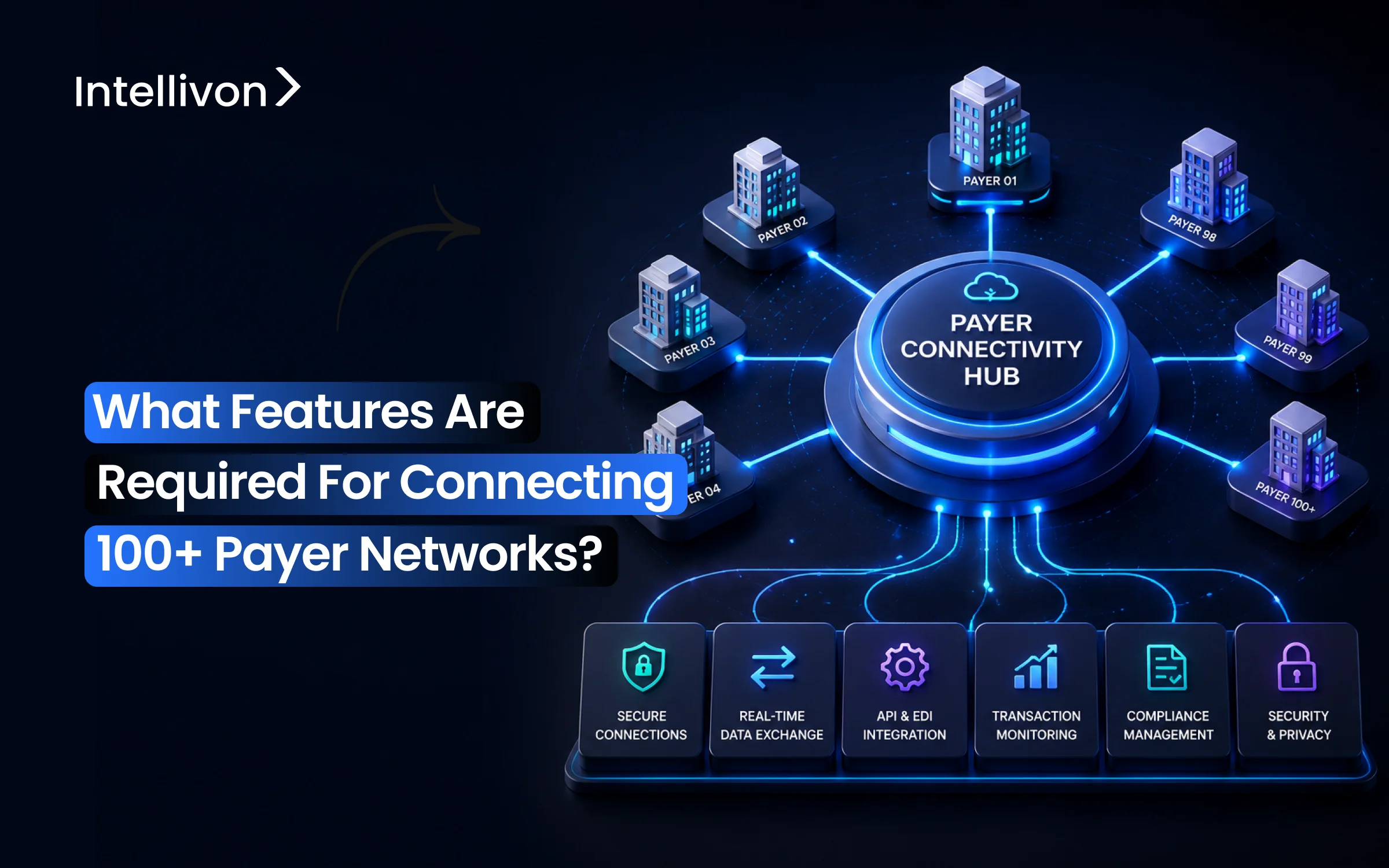
Connecting 100 or more payer networks requires five core feature categories, which include payer normalization, EDI transaction support, a centralized rules engine, real-time eligibility and claims processing, and HIPAA compliance controls. Here, each payer formats data differently and enforces different adjudication rules, so without the right foundation, you end up maintaining 100 separate integrations instead of one scalable platform.
However, without a payer normalization layer built in from the start, every new payer connection requires custom mapping work from scratch. As a result, platforms without this foundation spend 60 to 70 % more on maintenance as payer count grows. Platforms that build a centralized rules engine upfront, however, scale without rebuilding logic, and fully automated multi-payer platforms reduce administrative overhead by up to 40% within 12 months.
Specifically, Intellivon has built multi-payer connectivity systems for over ten years with payer normalization and compliance controls embedded from day one, not patched in later. This blog covers every required feature category, from EDI standards and payer APIs to rules engine design, ERA reconciliation, and connectivity redundancy. By the end, you will have a feature requirements framework ready to define build scope or evaluate any vendor.

What is a Multi-Payer Integration Platform?
A multi-payer integration platform is a centralized software system that links healthcare providers directly to hundreds of different insurance companies. Specifically, implementing the core multi-payer integration features required for connecting 100+ payer networks allows your system to route all transactions through a single gateway.
It automatically translates data between different formats like X12 EDI standards and modern APIs. This platform simplifies eligibility checks, claims tracking, and prior authorizations, saving your engineering and billing teams hundreds of manual hours every week.
Why Enterprises Need Multi-Payer Integration Platforms Now
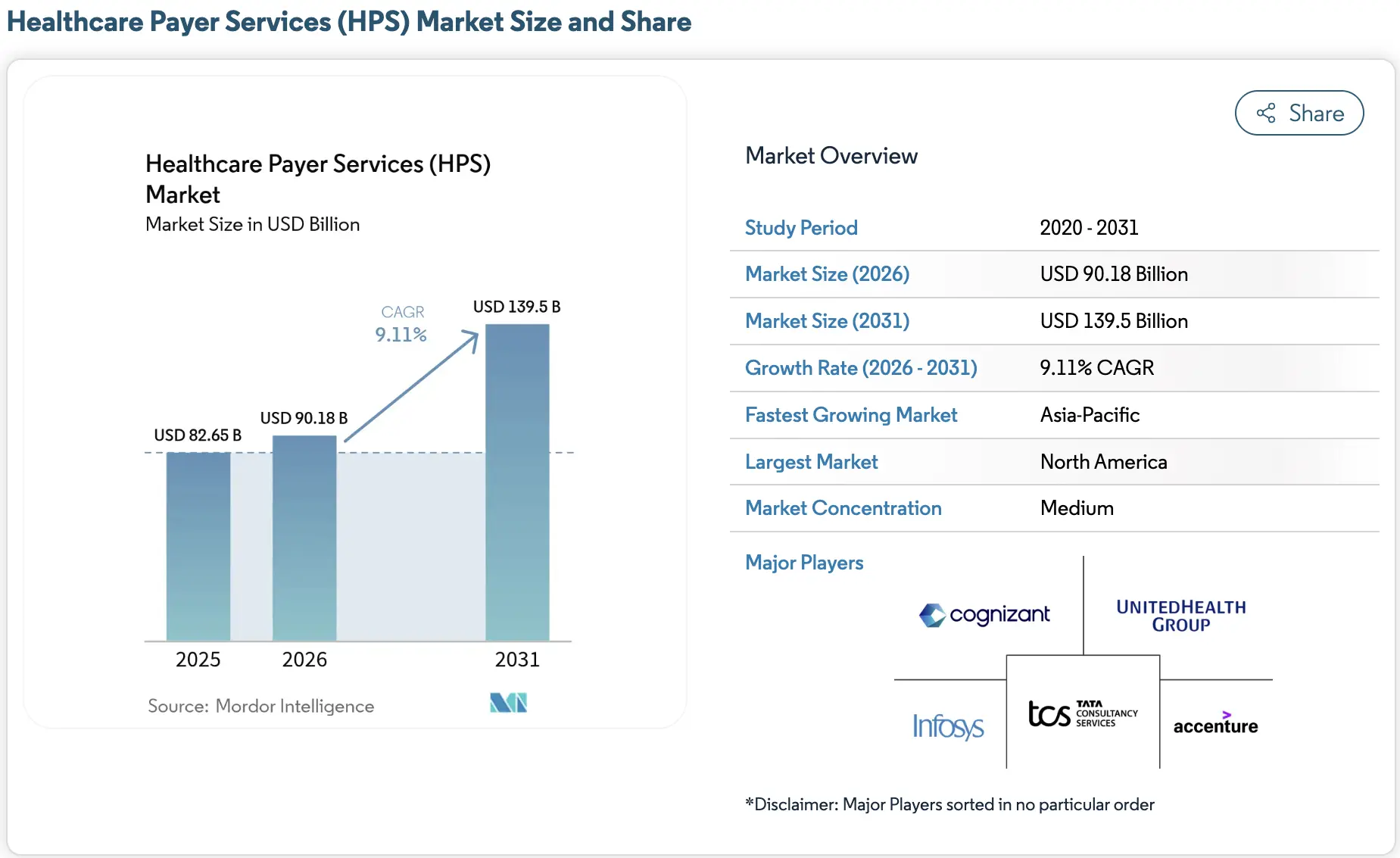
The enterprise need to connect with multiple payer systems is urgent, with the healthcare interoperability market projected to grow from $4.37 billion in 2025 to $15.13 billion by 2035. Managing this environment requires a unified infrastructure strategy rather than fragmented patches.
1. Fragmented Systems Drive Up Costs
Enterprise billing teams routinely manage 15 to 20 distinct payer portals. This fragmentation contributes to the $287 billion spent annually on U.S. administrative costs.
2. Value-Based Care Requires Real-Time Visibility
Value-based contracts represent 45% of U.S. healthcare payments, covering 90 million Americans. At the same time, operating under this model requires immediate visibility into member eligibility and quality metrics.
Multi-payer platforms provide real-time data synchronization, helping organizations reduce hospital readmissions by 18% to 25% and capture quality bonuses worth $50 to $150 per patient annually.
3. Regulatory Mandates Force Modernization
The CMS Interoperability Rules mandate real-time FHIR API data exchange, yet 60% of healthcare organizations still rely on legacy systems. Modern platforms bridge this gap using pre-built FHIR connectors for major commercial and government insurers.
This strategy compresses integration timelines from 12 months down to 2 to 4 weeks while maintaining 99.5% uptime.
Implementing the core multi-payer integration features yields 50% faster claims processing and a 60% reduction in verification time. This automation saves mid-sized health systems $2.3 million to $4.7 million annually, making unified gateways an operational necessity.
For a deeper breakdown of how foundational infrastructure choices impact your overall system cost, see our guide on the Cost To Develop a Healthcare Data Interoperability Platform.
What Multi-Payer Integration Features Are Required First?
The first required multi-payer integration features are directory management, eligibility verification, claims submission, remittance retrieval, claim status tracking, prior authorization routing, payer rules, normalization, audit logging, and uptime monitoring. Specifically, these core pieces create the foundational database, identity layers, and tracking rails that allow software to process transactions across hundreds of endpoints safely.
By establishing these essential features first, your team prevents structural data mismatches and transaction routing failures down the road.
Foundational Feature Requirements Matrix
| Core Feature Category | Core Technical Requirement | Operational Impact |
| Payer Directory Management | Stores active endpoints, transmission protocols, and communication rules. | Single dashboard to manage connections for all commercial and government entities. |
| Payer Database Features | Stores specific payer technical profiles (real-time APIs vs. legacy batch EDI). | Allows software to instantly look up transaction specifications based on the target payer. |
| Payer ID Crosswalk | Maps disparate, conflicting clearinghouse codes to a single system ID. | Ensures accurate transaction routing without manual code cleaning. |
| NPI & TIN Management | Validates National Provider Identifiers and Tax IDs across all outbound files. | Prevents immediate payer rejections and ensures accurate corporate tax reporting. |
| Group & Individual NPI | Maps clinic-wide group identifiers and individual rendering provider profiles. | Ensures multi-provider submissions roll up correctly under the right billing umbrella. |
| Multi-Location Connectivity | Routes transactions dynamically based on the specific physical or virtual clinic. | Adapts outbound files to match local state Medicaid or regional commercial contracts. |
| Multi-Specialty Features | Stores distinct billing modifiers, taxonomy codes, and specific document rules. | Automatically modifies transactions based on the clinical specialty before transmission. |
| Credential & Enrollment | Tracks provider credentialing status and automates digital onboarding packages. | Compresses the time required to clear a provider for active billing from months to days. |
| ERA & EFT Automation | Automates EDI 835 registration and coordinates Electronic Funds Transfer setups. | Eliminates paper checks and ensures rapid activation of digital payment posting. |
| API Versioning & Change | Supports multiple version configs and scans for payer payload alterations. | Ensures updating one endpoint configuration does not break active connections. |
| Transaction & Audit Logs | Captures immutable copies of all requests and tracks who accessed PHI data. | Allows engineers to fix errors instantly and provides compliance data for security reviews. |
A platform connecting to over 100 insurance networks requires a master directory and identity system before implementing advanced AI automation. Without absolute control over payer identity, transaction routing, enrollment status, and provider credentials, all downstream automated workflows become unreliable.
Building this rigid baseline layer ensures that your infrastructure remains stable as transaction volumes scale.
The next section defines the underlying platform architecture required to make these core features work together efficiently under heavy production loads.
Payer Network Connectivity Platform Features Need Six Architecture Layers
Payer network connectivity platform features should sit across six layers: intake, payer routing, standards translation, rules validation, transaction orchestration, and analytics.
Specifically, this architecture lets teams support EDI, FHIR, clearinghouse APIs, payer portals, and exception workflows without rebuilding the platform for every single payer relationship.
This structured approach ensures stable transaction scaling as you expand toward 100 or more payer networks.
The Six-Layer Architectural Requirements Checklist
| Architecture Layer | Component Focus & Supported Features | Primary Operational Value |
| 1. Front-Door Intake | EHR/Practice Management intake, RCM platform intake, batch file uploads, raw API requests, scheduling-triggered eligibility checks. | Consolidates all incoming provider data streams into a single, standardized ingestion queue. |
| 2. Payer Identity & Routing | Payer directory management, Payer ID crosswalk, plan code matching, commercial/government routing (Medicare, Medicaid, CHIP, Workers Comp, Auto Liability). | Automatically identifies the target insurance type, matching specialized rules like Medicare Advantage vs. Managed Medicaid. |
| 3. Transaction Standards | ANSI X12 5010 protocols, standard EDI transaction features (270/271, 837 claims, 276/277 status, 278 prior auth, 835 remittance, 834 enrollment), FHIR payer APIs. | Handles structural conversion, translating raw platform requests into legacy EDI data blocks or modern JSON outputs. |
| 4. Rules & Validation | Payer rules engine, payer-specific edit rules, NCCI edit features, LCD/NCD compliance, medical necessity validation, contractual adjustments. | Flags compliance errors, missing modifiers, or documentation gaps before files ever leave your cloud environment. |
| 5. Orchestration & Monitoring | Real-time payer monitoring, downtime detection, connectivity uptime tracking, API rate limiting, throttling management, failover redundancy, disaster recovery. | Manages active data traffic, triggering backup connections instantly if a specific commercial payer portal experiences a regional outage. |
| 6. Analytics & ROI | Payer performance analytics, payer scorecards, denial pattern tracking, response time metrics, volume reporting, clean claim rate optimization. | Surfaces clear operational metrics, tracking cash flow improvements like AR days reduction and first-pass acceptance rates. |
The platform should behave like a centralized payer operating system rather than an unorganized collection of disconnected scripts. Once this six-layer architecture is structurally locked in, product teams can deploy workflow-specific automation features safely without duplicating baseline cloud infrastructure.
This modular blueprint minimizes future development costs while maintaining 99.5% transmission uptime. For a deeper breakdown of how specific core features optimize your medical billing workflows, see our guide on What Core Features Matter Most in Prior Auth Automation?
Connecting 100 Payers Platform Requirements By Workflow
Connecting 100 payers platform requirements should be mapped by workflow because eligibility, claims, prior authorization, remittance, enrollment, and payment reconciliation each need different transaction patterns.
Specifically, a strong platform supports real-time calls, batch jobs, file-based exchange, API callbacks, payer-specific rules, and exception queues inside one operating model.
1. Eligibility And Benefits Verification
Multi-payer eligibility verification platform features must support real-time eligibility verification features, batch eligibility verification features, benefits verification automation features, coverage verification features, insurance discovery features, coordination of benefits features, and secondary payer identification features.
This workflow should run before visits, at scheduling, at check-in, and before claim submission.
- Technical Framework: Requires EDI 270 and 271 eligibility features, payer data normalization features, plan code matching, patient matching, subscriber validation, dependent matching, service type code handling, accumulator extraction, and coverage gap alerts.
- The Intellivon Approach: Intellivon builds eligibility workflows as both synchronous and batch services. This lets healthcare SaaS platforms run instant checks during onboarding while hospitals run overnight verification across scheduled appointments.
Once eligibility is clean, the next workflow is claim submission.
2. Claims Submission Across Diverse Lines
Claims submission features must support EDI 837 claims submission features across professional claims submission features, institutional claims submission features, dental claims submission features, vision claims submission features, and pharmacy claims submission features.
This platform should validate every claim before submission and track acknowledgments after submission.
- Technical Framework: Requires claim scrubbing, payer-specific edit rules, provider NPI validation, TIN validation, diagnosis-code checks, CPT and HCPCS validation, attachment prompts, clearinghouse routing, and claims acknowledgment features.
- The Intellivon Approach: Intellivon designs the claim submission layer with deterministic validation first. AI can flag likely denial risks, but payer-required edits must remain rules-driven and fully auditable.
After claims leave the platform, teams need real-time status visibility.
3. Claims Status And Tracking
Real-time claims status features should support EDI 276 277 claims status features, claims tracking features, payer response time tracking features, denial status alerts, and work queue routing.
This allows billing teams to act before delays turn into avoidable AR aging.
- Technical Framework: The platform must poll payer channels, receive payer responses, normalize status codes, map payer-specific language, and route claims by pending, accepted, rejected, denied, paid, or appealed status.
- The Intellivon Approach: Intellivon connects claim status data with payer scorecards and denial pattern analysis. This gives revenue cycle leaders a view of payer behavior, not just claim-level events.
The next workflow is remittance, where payment accuracy becomes visible.
4. ERA, EFT, And Remittance Reconciliation
ERA retrieval automation features should support EDI 835 remittance features, remittance processing features, payment posting integration features, virtual card payment features, ACH payment connectivity features, lockbox processing features, and payment reconciliation features.
This workflow turns payer payment data into posting, denial, underpayment, and adjustment intelligence.
- Technical Framework: The system must parse CARC and RARC codes, match payments to claims, identify contractual adjustments, detect underpayments, support secondary billing, and send structured data into billing or ERP systems.
- The Intellivon Approach: Intellivon builds remittance workflows with reconciliation logic and human review queues. This prevents blind auto-posting when payer data conflicts with contract terms or expected allowed amounts.
Prior authorization adds a clinical evidence layer to payer connectivity.
5. Prior Authorization And Referral Management
Prior authorization submission features should support EDI 278 prior auth features, PA status tracking features, real-time PA decision features, payer-specific PA rules features, referral management features, EDI 278 referral features, and clinical attachment submission features.
This platform should detect, prepare, submit, and track authorization requests.
- Technical Framework: Requires order data, CPT and diagnosis mapping, payer policy matching, LCD NCD compliance features, medical necessity validation features, electronic attachments features, medical record attachment features, and clinical document retrieval.
- The Intellivon Approach: Intellivon designs PA workflows with a human approval layer. AI can assemble evidence and flag missing data, but clinical and compliance teams should approve final submissions where risk is high.
For a deeper breakdown of prior authorization architecture, see our guide on AI Prior Authorization Platform Development.
Payer Network Integration Features Must Normalize Payer Variation
Enterprise multi-payer integration features must normalize payer names, payer IDs, plan codes, file formats, response codes, benefit language, claim status values, remittance fields, and authorization requirements. Specifically, payer variation represents the core architectural problem when managing a 100+ payer platform.
Without rigorous data normalization at ingestion, downstream billing apps fail due to mismatched fields. Building structural data normalization features ensures your software speaks a single language regardless of individual payer formatting errors.
1. Structural Data and Format Standardization
Standardized transaction protocols like EDI still vary wildly in practice between different commercial and government health insurance networks. This variation requires specific normalization logic to clean incoming files before they enter your database.
- Payer Normalization Features: This system dynamically re-maps non-standard names and text strings to a single internal convention.
- Payer Data Normalization Features: It strips white space, fixes corrupt dates, and corrects invalid characters from incoming payloads.
- Payer Format Standardization Features: Converts old flat files, custom JSON, or legacy EDI blocks into one uniform schema.
- Payer ID Crosswalk Features: Maps conflicting clearinghouse codes to a single system identity code for flawless routing.
- Machine-Readable Challenges: According to technical research, even highly standardized transactions return massive payer-specific variations in production [Stedi, 2026].
- The Normalization Mandate: Because of these format differences, machine-readable responses always require software normalization and exception handling [Stedi, 2026].
2. Gateway Connectivity and Integration Management
A 100+ payer platform cannot rely on a single connection method. The gateway must manage a hybrid mix of direct modern APIs, traditional clearinghouses, and automated web portal scripts.
- Clearinghouse Integration Features: Manages large batch SFTP uploads and tracking logs for traditional high-volume claim pipelines.
- Payer API Integration Features: Connects directly to modern real-time endpoints for instant eligibility and auth decisions.
- Payer Portal Connectivity Features: Uses secure web automation to log into legacy portals that lack public developer APIs.
- Payer Database Features: Stores the technical connectivity parameters and access tokens required for each individual network endpoint.
- Payer Directory Management Features: Provides developers a single dashboard to monitor active connections and update security credentials.
3. Versioning, Companion Guides, and Exception Handling
Payers change their custom business rules frequently without giving health systems advance notice. At the same time, your integration platform must detect, log, and isolate these changes automatically to avoid widespread transaction rejections.
- API Versioning: Safely maintains multiple active versions of a single payer endpoint during multi-month infrastructure migrations.
- Companion Guide Tracking: Digitizes payer-specific implementation manuals into software configurations rather than maintaining manual text documents.
- Payer-Specific Transaction Behavior: Adjusts outbound transmission timing and payload sizes based on known individual payer processing limits.
- Non-Standard 271 Response Handling: Parses messy eligibility responses when a payer places custom text inside standard fields.
- Non-Compliant Value Handling: Flags invalid codes or missing required segments before they cause an external transaction rejection.
- Fallback Workflows for Missing Payer Data: Re-routes transactions through alternative clearinghouses if a primary direct API path goes offline.
Data normalization turns chaotic multi-payer connectivity from a basic technical link into a predictable operational product. It establishes one common data language across your entire enterprise, even when individual insurance networks return highly inconsistent files.
Securing this clean data baseline is what ultimately makes an automated payer rules engine possible. For a deeper breakdown of how specific core features optimize your medical billing workflows, see our guide on AI Medical Billing Software Development for Healthcare.
The next section explores the specialized rules engine required to evaluate these normalized data streams against complex compliance policies.
Payer Rules Engine Features Control Denials Before Submission
Payer rules engine features should validate eligibility, authorization, coding, claims, attachments, contracts, fee schedules, and medical necessity before transactions leave the platform. This layer reduces avoidable denials because it checks payer-specific requirements earlier than billing review, clearinghouse rejection, or payer adjudication.
Catching formatting mismatches and missing modifiers programmatically inside your cloud ecosystem stops revenue leakage at the source.
Consequently, your platform maintains a clean transaction flow while lowering manual administrative overhead across your entire engineering and operations teams.
1. Deterministic Validation and Coding Rules
A 100+ payer network platform requires a rock-solid, rules-driven layer to enforce absolute compliance with non-negotiable coding and contractual policies. These edits prevent basic technical compliance mistakes from triggering automatic payer rejections.
- Payer-Specific Edit Rules Features: Enforces unique document formatting, custom subscriber group patterns, and required clearinghouse loop data based on the target insurer.
- NCCI Edit Features Multi-Payer: Automatically checks claims against National Correct Coding Initiative guidelines to prevent improper code bundling on multi-specialty submissions.
- LCD NCD Compliance Features: Evaluates transactions against Local Coverage Determinations and National Coverage Determinations to verify clinical necessity before submission.
- Medical Necessity Validation Features: Cross-references patient diagnosis codes directly with specific procedure codes to ensure the documented care matches insurance criteria.
- Payer-Specific PA Rules Features: Instantly determines whether an upcoming clinical service requires a prior authorization based on active insurance policy rules.
- Referral Management Features: Tracks and verifies active primary care provider referrals, ensuring the data attaches to specialists’ outbound claims automatically.
2. Revenue Integrity and Contract Management
Once clinical validation passes, the platform must verify that transaction parameters align perfectly with agreed corporate financial terms. This financial defense layer helps teams track payment performance and pinpoint cash flow errors instantly.
- Payer Contract Management Features: Digitizes fee schedules and reimbursement rules directly into the transaction processing line for accurate auditing.
- Fee Schedule Management Features: Stores localized regional rates and negotiated insurance prices across 100 or more distinct payer contract profiles.
- Allowed Amount Verification Features: Compares inbound remittance files directly with your expected contracted payment thresholds to find payment variances.
- Contractual Adjustment Features: Calculates expected write-offs automatically based on internal system rules, keeping financial accounting clean.
- Underpayment Detection Features: Flags claims when a payer pays less than the contracted fee schedule amount, generating instant alerts for billing teams.
- Revenue Integrity Payer Features: Combines transaction data to give revenue leaders real-time visibility into overall collection health and payment accuracy.
3. Advanced AI and Predictive Modeling Layers
While deterministic rules handle strict formatting and legal compliance, integrating specialized machine learning models adds predictive intelligence to the platform. These models handle complex, unstructured clinical text and track fluid behavior trends.
- Classification Models for Denial Risk: Machine learning models calculate real-time denial probability scores before a claim leaves your billing workflow.
- NLP Models for Evidence Extraction: Natural language processing parses unstructured clinical notes and electronic health records to extract required clinical evidence automatically.
- Rules Mining and Summarization: LLM-assisted systems scan massive, unstructured payer policy documents to flag changing documentation requirements for engineering teams.
- Anomaly Detection for Payer Behavior: Algorithms continuously track real-time payer response times and downtime patterns to catch silent platform connectivity issues.
- Human-in-the-Loop Feedback Loops: Structural review queues route borderline AI predictions to clinical specialists, using human feedback to optimize model accuracy.
- SHAP Explainability Requirements: The platform enforces strict SHAP explainability models so billing managers see exactly which data features drove a high denial risk score.
The rules engine should actively prevent bad transactions from leaving your system, not just explain why a claim was rejected afterward. However, verifying basic structural rules alone does not guarantee long-term contract payment accuracy.
For a deeper breakdown of denial risk and rules economics, see our guide on What’s The Real Development Cost For Denial Prevention AI?.
The Payer Truth Layer Finance Teams Actually Need
The most overlooked feature is a payer truth layer that compares eligibility, authorization, claim submission, ERA, EFT, contracts, fee schedules, and payment outcomes in one place.
Specifically, this gives finance leaders concrete evidence for underpayment detection, contract negotiations, payer mix analysis, reimbursement analytics, and network performance decisions.
1. Verifying Payer Financial Accountability
Most platforms focus only on the basic technical link needed to move data back and forth. However, a true enterprise platform must verify if insurance companies actually pay correctly after you connect.
- Payer Contract Management Features: Stores digital copies of active commercial agreements and tracks negotiated rate compliance.
- Fee Schedule Management Features: Hosts localized pricing models across 100 or more distinct insurance networks automatically.
- Allowed Amount Verification Features: Compares inbound remittance files directly with your expected contracted payment thresholds.
- Contractual Adjustment Features: Calculates expected internal financial write-offs automatically based on system rule parameters.
- Underpayment Detection Features: Flags claims when an insurance network pays less than the agreed fee schedule.
- Payer Contract Negotiation Data Features: Aggregates multi-year payment historical trends to give leadership leverage during renewals.
2. Structural Volume and Network Analytics
Managing risk across a large provider network requires deep operational visibility into your patient demographics and payment volumes. Clean data models allow finance teams to distribute resources effectively without relying on manual spreadsheets.
- Payer Mix Analysis Features: Tracks the exact ratio of commercial, Medicare, Medicaid, and self-pay revenue lines.
- Payer Volume Analytics Features: Measures total transaction counts and dollar volumes passing through specific gateway endpoints.
- Payer Reimbursement Analytics: Evaluates overall financial performance by specialty, clinical location, and specific insurance plan.
- Network Adequacy Features: Monitors provider coverage across geographic boundaries to ensure compliance with regional health contracts.
3. Performance Auditing and Compliance Tracking
Insurance networks frequently change their internal processing behaviors, which can cause sudden spikes in administrative delays. Continuous auditing helps teams isolate these variations before they disrupt your corporate cash flow.
- Payer Performance Analytics Features: Measures operational metrics like real-time response times and clean claim rates.
- Payer Scorecard Features: Ranks insurance companies by their actual denial rates and average payment velocity.
- Payer Audit Features: Generates comprehensive transaction histories to support internal billing reviews and external regulatory audits.
- Compliance Reporting Features (Payer): Produces exportable financial and operational reports tailored for healthcare compliance officers.
4. Concrete Financial Buyer Value
A Chief Technology Officer views this truth layer as an elegant, centralized data model that unifies disparate pipelines. Meanwhile, a VP of Revenue Cycle uses it as a leakage control shield to stop immediate financial waste.
Finally, a Chief Financial Officer relies on this data engine to enforce absolute payer accountability and protect corporate margins.
According to industry data, automated transaction workflows save the United States healthcare sector over $18 billion annually by eliminating manual administrative friction. However, capturing these savings requires total visibility into internal payer performance trends.
The payer truth layer turns basic technical connectivity into real corporate leverage. It helps healthcare leadership move from simply stating “we connected the payer” to confidently knowing exactly how each payer performs. Securing this financial visibility ensures your organization remains highly profitable.
HIPAA Compliant Multi-Payer Connectivity Features
HIPAA-compliant multi-payer connectivity features must include encryption, access control, audit logs, transaction traceability, Business Associate Agreement (BAA) readiness, Protected Health Information (PHI) minimization, secure file transfer, zero-trust architecture, SOC 2 controls, and incident response workflows.
Specifically, these features matter because multi-payer platforms process massive volumes of sensitive PHI, financial records, national provider identifiers, and patient claims history.
1. Encryption, Infrastructure, and Access Control
A high-volume enterprise payer gateway must safeguard patient data at every point of rest and transit across your network. Security cannot function as an afterthought or a superficial wrapper placed over vulnerable legacy pipelines.
- Data Encryption Payer Connectivity: The platform enforces strict AES-256 encryption for data at rest and TLS 1.3 for all data moving in transit.
- Role-Based Access Payer Platform: Administrators define granular access permissions so employees only view specific fields needed for their operational tasks.
- Zero-Trust Payer Connectivity Architecture: The gateway explicitly verifies every single user device and connection token, never assuming internal network safety.
- SOC 2 Payer Connectivity Compliance: The platform structure mirrors strict SOC 2 Type II trust principles to protect clinical operations.
- Multi-Tenant Payer Connectivity Features: The software uses isolated database schemas to keep client data separated within shared cloud architectures.
- High Availability Payer Connectivity: The platform runs across redundant cloud regions to maintain active data access during major server outages.
- Disaster Recovery Payer Features: Automated backup systems maintain strict, near-zero data loss targets to keep healthcare workflows running smoothly.
2. Auditing, Logging, and Transaction Traceability
Maintaining regulatory compliance across 100 distinct insurance connections requires a complete, unalterable ledger of every transaction. Your engineering team must have immediate access to these histories to satisfy strict federal reporting audits.
- Payer Connectivity Audit Trail: This central ledger creates an unchangeable record of every user who views, modifies, or exports PHI records.
- Transaction Logging Features: The platform captures exact raw copies of all outbound EDI files and modern JSON payloads for easy troubleshooting.
- Compliance Reporting Features (Payer): The software automatically builds exportable activity logs designed specifically for quick internal security evaluations.
- HIPAA Transaction Standard Compliance: The pipeline validates that all transaction segments match current federal electronic transmission laws perfectly.
- BAA Payer Connectivity Requirements: The architecture supports automated monitoring hooks that ensure active Business Associate Agreements protect every downstream data line.
- PHI Security Payer Connectivity: Automated data-scrubbing features strip out unnecessary identifiers from diagnostic logs to maximize patient privacy.
3. The Federal Regulatory Timeline
Under federal CMS-0057-F guidelines, operational reporting mandates are currently active across the United States healthcare ecosystem. Impacted payers must track compliance closely, as full Fast Healthcare Interoperability Resources (FHIR) API implementation deadlines hit on January 1, 2027 [CMS, 2024].
- CMS Payer API Requirements Features: The platform includes native technical configurations built specifically to meet these expanding federal compliance timelines.
- Patient Access Payer API Features: This gateway securely exposes consumer-directed claims, clinical notes, and active formulary data to third-party smartphone apps.
4. Expanded Network and Provider Access APIs
Interoperability rules demand clean, secure, and authenticated communication pathways between insurance entities and in-network clinical teams. This open access eliminates traditional manual processing blocks like phone queues, paper mailing, and outdated fax lines.
- Provider Access Payer API Features: Allows in-network medical teams to safely retrieve historical patient records directly from external insurance databases.
- Payer-to-Payer Exchange Features: Automatically transfers up to five years of a patient’s clinical and billing history when they switch plans.
5. Prior Authorization and Core Data Standards
Automating utilization management requires strict technical alignment with current federal data exchange frameworks. The platform handles the deep structural translation required to move files between traditional administrative systems and modern web interfaces.
- Prior Authorization API Readiness: Supports automated, machine-readable requests and responses to eliminate traditional paper and manual fax lines.
- FHIR Payer API Features: This data layer maps legacy database tables directly into clean HL7 Fast Healthcare Interoperability Resources formats.
6. Industry Implementation Alignment Frameworks
To operate a multi-payer platform at scale, your software code must align with verified industry implementation blueprints. These standardized frameworks provide the underlying data profiles and interaction rules that make cross-network connectivity predictable.
- Da Vinci Project Features: Implements standardized industry use cases designed specifically to bridge data gaps between payers and providers.
- PDex Payer Data Exchange Features: Standardizes the specific transmission profiles needed to move complex medical records across separate systems.
- PLex Prior Auth Features: Coordinates the underlying documentation requirements and approval pathways needed for electronic prior authorizations.
- CARIN Alliance Features: Integrates consumer-facing identity blueprints to give patients safe, unhindered access to their digital billing information.
Regulatory compliance should never slow your platform’s operational speed after a public launch. Instead, it must define the fundamental blueprint for how every individual payer connection processes and moves information from day one.
For a deeper breakdown of how foundational infrastructure design protects sensitive transactions, see our guide on the Cost To Develop a Healthcare Data Interoperability Platform.
Payer API Integration Platform Features That Benefit From AI
AI features optimize pattern detection, document extraction, task prioritization, and exception handling across your workflows. Crucially, AI does not replace transaction standards like X12 EDI or FHIR. Instead, machine learning handles unstructured data challenges, pre-assembles documentation, and highlights financial risk across your connected lines.
This hybrid infrastructure ensures that your technical billing platform processes complex human decisions with the same speed as traditional automated data transfers.
1. Machine Learning for Discovery and Patient Benefits
Unstructured insurance rules and messy patient registries routinely create verification errors that stall downstream billing pipelines. Specialized machine learning models actively clean up these gaps by predicting coverage paths before patient check-in.
- Insurance Discovery Features: Predictive data models scan historical state registries to locate active hidden coverage lines automatically.
- Secondary Payer Identification Features: Algorithms review patient data history to map correct primary versus secondary insurance structures.
- Benefits Verification Automation Features: Unifies disparate eligibility data blocks into a single, human-readable summary for billing staff.
- Real-Time Adjudication Features: Neural networks predict precise out-of-pocket patient costs during clinic visits based on historic trends.
2. Advanced Document Processing and Prior Authorization
Gathering clinical proof from Electronic Health Records (EHR) represents the most labor-intensive bottleneck in utilization management. Advanced vision and text models compress this workflow from hours to mere seconds.
- Clinical Attachment Submission Features: Machine vision systems scan, crop, and group medical PDF files for digital export.
- Medical Record Attachment Features: Natural language processing isolates relevant clinical chart notes required to satisfy complex insurance rules.
- AI-Assisted Exception Triage: Automated routing workflows flag missing physician signatures or missing test results before transmission.
- Optical Character Recognition Requirements: High-accuracy OCR tools convert scanned paper clinic forms into clean, machine-readable text files.
3. Financial Analytics and Revenue Recovery Models
Payer processing behaviors change constantly, which makes manual denial tracking highly inefficient for large finance groups. Intelligent anomaly detection engines surface hidden payment patterns that traditional rules-based systems completely miss.
- Denial Pattern Analysis Features: Clustering models group rejections by specific codes to uncover systemic administrative payment blocks.
- Payer Denial Rate Tracking Features: Monitors real-time adjudication anomalies to alert developers about silent portal change events.
- Underpayment Detection Features: Financial models cross-examine inbound remittances against contract rules to catch partial payment errors.
- Payment Reconciliation Features: Matches bank ACH text strings with outstanding insurance claims to eliminate manual spreadsheet tracking.
4. Payer Communication and Rules Maintenance
Maintaining clean developer documentation across 100 separate insurance networks requires continuous, manual code alterations. Generative AI layers handle this tracking by digitizing public policy shifts into software updates.
- Payer Correspondence Automation Features: Generative models draft precise, structured appeal letters based on historical approval records.
- Payer Communication Features: Semantic search tools instantly pull open helpline contact points and specific secure fax destinations.
- AI-Assisted Payer Rules Maintenance: Large language models scan updated carrier manuals to update internal processing rules automatically.
- RAG Policy Lookup Architectures: Retrieval-augmented generation engines search massive insurance policies to find explicit clinical coverage clauses.
- AI-Generated Internal Explanations: The system outputs clear, rule-level text explaining precisely why an internal transaction was held.
5. Strict Security and Model Governance Guardrails
AI outputs must never become final, external payer-facing submissions without explicit clinician validation. When models affect medical authorization, financial reimbursement, or legal clinical justification, a human specialist must review the payload.
To maintain strict regulatory compliance, your core database must store the exact model version used, the underlying source evidence extracted, the explicit reviewer action, and the final outbound JSON payload. This comprehensive tracking loop ensures full auditability for enterprise compliance reviews.
AI adds immense operational value when it actively reduces exception loads and accelerates internal decision speeds. However, the true bedrock of your architecture remains rigid data standards, strict rules engines, and robust transaction governance.
Healthcare Payer Connectivity Platform Requirements For Reliability
Healthcare payer connectivity platform requirements should include uptime monitoring, queue management, retry logic, failover channels, payer downtime detection, SLA tracking, throttling controls, disaster recovery, and transaction replay. Specifically, these features keep eligibility, claims, remittance, and prior authorization workflows running when external payer APIs, portals, or clearinghouse networks degrade.
Since insurance systems experience frequent unscheduled outages, building built-in operational redundancy ensures your billing applications continue processing data without systemic infrastructure crashes.
1. Reliability and Fallback Feature Requirements
| Technical Component | Core Supported Features | Specific Operational Impact |
| Outage & Uptime Monitoring | Real-time payer monitoring, Payer status monitoring, Payer downtime detection, Connectivity uptime monitoring. | Automatically detects silent portal drops or API blockages within seconds, instantly notifying your dev operations team. |
| Traffic & Rate Management | API rate limiting payer features, API throttling management features, Payer API versioning features, Payer API change management. | Prevents your servers from overwhelming insurance endpoints, completely avoiding automated IP bans or severe traffic throttling. |
| Redundancy & Failover Channels | Payer connectivity redundancy features, Failover connectivity features, High availability payer connectivity, Disaster recovery payer features. | Routes transactions through an alternate clearinghouse or portal automatically if your primary direct API path experiences an outage. |
| Exception Handling & Recovery | Transaction replay, Dead-letter queues, Alert routing, Incident dashboards. | Captures failed payloads in isolated queues so engineers can re-submit data packages without losing historical processing states. |
2. Workflow-Specific Operational Impacts
Operational reliability rules must differ significantly across your primary billing modules because various healthcare transactions carry highly distinct latency tolerances:
- Eligibility Checks: Require immediate, low-latency real-time response checks. When a patient stands at the front desk, an API delay directly disrupts clinical care.
- Claims & Remittance Pipelines: Can comfortably tolerate larger overnight batch processing windows. However, these modules require absolute data completion and predictable exception reporting.
- Prior Authorization Workflows: Demands a hybrid mix of urgent escalation handling and continuous, long-term status tracking over multiple days.
Platform reliability is a core visible product feature, not just a hidden infrastructure setting buried deep inside your cloud configurations. Your gateway must clearly surface what failed, why it failed, who owns the exception, and exactly how the system recovered.
For a deeper breakdown of how foundational infrastructure design protects sensitive transactions, see our guide on How Much Does 50+ Hospital EHR Integration Platform Cost?
How Much Do Multi-Payer Integration Features Cost To Build?
A custom multi-payer connectivity platform usually costs up to $450,000 to build, depending on payer count, transaction scope, EDI/FHIR complexity, clearinghouse coverage, AI features, compliance depth, and integration volume.
Specifically, a focused MVP can start near $180,000, while a 100+ payer production platform often exceeds $450,000. Defining clear architectural boundaries early protects your budget from sudden inflation during development. Consequently, engineering teams can prioritize high-value modules without accumulating crippling technical debt.
1. Cost Breakdown Matrix by Project Phase
| Development Phase | Typical Cost Range | What It Covers |
| 1. Discovery & Inventory | $20,000–$60,000 | Payer lists, transaction mapping, volume analysis, compliance scoping, and workflow prioritization. |
| 2. Architecture & Data Model | $50,000–$120,000 | Payer directories, payer ID crosswalk features, core routing engines, EDI/FHIR data models, and audit frameworks. |
| 3. Eligibility & Claims MVP | $80,000–$180,000 | EDI 270/271, 837 claims, acknowledgments, basic payer routing, and EHR or RCM application integration. |
| 4. ERA & Reconciliation | $90,000–$220,000 | EDI 835 parsing, 276/277 status tracking, automated payment posting, and contract adjustment handling. |
| 5. Prior Auth & Attachments | $120,000–$300,000 | EDI 278 workflows, payer-specific PA rules features, status tracking, and clinical document attachment tools. |
| 6. Rules Engine & Normalization | $100,000–$260,000 | NCCI edit features, LCD/NCD compliance checks, plan code normalization, and automated exception handling queues. |
| 7. AI & Analytics Layer | $120,000–$350,000 | Machine learning denial prediction models, payer scorecard features, underpayment detection, and anomaly engines. |
| 8. Security & Monitoring | $80,000–$220,000 | HIPAA access controls, role-based encryption, immutable audit logging, uptime monitoring, and disaster recovery. |
| 9. Rollout & Hardening | $150,000–$450,000 | Multi-network onboarding, testing, payer enrollment automation features, redundancy setups, and SLA dashboards. |
2. Ongoing Maintenance and Operational Costs
Ongoing system maintenance usually costs 18% to 30% of your initial build budget per year. This recurring investment is necessary because insurance networks introduce structural changes to their infrastructure without providing advance industry warning:
- Payer Configuration Maintenance: Covers continuous payer API adjustments, updated companion guides, and evolving rule parameters.
- Compliance & Technical Support: Funds critical data compliance updates, machine learning model drift monitoring, and active transaction failure debugging.
- Infrastructure Operations: Supports cloud data center scaling, security patch deployment, and bandwidth adjustments to handle shifting transaction volumes.
Development costs rise fastest when your software tries to expand from one individual workflow to many parallel workflows across diverse payer environments simultaneously.
The most effective cost-control strategy is executing a phased delivery plan rather than engaging in drastic feature reduction.
Build A Multi-Payer Connectivity Platform With Intellivon
Intellivon helps healthcare SaaS companies, RCM firms, hospitals, clearinghouses, and large provider groups plan and build multi-payer connectivity platforms around real payer workflows.
The team can help define payer scope, EDI architecture, FHIR API strategy, clearinghouse routing, payer portal automation, compliance controls, AI support, and phased development priorities before full engineering begins.
1. Define The Right Payer Connectivity Scope
The first step is deciding which payers, transaction types, and workflows matter most. Intellivon helps teams map commercial payers, Medicare Advantage plans, Medicaid MCOs, regional Blues plans, clearinghouse routes, and direct payer APIs before build planning starts.
This gives product, engineering, and revenue-cycle leaders a clear scope for eligibility, claims, prior authorization, remittance, claim status, benefits verification, payer rules, and denial workflows. It also helps avoid building broad payer coverage before the highest-volume or highest-friction routes are understood.
2. Design The Transaction And Routing Architecture
Multi-payer connectivity depends on routing logic that can handle payer differences without breaking front-end workflows. Intellivon helps design architecture for X12 transactions, FHIR payer APIs, clearinghouse APIs, SFTP files, payer portal data, and internal workflow APIs.
The platform can support eligibility checks, claim submission, claim status, electronic remittance advice, prior authorization requests, payer rule validation, and exception handling. This gives teams a cleaner foundation for scale because payer-specific complexity stays inside the routing and rules layer.
3. Build Rules, AI, And Audit Controls Together
Payer connectivity platforms need deterministic logic and AI support. Intellivon helps separate hard payer rules, EDI validation, medical policy checks, authorization requirements, and routing decisions from AI-assisted workflows such as document extraction, exception triage, denial prediction, payer response classification, and underpayment risk detection.
This approach keeps the platform auditable while still improving speed. Revenue-cycle teams can see why a claim, authorization, or remittance workflow was routed, flagged, approved, or escalated.
4. Connect The Platform To Revenue Outcomes
A multi-payer platform should improve measurable revenue-cycle outcomes, not only move data between systems. Intellivon helps teams define the operating metrics the platform should track from the beginning.
These metrics may include clean claim rate, first-pass acceptance rate, denial rate reduction, authorization turnaround time, payer response time, AR days reduction, underpayment recovery, claim status visibility, and staff productivity. This makes the platform easier to justify because technical architecture connects directly to financial impact.
5. Plan A Phased Build Before Scaling To 100+ Payers
A 100+ payer platform should be built in phases. Intellivon can help teams start with the highest-volume payers, highest-denial workflows, or most urgent transaction types before expanding coverage.
The first phase may focus on eligibility and claims. The next phase may add prior authorization, remittance, claim status, payer rules, analytics, and AI-assisted exception handling. This phased approach reduces integration risk and gives leadership clearer budget, timeline, and ROI visibility.
Start Your Multi-Payer Connectivity Build Plan
If your team is planning a multi-payer connectivity platform, Intellivon can help define the payer network, transaction scope, EDI and FHIR architecture, clearinghouse strategy, compliance controls, AI layer, analytics model, and phased roadmap before development begins.
Build a payer connectivity platform that supports real revenue-cycle operations, payer complexity, audit requirements, and measurable financial outcomes from the first release.
Conclusion
A multi-payer connectivity platform should be planned as revenue-cycle infrastructure, not a simple integration project. First, teams must define payer scope, transaction types, routing rules, and compliance needs. Then, they should connect EDI, FHIR, clearinghouse, portal, and analytics workflows in phases.
As payer coverage expands, the platform should improve eligibility accuracy, claim acceptance, authorization speed, remittance visibility, denial reduction, and measurable revenue-cycle performance across every connected payer network route safely.
Things To Know About Multi-Payer Integration Features
Q1. How much do multi-payer integration features cost to build?
A1. Multi-payer integration features usually cost upto $450,000 to build. A focused MVP with eligibility, payer routing, and claims submission costs $180,000–$350,000. However, production platforms with 100+ payer connections, ERA, PA, AI rules, compliance, and analytics can exceed $450,000.
Q2. How long does a 100+ payer connectivity platform take to build?
A2. A focused MVP usually takes 14–20 weeks. Meanwhile, a production-ready platform with EDI 270/271, 837, 835, 276/277, 278, payer normalization, monitoring, and compliance usually takes 7–14 months. However, a 100+ payer rollout may need 12–24 months.
Q3. What features does a multi-payer network platform need first?
A3. A multi-payer network platform first needs payer directory management, payer ID crosswalks, eligibility checks, claims submission, claim status, ERA retrieval, payer rules, transaction logs, enrollment tracking, and HIPAA controls. After that, teams can add AI, analytics, real-time adjudication, and payer performance tools.
Q4. Are clearinghouse connectivity features 100 payers enough for enterprise scale?
A4. Clearinghouse connectivity can cover many payer transactions. However, it may not be enough for enterprise differentiation. At the same time, larger teams often need custom payer rules, contract analytics, payer scorecards, AI exception handling, underpayment detection, and deeper workflow integration beyond clearinghouse pass-through.
Q5. Should we build or buy an enterprise payer connectivity solution?
A5. Buy when you only need basic eligibility, standard claims submission, or low-volume transactions. However, build when payer connectivity affects product control, margins, workflow ownership, data access, AI roadmap, or payer analytics. For 100+ payer networks, a hybrid model often works best.
To Sum Up:
- A 100+ payer platform is not just a bigger eligibility checker. It needs payer identity, routing, EDI, FHIR, rules, remittance, PA, compliance, and analytics in one architecture.
- The overlooked feature is the payer truth layer. It connects contracts, claims, ERA, EFT, denial patterns, and underpayments into one financial view.
- AI should not replace payer standards. It should extract evidence, detect risk, prioritize exceptions, and explain payer behavior with audit controls.
- Most payer integrations look successful at go-live. The real test is whether the platform can handle payer rule updates, API changes, enrollment gaps, and payment variance after launch.