Key Takeaways:
-
Clinical decision support platforms deliver AI-assisted recommendations across diagnosis, treatment, risk scoring, and care pathways.
-
EHR and workflow integrations, local clinical validation, and human oversight are non-negotiable production requirements.
-
FDA, ONC, and HIPAA controls govern how clinical recommendations are generated, displayed, and audited throughout.
-
Development costs $70,000 to $300,000 with 12- to 16-week MVPs and 5- to 8-month production timelines.
-
How Intellivon builds clinical decision support platforms using a phased, compliance-first approach from EHR integration through deployment.
An AI risk assessment tool tracks patient data continuously and flags danger before it turns into a crisis. That matters because most hospitals still rely on manual checks every few hours, and a patient’s condition can shift fast in that window. By the time a chart reflects the change, the response is already delayed.
A prediction model on its own doesn’t solve this. What actually changes outcomes is getting that alert to the right nurse or physician, inside the workflow they already use, not buried in a separate dashboard. In fact, a nine-hospital study found in-hospital mortality dropped by 39.5%, and 30-day readmissions fell by 22.7%, after an AI sepsis tool went live, according to research published on NCBI Bookshelf.
Nurses and physicians won’t act on a risk score they can’t trace back to specific vitals or lab values, and alert overrides climb fast when that trail is missing. We build that explanation into the alert itself at Intellivon, which inputs drove the score, not a separate report generated after the fact. This blog covers the entire build process, from model design to EHR integration and compliance, so you’ll know exactly what it takes to catch risk before it turns into harm.
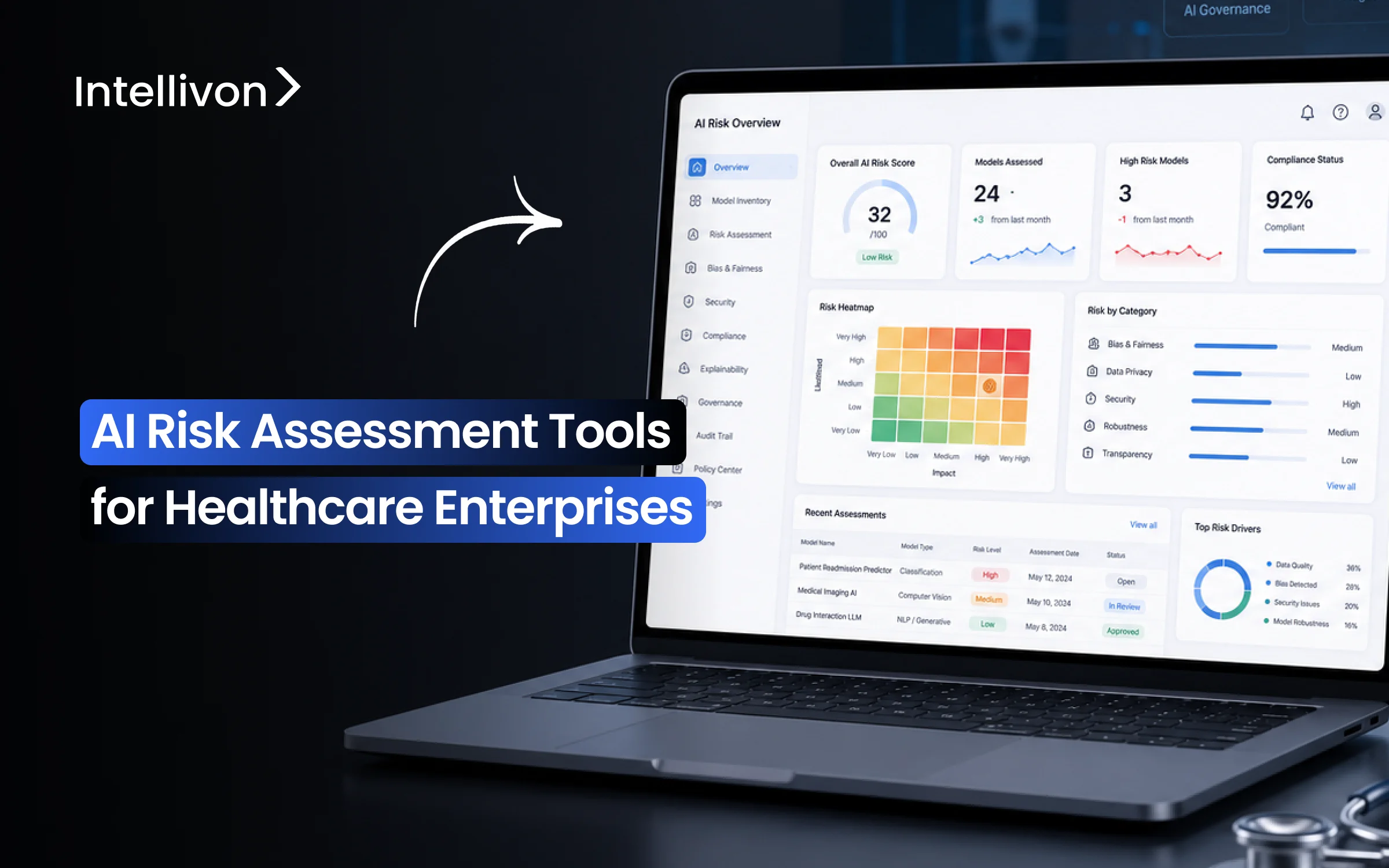
What AI Risk Assessment Tools Mean in Healthcare
AI risk assessment tools healthcare systems rely on evaluate real-time patient vectors or model performance to prevent adverse events and ensure clinical safety. Specifically, unlike generic governance, risk, and compliance (GRC) platforms or payer-focused risk-adjustment engines, enterprise clinical risk platforms operate directly inside provider workflows.
Consequently, they process streaming electronic health record (EHR) data, physiological telemetry, and lab results to identify deteriorating patients, forecast acute complications, and flag operational or algorithmic failures before they harm patient outcomes.
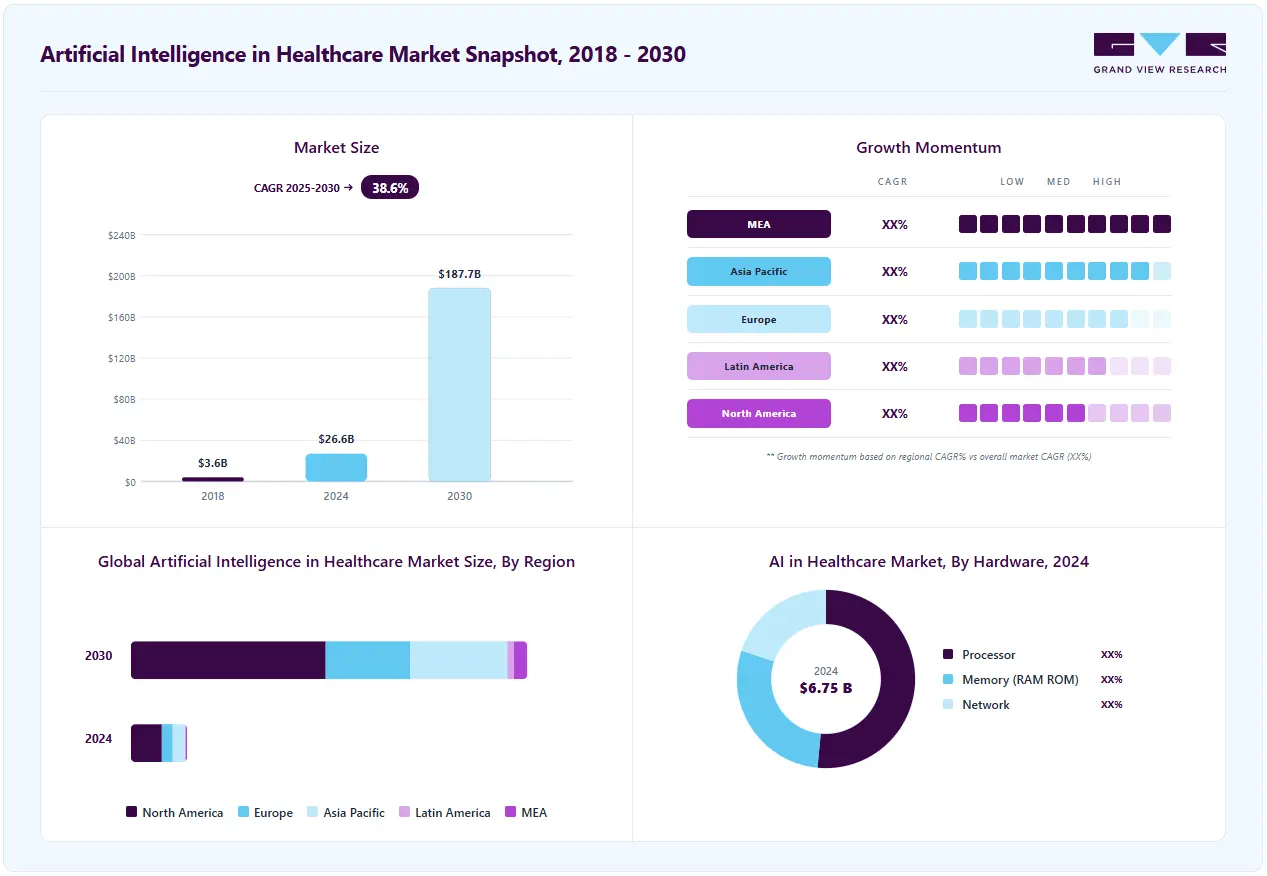
Furthermore, the global market for predictive analytics and clinical AI risk tools is expanding rapidly. Valued at $50.7 billion in 2026, the AI in healthcare market is projected to reach $505.6 billion by 2033, growing at a compound annual growth rate (CAGR) of 38.9%.
1. Patient Risk Prediction
These models calculate a patient’s probability of suffering a specific, near-term adverse clinical event.
- Sepsis and Deterioration: Early warning detection for septic shock, ICU transfer, or respiratory failure.
- Acute Complications: Real-time risk scoring for acute kidney injury (AKI), cardiac arrest, and surgical site infections.
- Safety & Transitions: Predictive flags for patient falls, 30-day readmissions, and medication-induced adverse events.
2. AI System Risk Assessment
This layer continuously evaluates whether the deployed clinical algorithm itself introduces operational, privacy, or diagnostic hazards.
- Clinical & Safety Risk: Ongoing monitoring for model drift, out-of-distribution data, and false-negative trends.
- Regulatory & Compliance: Automated audit trails for FDA Software as a Medical Device (SaMD) and HIPAA privacy rules.
- Bias & Fairness: Real-time auditing for demographic bias and disparate performance across sub-populations.
3. Risk Adjustment and Financial Risk Versus Bedside Clinical Risk
| Attribute | Risk Adjustment & Financial Risk | Bedside Clinical Risk Assessment |
| Primary Focus | Population-level Hierarchical Condition Category (HCC) coding and Risk Adjustment Factor (RAF) scores | Real-time patient physiological changes, acute deterioration, and clinical safety |
| Data Sources | Historical claims data, billing codes, and annual health assessments | Live EHR feeds, continuous vitals streaming, telemetry, and real-time lab results |
| Execution Window | Retrospective or monthly batch processing for financial forecasting | Continuous, sub-second inference driving point-of-care clinical decisions |
| Primary User | Medical coders, value-based care analysts, and health plan administrators | Bedside nurses, physicians, rapid response teams, and care coordinators |
4. What a Clinical Risk Tool Must Produce
To drive meaningful action, an enterprise AI risk assessment platform for hospitals must generate a complete, actionable output package rather than a standalone score.
- Patient-Level Probability: A normalized 0–100% risk calculation powered by continuous data feeds.
- Risk Tiering & Factors: Stratified severity levels paired with key contributing clinical features.
- Explainability & Uncertainty: Visual SHAP/LIME factor breakdowns alongside confidence intervals.
- Actionable Routing: Automated clinical review pathways assigned to specific care teams with timestamped audit trails.
A risk score without an intervention workflow remains a passive analytics output, not an active clinical risk-management system. Therefore, high-performing health systems require closed-loop integration to convert predictive intelligence into immediate bedside care.
Where Healthcare Enterprises Use AI Risk Assessment
Enterprise health systems deploy clinical AI risk stratification tools that enterprises rely on to catch silent patient deterioration, streamline hospital operations, and close systemic gaps in care.
Rather than relying on static, once-a-day manual risk scores, modern health systems run real-time machine learning models that continuously scan electronic health records (EHRs), lab feeds, and bed monitors.
This continuous background monitoring turns raw clinical data into instant bedside alerts, giving clinical teams a vital head start to save lives and prevent costly complications.
For a deeper breakdown of building compliant healthcare algorithms, see our guide on AI Bias Detection Tools for Enterprise Compliance.
Clinical Domain Table
| Clinical Domain | Prediction Target | Typical Data Sources | Prediction Window | Primary User | Required Action |
| Acute Deterioration & Sepsis | Septic shock, respiratory failure, ICU transfer, cardiac arrest | Continuous vitals, lactate, WBC count, nursing notes, NEWS/MEWS scores | 4 to 12 hours before event | Rapid Response Teams, ICU Nurses | Initiate sepsis bundle, evaluate for ICU escalation, order blood cultures |
| Readmission & Flow | 30-day readmission, discharge delay, length of stay (LOS) excess | Historical admissions, comorbidity index, SDOH data, medication complexity | At admission & 24 hours pre-discharge | Case Managers, Care Coordinators | Schedule early home health, coordinate transportation, resolve care gaps |
| Hospital-Acquired Harm | Patient falls, pressure ulcers, VTE, AKI, hospital-acquired infections | Braden scale history, mobility status, serum creatinine, urine output, IV line duration | Continuous / Daily updates | Bedside Nurses, Safety Officers | Adjust fall precautions, order sequential compression devices, adjust nephrotoxic meds |
| Surgical & Maternal | Postoperative complications, preeclampsia, maternal hemorrhage | ASA score, operative duration, blood loss, blood pressure trends, lab panels | Intraoperative to 48 hours post-op | Anesthesiologists, Obstetricians, Surgical Teams | Administer prophylactic antihypertensives, prepare blood products, extend PACU monitoring |
| Population Health | Disease progression, care gap emergence, food/housing insecurity | Claims data, Z-codes, outpatient encounter history, community risk indices | 30 to 90 days forward | Population Health Managers, Primary Care Physicians | Enroll in chronic care management, connect with social services, schedule preventive visits |
1. Acute Deterioration and Sepsis
Acute deterioration models track continuous physiological shifts to forecast septic shock, cardiac arrest, and respiratory collapse hours before manual scoring systems trigger.
- NEWS and MEWS Augmentation: Machine learning models enhance traditional National Early Warning Scores (NEWS) and Modified Early Warning Scores (MEWS) by analyzing subtle non-linear trends in telemetry.
- Rapid-Response Activation: Early risk alerts automatically trigger rapid-response teams, significantly reducing unplanned ICU transfers and unexpected bedside codes.
2. Readmission, Discharge, and Length of Stay
Readmission and length-of-stay algorithms identify high-risk patients during their inpatient stay to prevent post-discharge complications.
- 30-Day Readmission Risk: Models evaluate social risk factors, polypharmacy, and clinical stability to flag patients needing intensive post-discharge support.
- Transition-of-Care Planning: Predictive discharge tools identify bottleneck risks early, allowing care coordinators to arrange home health services and prevent unnecessary bed-day extensions.
3. Hospital-Acquired Harm
Predictive harm algorithms continuously evaluate inpatient risk factors to prevent avoidable hospital-acquired conditions.
- Fall and Pressure Injury Prevention: Algorithms analyze real-time mobility notes and lab results to update nursing care plans automatically.
- Acute Kidney Injury (AKI) & VTE Alerts: Models monitor urine output and serum creatinine to flag drug-induced AKI and venous thromboembolism before irreversible organ damage occurs.
4. Surgical, Maternal, and Behavioural Health Risk
Specialized risk scoring systems protect vulnerable surgical, obstetric, and behavioral health patient populations.
- Perioperative & Maternal Safety: Real-time risk tools monitor blood pressure trajectories and lab trends to predict preeclampsia, maternal hemorrhage, and postoperative surgical site infections.
- Behavioral Health Escalation: Natural language processing (NLP) models analyze clinical notes to detect rising suicide, self-harm, or substance-use risks during encounters.
5. Population Health and Health Equity
Enterprise risk platforms aggregate longitudinal data to identify rising-risk patients across entire health system networks.
- Chronic Disease & Care Gaps: Predictive engines identify patients at risk of chronic condition escalation, allowing care managers to intervene proactively.
- SDOH & Equity Monitoring: By incorporating social determinants of health (SDOH), such as housing instability or food insecurity, platforms ensure care resources are distributed fairly without algorithmic bias.
Real-time clinical risk predictions transform reactive bedside medicine into proactive care delivery. Consequently, health systems using automated risk stratification dramatically reduce adverse clinical events while streamlining care coordination across every department.
Best AI Risk Assessment Tools Healthcare Leaders Can Compare
Selecting the right platform requires evaluating tools by functional category rather than relying on generic market rankings. Because clinical risk domains demand distinct data inputs and workflow triggers, healthcare leaders must evaluate platforms against their specific operational needs.
For a deeper breakdown of building compliant healthcare algorithms, see our guide on AI Model Risk Management Software for Enterprises.
1. EHR-Native Clinical Risk Tools
Native capabilities embedded within EHR platforms like Epic, Oracle Health, MEDITECH, and athenahealth offer rapid deployment and seamless workflow integration.
- Workflow Fit: Native tools eliminate context-switching by displaying risk scores directly within existing physician and nursing documentation screens.
- Limitations: However, they often lack model transparency, limit custom algorithm modifications, and cannot easily export predictive context to external systems.
2. Acute Monitoring and Early-Warning Platforms
Specialized platforms such as Philips early-warning solutions, PeraHealth, CLEW, and Etiometry process continuous physiological data to flag acute patient deterioration.
- High-Frequency Analysis: In particular, these platforms analyze streaming telemetry and vital signs in real time to detect early septic shock or respiratory collapse.
- Targeted Interventions: Consequently, they immediately trigger bedside rapid-response teams, helping prevent unexpected ICU transfers.
3. Population Health and Risk-Stratification Platforms
Enterprise platforms like Innovaccer, Arcadia, Health Catalyst, Optum, and Apixio stratify risk across broader patient populations.
- Multi-Source Ingestion: Specifically, they combine clinical records, historical claims, pharmacy data, and social determinants of health (SDOH).
- Proactive Care Management: As a result, care teams can identify rising-risk patients and close care gaps before costly hospitalizations occur.
4. Specialty and Imaging Risk Platforms
Specialized tools like Viz.ai and Aidoc focus on acute diagnostic and specialty domains, including neurology, cardiology, and radiology.
- Rapid Image Triage: For instance, algorithms automatically analyze CT scans and X-rays to flag critical conditions like stroke or pulmonary embolism.
- Specialist Activation: Furthermore, they route urgent findings directly to specialist call teams within minutes.
5. Custom Enterprise Platforms
Custom development becomes essential when health systems require proprietary models, local clinical protocols, or cross-EHR interoperability.
- Tailored Workflows: Above all, custom solutions allow health systems to build proprietary risk scoring models tailored to unique patient demographics.
- Complete Ownership: Ultimately, enterprises maintain total control over data governance, model retraining schedules, and intellectual property.
6. The RFP Scorecard
| Evaluation Dimension | Key Criteria & Requirement |
| Clinical & Regulatory | Intended use, FDA SaMD status, development population diversity, external validation studies |
| Model Performance | Local validation support, calibration accuracy, subgroup bias detection, SHAP/LIME explainability |
| Workflow & Interoperability | Customizable alert thresholds, SMART on FHIR support, HL7 integration, complete audit trails |
| Vendor Terms | Model update frequency, total cost of ownership, clear data-portability and exit terms |
7. How to Use KLAS Evidence
Although KLAS feedback provides valuable insight into vendor implementation speed and customer support, it should not replace local clinical validation. Therefore, healthcare leaders must conduct independent validation using their own historical patient data to ensure model accuracy before full deployment.
A platform’s category determines its data requirements, workflow integration depth, and clinical impact. Consequently, comparing platforms within their specific operational category ensures health systems select the right technology for their clinical goals.
Enterprise AI Risk Assessment Platform Architecture
An enterprise-grade platform architecture processes disparate clinical data streams in real time to calculate risk scores, suppress redundant alerts, and trigger closed-loop bedside interventions.
Furthermore, this multi-tier infrastructure relies on robust data pipelines, standardized medical terminologies, scalable inference engines, and automated MLOps oversight.
Consequently, by decoupling ingestion from model execution and alert routing, health systems maintain low-latency scoring while adhering to strict security and regulatory requirements.
For a deeper breakdown of EHR architecture, see our guide on How to Build an EHR Integration Platform for Hospitals.
1. Clinical Data Ingestion Layer
The ingestion tier continuously aggregates high-frequency structured and unstructured clinical feeds from across the health system.
- Acute & Inpatient Sources: Real-time Admission, Discharge, and Transfer (ADT) messages, laboratory results, electronic health record (EHR) notes, and continuous bedside telemetry.
- Longitudinal & Community Feeds: Historical insurance claims, outpatient pharmacy records, wearables, and social determinants of health (SDOH) data indices.
2. Normalisation and Patient Identity Layer
Raw clinical data undergoes immediate transformation and alignment to create a unified, temporal record for every patient.
- Identity Resolution: Master Patient Index (MPI) algorithms match incoming records across disparate software environments.
- Terminology Mapping: Standardizes local laboratory and clinical codes into universal SNOMED CT, LOINC, RxNorm, and ICD-10 ontologies.
- Data Sanitization: Executes automatic unit conversions, missing-data imputations, and event-time alignment for continuous time-series modeling.
3. Feature and Risk-Scoring Layer
The core calculation engine converts normalized data streams into actionable predictive scores.
- Feature Store Management: Real-time feature stores calculate running variables, such as 6-hour vital sign trajectories or rolling lab ratios.
- Model Inference Execution: Microservices run ensemble scoring algorithms to calculate real-time patient probabilities.
- Threshold Services: Stratify raw scores into actionable risk tiers while calculating confidence intervals to guide clinical decision-making.
4. Alert and Intervention Orchestration
To prevent alert fatigue, this layer manages how predictive alerts are filtered, prioritized, and routed to care teams.
- Intelligent Suppression: Deduplicates repeated notifications and suppresses minor alerts if a patient’s trajectory remains stable.
- Targeted Escalation: Dynamically routes high-priority warnings to assigned bedside nurses, physicians, or rapid response teams based on active shift rosters.
- Closed-Loop Auditing: Mandates clinician acknowledgments, tracks reassessment windows, and records override reasons directly to the audit log.
5. Clinical Dashboard and Reporting
Front-end visualization tools surface predictive insights directly into active clinical workflows.
- Patient Worklists: Prioritizes clinical rounding lists based on dynamic risk scores and severity trends.
- Explainability Views: Displays visual SHAP (SHapley Additive exPlanations) factors highlighting specific clinical variables driving the elevated risk.
- Executive Quality Tracking: Aggregates population-level subgroup outcomes, model accuracy benchmarks, and care delivery quality KPIs.
6. Governance, Security, and MLOps Layer
A continuous governance wrapper guarantees data security, regulatory compliance, and operational stability.
- Zero-Trust Access Control: Enforces strict Role-Based Access Control (RBAC), end-to-end encryption, and HIPAA-compliant audit logging.
- Model Lifecycle Management: Continuous monitoring tools detect performance degradation and data drift, automatically triggering retraining pipelines or model rollbacks.
- Incident Response Integration: Connects platform event logs directly to enterprise Security Information and Event Management (SIEM) systems for real-time threat auditing.
A well-architected clinical risk platform separates data ingestion from alert orchestration. Consequently, health systems can scale real-time predictive modeling across multiple hospitals without overloading clinical staff with redundant notifications.
EHR and Clinical Workflow Integration Requirements
Modern AI risk assessment tools for clinical decision support must connect directly to electronic health record (EHR) environments to deliver predictive insights at the exact moment of care. Because raw predictions hold little value if isolated from provider workflows, enterprise architectures must leverage standardized APIs, real-time message streams, and native EHR interface controls.
Consequently, this deep integration allows algorithms to read live patient data, trigger context-aware alerts, and record clinical actions without causing interface friction or administrative burden.
For a deeper breakdown of healthcare interoperability, see our guide on How Hospitals Integrate Wearable Data With EHR Systems.
1. FHIR R4 and US Core APIs
Fast Healthcare Interoperability Resources (FHIR) R4 APIs provide standard data models for exchanging patient information.
- Clinical Data Access: Queries Patient, Encounter, Observation, Condition, MedicationRequest, Procedure, and DiagnosticReport resources to assemble patient histories.
- Risk Reporting: Exports generated probabilities and flags back into the EHR using standardized RiskAssessment, CarePlan, and Flag resources.
2. HL7 v2 Event Feeds
HL7 v2 message streams offer low-latency, event-driven data feeds essential for immediate clinical risk calculations.
- Real-Time Data Ingestion: Processes ADT (Admission, Discharge, Transfer) messages to track patient movements, room assignments, and discharge events.
- Diagnostics & Orders: Ingests ORU (Observation Result) and order messages to update risk models immediately when new lab values or vital signs publish.
3. SMART on FHIR and CDS Hooks
These standards enable seamless user interface launches and automated workflow triggers within the provider’s EHR.
- CDS Hooks Integration: Listens for specific EHR workflow events—such as opening a chart or ordering a medication—to run risk checks in the background.
- SMART on FHIR Applications: Launches interactive risk visualization dashboards directly inside native EHR screens, returning actionable decision cards and suggestions without requiring separate user authentication.
4. Epic, Oracle Health, and MEDITECH Integration
Integrating custom risk models into top EHR platforms requires distinct data-read and writeback strategies.
- Data Extraction vs. Action: Platforms must handle reading clinical data, calculating risk scores, writing back structured results, and updating rounding worklists simultaneously.
- Closed-Loop Recording: Systems must automatically record clinician responses, such as accepting a recommendation or acknowledging an alert, to preserve accountability.
5. Alert Suppression and Escalation
To mitigate severe clinician alert fatigue, enterprise platforms implement sophisticated filtering and routing logic.
- Intelligent Suppression: Automatically suppresses redundant warnings after a treatment protocol has already been ordered or initiated.
- Role-Based Routing: Directs minor risk escalations to care managers while routing critical flags directly to attending physicians or rapid response teams.
- Mandatory Override Log: Requires explicit clinician acknowledgments for severe flags while capturing structured opt-out reasons to refine future alert thresholds.
6. Downtime and Fail-Safe Design
High-availability platforms maintain clinical safety even during server outages or network disruptions.
- Stale-Data Warnings: Displays prominent visual indicators when predictions rely on delayed or out-of-date telemetry feeds.
- Manual Fallback Protocols: Automatically reverts to standard manual scoring tools (such as traditional NEWS or MEWS) if inference engines experience failure.
- Preserving Clinical Autonomy: Ensures technical failures never automatically override standard nursing judgment or physician authority.
Seamless EHR integration bridges the gap between machine learning models and bedside care delivery.
Consequently, embedding predictive risk tools directly into existing software workflows ensures timely clinical interventions while preventing alert fatigue.
FDA, ONC, HIPAA, and Patient Safety Compliance
Healthcare enterprises deploying clinical AI tools must navigate a complex regulatory matrix to ensure legal compliance and patient safety. Specifically, regulatory bodies mandate that AI platforms prove algorithmic safety, eliminate demographic bias, protect patient privacy, and maintain full operational transparency.
Consequently, building a successful platform requires embedding strict compliance controls into the software architecture from day one.
1. FDA AI-Enabled Device Software Requirements
The FDA determines whether a clinical tool qualifies as Software as a Medical Device (SaMD) based on its intended use and level of clinical influence.
- Clinical Independence: Tools that provide recommendations while allowing clinicians to independently review the underlying logic may avoid device classification.
- Autonomous Influence: Conversely, algorithms that automatically drive diagnostic decisions or treatment paths trigger rigorous FDA clearance requirements.
- Lifecycle Validation: Manufacturers must present robust safety evidence, multi-site clinical performance trials, and comprehensive total product lifecycle documentation.
2. Predetermined Change Control Plans (PCCP)
The FDA’s PCCP guidance permits pre-approved algorithmic updates without requiring new 510(k) submissions for every model iteration.
- Planned Modifications: Clearly defines acceptable parameters for model retraining and performance optimization over time.
- Validation Protocols: Establishes fixed protocols to test updated algorithms before re-deploying them into live production environments.
- Controlled Upgrades: As a result, health systems can continuously update algorithms while maintaining full regulatory authorization and safety compliance.
3. ONC HTI-1 Predictive DSI Requirements
The ONC HTI-1 rule enforces strict transparency standards for predictive Decision Support Intervention (DSI) tools used in certified health IT.
- Mandatory Source Attributes: Developers must document model training datasets, demographic distribution, validation metrics, and known performance limitations.
- Broad Scope: These transparency requirements cover critical clinical risk models, including sepsis early warning, readmission, AKI, and suicide-risk prediction.
- Equity & Risk Management: System operators must continuously evaluate algorithmic fairness and maintain active risk-management practices to prevent disparate care outcomes.
4. HIPAA Security Rule Risk Analysis
Protecting Protected Health Information (PHI) requires automated data governance and continuous technical auditing.
- Technical Safeguards: Enforce zero-trust architecture, end-to-end encryption in transit and at rest, role-based access control (RBAC), and full audit logging.
- Vendor Accountability: Health systems must maintain an accurate PHI inventory and execute binding Business Associate Agreements (BAAs) with all software partners.
- Active Corrective Action: Regulated entities must document risk levels, perform periodic vulnerability reassessments, and remediate identified gaps immediately.
5. NIST AI RMF as the Governance Overlay
The NIST Artificial Intelligence Risk Management Framework (AI RMF) serves as an overarching structural governance model.
- Four Core Functions: Structures platform governance around Govern, Map, Measure, and Manage functions.
- Continuous Monitoring: Monitors live systems constantly for performance degradation, model drift, unexpected behavioral shifts, and cyber threats.
- Incident Recording: Establishes formal protocols to log near misses and changing clinical impacts, ensuring fast system rollbacks when needed.
6. Joint Commission and CMS Requirements
Integrating risk platforms into health systems supports broader quality and safety accreditation programs.
- Patient Safety Alignment: Platform audit logs provide objective evidence during Joint Commission adverse-event reviews and safety evaluations.
- Value-Based Care Support: Predictive risk tools help hospitals satisfy CMS quality measures, reduce avoidable readmissions, and optimize care-gap management.
- Clarification on Approval: Note that meeting Joint Commission standards or participating in CMS programs does not constitute formal FDA approval for an AI model.
A robust compliance posture transforms regulatory requirements into an architectural advantage. Consequently, building AI risk platforms with native transparency and safety controls accelerates enterprise adoption while protecting patient safety.
AI Risk Assessment Platform Implementation Roadmap
Executing a successful enterprise deployment requires following a structured, phase-based engineering roadmap. Therefore, rather than rushing algorithms directly into clinical workflows, healthcare organizations must systematically validate model accuracy, establish compliance guardrails, and build clinician trust.
Phase 1 — Clinical Discovery and Intended Use
Phase 1 establishes the exact operational, clinical, and regulatory boundaries of the proposed risk assessment tool before engineering begins.
Specifically, teams must define target clinical outcomes, accountable care roles, intervention pathways, and explicit safety boundaries to ensure full alignment across medical, technical, and legal stakeholders.
- Technical Work: Defining target prediction windows (e.g., 6-hour sepsis warning), identifying primary end-users, documenting clinical intervention pathways, and mapping excluded patient populations.
- Intellivon Approach: Intellivon conducts a dedicated 3-week discovery process combining clinical informatics, regulatory compliance, and cloud architecture reviews before selecting any predictive models.
- Next Steps: Consequently, establishing clear scope boundaries allows engineering teams to transition into historical data analysis.
Phase 2 — Data Readiness and Risk Taxonomy
Phase 2 evaluates the quality, completeness, and accessibility of historical electronic health record (EHR) data feeds.
Specifically, engineers audit source systems, calculate missingness ratios, resolve patient identity discrepancies, and map local clinical codes to standardized medical terminologies to prevent downstream model bias.
- Technical Work: Ingesting multi-year historical patient cohorts, assessing ADT and lab feed latencies, resolving Master Patient Index (MPI) matching rules, and mapping local lab codes to LOINC and SNOMED CT.
- Intellivon Approach: Intellivon deploys automated data-profiling pipelines that automatically flag missingness patterns, temporal shifts, and demographic imbalances across historical datasets.
- Next Steps: Once historical data feeds are clean and aligned, engineering teams begin baseline model construction.
Phase 3 — Baseline Model and Core Controls
Phase 3 focuses on developing, validating, and benchmarking core machine learning models against established clinical scoring methods.
Specifically, engineers build interpretable baseline models alongside complex ensemble algorithms, configure alert threshold ranges, and integrate explainability layers to highlight key risk factors.
- Technical Work: Training interpretable baseline models (such as logistic regression) against gradient-boosted challenger models, generating SHAP/LIME factor explanations, and establishing risk-tier cutoffs.
- Intellivon Approach: Intellivon constructs modular feature stores and integrates dynamic explainability engines, ensuring every score output includes human-readable contributing factors.
- Next Steps: After model performance meets validation benchmarks, development moves to native EHR integration.
Phase 4 — EHR and Workflow Integration
Phase 4 connects the predictive inference engine directly into existing clinical software environments using modern interoperability standards.
Specifically, developers configure real-time HL7 message listeners, construct FHIR R4 data pipelines, and deploy SMART on FHIR user interfaces to embed risk scores into native nursing worklists.
- Technical Work: Building HL7 v2 ADT/ORU message parsers, configuring FHIR R4 read/write endpoints, setting up CDS Hooks event triggers, and embedding SMART on FHIR interface cards.
- Intellivon Approach: Intellivon builds lightweight, zero-latency integration middleware that writes predictions directly back to native EHR rounding screens without slowing system performance.
- Next Steps: With technical pipelines established, the platform enters a silent evaluation period.
Phase 5 — Silent Prospective Pilot
Phase 5 runs the complete predictive pipeline in a live production environment without exposing alerts to frontline clinicians.
Specifically, engineering teams evaluate real-time model calibration, measure notification volume, track system latency, and verify that prediction lead times provide actionable windows for clinical intervention.
- Technical Work: Running continuous, sub-second inference in background threads, logging prospective false-positive rates, measuring data feed latencies, and evaluating subgroup performance fairness.
- Intellivon Approach: Intellivon conducts daily prospective validation audits during the silent phase to refine alert thresholds and eliminate unnecessary alert volume.
- Next Steps: Once silent pilot metrics meet clinical accuracy standards, the system proceeds to a controlled live launch.
Phase 6 — Controlled Production Rollout
Phase 6 deploys live risk notifications to frontline care teams within a tightly controlled, highly monitored pilot unit.
Specifically, implementation teams initiate live alerts within one hospital unit, assign dedicated clinical owners, hold daily feedback sessions, and capture structured override reasons to refine system thresholds.
- Technical Work: Activating live CDS Hooks cards, routing high-priority alerts to designated rapid response teams, logging clinician responses, and recording override feedback.
- Intellivon Approach: Intellivon provides dedicated onsite and remote engineering support during initial go-live weeks to adjust sensitivity thresholds based on direct clinician feedback.
- Next Steps: Following successful unit-level pilot validation, the platform scales enterprise-wide.
Phase 7 — Continuous Monitoring and Scale
Phase 7 expands platform deployment across additional hospital sites, care units, and clinical risk domains while maintaining strict automated governance.
Specifically, MLOps teams activate continuous drift detection, automate performance reporting, and establish quarterly clinical review boards to manage long-term model retraining cycles.
- Technical Work: Monitoring for statistical concept drift, tracking long-term patient outcome KPIs, automating retraining pipelines, and expanding FHIR integrations to new clinical departments.
- Intellivon Approach: Intellivon establishes automated MLOps monitoring wrappers that continually track model performance, issuing proactive alerts before data drift impacts patient care.
- Next Steps: Consequently, health systems maintain an adaptive, fully compliant clinical risk infrastructure capable of scaling across new specialties over time.
Adhering to a rigorous, seven-phase engineering roadmap minimizes operational friction and protects patient safety. Consequently, health systems move seamlessly from early discovery to enterprise-scale deployment with total technical and regulatory confidence.
How Much Does AI Risk Assessment Software Cost?
AI risk assessment software for health systems costs approximately $70,000 to $300,000 to design, validate, integrate, and deploy.
At the same time, total capital allocation depends heavily on model complexity, clinical workflow integrations, real-time telemetry needs, and specific regulatory scope requirements.
Development Cost Breakdown
| Phase | Estimated Cost |
| Clinical discovery and intended-use design | $8,000–$18,000 |
| Data engineering and EHR integration | $15,000–$45,000 |
| Model development and clinical validation | $20,000–$60,000 |
| Clinical dashboard, alerts, and workflow tools | $12,000–$35,000 |
| HIPAA security, governance, and audit controls | $10,000–$30,000 |
| Pilot, MLOps, testing, and deployment | $5,000–$22,000 |
| Multi-site rollout or additional risk models | Add $40,000–$90,000 |
Recommended Cost Tiers
- $70,000–$120,000 (Focused MVP): Covers one risk model deployed in a single care setting with one primary EHR integration.
- $120,000–$210,000 (Production Platform): Delivers a robust production system featuring local data validation, customizable clinical dashboards, comprehensive auditability, and core MLOps monitoring.
- $210,000–$300,000 (Enterprise Multi-Site Platform): Provides a multi-site enterprise solution supporting several predictive models, live bedside device feeds, advanced drift monitoring, and enterprise security controls.
Implementation Timeline
- Focused MVP: 12–16 weeks
- Validated Production Platform: 5–8 months
- Multi-Hospital Rollout: 8–12 months
Published healthcare AI engineering estimates also place focused compliant releases in the low-month range, while production clinical AI with integration and validation can require approximately six to nine months.
Ongoing Maintenance Costs
Organizations should budget 15% to 25% of the initial build cost annually to maintain long-term system stability, clinical safety, and regulatory compliance:
- Infrastructure & Hosting: Cloud infrastructure, secure database scaling, and high-availability endpoints.
- Data Quality & Model Validation: Automated data-quality monitoring, drift testing, and periodic retraining.
- Security & Integration: Ongoing HIPAA security patches, API connector updates, and EHR version maintenance.
- Governance & Regulatory Support: Clinical review board operations and continuous regulatory documentation updates.
Investing in a well-architected risk assessment platform prevents costly deployment delays and mitigates clinical liability. Consequently, health systems gain predictable software development budgets while ensuring scalable, long-term AI safety.
Build an AI Risk Assessment Platform With Intellivon
Intellivon provides end-to-end engineering services to design, build, and deploy enterprise-grade AI risk assessment tools tailored for health systems.
Specifically, Intellivon supports:
- Clinical Discovery & Strategy: Use-case definition, safety boundary mapping, and intended-use scoping.
- Algorithmic Development: Custom patient-risk model engineering with native explainability and fairness controls.
- Interop & Integration: Direct FHIR R4 and HL7 v2 messaging pipelines connecting seamlessly into Epic, Oracle Health, and MEDITECH clinical workflows.
- Regulatory & Safety Support: Technical documentation preparation aligned with HIPAA security rules, FDA SaMD/PCCP requirements, and ONC HTI-1 predictive DSI standards.
- Clinical UI & Operations: Custom frontline clinical dashboards, real-time alert routing, and MLOps platforms featuring continuous drift monitoring.
Through a structured, phased rollout model, Intellivon delivers production-ready healthcare risk platforms within a transparent $70,000–$300,000 roadmap.
Ready to modernize your clinical risk infrastructure? Schedule a technical strategy call with Intellivon’s healthcare AI engineering team to evaluate your data readiness and map your enterprise deployment roadmap.
Conclusion
Enterprise-grade clinical AI risk tools transform reactive healthcare into proactive, precision medicine. However, bridging the gap between raw algorithmic models and bedside clinical impact requires more than high predictive accuracy.
By prioritizing standardized FHIR data pipelines, intelligent alert suppression, strict FDA and ONC regulatory compliance, and robust MLOps governance, health systems ensure patient safety while eliminating clinician alert fatigue.
Ultimately, adopting a structured, phased implementation roadmap allows enterprise healthcare organizations to deploy scalable, trusted predictive platforms that improve patient outcomes, optimize clinical workflows, and maximize value-based care delivery.
FAQs
Q1. What data does AI clinical risk assessment software require?
A1. AI risk assessment platforms require real-time EHR encounters, diagnoses, labs, medications, vital signs, procedures, clinical notes, device feeds, claims, and SDOH data. Consequently, every source must be clinically relevant to the prediction window to ensure temporal accuracy.
Q2. Can an AI risk assessment platform for hospitals integrate with Epic and Oracle Health?
A2. Yes, platforms integrate seamlessly using FHIR R4, HL7 v2 messaging, SMART on FHIR apps, and CDS Hooks. Furthermore, developers must account for vendor-specific API constraints and EHR permission models to support real-time data exchange.
Q3. When does patient-risk software require FDA review?
A3. Regulatory scope depends directly on intended use. Specifically, software that directly influences diagnosis or treatment pathways requires formal FDA SaMD review, whereas administrative risk tools or pure workflow prioritization utilities face lighter regulatory oversight.
Q4. How often should a clinical risk model be retrained?
A4. Retraining schedules should depend on performance degradation rather than fixed calendar dates. Additionally, teams must immediately revalidate models following significant shifts in clinical coding, bedside devices, lab hardware, care workflows, patient demographics, or EHR configurations.
Q5. Can open-source clinical risk models be used in production?
A5. While open-source models accelerate baseline research, production deployment requires extensive refinement. Specifically, enterprise use demands data-rights reviews, local clinical validation, HIPAA security controls, workflow integration, continuous drift monitoring, clear clinical ownership, and regulatory safety assessments.
To Sum It Up
- A model with a high AUROC can still fail clinically when its probabilities are poorly calibrated, or its alerts arrive after the intervention window.
- The most useful patient-risk platform measures alert burden and time to intervention alongside sensitivity and specificity.
- Local validation is not optional when patient populations, coding practices, devices, and clinical workflows differ across hospital sites.
- A $70,000 clinical risk MVP becomes a $300,000 enterprise platform when it adds multiple models, multi-site integrations, continuous monitoring, and regulatory evidence.