Key Takeaways:
- Enterprise AI radiology platforms need DICOM ingestion, multi-model inference, PACS/RIS/EHR integration, radiologist review workflows, and model monitoring working as one system, not separate tools.
- AI findings must appear as native overlays inside existing PACS workflows, or radiologists will not use them, regardless of detection accuracy.
- Model governance, including drift detection, version control, rollback capability, and radiologist feedback loops, is what separates a clinical tool from a prototype.
- MVP platforms need DICOM processing, one focused detection use case, a basic review interface, and audit logs before adding multi-modality or multi-site complexity.
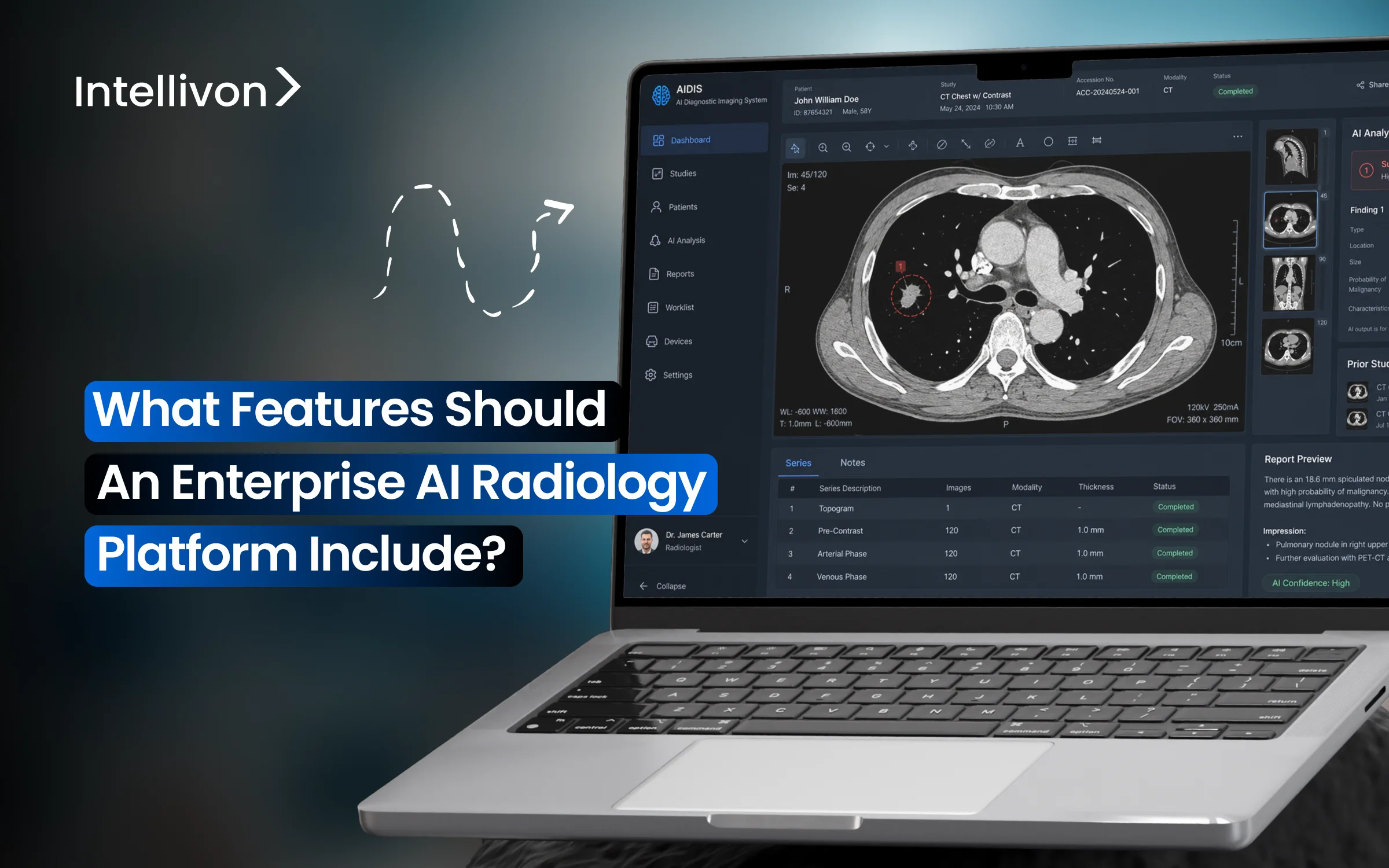
How Intellivon builds enterprise AI radiology platforms your organization fully owns, connecting imaging workflows, AI detection, radiologist review, and compliance controls into one scalable clinical system. Enterprise radiology teams are not short on AI tools. They are, however, short on tools that actually work together. Disconnected software creates fragmented workflows, delayed diagnoses, and compliance blind spots that compound over time. As a result, what serious radiology operations need is a single, secure platform where imaging data, AI analysis, clinical review, reporting, and operational analytics function as one cohesive system.
The right enterprise AI radiology platform feature set is, moreover, not universal. It shifts considerably depending on whether you are building for a hospital network, a radiology SaaS platform, or an early-stage healthtech company. Therefore, defining your deployment context before scoping features is not optional. It is, in fact, the foundation of a sound product strategy.
At Intellivon, we build enterprise AI radiology platforms that connect medical imaging workflows, AI-assisted detection, radiologist review, reporting, PACS/RIS integrations, and compliance controls into one scalable clinical system. In this blog, we therefore break down the full feature stack your platform needs, and why each layer ultimately matters for clinical performance, operational efficiency, and long-term scalability.

Why Enterprise AI Radiology Platforms Need More Than Detection Models
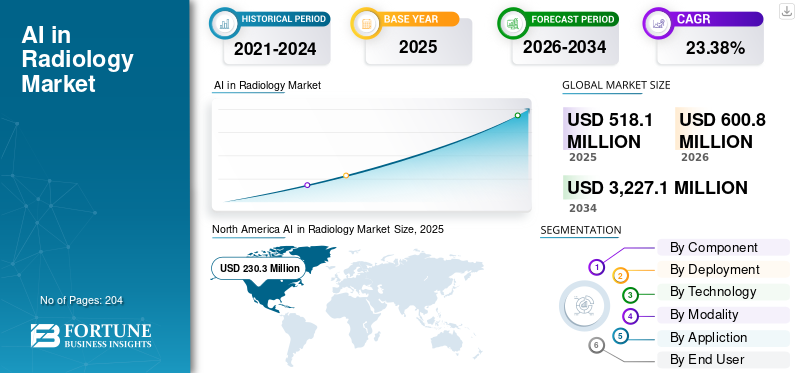
Modern radiology platforms are shifting from simple detection tools to essential engines for clinical decision-making. The market is projected to grow from $600–800 million in 2025 to over $2–3 billion by 2030, reflecting a 24–25% CAGR. This transition shows that enterprise leaders now prioritize integrated, governed ecosystems over standalone AI tools to ensure long-term scalability.
Modern clinical environments require more than a standalone algorithm. While detection models identify abnormalities, a true enterprise platform orchestrates the entire lifecycle of an image.
It must handle complex data ingestion, smart routing, and seamless radiologist review within a secure framework. Without robust reporting integrations and performance monitoring, a model remains a siloed tool rather than a strategic asset.
1. AI Findings Must Fit Into Existing Radiology Workflows
Clinicians operate within established PACS and RIS ecosystems. Forcing a user to switch screens or log into a secondary portal creates friction that kills adoption.
Therefore, AI outputs must appear as native overlays or pre-populated findings within existing reporting systems. Integration should focus on prioritizing urgent cases, ensuring the technology supports, rather than replaces, expert clinical judgment.
2. Enterprise Radiology Needs Platform-Level Reliability
Scaling AI across multiple hospital locations requires high-availability infrastructure capable of handling massive imaging volumes. Distributed teams depend on 24/7 uptime and instant synchronization to manage critical workloads.
Consequently, a platform must include disaster recovery protocols to maintain operational continuity during peak demand or system outages.
3. Clinical AI Needs Governance, Not Just Accuracy
High accuracy is irrelevant without rigorous model validation and explainability. Enterprise leaders require clear audit trails and approval workflows to ensure clinical accountability. Additionally, continuous drift monitoring is essential to track model performance over time, ensuring that version control remains tight as clinical data evolves.
4. Why Generic AI Software Fails In Radiology
Generic software cannot navigate the nuances of heavy DICOM files or strict PHI protection mandates. Specialized radiology AI must thrive within complex EHR and PACS integrations where speed and traceability are mandatory. However, clinical trust only develops when a system respects these technical complexities while delivering rapid results.
Enterprise success hinges on supporting the full diagnostic journey. When the platform prioritizes workflow over simple output, it becomes a growth enabler for the entire organization.
What Core Features Should An Enterprise AI Radiology Platform Include?
Building a resilient diagnostic ecosystem requires moving beyond basic image analysis toward a unified AI radiology platform architecture. For a system to deliver genuine ROI, it must bridge the gap between raw data ingestion and final clinical reporting while maintaining strict security.
| Feature Category | Core Capability | Strategic Value |
| Data Logistics | Automated DICOM Ingestion & Routing | Eliminates manual bottlenecks and data silos. |
| Clinical Intelligence | Multi-Model Inference & Triage | Accelerates diagnosis for life-critical cases. |
| Workflow Synergy | Native PACS/RIS & EHR Integration | Boosts clinician adoption by reducing “toggle tax.” |
| Governance | Model Drift Monitoring & Audit Logs | Ensures clinical safety and regulatory compliance. |
| Business Logic | Performance Analytics & Reporting | Provides data-driven insights for operational scaling. |
Selecting a comprehensive AI radiology platform ensures your infrastructure is both medically precise and operationally scalable. This balance transforms a technical investment into a long-term strategic advantage for the entire health system.
Medical Imaging Data Ingestion And DICOM Processing Features
A high-performance AI radiology platform starts with how it consumes information. Reliable ingestion ensures that every pixel is accounted for before the analysis begins. This phase talks about establishing a high-fidelity data pipeline that powers the entire diagnostic engine.
1. DICOM Image Upload And Ingestion
The platform must act as a universal receiver for diverse imaging types. Whether handling high-resolution CT and MRI scans or specialized mammography and PET data, the system needs to support both batch transfers and real-time modalities.
- Multi-Modality Support: Native compatibility with X-ray, ultrasound, and advanced 3D imaging.
- Flexible Sources: Direct ingestion from PACS, VNA, and external imaging centers.
- Protocol Security: Utilization of encrypted transfer protocols to maintain data integrity.
2. DICOM Routing And Study Classification
Smart routing ensures the right image reaches the right model without human intervention. By classifying studies based on body region or imaging protocol, the AI radiology platform can automate triage based on clinical urgency.
This parallel routing happens in the background, therefore leaving the primary PACS workflow undisturbed.
3. Metadata Extraction And Normalization
Standardization is critical for enterprise-level search and retrieval. The system extracts and normalizes specific identifiers such as Patient ID, modality, and referring physician.
This structured approach allows for better study prioritization and ensures the institution’s data remains organized and actionable.
4. De-Identification And PHI Protection
Privacy is a non-negotiable pillar of healthcare technology. The platform must handle metadata de-identification and pixel-level PHI masking to stay HIPAA and GDPR-aligned.
Advanced pseudonymization rules allow for secure re-linking when clinical follow-up is necessary, keeping patient data protected yet accessible to authorized users.
5. Imaging Data Quality Checks
Garbage in results in garbage out. Consequently, the AI radiology platform must perform automated checks to detect corrupted images or missing series before processing.
- Format Validation: Alerts for unsupported formats or low-resolution files.
- Orientation Checks: Validating laterality and positioning to prevent diagnostic errors.
- Duplicate Detection: Minimizing storage bloat and confusion by identifying redundant studies.
Reliable imaging ingestion serves as the bedrock of the entire diagnostic journey. By mastering these foundational processing features, the platform ensures every subsequent AI insight is built on a base of high-quality, secure data.
AI Detection And Clinical Decision Support Features
An AI radiology platform must serve as a force multiplier for clinical precision. Beyond simple identification, the system should offer a nuanced layer of decision support that enhances the speed and accuracy of every diagnosis.
By integrating diverse detection capabilities, the platform helps clinicians focus their attention on the most critical findings.
1. Automated Abnormality Detection
The engine provides immediate eyes on studies, identifying subtle patterns that indicate acute or chronic conditions. This automation covers a vast clinical spectrum, ensuring that no critical indicator goes unnoticed during the initial triage phase.
- Emergency Indicators: Rapid detection of strokes, pulmonary embolisms, and intracranial hemorrhages.
- Chest & Lung: Specialized analysis for lung nodules, pneumonia, and fractures.
- Oncology & Wellness: Detection of tumor markers, organ-specific abnormalities, and breast health indicators.
2. Multi-Modality AI Model Support
Versatility is key to enterprise adoption. A robust AI radiology platform supports specialized models across the entire imaging suite, from X-rays and CT scans to high-resolution MRI and ultrasound.
This multi-organ approach ensures that the platform remains relevant across different hospital departments and clinical specialties.
3. Confidence Scores And Risk Flags
AI outputs are most effective when they provide context through probability scores and urgency levels. These risk flags allow for institutional threshold customization, ensuring that radiologists are alerted to high-priority cases based on specific local protocols.
This structured feedback loop helps in managing case volumes by highlighting where expert review is most urgently required.
4. Lesion, Nodule, And Region Highlighting
Clarity in visual output reduces the cognitive load on the physician. The platform utilizes advanced visualization tools to point directly to areas of interest, providing a transparent look at the AI’s logic.
- Segmentation Masks: Precise outlining of organ boundaries and lesion volumes.
- Heatmaps: Visualizing probability distributions across a 2D or 3D scan.
- Bounding Boxes: Rapidly identifying regions of interest for immediate review.
5. Longitudinal Image Comparison
True clinical insight often lies in the changes over time. By automatically comparing current scans with prior studies, the AI radiology platform can track tumor progression or nodule growth.
This longitudinal tracking is essential for assessing treatment response and monitoring chronic conditions, providing a comprehensive view of the patient’s health journey.
6. AI Second-Read Workflows
Quality assurance is built into the workflow through systematic second-read capabilities. Whether the AI reviews the image before or after the radiologist, the system acts as a safety net.
It triggers discrepancy alerts if an AI-detected finding is absent from the final report, effectively minimizing missed findings and bolstering overall diagnostic reliability.
The primary goal is to surface clinically useful findings at the exact point they are needed. When an AI radiology platform delivers the right insight at the right time, it moves from being a novelty to an indispensable part of the diagnostic process.
Radiology Workflow Automation Features
Integrating an AI radiology platform into daily operations transforms clinical efficiency by removing manual bottlenecks. Automation ensures that the highest-priority data reaches the right specialist without delay.
By streamlining how studies move through the system, the platform allows clinical teams to focus on patient care rather than administrative coordination.
1. AI-Powered Case Prioritization
Time is the most critical variable in emergency medicine. The platform automatically identifies life-threatening findings, such as acute strokes or hemorrhages, and escalates them to the top of the queue.
This proactive reordering ensures that time-sensitive diagnoses receive immediate attention, significantly reducing turnaround times for STAT cases.
2. Smart Radiology Worklists
Traditional worklists can become overwhelming during peak hours. A sophisticated AI radiology platform provides dynamic filters that allow users to sort studies by modality, location, or specific AI findings.
This clarity enables radiologists to manage their pending, reviewed, and escalated statuses with surgical precision, maintaining a steady and organized flow of information.
3. Automated Case Assignment
Distributing the workload effectively requires more than just a first-in, first-out approach. The system intelligently routes studies based on:
- Sub-Specialty Expertise: Sending musculoskeletal scans to MSK specialists.
- Availability & Workload: Balancing tasks to prevent physician burnout.
- Geographic Routing: Managing distributed teams across multiple hospital sites or teleradiology networks.
4. Critical Alert Management
When a critical finding is detected, the platform triggers an immediate notification sequence. These rules-based escalations ensure the entire care team is informed, requiring clinician acknowledgment to close the loop.
Every alert is logged in a comprehensive audit trail, providing necessary documentation for patient safety and regulatory compliance.
5. Follow-Up Recommendation Tracking
Closing the care gap is essential for long-term health outcomes. The AI radiology platform tracks suggested follow-up scans and alerts administrators to missed appointments or pending recalls.
By notifying referring physicians of the necessary next steps, the system ensures that patients do not fall through the cracks of a complex healthcare journey.
Workflow automation evolves AI from a passive tool into an active operational partner. By supporting faster, more informed decisions, these features ensure that the healthcare enterprise operates at peak clinical and business performance.
Radiologist Review And Image Viewer Features
A high-performance AI radiology platform must bridge the gap between complex data and human intuition. The interface serves as the primary touchpoint where technology meets clinical expertise, requiring a design that enhances speed without compromising diagnostic integrity.
By consolidating tools into a single, intuitive workspace, the platform minimizes fatigue and maximizes accuracy.
1. Diagnostic Image Viewer
The foundation of the review process is a viewer that handles massive datasets with zero latency. Radiologists require fluid control over high-resolution images to identify the most subtle abnormalities.
Consequently, the system must provide comprehensive tools for multi-series navigation and instant access to prior studies for side-by-side comparison.
- Standard Manipulation: Precise zoom, pan, rotate, and windowing controls.
- Navigation: Seamless switching between different imaging sequences and planes.
- Comparative Analysis: Automatic alignment of current and historical scans for longitudinal review.
2. AI Overlay Controls
Transparency is vital for building clinical trust. The platform allows users to toggle AI findings on or off, providing a clear view of both the raw scan and the interpreted data.
Radiologists can inspect specific highlighted regions and view confidence scores, allowing them to accept, reject, or modify findings based on their professional judgment.
3. Structured Review Interface
Efficiency is often lost in fragmented reporting. Therefore, a structured interface centralizes finding lists, clinical indications, and AI observations in one location.
This organization ensures that the radiologist can quickly synthesize data into report-ready output, reducing the time spent on manual documentation.
4. Human-In-The-Loop Validation
Clinical accountability remains the cornerstone of medicine. The AI radiology platform facilitates a feedback loop where radiologists approve or correct AI outputs.
This validation not only ensures the accuracy of the current report but also serves as a critical discrepancy marking system that helps improve the underlying models over time.
5. Collaboration Tools
Modern diagnostics often require a multidisciplinary approach. Integrated collaboration features allow for secure peer reviews, second opinion requests, and case sharing among specialists.
- Secure Messaging: Contextual communication regarding specific studies.
- Peer Review: Simplified workflows for quality assurance and departmental learning.
- Role-Based Access: Ensuring patient data is only accessible to authorized clinical personnel.
A sophisticated AI radiology platform accelerates the review process while keeping the clinician firmly in control. This balance ensures that technology serves as an assistant, not a replacement, for expert medical insight.
PACS, RIS, EHR, And Healthcare System Integration Features
An enterprise AI radiology platform is only as valuable as its ability to communicate with the existing hospital infrastructure.
For a solution to be truly “enterprise-grade,” it must eliminate data silos and function as a seamless extension of the current clinical environment.
Technical excellence in this domain means ensuring that high-speed data exchange occurs without latent delays or workflow disruptions.
1. PACS Integration
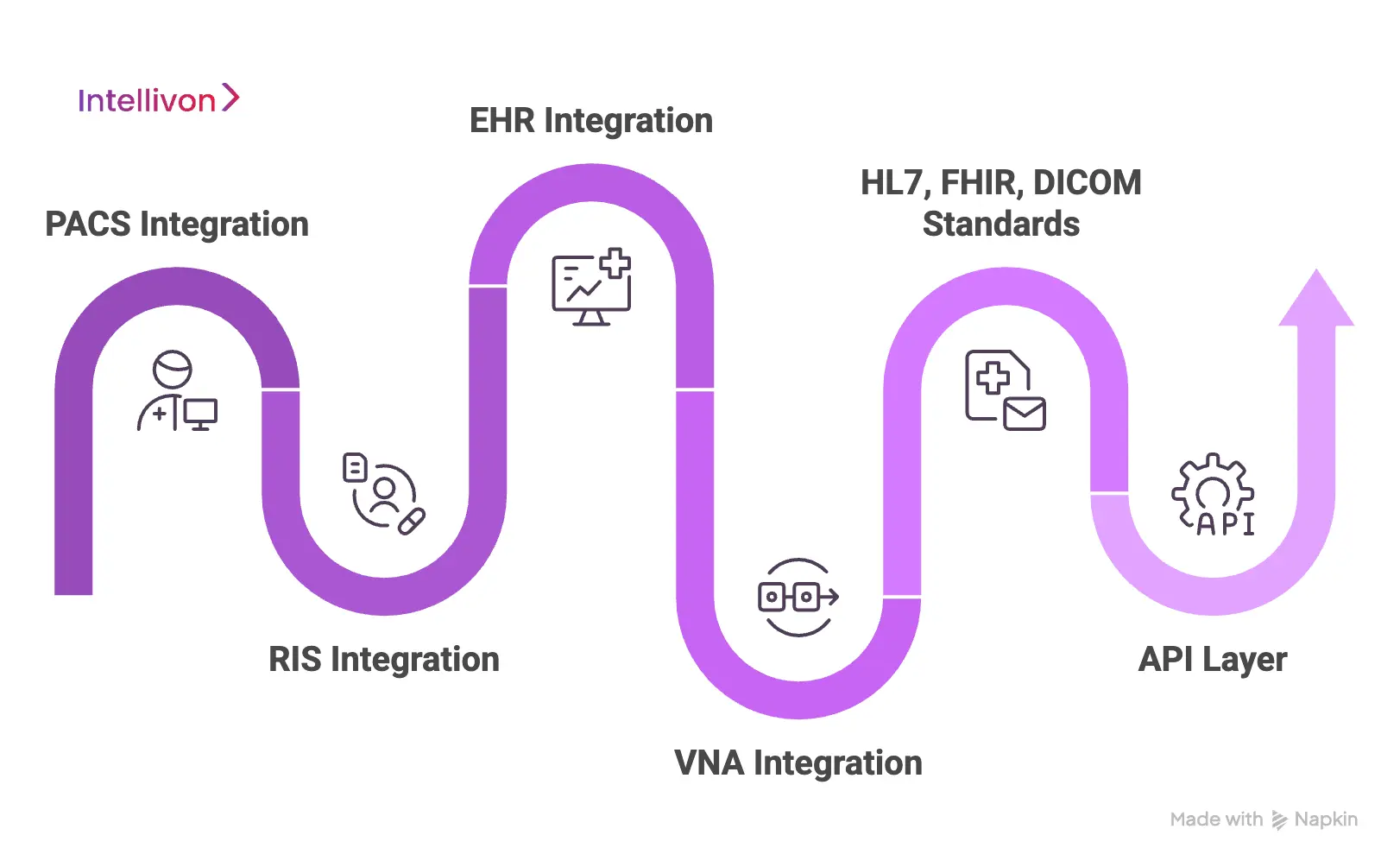
The Picture Archiving and Communication System (PACS) is the heart of the radiology department. A sophisticated platform retrieves images and returns AI insights directly into the radiologist’s native viewer.
By synchronizing worklists and providing result overlays inside the PACS interface, the system ensures that clinicians never have to leave their primary environment to access advanced intelligence.
2. RIS Integration
Operational efficiency relies on a tight connection with the Radiology Information System (RIS). The platform consumes scheduling data, order information, and patient demographics to maintain context for every study.
This integration ensures that accession numbers and reporting workflows remain aligned, preventing administrative errors and accelerating department-wide throughput.
3. EHR Integration
To provide a complete diagnostic picture, the AI radiology platform must tap into the Electronic Health Record (EHR). Accessing clinical history and lab data allows the AI and the radiologist to interpret images within the full patient context.
Once the analysis is complete, the final report is delivered back to the EHR, ensuring the entire care team has immediate access to longitudinal records.
4. VNA Integration
For large health systems, Vendor Neutral Archive (VNA) integration is mandatory for a unified enterprise imaging strategy. The platform supports cross-facility study retrieval and long-term imaging access by interfacing with centralized archives.
This capability allows for a consistent diagnostic approach across multiple sites, regardless of the local hardware in place.
5. HL7, FHIR, And DICOM Standards
Interoperability is built on industry-standard protocols. The platform utilizes:
- DICOM & DICOMweb: For high-speed imaging workflows and modern web-based access.
- HL7: To manage the secure exchange of orders and diagnostic reports.
- FHIR & SMART on FHIR: For modern, app-based clinical data exchange that follows the latest healthcare IT trends.
6. API Layer For Enterprise Connectivity
At Intellivon, we understand that custom enterprise workflows require more than “out of the box” settings. Our platform features a robust, secure API layer designed for complex internal system integrations.
This allows for third-party AI model connections and advanced analytics platform integrations, providing a level of technical flexibility that generic AI development companies cannot match.
Superior integration turns a fragmented collection of tools into a cohesive diagnostic engine. By prioritizing standards-based interoperability, the platform ensures that your investment remains future-proof and fully scalable across the healthcare enterprise.
Security, Compliance, And Data Governance Features
In the high-stakes environment of medical data, security is not a background requirement; it is a core functional feature. An enterprise AI radiology platform must be built with a “zero-trust” mentality, ensuring that sensitive patient information is protected at every touchpoint.
For decision-makers, this means investing in a system where governance is integrated into the code, not added as a patch.
1. HIPAA And GDPR-Aligned Architecture
The platform is engineered to meet the world’s most stringent privacy standards from the ground up. By utilizing a privacy-by-design architecture, the system ensures that data handling follows “minimum necessary” access principles.
This includes native support for Business Associate Agreements (BAA) and consent-aware workflows that respect patient rights across global jurisdictions.
2. Role-Based Access Control
Managing a distributed healthcare workforce requires precise control over who sees what. The platform employs granular permission levels tailored to specific organizational needs:
- Radiologists & Technicians: Access to diagnostic tools and image manipulation.
- Administrators & Auditors: Oversight of system health and compliance records.
- Referring Physicians: Limited access to final reports and specific clinical findings.
3. Encryption And Secure Data Transfer
Data remains shielded whether it is sitting in storage or moving across the network. The system utilizes TLS-encrypted tunnels and VPN support for secure DICOM transfers.
With encryption at rest and in transit, combined with sophisticated key management, the AI radiology platform ensures that intercepting or accessing raw PHI without authorization is virtually impossible.
4. Audit Logs And Access Monitoring
Transparency is the foundation of accountability. Every action, from which user viewed a specific slice of an MRI to which model version generated a finding, is recorded in immutable audit logs.
These logs track when AI inference ran and who ultimately approved or rejected a finding, providing a clear trail for clinical and legal reviews.
5. Data Residency And Multi-Region Deployment
To accommodate global enterprises, the platform supports flexible hosting models, including country-specific cloud environments and on-premise deployments.
Whether your strategy requires a hybrid setup or strict cross-border data controls, the architecture adapts to local governance rules without sacrificing performance or accessibility.
6. Retention And Deletion Workflows
Automated lifecycle management ensures that data is stored only as long as legally required. The platform supports complex archival policies and legal holds, allowing for seamless deletion requests or long-term retention of AI outputs.
These workflows ensure that your organization remains compliant with regional healthcare record-keeping mandates.
Security and governance are the pillars of clinical trust. When these features are treated as essential product components, the AI radiology platform becomes a safe, scalable foundation for the future of digital medicine.
AI Model Management And Monitoring Features
Deploying an AI radiology platform is the beginning of a continuous lifecycle. To maintain clinical safety and high ROI, the system must actively manage and monitor every algorithm in its library.
Rigorous oversight ensures that models remain accurate even as scanner hardware, imaging protocols, and patient demographics evolve.
1. Model Registry
A centralized registry provides a single source of truth for all internal and third-party algorithms. It tracks model versions, deployment statuses, and specific regulatory documentation for every approved use case.
This organized catalog ensures that clinical leadership knows exactly which tools are active and what their intended diagnostic boundaries are.
2. Pre-Deployment Validation
Before any model touches live patient data, the platform subjects it to localized validation. This involves testing against the facility’s specific scanners and unique patient populations to identify potential biases.
Clinical acceptance testing ensures that the software performs as expected in a real-world environment rather than just a controlled lab setting.
3. Model Performance Monitoring
Ongoing success is measured through hard clinical metrics. The platform continuously tracks sensitivity, specificity, and the frequency of false positives or negatives.
By monitoring radiologist override rates, administrators can see exactly how often clinicians disagree with the AI, providing clear insight into the tool’s actual diagnostic utility and impact on turnaround times.
4. Drift Detection
Clinical data is fluid. Changes in scanner hardware or imaging protocols can cause “data drift,” where a model’s performance begins to degrade over time.
The AI radiology platform sets alert thresholds for demographic variations and performance dips, ensuring that technical teams are notified the moment a model’s accuracy shifts from its baseline.
5. Model Rollback And Version Control
Safety requires the ability to revert to a stable state instantly. The platform features robust version control with safe rollback capabilities if a new update underperforms.
Every change is documented in detailed logs with strict approval gates, ensuring that only validated, low-risk updates reach the clinical front lines.
6. Feedback Loops For Continuous Improvement
At Intellivon, we believe the best models are those that learn from human experts. Our platform integrates structured feedback loops where radiologists’ corrections and false-positive labels are captured and used for retraining.
This QA review process turns daily clinical work into a powerful engine for dataset improvement and long-term model refinement.
Diligence after launch is what separates an experimental tool from a true enterprise-grade solution. By prioritizing active model management, the platform ensures that the AI remains a reliable and safe partner for clinicians over the long haul.
Deployment And Infrastructure Features For Enterprise Scale
Building a reliable AI radiology platform is as much an exercise in high-performance infrastructure engineering as it is in algorithm development. For a global healthcare enterprise, the architecture must support massive data throughput without compromising on speed or security.
A well-designed system ensures that diagnostic intelligence is available whenever and wherever a clinician needs it.
1. Cloud-Based Deployment
Cloud architecture offers unparalleled scalability for growing healthcare networks. By centralizing analytics and model management, an AI radiology platform can deploy updates across multiple locations simultaneously.
This approach reduces the burden on internal IT teams while providing the computing power necessary for intensive deep-learning tasks.
2. On-Premise Deployment
For institutions with strict data residency requirements or legacy system dependencies, on-premise deployment provides total control. This setup keeps imaging data within the hospital’s own firewalls, satisfying internal governance and security-sensitive mandates.
Consequently, data movement is minimized, ensuring compliance with the most rigid local privacy laws.
3. Hybrid Deployment
The hybrid model offers the best of both worlds: local data processing for speed and cloud-based analytics for strategic oversight. Edge inference allows for local AI execution at the hospital site, while the cloud manages multi-region control and long-term reporting.
This flexibility allows enterprises to balance performance needs with complex compliance requirements.
4. GPU And Edge Inference Support
High-volume image processing requires specialized hardware to maintain low-latency results. The platform utilizes GPU acceleration to handle 3D reconstructions and complex scans in seconds.
By supporting edge inference, the system ensures that emergency cases are processed locally, reducing transfer delays and maintaining critical diagnostic speed.
5. High Availability And Disaster Recovery
In healthcare, downtime can have clinical consequences. Therefore, a robust AI radiology platform includes:
- Redundant Architecture: Failover systems that kick in automatically if a primary server fails.
- Backup Workflows: Ensuring no imaging data is lost during system transitions.
- Uptime Monitoring: Constant surveillance to meet strict Recovery Time Objectives (RTO).
6. Multi-Site Enterprise Support
Managing diagnostic chains or teleradiology groups requires a centralized administrative perspective. The platform provides a single console to manage location-wise access controls and cross-site analytics.
This unified view allows enterprise leaders to monitor performance across an entire hospital network, ensuring consistent care standards at every facility.
True enterprise-grade development treats infrastructure as a primary feature. By focusing on scalable, redundant engineering, the platform provides a stable foundation that generic applications simply cannot match.
Must-Have Features Vs Advanced Features In An AI Radiology Platform
For entrepreneurs and investors, distinguishing between essential functionality and high-level enterprise capabilities is critical for resource allocation.
While an MVP focuses on basic diagnostic utility, a full-scale AI radiology platform requires sophisticated orchestration and governance to deliver long-term value. This breakdown helps decision-makers prioritize their development roadmap or procurement strategy.
| Feature Category | Must-Have Features | Advanced Enterprise Features |
| Imaging Data | DICOM upload, routing, metadata extraction | Multi-site VNA integration, DICOMweb, automated quality checks |
| AI Detection | Abnormality detection, confidence scores | Multi-model orchestration, longitudinal comparison, second-read AI |
| Workflow | Worklists, case status, triage | Automated assignment, SLA tracking, care team escalation |
| Review | Viewer, AI overlays, radiologist approval | Peer review, discrepancy tracking, human-in-loop feedback |
| Reporting | Structured reports, export | AI-assisted drafting, voice dictation, NLP report structuring |
| Integration | PACS/RIS connection | EHR, FHIR, HL7, SMART on FHIR, API ecosystem |
| Security | RBAC, encryption, audit logs | Data residency, retention automation, compliance dashboards |
| AI Governance | Model versioning | Drift detection, rollback, clinical validation workflows |
| Analytics | Case volume, TAT dashboards | Executive ROI analytics, model performance intelligence |
Understanding these distinctions allows buyers to build a lean, functional core while planning for the complexity of enterprise-scale deployment. This dual focus ensures the system is both immediately useful and prepared for the demands of a global healthcare network.
What Features Should An MVP AI Radiology Platform Include?
For an initial launch, the goal is to validate the core value proposition without over-engineering secondary systems. A successful AI radiology platform MVP must solve a specific clinical friction point while maintaining high standards for security and interoperability.
This focused approach allows for rapid market entry and real-world feedback from early adopters.
1. DICOM Upload And Image Processing
The minimum requirement is a secure, stable pipeline for image ingestion. The platform must be able to handle standard DICOM files, ensuring that metadata is preserved and images are rendered accurately for the clinician.
Without reliable handling of raw data, the downstream AI analysis loses its foundational integrity.
2. One Focused AI Detection Use Case
Attempting to launch with a dozen models often leads to diluted quality. Instead, an MVP should master one high-impact area where AI provides immediate, measurable relief for radiologists.
- Chest & Lung: Automated lung nodule or pneumonia detection.
- Emergency Triage: Rapid identification of fractures or intracranial hemorrhages.
- Preventative Care: Mammography support or cardiac marker screening.
3. Basic Radiologist Review Interface
The interface should focus on a “clean” viewing experience that does not clutter the diagnostic process. Essential features include a high-resolution viewer, the ability to toggle AI overlays, and a simple findings list.
Most importantly, it must include a clear accept or reject option for the clinician to maintain ultimate diagnostic authority.
4. Structured Report Generation
Even at the MVP stage, providing an exportable, template-based report adds significant professional value.
This feature summarizes AI observations alongside radiologist notes, allowing for a polished final document that can be shared with referring physicians once the radiologist gives final approval.
5. PACS Or RIS Integration
Planning for integration early is a strategic necessity. Disconnected “side-car” workflows often lead to poor adoption because they require radiologists to jump between applications.
Consequently, even an MVP should offer basic integration points to ensure the AI radiology platform feels like a natural part of the existing ecosystem.
6. Security And Audit Logs
Foundational security cannot be deferred. The MVP must include encrypted storage and precise user roles to protect patient privacy.
Additionally, comprehensive audit logs must track study access and AI inference activity to satisfy initial regulatory and compliance reviews.
By proving clinical and operational value through a streamlined feature set, an MVP sets the stage for future expansion. This lean foundation ensures that subsequent investments in multi-model or multi-site features are built upon a validated, high-utility core.
What Features Should Be Added For A Full Enterprise AI Radiology Platform?
Transitioning from a functional MVP to a comprehensive AI radiology platform requires a shift in focus toward orchestration and institutional governance. A full-scale solution must harmonize diverse clinical specialties while providing executive leadership with the transparency needed to measure departmental impact.
This level of maturity ensures the platform can support the rigorous demands of a global healthcare network.
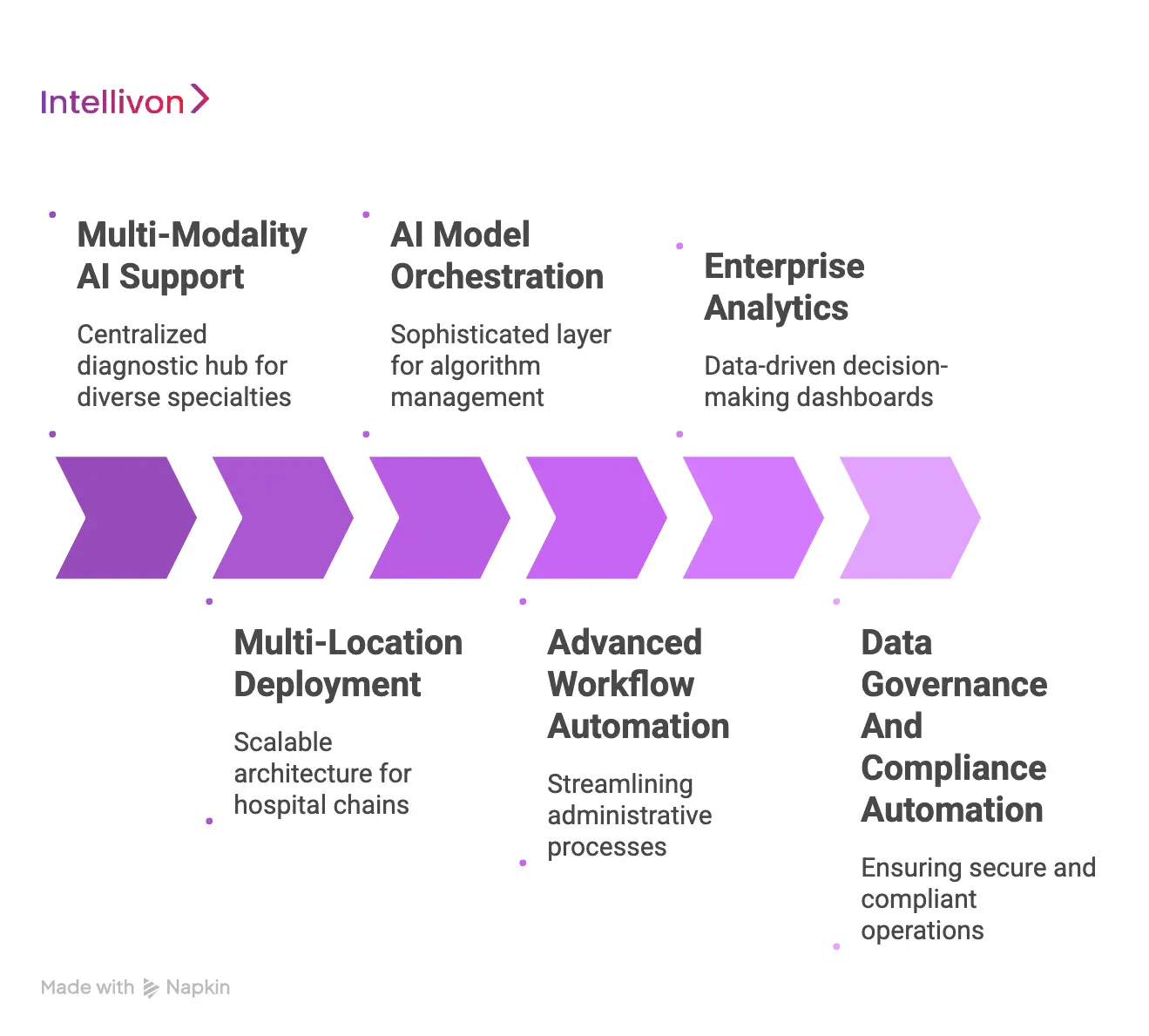
1. Multi-Modality AI Support
Enterprise-grade platforms move beyond a single specialty to offer a horizontal clinical reach. This means providing high-performance workflows for CT, MRI, X-ray, ultrasound, and mammography simultaneously.
By supporting a broad spectrum of modalities, the platform becomes a centralized diagnostic hub for every department, from oncology to orthopedics.
2. Multi-Location Deployment
Scalability is the hallmark of an enterprise solution. The architecture must accommodate sprawling hospital chains and distributed diagnostic centers, allowing a centralized radiology team to manage studies from dozens of remote sites.
This centralized access ensures a consistent standard of care regardless of where the patient is physically located.
3. AI Model Orchestration
Managing a diverse library of algorithms requires a sophisticated orchestration layer. The platform uses a model registry to track versioning and routing logic, ensuring that each study is automatically directed to the most appropriate AI tool.
Continuous model monitoring further ensures that every algorithm in the ecosystem maintains its performance baseline over time.
4. Advanced Workflow Automation
Efficiency at scale depends on removing human intervention from the administrative process.
- Automated Worklists: Dynamically reordering tasks based on sub-specialty and urgency.
- Assignment Logic: Routing cases to the available radiologist with the highest relevant expertise.
- Escalation & Follow-up: Triggering alerts for time-sensitive findings and tracking patient recalls automatically.
5. Enterprise Analytics
Data-driven decision-making is made possible through integrated operational and clinical dashboards. Executive leadership can monitor real-time turnaround times (TAT), model accuracy, and compliance metrics.
These insights allow for a clear assessment of ROI, helping the organization identify where AI is delivering the most significant value.
6. Data Governance And Compliance Automation
As an organization grows, manual compliance becomes impossible. The platform automates audit-ready workflows, ensuring that retention policies and access monitoring are enforced across all regional deployments.
This automation reduces the legal and regulatory burden, making the AI radiology platform a secure, governed asset for the entire enterprise.
A full enterprise platform is defined by its ability to support scale without losing operational control. By integrating these advanced features, a health system transforms disconnected diagnostic tools into a unified, high-performance engine.
Common Feature Mistakes To Avoid When Building AI Radiology Platforms
Developing a high-performance AI radiology platform involves more than just perfecting a neural network. Many projects fail because they overlook the operational realities of the clinical environment.
By identifying these pitfalls early, enterprise leaders can avoid costly rework and ensure their technology actually improves patient outcomes rather than creating new bottlenecks.
1. Building AI Detection Without Workflow Integration
The most common mistake is focusing solely on the model’s accuracy while ignoring how a radiologist interacts with the output. If a clinician has to log into a separate portal to view findings, they simply won’t use it. Disconnected AI outputs create friction, therefore slowing down the very diagnostic process they were meant to accelerate.
At Intellivon, we resolve this by designing “invisible” workflows where AI insights are injected directly into the user’s primary workspace.
2. Ignoring PACS And RIS Integration Until Late Development
Treating integration as a final step is a recipe for project delays and massive technical debt. Healthcare ecosystems are complex, while waiting until the end of the development cycle to address DICOM routing or worklist synchronization often leads to fundamental architectural flaws.
We mitigate this risk by utilizing a “standards-first” approach, building around HL7 and FHIR protocols from the initial sprint to ensure seamless interoperability.
3. Treating Compliance As A Final Checklist
Security and privacy cannot be “bolted on” at the end of a project. When auditability and access controls are an afterthought, the resulting system often fails to meet the rigorous demands of HIPAA or GDPR.
Our team avoids this by employing a privacy-by-design architecture, ensuring that every data packet is encrypted and every user action is logged from the very first line of code.
4. Launching Without Model Monitoring
A model that performs well in a lab may fail when exposed to a new scanner or a different patient demographic. Without active drift detection, performance decay can go unnoticed, leading to clinical risks.
We solve this by implementing continuous monitoring dashboards that alert administrators to even slight shifts in sensitivity or specificity, ensuring the AI radiology platform remains reliable over time.
5. Overloading Radiologists With Alerts
Indiscriminate notifications lead to alert fatigue, causing clinicians to ignore even critical warnings. A system that flags every minor finding creates more noise than value.
To resolve this, we implement context-aware notification logic and customizable thresholds, ensuring that only the most urgent and relevant findings trigger an immediate escalation.
6. Not Designing For Multi-Site Scalability
An architecture built for a single clinic will inevitably break when scaled to a national hospital chain. Issues with data residency, latency, and centralized administration often emerge too late to be easily fixed.
Intellivon designs for the enterprise from the start, utilizing a hybrid cloud-edge infrastructure that allows for centralized management with localized, high-speed processing.
Avoiding these common mistakes strengthens the foundation of your investment. By addressing these implementation risks early, we transform potential technical hurdles into competitive advantages that drive long-term clinical and business success.
Conclusion
Successful AI radiology adoption requires moving beyond isolated tools toward a unified ecosystem that prioritizes clinical workflow, security, and infrastructure. By focusing on deep integration and rigorous governance, enterprise leaders can transform diagnostic speed and accuracy at scale.
Investing in a comprehensive, interoperable platform ensures your organization is not just adopting technology but building a future-proof foundation for superior patient care and sustainable operational growth.
How Intellivon Builds Enterprise AI Radiology Platforms
Building an enterprise AI radiology platform requires more than adding AI to medical images. It requires a secure imaging infrastructure where DICOM data, AI models, radiologist workflows, clinical reporting, compliance controls, and healthcare integrations work as one connected system.
At Intellivon, we develop AI radiology platforms for hospitals, diagnostic imaging chains, teleradiology providers, healthtech companies, and medical imaging startups.
Our engineering approach focuses on real clinical workflows, secure image pipelines, AI-assisted review, scalable deployment, and enterprise-grade compliance.
A. Designing The AI Radiology Architecture
We define how images will move through the platform, where AI models will run, how radiologists will review outputs, and how reports will return to existing systems.
Our architecture planning includes:
- Clinical use case planning for focused AI-assisted diagnosis
- Modality selection across X-ray, CT, MRI, ultrasound, or mammography
- Imaging workflow mapping across upload, review, reporting, and escalation
- PACS and RIS integration strategy for existing radiology operations
- Data flow architecture for secure image movement and processing
- Deployment model planning across cloud, on-premise, or hybrid environments
This ensures the platform is not built as a disconnected AI tool, but as a clinical system that fits into real radiology operations.
B. Building Secure Medical Imaging Pipelines
We design DICOM workflows that support high-volume imaging environments and prepare studies for AI analysis, radiologist review, and reporting.
Our medical imaging pipeline development includes:
- DICOM ingestion from modalities, PACS, VNA, or external sources
- Study routing based on modality, body region, urgency, or AI model
- Metadata normalization for consistent imaging and patient context
- De-identification workflows to protect PHI before AI processing
- Image quality checks for incomplete, corrupted, or unsupported studies
- Secure storage with encryption, access control, and audit visibility
This gives enterprises a reliable foundation for AI-assisted radiology at scale.
C. Developing AI-Assisted Detection And Review Workflows
Intellivon builds AI-assisted workflows that help radiologists detect findings faster while keeping clinical control in human hands. The system can integrate detection models, run inference pipelines, generate confidence scores, and present findings in a review-ready interface.
Our AI-assisted review workflows include:
- Model integration for focused radiology use cases
- AI inference pipelines for real-time or batch image analysis
- Confidence scoring to support clinical prioritization
- Finding visualization through overlays, markers, or highlighted regions
- Radiologist approval workflows for accepting, rejecting, or editing outputs
- Human-in-loop feedback to improve review quality and future model performance
This allows AI to support the diagnostic workflow without replacing radiologist judgment.
D. Integrating With PACS, RIS, EHR, And VNA Systems
Enterprise radiology platforms must work with existing healthcare systems. Intellivon builds integration layers that connect AI radiology workflows with PACS, RIS, EHR, VNA, reporting systems, and clinical data environments.
Our integration capabilities include:
- Standards-based interoperability across clinical imaging systems
- HL7, FHIR, and DICOM workflows for healthcare data exchange
- API development for internal systems and third-party platforms
- Report delivery into EHR, RIS, or referring physician workflows
- Worklist synchronization for radiologist review and case prioritization
- Enterprise system connectivity across multi-location imaging networks
This ensures AI insights move back into the systems clinicians already use.
Build Your AI Radiology Platform With Intellivon
If you are planning to build an AI radiology platform for hospitals, diagnostic networks, or imaging teams, Intellivon can help you define the right feature set, design the architecture, and develop a secure enterprise-ready solution.
From DICOM pipelines and PACS/RIS integrations to AI-assisted review, reporting, analytics, compliance, and scalable deployment, we build radiology platforms that fit real clinical workflows and support long-term enterprise growth.
Contact Intellivon to build an AI radiology platform that improves imaging workflows, supports radiologists’ decisions, and scales with your business.
FAQs
Q1. What features matter most in an enterprise AI radiology platform?
A1. The most important features include DICOM image ingestion, PACS/RIS integration, AI-assisted detection, radiologist review tools, structured reporting, audit logs, and model monitoring. Enterprises should also prioritize workflow automation, role-based access, secure storage, and analytics dashboards so the platform supports real clinical operations, not just image analysis.
Q2. How should AI radiology platforms integrate with PACS and RIS systems?
A2. An AI radiology platform should connect with PACS and RIS through DICOM, HL7, FHIR, and secure APIs. This allows studies, worklists, reports, and AI findings to move between systems without manual uploads. Strong integration helps radiologists use AI inside existing workflows instead of switching between disconnected tools.
Q3. Can AI radiology platforms support teleradiology and multi-site imaging networks?
A3. Yes. Enterprise AI radiology platforms can support teleradiology groups, diagnostic chains, and hospital networks through cloud, hybrid, or on-premise deployment. The platform should include multi-site access, intelligent worklists, role-based permissions, centralized reporting, secure image routing, and scalable infrastructure for high imaging volumes across locations.
Q4. Will AI replace radiologists in enterprise radiology workflows?
A4. AI is designed to support radiologists, not replace them. It can help prioritize urgent scans, detect abnormalities, highlight findings, and reduce repetitive review work. However, radiologists remain responsible for clinical judgment, final interpretation, report approval, and patient-specific decision-making within safe, human-in-the-loop workflows.