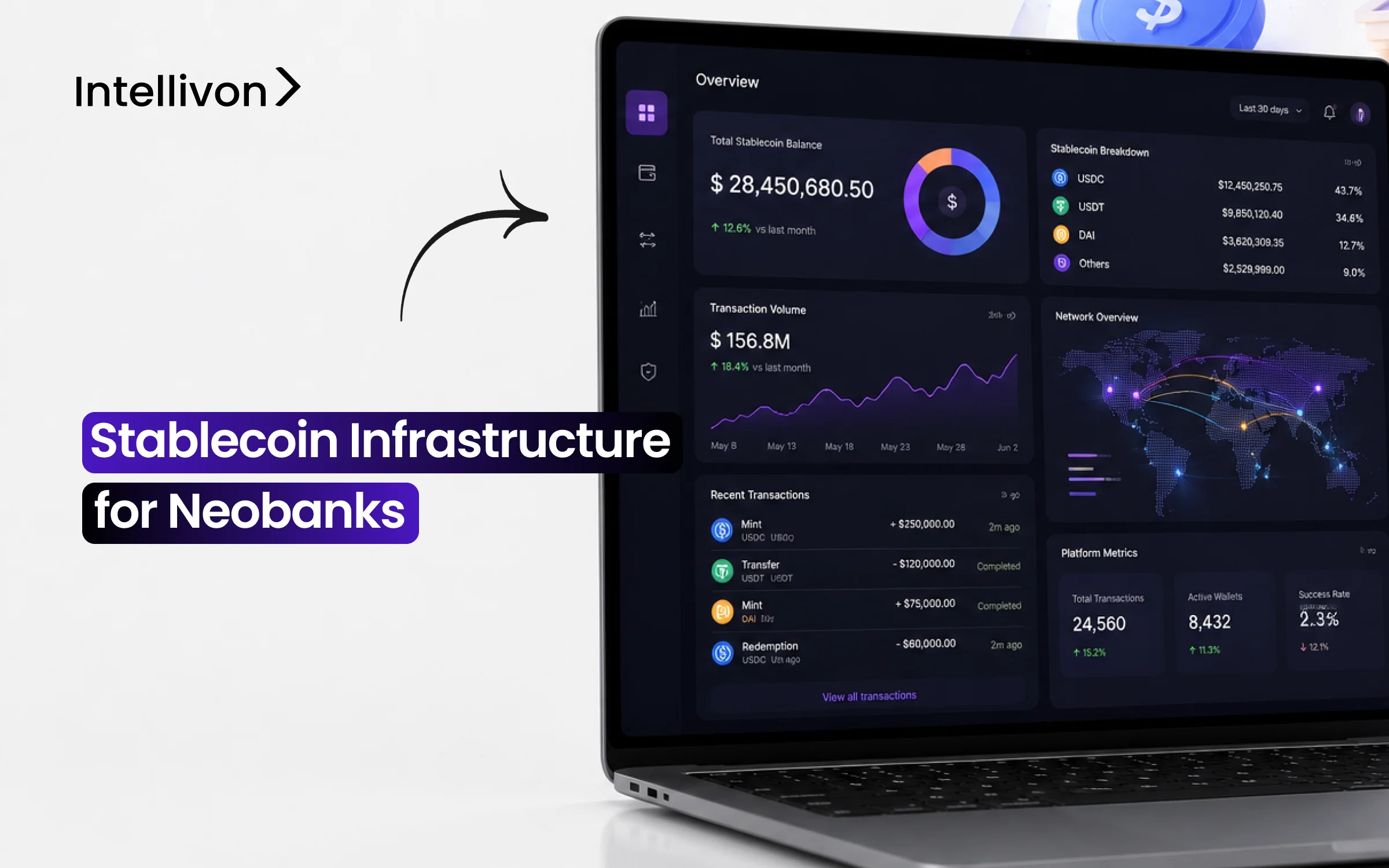
Key Takeaways:
-
Stablecoin infrastructure for neobanks connects the app, core ledger, fiat rails, wallets, stablecoins, FX, and compliance services.
-
Three operating models exist: partner-led custody, neobank-controlled custody, and self-custodial infrastructure, each with different risk profiles.
-
KYC, AML, sanctions screening, Travel Rule controls, custody policies, and licensing define the compliance architecture requirements.
-
AI assists fraud detection and liquidity forecasting but never authorizes or initiates fund movement autonomously.
-
How Intellivon builds neobank stablecoin infrastructure corridor-first and compliance-led, costing $70,000 to $300,000 over 4 to 10 months.
Stablecoin infrastructure for neobanks means building core banking, card issuance, and payment rails around dollar-pegged tokens instead of traditional interchange and FX. That shift matters because the old revenue model is breaking down. A neobank processing $1,000 a month per customer earns roughly $4.40 in interchange, according to a 2026 neobank business model analysis, barely enough to cover infrastructure, let alone fund growth.
Interchange caps are a big part of why that number stays so thin. Meanwhile, stablecoin settlement replaces expensive correspondent banking on cross-border transfers entirely, and yield products built on stablecoin reserves open up a margin layer interchange never offered. As a result, neobanks building this infrastructure now are positioning around a business model that doesn’t depend on transaction volume alone.
In this blog, we’ll cover how to architect stablecoin infrastructure into core banking, what compliance looks like across jurisdictions, and what this build costs against buying into an existing BaaS stack.

What Is Stablecoin Infrastructure for Neobanks?
Stablecoin infrastructure for neobanks is the software layer and regulated partner network that allows a digital bank to hold, convert, transfer, settle, and reconcile stablecoin-backed value alongside conventional fiat accounts. As a result, fintech platforms can offer tokenized dollar accounts while maintaining traditional ledger workflows and banking-grade security.
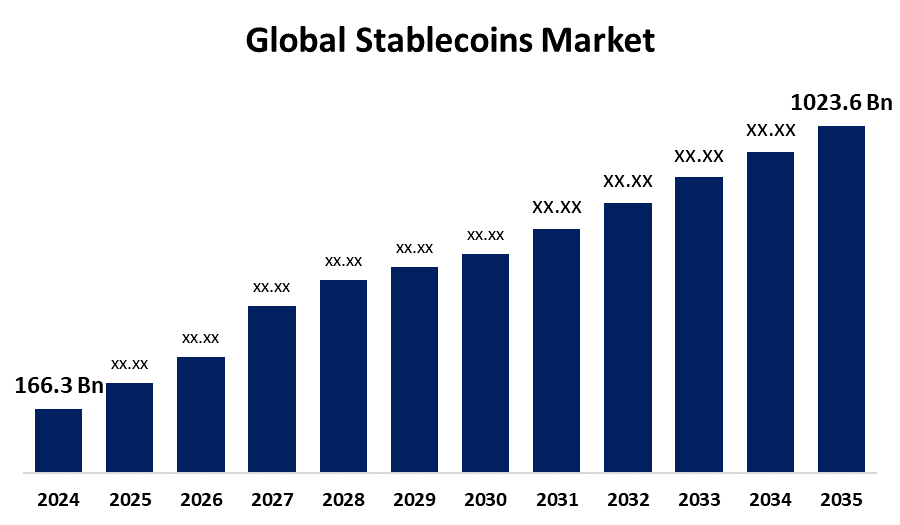
Analysts at Citi forecast the global stablecoin market to reach between $1.9 trillion and $4.0 trillion by 2030, driven by rising institutional demand for instant, digital-dollar settlement. Furthermore, global neobanking platforms are expanding at a 36% CAGR, making cross-border stablecoin rails an essential component for digital banking growth.
1. Stablecoin-Enabled Neobank vs Stablecoin-Native Neobank
Understanding the distinction between operating models ensures engineering teams select the correct ledger and compliance stack. Therefore, misaligning this core architecture often leads to costly migrations and regulatory friction.
| Platform Type | Core Architecture | Settlement Primaries | Typical Target Audience |
| Stablecoin-Enabled Neobank | Existing fiat core banking system with stablecoin functionality integrated as an add-on rail. | Standard fiat currency with optional stablecoin transfers. | Mainstream retail users and corporate clients seeking cheaper international transfers. |
| Stablecoin-Native Neobank | Built from the ground up where stablecoins form the primary settlement asset and ledger unit. | On-chain stablecoins (USDC, USDT, PYUSD). | Web3 businesses, cross-border contractors, and multi-currency global enterprises. |
| Crypto Wallet | Standalone non-custodial or custodial asset storage without banking integrations. | On-chain digital assets directly. | Individual Web3 users storing assets without card issuance or fiat clearing. |
| BaaS Platform | Software intermediary that connects apps to chartered banks without blockchain processing. | Traditional ACH, FedNow, and SWIFT rails. | General fintechs that do not require multi-chain or stablecoin settlement. |
2. What the Infrastructure Actually Includes
A production-ready platform relies on tightly coupled stablecoin neobank infrastructure components to balance blockchain flexibility with strict financial controls. Consequently, each module manages a specific point in the transaction lifecycle:
- Customer Accounts: Front-facing mobile and web portals for managing balances and multi-currency views.
- Double-Entry Ledger: Tracks off-chain entitlements, user sub-ledgers, and beneficial asset ownership in real time.
- Wallet and Custody Services: Provides MPC or HSM key management to store and protect private keys securely.
- Stablecoin Settlement Infrastructure: Direct blockchain connectors to process on-chain minting, burning, and transfers.
- Fiat On-Ramps and Off-Ramps: Integrates local ACH, SEPA, and wire networks to move between fiat and stablecoins.
- FX Conversion Engine: Dynamically routes foreign exchange trades to lock in real-time conversion rates.
- Liquidity Controls: Connects to market makers and liquidity pools to ensure reliable settlement execution.
- Card Processing: Powers virtual and physical card issuance linked directly to stablecoin balances.
- KYC and AML Verification: Automates identity verification, sanction screening, and transaction monitoring rules.
- Reporting and Reconciliation: Audit-matches internal database entries against live on-chain ledger states.
Building this tech stack requires orchestrating multiple off-chain and on-chain systems rather than executing simple blockchain transactions. Consequently, the true value sits in the middleware that synchronizes these components securely.
For a deeper analysis of core ledger configurations, see our guide on How to Build a Stablecoin Payment Platform for Global Businesses.
Why Neobanks Are Adopting Stablecoin Payment Rails
Neobanks use digital dollar tokens to upgrade slow international transfers and lower operational costs across high-friction corridors.
Consequently, these institutions adopt stablecoins to improve speed and margins for cross-border workflows without replacing their existing local fiat clearing systems.
1. Multi-Currency Accounts Without Separate Banking Infrastructure
Establishing local clearing accounts across multiple global jurisdictions requires heavy regulatory overhead and capital reserves.
By leveraging dollar-backed tokens, neobanks allow global users to hold stable dollar value while converting to local currencies on demand.
2. New Revenue Without Turning the App Into a Crypto Exchange
Neobanks generate sustainable subscription and transaction income by embedding stablecoins into everyday financial services:
- FX Spreads: Earn margins on real-time conversions between local fiat and digital dollars.
- Payment Fees: Charge competitive transaction fees for instant international payouts.
- Card Interchange: Collect processing revenues when users spend stablecoin balances via debit cards.
- Business-Account Subscriptions: Package multi-currency accounts into monthly tier fees for corporate clients.
- Treasury Services: Earn yield by managing institutional stablecoin liquidity pools for corporate payouts.
- Yield Product Administration: Collect management fees on tokenized money market savings products.
- Embedded Finance APIs: Monetize custom payout endpoints for enterprise software platforms.
3. 24/7 Settlement and Treasury Movement
Public blockchains operate continuously, allowing neobanks to rebalance internal liquidity around the clock. However, true finality requires matching instant on-chain transaction verification with local banking clearing windows during local off-ramp processing.
Ultimately, stablecoins should solve targeted payment friction in specific corridors rather than replace every standard rail.
How Stablecoin for Neobanks Works End to End
Stablecoin for neobanks coordinates off-chain database updates with on-chain token execution to move money across borders in seconds. For instance, consider a US company using a digital banking app to pay an independent contractor in Mexico or the Philippines.
Consequently, this workflow processes the transfer through six distinct engineering steps to ensure compliance, speed, and exact ledger alignment.
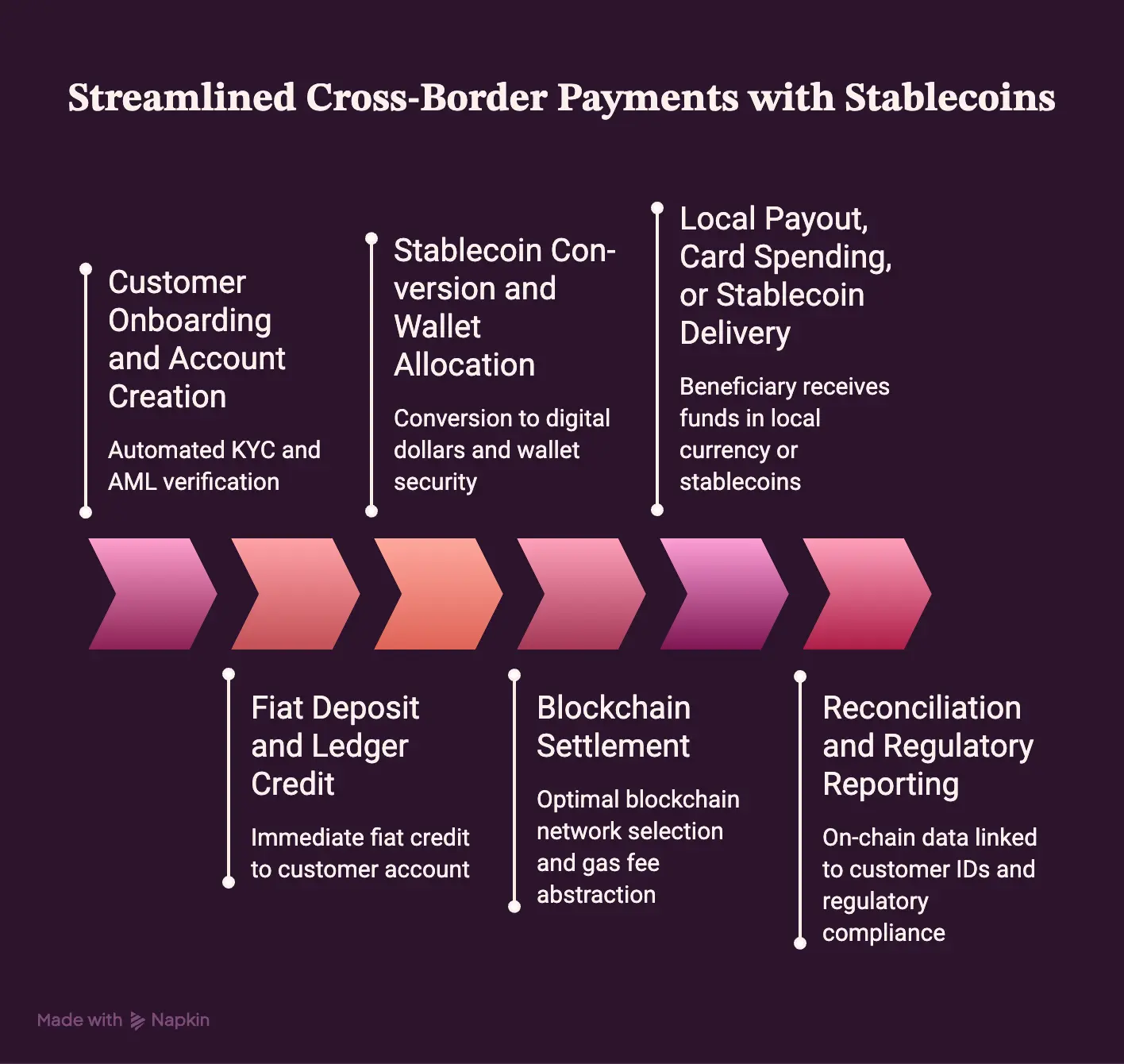
Step 1 — Customer Onboarding and Account Creation
Before any transaction occurs, the neobank verifies both the sender and recipient using automated KYC and AML pipelines.
First, the system runs identity verification, screens against international sanction lists, and assigns a risk tier to the user profile. Once approved, the platform creates an account and provisions an enterprise wallet structure using MPC key management to secure funds.
Step 2 — Fiat Deposit and Ledger Credit
The US customer deposits USD into their neobank account using ACH, FedNow, or a standard wire transfer.
However, the neobank’s internal double-entry ledger immediately credits the customer’s fiat sub-ledger before initiating any blockchain action. Consequently, the application maintains strict accounting control over customer entitlements before moving assets onto public rails.
Step 3 — Stablecoin Conversion and Wallet Allocation
Once fiat funds clear, the platform converts the deposit into digital dollars through a licensed liquidity partner or primary issuer.
Furthermore, automated wallet policies evaluate transaction safety before routing assets into active operational wallets. The system then locks in FX quotes and screens beneficiary wallet addresses to prevent transfers to high-risk actors.
Step 4 — Blockchain Settlement
The neobank’s settlement engine selects the optimal blockchain network, such as Solana, Polygon, or Base, to execute the transaction.
Next, the system handles gas fee abstraction so the user avoids managing native network tokens like ETH or SOL. Idempotency keys ensure that network timeouts or temporary RPC failures do not cause duplicate token transfers on-chain.
Step 5 — Local Payout, Card Spending, or Stablecoin Delivery
Upon on-chain confirmation, the beneficiary receives the funds through one of three configurable options:
- Local Fiat Account: The local off-ramp partner converts stablecoins to Mexican Pesos (MXN) or Philippine Pesos (PHP) and credits local SPEI or InstaPay accounts.
- Direct Stablecoin Wallet: The contractor retains digital dollars directly inside their neobank multi-currency crypto wallet.
- Card-Authorized Purchase: Tokens are linked directly to a virtual Visa or Mastercard for instant point-of-sale spending.
Step 6 — Reconciliation and Regulatory Reporting
Finally, the backend system links on-chain transaction hashes directly to customer IDs, applied FX rates, fee structures, and beneficiary profiles.
As a result, the platform updates its central general ledger and produces automated audit trails for regulatory compliance. Consequently, compliance teams can generate FATF Travel Rule reports and submit BSA filings without manual data matching.
For an in-depth operational review of global payment architectures, explore our detailed guide on How to Build a Stablecoin Payment Platform for Global Businesses.
Stablecoin Neobank Infrastructure Architecture
Consequently, an enterprise banking stack relies on eight decoupled software layers working in real time to process payments, manage liquidity, enforce compliance, and sync sub-ledgers securely.
Layered Architecture Table
| Infrastructure Layer | Primary Operational Focus | Core Software & Protocol Components | Key Outputs & Deliverables |
| Layer 1: Client & Gateway | User interaction & session protection | iOS/Android (Flutter/React Native), Web, Passkeys, OAuth 2.0, Rate Limiter, API Gateway | Authenticated requests, Signed payload intents |
| Layer 2: Identity & Accounts | Profile lifecycle & policy engine | KYC/KYB State Machine, Jurisdiction Router, Limits Engine, Device Risk Scoring | Verified account status, Transaction permission state |
| Layer 3: Core Ledger | Financial source of truth | Double-Entry Sub-ledger, Event Streaming, Fee Engine, FX Allocation, Reversals | Immutable balance states, Audit-ready general ledger |
| Layer 4: Custody & Key Mgmt | Asset protection & signing policies | Fireblocks/BitGo, MPC Cluster, HSM Key Storage, Multi-Sig Policy Rules | Secure transaction signatures, On-chain signing authorization |
| Layer 5: On-Chain Settlement | Public blockchain connectivity | Node RPC Routers, Gas Abstraction Relayers, Solana/Polygon/Base Adapters | Broadcasted transaction hashes, Block confirmation status |
| Layer 6: Ramps, FX & Liquidity | Fiat connectivity & market making | ACH/SEPA/Wire Off-Ramps, Liquidity Pools, Market Maker RFQ, Lock-In FX Engine | Converted fiat deposits, Instant liquidity routing |
| Layer 7: Compliance & Risk | Regulatory & fraud decisioning | Chainlink PoR, Elliptic/Chainalysis, Travel Rule (NotaBene), Sanctions Filter | Risk-scored transfers, Compliant regulatory reports |
| Layer 8: Cloud & Observability | Platform stability & security | AWS/GCP, K8s Microservices, Zero-Trust Enclaves, Datadog, SOC 2 Audit Storage | High-availability uptime, End-to-end telemetry traces |
Implementing an enterprise stablecoin neobank infrastructure design requires orchestrating high-throughput off-chain databases alongside non-deterministic blockchain nodes.
As a result, robust orchestration guarantees sub-second response times while preserving complete cryptographic integrity across all customer balances.
For a complete breakdown of operational ledger setups, explore our guide on How to Build a Stablecoin Treasury Management Platform.
Core Banking, BaaS, and Payment Rail Integration
Stablecoin infrastructure coexists alongside legacy banking stacks to bridge traditional accounts with digital dollar rails. Consequently, this architecture requires precise ledger mapping, sponsor-bank alignment, and real-time payment orchestration.
1. Core Banking Integration
Modern platforms connect to core engines like Mambu, Thought Machine, Temenos, or Finastra via webhooks and REST APIs. These systems synchronize user accounts, journal entries, transaction codes, and balance changes across both environments.
2. Banking-as-a-Service Integration
BaaS providers deliver fiat account numbers, ACH routing, FBO structures, card sponsorship, and regulatory coverage.
Recent market disruptions underscore the importance of proper ledger design. For example, the Synapse Chapter 11 bankruptcy in April 2024 left $60 million to $90 million in customer fund shortfalls, proving that neobanks must directly control their underlying balance ledgers and maintain independent vendor reconciliation.
3. Traditional Payment Rail Integration
In addition to digital tokens, systems route fiat using ACH, FedNow, SEPA, Faster Payments, SWIFT, open banking APIs, mobile money, and ISO 20022 messaging formats.
4. Which Ledger Should Be the Source of Truth?
The neobank’s internal double-entry ledger must remain authoritative. Consequently, card processors, core banking providers, and public blockchains are treated strictly as reconciled external endpoints.
For a deeper breakdown of the underlying payment stack, see our guide on Cost to Build a Stablecoin Payment Infrastructure Platform.
Cross-Border Payments and Neobank Product Modules
Neobank infrastructure powers five core customer products by decoupling internal user ledgers from on-chain execution.
Consequently, platforms deliver fast transfers, multi-currency accounts, debit cards, yield offerings, and business banking tools without introducing operational friction.
- Cross-Border Transfers: Converts sender deposits into stablecoins, routes tokens across low-cost blockchains, and triggers recipient fiat off-ramps with complete refund controls.
- Multi-Currency Accounts: Isolates display currencies, internal ledger units, on-chain settlement tokens, and local payout denominations to manage real-time FX conversions.
- Virtual and Physical Card Programs: Connects BIN sponsors, program managers, and processors like Visa or Mastercard to convert stablecoins into fiat at the point of sale.
- Savings and Yield Products: Distinguishes issuer-provided rewards from tokenized money-market funds, DeFi protocols, or staking to maintain strict regulatory compliance.
- Lending, Credit, and Investment Products: Manages crypto-backed collateral, automated risk underwriting, programmatic liquidations, and real-time portfolio reporting.
- Business Banking Products: Delivers automated global payroll, contractor batch transfers, AP automation, escrow accounts, and corporate expense cards.
For corridor architecture, see our guide on Stablecoin Infrastructure for Cross-Border Payments.
For FX and currency orchestration, see Building Multi-Currency Stablecoin Payment Systems.
Compliance, Licensing, Security, and AI Risk Controls
Operating a stablecoin-enabled neobank requires coordinating licensing permissions, regional regulatory mandates, real-time risk decisioning, and system resilience.
Consequently, compliance must be embedded directly into fund flows and database state machines rather than treated as a separate manual process.
Licensing and Regulatory Frameworks
Regulatory requirements depend directly on how a platform interacts with fiat and digital token movements. The table below outlines core obligations across major global operating models and jurisdictions:
| Operating Domain | Jurisdiction / Regulation | Core Requirements & Compliance Mandates | Key Operational Impact |
| Fund Flow Licensing | Global Decision Framework | Money Transmission Licenses (MTLs), EMI/Payment Institution status, or Sponsor-Bank FBO coverage depending on key control. | Dictates whether private keys are held directly or managed by a licensed custodian. |
| United States | FinCEN, BSA, OFAC & GENIUS Act (July 18, 2025) | Requires FinCEN registration and strict BSA/AML controls. Distinguishes regulated payment-stablecoin issuers from neobanks that merely integrate third-party tokens. | Ensures distributions meet federal reserve-backing criteria while applying automated OFAC screening. |
| Europe & UK | MiCA & FCA CASP Authorization | E-Money Token (EMT) issuers must hold credit institution or EMI authorization, while platform operators require Crypto-Asset Service Provider (CASP) licensing. | Standardizes token admissibility across the EU under strict GDPR and Transfer of Funds rules. |
| APAC & Middle East | MAS, HKMA (August 1, 2025) & VARA | Adheres to MAS Payment Services, HKMA Stablecoin Issuer Licensing, and VARA regulatory frameworks. | Enforces strict local reserve backing, data residency rules, and segregated asset custody. |
KYC, AML, Sanctions, and Travel Rule Controls
A production risk engine continuously monitors user behavior and transaction safety across every layer:
- Identity Verification & Perpetual KYC: Validates user credentials initially using biometric checks and automatically re-verifies profiles when risk triggers occur.
- Sanctions & PEP Screening: Continuously checks senders, beneficiaries, and counterparty wallet addresses against OFAC and global PEP lists.
- Transaction Monitoring & Wallet Screening: Scans on-chain destinations with tools like Chainalysis or Elliptic to flag mixers, sanctioned entities, or high-risk protocols.
- Travel Rule Data Messaging: Exchanged via protocols like Notabene to comply with FATF Recommendation 15, which reached an 83% global legislative adoption rate by July 2026.
AI-Supported Risk Controls vs. Policy Engines
Artificial intelligence supports threat detection, but hard policy rules must always control money movement:
- AI Analysis Layer: Evaluates behavioral signals to flag synthetic identities, detect account takeovers (ATO), predict liquidity demands, and score transaction risk.
- Deterministic Execution Engine: Uses strict binary rules to execute, pause, or reject transfers. AI outputs serve as input scores for policy decisioning, ensuring predictable system behavior.
Security and Operational Resilience
Enterprise platform security requires zero-trust access controls, hardware-backed key protection, and robust disaster recovery:
- Security Certifications: Holds active SOC 2 Type II, ISO 27001, and PCI DSS compliance validations.
- Key Security & Penetration Testing: Uses HSM and MPC infrastructure to prevent single points of key compromise, backed by regular third-party security audits.
- Resilience Playbooks: Runs automated procedures to handle token depegging, RPC provider failures, and data residency synchronization.
For a deeper analysis of system architecture and infrastructure costs, explore our guide on Cost to Build a Stablecoin Payment Infrastructure Platform.
How to Build Stablecoin Infrastructure for Neobanks
Learning how to build stablecoin infrastructure for neobanks requires moving from regulatory planning to live multi-chain settlement.
Following a structured neobank stablecoin infrastructure development guide ensures engineering teams avoid costly architecture mistakes while maintaining compliance and zero-downtime ledger performance.
Consequently, this seven-step stablecoin infrastructure neobank development roadmap provides a clear blueprint for executing a custom stablecoin neobank infrastructure build.
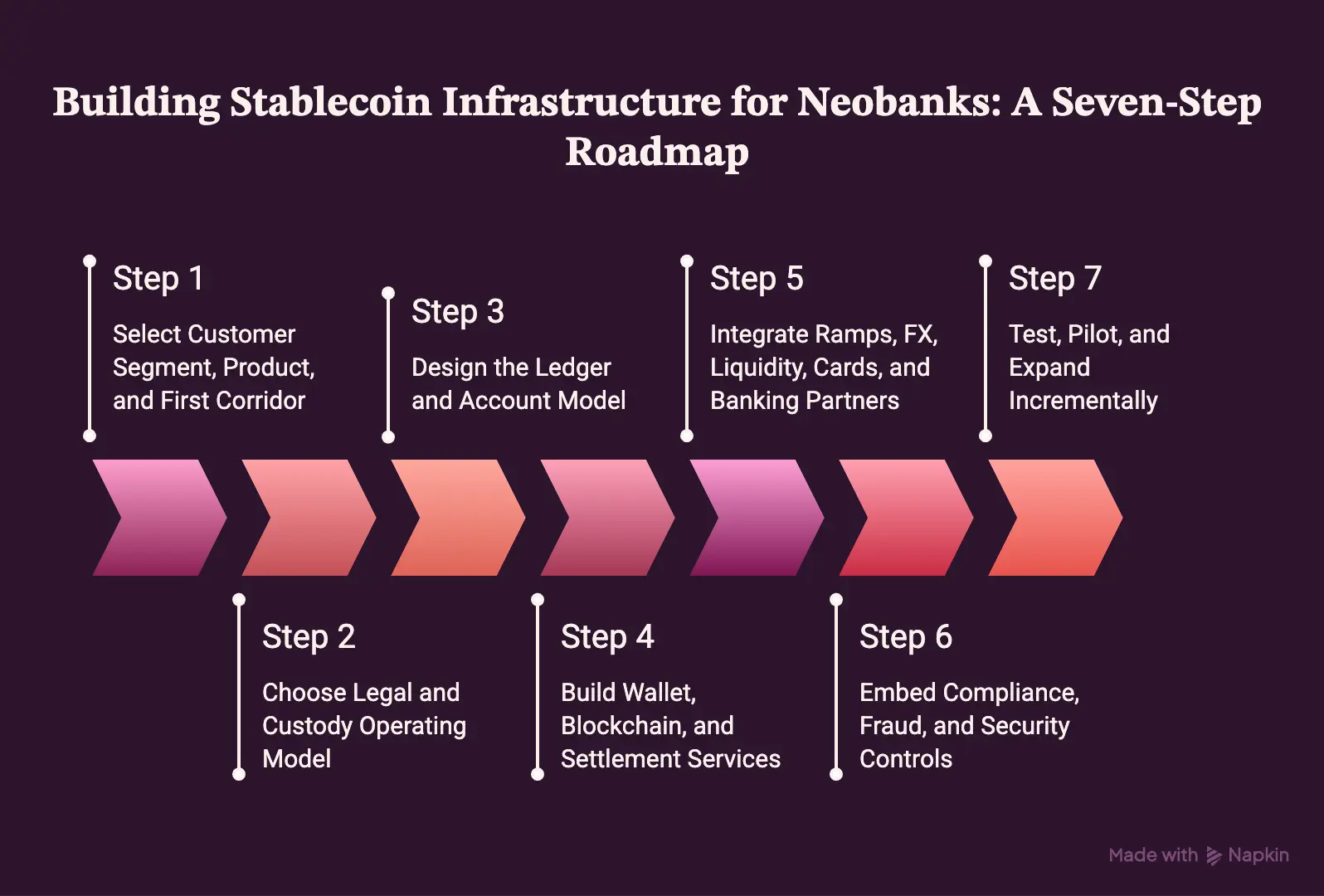
Step 1 — Select the Customer Segment, Product, and First Corridor
Building a neobank platform starts by defining target user profiles, primary payment corridors, funding methods, settlement tokens like USDC, and recipient off-ramps. Furthermore, locked corridor choices determine monthly volume limits and fee structures. As a result, engineering teams establish exact transaction parameters before writing backend code.
Technical Scope: Define transaction schemas, FX margin thresholds, user account tiers, and currency API pairing endpoints.
Intellivon Approach: At Intellivon, we map complete transaction fund flows and regulatory boundaries before selecting specific blockchain protocols or software vendors.
Once corridor parameters are finalized, the team selects the legal and custody architecture.
Step 2 — Choose the Legal and Custody Operating Model
Choosing the operating model determines whether the platform requires direct MTL, VASP, or CASP licenses. Alternatively, neobanks can partner with licensed sponsor banks, EMIs, or institutional custodians. Consequently, this decision dictates key management policies and FBO account structures.
Technical Scope: Map custody API endpoints, define key authorization thresholds, and configure sponsor-bank permissions.
Intellivon Approach: Intellivon integrates flexible wallet control models using Fireblocks or BitGo APIs, allowing platforms to transition between custodial and hybrid setups.
After establishing legal boundaries, backend engineers construct the primary accounting ledger.
Step 3 — Design the Ledger and Account Model
The internal double-entry ledger acts as the authoritative source of truth for all customer funds. Moreover, it keeps off-chain user entitlements synchronized while managing pending balances, fee entries, FX gains, and reserves. Therefore, this layer prevents overdrafts before blockchain execution occurs.
Technical Scope: Build sub-ledger event streaming, automated fee deduction engines, FX gain/loss tracking, and reversal workflows.
Intellivon Approach: We deploy high-throughput double-entry ledger engines that process micro-transactions asynchronously while maintaining audit-ready general ledger states.
Once ledger rules are operational, developers build direct blockchain connectivity services.
Step 4 — Build Wallet, Blockchain, and Settlement Services
This phase builds the middleware that provisions wallets, manages network gas fees, signs transactions, and monitors confirmations. Additionally, automated retry logic handles RPC timeouts without duplicating on-chain transfers. Consequently, users enjoy smooth settlement across multi-chain environments.
Technical Scope: Integrate MPC signing clusters, RPC failover routers, gas abstraction relayers, and treasury sweep logic.
Intellivon Approach: Intellivon deploys multi-chain abstraction adapters that route token transfers across Solana, Polygon, Base, or Ethereum transparently.
With on-chain rails connected, the platform integrates external banking networks and liquidity providers.
Step 5 — Integrate Ramps, FX, Liquidity, Cards, and Banking Partners
Connecting local fiat on/off-ramps, market makers, and card processors allows users to convert and spend funds globally. Furthermore, a provider-abstraction layer decouples vendor APIs from core banking logic. As a result, neobanks can replace partners without rewriting client apps.
Technical Scope: Build provider abstraction endpoints for ACH, SEPA, Faster Payments, FX RFQ engines, and Visa/Mastercard processing.
Intellivon Approach: We structure modular vendor abstraction layers that allow fintechs to swap liquidity or card partners without disrupting user workflows.
After connecting payment rails, security and risk controls are embedded across all transactional endpoints.
Step 6 — Embed Compliance, Fraud, and Security Controls
Compliance checks must execute automatically before token conversion, before transaction signing, and during post-payout monitoring. Meanwhile, perpetual KYC updates and Travel Rule messaging prevent illicit fund flows. Therefore, risk decisions occur programmatically without manual intervention.
Technical Scope: Embed Travel Rule data protocols, wallet address screening, sanctions filters, and AI-driven fraud scoring.
Intellivon Approach: Intellivon embeds deterministic policy rules directly into execution pipelines, freezing high-risk transfers before they hit public networks.
Once security controls are active, the platform undergoes comprehensive pilot testing.
Step 7 — Test, Pilot, and Expand Incrementally
Rigorous testing validates ledger precision, chain congestion resilience, depeg protocols, and card reversal flows under live market conditions. Furthermore, chaotic stress testing identifies custodian or RPC outages before public launch. Consequently, phased expansion minimizes operational risk.
Technical Scope: Run chaos engineering simulations, stress test peak throughput, test depeg playbooks, and audit disaster recovery backups.
Intellivon Approach: Intellivon launches a controlled pilot in a single market corridor with one stablecoin asset before expanding to additional rails.
Moving from development execution to project budgeting requires evaluating upfront and ongoing platform costs.
Stablecoin Neobank Platform Development Cost and Timeline
Building stablecoin infrastructure for a neobank typically costs $70,000 to $300,000, depending on custody, banking integrations, card issuance, supported jurisdictions, liquidity design, and compliance responsibilities.
Consequently, engineering budgets scale according to feature complexity and regional regulatory scope.
1. Cost by Product Scope
| Platform Scope | Development Cost | Typical Coverage |
| Focused MVP | $70,000–$110,000 | One stablecoin, one network, managed custody, one corridor, basic ledger, KYC/AML, one ramp pair. |
| Growth Platform | $120,000–$200,000 | Multi-currency accounts, two or three networks, card integration, FX engine, several corridors, BaaS integration. |
| Enterprise Platform | $220,000–$300,000 | Multi-region deployment, configurable custody, advanced fraud controls, multiple banking partners, HA/DR, custom compliance reporting. |
2. Cost by Development Phase
| Development Phase | Estimated Cost |
| Discovery, Corridor, and Regulatory Mapping | $5,000–$15,000 |
| Product, UX, and Account-Model Design | $7,000–$20,000 |
| Core Ledger and Payment Orchestration | $15,000–$50,000 |
| Wallet, Custody, and Blockchain Services | $10,000–$40,000 |
| On-Ramps, Off-Ramps, FX, and Liquidity | $8,000–$35,000 |
| KYC, AML, Travel Rule, Fraud, and Reporting | $8,000–$40,000 |
| Core Banking, BaaS, and Card Integrations | $10,000–$55,000 |
| Cloud, Security, Testing, and Production Hardening | $7,000–$45,000 |
3. Ongoing Operational Costs
Annual software maintenance normally equals 15% to 25% of the initial build cost. However, platforms must budget for recurring operational variables separately:
- Third-Party Service Fees: Institutional custody fees, per-user KYC checks, and real-time blockchain analytics tools.
- Payment Rail Expenses: Card-program management fees, sponsor bank charges, network gas fees, and liquidity provider FX spreads.
- Platform Operations: Cloud infrastructure consumption, continuous security penetration testing, and legal compliance retainers.
4. Implementation Timeline
| Scope | Recommended Planning Range |
| Focused MVP | 4–5 months |
| Growth Platform | 6–8 months |
| Enterprise Multi-Region Platform | 8–10 months |
Consequently, regulatory licensing approvals, money transmitter license filings, and sponsor-bank onboarding run on independent timelines parallel to primary software development.
Build Stablecoin Infrastructure for Neobanks With Intellivon
Launching a stablecoin-enabled neobank requires software that bridges public blockchains with traditional banking networks without compromising regulatory compliance or accounting integrity.
Consequently, Intellivon delivers production-first engineering to build custom digital banking platforms, multi-currency wallets, and 24/7 cross-border payout rails.
Our technical teams bring over 500,000 engineering hours and ex-MAANG technical leadership to every build.
As a result, our enterprise platforms integrate AI-assisted fraud detection, SOC 2 Type II security controls, and multi-region cloud deployment across AWS, Azure, and Google Cloud.
Why Engineering Teams Build With Intellivon
- Corridor-First Architecture: We map regulatory boundaries, payment corridors, and liquidity flows before choosing vendors or writing protocol adapters.
- Core Banking & BaaS Connectivity: Direct API integration with core ledgers (Mambu, Thought Machine, Temenos) and sponsor banks ensures real-time account synchronization.
- Institutional Key Custody: Multi-Party Computation (MPC) and HSM signing infrastructure remove single points of failure across operational wallets.
- Deterministic Risk & Travel Rule: Compliance rules execute automatically across KYC, AML, sanctions screening, and FATF Travel Rule messaging.
- Production-First Delivery: Complete software handover with zero vendor lock-in, full audit trails, and multi-cloud resilience (AWS, Azure, Google Cloud).
Ready to Build Your Neobank Payment Infrastructure? Talk to Intellivon about defining the first product, corridor, custody model, banking integrations, and compliance boundaries for your neobank before committing to a full infrastructure build.
Conclusion
Deploying a production-ready stablecoin for neobanks requires far more than connecting a standalone crypto wallet or basic blockchain API. It demands a regulated financial platform that unifies customer accounts, authoritative double-entry ledgers, institutional custody, banking rails, FX engines, card networks, liquidity, compliance, and automated reconciliation.
To execute successfully, start with one validated product and corridor while keeping your internal ledger strictly authoritative. Furthermore, adopt a hybrid build-versus-buy model and embed licensing and compliance decisions before writing code. Plan for a development budget between $70,000 and $300,000, and expand to new rails only after your first corridor operates efficiently and profitably.
FAQs
Q1. Can a Neobank Use Stablecoins Without Becoming a Crypto Brand?
A1. Yes, because modern abstract middleware hides blockchain mechanics entirely behind traditional mobile banking interfaces. Consequently, customers interact solely with standard dollar balances, fiat transfer inputs, and familiar payment buttons. Meanwhile, background APIs handle wallet creation, network gas fees, on-chain routing, and currency conversions invisibly.
Q2. How Can a Neobank Avoid Making Customers Complete KYC Twice?
A2. A neobank avoids duplicate onboarding by implementing identity orchestration platforms that share tokenized KYC states with regulated banking partners. Furthermore, securely passing verified customer attributes and consent records satisfies partner compliance checks. However, additional verifications still trigger when transaction volumes cross specific jurisdiction-defined regulatory risk thresholds.
Q3. Should a Neobank Use Custodial or Self-Custodial Wallets?
A3. Select custodial MPC wallets for mainstream retail users who expect password recovery, card spending, and automated customer support. Conversely, choose self-custodial architecture for crypto-native users who require direct key control. Consequently, custodial setups simplify licensing and fraud recovery, whereas self-custodial models shift key security responsibility directly to customers.
Q4. How Do Stablecoin-Funded Debit Cards Actually Work?
A4. When a customer swipes a card, the processor requests real-time purchase authorization from the neobank. Consequently, the backend instantly converts equivalent stablecoin balances into local fiat to approve the transaction. Subsequently, licensed issuer sponsors settle the fiat balance with Visa or Mastercard, while standard protocols handle chargebacks and refunds.
Q5. How Much Liquidity Does a Stablecoin Neobank Need?
A5. A platform should maintain one to three days of expected net outflows as an initial stress-testing baseline. Furthermore, risk teams must continuously model peak net payouts, redemption delays, weekend bank closures, corridor volatility, and partner limits. Consequently, adequate pre-funding prevents payout delays during sudden volume spikes.
Q6. Should a Neobank Build One Integration Layer or Connect Vendors Directly?
A6. Neobanks should build an internal provider-abstraction layer rather than connecting vendors directly. Consequently, unifying external APIs under a single internal interface prevents vendor lock-in. As a result, engineering teams can swap liquidity providers, custodians, or banking partners seamlessly without rewriting core frontend applications or disrupting user workflows.
Q7. Can a Neobank Offer Stablecoin Yield Without Taking Credit Risk?
A7. Yes, neobanks can offer yield without taking credit risk by distributing short-duration tokenized US Treasury bills or issuer-backed rewards. However, platforms must clearly distinguish these products from traditional bank deposits. Consequently, proper marketing disclosures ensure customers understand that yield products carry distinct regulatory and market risk profiles.
To Sum It Up
- A stablecoin transaction can settle in seconds while the customer’s payment still fails hours later at the fiat off-ramp. Neobanks must measure usable-funds delivery, not blockchain confirmation alone.
- The internal double-entry ledger should remain the source of truth even when every settlement event appears on a public blockchain.
- Stablecoins reduce the number of financial intermediaries, but they do not remove licensing, reconciliation, customer support, or card-scheme obligations.
- Most neobanks should build their orchestration and product logic while purchasing custody, identity verification, blockchain analytics, and licensed fiat access.
- A $70,000 MVP can test one corridor. A multi-region banking product with cards, liquidity controls, and configurable compliance can reach $300,000.